Division of work was the first milestone we had passed in our quest to reach humanhood.

If not convinced, compare the effectiveness – in any situation, of a team composed of identically educated and similarly skilled people versus one comprising individuals with various skills and diverse exposure to the world – a.k.a. education.
In other words, compare a bunch of ‘robots’ to a gang of people who complement each-other.

Historically, societies – when and where enough resources had been present, have become increasingly complex. While those composing them have become more and more specialized. And more and more dependent on the rest of the society. On the smooth functioning of said society.
In Adam Smith’s words: the baker, the butcher and the brewer depend on each-other to feed their respective families.

In fact, all of us depend on the smooth functioning of the market. Those of us who had experienced communism had learned this on our own skin.
Same thing is valid for all totalitarian societies. Any attempt to run complex systems from above – in a centralized manner, will – sooner rather than later, end up in failure.
For no other reason than the fact that nobody – individually or in a small team, is above error. No matter how smart or well intended, all of us make mistakes. If the system allows for those present to point out errors – and to demand those errors to be fixed, things may continue.

But, by definition, a totalitarian – a.k.a. centrally planned, system has no feed-back loop. The planners have ‘no’ information about the consequences of their decision making. Well, my experience suggests a combination. Those at ‘the bottom’ gradually loose their appetite for sending information topside – because those at the top had the habit of ‘killing’ the bearers of bad news, while those at the ‘top’ gradually loose any interest in what goes on at the bottom.

Working democracies are organized around the principle of ‘separation of powers’. Another form of ‘division of work’. Each ‘power’ does what it’s supposed to do and, together, balance the whole system.

Nothing ‘fancy’.
For as long as those involved pay due respect to the principle instead of lip service to the form…

Nassim Taleb had coined an interesting concept.
Intellectual yet Idiot.
Any individual conceited enough to believe he’s always right and arrogant enough to try to impose his worldview on those around him.

Or, in Karl Marx’s terms, an individual who has convinced himself that the world needs to be changed according to his own precepts.

‘What?!?
Are you implying that Marx was the first ‘intellectual yet idiot’?’

No, only the second…
Remember Plato’s ‘king priests’?
What’s the difference between those who, according to Plato’s advice, were to be groomed to govern and those who had been conditioned by various totalitarian parties and sent out to ‘spread the word’?
What’s the difference between Plato, Marx and, say, Alfred Beumler and Alfred Rosenberg?

Plato had been inspired by what Pericles – a dictator, had managed to achieve and his most prominent ‘product’ had been Aristotle. Who, in his turn, had educated Alexander the Great. Supposedly one of the greatest generals and statesmen in human history. According to European historiography, anyway…
If you ask to those of his contemporaries who had happened to be in Alexander’s path to glory… you might get a different opinion!
And what’s so glorious in being the immediate cause of death for so many people across three continents only to die of alcoholic poisoning?

Marx had come up with a brilliant explanation for what went wrong in early capitalism and with an abysmal solution for the problems he had identified.
The worst thing being that he didn’t stop at proposing aberrant solutions.
He was actually instrumental in several attempts to put them in practice.

Alfred Beumler and Alfred Rosenberg. Is there any need for me to comment on them? On their absolute arrogance?
How else to call their willingness to declare that some people are to go on living while others should be disposed off?

This being the moment I’ll be pointing the finger to what Plato, Marx and Beumler/Rosenberg have in common.
All of them share the willingness to divide people into ‘deserving’ and ‘undeserving’. The arrogance to put forward criteria which are to be followed by the rest of us.
The arrogance to consider the world should follow their teachings.

Division of work had done it’s job.
Invented by nobody in particular, used by most of us – and many of our ancestors, it had brought us to where we are now. When so many of us have time to think.
Technology – maybe the most evident consequence of ‘division of work’, is proficient enough to feed us all. If we use it right.
Or to kill us all. If we use it wrong.

What will it be?
Are we going to remember what, time and time again, our forefathers have figured out? That ‘together’ we can ‘move mountains’? That diversity is the key to survival? To finding new paths into the future?
Or are we going to fall pray – not for the first but, certainly, for the last time, to those who teach us to despise our neighbor? To stay separate? To consider some people – mainly ‘us’, as being above the rest?

Cei care numesc masca, botnita, sunt aceiasi oameni care daca maine s-ar da lege ca este obligatoriu sa circuli incaltat pe strada, ar incepe sa circule desculti ca “labutzele lor trebuie sa respire si nu li se incalca lor drepturile fundamentale”.
Normal ca considerati masca botnita daca sunteti niste javre.

E o problemă imensă cu spunerea asta.
Pe de o parte este extrem de exactă iar pe cealaltă este cât se poate de contraproductivă.

Propaganda anti ‘botniță’ are ca scop divizarea societatii.
Îngreunarea procesului de regrupare a forțelor și de reconectare între diversele segmente sociale. Proces esențial pentru depășirea crizelor. Inclusiv pentru depașirea crizei Covid.

Cei care stau în spatele genului ăsta de propagandă înțeleg Covidul ca pe o oportunitate. Ca pe un prilej pentru a-și pune planurile în aplicare.
În situația asta, orice raspuns în stil ‘pamfletar’ – oricât de haios ar fi el, le cântă-n strună.

Cei care, din diverse motive, au căzut în plasa propagandiștilor se simt jigniți. Devin opaci la orice argumente. Și încep să-i urască pe cei care poartă masca.
‘Mascații’, la rîndul lor, după ce iau contact cu genul asta de mesaje, se simt îndrituiți să le disprețuiască pe ‘javre’.
În loc să-încerce să-i convinga!

Iar propagandiștii se distrează văzând cum dezbinarea se întinde precum pecinginea. Precum un virus.
Precum un virus pandemic….

In a free-enterprise, private-property system, a corporate executive is an employee of the owners of the business. He has direct responsibility to his employers. That responsibility is to conduct the business in accordance with their desires, which generally will be to make as much money as possible while conforming to their basic rules of the society, both those embodied in law and those embodied in ethical custom.” Milton Friedman, 1970

Between 1776 and 1970 the world had leaped forward. Technologically, economically and socially. Not only that we’ve managed to learn so much about the world and to produce immense wealth but we’ve somehow managed to ‘spread around’ the results. The proportion of people who had improved their fortunes had grown constantly during the entire period.

The majority of Americans share in economic growth through the wages they receive for their labor, rather than through investment income. Unfortunately, many of these workers have fared poorly in recent decades. Since the early 1970s, the hourly inflation-adjusted wages received by the typical worker have barely risen, growing only 0.2% per year. In other words, though the economy has been growing, the primary way most people benefit from that growth has almost completely stalled.” Jay Shambaugh, Ryan Nunn, HBR

Isaac Newton hadn’t invented gravitation. He only ‘noticed’ it. Put it in words.
Adam Smith hadn’t invented the free market. He had noticed how it used to work and opened our eyes about it.
For what ever reasons, enough of us had chosen to close those eyes back. And have reached the conclusion that ‘greed is good’.

Milton Friedman was both horribly wrong and exactly right.

He was right in the sense that he had gouged correctly what the ‘general public’ wanted/was ready to accept. “in accordance with their desires, which generally will be to make as much money as possible

He was horribly wrong in the sense that he had perpetuated Marx’s error. Karl’s, not Groucho’s.

Money isn’t everything. Life beats it to the post.
Profit is, indeed, essential. Only it is nothing but an indicator. About how efficient a corporation is.
Meanwhile the role of a corporation is to accomplish – as Friedman himself had dully noted, the will of the shareholders.

The problem arises from the fact that ‘near mindedness’ blinds.
If/when both shareholders and management have nothing but ‘money’ in their scopes the market actually looses its freedom.

Economic agents no longer converge towards the market to solve each-others problems – like Smith had noticed, but to ‘make money’.

Not the same thing. Not by a long shot.

A new pandemic is gripping us.
By our egos!
One which is a hell of a lot more dangerous than Covid….

In fact, narrow mindedness is a disease which occurs naturally. It probably affects some 10 percent of the population in ‘normal’ times.
When things are no longer normal – and people become nervous because uncertainty does all kind of ‘funny’ things to our minds, narrow mindedness becomes an opportunity.
A golden opportunity for those who ‘professionally’ fish in troubled waters.

“The Petersons weren’t wearing pro-police T-shirts,” notes Churchill. “They weren’t carrying a banner, holding a sign or waving a black-and-blue flag. They appear to just be listening. But merely listening to an opinion that some Skidmore students find objectionable is apparently enough to get a professor in hot water.”
Professor Greg Patton at the University of Southern California (USC) was telling students in a communications lecture last month about filler, or pause words, such as ‘err’, ‘umm’ or ‘you know’ in English.
Footage of his lecture, which has now gone viral, shows Prof Patton saying: “In China, the common pause word is ‘that, that, that’. So in China, it might be na-ge, na-ge, na-ge.”
Enunciated, na-ge sounds like the N-word, which led several of the professor’s students to complain to the university. Responding to the complaint, the dean of the university, Geoffrey Garrett, told students that Prof Patton would no longer be teaching the course.
“It is simply unacceptable for the faculty to use words in class that can marginalize, hurt and harm the psychological safety of our students,” he said.

Tocmai ce m-am împiedicat de chestia asta pe net.

Păi după treij-dă ani de democrație noi încă am rămas pe vremea lui Eminescu?

Cum nu vii tu, Ţepeş doamne, ca punând mâna pe ei,
Să-i împarţi în două cete: în smintiţi şi în mişei,
Şi în două temniţi large cu de-a sila să-i aduni,
Să dai foc la puşcărie şi la casa de nebuni!

Încă îl mai așteptăm pe Țepeș să trimită pe cineva care să curețe mizeria în care ne bălăcim noi?
Și de ce? Oricum n-o să poată ‘Țepeș’ să facă tot ce e de făcut… Tot noi vom fi cei care va trebui să punem mâna pe mătură!

Și atunci? De ce nu ne apucăm singuri?
De ce trebuie să așteptăm să vină cineva care să ne spună ce să facem?
Nu știm unde e mătura?
Nu vedem unde e rahatul?

Sau ne e frică să ridicăm covorul? Că nu se știe peste ce mai dăm pe-acolo!
Păi nu era mai bine nu fi ascuns rahatul? … dar asta e altă discuție….

As a mediator, I was trained to differentiate between needs and wishes.
Between something which will actually make your life easier and something you just fancy.
And to understand the fact that everything we do has consequences.

A father has asked me the other day:
‘What had I done wrong? My only son hardly ever speaks to me…’

‘When did the rift became apparent? How early?’

‘Things went fine until he had become an young adult. OK, we had some ‘misunderstandings’ when he was a teenager but he seemed to had overgrown them… Until sometimes in his early 20-ies when he really rebelled. And told me everything he couldn’t tell me – his words, about how he felt while growing up.”

‘And what exactly were his grievances?’

‘He was cross at the manner in which I was telling him things. At the manner in which I was trying to stimulate him. He’s very bright, you know, only didn’t do much in his life. Not by a long shot! And I kept telling him that. I still do, as a matter of fact.’

‘You see, no matter whether you go to the church or to a brothel, the soles of your shoes will get thinner. This doesn’t depend on where you go. It only depends on the road you chose and the manner in which you shuffle your feet.
Same with words. What you’re trying to say is, indeed, very important. But even more important is the manner in which you try to get the message across. Whenever your ‘target’ becomes angry at you … the message will be truncated in the process… Even more importantly, the ‘target’ will retain a ‘bad’ memory of the whole incident. And if more and more ‘bad’ memories keep piling one on top of the other…
But not everything is lost! The very fact that he took the trouble to talk out the matter with you means he was not ready for a ‘divorce’. Not then, anyway…’

“For a proposition to be true, it is not enough for it to be logically correct. It also needs to make epistemological sense.” Oscar Hoffman

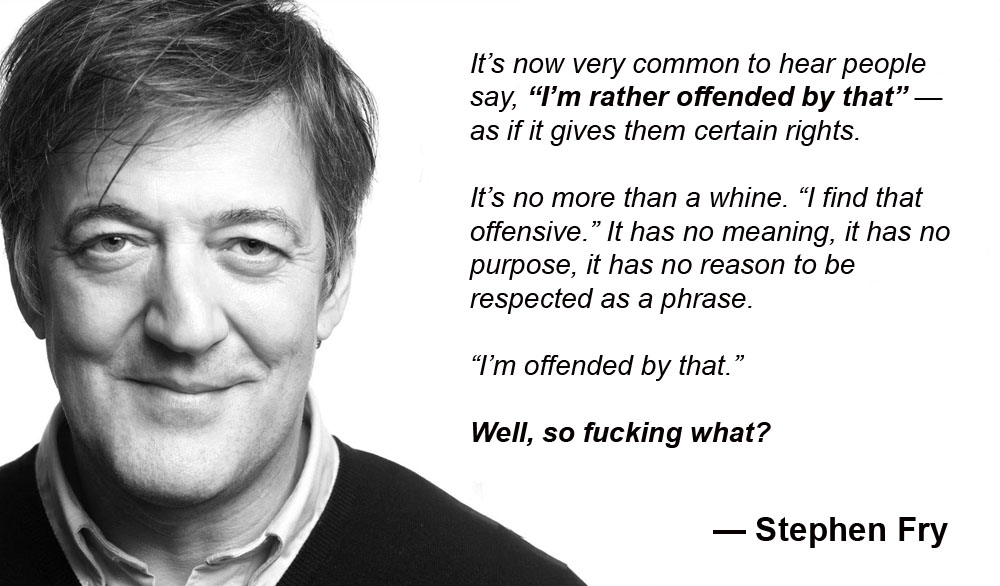
Ricky Gervais is right, right?
There’s no logical connection between being offended and being right…
There’s no doubt about this!

Only Gervais is wrong.
Wrong in saying it, not in what he said.

Yes, there are people who declare themselves to be offended in an attempt to get something. Sympathy, some slack… or even the others to accept their version of things. That ‘they’ are ‘right’.

But this is not always the case!
Some (other) people are so offended by the manner in which things are unfolding that they actually need to express their feelings.
To send the warning ‘don’t continue in this manner or you’ll loose my attention/will to cooperate’.

In this sense, Gervais is actually wrong.
His saying had been used by numerous meme builders to create a bubble inside which callousness is actively encouraged.
‘Go on disregarding other people’s sentiments. They’re nothing but pussies.
It’s just words, not sticks nor stones.’

Here’s a more detailed analysis:

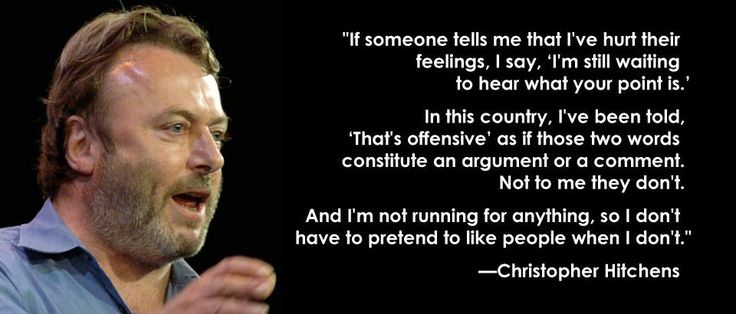
So fucking what?!?
Somebody just told you they are not going to stop paying any real attention to what you are trying to say to them and you don’t care?
Why did you start communicating in the first place? Or ‘performing’ the ‘offensive’ thing in public?
Was the ‘offense’ premeditated? For a reason or just for fun? Then it’s not ‘so fucking what’ anymore…
Or you just hadn’t thought about it beforehand? And you’re looking for an easy way out?

No, you don’t have to pretend to like people when you don’t.
But, in the longer time frame, it pays to honestly respect those you get in contact with. All of them.

Your life will get a lot better!

Tocmai ce m-am împiedicat de chestia asta pe net.

La-nceput m-a încercat furia.

Cât de … trebuie să fii ca să poți scrie așa ceva?!?

Ceaușescu „a păstrat demnitatea acestui popor de tâmpiți”….

Care demnitate?
Nu urcam în lift de frică să nu rămânem între etaje?
Aveam, cu toții, lumânari în casă? Cu toate că nu mai credeam în Dumnezeu…
Păstram săpunurile primite de peste graniță între cearceafuri? Ca să miroasă frumos?
Părinții se spălau pe dinți cu sare sau cu bicarbonat ca să rămână pastă pentru copii?
Iarna mai puneam o haină pe noi pentru că tot cărbunele era folosit în siderurgie? Ca să fie produse utilajele și vagoanele de cale ferată pe care le-au vândut șmecherii la fier vechi după ‘zaveră’? După care și-au cumpărat Mercedesuri, pe care le rup în gropile pe care tot ei nu-s în stare să le astupe?

După care m-am întrebat dacă nu cumva tipul chiar are dreptate!
Pană la urmă, am stat vreo 5 ani de zile la coadă pentru câte o pungă de frații Petreuș înainte de a-l trimite pe marele cârmaci în excursie cu elicopterul la Târgoviște…

Iar aceia dintre voi care nu știți care era treaba cu frații Petreuș dar aveți convingeri ferme despre cât de ‘mai bine’ era pe vremea lui Ceaușescu… să vă dea Domnul demnitate… că habar n-aveți ce să faceți cu mintea!

PS.
„A dublat populația urbană”… da, interzicând avortul!
Ce o fi demn în a umbla cu plicul la doctori încercând disperat să scapi de o sarcină nedorită….
‘Dacă erați proști și nu foloseați prezervativul!’
Care prezervativ?!? Nu se găsea nici un fel de contraceptiv… ‘Pilule’ ioc, prezervative canci, sterilete doar pe sub mână din Uniune (adică din Rusia)…
Contraceptive nu, examen ginecologic obligatoriu din trei în trei luni pentru femeile „fertile” … curat „demnitate” Coane Niculae….

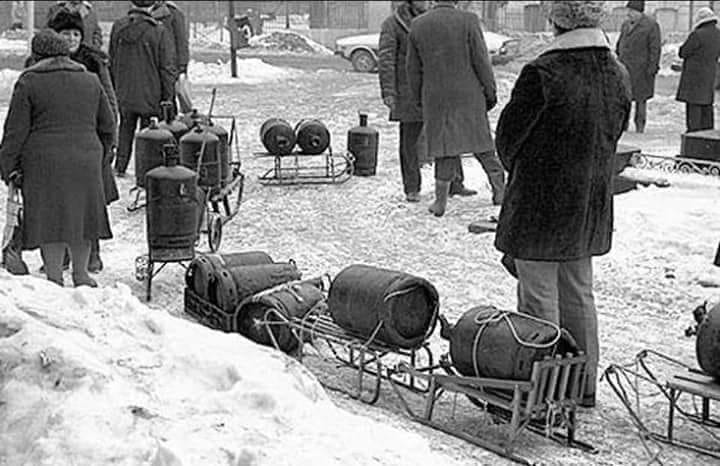
Demnitatea bunicilor care așteptau să vină mașina cu butelii.

Society exists in two forms.
One in which the individual members have a certain amount of respect towards their peers.
And another one, where John Doe doesn’t give a damn about anybody else. Or even hates everybody else.

The first kind evolves. People talk – and listen, about their problems. Then find solutions.
The second experiences revolutions.

When too many individuals have never had anything ‘substantial’ on their name, and feel they have no chance of improving their lot – because ‘everything’ has already been appropriated by a small minority, that society has a marked tendency towards communism.

Sometimes, too many individuals see their fortunes go down the drain, for no matter what reason. From there, only God knows how, those fortunes go straight into somebody else’s pockets. Any society which experiences something similar has a marked tendency towards fascism.

The problem with both communism and fascism being that they have always failed. Crumbled from within before being pushed into the precipice by those who has seen the situation as an opportunity. As an opportunity too good to be wasted.
Then, if neither had ever survived for long, why are so many people who continue to profess either? So many intellectuals who try to convince their audience that …

Well…, first of all, because ‘intellectuals’ are nothing but regular people. With a twist! Not only that intellectuals have the same ‘passions’ as the commoners – ‘greed’ being the most intense, but they also have a very good opinion about themselves. Hence too many of the intellectuals consider that they are the ones who should be in charge. That they are the ones who know what everybody else need to do if they want to live comfortably.

In a nutshell, too many intellectuals fall into the trap of considering themselves infallible. And ‘deserving’!
Hence those would do everything needed to get what is rightfully theirs.

If a society is ripe for communism, one/a bunch of the ‘intellectuals’ I described above will, for sure, drape themselves in a communist flag.
If another society is ripe for fascism, in a similar manner, one or, probably, more ‘intellectuals’ will drape themselves in a fascist flag.

It’s up to us, who’ve experienced at least one of them, to blow the whistle.
And it’s up to the rest to listen…

Let me start by attempting to answer this question in a logical manner.

Theoretically, individuals have the right to defend their lives. And properties. In some jurisdictions, the defender might even shoot the trespasser.
On the other hand, it is a lot harder to identify an example where property might end up purposefully damaged in a lawful manner while life is being defended. ‘Purposefully’ as in property being targeted in an attempt to fulfill the goal of defending life.
When groups of people are involved, things are even more complicated.
Is a community entitled – using the police force, a “well regulated militia” or even ‘spontaneously’, to inflict bodily harm to a group of people who randomly destroys property? What becomes different when the destruction occurs during a protest ‘gone wrong’?
The way I see it, things are more complicated at the social level because of the number of people involved. At the individual level, things are simple. The guy who trespasses is the one who gets hurt. The defender is the only person who might inflict injury and the one who will answer for the act. When there are more people involved…. Some protest peacefully, others do the damage… and who knows who gets clobbered – or shot, by the police?!? Same thing looking from the ‘other’ side. The owner of a property might have decided to protect it in a different manner than the police … or even not at all…
To wrap it up, there’s no single answer for this question. On the individual level, the actors/agents must decide on the spot. Considering the specifics of each incident. While being ready to accept the consequences. On the social level, neither murder nor property damage are acceptable and must be dealt with in a very thoughtful, but firm, manner.

As usual, logic can take us only this far. Far from the essence…

What are we doing here?
How can we even attempt to compare life with property?
Do they belong to the same category?
Can we sell a human being? Do houses have souls?
What’s happening to us?