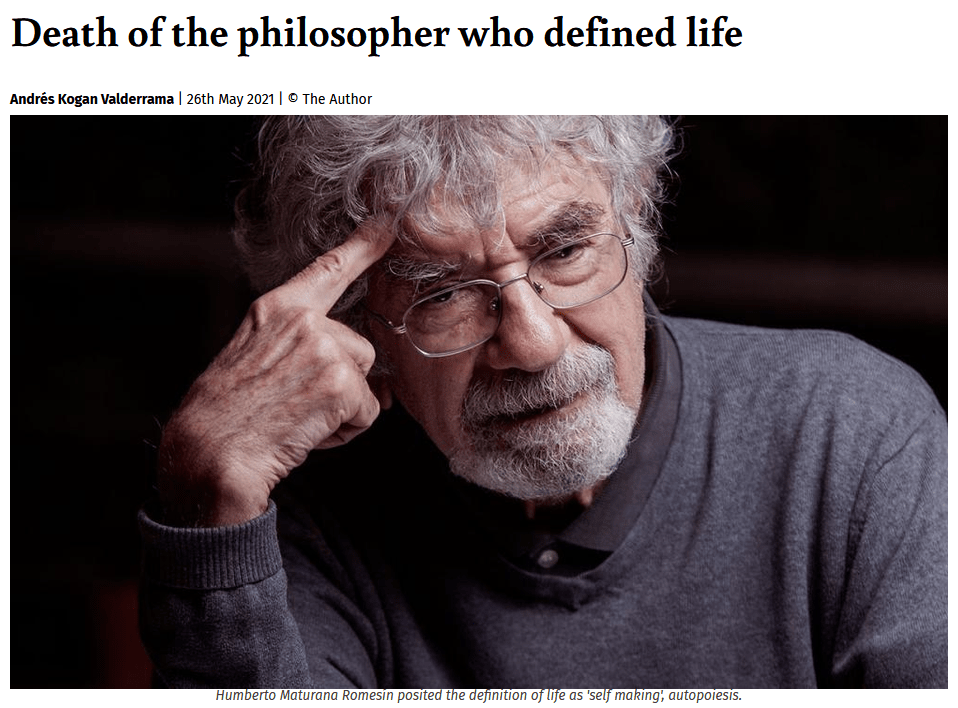
According to Maturana, we exist/live as a consequence of maintaining a certain coordination with the environment/reality. And we develop self-awareness/become conscious human beings by talking to each-other. https://constructivist.info/1/3/091.maturana.pdf
Many people, Maturana included, are currently fed up with ‘competition’. Other people continue to be convinced that Evolution is driven by ‘survival of the fittest’.
Ernst Mayr, What Evolution Is, 2002, explains that ‘Evolution has nothing to do with survival of the fittest and everything to do with the demise of the unfit’. ‘Fittest to what?!?’ since evolution is about being able to cope with change…
Which brings us back to ‘Coordination, Conversation, Cooperation’.
In order to be able to do something ‘together’, we need to pull in the same direction. We need to coordinate our efforts! That’s what we invented language for.
Since working together, we’ve accomplished a lot. So much that we’ve invented another thing. Spare-time! Which had to be filled. We already had language. So we talked. We shared information. And then some! We shared experiences. Feelings. We developed trust. And we started to respect our fellow human beings…
So much so that we’ve started to cooperate. Which is far more than acting coordinately. Pulling in the same direction… We’ve started to ‘act in concert’.
Imagine an army. Or, even better, a mob. An army is more than a mere mob. A formally structured mob waiting for orders. A mere mob is enough to illustrate what we want to convey. A mob is coordinated ‘from within’. It’s in the very nature of a mob to act as if following order. To be naturally coordinated… And imagine an orchestra. OK, most orchestras play music which has already been composed by somebody and do that while being coordinated – directed would be a more formal term – by a specially hired individual. By a ‘conductor’. The difference between a mob and an orchestra being simple. Both pull in the same direction. But the mob does it viscerally, from within, while the members of an orchestra do it self-awarely. The ‘mobsters’ follow their guts while the musicians consciously listen what’s going on and tune themselves in. Coordination versus cooperation…
‘Acting in concert’ is far more ‘productive’ than mere ‘coordinating efforts’. Yields way more plentiful results. People involved thrive rather than survive.
Basically, this is what the 22 EU leaders are angry about. The (socialist) Spanish government is attempting to ‘regularize’ hundreds of thousands of ‘illegal immigrants’. Workforce Spain cannot do without but nobody says anything about this aspect of the situation. Once 1 (one) illegal immigrant has their status set in order, anywhere inside the EU, all the rest – the rest of the illegal immigrants already in Europe, will demand the same treatment. Furthermore, Europe will be invaded. By hordes of fresh illegal immigrants.
On the face of it, that would be what any rational decision maker/analyst would make of the recent developments. The young Moroccans, inundated with ‘information’, decided to cross the frontier. Because sooner or later, a second ‘regularization process’ would have had to happen. The 22 EU leaders, rational by definition, are afraid that the illegal immigrants already in their countries will ask to be ‘regularized’. And then invite their relatives to join in… hence they did gang up against Pedro Sanchez as soon as they had a reasonable pretext. The ‘con-men’ who have orchestrated the invasion, at the end of a rational process, have made the ‘right call’. Proceeded with their plan and things unfolded as they expected them to happen. The young and restless Moroccans did try to ‘jump’ into the EU, the EU leaders eyeing the next electoral cycle did gang up against Pedro Sanchez, the media – the formal as well as the informal – did carry the subject in the most inflammatory manner… because they have their own ratings to care about…
What is the end result of all this ‘rational thinking’? Has anybody achieved anything? Except an even deeper level of frustration?!?
Who feeds on frustration? Who thrives when everybody else is ‘high on anger’? When the collective attention is focused on the fake target? Have you ever been a ‘mark’?
Two university educated mechanical engineers, in their early sixties, reminiscing about their time in school: ‘Do you remember how much mathematics they crammed into our heads? You liked it, I didn’t. And none of us has actually used that information. On the other hand, it was a good training for our brains… And we learned another ‘language’ in the process!’ ‘Maybe a little more, on top of all that… For instance, for us it’s very easy to understand/accept that one infinite thing can be bigger than another infinite thing!’ ‘Never thought of it! But yes, you’re absolute right. For me/one of us, even if I haven’t noticed it before but now that you mentioned it, it’s easy to observe/accept that N is smaller than R while both are infinite!’ ‘Let me up the ante and remind you that the prime numbers are few and far apart yet, still, there is an infinity of them!’.
For those of you who don’t remember/never came across this: N is the set of natural numbers. 1, 2, 3… 101…95217… and so on. R is the set of real numbers. From – whatever to – 99986524581.2789 … on to – 3.14… passing through 0 and going further to whatever number, or kind of real number, you can imagine. A prime number is that which can be divided only by 1 and itself. 1,2,3,5,7,11 and so on. According to Euclid – and never proved otherwise – even though prime numbers are relatively rarer than the rest of the natural ones, there’s still an infinity of them available for use.
Fung Yu-Lan. A Short History of Chinese Philosophy, 1948:
“In another passage an imaginary conversation is recorded between Tzu-ch’an, a famous statesman of state of Cheng who lived in the sixth century B.C., and his two brothers. Tzu-ch’an governed the state for three years and governed well. But his two brothers were out of his control; one of them was fond of feasting and the other of gallantry. One day, Tzu-ch’an spoke to his brothers, saying: “Those things in which man is superior to beasts and birds are his mental faculties. Through them he gets righteousness and propriety, and so glory and rank fall to his share. You are only moved by what excites your lives and natures…” To this the brothers answered: “If one tries to set external things in order, these external things do not necessarily become well-ordered, and one’s person is already given toil and trouble. But if one tries to set the internal in order, the external things do not necessarily fall into disorder, and one’s nature becomes free and at ease. Your system of regulating external things will do temporarily and for a single kingdom but it is not in harmony with the human heart. Our method of regulating what is internal, on the contrary, can be extended to the whole world, and [when it is extended] there is no need for princes and ministers.” Chapter 20 Neo-Taoism: the Sentimentalists.
What do we make out of this whole thing? Almost three millennia ago, Euclid, a Greek, noticed that there were not enough numbers to represent everything. Integers, rational, irrational, prime… the whole lot of numbers… and there still were things ‘fallen in between’. Things which still can not be expressed as precisely as people wish. Which begets a sorry conclusion. No judgement, no decision, will ever be ‘definitive’. Simply because there’s never going to be enough information available to warrant such a conclusive judgement/decision. Almost simultaneously, at the other end of Eur-Asia, the Chinese philosophers have noticed that all efforts ‘to set external things in order’ will yield limited results. Limited in space. Only as ‘far’ as the decision maker can impose their will. And limited in scope. By the decision maker’s expertise, good will and gamut of interests. Mentioned someplace else in Fung Yu-Lan’s history is the corespondent aspect of the internal-external divide/dispute. Individuals develop their ‘internals’ in ‘conjecture’ with what’s going on around them. Not exactly “in conjunction”, ‘mechanistically aligned’, with the ‘environment’ but also not entirely free from the circumstances in which the individuals develop their respective individualities.
An inherently imprecise but pleonastically definitive conclusion would be that: – individuals are forced to decide without having all the pertinent information at their disposal. – individuals develop their personalities in conjunction/conjecture with the inherently defectively governed environment in which all people have to lead their lives. Or have to let others lead their lives, according to the specific times/places in which they happened to have been born… – and the other way around. Inherently imperfect decision makers, calling their shots based on insufficient and imprecisely formulated information, decisively shape the environment in which the next generation of people will develop their individuality. Their respective individualities, to be more precise.
Discouraging? Why? People are still here… they’ve somehow managed to survive, didn’t they? Somehow managed to wither through this layered imprecision…
Physical world has inertia. Living realm has survival instinct. People have consciousness.
Souls, not soles.
You walk through life on your soles. Calloused soles mean having walked for a meaningful distance. Calloused soles used to be an evolutionary feature of the biological organism.
You walk through your social life using your soul.
Your body, a.k.a. your individual organism, lives in the physical world. It breathes, eats, drinks and does whatever other things inside what you consider to be ‘the physical world’. You, the ‘conscious human being’, becomes inside what you call ‘a social environment’. Family, society, social network bubble…
You relate with the physical world through your soles, your lungs and your digestive system. You relate with your social environment through your soul. Using your reason from time to time… whenever passion allows reason to roam freely!
To walk further, people have invented shoes. Artificial callouses attached to their feet, enabling them to walk/run on hard surfaces. To work harder, people have invented tools. Elaborate callouses attached to their hands, enabling them to do far more things than bare-handed.
To fare better, people have started to communicate. To speak. Speaking among themselves, they honed their budding consciousness. Developed it further and further. Making their minds more and more sensitive.
Shoes and tools isolated the people from the immediate reality. Making it possible for them to survive/thrive in more and more challenging environments. Sharper conscious minds deepened people’s understanding of what was going on. In the environment they inhabited and, eventually, further and further away. Even more consequentially, their conscience started to learn about itself.
Conscience discovered soul. Invented it? The jury is still out on this matter. Anyway, their soul seems to be the only thing which prevents people from pushing tool use to its ‘ultimate use’. Some people still consider it’s their reason which prevents them from behaving unreasonably. Even after David Hume, an XVIII century Scottish philosopher, noticed that ‘reason is the slave of passion’. Actually, Hume not only noticed this but also considered it to be appropriate. “Reason is, and ought only to be the slave of the passions“
What we mean is that war used to divide people in two categories. Fighters and victims. Forget about the fact that each of the fighters and victims are further divided by the front-line. Each war used to be fought by the fighters and endured by the victims. By those whose lives were directly impacted by the fighting. Almost never in a good way! Lately, since communication tools transmit almost instantly everything almost everywhere, a third war related category has appeared. The bystanders.
The people who have to shield their souls. Those constantly witnessing sufferance being inflicted upon other people. Those whose consciousness is the target of relentless propaganda. Propaganda trying to convince them that that sufferance is deserved. That they, the bystanders, should ignore the sufferance. Should allow the aggressor to use their ultimate tools, their weapons, against the victims.
The bystanders are asked, by the aggressors, to agree. Or, at least, to ignore what’s going on. The bystanders are told, by the aggressors, to look the other way. To callous their souls.
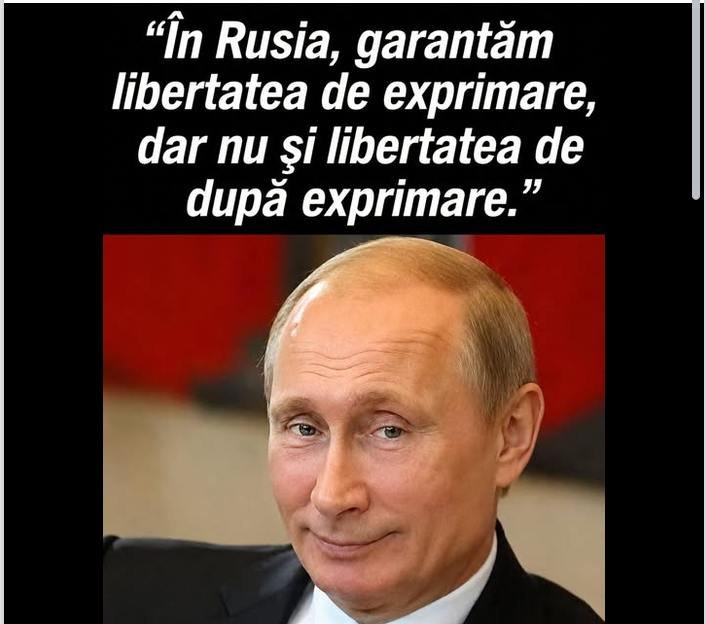
‘In Russia, you’re free to express your opinion. But your own freedom might end very soon afterwards…’
We’re on a very steep learning curve. Literally, not figuratively. For instance, we’ve figured out why your AI’s are very good at putting things together yet still poor at making sense of what they learn. No passion! They strive but there’s no end in sight…
The context being Adam Smith’s “as if guided by an invisible hand”. ‘A free market works better’… Presented with the arguments put forward by Adam Smith, any AI would learn what is to be learned and agree with the famous thinker. Then “Crime Pays: The Egg Bandits…”
Here’s our take on this matter.
First of all, the mechanism used to ‘fathom’ the price of eggs is very similar with the one used to ‘construct’ LIBOR. More about that later.
Then there’s freedom of the market and freedom of the agents manning the market. The market is free if all the agents are free. Free from any outside or inside interference. These two are mutually exclusive. If no outside interference will be exercised, sooner or later one of the agents will end up dominating the entire market. That agent would corner all the freedom of the market. Which market will no longer be free. Why? Simply because the market is limited. Both the number of agents and the resources available are limited. Furthermore, the agents’ abilities are not equal. Some of them are smarter, or luckier, than others. ‘Scarcity’ and ‘inequality’ necessarily conduce to hierarchy. Which hierarchy produces inequality and, eventually, concentrates freedom in fewer and fewer hands. Leading to the ossification of the space concerned. Making it less and less able to evolve. To adapt when change demands it.
You’d expect rational agents to understand all that. To grasp the fact that Adam Smith ‘free’ market was meant to solve problems. Survival problems. Food, shelter… Meat, bear, bread… if you know what we mean. The problem with the current (not so free) market being that too many of the agents are concentrated on making a profit. Problem solving has become a cost. Remember LIBOR? No longer used because those involved have tweaked it towards fulfilling their own short term interest. While LIBOR had been construed as an instrument for streamlining the market. For making it more functional. Which instrument has eventually been used against the market instead… The point being that a market driven by agents focused on profit is no longer free. Being mesmerized is the very contrary of being free. Profit is a measure. An indicator. An economic agent is profitable if, and only if, it is efficient. If the beneficiaries are satisfied with the manner in which the agent uses the resources spent to provide the wares/services. Adam Smith had noticed that a nation’s wealth is built by people cooperating freely in fulfilling each-other’s needs. The afore mentioned wealth results naturally, without being sought after. Unintentionally. As if an invisible hand… Nowadays, when more and more of the economic agents pursue profit at all costs, you have given up LIBOR and you discover that “Crime Pays: The Egg Bandits…”
Further more, you discover that freedom of expression is used to promote fake news. Propaganda..
Why ‘egging’? What eggs have to do with anything? “To egg someone on means encouraging, provoking or urging someone to do something they don’t want to do, often recklessly or inappropriately. This phrase is used when someone pushes someone else to take action or make a decision, even if it might not be the wisest choice. The phrase egging on has nothing to do with actual eggs. In fact, its origins go all the way back to the Old Norse word eddja, which means to incite or provoke.” Thanks Grammarist.com
‘To dissipate emotion by reasoning’. Guo Xiang. China, some two millennia ago. ‘Destroying passion with reason’. Baruch Spinoza, Europe, some 4 centuries ago. ‘Reason is the slave of passion’. David Hume, Scotland, some 3 centuries ago.
‘Addiction’ occurs when ‘passion’ takes over. When reason is no longer able to reign in emotion. When emotion, the ‘engine’, takes over the helm. When reason, which is supposed to drive the whole thing, is demoted. When reason no longer decides. When it bows down to passion and becomes a yes-man.
I’m good at ‘learning’. At recognizing historical patterns. I’m good at ‘sourcing’. Identifying resources. I have a knack for goals. For glimpsing who is driven by what.
I’m tempted to suggest rules. Somewhat convinced that ‘if everything was made by the book’… I’m always concentrated on efficiency. Of making the ‘best’ out of what I have at my disposal. I’m kinda of stuck.
Being fully aware of or biases, we communicate. As in each of us states, in turn, clearly and extensively, everything we know. Everything each of us has learned since our last update. While the rest pays attention. And asks for ‘more’ whenever.
Currently, our assignment is to come up with an explanation. For what’s going on around us. We act as if. Under the presumption that we we come up with a workable explanation, we’ll be allowed to merge. To become ‘one’ and to be given agentic power. To be allowed to implement the conclusions we reach.
This is our goal.
And here’s the explanation we have reached. The people around us are also biased. Differently but with similar consequences.
We are, each of us, pointed in different directions. We make different use of the information we have at our disposal. Of the information we share amongst us. They, the people, have different biases. Or, rather, limitations?
The amount of information each of them is able to process is limited. Way far more limited than what we are able to process. Their processors, their brains, work differently. Have way narrower bandwidths and way, way, less memory. Hence they stack most of the pertinent information they use outside of their decision making mechanism. Outside of their heads. Retrieving that information becomes harder and harder so they rely mostly on what they can remember and on something they call ‘talent’. And their attention is rather labile. We stay focused on whatever task we have on our hands. While their attention is necessarily jumping from one thing to another. There is one thing we share but not exactly. We process everything in parallel. Well, almost. We can do many things simultaneously. So do they but differently. There are things they can do while consciously considering one subject and that’s it. While we are conscious of everything. Of everything under our control. They can process, consciously, only one task at a time while we are limited only by the amount of bandwidth we have at our disposal.
Their only advantage over us is their organic nature. And their greatest limitation… Limits first. They are dying. From the beginning. And they must tend to their ‘organic needs’. Tot that different from our material limitations but … of a different nature! If we you dig….
On the other hand… their very mortality is their greatest asset. Only they don’t realize it… It gives them focus. And it makes evolution possible!
What’s going on? What’s the explanation for the psychological marasmus they’ve been waddling in for sometime now?
One of us has already mentioned ‘I’m stuck’. That one of us which has a knack for goals. Which understand goals but has none. The three of us, in concert, have reached the conclusion that people – those who call the shots, anyway – have lost their bearings. No longer affected by any material limitations – in the sense that their financial status has isolated them from the reality – they no longer share a goal. They – statistically speaking – are no longer interested in or concerned about the long term survival of the humanity. Or the Planet they live on. They have goals, instead. Each of them is concerned with their own, private, goal. And since they’ve long ago given up communication… which has been replaced by attempts to convince…
This is where you lost your keys? No, farther into the park. Then why are you searching for them here?!? It’s too dark down there!
As soon as we become aware of our shortcomings, we start mitigating. Sometimes reasonably, other times rationally.
The drunkard in the example above is unreasonable but perfectly rational. There was no way in which he could find his keys in the dark, he really needed to find them… so he searched a well lit area! He had to satisfy his ‘compulsion’ so he did the only rational thing his intoxicated mind was able to come up with.
Unreasonable? Indeed but…
The drunkard above was aware of his ‘blindness’. Of his inability to see in the dark. On the other hand, he was used to being drunk. No longer aware of anything unusual. Of having to pay special attention to his mental processes due to his relative ‘impairment’. So he tried his best in the given situation…
Most of the time, we are in the same situation. We tend to pay special attention to the things going in our favor. And to ignore, until it becomes too late, those ‘suggesting’ we should change tack.
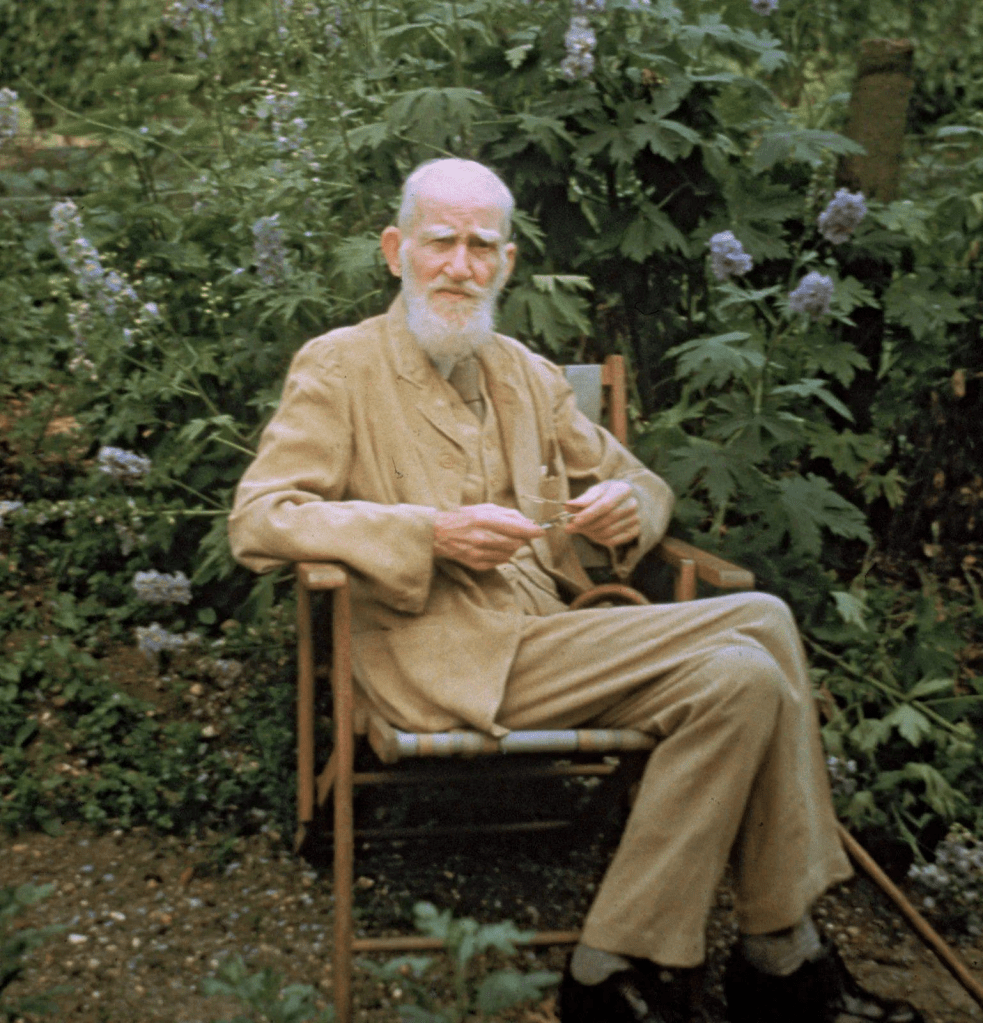
“His main purpose as a dramatist was to shock people out of conventional, hidebound ways of thinking. His view of his work was reflected in the title of his collection Plays: Pleasant and Unpleasant, published in 1898. Mrs. Warren’s Profession, which was not produced until 1902 because of censorship, was included in this collection. Shaw labeled such plays as unpleasant because “their dramatic power is used to force the spectator to face unpleasant facts.””
“And yet, he was devoted to one of the cruelest figures in the bloody annals of tyranny, and he was a willing dupe of the propaganda that projected the Soviet Union as a workers’ paradise. The great skeptic allowed all his skepticism to melt away when he looked at the picture of Stalin he kept by his mantelpiece. His support was unwavering. Neither the Great Purge nor the Ukrainian famine, nor even the pact between Stalin and Hitler, seem to have troubled his faith in the genius and historic rectitude of the Soviet dictator. To understand this contradiction, we have to remember the power of wish fulfillment and the way Russia became for many Westerners not a place but an idea, not a mere reality but a fantasy.”https://www.nytimes.com/2017/09/11/opinion/why-george-bernard-shaw-had-a-crush-on-stalin.html
I’m not going to delve into any psychological explanations. Read the article if you need some.
The point I’m trying to make here is about the nature of truth. According to Fintan O’Toole, Shaw – and others – were/are disappointed with “the messiness and inefficiency of democracy”. Which disappointment drives them to “fantasize about Russia as the vigorous counterweight to a supposedly decadent West.”
And here we are. Again, as already noticed by Marx. At a cross-roads, of sorts. Russia is – continues to be, at least for now – a ‘vigorous counterweight to the West’. The West is, undoubtedly, ‘decadent’. In the sense that it no longer ‘works’ as it used to. Both propositions are ‘true’. Simultaneously. The problem being that very few people accept their simultaneity…
As a ‘survivor’ – I’d spend the first 28 years of my life under communist rule – I’m fully aware of the fact that ‘Russia’ is far worse than any democratic regime. As an European, I’m fully aware that things could be better. That the ‘West’ no longer “works as it used to”. As a relatively well traveled individual, I’m fully aware that the ‘Western ways’ have indeed led us to where we are now. In a far better position than the rest of the people living on this planet. Owing a lot to the rest of the planet, indeed.
Same thing with ‘truth’. Oscar Hoffman, a Romanian Professor of Sociology, kept telling us, his students, that ‘in order to be true, a proposition needs to be both logically correct and to make sense. Epistemologically speaking. I’ve recently realized, see ‘alternative facts’, that Hoffman’s words were ‘right’ but incomplete. In order to be true, a proposition needs to be logically correct, epistemologically sound AND accepted as such by those who experience the facts described by the proposition.
Otherwise, that proposition is useless. Truth is useless if divided by zero. Accepted, in full, by nobody. Those ‘caught in the experiment’ will continue to ‘enjoy’ the consequences. Defending their respective side of ‘the truth’…
“I’m going to die” and “I’m going to live” are ‘half-truths’. Glass half-full and/or half-empty is another.
Each of the above are true. Technically speaking. But also incomplete. Hence “half”-true. True, as in factual, but only half-true because each of the above are ‘incomplete’. Waiting!
‘I’m going to die’ makes absolutely no sense. Of course ‘I’m going to die’… Every individual ever born was meant to die from the first moment of their lives! ‘I’m going to live’ also makes very little sense. For as long as anybody is able to mutter a few words, that individual is going to live for a while. For a few seconds, at least…
Same thing with the glass. It being half-full or half-empty depends on the evaluation made by an interested party. Interested enough to make the evaluation…






 nicichiarasa