Adapt to survive’.

‘Intelligent design’ didn’t make much sense. For me. Until now!

Trying to make sense of what’s going on, I’ve suddenly understood how useful it is. The concept!
How many things can be explained using the ‘intelligent design’ paradigm…

January 14, 2026.
NASA is cutting short, for medical reasons, a scientific mission. And brings back 4 astronauts from the International Space Station.
Meaning that NASA, a human ‘agency’, is able to fly people up and down into the sky. At will. And that it cares, for whatever reason, about the well being of those involved.
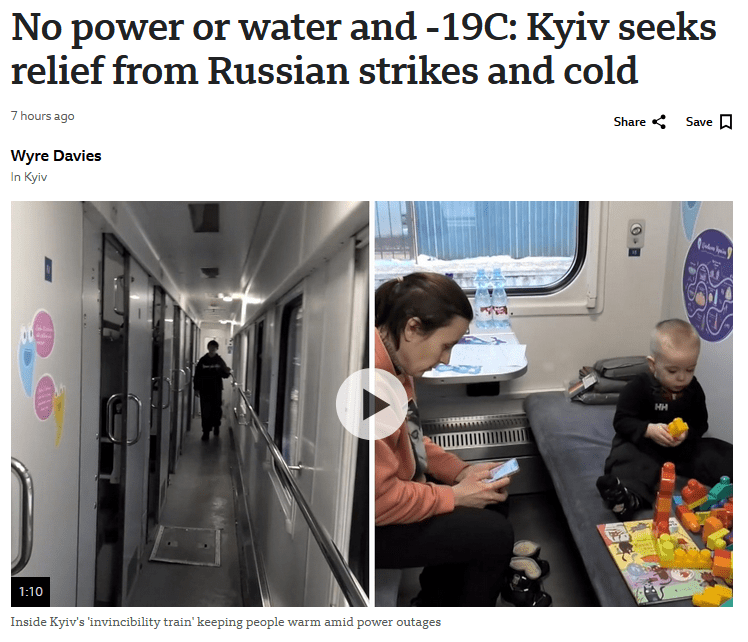
Meanwhile, in both Bucharest and Kyiv people have to make do without enough heat. In the middle of winter.
Why?

Can any of this be explained without making use of ‘intelligent design’?

But wait! It gets even better…
OK, NASA was well designed in the first place. Operates in a civilized country and is manned by some of the most capable inhabitants of that country.
People in Kyiv are suffering the consequences of a ‘well designed’ conflict.
People in Bucharest experiment the consequences of their own short-sightedness. For 35 years the centralized heating system has been neglected. Underfunded and ineptly maintained. A patent lack of ‘intelligent design’, right?

All these three examples, as well as many others, fit perfectly.
Things too complicated to happen without outside intervention.
Things so different from what is considered to be ‘normal’ that a ‘deus in machina’ is needed as the only possible explanation.

Yet, as I already promised, things go even ‘deeper’.
As you might already know, there are some people who dislike the European Union. And who claim that nothing good comes from ‘Brussels’. That the Europeans would be far happier ‘on their own’, without the ‘obtrusive interventions’ coming from the ‘Commission’.
In this context, it is worth mentioning the fact that, for example, “80% of the apartments situated in Sectorul 3 (one of the 6 boroughs of Bucharest) have been thermally rehabilitated, most of the funds being grants from the EU”

Intelligent design, eh… Convincing people they will fare better outside the EU, when the EU had paid to make their lives more bearable….

And the Lord God said, Behold, the man is become as one of us,
to know good and evil: and now, lest he put forth his hand,
and take also of the tree of life, and eat, and live for ever:
Therefore the Lord God sent him forth from the garden of Eden,
to till the ground from whence he was taken.

“They’re extremely simple and accessible objects, which is not always the case with math research,” Schwartz said. “It’s the kind of thing that you could explain … to an eight-year-old.”

This doesn’t make much sense, does it?
Driving ‘man’ “forth from the garden of Eden”, that is… The Mobius band, as stated above, is a simple thing!

After all, knowing good and evil is a natural thing. For humans… ‘Man’ doesn’t need to ‘raise a hand and eat some fruit’… Living among like-minded peers is enough. As long as they talk to each other, of course.
As for ‘living for ever’… that’s impossible. Not only for ‘men’ but also for gods. So many of them are nothing more than memories… like ‘ordinary’ deceased people, right?

So.
Somebody mentioned it in one of the most interesting books known to ‘man’. Not only interesting but also extremely consequential.
Then it must mean something. Despite not making much sense, on the face of it…

What if we look at the whole thing as a metaphor?
As the story of how ‘man’ has become a conscious human being? Instead of a mere historical rendition…

‘But I was under the impression that all cosmogonies were exactly that. Stories meant to impart sense to the Universe. To make it acceptable to the conscious ‘man’…’

Indeed. That’s exactly what cosmogonies do. Did…
Only calling them cosmogonies shreds the magic. To use another metaphor, using the wrong name transforms a swan into a lame duck.

OK, the Bible is a cosmogony. One of many.
But there are many ways to read it.
From the inside, as a ‘bible’. And from the outside. As a cosmogony…

Which brings us to the point.
Science – cold, rational observation performed by conscious agents – can be made only from the ‘outside’. Any personal involvement of the observing agent, any feelings towards the observed subject, will only add layers of bias on top of the ‘desired’ knowledge.

Ouch?!?

How can a ‘rational conscious agent’ observe the world they live in as if they were on the outside?!?
Not only ‘banished outside’ but also made ‘to till the ground from whence he was taken’? …

No hard feelings allowed!
No feelings at all, actually…

WHAT HAPPENS WHEN YOU PUT GOOD PEOPLE IN AN EVIL PLACE?
DOES HUMANITY WIN OVER EVIL, OR DOES EVIL TRIUMPH?
THESE ARE SOME OF THE QUESTIONS WE POSED IN THIS DRAMATIC SIMULATION
OF PRISON LIFE CONDUCTED IN 1971 AT STANFORD UNIVERSITY.

“How we went about testing these questions and what we found may astound you. Our planned two-week investigation into the psychology of prison life had to be ended after only six days because of what the situation was doing to the college students who participated. In only a few days, our guards became sadistic and our prisoners became depressed and showed signs of extreme stress. Please read the story of what happened and what it tells us about the nature of human nature.”

Professor Philip G. Zimbardo

1971

A group of California students was divided in two. Half were told to act as prison guards and the other half to obey the first. The experiment was meant to last for two weeks but was cut short after six days.
“I ended the study prematurely for two reasons. First, we had learned through videotapes that the guards were escalating their abuse of prisoners in the middle of the night when they thought no researchers were watching and the experiment was “off.” Their boredom had driven them to ever more pornographic and degrading abuse of the prisoners.” Professor Philip G. Zimbardo.

2025-2026

People living in the US have been told that some of them don’t belong there. That if and when those who do not will have been removed, the rest will resume their previously ‘great’ lives.


Rob Peter to Pay Paul

Riding and driving.
Similar and, yet, so different.

Riding used to be about transporting yourself. On the back of a horse, mostly. Now using a bike, but the principle is the same.
Driving used to be about transporting cargo. Or other people…

The key words here being “used to”.
Nowadays most driving and riding is about transporting single persons. Usually for ‘work related goals’. That despite the fact that almost all merchandise ‘spends time’ inside ‘wheeled transportation devices’.

On the other hand, both driving and riding are about balancing goal, means and sheer luck.

Goals may not be always chosen by the drivers. Yet getting there is determined by the ability of the drivers to ‘do their thing’.
Furthermore, during the voyage, the drivers have also to keep an eye open for the ‘well being’ of their ride. You know… make sure the horses get enough to drink, fill the tank from time to time, checking the lube oil… things like that.
Finally, but not least importantly, the drivers must cope with everything life throws at them.

Which brings us to the point of the day.
Most people don’t get to decide much. Not as autonomously as they do it ‘behind the wheel’. A vast majority of the jobs open for the ‘average guys’ are highly ‘procedured’. Most people have to follow strict sets of instructions, after they reach their working places. Then make ends meet in rather ‘meager economic conditions’ after they get back home. Driving back and forth between those two places define the freest periods of their days.

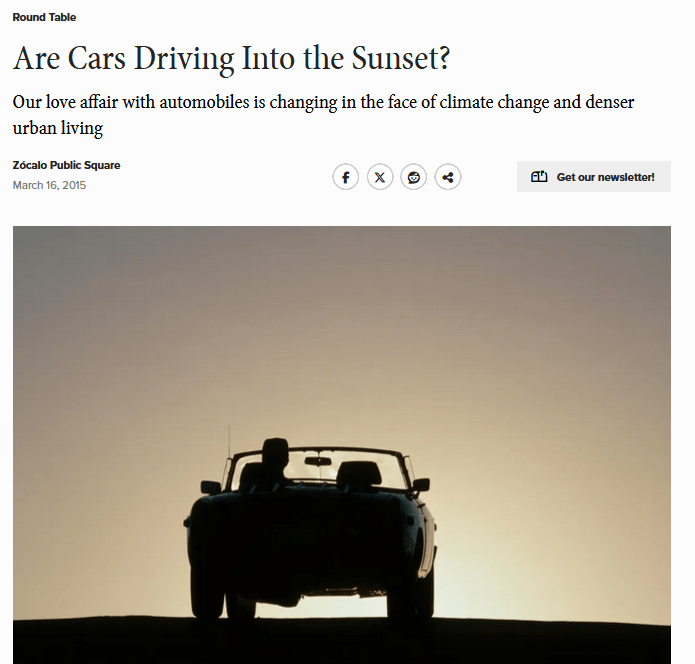
The way things are going now, global warming and self-driving cars, we must find fresh ways to let our autonomy roam free.

Some forty odd years ago, a co-worker asked me: ‘What do you think about the UFO-s?’.

Romania, while Ceausescu was still running the show.
People had time on their hands to consider subjects like that. Unidentified Flying Objects. No TV to watch. Only two hours each day. Most of it repeating what Ceausescu had just said. No vacation to plan. People didn’t have enough money. Nor were allowed to go abroad. No books worth reading. No new books worth to be read, anyway… So people spent their time discussing ‘safe’ subjects.

‘Well, I’m not sure they actually exist. I haven’t seen one myself.
But if they do… that might mean we’re under surveillance.
Not that different from what we do in the jungle. Study the chimpanzee. Without interfering in their evolution!’

?!?

‘Do you feel exploited?’

‘No…’

‘Well… We, humans have been exploiting those who were weaker than us. Remember what happened when the Spaniards had discovered America. Or when the English had managed to conquer India. Control China. When the Americans ‘opened up’ Japan…
Now let’s accept the UFO’s as being real.
They must be controlled by very powerful agents. The kind of people which could, if they so wished, very easily control the entire Earth. Transform it into a colony. Which didn’t happen.
Which means they’re not like us. Like we used to be, anyway.
And let me go further.
If they do exist, and do have a certain technological prowess, they may behave in two ways. Peacefully or aggressively.
We’ve already established that they seem to be peaceful. And probably have been so for quite a while.
Then they’re no longer able to fight. Ready to risk their lives in battle.
Hence they’ll be using their technological prowess to protect themselves. Against ‘fresh’, immature, civilizations. Whose members continue to believe it’s worthwhile to risk their lives if the reward is big enough. Who are still ‘ready to fight’.
According to this scenario, the UFO-s are here to make sure we don’t get out in the space until we learn to behave.

A couple of years ago, I stumbled upon Liu Cixin’s Trilogy. In which he exposes the ‘Dark Forrest Hypothesis’. A couple of weeks ago, I came across the final book of the trilogy, the Death’s End.
Reading it, I remembered the discussion I had with my co-worker.

So, which will it be?
And, even more importantly, will we learn from our own mistakes?

Civilizations rarely collapse in moments of chaos.
More often, they decay through a sequence of decisions
designed to postpone accountability.
By the time destruction arrives, it feels abrupt
only to those who refused to look directly
at what was already happening.

Genny Harrison

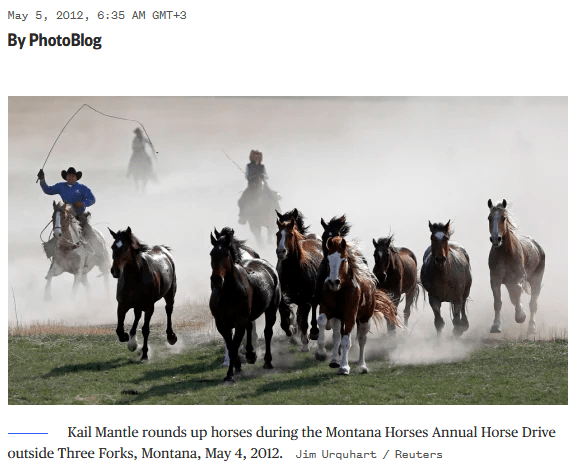
At some point, there were way more driven/ridden horses than wild ones.
Currently, there are substantial numbers of cows, chicken, pigs and so on raised by humans and almost no wild brethren of the above mentioned animals. Same with quite a number of plants.

Are we even aware of the whole situation?

Why?
Because so few of us are still needed when it comes to ‘raising food’?

I’m afraid we’re very soon going to face the consequences.
Directly!

Direction, protection and order.
These are what a leader is supposed to provide.
According to the current lore, that is.

Until the start of the previous century, drivers used to drive horses. Then cars.
Since computers have come of age, drivers enable the OS – operating system – to run the hardware. To drive the printer, for example.
Which makes sense. A driver – a person or a computer script – makes the link between the problem which has to be solved and the means which will be used to accomplish the task.

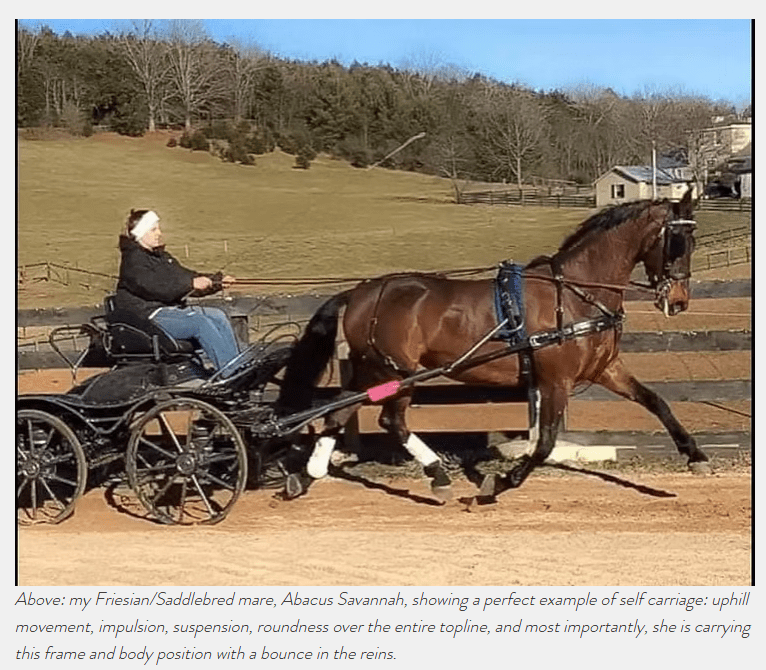
Furthermore, a driver – regardless of its nature – must act inside a certain ‘perimeter’. Certain things must be balanced in order for the drivers to be able to accomplish their tasks. For instance, horses – or donkeys, oxen or even camels – must be harnessed to the carriage. But not zebras! Despite zebras being very much similar to horses…
Same thing for computers. No matter how well written, no driver will ever be able to cajole a printer to perform the task fulfilled by a mouse.

Comparing human and computer drivers, they share one thing. And are set apart by another.
Human drivers must assume the task, despite the fact that they are never sure – not even after reaching the destination – about the final consequences of what they’re doing. Just as the computer drivers. Only the computer drivers don’t care. ‘Cause they cannot care…

Then how come human drivers … ?!?
Human drivers, like their computer counterparts, have their ‘orders’. The direction of the journey, the rules they have to follow… and they are even shielded from some of the consequences.
How many of you would start a journey into a completely anarchic ‘unknown’, just for the fun of it? Into a real life completely anarchic unknown, not into a computer generated virtual reality experience pretending to give the impression…

For the fun of it, into a place you know nothing about but the fact that there’s no established rule you can count on…. and without any form, whatsoever, of insurance.

I encourage you to click the picture and to read the post. Highly illustrative for the points I was trying to make. Direction, protection and order… making possible the interaction.
My gratitude goes to Jess3152.

Nothing which is impossible may ever happen.’
Until it does…

Life happens. Because it is, after all, possible.
In certain conditions, true.

Life, individually speaking, is limited. Individual organisms live for a while. Then go away.
Species adapt themselves. Or disappear…
Evolution! That’s how we, conscious observers, call this process.
Life itself, the entire phenomenon, may happen – as I’ve already mentioned, I know – only ‘inside’ a certain ‘environmental bracket’. The kind of life we’re familiar with, anyway.

The ‘impossible’ I’ve started with is a very interesting thing.
First of all, it’s – again – us who have come up with the notion. Until we’ve started to observe, things happened. Or not… But there was nobody to tell whether something was possible. Or impossible…
Things which could happen, did – if the conditions were right for long enough, while things which could not – at least not in the then present circumstances – simply didn’t happen. Without anybody noticing any of those things.
Now, that we’ve started to observe – in a conscious, as in ‘what’s in it for us’, manner – we’ve become very much interested in whether something may happen or not. Whether something good might be ‘enticed’ to happen and whether something bad might be prevented from happening.

I need to go back to ‘life’ for a moment.
I’ve already mentioned that individual life is temporary. Finite. I’ve also mentioned that species have to adapt to changes in order to survive. And that life itself, as we know it, can happen only inside a certain environmental bracket.
The point being that individual organisms which happen to be less than perfect – less than perfectly attuned to their environment – may still survive. At least for a while.
Life, as a phenomenon and strictly inside that environmental bracket, has somehow stretched the very notion of possible/impossible. The limits of ‘impossible’ are no longer clear cut. Somehow hazy. As in ‘possible’ but not for very long…
‘In constant balance’.

And we’ve arrived to the next level.
Society. Conscious people in congress.
Just as life has stretched the limits of ‘possible/impossible’, society – us, individual people working in concert – has stretched those limits even further.

The most blatant example which crosses my mind being the academic who had decreed that ‘heavier than air flying machines are impossible’. Lord Kelvin, 1895.
So. What had happened in the short 8 years passed between Kelvin uttering his now infamous words and the Wright brothers taking off? Had physics changed? Had our understanding of physics changed?
None of the above. We, as in ‘we humans’, made it possible. Found ways.
Just as life found a way to transform inanimate matter into living organisms – on a temporary basis – people working in concert have found ways to accomplish feats which seemed impossible. To their contemporaries. And, sometimes, even to those who live in the distant future of those achievements. We still have not figured out, in detail, how the Egyptian pyramids had been built…

I’ve been speaking of ‘individual’ achievements.
Flying machines as well as pyramids are, in a sense, ‘individual’. Somebody had an idea and, based on previous human achievements and with the help of others, have put their ideas into practice.
‘Individual’ not strictly in the sense that they have been achieved by an individual but in the sense that they have been the result of a deliberately targeted effort.

Other achievements had been ‘natural’. Or social?
In the sense that they had come around without anybody coordinating the effort. As in the case of the individual ones.
Learning to speak. To write. Yes, we do know that Cyril and Methodius were the guys responsible for the Russian alphabet. And that Mesrop Mashtots had created the Armenian Script. Only these efforts had been based on previous knowledge. Humankind had already been writing for at least 3000 years. Using different manners of notation but the principle was already there. And the achievement was ‘folkloric’ in nature. No identifiable author. The feat belonged to the entire community.

Another social/natural achievement is morals. Our habit of doing ‘the right thing’.
Which is different from what is being known as ‘justice’. Formal law being upheld by the government. Which is, basically, a collection of individual achievements.
So, why do we – statistically speaking – behave in a moral manner?

Evolutionary speaking, simply because moral communities fare better than amoral ones. And even better than immoral ones.
Don’t believe me? You’re not convinced that immoral communities will, sooner rather than later, either change their ways or crumble under the weight of their undoings? You are still under the impression that immorality is here to stay? Based on what you witness on a daily basis?
Do you remember that “individual organisms which happen to be less than perfect – less than perfectly attuned to their environment – may still survive. At least for a while”? Same thing goes for communities/societies. Communism, amoral by definition and profoundly immoral in practice, did survive for quite a while.

Then why do we stray from the ‘straight and narrow’?
Why do so many of us succumb to temptation?
I’m going to save that for the next post. But I’ll add this here.
Each digression is individual in nature. The consequence of ‘a deliberately targeted effort’. An individual human being comes up with a new idea. Good or bad. Is followed, if at all, by a group. Which group will survive – and add the ‘new’ idea to what is called ‘tradition’ if, and only if, that ‘new’ idea is beneficial for its survival. If that new idea works in the particular set of circumstances where that group of people live. Only after that had happened, after the group had survived for long enough and the new idea had become traditional, that particular, individual, achievement becomes a social one. The original author of the idea is forgotten and the engendered habit becomes natural.


Communism failed. Like all other totalitarian regimes.
Some people, most living in countries where it has never been experimented, consider communism to be an interesting idea. They also believe that what took place in the communist lager was not the real deal. Not what Marx had in mind!

First things first.
According to Marx’s Communist Manifesto, communism – as in the communist regime – was going to be instated by “the most advanced elements of the working class”. The communist activists… And the regime was going to be imposed by revolutionary means.
For a very simple reason…

The whole rationale of communism was that everything bad came from private property.
Abolish private property and everything will be just fine.
Yeah but… who in their right minds would accept that? Those who have only their chains to lose, right, but what about the rest? Hence the need for revolution! Which revolution was to install the dictatorship of the proletariat…

Forget about the proletariat and focus on the idea of dictatorship. Top down decision making, at its worse.
Remember the ‘who in their right minds would accept anything like that’ part…

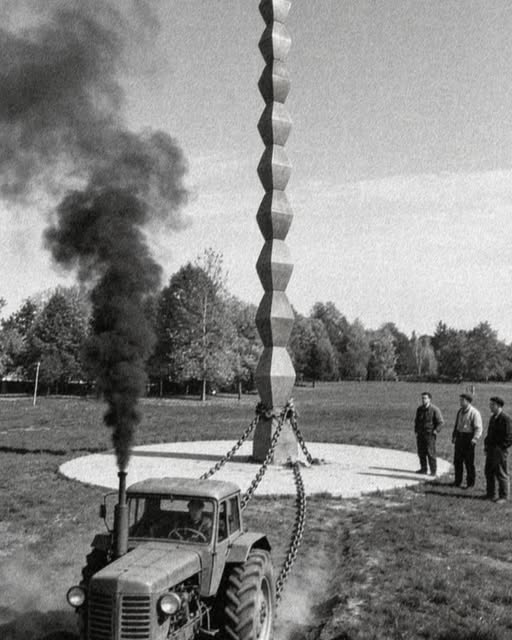
You might have already recognized Brancusi’s Endless Column. World famous sculpture built in Targu Jiu, Romania. Considered to be ‘decadent’ by a local communist activist in the 1950’s. So, being ‘decadent’, it had to be removed. The recovered iron was going to be melt and used in the industry.

Fortunately, the activist running the show was an idiot.
A smarter guy would have attached those chains higher. Far higher. The results may had been different.
The rig pictured above didn’t accomplish anything. The chains broke and the column didn’t budge.

The whole thing is a perfect example.
For what happens when an ignorant nincompoop tries to remodel the reality.
Nothing if the reality is lucky.
Nothing good in all other instances…


Coada la butelii…

Cei care locuiau la bloc aveau câteva dezavantaje. Mă refer la ultimii ani de comunism.
Iarna era frig. Dacă se oprea curentul, ultimele etaje rămâneau și fără apă. Iar curentul se oprea des. Mai ales iarna.
Și un mare avantaj. Cam toate blocurile aveau gaze! Nu trebuia să stai la coadă, cu orele, ca să poți fierbe o ciorbă. Dacă aveai din ce, dar asta era altă problemă…

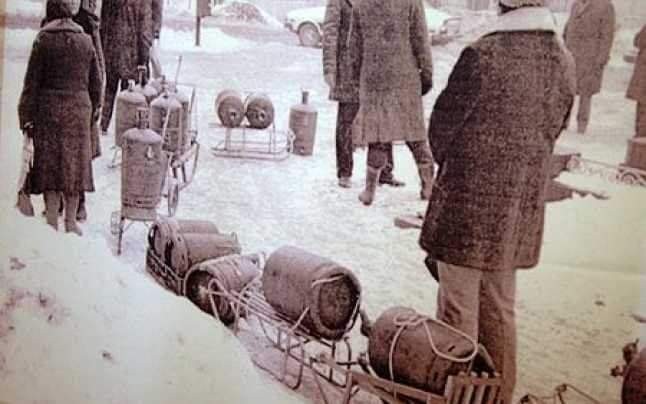
Am văzut poza asta pe FB.
Cei care țin minte epoca, vor remarca două lucruri. Oamenii din poză sunt bine îmbrăcați. Și era extrem de frig afară. Pe jos era un strat de gheață.

De ce ar sta niște ‘bine îmbrăcați’ la coadă? Pe ger?!?

Simplu. Pentru că asta era singura cale pentru a obține o butelie plină. Așteptai, cu orele, în ziua din săptămână când veneau buteliile la centrul din apropiere. Dacă veneau… Dar nu aveai de unde ști, așa că te puneai la coadă de dimineață.

Și încă o chestie. Fiecare dintre cei din poză aveau mai multe butelii în grijă. Una a lor și celelalte ale vecinilor. Se schimbau unul pe altul la coadă.

Ce făceai dacă nu veneau buteliile?
Depinde. Dacă mai aveai una plină acasă sau nu… Te duceai, a doua zi, la alt centru. La alt centru de distribuție a buteliilor. Așa se chemau. Care era mai departe. Și mai aglomerat. Pentru că nu erai singurul. Singurul care stătuse ieri degeaba la coadă…
Dacă mai aveai o butelie acasă, te riscai până săptămâna viitoare. O butelie ținea, pentru o familie normală, cam trei săptămâni.

De ce nu-și cumpărau oamenii mai multe butelii?
Pentru nu se găseau. Trebuia să faci cerere. La locul de muncă. Care cerere era aprobată în funcție de posibilități. Adică daca erau butelii de dat…

Și atunci? De unde aveau oamenii butelii? Unii mai mult de una?!?

Până prin 1975, comunismul nu a fost chiar atât de negru. Din punct de vedere economic… Din 1955 până în 1972 a fost din ce în ce mai bine. Mult mai prost decât în restul Europei dar din ce în ce mai bine. De la un an la altul. Din 1972 până în 1975 lucrurile au fost staționare. Iar din 1975 a fost din ce în ce mai prost… Adică de la un an la altul.
Până în 1975, cereai butelie și căpătai. Făceai un copil, îți dădeau voie să mai cumperi una. După care s-a rupt filmul.
Doar că din ce în ce mai mulți oameni au început să se mute la bloc. Și nu mai aveau ce să facă cu buteliile… Au început să le ducă rudelor de la țară. Unde chiar era nevoie de ele.

Apoi au început să fie vândute și pe piața neagră.
Acuma țineți-vă bine pe scaun. Între 1985 și 1989, în București, o butelie din aia se vindea cu 3000 de lei.
În condițiile în care 3000 de lei pe lună era un salariu mare…