Let’s face it! Decision making is a process steeped in ideology.
We see things through ideologically tinted glasses. We use ideological shortcuts when evaluating situations. And we do all this ‘under the radar’.
Most of us are not even aware of all this! Most of us don’t know that our decision making is so heavily influenced by the cultural programming we have been subjected to during our entire life. Most of us…
This being the explanation for what’s going on. The rest, the savvy, use their knowledge on the matter to influence our thinking. Our decision making. To manipulate the masses! Which manipulatory process is made easier by the fact that we’ve already been taught to ‘do our own research’. Basically, to adopt our own ideology.
‘Do your own research’, an ideology in its own right, is a double edged sword. A double-pointed dagger, to be more precise… Very efficient when you know what you’re doing and almost sure to mislead an unsuspecting novice…
A professional decider knows to disregard their feelings when making a call. Each of us is a professional decider when toiling our respective fields of expertise. This being the reason for which we’re good at what we’re doing… For which we feel good about ourselves.
For which we used to feel good about ourselves…
To cut a long story short, until not so long ago, we used to feel good. Things seemed to be going into the right direction. No longer. Many of us, a majority according to what’s going on, are no longer satisfied. With “where the world is headed”.
I used ‘headed’ on purpose. ‘Heading’ would mean that the world is still searching its destination while ‘headed’ accurately describes the predominant feeling. That ‘somebody’ leads us towards ‘disaster’. That ‘we’ are no longer in charge.
Hence the need to ‘do our own research’. To stop believing what ‘we are told’ and to demand ‘change’. What ‘change’?!? Anything but what we already have!
How wise is this? How wise is for us to allow our dissatisfaction to take over? How wise is for our handlers to drive us towards uncharted waters?
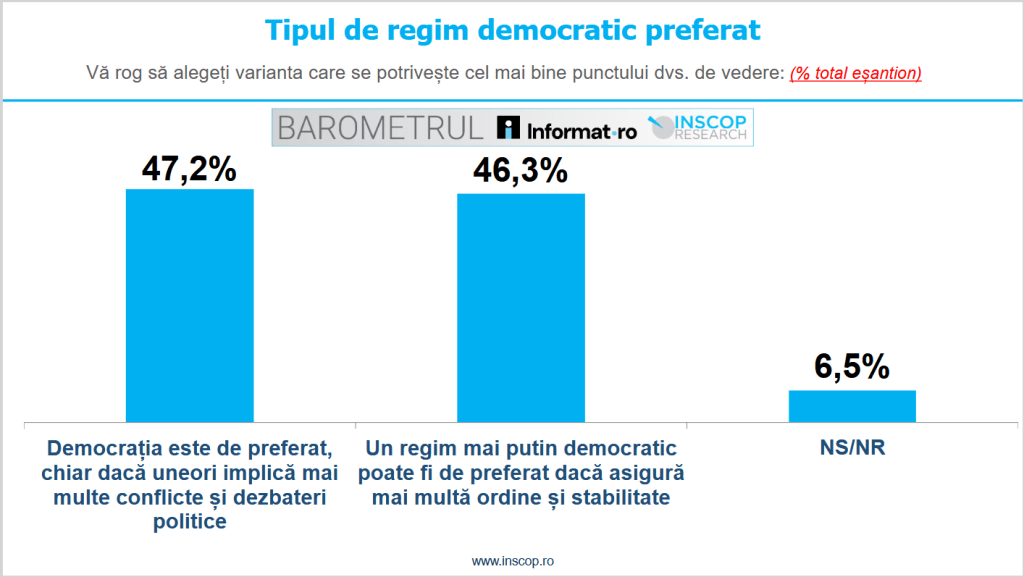
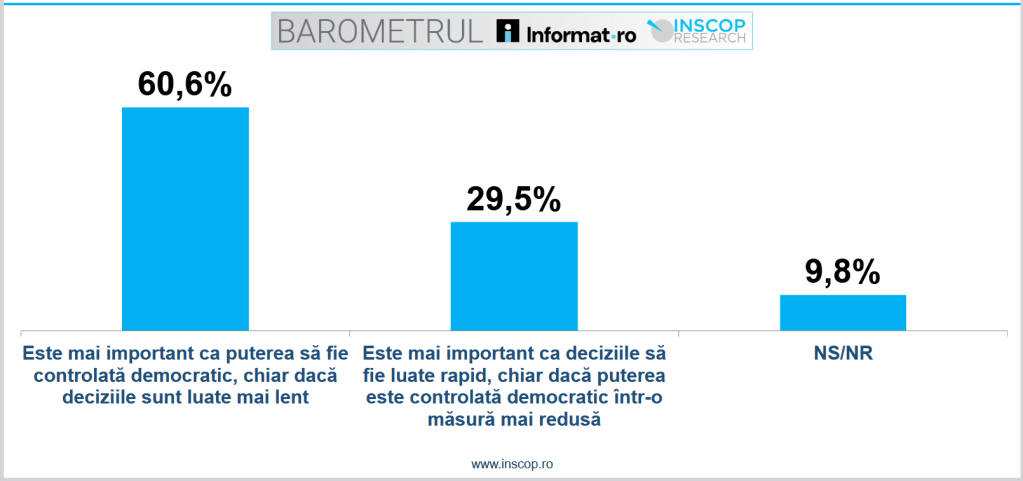
A perfunctory glance down the history alley is enough to convince us. Democratic decision making is slower than any of the alternatives. Yet, over the longer time frame, it begets better results.
Democratically run systems are more likely to survive, as long as they manage to preserve their democratic nature. While autocracies collapse, under their own weight, sooner rather than later. Because of their autarchic nature. Those running an autocratic regime – a small group to start with and growing smaller and smaller as time passes because that’s how autocracies work – don’t understand the observer effect.
But what is this famous ‘democratic nature’?
Each democratic ‘event’ has three ‘stages’. Like all other decision making processes. Information gathering, making the call, assessing the outcome.
Electoral campaign. ‘Political scientists’ use the above mentioned term to designate the democratic ‘fact finding phase’. Leaving aside the fact that people – potential voters – actually live. In the very circumstances they are called to vote about. To evaluate at the ballot box. Which highlights for us to the first ‘chocking point’.
Individual voters have a limited experience. Each of us gets in touch with a limited portion of the reality, remembers only some of it and tries to figure out only what each of us is interested in. If actual voting would take place in ‘absolute darkness’ – each of us voting based exclusively on our own, individual, experience – democracy would be demoted to ‘mob rule’. The largest group of people would run the show according to its own, specific, interest. While all the rest would be sidestepped. Not a sustainable way of running business. Specially when the business at hand is of a social nature. Hence democracy depends upon a continuous, honest and respectful exchange of information between all the members of a democratic society. People need to know what their neighbors feel about things before voting one way or another. Furthermore, and even more important, people need to care about what other people experience in their daily lives. ‘Political scientists’ – well, some of them – are convinced that ‘efficient campaigning’ is enough to do the trick. To convince enough voters to do as they are told. This conviction has transformed democracy into a war of words. Into a conflict fought inside a space defined by language. Fighting that war brought us where we are now. For the better and the worse of it.
‘It doesn’t matter what people vote. The important thing is that votes are counted by the right people.’ I rephrased here a quote attributed to Stalin. The communist dictator. Si non e vero, e ben trovato. The ‘original attribution’, “It is enough that the people know there was an election. The people who cast the votes decide nothing. The people who count the votes decide everything.” aptly describe Stalin’s attitude towards his subjects. The attitude demonstrated by the consequences produced by his actions. By his actualized decisions. His public positions on the matter? Read one of his discourses… He was lying through his teeth? Said one thing and done the very opposite? Judging by the very consequences of his reign? That’s what I meant by saying ‘the autocrats don’t care about/understand the observer effect’. Enough about vote rigging. The second ‘chocking point’.
Casting the ballots – and counting them, one way or the other – takes us only this far. Where we are ‘now’. ‘Going forward’ we also need to ‘evaluate’. You might think that evaluation is an integral part of the first phase. It is. The evaluation of the consequences. Before a new round of elections we need indeed to evaluate what the confirmed candidates had done. I’m talking about another evaluation. Very soon after the votes had been counted, the confirmed candidates ‘loose’ their masks. Relax their pretenses and start acting their truer selves. That being the moment when we need to evaluate our decisions. Our choices. What we have voted for…
Very soon after they get elected, the vast majority of the confirmed candidates start blaming their predecessors. ‘Things would be far better if the guy before me would had done that. Or refrained from doing the other that’. ‘Yes, I know. That’s why I voted for you! But you’re not delivering. Everything you promised…’ This being the moment when we, each of us, need to evaluate our own actions. Our own decisions!
Yes, ‘they’ have their share of guilt. ‘Had they done everything they promised…’ But first we need to figure out how, and why, WE have fallen for their ‘lies’. Cause, after all, we are the ones who have put our faith in their promises! And we are the ones experimenting the consequences.
Epigenetics refers to how your behaviors and environment can cause changes that affect the way your genes work. Unlike genetic changes (mutations), epigenetic changes are reversible and do not change the sequence of DNA bases, but they can change how your body reads a DNA sequence. CDC.gov, 31 Jan 2025
So. XII-th century alchemy was OK. And, eventually, had given birth to science. All the while, starting with the XV-th century, practicing witchcraft was punished by burning the culprit at the stake. In the same cultural space! Christian Europe…
Both alchemists and inquisitors read the same Bible. Followed the same precepts. Both alchemists and witches were involved in the same business. Performed, or tried to, the same kind of feats. Alchemists tried to out-rightly transform the reality, according to their particular wishes, while the witches were accused of achieving ‘unnatural goals’. Saving someone’s life – or that of some animal – who should have ‘normally’ died. Who would have ‘otherwise’ died… The interesting aspect of this whole thing is this: Alchemy was considered to be OK. Alchemists believed – and the general public obliged – that everything which existed came to be by design. Was wished into being by God. As a consequence of this belief, the alchemists – and the general public – were convinced that by studying nature they would, eventually, learn something about the will of God. And achieve some results along the way… Simultaneously, since the feats accomplished by the witches were ‘against the nature’, they must had been performed with the help of the devil. Hence had to be punished.
What about the miracles performed by Jesus?!? And promised by Him to all those who followed his teachings? In earnest… “Truly I tell you, if you have faith as small as a mustard seed, you can say to this mountain, ‘Move from here to there,’ and it will move. Nothing will be impossible for you.” Matthew, 17:20
What drove the XV-th century witch-hunters to the conclusion that miracles could be performed only with the help of the Devil? That God was no longer willing to assist?
‘Reality’ – as in ‘whatever happened on the face of the Earth’ – was considered to be the actualization of the Will of God, remember? Such a tragedy, “perhaps 50% of Europe’s 14th century population” disappearing in such horrible way, was bound to be interpreted as a punishment. Applied by God to a sinful population. And since God was perceived to be in a vengeful disposition, any ‘help’ could have come only from the ‘competition’. From the ‘sneaky’ one.
Farfetched? Believers don’t think like that? Don’t blame God for the bad things happening to Man?
Yet another interpretation? Of the same cultural tradition?
Indeed, this my very point. Just as individual living organisms somehow ‘tweak’ the information written in their DNA to increase their chances of survival in the specific conditions present in their environment, we – conscious human beings – have the opportunity, read ‘liberty’, to interpret the cultural traditions passed on to us by our ancestors. We do that ‘under influence’. Pressured by everything going on around us. Are we truly free when doing this? Does our conscience work as intended in such conditions? When in ‘dire straits’?
I posited in my previous posts that: a. Language is inherent to life. Since there can be no life unless there is a functional coordination between the inner reality of the living organism and the environment which constitutes the ‘outer’ reality. b. Language evolves. According to what needs to be coordinated. And, since the advent of man, according to their ‘wishes’.
Fast forward to the present. To the world of alternative facts…
Delanies Lawes, the author of a very interesting paper, “The Theater of the Absurd”, gives us a heads up. ‘Language is unreliable, “one can easily say one thing and do the opposite” ‘. She ends her study by pointing out “Essentially, the absurd dramatists redefined the art form and created a space in which succeeding movements could flourish.”
Reading forward, I came across an explanation by Kathrin Busch. Clarifying – for us, ordinary people – what Walter Benjamin meant when making the difference between ‘through language’ and ‘in language’. “he also draws a clear distinction between expression through language and expression within language. A specific content, i.e. what is meant by the word, is communicated through language – as befits its instrumental use. Items of information and semantic content are conveyed through the language as it is defined instrumentally. In contrast, something else again is communicated in language: a very particular type of meaning emerges in the expression or in the manner of speaking and this meaning in no way has to match the content of what is being said. Benjamin now imposes the mode of speaking, the form of language, on the concept of language in general, thereby implying that, for him, the form of articulation is more fundamental for language than the communicable nature of semantic contents or their referentiality. Benjamin’s argument thus goes considerably further than simply stating that the meaning of what is being said is inseparable from the way of saying it, that the content of a speech act is intrinsically bound up with its form. Rather, the more radical argument that the form of speech can produce a completely different, independent and above all latent meaning must be made…” “However, Benjamin doesn’t just mean that, within a language – in poetic usage for example – the “how” of the act of saying is relevant, but that every language is itself such a form of saying. Language is precisely the formative principle of expression in general. Here, Benjamin picks up on Humboldt’s concept of the inner form of language. According to this, a specific form of saying is expressed in a particular language and, at the same time, a particular cultural significance is generated through this linguistic form.”
Conventional language has failed man… one can easily say one thing and do the opposite… Hence conventional language has failed man by not being rigid enough. By being a flexible enough ‘space’ where man might say one thing while doing the exact opposite… Well… not so fast! “Essentially, the absurd dramatists redefined the art form and created a space in which succeeding movements could flourish.” By using language in a specific manner, theirs, the absurd dramatists created, opened up, the space for was going to happen next…
Not that different from what Benjamin, and Humboldt, had to say about the matter. That by using language, people build culture. And civilization. Interact with their environment. Benjamin was also speaking about the “language of things“. Coordinate their actions. One way or the other. Act as a team or deceive their marks…
The point being that all these people say the same thing. Using different words and, maybe, even without realizing how close they fit together.
Language is far more than what we say. Far more than what we do…
Basically, language is the interface we use to interact with the rest. A tool. A tool which seems to have a mind of its own, but only because it is wielded simultaneously by all of us.
Trust, but verify! Russian proverb, “adopted as a signature phrase” by Ronald Reagan
“Suzanne Massie, an American scholar, met with Ronald Reagan many times between 1984 and 1987 while he was President of the United States.[1][2] She taught him the Russian proverbdoveryai, no proveryai (доверяй, но проверяй) meaning ‘trust, but verify’. She advised him that “The Russians like to talk in proverbs. It would be nice of you to know a few.”
I posited yesterday that “languaging is how things work in the living world”. That a constant flow of information is piece and parcel of any living organism. I will add today that the information flow mediating the life of those organisms has to be reliable. To be true. To its stated purpose.
That an organism needs a dependable flow of information in order to remain alive. In order to be able to perform the feats which differentiate a living organism from a clump of inanimate matter. Maintaining its structural integrity and a controlled exchange of specific substances between the inside of the organism and its environment.
Well, the same principle ‘animates’ the meta-organisms we call ‘human communities’. With a single, but very important, difference!
We lie! On purpose…
There are many living species which use deceit in their quest to make a living. Carnivorous plants which trap their prey. Animals which use camouflage to pretend various things. Even birds which emit false signals in order to fool other animals.
Yet we, humans, are mastering this on the rim of disaster! We have not only invented the concept of lying but also mastered it to perfection.
How much sense does it make and how wise is it to harness the power of AI to a chariot full of deceit?
And when are we going to cut the crap? To adapt our languaging to the new reality?
‘Faith in the photographic image’… really?!? OK, human language cannot be as precise as the kind of information flowing to keep our organisms alive. Human language has to be more flexible than that. For evolutionary reasons to be mentioned at a later date. But let’s be reasonable. And keep it from ‘jumping the shark’.
By transforming artifacts into objects of faith we actually let the ‘makers’ walk scot-free. Allow deceivers to shed all shrouds of responsibility… What happened to ‘do not make idols’? OK, I don’t believe in ‘God’ either but it would be wrong for us to discard time sanctioned wisdom in the process of setting ourselves free from organized religion.
‘Faith’ should be reserved for people, not for objects. Faith, the word, stretches only as far as we pull it. It’s up to us to do that sparingly! Human language is far laxer than the ‘natural’ one. Which makes it less reliable. It’s up to us to keep it dependable.
OK, so it did happen in front of you. But this doesn’t mean you necessarily have to claim any credit for it. Not even if you were the only one to notice… Or to understand what was going on!
Post hoc, ergo propter hoc is considered to be a fallacy. A logical fallacy based on a confusion. Correlation is not causation, right? Then why so many people continue to ‘indulge’ in this habit? Even after they’ve been ‘prompted’ about this…?
Evolutionary speaking, fallacies should not be able to survive, right?
But… but…?!?
OK, let me put it the other way around. Fallacies have already survived for long enough. For us to pay attention! Let me propose an explanation for their survival.
According to Gemini, the intelligence perusing the internet when we google something, fallacies survive simply because we’re comfortable using them.
‘We’re comfortable using them’?!? You’re not making much sense… ‘We’ consider them to be ‘wrong’ – as in “fallacious” – and you say “we’re comfortable using them”…
OK. Let me point your attention to the difference between we – as a collection of individuals happening to be in the same mess but fierce-fully guarding our individualitIES – and the collective WE. A group of people – a collective, a society or even the entire species – engaging in the same behavior. Knowingly, unknowingly and anywhere in between.
We’re made from the same ‘cloth’. Dust if you will… We ‘work’ according to the same ‘rules’. In the sense that we share 99.99% of our DNA. Or more… The fact that we’re so different, individually speaking, is the ‘strange’ thing. The marvelous thing! We shouldn’t be so cross when noticing how much we have in common…
The tendency to indulge in fallacies, even after understanding they are ‘wrong’. The tendency to appropriate credit when none is due to us…
You still expect me to keep my promise? An evolutionary explanation for why we keep indulging in fallacies? Come back tomorrow!
How many apples had fallen? Before one of us noticed?
I really don’t care whether the story is true or not. All I’m interested in is ‘why it took us so long’? After all, things had fallen towards the center of the Earth since always. Eratosthenes had already calculated the circumference of the obviously round Earth back in 240 BC. And “By the 1st century AD, the spherical model was widely accepted, and Ptolemy developed maps based on a globe with systems of longitude and latitude.” According to the currently famous internet, obviously …
The way I see it, the world was not ready for it. Before Newton. We didn’t have the ‘language’ in which to spell this new reality. And nobody really cared about the matter. Really invested into the matter, as opposed to interested about the subject…
But things change. 1492 Christopher Columbus discovered America. Trying to go to India but steering into the ‘wrong’ direction. Inaugurating the era of sailing into the unknown. 1524 The posthumous publication of Johannes Werner’s method of determining longitude and latitude by measuring the angular distance between the moon and other astronomical objects. The method was not usable at the time because the necessary data, ‘tables of ephemerides’ had not yet been published. 1543 Nicolaus Copernicus. a priest, published his famous book about how the planets circled the Earth. 1600 Giordano Bruno was burned at the stake for defending and promoting Copernicus’ ideas. The world was still not ready. 1595 – 1627 Johannes Keppler published a series of works detailing Copernicus’s heliocentric model of the Universe and elaborating mathematical tools for the job. Including a set of Ephemerides, in 1617. His work was met with mixed reactions, the opposition being mitigated by the fact that Keppler, a very religious person, never crossed any of the significant figures he came in contact with. 1687 Isaac Newton published his Principia Mathematica. Integrating and formalizing the work of many, Newton’s synthesis filled the ‘need to know’ of those concerned. While his theory was met with some philosophical opposition – Huygens and Leibniz, among others, on the practical side no one had raised any objections. Until Einstein, but that is another subject.
What happened?
People had been already sailing for some 2000 years. But until then, it used to be a ‘craft’. Something passed on from father to son and kept, more or less, into the family. The ‘Sea People’… Vasco da Gama, the first European to reach India by sailing around the Cape of Good Hope, 1498, was the last of the ‘craftsmen’ who ‘discovered’ places. By sailing there using ‘the good old, time sanctioned, manner’. Christopher Columbus, by sailing the other way around, was the first to transform this craft into an industry. He also started the process which transformed the whole world.
Sailing and trading on an industrial scale demands a different kind of people. And transform those who embark unto the adventure. Ancient Athens, heavily involved in sailing and trading, had invented democracy. The city continues to exist while we consider democracy to have been invented by the Ancient Greeks. Ancient Sparta, Athens’ fiercest domestic competitor, a quintessentially agricultural society, was run as a dictatorship. Only ruins survived. And a myth…
Isaac Newton, and his readers, were able to understand gravity because they needed that knowledge. Which was but a step in the road they were opening. For themselves and for those who followed. Basically, what they did was to spin a new story, read ‘narrative’ out of information which was already floating around.
Are we capable of following in their steps?
For ‘only God knows what reason’ this very morning I was reminded by ‘the FB algorithms’ about a comment I made some 7 years ago. “Democracies fend off challenges when participants value the preservation of the system—its norms and ideals and values—over short-term political gain.”
“Capitalism has already ended and we don’t even know it” is, helas, true. “Techno-feudalism” is, indeed, a pertinent description of the current state of affairs. Any further than that…
Varoufakis is ‘long’ on money. He’s so heavily invested in this concept that he has somewhat lost his bearings.
For him, capitalism had started to die when public money has been replaced with the private kind. When people have started to replace national currencies with encrypted ones. I’m afraid this is a huge misunderstanding. ‘Real’ money being replaced with the ‘fiat’ kind was a symptom, not a cause!
I hear you! For purists, ‘commodity money’ is the real thing while fiat money is printed by the government. Hence ‘commodity money’ is considered to have ‘intrinsic’ value while fiat money is seen as being less valuable than the paper it’s printed on. For some of those purists, bit-coin – and other equivalent coins – are real. In the sense that their valuation comes from the market. ‘Bit-coin is valuable because people keep buying it’. As if people buying gold, and accepting dollars in exchange for what they have to sell, is not the very same thing! Value being conferred by the free market… The way I see it, real money is the kind people trust to use while fiat money is the kind which is ‘made’ by somebody. These two are not mutually exclusive??? But why should they?!?
Back to Varoufakis’ confusion. Which is a continuation of that between capitalism and the primitive accumulation of money. Crassus, a very wealthy contemporary of Caesar, was loaded. Full of money. The real kind… Loads and loads of gold coins. Did that, Crassus owning an insane amount of money, made him an early capitalist?!?
Capitalism, the one hailed by Adam Smith, is about trust, not about money! We became capitalists the moment we started doing business with each other. When when trade was no longer sanctioned by the lord. When commerce no longer had to be ‘protected’ by the Mafia which previously controlled the territory. As was the case during the feudal era. Hence the insistence of those who know what they are talking about when it comes to market freedom! I repeat, capitalism began when market participants had enough mutual trust to trade directly. To deal with their partners without any intervention or mediation from the the powerful of the day.
And yes, if we look from this angle, capitalism has disappeared. People, those who populate the market, have lost both their trust and their freedom. The vast majority of them are obsessed with profit. And the obsessed are anything but free! Meanwhile none of them trust their business partners anymore. In earnest… People continue to trade because they rationalize their greed. Consider that chasing the fast buck is the rational thing to do and are convinced everybody in the market are equally ‘reasonable’. That since all of them chase the same thing, all of them will act rationally. Hence predictably…
Which, as we innocently discover periodically, is nothing but horse manure. Bull-shit. Pure and unadulterated crap!
Crassus wasn’t chasing even more money! He wanted power…
Another fallacy we keep entertaining is that ‘people respect the law’. And are going to fulfill ‘the contract’, without any outside intervention. We’ve grown accustomed with contracts being fulfilled, in good faith, during the ‘good old days’. When a handshake was enough. Nowadays… contracts are fulfilled only because the parties don’t want trouble. And this is not at all the same thing!
Unfortunately, Varoufakis is right. Capitalism is dying. But I’m afraid Varoufakis still has no clue about what capitalism really is! Used to be…
Id, Ego, SuperEgo. Freud. Consciousness is the ulterior level of self-awareness. Added by humans through languaged interaction. Humberto Maturana. AI is a function. A human developed computer application. Built by cramming information available over the internet into computer circuits sophisticated enough to defy human understanding. Social Media
Some 70 000 years ago, people – human people, that is – have learned to articulate. To communicate in a symbolic manner. The next step up from coordinating their moves while hunting. Acting like a pack was inherited from their primate ancestors. Active communication, speaking with the intent to teach, was a human addition.
Not without consequences. They were already accomplished hunter-gatherers and skillful tool makers. Some researchers have unearthed evidence that they were also artists. They were painting on cave-walls some 20000 years before the modern humans, the Sapiens, had started to displace them. They were our uncles, the Neanderthals. But it was us, the Sapiens, who have survived. To tell the story…
Us being able to speak, to language our interactions, has had tremendous consequences. The most important one, even if rarely mentioned, is the ‘shape’ of our consciences. And the depth of our consciousness.
Some 10000 ago, people have invented agriculture. Planting crops and raising animals. Already conscious, they had figured out the ups of the whole thing. Unfortunately – their rationality was just as bounded as our still is – they didn’t knew what was coming… According to some researchers – and to my first hand observations – being able to grow your own food doesn’t necessarily mean you’ll live longer. Or better… But society, as a whole, was able to leap forward!
It took our homo ancestors some 2 and a half million years to evolve from primates to cave-painting humans. In another 50 000 years, our already speaking ancestors have invented agriculture. And built things like Stonehenge and the Great Pyramids.
You don’t need to speak in order to coordinate your actions while hunting. Wolfs do it ‘silently’. But you need a different kind of coordination, a deeper one, if you want to build things. ‘You’, in this case, is ‘you, the people’. When building things, the builders need coordinated thinking. Coordinated action is not enough. Hence religion. Reflexive self-awareness, developed in contrast to but in cooperation with the individuals comprising the community becomes a shared consciousness. A collection of cooperating individuals generate an entire space. Open-up a brand new ‘volume’. One full of human made opportunity and governed by culture. Nota bene, competition is nothing but yet another form of cooperation. Of a deeper nature!
Some 500 years ago, our fore-fathers have invented Science. While philosophy was a coordinated effort to make sense of things, science had been invented to coordinate knowledge with reality. While philosophy had sprouted naturally, as a consequence of how people used, and continue, to be, science had been born, intentionally, out of necessity. Philosophy and religion have happened naturally, depending heavily on the particulars of when and where they happened to appear. Science was invented as a consequence of where the people involved had ‘opened their eyes’. As a consequence of the circumstances produced by the previous efforts.
Nowadays, in the technologically built circumstances we have prepared for ourselves, we are currently cramming already gathered knowledge – too much of which being nothing more than mere crap – through computer circuits so complicated that we no longer understand. Hoping that the elusive AI we expect to be born as the result of our efforts will ….
Will what?!? Make more sense? Of what we call ‘reality’? Or makes us even richer? Well, make some of us even richer than they already are…
One caveat here. While humankind, as a whole, has leapt forward each time, individual humans have had a more nuanced experience. Depending more on the circumstances each of them had been born into rather than on their individual efforts. Yes, people who were able to grow their food had been able to build magnificent things. The Egyptian and the Mayan pyramids, for example. The Stonehenge and the Atlit Yam monuments. But if we look closer… only a small number of agricultural societies have been able to generate remarkable things. And only for a limited time… The rest of the agricultural societies had experienced nothing but hard work. Sometimes, too many times, wasted at the whim of authoritarian rulers. In fact, each and every such breakthroughs had been a blessing in disguise. To be experienced by others but those who had borne the brunt of them being introduced. Those toiling the fields had to work harder than the foragers before them. Those sweating in the factories had to work more hours, yearly speaking, than the peasants. Currently, people working remotely – connected to a computer – can hardly escape off-line.
History is full of peasant uprisings and various revolutions. None of which had accomplished anything. We’d better have a talk with our alter-ego. Or pray… We’re headed towards interesting times!
1939, September 1. The III-rd Reich invades Poland. 1939, September 3. France and Britain declares war against Germany. 1940, April 8, Germany invades Norway. 1940, May 10, Germany invades Belgium. 1940, June 14, German soldiers occupy Paris.
The British Army in France 1939 Army and French Air Force personnel outside a dugout named ’10 Downing Street’ on the edge of an airfield, 28 November 1939.
OK. War makes no sense. Starting one, that is. Unless you have to defend yourself, of course!
It was Hitler’s Germany which had started WWII. France and Britain declaring war on Germany was nothing but a formality. But what happened next…
Waiting for 8 months while your opponent was busy elsewhere makes even less sense. Than starting the war in the first place…
Counterfactual history is interesting. Imagining ‘what could have happened if’, we may learn how people think.
We know what happened. We’re not happy with much of it. It would have been a lot better if WWII was never fought. In the first place. For all of us. The next best thing would have been a lot shorter war. France and Britain invading Germany while Hitler and Stalin were dividing Poland among themselves.
I’m not going to enumerate arguments. Neither for nor against. I don’t actually know whether the war would have been shorter or not. Whether the end would have been significantly different. Or in which way different… But I would really like to understand what was going on in Chamberlain’s head! As well as in Daladier’s. The British and French prime-ministers at that time, respectively.
On the other hand… 1936. Hitler had ordered his army to enter the Rhineland region. In breach of the Versailles Treaty. 1938. Hitler had occupied Austria. 1939, March. Hitler invaded what was left of Czechoslovakia, breaching what he had promised in September 1938. During this time, France and Britain did nothing!