Hunters and growers.

Then fighters, doers and rulers.

Now, doers and ‘commentators’.

Some people actually do something – be it ‘fighting’, producing something or being involved in government, while other just ‘speak’. OK, their ‘speech’ does have consequences.
So we might say they also ‘do’ something… yes, true enough, only their deed is more than indirect. And no, teachers don’t belong here. Nor ‘actors’. Or even writers. All these people might do nothing but ‘speak’ only they produce something through their speech. Education, show, literature…
‘Commentators’ is very straightforward. Even more straightforward is ‘talking heads’. But ‘talking heads’ isn’t wide enough!

The philosophers have only interpreted the world, in various ways; the point is to change it. ” Karl Marx, Theses on Feuerbach

We all know the consequences of people following Marx’s advice…
But what could have gone wrong? Weren’t philosophers supposed to be the brightest amongst us?
Wasn’t Plato – the founder of Western philosophy, advocating the very same thing? That society should be run by specially trained philosopher kings?

Let’s go back to the original division of work.
Not all people have become farmers. There still are a lot of humans who survive as hunter-gatherers. Some don’t need to bother – there’s enough food to be gathered where they live , while others couldn’t possibly farm anything. The Inuits, for instance.
Among the farmers, there’s further division. Some farm plants while others farm animals. Because of the specifics of local soil, geography…
Also, farmers need tools. Hence wood workers, metal workers, weavers… etc.
The farmers need protection. Hence soldiers.
Society, as a whole, needs organizing. Hence government.

Let me pause for a moment. These arrangements work simply because they are more efficient than each individual providing everything they need for their own survival.
The soldier protects so the farmer might plow in peace. Some farmers use better plows because of the woodworkers and the metal workers who have cooperated to produce it. The farmers with the better plows produce more than those who use a rudimentary one, built by themselves. And so on. But please remember that each of these people have a first hand experience in their domain of expertise. And that their livelihood depends directly on their expertise.

Now, the next level of analysis shows us that organized societies fare better than those who lack any ‘structure’. ‘Fare better’ in no other sense than having a better chance of survival, as a social organism.
Nota Bene! While an Inuit – or an Inuit family, has a far better chance to survive in the Arctic than you and me, we, together, have a better chance at surviving – and even thriving, anywhere on the planet. Including in the Arctic. But only as long as we act as an organism. Only as long as we cooperate among us.

And whose job is to organize this cooperation?
The government and the ‘commentators’, who else…
The government to act as a referee – to prevent the rogue among us from ruining the game, and the ‘commentators’ to convince us that behaving is a lot better than mis-behaving.

Yeah… only this is nothing more than an ideal… seldom maintained for long…
Usually, the ‘government’ becomes too powerful, the ‘commentators’ convince us – both ‘government’ and general public, that this is how it should be… tensions build up… and something snaps!

And the problem becomes even more acute when the ‘commentator’ pretends to become king. Pretends to have the ultimate truth. Pretends to be obeyed. Convinces us – this being his only skill, to obey him.

This being the moment for us to remember that the commentators have only indirect knowledge about the world. While each of the doers has at least some first hand experience about something, the commentators have nothing but second hand expertise. Everything they know, they know it because somebody has told them so. Or because they have read about it somewhere.
The commentators’ vision might be far wider than that of the doers but it is at least ‘once removed’ from the reality.

And this is the reason for which societies who have used Marx as their spiritual leader have failed. They have not respected the main principle which makes division of work function properly. Let those who know about it make it their job.
Let the doers do and let the commentators gather and aggregate knowledge.

Don’t mess up things.

Îl scoli de la 7. Poate, dacă are noroc, de la 7 jumate.
Îl îmbraci și-l bagi în mașină. Adormit și nemâncat, o să-i dea ăia ceva acolo.
Ajungi, odată cu traficul, și începi să cauți loc de parcare. De multe ori blochezi un garaj. Și te înjură câte cineva care întârzie el din cauza ta.
– Dă-l în mă-sa, uite ce căsoi are. În mijlocul Bucureștiului. Când o să am banii lui, am să-mi fac o casă în mijlocul câmpului, să nu mai miros eșapamentul altora.
O să ridici din umeri dacă te întreabă cineva cum o să meargă la școală copilul pe care îl duci la creșă. Acum ești prea ocupat să ajungi repede la servici. Iar o să te fută șeful la cap cu chestia aia care trebuia făcută ieri. Ca toate celelalte…

Pleci, în sfârșit. Bine că trebuie să-l iei pe ăla micu’, că altfel te mai ținea nebunul cine știe căt. Chiar dacă ai stat deja o oră peste program și iar o să fii ultimul părinte. Bine că măcar o să-l îmbrace educatoarea … Nu de alta, dar vrea și ea să plece odată acasă. La copiii ei…
Nici tu nu știi cum ai ajuns. Nebunia de pe stradă crește de la o zi la alta. Descoperi că nu ești ultimul. Atât de ne-ultimul încât și la ora asta singurul loc de parcare e tot în fața garajului celui cu care te-ai certat azi dimineață.
– Dă-l în mă-sa, doar n-o veni chiar acum!
Fugi înăutru și descoperi că trebuie să-l și îmbraci. Mai sunt cinci copii și educatoarea stă cu ei la povești. Nu poate să-i îmbrace pe toți odată și, oricum, ar muri de cald. Îl bagi cumva în haine, îi dai banana care trebuie să-i țină de foame până când ajungeți acasă, îl iei de mână și…
Bine măcar că n-a venit ‘căpcăunul’ acasă. Mai stai un minut să termine prâslea banana. Arunci coaja pe jos – de unde coș de gunoi pe străzile astea mici și doar n-o să murdărești mașina firmei. Pleci în sfărșit spre casă.
Unde-o să ajungi peste vre-o oră…

Poate că ai folosi și tu transportul în comun, ca cei care n-au mașină… dar cea mai apropiată stație e la aproape un sfert de oră…. și asta doar dacă-l iei pe ăla mic în brațe… iar drumul e plin de gropi și bălți… afară e întuneric… și dimineața și seara… bine că măcar au strâns căinii vagabonzi…

Uite, Ceaușescu a făcut creșele astea când i-a adus pe muncitori de la țară! Îl duceai frumos luni de dimineață… și-l luai tocmai sâmbăta! Nu te interesa că era departe de stație. Aștia de ce nu mai fac altele? Poate mai mici și mai dese, să nu mai pierzi atâta vreme pe drum… Că tot spun ei că-i interesează îmbătrânirea populației și lipsa forței de muncă!

Dar tu, tu ce faci?
Ce faci ca să ieși din ‘cercul ăsta strâmt’?
Și nu singur… că ieși degeaba, dacă toți prietenii tăi rămân acolo!

Universal Grammar (UG) is intended to specify the most general principles of human language. It must provide an explanation for the extraordinary fact that a Japanese child raised in Paris will acquire French, but not Japanese, and a French child raised in Tokyo, Japanese, but not French. Either child may acquire both French and Japanese, of course, but neither will fail to acquire French or Japanese. Linguists and philosophers may have known this in antiquity; they did not say so with any great conviction, and they may not have said so at all. It was left to Chomsky to remark with the full force of his genius that every human language can be acquired by any human being. Universal Grammar, Chomsky concluded, must be a species-specific characteristic of the human race, biologically encoded, genetically transmitted.

The quote comes right out of an article written by David Berlinski and Juan Uriagereka. Never heard of any of them.

Reading that article, I remembered the reason for which I tend to avoid modern philosophers. Or linguists. Hard to discern which is which, anyway…

Let me return to the quote itself.
“An explanation for the extraordinary fact that a Japanese child raised in Paris will acquire French, but not Japanese, and a French child raised in Tokyo, Japanese”.
Read this to anybody who isn’t familiar with the notion of ‘Chomsky’. You’ll get a laugh and a troubled look. ‘What’s so extraordinary here?!? People will always learn whatever language is spoken around them… but only if they come in contact with the ‘exterior’ world!’

Home-school those Japanese/French children in Paris/Tokyo while preventing them from getting in touch with anybody else but their immediate family/trainers and they’ll learn only whatever language(s) their trainers/family will have chosen for them.

As an aside, what does Chomsky mean by ‘French’ and or ‘Japanese’?
‘Genetically’ French/Japanese? What if one parent is French/Japanese and the other German/Korean? What will the child be? Like the father or like the mother?
‘Culturally’ Japanese/French? According to their ‘mother’ tongue?!?
Forget it…

“Universal Grammar, Chomsky concluded, must be a species-specific characteristic of the human race, biologically encoded, genetically transmitted”.

‘Species specific characteristic of the human race’… told you these guys have a lot of humor… or, maybe, they cannot make up their minds…
What are we, humans?!? A species or a race?

OK, let me move forward.
Hidden underneath all this ado, there is a piece/gem of ‘harsh’ reality.
The simple fact that if/when we want to, we are able to understand each-other. To communicate with each-other. To exchange ideas. To trade meaning.
And there is indeed something species-specific about this ability of ours. Nobody else has it… according to our present knowledge about the world, anyway.

‘Nobody else has it’… yeah, right… as if you hadn’t watched, time and time again, two dogs ‘greeting’ each-other in the park.
OK, those dogs were interacting in highly unnatural circumstances. Walked by people, in a people infested environment …
Fact is that all animals have ‘procedures’ for interacting with other animals. Belonging to the same species or belonging to other species. Some of the procedures being inbred while others had been acquired trough learning or training.
Cats, for instance, have an inbred ‘procedure’ for chasing anything which might become a prey but need to be taught by their mothers how to finish the chase. How to kill that prey.
And yes, cats do have a species-specific, biologically encoded and genetically transmitted characteristic which allows them to kill and eat their prey. Or to play with the people who take care of them. They kill and eat using their claws and teeth while they play using their brain. OK, the brain also contributes during the chase… don’t be a nit-pick.

Let me summarize.
So cats have a specific set of tools, teeth and claws, which are ‘coordinated’ by a brain which needs to be taught in order to become fully functional.
And the overall ‘functioning’ of any given cat depends simultaneously on how well their organism works AND the quality of the learning they have been able to amass.

Then where’s the difference between humans and cats?
What is so species-specific in our ability to interact with the world?

I’m exaggerating, of course. We are able to understand each-other far deeper than the other great-apes, our cousins. There is something species-specific in all this.
But only in ‘depth’, not in ‘nature’.
We’ve been able to teach chimps to write. And cats to play with strings instead of catching mice. All three of us ‘share’ the more or less same kind of brain and surprisingly similar anatomies.

What really sets us apart is our learned ability to watch ourselves while doing something. To observe ourselves observing, as Maturana puts it.
And our ability, learned again, to formulate information in a transmittable form. To ‘build’ highly specific messages using rather ‘fungible’ building blocks and in such a manner that those messages might be transmitted from one individual to another. From one generation to another, even.
To make good use of the Universal Grammar noticed by Chomsky.

Can any of this be construed as species-specific? Of course. Without the huge brain we’ve got – or without the ability to articulate sounds, we most likely wouldn’t have been able to reach this stage of our evolution.
But to reduce everything to mere biology … I’m afraid that would be too simplistic.

Consciousness – or self-awareness, opens up huge evolutionary venues. Powered by our very ability to communicate so intensely. To use ‘Universal Grammar’, even without being aware of its existence.
But since both self-awareness and talking depends upon learning them from/with the others… biology is not enough. Necessary, indeed, but not enough.

Not by a long shot.

I thought I had it all figured out.

I had already learned that individuals needed to preserve their self esteem. The good opinion they have built about themselves during their entire lives.
This being the reason for which most self made people see their own efforts as the main reason for their status. While being adamant that Lady Luck had played no role whatsoever in their advancement…

I had also observed that all imperia had eventually failed. No matter what kind of imperia… Political dictatorships, commercial monopolies, abusive families…
For no other reason than dictators’/patriarchs’ tendency to drive away those who don’t kowtow to their opinions.
Which attitude effectively empties the structures led by authoritarian figures of any ‘alternative’ expertise. Of any other expertise but that of the leading figure. And since no expertise was ever infinite – not even Napoleon’s, the end of all imperia had been sealed from the moment when a single will had imposed itself over the entire structure.

OK, from the outside everything made sense. The added figures matched the measured total.

But something still bothered me.
As a constant rebel, I perfectly understood those who chose to leave instead of bowing to the higher authority.

But why act in a dictatorial manner in the first place?
Why drive away all those who might come handy in a dire strait?
Why not replace those who choose to leave with equivalent people? Instead of favoring increasingly obedient ones?
Specially when speaking about very intelligent people… and very few individuals have ever arrived at the top of any complicated structures only because Lady Luck had a crush on them …

Yesterday, when discussing the subject with my father – we each support different political parties and Romania had just elected it’s president, he told me: “You had been lucky enough to never have had to make a compromise. That’s why you can afford to think like this!”
We were using Romanian. I used ‘can afford’ to convey what he said to me because I’m not aware of a closer English equivalent. Maybe I could have used ‘allow yourself to think like this’…
Anyway, that was the moment when it struck me.

That past ‘compromises’ tend to compromise our ability to see the forest for the trees.
That whenever somebody aired an opinion which even slightly contested any of the compromises we ever had to make in our pasts we perceived it as an aggression. As if our self esteem was under assault. No matter that the ‘assailant’ had no way of knowing that we had to compromise our own beliefs at one point.
The simple fact that we remember that moment is enough. We’ve found ways to soothe our souls. We’ve already have invented excuses. Otherwise we wouldn’t have been able to function… But we’ve never been able to really come to terms with ourselves. We’ve never forgiven our own weaknesses. Never assumed them in earnest.

And this is how past ‘mistakes’ continue to haunt us.
Preventing us from accepting advice.
Because ‘deep down’ we feel the urge to continue the path we have already chosen’. That being the easier way to preserve our psychological well being. Our mental consistency…

Further reading:
Cognitive Dissonance
Customer cancels Zomato order for sending non-Hindu delivery boy.

Cica ‘post coitum, omne animal triste’.

Constat o tristețe funciară pe plaiurile mioritice încă înainte ca ultimul buletin de vot să fi penetrat urna.
Inclusiv la mulți dintre cei care anticipează cu bucurie trecerea ‘în rezervă’ a Vioricăi Dăncilă dar care au destule de scos pe nas celui așteptat să se întoarcă la Cotroceni.

Și bine fac.

Cineva spunea că momentul 2019 seamănă foarte bine cu alegerile prezidențiale din 2000. Atunci când mulți am votat Iliescu ca să nu cumva Vadim.

Da, numai ca 2000 a fost urmarea firească a lui 1996. Atunci când am votat Constantinescu ca să scăpăm de Iliescu.
Nu prea știam noi bine ce înseamnă capitalismul – și cum să ne pregătim pentru el, dar vroiam neapărat să scăpăm de Iliescu. Și de comunism.
Atunci am crezut că treaba noastra se terminase. L-am ales președinte, de-atunci încolo era misiunea lui Constantinescu. El să schimbe Romania. De unul singur.
Noi ne-am văzut de afacerile noastre.
Ne-am trezit, în 2000, că Milică făcuse multe. Dar nu tot ce ne dorisem noi de la el. Și, mai ales, am descoperit ‘neisprăvirea’ celor pe cei pe care îi lăsasem – complet nesupravegheați, să gestioneze treburile publice. Privatizări la fel de aiurea, restructurări amatoristice, mai mult s-au certat între ei în loc să pregătească țara pentru ce urma să vină… Cel mai grav a fost că au convins electoratul că ‘dreapta’ habar n-avea să guverneze. Că PSD-ul, sau cum s-o fi numit pe vremea aia, era singurul partid cu adevarat organizat.

Așa că în 2000 l-am luat din nou în brațe pe Iliescu. Ne-am întors speranța către ‘salvatorul nației’.

În loc să înțelegem că adevărata salvare vine din interior.
Noi suntem cei care trebuie sa ne schimbăm primii.
Abia apoi putem pretinde politicienilor să ne urmeze.
Abia după ce vom înceta să-i privim ca pe niște dumnezei – sau ceaușesti mai mici, le vom putea cere socoteală pentru greșelile făcute. Și-i vom putea opri înainte ca greșelile lor să ne ducă, pe toți, în ‘ispită’.

Acesta este motivul pentru care sunt bucuros de nemulțumirea care domnește acum. Inclusiv cu privire la candidatul Iohannis.

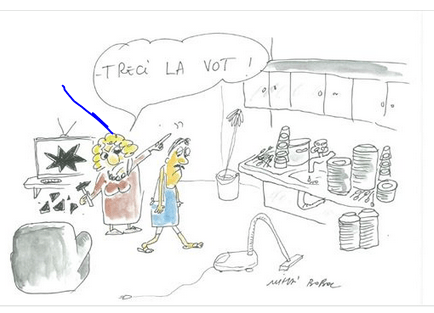
Toată chestia este să nu uităm să mergem la vot. Degeaba suntem nemulțumiți dacă nu ne exprimăm opiniile. De unde să știe ce vrem de la ei dacă tăcem ca pietrele?

De unde să știe PSD-ul că a greșit dacă nu-l votăm pe Iohannis?
De unde să știe Iohannis că îi vom cere socoteală pentru greșelile pe care le va face dacă nu ieșim la vot?

Dacă nu le arătăm că ne pasă cu adevărat?

Mihai Gabriel Boboc.

Liberty is freedom from being constricted, in any way, shape or form. Period.

Liberty is more of an adjective rather than a verb. A situation more than an action.

Liberty can be attached to a space, to an agent or to both.

A free space would be a space where no constriction may occur, whatsoever.
A free agent would be an individual entity outside any constriction, whatsoever.

Mathematically, both definitions are possible.
Philosophically, both definitions are imaginable. By philosophers, of course.

Oscar Hoffman, a Teacher, kept telling us, his students, “For a proposition to be true it is not enough for it to be logically correct. It also has to make ontological sense. For those of you who don’t remember what ontological means, a true proposition must describe something which has to be at least possible”

In the real world, where there is no such thing as absolute freedom, liberty has to be first noticed/invented. And then constantly negotiated.

‘No such thing as absolute freedom?!? But liberty is a (God given) (human) right!!!’

Do you remember what Hoffman had (just) said about things which can exist in practice and things which can exist only in our minds?
Liberty might be a right – for those who enjoy it, but that doesn’t mean that everybody has it. And, even more important, that there is – or ever will be, something even close to absolute liberty.
If you don’t believe me, try to fly off a balcony without any ‘mechanical’ help. Or stop eating for a day or two. The Earth will surely ‘constrict’ you back towards its center and your stomach will certainly constrict itself for lack of food. And both Earth and stomach will constrict you back to reality.

‘OK, so no absolute freedom for individuals. How about ‘free spaces’?’
‘As in spaces where no constriction, whatsoever, may be exercised?’
‘Yes.’
‘Well, that would be possible. If a space is completely empty… no constriction might be exercised in there, right? On the other hand, as soon as something, anything, populates that space, constrictions start to appear. For instance, since no two things can simultaneously exist in the very same place, the mere existence of a speck of dust in a whole stadium induces the restriction that no other speck of dust may exist in the very same spot. Sounds trivial, true, but this is it… No absolute freedom. Not for individual agents and nor for spaces.’

‘Then why are writing a post about ‘Free market’? Doesn’t make much sense, isn’t it?’

Let me finish with liberty before going any further.
I mentioned earlier that liberty must be first noticed and then negotiated.
You see, right or no right, liberty is, above all, a concept.
We’d first observed that a flying bird is freer that a crawling worm and bam!!! We realized that some of us were freer than the others. Then that freer groups/societies fared better than the more ‘stifled’ ones.
But only where liberty was more or less spread around, not concentrated in one hand. Dictatorships – where all liberty is concentrated at the top, are way more fragile than any democracy. I’ll come back to this.
Now, for the negotiation part.
‘Your freedom to swing your fist ends where my nose begins’. And vice-versa. Only this is rather incomplete.
Let me examine the situation where you are a person who likes to swing your fist. In the air, not with any aggressive intent, of course. So you were swinging your fist, after you had determined, in good faith, that there was no nose close enough to hurt. But what if I am a ‘nosy’ guy? ‘Nosy’ enough to bring my actual nose inside your reach? You having to restrict your swings – or to go somewhere else, isn’t a limitation of your freedom? An absolutely unnatural limitation of your freedom?
Has it become a little clearer? What I mean by negotiation when it comes to individual freedom?

OK, time has come for me to go to market. To the free market!

A market is a place. Obviously, right?
A place where people trade their wares. Because they have noticed that it is easier for each of them to do what each of them do better and then trade the results of their work instead of each of them providing everything for themselves. As in everything each of them needs. Or fancy.

Initially, markets were far from being free. First of all, supply was sorely limited. Transportation means were practically nonexistent so supply varied seasonally and was severely influenced by weather, soil and other similar factors. And, maybe even more importantly, supply was influenced by the sheer will of the most powerful ‘free agent’ who happened to be around. Or, more exactly, supply was heavily influenced by the whims of the most powerful free-agent who happened to be around.
Don’t believe me? Then consider the extreme famine experienced by the Bengalis in 1943. Or by the Romanians during the last years of Ceausescu’s reign.
Slowly, people have learned that freer markets tend to be a lot more stable than the less free. ‘Freer’ markets meaning freer from both exterior and interior limitations. For a market to become free(ish) the participants need to have a big enough pool of resources at their disposal and to be wise enough to organize themselves in a ‘free’ manner.

And what happens when at least one of the two conditions remains unfulfilled?
Time has taught us that while markets tend to be limited in space and that some of the participants tent to impose themselves over the rest there is one dimension where the liberty of the market is very hard to be limited. ‘Liberty’ here meaning that things tend to evolve more in their own terms rather than ‘according to plan’. Or according to anybody’s wishes.

Whenever the available resources dry up, the participants to the market move someplace else. Or die of starvation.
Whenever a market looses too much of its freedom – as in some agent controls too much of what is going on there, the market itself no longer functions properly. Whenever too many of the participants loose their ability to determine their fate/future they slowly become ‘sitting ducks’. Not as much easy to hunt down but actually unable to feed themselves.
And since hunger is the best teacher, they either learn to fight for their freedom or… die of starvation. Pol Pot’s Cambodia would be a good example, even if somewhat extreme. The fall of most communist regimes also makes a compelling case for what I have in mind.
Even more interesting, though, is what had happened to the American Automobile Industry. General Motors and Chrysler Corporation, once the dominant stars of the market – along with Ford, had to be rescued by the government. Quasi monopolistic positions tend to be bad for the monopolists also, not only for the rest of the market. Given enough time, true enough…

Există o foarte mare mirare în spațiul public.

Cum de-a ajuns cineva ca Dăncilă să ocupe scaunul pe care a stat, cu nu foarte mult timp în urmă, Adrian Năstase?

Dintr-una-n alta. Adică dintr-o alegere-n alta. Ca urmare a unei succesiuni de decizii. Unele obligatorii iar altele cât se poate de libere. Dar încă neasumate de cei care le-au făcut.

În decembrie 1989, a explodat mămăliga. Oamenii au ieșit pe stradă, pentru că, efectiv, nu mai puteau sta acasă. Puterea politică a fost preluată de Frontul Salvării Naționale, o organizație para-statală. Pentru că cineva trebuia să țină locul statului comunist ce tocmai fusese dizolvat.

În 6 Februarie 1990, „FSN s-a transformat într-un partid politic, pentru a putea candida la viitoarele alegeri.” În realitate, posibilitatea de a candida a fost doar un pretext. Au transformat structura para-statală într-un partid pentru că așa au vrut ei. Dacă ar fi vrut doar să candideze la alegeri, ar fi înregistrat, ca toți ceilalți, un partid politic. Să nu uităm că între 6 Februarie și 20 Mai statul FSN a organizat alegerile în care candida partidul FSN.

Alegerile organizate de statul FSN au fost câștigate de partidul FSN. 66.31% la Cameră, 76,47% la Senat și 85,07% la Președenție.
Alegerile au fost cât se poate de libere – adică voturile au fost numărate corect, iar oamenii au votat așa cu justificarea că ‘Ei au făcut Revoluția. Doar n-o ia puterea veneticii aștia care „n-au mâncat salam cu soia” !!!’
Sigur se va găsi cineva să-mi spună cineva că același lucru se întâmplă și acum. Partidul aflat la putere este cel care organizează alegerile…

O parte dintre bucureșteni au ales să-și manifeste nemulțumirea față de toate aceste în mijlocul Pieței Universității. Puterea proapăt investită a ales să mulțumească, în mod oficial, minerilor veniți ‘spontan’ să curețe piața de ‘drogați’.

În 1996, la urne, majoritatea a ales să încerce și altceva. Altceva decât ceea ce experimentaseră între 1990 și momentul respectiv.
După care, crezându-se cu sacii-n căruțe, cei mai mulți dintre cei ‘cu spirit liber’ și-au văzut de treabă. Adică de interesul propriu. Lăsând ‘piața liberă’ să acționeze. Așteptându-se ca ea, piața singură, să ‘facă ordine’.
Adică să facă ceea ce ar fi trebuit să facem noi. Ordine în ogradă.
Să transforme o populație debusolată – după 50 de ani de comunism, precedat de 10 ani de dictatura regală/corporatism antonescian, într-o națiune liberă și complet funcțională.
Fiecare dintre ‘orientați’ și-a văzut de treaba lui, lăsându-i pe ceilalți ‘să piară pe limba lor’ – dacă tot nu erau în stare de altceva.

În mod firesc, cei lăsați de izbeliște s-au raliat celui care promitea mai mult.
Și uite-așa Iliescu i-a luat fața lui Vadim Tudor în 2000…

Al doilea (treilea, patrulea….) mandat Ion Ilescu.
Ce poate fi mai definitoriu pentru acea perioadă decât doctoratul făcut cadou de către „Profesorul” Adrian Năstase protejatului său, „Micul Titulescu”?

Și uite-așa am ajuns la momentul ‘despărțirii apelor’. 2004. Românii aveau de ales, la turul doi, între Adrian Năstase și Traian Băsescu.
Măi, Adriane, ce blestem o fi pe poporul ăsta de a ajuns până la urmă să aleagă între doi foşti comunişti?
Mai țineți minte momentul 1996? Când cei deja ‘woke’ au ales să-și vadă mai degrabă de treaba lor, înainte de a scoate căruța la drumul mare?

După care a urmat cea mai uluitoare succesiune de trei decizii colective din istoria noastră recentă.
Băsescu își dăduse, treptat, arama pe față. Cu toate astea, a fost confirmat în funcție de trei ori. 2007, 2010 și 2012.

Rezultatul?
În iarna lui 2012, PDL – jumătatea rebelă a fostului FSN, a pierdut alegerile în fața unei coaliții formate din jumătatea Iliesceană a FSN-ului și Partidul Național Liberal. Ce mai contează că această alianță s-a prăbușit foarte repede…

2015 părea să fi marcat un nou punct de inflexiune. Tragedia de la Colectiv a provocat exprimarea nemulțumirii care mustea pe tot locul. Drept pentru care au ieșit în stradă suficient de mulți oameni încât să determine demisia guvernului Ponta.
Iar România a asistat la repetarea momentului 1996.
Crezând că au scăpat de ceea ce va fi cunoscut ulterior sub numele de ‘Ciuma Roșie’, wokii s-au întors la treburile lor. Lăsându-l pe Cioloș să se descurce de unul singur.

Să mai mirăm de rezultele din 2016?
De succesiunea de prim miniștri propulsați de PSD pe prima scenă?
Grindeanu, Tudose, Dăncilă?
Nu atât de persoanele în sine cât de modul de funcționare a partidului? Cât și de (lipsa) de reacție eficientă a organismului social?


‘Ce reacție visezi, mă? Ești copil? Când tot ce-și dorește ‘alternativa’ este să ‘dea drumul hățurilor’? Să ‘elibereze’ ‘capitalismul sălbatic’?’

Ce-or fi înțelegând adepții neo-liberalismului din toată chestia asta… rămâne de văzut.
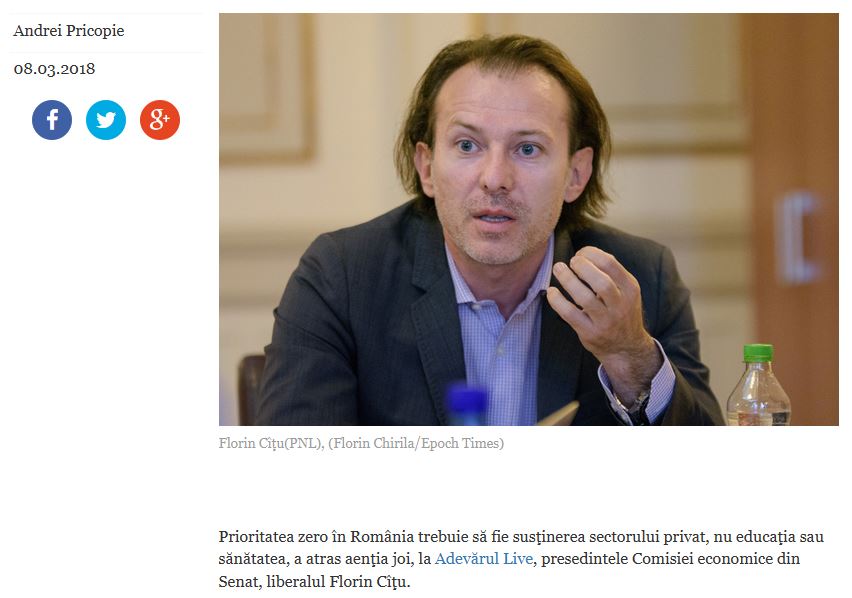
Cum își propun ei să susțină ‘sectorul privat’ în condițiile în care nu-i interesează calificarea muncitorilor și nici starea lor de sănătate….? Cum o funcționa piața – chiar eliberată de actualele disfuncționalitați, atâta vreme cât majoritatea ‘consumatorilor’ rămân săraci, analfabeți și bolnavi…?

Să revenim la ‘incest’.
Practicat pe scară largă în Egiptul Antic și în Persia. Precum și, într-o formă mai atenuată, de către cea mai influentă familie din Europa Medievală.
Cu ce rezultate? Dinastiile Egiptului Antic s-au succedat relativ repede – mai ales ca statele din jur n-au reprezentat, până târziu, vre-un pericol real. Și nu cred ca este nevoie să vă aduc aminte despre consecințele dinastice și sociale ale aberațiilor genetice produse de cosangvinizarea conducătorilor imperiali din Spania Habsburgică și din Rusia Țaristă!

Dar ce legătură este între incest/cosangvinizare și transformarea PSD-ului din formațiune para-statală în partid politic?!?

Păi care este esența incestului?
Săvârșirea deliberată a unui act contra naturii. Act prin intermediul căruia membrii unui grup încearcă să pastreze pentru ei constrolul asupra unor privilegii, nu?
Justificarea fiind ‘noi suntem deasupra naturii/firescului’. Și ‘mai dă-i dracului pe restu’!
Iar cel mai trist este ca nu văd nici o diferență de substanță între atitudinea asta și crezul neo-liberal. Ceea ce explică și incapacitatea funciara a celor care se revendică de la fiecare dintre aceste doua curente de a se respecta cu adevărat între ei.
Și mai ales de a colabora. În interesul lor reciproc.
Cele două grupuri se comportă ca două săbii care se bat între ele pentru a intra în posesia tecii!

Iar cel mai greu de înțeles este apatia cu care tratăm noi, restul, situația.
Când ne vom da odată seama că taberele astea două se bat pe căciula noastră? Și că noi stăm cu capul gol, în ger și soare?
Când o să le arătăm odată clar, cu subiect și predicat, că noi suntem gâsca cu ouă de aur? Și că au doar de pierdut dacă ne fură din tain?

https://redeeminggod.com/genesis_3_1-5/

You might have figured out already that I don’t believe yet I find a lot of inspiration in the Bible.

I’d like to discuss today the subject of Eve.
Many people are adamant that she was instrumental in Adam being banished from heaven. That she was conned by the serpent into convincing Adam to commit the first – and most important, sin. Into disobeying God, his Father.
Hence Eve – and all her daughters, are the culprits for us, men, having to ‘toil for our daily food’. Outside of where we have been meant to live, the Paradise…

Really?!?

Then, if Eve was the root of all evil, why had God chosen Virgin Mary – Eve’s granddaughter, as the vessel for his beloved Son? For the instrument of our salvation?

Furthermore, if we treasure virginity – something which only man can spoil, then how come it is Eve – the entire womenfolk, who is considered the origin of sin?

Let’s move forward to the really hard questions.

Eve engaging in conversation with the serpent resulted in both Adam and Eve learning the difference between good and evil. In both Adam and Eve becoming full fledged, self aware human beings.
And what was wrong with that?!?
Becoming conscious was a bad thing? Thinking with our own heads is sinful?

I remember that, as a child, I had always experimented what was verboten. Except for the obvious things, of course.
And used the trick on my own son. Whenever I wanted him to try something, I led him to believe that that thing was dangerous or out of limits. For him, of course.

For a (free) market to function, at all, it needs active economic agents.
Which economic agents need, in their turn, certain amounts of concentrated resources at their disposal. A certain amount of ‘capital’. Regardless of who owns it. Or disposes of it.

In this sense, no matter where each of them finds itself on the individual to socialist spectrum, all societies are ‘capitalist’.

On the other hand, individual capitalists – economic agents, do not need a free market to thrive. The do indeed need a market to sell their products/services, only that market does not have to be free. On the contrary, even.

OK, no monopolistic market has survived for long. And all monopolies have eventually failed. Even those who had grown ‘too big to fail’!

But go and tell this to any of those who happen to be at the helm of a monopoly… be it of economic or political nature …