
Florin Cîțu, premier.
Emilia Șercan, ziarist.
Pe bune?!?
Voiculescu este tras pe tușă pentru că nu a comunicat suficient iar guvernul refuză să ne spună cine ne sunt ‘informatorii strategici’.
Interesant, nu?
Florin Cîțu, premier.
Emilia Șercan, ziarist.
Pe bune?!?
Voiculescu este tras pe tușă pentru că nu a comunicat suficient iar guvernul refuză să ne spună cine ne sunt ‘informatorii strategici’.
Interesant, nu?

Proverbul din titlu ilustrează cât se poate de bine situația în care ne aflăm.
În primul rând, pentru că prea puțini dintre noi înțeleg cu adevărat despre ce e vorba.
Cam toți știm că, pe vremuri, căruțele erau trase de cai. Acum, pe unde mai sunt, fiind trase de tractorașe. Sau de ATV-uri…
Puțini sunt cei care au citit că poștalioanele – niște căruțe de cursă lungă, opreau din loc în loc – adică în stațiile de poștă, unde li se schimbau caii.
Amplasarea stațiilor de poștă era făcută cu mare artă. În așa fel încât porțiunile mai dificile ale traseului să fie parcurse cu cai ‘proaspeți’. Vadurile, adică locurile pe unde erau traversate râurile – direct prin apă, erau unele dintre porțiunile de traseu considerate a fi fost cu adevărat dificile.
Cred că ați început să vă prindeți.
Proverbul este, de fapt, o metaforă. Folosită pentru prima oară de Abraham Lincoln, într-un comentariu făcut după nominalizarea sa pentru un al doilea mandat la Casa Albă.
Suntem în mijlocul râului. Cu apa până la brâu.
‘OK. Ce vrei să spui?
Cine a greșit?
Voiculescu că a încercat să reseteze întreg sistemul sanitar în mijlocul unei pandemii sau Cîțu că l-a debarcat pe ministrul sănătății în mijlocul aceleiași pandemii?’
„ amplasarea stațiilor de poștă era făcută cu mare artă. Adică în așa fel încât porțiunile mai dificile ale traseului să fie parcurse cu cai ‘proaspeți’.”…
La poștalioane era simplu. Știai traseul așa că era simplu să identifici locurile unde trebuiau amplasate stațiile de poștă. Locurile unde era bine să schimbi caii.
În viața reală, e mai complicat. Nu știi niciodată când o să-ți cadă beleaua pe cap.
Dar știi, totuși, cam care ar putea fi unele dintre belele…
Știi, de exemplu, că ai nevoie de un sistem de sănătate funcțional.
De un sistem de învățământ funcțional.
De un sistem de justiție funcțional…
De o presă funcțională. Adică independentă!
Primele trei fiind sistemele care nu te lasă să te afunzi în belea, atunci când îți cade în cap pe neașteptate, iar al patrulea este cel care te avertizează că ceva nu este în regulă. În oricare dintre primele trei sisteme sau în oricare altă parte a meta-sistemului.
Vi se pare că am reușit în ultimii 30 de ani să ne asigurăm că măcar unul dintre primele trei sisteme functionează suficient de bine?
Și degeaba ne mângâiem pe cap cu privire la libertatea presei.
Putem vorbi cu adevărat doar despre ‘diversitatea’ presei românești, nu despre independența sa reală.
Faptul că fiecare ‘sferă de interese’ are ‘organul ei de presă’ nu înseamnă că cititorilor le este ușor să înțeleagă ce se petrece în jurul lor…
„Haite de troli furioși bântuie rețelele sociale și înveninează atmosfera.”
Iar partea cea mai proastă este că ‘dezorientarea’ de la nivelul oamenilor de rând a ajuns până în sferele cele mai înalte… tocmai pentru că nu mai are cine să-i tragă cu picioarele pe pământ.
Pe cei cu ‘capul în nori’!
Guvernanți și ‘lideri de opinie’, laolaltă.
Dacă vrem să trecem „testul Covid”, e nevoie să reconsiderăm – chiar aici, în mijlocul râului – relația dintre cai, caruță și vizitiu. Neuitând de cei din statiile de poștă și nici de ‘oamenii de acasă’.
PS
Unii sustin ca sistemul de sanatate ar fi fost deja ‘privatizat’.
Chiar dacă noi nu ne dăm seama încă.
Dacă avem noroc, peste câțiva ani n-o să mai înțeleagă nimeni nimic din chestia asta.
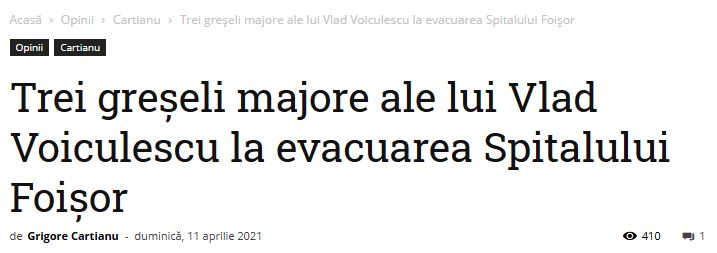
Pentru că lumea va uita intensitatea pandemiei. Faptul că spitalele ‘COVID’ au fost, la un moment dat, atât de pline încât a fost nevoie să fie evacuat, peste noapte, un spital de ortopedie.
Așa că cei care nu puteau să meargă au fost trimiși acasă pentru a face loc celor care nu puteau să respire.
Să revenim la cestiune.
Care a fost reacția ‘presei’?
Vreun articol care să scoată în evidență tragismul situației?
Intensitatea pandemiei?
Faptul că suntem în rahatul ăsta pentru că nu am știut – noi toți, comunitatea – cum să reacționăm?
Tot ce văd sunt critici acerbe la adresa guvernului. Din toate direcțiile.
Critici meritate!
Cam tot ce se spune este cât se poate de adevărat.
Guvernoiu comite greșeli pe bandă rulantă!
Ca noi toți, de altfel.
Nu cred că există cineva dintre noi care să nu greșească.
Și totuși.
Până la urmă, ce vrem să fim?
Parte din problemă sau parte din soluție?
Cum e mai bine?
Să greșești făcând ceva sau să dai din gură pe margine?
Altfel spus, cum e mai bine? Să pui degetul pe greșelile comise de cineva sau să transformi acele greșeli într-un show?
Să ajuți pe cineva să rămână ‘pe calea cea dreaptă’ – spre folosul întregii comunități din care faci și tu parte – sau să transformi în spectacol ‘împleticelile’ celor ‘angajați’ să găsească calea cea dreaptă?
Ne ajută cu ceva tot circul ăsta?
Pe noi, pe rudele celor evacuați de la Foișor?
Pe noi, pe rudele celor aduși la Foișor?
Pe noi, pe… cei care am putea ajunge, mâine, la Foișor?
Adică pe NOI toți?!?
Se pare că nu prea ajută…
Ba chiar se pare că însăși breasla, sau măcar unii dintre membrii ei, sunt conștienți de ceea ce se întâmplă
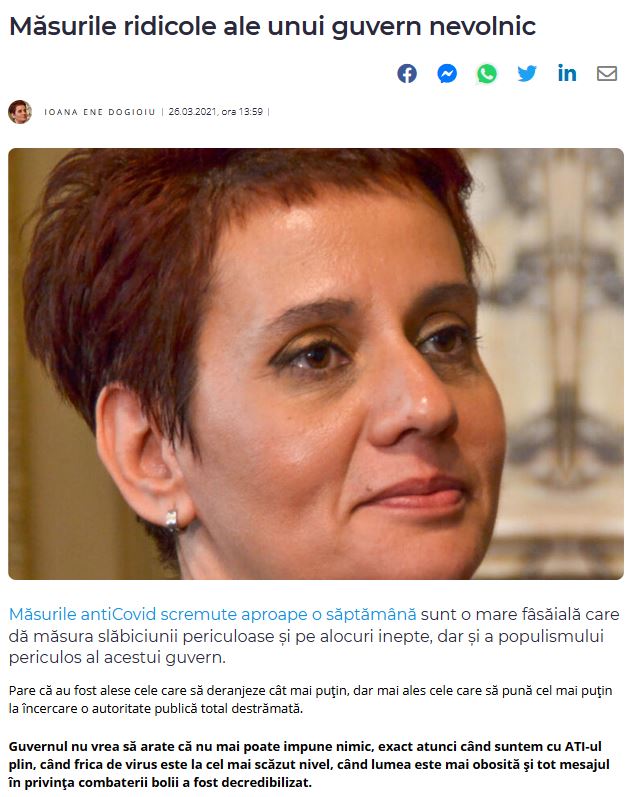
Hai să acceptăm ideea că guvernul o fi nevolnic. Asta am fost în stare, asta am ales.
Bine că guvernele pot fi schimbate.
Mai pot fi schimbate. Încă…
Dar cine o fi decredibilizat „mesajul în privința combaterii bolii”?
Cine o fi contribuit la scăderea fricii de virus până la „cel mai scăzut nivel”?
Tot nevolnicia guvernoiului?!?
Ernst Mayr spunea la un moment dat că:
‘Evoluția nu este despre supraviețuirea celui mai puternic.
Este doar despre dispariția celui incapabil să supraviețuiască.’
Chestia asta este valabilă atât pentru organismele biologice cât și pentru cele sociale.
Privit din unghiul ăsta, testul COVID capătă noi valențe.
La nivel individual, nu mai contează dacă respectivul este pozitiv sau nu. Doar ce face atunci când își dă seama că boala există în jurul lui. Sau în el…
La nivel social… Dacă învățăm ceva din pandemia asta, bine. Dacă nu… poate învățăm data viitoare. Dacă mai apucăm! Câți mai apucăm…
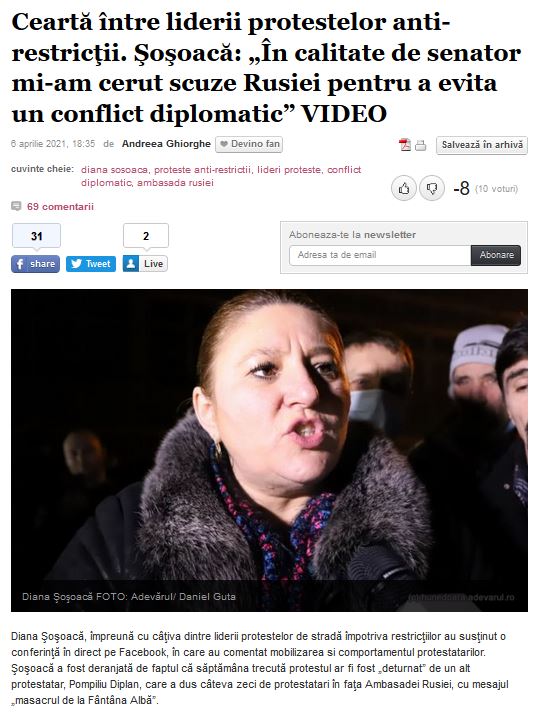
Până atunci, Șoșoacă cere scuze Rusiei…
The freer some people allow themselves to feel about expressing their opinions, the more others might understand.

OK, Obama, Clinton and Biden should hone their communication skills.
The media was uncharacteristically spot on.
Trump would be happier and happier if more and more Americans would adopt this ‘way of life’.
And those who are OK with this are happy to use a skull as their defining symbol.
What clearer message do you want?
I’m old enough to remember how things looked like when watched on a black and white TV set…

Still think this is funny?

I feel the need to disagree vehemently!
The malicious has made an option. Had chosen. Willingly! And, supposedly – according to the hypothesis being discussed here, knowingly.
The ‘stupid’ just stays put. Until the relevant information penetrates his ‘thick skull’.
It’s not his fault that those who attempt to convince him are not skillful enough.
And if the ‘stupid’ happens to be in a ‘powerful’ position… (hence his inability to understand fast enough is liable to produce considerable damage) who needs to be chastised?
The ‘stupid’ himself? Who presumably ‘doesn’t have a clue’ about what’s going on?
The malicious who had made the whole situation possible?
The ‘lazy bystandards’? Who had allowed this to happen? Out of carelessness?
Or those who are liable to suffer the consequences? Who had understood what was going on but…
On the other hand… Could Dietrich Bonhoefer – a renowned pastor and theologian, utter such ‘simplistic’ words? So callous?
I’m not exactly old.
Only old enough to continue to check my email. From time to time…
For reasons outside my knowledge, this morning I’d found – in the ‘promotions’ section’ a link to a ‘common sense with Bari Weiss’ article. The title was apealing, the name rang a bell – even though I had no idea about who the person was, so I read it.
My reaction was intense enough to start writing.
Not before looking her up…
The point being that she is basically right. Enabling is a powerful phenomenon.
But she is also basically wrong.
Powerfull it might be, only enabling is not necessarily malignant. As she implies.
Enabling is done by people with means. Powerfull and or resourcefull enough for their actions to be effective.
What the enablers choose to enable… is something else.
And the consequences of enabling depend on the enablers’ choices!
Things might come up right. Or wrong.
The kind of enabling curently predominant in America has been detrimental to the society at large. Leading to the enablers becoming irrelevant.
Just as Weiss advertised. Trump has been supplanted by those who had occupied the Capitol – after being enabled by him, while on the other side of the political divide things aren’t going any better. Cultural cancellation isn’t going to end up well.
But enabling can lead to different outcomes. Depending, of course, on what is being enabled.
Take Germany, for instance.
Yes, nobody knows who its President is. Only the country, as a whole, functions far better than many of those whose Presidents are on everybody’s lips. Simply because the German enablers had chosen to enable the ‘right’ kind of behaviors.
PS
Frank Walter Steinmeier

La Sibiu există o ‘Prietenă a Berzelor’. Care ne-a avertizat, nu demult, că „viteza cu care oamenii distrug natura e mult mai mare decât capacitatea ei de regenerare.”
Miruna Gritu, așa o cheamă pe prietena berzelor din Sibiu, este atât de cunoscută în lumea iubitorilor de animale încât atunci când un cetățean din Biertan a găsit doi pui de urs, a sunat-o pe ea. Nu la Garda de Mediu. La Asociația Prietenii Berzelor!
După cum înțelegeți din context, aceasta s-a dus la Biertan. Pe drum a tot dat telefoane până când a aflat că la Zărnești există un sanctuar pentru urși. Așa că a luat puii – deshidratați și foarte slabiți de diaree, și i-a dus la Zărnești.
Între timp a fost sunată de cineva de la Garda de Mediu. Invitată la sediu. Și amendată cu 10 000 de lei.
Pentru că a transportat urși fără să fi fost autorizată în acest sens.
Garda de Mediu este o înstituție care se ocupă cu ‘ocrotirea mediului’. Urșii fac, evident, parte din mediu. Garda este obligată să se ocupe de bunăstarea urșilor. Obligată să aplice legile. Pentru simplul motiv că dacă s-ar apuca oricine să transporte urși unde li se năzare, urșii ar avea de suferit. Împreună cu restul mediului.
Miruna Gritu se ocupă și ea tot cu ocrotirea mediului. Cu ocrotirea aceluiași mediu… Berzele pe care le oblojește Miruna Gritu nu sunt cu nimic mai prejos decât urșii care tocmai au fost protejați de Garda de Mediu.
Și atunci?!?
Cum putem ieși din situația asta? Ce era să facă comisarul de la Garda de Mediu?
S-o lase în pace pe Miruna Gritu după ce aceasta tocmai încălcase legea? Ce exemplu dădea?
Pe de altă parte, cam câte berze poate să îngrijească Miruna Gritu cu banii aia?
Am să închei cu o altă serie de întrebări.
Care este amenda minimă pentru transportat urși fără autorizație?
Și, mai ales, cum rămâne cu sustenabilitatea? Facem ceva pentru ea, pe bune, sau ne ‘acoperim cu hârtii’?

Avem o biserică vandalizată – cea din parcul IOR, o reacție extrem de ‘intensă’ a ‘proprietarului ultim’, una mult mai ponderată a ctitorului – care este și preotul paroh al acestui lăcaș duhovnicesc, și o încercare de analiză.
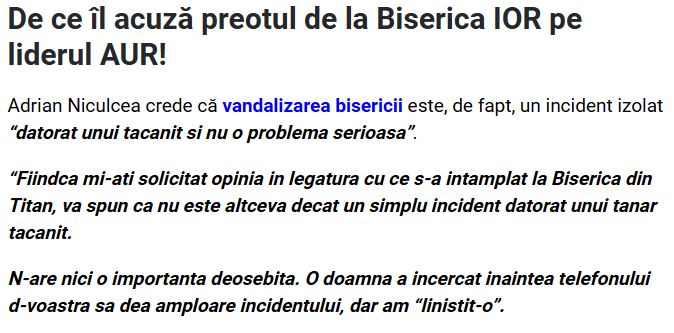
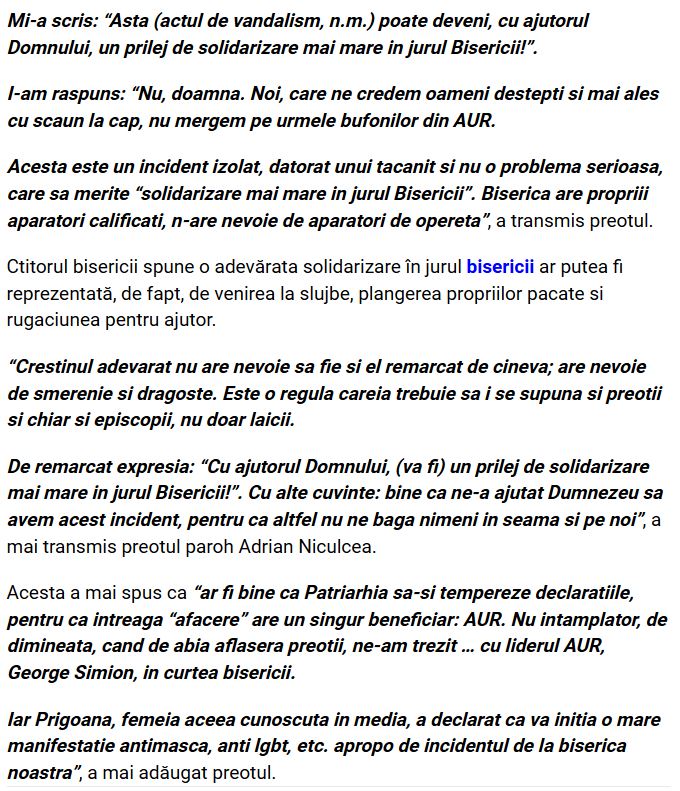
Despre cât se poate de evidentul ‘dublul standard’ cu care sunt judecate prea multele dintre spețele aflate la judecata publicului a vorbit Sorin Cucerai.
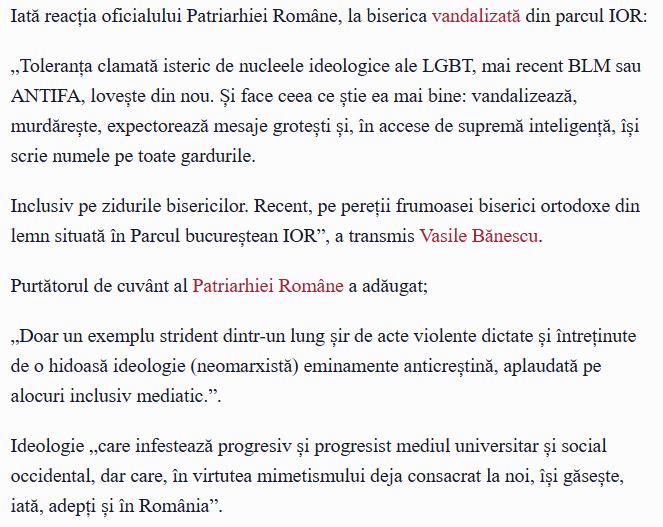
Că autorul inscripțiilor ‘n-are toți boii acasă’… a recunoscut și Vasile Bănescu.
„…expectorează mesaje grotești și, în accese de supremă inteligență, își scrie numele pe toate gardurile.”
Că singurii care ar avea ceva de câștigat din toată tărășenia asta ar fi doar cei din AUR… poate pe termen scurt.
Foarte scurt… Oamenii ‘de rând’ sunt mult mai inteligenți decât au impresia foarte mulți dintre ‘analiști’… pot fi ‘stârniți’ – în anumite condiții, dar își revin destul de repede.
Alții care ar putea încerca să tragă oarece spuză pe turta proprie sunt cei din ierarhia BOR. Care au și făcut acest lucru…
În realitate, singurii care au ceva de câștigat – tot pe termen scurt dar ‘ceva’ mai ‘palpabil’, sunt proprietarii trusturilor de presă. Adică rating și atenția publicului. Care sunt două lucruri destul de diferite, dacă stai bine să te gândești…
Și acum, că am ajuns la trusturile de presă, voi începe prin a nota că reacția cât se poate de ponderată a părintelui paroh Adrian Niculcea a fost consemnată de cotidianul sportiv Fanatik. Poate că a apărut și în alte publicații. Cert este că goagăl l-a scos în față pe Alexandru Năstase. Iar goagăl nu minte… la chestii din astea!
‘OK, un Fanatik cu mintea la cap!
Altceva?’
O întrebare.
Dacă cel în cauză ar fi fost un ‘țăcănit’ normal – un zâmbet pentru oximoron, vă rog, așa după cum sugerează părintele Niculcea – ce să facă și el, atunci poliția l-ar fi găsit în doi timpi și trei mișcări.
Dacă cel în cauză ar fi fost un LGBT – la fel de ‘tâmpit’ precum restul comunității, după cum sugereaza Vasile Pănescu, ce să facă și el, atunci poliția l-ar fi prins într-un timp și cel mult două mișcări.
Având în vedere că nici un suspect nu a fost prezentat publicului … putem începe să speculăm.
Agentul 007!
Agent provocator. Pus de cine știe cine…
Poliția ascunde rezultatele cercetărilor. Din varii motive…
Vă rog să notați că ipotezele astea pot fi valabile și simultan!
‘Păi bine mă!
Ai promis o întrebare și ai turnat o droaie de ipoteze. Care mai de care mai ipotetice!’
Uite și întrebarea.
De ce a fost aleasă tocmai biserica la care slujește părintele Niculcea?
Biserică ctitorită de chiar părintele paroh. Care părinte paroh are o poziție ‘oarecum’ diferită față ce cea expusă, cât se poate de apăsat, de Vasile Bănescu!
Cine e Vasile Bănescu?!?
Purtătorul de cuvânt al Patriarhiei. Al exact acelei Patriarhii care „ar fi bine să-și tempereze declarațiile”!
Zicea cineva ceva despre un protest antimască…
Da’ măștile alea de pe suflet … pe alea când le scoatem?!?
În fața ‘judecătorului suprem’ va fi mult prea târziu… vom fi făcut deja tot răul de care am fost capabili!
I’m not a very social person.
I don’t know that many people.
Those I know belong to three categories. People I’ve met, people I’ve kept in contact with and people I’ve got drunk with.
Since I don’t ‘go under’ easily, you can imagine that those belonging to the third category are not ‘legion’.
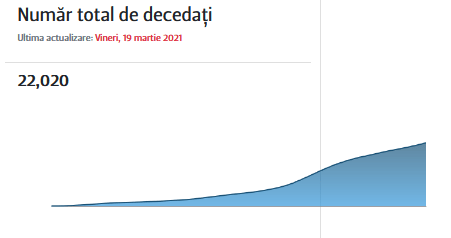
On the other hand, Romania hasn’t been hit that hard by Covid. Only 22000 dead.
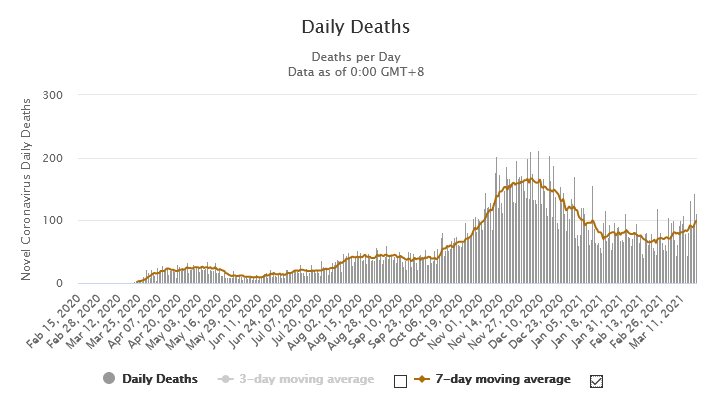
I’m not going to tell you how many of the people I’ve ever met – or even kept in contact with, are now dead. Because of Covid, of course.
I’m only going to mention that two of those with whom I’ve enjoyed more than a ‘merry evening’ are no longer with us. Because of Covid. I’ve known them well and I’m certain it wasn’t a bogus diagnosis.
Let’s get serious.
I know how many of you are fed up with how the authorities – all over the world, have bothched ‘it’ up.
I know how many of you are fed up with how greedy Big Pharma, and the healthcare establishment, have been during the last 50 years or so.
I know how many of you are longing to get back to ‘normal’.
I know all these because I’m fed up too. And I too am longing to raise a glass with my surviving friends.
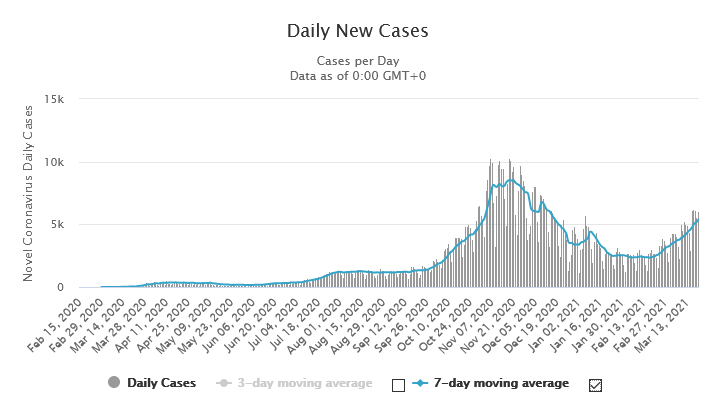
Please note that during the previous peak it had been reached a 7 day moving average of some 8 000 daily new cases. And a 7 day moving average of some 165 daily deaths. Right now we are at a 7 day moving average of 5500 new daily cases and an average of 100 daily deaths
165/8000*100=2.06%
100/5500*100=1.82%
Better, but still! And we shouldn’t forget that the hospitals are not yet running overdrive….
That’s why I’ll continue to wear a mask, to keep my distance, to wash my hands. That’s why I’ve put myself on the waiting list.
I’m sure you have a prety clear idea which list I’m talking about.
See you on the other side!
And I pray those who are no longer with us will rest in peace.

 nicichiarasa