I’m not pointing fingers here. I just try to convince you how hard it is to make the right decisions. ‘Going forward’ as opposed to ‘looking back’. I just try to convince as many of you as possible to stop for a moment and think about it. As dispassionately as possible.
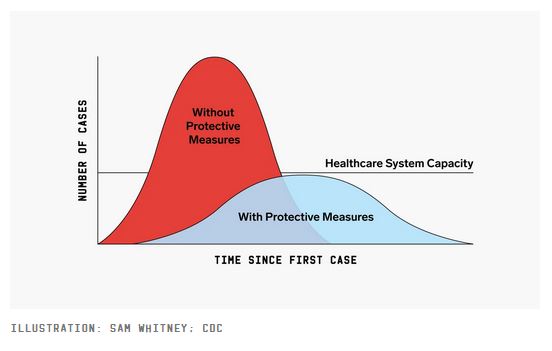
We’ve also been told that we need to flatten the curve. That our systems were not prepared enough for the onslaught that was going to happen.
Some people continued ‘as they were’ while others tried to ‘flatten the curve’.
For a while. Now, after some time, people from both categories have started to entertain second thoughts.
Trying to figure out what’s going on here, I’ve asked my self a couple of questions.
Who had chosen to go on as usual and who had chosen to distance themselves from the rest of the society?
‘Go on as usual’ first: – Those who don’t trust the government. – Those who are convinced nothing can happen to them. – Those who felt they had no alternative. Who live paycheck to paycheck or who provide essential services to the society. Like healthcare for instance. Or those who bake our daily bread. Pump the water we drink. Tend the generators who lighten our bulbs and power the computer I use to write this post.
Now those who attempt to ‘flatten the curve’: – People who tend to trust the authorities. – Those who understand they should really protect themselves. Who are older and/or already sick. – Those can work from home. – And people who are otherwise fine but afford to distance themselves from the fray. Those who have enough resources to do it.
Am I imagining things or the picture is already a lot clearer?
And the other question now. Why the second thoughts?
Because things have unfolded more or less as the government said they were going to. Because things have started to happen. If not to them, directly, at least to some of those living around them. Because there still is no alternative in sight. And because there is nothing much to convince them that their efforts are appreciated by the rest of the society.
Because the government might have been right to tell them to ‘lie down’. But because the same government has failed to do enough in the meantime. Not to mention what it had failed to do before. Because staying put allows you to start thinking. ‘What next? For how long can we go on like this?’
So. What next? What are we doing to convince those who actually keep us going to continue doing so? What are we doing to convince those who have chosen to restrict their lives to a barren minimum that their efforts are worth it?
What are we doing to convince everybody that there will be a life worth living at the end of all this?
Un număr de cadre medicale și-au dat demisia. Unii invocând lipsurile din spitale, unii circumstanțe personale… alții pur și simplu fără motiv.
Internauții români de pe Facebook au început să se poziționeze. De la brutalul ‘dezertori’ până la ‘primul lucru pe care trebuie să-l cerem de la guvernanți după ce trece criza este să reconstruiască din temelii sistemul de sănătate’. Trecând prin ‘Toți sunt de vină. Chiar dacă nu luau toți șpagă, toți știau ce se întâmplă. Nimeni n-a făcut nimic. Singurul mod prin care unii dintre ei și-au manifestat dezacordul a fost plecarea. S-au dus și nu s-au mai uitat înapoi.’
Ce ziceți despre ‘Toți suntem de vină!’?
E adevărat că nu toți medicii cereau șpagă. Din păcate, aproape toți acceptau. Plicurile pe care le strecuram noi. În buzunarele lor. În buzunarele halatelor lor albe…
Până nu demult, logica noastră era simplă. ‘E firesc să primească, au salariile foarte mici.’
Salariile angajaților din sistemul de sănătate erau într-adevăr mici. Iar noi am fost atât de înguști la minte încât am lăsat-o așa cum căzuse. ‘Dă-i încolo. Au destui bani!’
Asta până în momentul în care din ce în mai mulți dintre ei au preferat să-și ia ei singuri talpășița. În loc să mai accepte șpaga noastră.
Abia atunci am înțeles cât de rămas în urmă era sistemul nostru de sănătate. Abia atunci când personalul medical a continuat să plece și după măririle atât de substanțiale ale lefurilor din sistem.
Cred că a venit momentul unei reale schimbări la față. Cred că a venit momentul să încetăm a mai cere ceva celorlalți înainte de a ne uita un pic în sufletul nostru.
Înainte de a cere guvernanților restructurarea sistemului de sănătate. Înainte de a cere celor din sistemul de sănătate să-și pună în pericol sănătatea lor pentru a apăra sănătatea noastră.
Înainte de a cere toate aceste lucruri este momentul să înțelegem că noi suntem cei care am dat șpăgile. Că noi suntem cei care am îngăduit, mai ales după 1990, sistemului să devină din ce în ce mai corupt. Da, noi suntem cei care acum tragem ponoasele. Cu toții. Medici, asistente, infirmiere, brancardieri, femei de serviciu, pacienți, aparținători. Toți.
Victime și Vinovați. În același timp.
Tocmai de aceea va fi suficient să ne schimbăm noi.
Iar după ce ne vom fi schimbat noi, nu va mai fi nevoie să le cerem celorlalți să se schimbe. Pentru că ne vom fi schimbat, deja, cu toții.
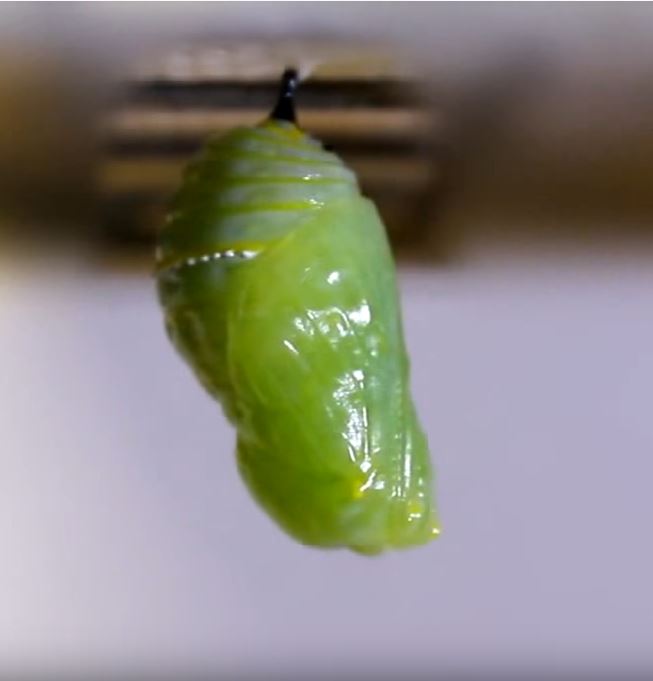
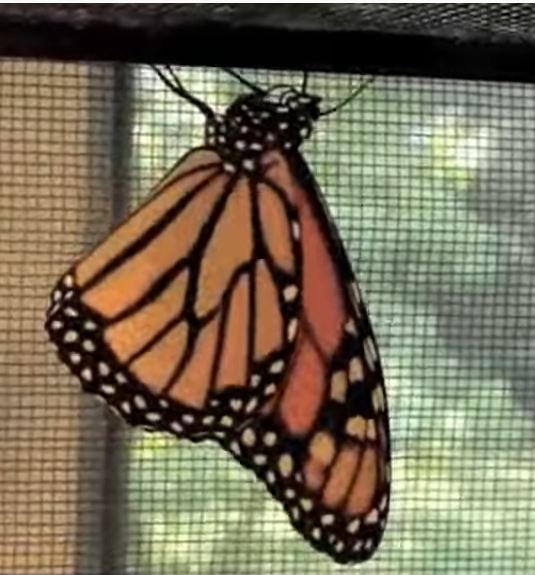
A transformation so drastic that somebody needs to have been at both ends of the process in order to accept that what came out was the same thing as what went in.
The Universe has already went through Metamorphosis 0.1 and 1.0. The ‘Big Bang’ and the apparition of life.
We’re witnessing Metamorphosis 2.0. Awareness’ coming of age.
Individuals becoming aware not only of their own awareness but also of their place in the order of things. Communities becoming aware that each of their individuals are paramount. That ‘no one left behind’ is the only thing that keeps the community together. Individuals understanding that each of them is equally important yet none of them indispensable.
Individuals and communities alike opening their minds to the fact that none of them might exist without the other.
Let’s face it. The homeless are ‘survivors’ who don’t pull their weight as members of the community. They live ‘off the land’ – but the land they use to live off is us, and they don’t give anything back in return. Except for the garbage they leave behind…
Hence we have a problem. Which we might choose to ignore. Or to solve.
I’ll presume we want to solve it. First step to solving any problem is, of course, to understand its nature.
So, what is bothering us?
The garbage they leave behind? The sore sight they offer each time we see them? The danger they represent for public safety? The fact that they occupy public property? And prevent the rest of us from using it? The fact that they don’t contribute? The loss of their creative potential? The bad example for our children? They are a reminder of what could have happened to any of us?
Second step, the ‘how’ of the matter.
What caused such a number of able bodied people to live in the streets? Why do so many of them use drugs? And alcohol? Why do so many of them refuse to be helped? By the institutions which care for them?
I don’t have a real answers for any of these. The first category of questions depends on each of us while the second on each of the homeless.
Nevertheless, I would like to point out a few things.
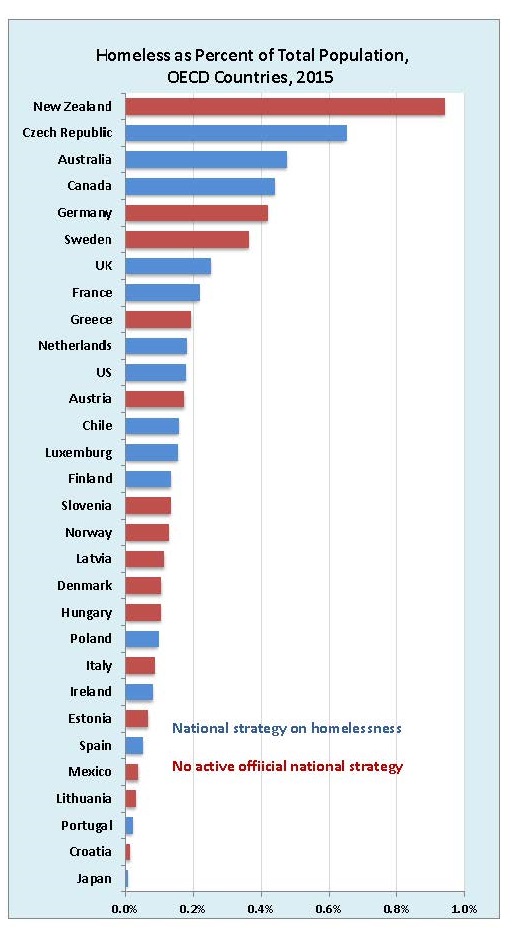
And what might we learn from this? Leaving aside the ‘vagaries’? That New Zealand has way more homeless people than Japan? And why nobody knows anything about the New Zealand homeless – or about those in the Czech Republic, but all concerned netizens are horrified by the manner in which the US are treating their homeless?
For starters, and given the relative size of the US population, there are way more homeless in the US than in the rest of the OECD. Roughly counting, of course. Secondly, the US is the wealthiest country in the world. And the one which used to describe itself as being the place where all dreams could be fulfilled.
So, after all, is there anything to be learned here?
Actually, yes.
That luck does play a huge role. It makes a hell of a difference being born a Maori in New Zealand or a billionaire’s child in California. And that becoming acculturated in the US actually increases your chances of becoming homeless.
The way I understand all this is that there must be a link between homelessness and the intensity, and character, of the social interaction prevalent among the members of any given society.
People in the West, and specially in the US, see personal success as paramount. And personal failure as … well… something to be shunned. Simply because it reminds us of what may happen to any of us. Specially when taking on the risks we must assume if we want to really succeed. As we are pressured from early childhood. The risks the immigrants grow accustomed to the longer they live in the US.
I’m afraid I was that close of forgetting a point I planned to make. Why so many of the homeless use drugs and have an alcohol problem.
Unii spun că ‘ce nu te omoară, te face mai puternic’. Poate. Amintirea momentului constituie întotdeauna un sprijin. Un precedent care îți aduce aminte de ceea ce ai fost în stare să faci. Peste ce ai fost capabil să treci…
Sprijinul devine mult mai puternic atunci când supraviețuitorul înțelege ceva din experiența trăită. Dacă nu atunci, măcar mai târziu…
Cert este că cele trăite lasă urme. Suficient de adânci încât să le pierdem din vedere.
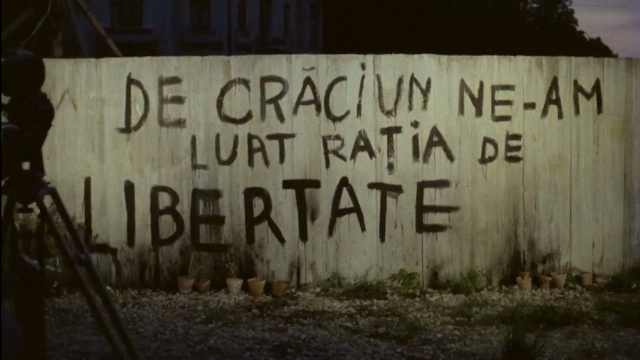
Abia aseară, la treizeci de ani după, mi-am dat seama cât de nepotrivită este alăturarea dintre „rație” și „libertate”. Mi-au trebuit 30 de ani, mai mult de jumătate din viață, să realizez cât de adânc îmi intrase în suflet conceptul de „limită”. Zahărul era cu porția, carnea era cu porția, uleiul era cu porția, pâinea era cu porția… așa că atunci când am rupt băierile, chiar și libertatea ne-am luat-o cu porția.
Doar cât am considerat noi. Că ne-ajunge. O rație…
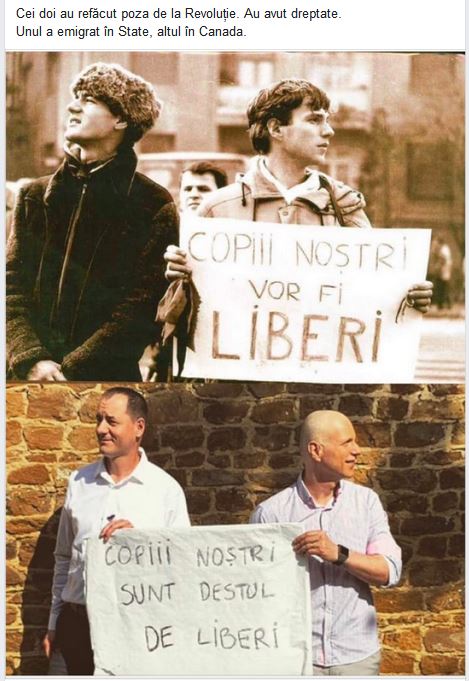
Destul de liberi?!?
Se vede că cicatricile supraviețuirii sunt suficient de adânci încât să ne urmeze și dincolo. Sunt curios dacă trec și peste generații.
Ce părere or avea copiii ‘lor’ despre toată chestia asta? Cum o fi să te simți „destul de liber”?!?
La prima vedere, spunerea asta aduce a pleonasm. Curiozitatea este, în sine, o nevoie. Nevoia de informație. De cunoștințe. De a înțelege ce se întâmplă.
Și atunci? Nevoia de nevoie?!? Cine are nevoie de nevoi?
Și totuși… Am putea vedea lumina dacă n-ar fi de fața și măcar un petec de întuneric? Am duce paharul la gură dacă nu ne-ar fi sete? De ce să mâncăm dacă nu ne e foame? Cât de conștienți suntem înainte de a înțelege nevoia de celălalt? De cooperare? De dragoste?
Ce ne întreabă nenea doctorul? ‘Aveți poftă de mâncare?’ Viața însăși este, până la urmă – și nu glumesc aici, o nevoie continuă. Abia după ce murim…
You might have figured out already that I don’t believe yet I find a lot of inspiration in the Bible.
I’d like to discuss today the subject of Eve. Many people are adamant that she was instrumental in Adam being banished from heaven. That she was conned by the serpent into convincing Adam to commit the first – and most important, sin. Into disobeying God, his Father. Hence Eve – and all her daughters, are the culprits for us, men, having to ‘toil for our daily food’. Outside of where we have been meant to live, the Paradise…
Really?!?
Then, if Eve was the root of all evil, why had God chosen Virgin Mary – Eve’s granddaughter, as the vessel for his beloved Son? For the instrument of our salvation?
Furthermore, if we treasure virginity – something which only man can spoil, then how come it is Eve – the entire womenfolk, who is considered the origin of sin?
Let’s move forward to the really hard questions.
Eve engaging in conversation with the serpent resulted in both Adam and Eve learning the difference between good and evil. In both Adam and Eve becoming full fledged, self aware human beings. And what was wrong with that?!? Becoming conscious was a bad thing? Thinking with our own heads is sinful?
I remember that, as a child, I had always experimented what was verboten. Except for the obvious things, of course. And used the trick on my own son. Whenever I wanted him to try something, I led him to believe that that thing was dangerous or out of limits. For him, of course.
Now, bureaucrats are individual human beings. Seeped/raised in the very same culture/weltanschauung as the rest of us. If we’re not sure our own acquaintances would help us move, why do we expect a complete stranger to help us? Only because he happens to be a bureaucrat? On the other hand, if what we need him to do is to fulfill his job – not ‘help us’, simply ‘perform his duty’, then it’s our fault. Our collective fault. Because we’ve allowed the wrong kind of people to climb the bureaucratic ladder.
And because we’ve allowed the wrong kind of weltanschauung to creep upon all of us. Laymen and bureaucrats alike.
And why shouldn’t they be? Depressed and panicked, that is?
Not so long ago, universities were perceived as fountains of knowledge and dispensers of philosopher’s stones. Having a degree was one of the most coveted things in the world. And one of the most useful.
That would explain the depression. But ‘panic attacks’? Experienced by the young generation of the most civilized and affluent people in the whole world? Well, just remember the financial burden students and their families have to shoulder…
So. Students are depressed and prone to panic attacks… Which only proves that the die-hard ‘conservatives’ are right. Millennials and Generation Z are nothing but a bunch of sissies.
Yeah, right. Only these two generations have grown under our watch. They are our children. We raised them. We have built the world they have to cope with.
In fact, we are the ones who need to be depressed. And panicked. Very soon we’ll need to retire. For no other reason than becoming too old to fend for ourselves. We’ll actually need our arses to be wiped clean and our world to be managed by somebody else but us.
Who will step in our shoes?
Furthermore, what example are we offering the next generation?
On the other hand, depression might be good. Evolutionary speaking, of course. The depressed have less energy. Hence are unable to put in practice major mistakes. Except killing themselves, of course. The depressed have a lot of time on their hands. Huge opportunity to think things over. To notice and understand the mistakes that led them here.
Those who will resist the urge to give up – either by actually killing themselves or by falling back into the old morass, will shape ‘tomorrow’.




 nicichiarasa