
You can!
But should you?!?

Neither makes sense.
At first glance, the second even less.
Buying a gun in order to ‘have an opinion’ is not only possible but also cheap.
At a second glance, the first is worse.
It sets the stage. In a certain manner….
You can!
But should you?!?
Neither makes sense.
At first glance, the second even less.
Buying a gun in order to ‘have an opinion’ is not only possible but also cheap.
At a second glance, the first is worse.
It sets the stage. In a certain manner….
“Mother Earth is a source of life,
not a resource.“
Chief Arvol Looking Horse

Mother Earth being the source of life – the, not “a” – is a truism. Regardless.
On the other hand, being a mere resource isn’t bad either… For the simple reason that all reasonable people treat resources is a responsible manner.
Right?
Specially when speaking about resources which are ireplaceable!
And since there is only one Earth… Huge, indeed, but finite nevertheless…
Which brings us back to ‘to each their own’.
Basically, there are two kinds of people currently living on Earth.
Some continue to treat it as a Mother – take from her only what they need and refrain from littering her bossom.
And the ‘cherry-pickers’. Who go by “Be fruitful, and multiply, and replenish the earth.” Who believe they had been given a free hand by their God. A free hand regarding the ‘dirt’ they have been made from…
The only problem with the ‘cherry pickers’ – exclusivelly with the ‘cherry pickers’ – being the fact that they don’t read enough. Enough of their (own) Book.
King James’ version is rather hard to ‘read’? OK…
‘Don’t eat any animal which has not been bled out first and don’t spill human blood?’
I’m afraid you’re still not getting it.
According to the book we’re talking about, God has made the entire world. Sparated the stars from the Earth, the water from the dry land, made all the plants and the animals… and Man.
Which man needs the Earth to live upon. An Earth as close to how it currently is as possible, in order for man to live comfortably!
But since “in the image of God has God made mankind”, then God himself needs the Earth.
For whatever reason.
Which means we’d better take good care of His Creation.
Of His entire Creation!
Keep it Virgin.
In Spirit!
Before wrapping up, I must remind you the Covenant between God and Noah’s children. Us.
“Never again will all life be destroyed by the waters of a flood; never again will there be a flood to destroy the earth.”
Corelate this with “Whoever sheds human blood, by humans shall their blood be shed” and “for I, the Lord your God, am a jealous God, punishing the children for the sin of the parents to the third and fourth generation of those who hate me” and the whole thing suddenly has a new meaning.
‘OK, no more floods. But you’re still going to feel the consequences of your own follies. You, your children and all those wallowing in the wicked way’.
”Scopul pentru care cineva înființează o firmă este să facă profit.
Cu cât este mai mare profitul cu atât e mai bine pentru firmă,
și implicit pentru proprietarii firmei.
Scopul statului este să ia cât poate de mult de pe urma funcționării unei firme.
Cu cât poate lua mai mult cu atât e mai bine pentru stat”
Noi, oamenii, avem ceva în plus față de celelalte animale. Capacitatea de a acționa ca un agent liber. De a lua hotărâri, de preferință în cunoștință de cauză. În mod conștient.
Capacitate codificată în legislația românească sub numele de „capacitate de exercițiu”.
O parte dintre societățile/culturile umane au devenit, în timp, democratice. Evoluția – adică fenomenul acela care impiedică supraviețuirea organismelor, biologice sau sociale, care nu fac fața ‘provocărilor’ la care sunt supuse – a făcut ca anumite societăți/state/culturi să inventeze – în mai multe rânduri și locuri – ceea ce noi numim, astăzi, democrație. Un spațiu de libertate în care fiecare face ‘ce vrea’ – atâta vreme cât nu răstoarnă barca – și în care hotărârile care influențează soarta comunității sunt luate abia după consultarea onestă a celor cărora le pasă de mersul lucrurilor.
Spațiul ăsta ‘de libertate’ presupune și libertatea cuvântului. Toată lumea poate spune tot ce are pe suflet.
Treaba asta e esențială pentru procesul de „consultare onestă a celor cărora le pasă de mersul lucrurilor”. Ce fel de consultare onestă a aia în timpul căreia cei consultați nu pot spune ce au pe suflet? Tot ce au pe suflet… Chestie care trebuie să fie liberă tot timpul, nu doar pe durata campaniei electorale!
Dacă tot putem spune tot ce ne trece prin cap – e o oarecare diferentă între ce avem în suflet și ce ne trece prin cap, numai că diferența asta poate fi făcută doar de fiecare dintre noi – atunci hai să ‘comunicăm’. Să împărtășim lumii toate gândurile noastre!
Să lăsăm lumea să discearnă! Să facă diferența între ….
Suficientă ‘pregătire de artilerie’!
Noi toți, fiecare în calitatea sa de agent liber, suntem supuși unor mai multe influențe.
Care acționează pe mai multe paliere și care sunt luate în calcul, atunci când decidem/spunem câte ceva, mai mult sau mai puțin conștient.
E foarte greu de discutat filozofie atunci când ți-e foame. Sau în prezența unui foarte atractiv, și evident disponibil, potențial partener sexual….
Ultimele două influențe care continuă să ne structureze procesul de decizie după ce toate celelalte au încetat să-și mai facă simțită prezența sunt cultura și ideologia.
Si nu, nu sunt deloc chiar același lucru.
Da, ideologia face parte din cultură – în sensul că amândouă au fost făcute de oameni și au fost transmise din om în om.
Numai că ansamblul cultural în care am evoluat este o devenire ‘naturală’ – fără scop în sine și rezultatul cooperării unul mare număr oameni care au făcut parte dintr-un imens șir de generații.
În timp ce fiecare dintre ideologiile care s-au perindat pe aici au fost opera unor inițiatori și suporteri care aveau câte o agendă. Câte ceva de demonstrat și/sau obținut.
Ute-așa am ajuns ca în însuși spațiul de libertate care presupune exprimarea fără opreliști, care inveterează decizia individuală cât se poate de aproape de dorințele și considerațiile fiecăruia dintre noi și care impune consultarea populară înaintea adoptarii oricărei decizii colective există oameni care ‘știu ei mai bine’!
Care știu ei, fără să întrebe pe nimeni, de ce sunt înființate firmele. Toate firmele!
Ce trebuie să facă statul și ce este mai bine pentru el…
Și, mai ales, că statul este – în mod absolut dar, în același timp, într-un fel extren de nebulos – diferit de restul societății!
Autorul citatului de mai sus este o persoană cât se poate de respectabilă.
Autorul citatului de mai sus este o persoană cât se poate de respectabilă.
Citatul descrie cât se poate de exact starea de fapt din momentul actual. Moment în care chiar noi, cei care trăim acum, suntem liberi să ne exprimăm părerile și să ne votăm viitorul.
Doar că citatul a fost redactat sub o puternică influență ideologică.
Sub o triplă influență ideologică.
De convingerea raționalistă că fiecare ‘trestie gânditoare’ poate cunoaște adevărul absolut – dacă se străduie suficient de mult și doar dacă rămâne fidel metodei raționale de căutare a adevărului.
De convingerea neo-liberală că statul este dușmanul împilator al tuturor celorlalți.
Și de concluzia lui Milton Friedman ca ‘profit uber alles’.
N-am să mă apuc acum să mă/vă întreb dacă e bine sau nu.
Vă întreb doar dacă vi se pare că lucrurile funcționează? Dacă vi se pare că mergem în direcția bună?
Eu aș reformula puțin.
Scopul pentru care cineva înființează o firmă este cunoscut doar de cel care înființează firma respectivă.
Tot așa, tot doar cel care înființează firma știe cât profit își dorește să facă. Ce profit i se pare lui rezonabil să aibe.
În ceea ce privește statele, sunt două tipuri de politicieni.
Unii care – forțați de împrejurări/condiționați de educația primită – înțeleg că impozitele colectate – multe, puține, nu contează, trebuie cheltuite în așa fel încât întreaga societate – populația organizată sub forma unui stat, să devină din ce în ce mai funcțională. Si alții care mai cred că odată ajunși la butoane îșii pot permite să sifoneze în interes propriu o din ce în ce mai mare proporție din bugetul colectat de stat.
Fiecare dintre aceste doua tipuri de politicieni – care sunt, de fapt, niște oameni ‘din popor’-ul care locuiește într-un anumit stat – învârt câte un cerc.
Primul, cel în care impozitele sunt cheltuite în mod judicios, este un cerc virtuos. La fiecare învârtitura lucrurile merg din ce în ce mai bine. Oamenii din societate percep impozitele ca pe un cost pe care îl plătesc pentru a trăi așa cum li se pare normal să trăiască. Părere pe care o vocalizează în mod constant. Mai apăsat în timpul campaniilor electorale. Și părere pe care o ‘formalizează’ cu ajutorul buletinului de vot.
Al doilea cerc, cel prin circumferința căruia din ce în ce mai mulți bani o iau ‘pe alături’, este unul vicios.
S-ar putea ca lucrurile să meargă bine pentru o oarecare perioadă. Mai ales atunci când există un mare decalaj între țara respectivă și cele din jurul/apropierea ei. Respectiva țară este, pur și simplu, aspirată în trena celorlalte. Așa cum s-a întâmplat cu Grecia până nu demult.
Doar că ‘mersul la aspirație’, după cum știu toți bicicliștii care s-au ținut suficient de mult timp bprea aproape de autobuze, implică anumite riscuri. Mai devreme sau mai târziu, autobuzul se oprește brusc iar biclistul se alege cu nasul spart. Și, pentru că și-a cheltuit toți banii pe concedii – chiar dacă nu erau ai lui, acum n-are cu ce să-și repare biclicleta.
Credit… ioc!
Cine-i așa prost să dea bani cuiva care își asumă genul asta de riscuri?
Care nu se gândește la ‘și eu ce mă fac mâine? Dacă mă prind aștia?’
Ce înțelegeți prin
Libertatea mea e libertatea ta?
Când libertatea mea/ta de a ne flutura pumnii prin aer se oprește acolo unde începe nasul tău/meu, nici unul dintre noi nu este cu adevărat liber. În situația asta, libertatea noastră este libertatea de a ne lupta între noi pentru cât mai multă libertate individuală.
Concepția asta tratează libertatea ca și cum am avea de a face cu o cantitate limitată. De libertate.
Cantitate pe care ar trebui să o împărțim, într-un fel sau altul, între noi.
Limitele libertății sunt de natură calitativă, nu cantitativă.
Vom fi cu adevărat liberi, cu toții, doar atunci când vom fi liberi împreună.
Decât atunci…
Atunci când vom înțelege că libertatea începe în fiecare dintre noi – în sufletele și în mințile fiecăruia dintre noi, și că libertatea noastră, a tuturor, poate fi pusă în practică – adică poate fi crescută, micșorată sau chiar anulată pentru o perioadă, doar împreună!
Cică să faci ce spune popa, nu ce face popa!
‘Dacă vrei să ieși din criză, pune mâna și plătește doi oameni. Din bani publici. Pe unul să sape un șanț și pe celălalt să-l astupe. Pe șanț, nu pe primul lopătar!’
Idea din spatele învățăturii lui Keynes fiind aceea că cei doi săpători, până atunci șomeri muritori de foame, vor avea astfel suficient de mulți bani la dispoziție încât să repornească afacerile ‘brutarului, măcelarului’ și chiar și chiar și pe cea a ‘berarului’! Iar toți aceștia – plătitori de taxe fiind – urmau să întoarcă la buget, prin efectul de cascadă, chiar mai mulți bani decât cei folosiți pentru plata foștilor șomeri.
Doar că șanțul lui Keynes era o metaforă!
Omul, adică Keynes, nu se aștepta ca cineva să-l ia ad-litteram. Pe șanț, nu pe el…
E de bun simț că dacă tot dai niște bani pe ceva – și niște oameni depun un efort să facă ceva – ca acel ceva să aibe și o utilitate directă! Și, mai ales, să nu strice!
Primum, non nocere!
Acu’ vreo câteva săptămâni am găsit un afiș la capătul străzii.
‘Luați-vă mașinile de aici că de poimâine ne apucăm de treabă!’
Zis și făcut.
La capătul săptămânii strada era un mare șanț!
Stați liniștiți, n-au schimbat nici o țeavă. Nici vreun fir de curent sau cablu de internet! Doar au scos asfaltul, pietrele, trotuarele și bordurile.
După care au adus alte pietre – sparte de data asta, au pus alte borduri – cele vechi aveau mai puțin de 10 ani, au turnat beton pe trotuare – încă mai avem internet, dar țevile care nu aveau fibra optica montată în ele sunt cam strivite, au turnat asfalt și s-au apucat să pună ‘pișcoturi’ deasupra betonului de pe trotuare.
Am uitat să vă spun că strada urmează să devină ‘cu sens unic’. Așa că au apărut niște șicane la cele două capete. Să nu poată intra două mașini una pe lângă cealaltă?!?
Da’ mașina de pompieri? Sau o cifă cu beton? Gunoiul? Astea cum iau curbele?
În linie dreaptă au loc, dacă parchează riveranii ca lumea…

Și încă o chestie interesantă.
La o lucrare de genul ăsta ai nevoie de mulți oameni. Inginer, operatori pe utilaje, lopătarii lui Keynes, cârcași.
Ei bine, inginerul, lopătarii și cârcașii sunt români. Iar toți operatorii de utilaje – excavatoare, compactoare, greder, mașina de asfaltat, sunt din Sri-Lanka. Operatorii, nu utilajele! Vin ceva mai devreme, singuri, își ung utilajele, completează uleiurile, șterg parbrizele… Utilajele sunt din Anglia si din Germania, că Progresul Brăila a ajuns la fier-vechi.
Românii sunt aduși un pic mai târziu cu un microbuz. Nemțesc.
Inginerul vine singur, cu un Duster. De la firmă. Care, după nume, se ocupă în principal cu montajul și întrețirea rețelelor de gaze.
And this has happened many more times across the world/along human history.

The fact that Stonehenge exists is ample proof that those people had been able to generate enough ‘wealth’ to build it.
We’ve been able to find out that the boulders had been sourced from two places. The 20 tons hard-sandstone sarsenes ‘traveled’ about 20 miles while the 2 tons blue-stones had been schlepped for about 220 miles. According to Mark Pitts, writing for the British Museum. And we think we have a fair idea about how the whole thing had been put together. Read the paper.
But we know close to nothing about the people who did it.
The stone ring is all that’s left of them.
Isn’t it strange? For such a technologically sophisticated people – and rich enough to afford such a herculean endeavor – to disappear in the mist of history?
And here’s a selection of other abrupt endings/’hibernations’:
Mohenjo-Daro and Harrapa in Pakistan.
Angkor Wat.
The Great Chinese Wall
The Egyptian pyramids
The Athenian Parthenon
The Roman Coliseum and the roads cris-crossing more than half of Europe
Kuldhara, the ghost-city
Machu Picchu
And, last but not least, the cathedrals mentioned by Reuter’s Mark John.
Europe did take a break after finishing building those cathedrals….
What am I trying to ‘suggest’?
That we, as a cultured species, have a tendency to evolve in fits and starts.
We tend to reach pinnacles only to descend – sometimes temporarily – in abject ‘marasmus’.
Could ‘self-sufficiency’ explain at least some of this?
While the spinning jenny was key to 18th century automation of the textiles industry,
they found it led to longer working hours in harsher conditions.
Mechanical cotton gins facilitated the 19th century expansion of slavery in the American South.

NOTA BENE!
Don’t tell me capitalism is at fault for any of this.
Capitalism is but a way of doing things. A road. Which we followed to where we are now.
How we behaved en-route and what we decide right now was/is our own contribution!

Learning from who’s experience?
A wise man is supposed to learn from other people’s experiences, right? No need to make your own mistakes, as long as they have already been committed… and the consequences made public!
‘Admitting that I may be wrong’ … easier said than done, for obvious reasons!
Very few people enjoy being proven wrong. Specially when ‘others’ get the upper hand. And even more so when those ‘others’ have nothing special. When those ‘others’ are nothing more but our “potential equals.”
We’re doing it for a noble cause.
In pursuit of the truth!
How about us being led into a wild goose chase?
Not by Karl Popper, mind you!
Modern propaganda, and particularly the kind currently permeating the social-media, is shaped and propagated by very skilled operators. Who are familiar with all the tricks in the psychology book and conversant in most ideological tenets currently whirling in the public space. And each of these propagandists has their agenda… Each of them tries to pull as many of us into their orbit… One of their favorite tools being Popper’s “I may be wrong and you may be right and, by an effort, we may get nearer the truth”.
In fact, these operators use Popper as a lever to break open our skepticism. To soften our disposition and to prepare the soil for the seed they want us to accept. And nurture…
How to resist? Given the fact that we are mere novices while they are masters of their chosen profession? Masters at ‘brain fogging’…
They try to mis-use Popper, we’ll use Popper as an antidote.
Do you feel treated as an equal?
Being invited as an equal member into a truth searching party?
Are you involved in a real debate? Do you get to say anything?
Or you, along with the rest, are simply told what to believe?
“Have you no sense of decency, sir, at long last?
Have you left no sense of decency?”
Joseph Nye Welch, 9 June 1954,
replying to Senator Joseph McCarthy.

As an European, I’m fascinated with how intense the Americans are.
‘knows nothing (nor cares) about Kommunism’…
As if Joe McCarthy had never existed – btw, he was a fascist – and Kommunism had been a German thing. All other languages use “c” when spelling the word, you know…
As a Romanian – who had spent the first 30 years of his life under the yoke – I can pretend to know a thing or two about the subject. Given the fact that Romania had been subjected to both fascist and communist rule. 1938-1945 and 1945-1989, respectively.
Apparently, and declaratively, those two are at the opposing ends of the political spectrum.
In the day to day practice, both belong to the totalitarian mode of controlling a society/country.
Before going any further, I’m going to mention a few traits shared by both modi operandi.
Communism had been first formulated – by Marx – and only then put in practice.
Fascism, like most other political ideologies, had been first practiced and only later put into words.
As far as I know, for communism to be successfully instated in a country, that country had to have had experienced a bout of fascism. Even if it had not been declared as such. This is a necessary condition but it isn’t sufficient. Fascism had been invented – declaratively – in Italy, but Italy hasn’t – not yet, anyway – become communist.
All communist and fascist regimes had ended in abject failure.
While all communist regimes had been instated in former fascist(oid) countries – to the best of my knowledge – fascistoid regimes may be, and already have been, reinstated in former communist countries.
There are also a few notable differences.
Communism pretends all property belongs to the entire people while fascism allows individuals to retain the ownership of their ‘belongings’. But only theoretically and subject to various limitations.
Under communist rule, the ‘democratic process’ is used exclusively to rubber-stamp whatever decisions had already been made by the current dictator while some fascist regimes use the electoral process to gouge the ‘social temperature’ of the ‘political organism’.
While the communist regimes tend to crumble under their own weight, the fascists usually grow too big (cocky) for their own good.
Before ending, I must mention the fact that both China and Russia have become fascist countries, despite China’s leaders pretending their country, literally their country, continues to be communist and despite Putin pretending Russia is a democracy. A democracy which attempts to denazify Ukraine…

Am întâlnit tot felul de explicații și păreri cu privire la soluția dată de judecători. De la ”fosta securitate’ și-a păstrat o ‘oarecare’ capacitate de a influența justiția’ până la ‘procurorii au încercat să facă ‘procesul securității’ iar judecătorii s-au folosit de chestia asta pentru a-i face scăpați pe cei doi’.
În Giuleștiul meu natal, pe vremea când Ursu era călcat în picioare de securiști, umbla o vorbă.
‘S-antâlnit hoțu’ cu milițianu’.
Adică s-au întâlnit doi oameni cu aceiași mentalitate dar care se află – cu totul și cu totul întâmplător – pe părțile opuse ale baricadei.
Ce vreau să spun cu chestia asta? Ce spuneau și Giuleștenii de rând. Care vedeau cum hoții furau liniștiți iar milițienii se făceau că nu văd în timp ce-și primeau tainul de la hoți. Asta atâta vreme cât hoții nu săreau calul…
Așa și în situația asta. Ursu e mort, toată lumea știe cine l-a omorât iar procuratura și judecatoria au reușit să-i facă scăpați pe cei doi nemernici. Din greșeală, din incompetență, din-adins… nici nu mai contează!
Tot ce contează este că omul de rând, precum Giuleșteanul pre-revoluționar, are din ce in ce mai puțină încredere în chestia aia care se cheamă ‘stat’.


What’s going on here?
What happened with/in the greatest/most powerful democracy on Earth?
Why has the American People allowed itself to be split in half? Each of those halves bowing to its own idol…
Only because ‘they had avocados’?!?
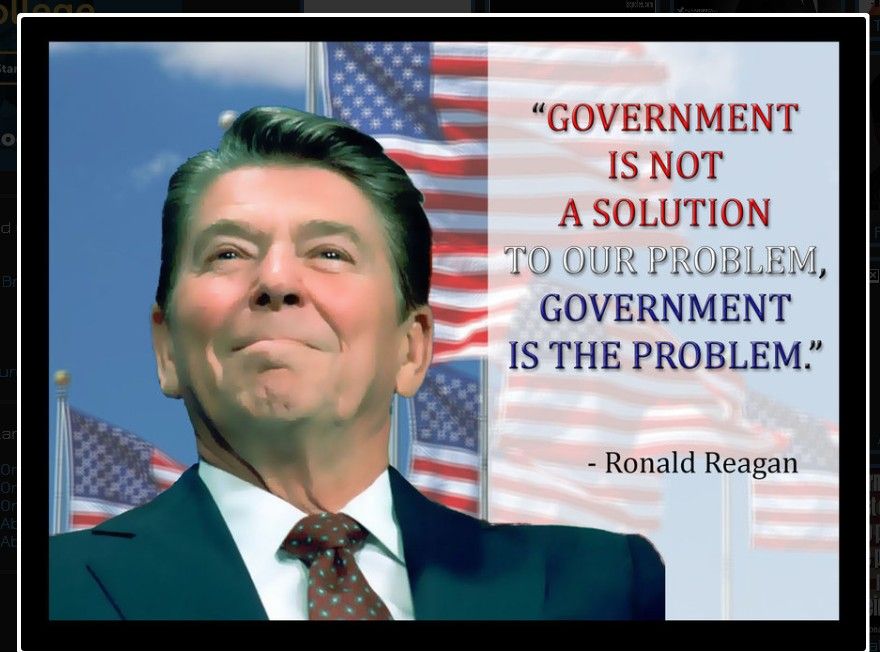
And what about Reagan? He was right, after all… Trump was the government, wasn’t he?
Reagan was incomplete.
Government is nothing but a tool. A tool for the society to govern itself with. “of the people, by the people, for the people“. But also a tool for a dictator to exploit a country.
Blaming the tool never takes the blamer out of the ‘unpleasant’ situation.
A more complete statement would have been:
‘Any unchecked government tends, sooner rather than later, to become a problem.’
The key word here being ‘unchecked’, not government. For the same reason which had prompted ‘god’ to warn us:
Any graven image you will ever make will inevitably be incomplete. Not because of your incompetence but because of my infinite complexity. I, your god, am infinite. Hence incomprehensible. You might glimpse some, or even a lot, about my ‘true’ nature but you’ll never find out enough. Enough for you to make a ‘usable’ graven image.
A reliable idol…
 nicichiarasa