By 1917 it seemed to Lenin that the war would never end and that the prospect of revolution was rapidly receding. But in the week of March 8–15, the starving, freezing, war-weary workers and soldiers of Petrograd (until 1914, St. Petersburg) succeeded in deposing the Tsar. Lenin and his closest lieutenants hastened home after the German authorities agreed to permit their passage through Germany to neutral Sweden. Berlin hoped that the return of anti-war Socialists to Russia would undermine the Russian war effort.
Do you remember the story about the early American Colonists “gifting of blankets and linens contaminated with smallpox” to the native inhabitants of the place? It worked, to a degree, because the natives had no prior experience with the disease. Their immune systems had no prior experience with this pathogen. Which had been construed as an opportunity by those who had cooked up the plan, even though – in those times – nobody had any idea about ‘immunity’.
Lenin was also effective towards pulling the Czarist Empire out of WWI. Do we really care whether he was aware of the fact that he had been used as a 5-th column by Kaiser Wilhelm II’s strategists?
For some reason, there still exists a considerable number of people not yet convinced that what had been experienced in the Soviet Union was “a true socialist/communist form of government”
The sad reality is that the Russian Revolution did establish a true socialist form of government! As per Marx’s teachings. The communists had been in charge of things, and the things failed to become better. In fact, they had become worse. Eventually, the Soviet Union – along with all other socialist attempts, had crumbled under their own weight.
Those who want to find better alternatives to democratic capitalism – good luck with that – need to find another word but socialism to describe their goal. Or wait a few generations before attempting to give it a new meaning. The current one had been wasted by the likes of Marx, Lenin, Stalin, Mao, Kim, Ceausescu…
Protagoras din Abdera a spus că ”omul este măsura tuturor lucrurilor”.
Platon a spus că sofiștii trebuie ‘aruncați la groapa de gunoi a istoriei’.
Protagoras era sofist – ‘filozof’ plătit de ‘clienții’ săi pentru a-i învăța să gândească, fiecare dintre sofiști avea linia sa proprie de gândire iar ‘clienții’ îl alegeau pe cel care le plăcea fiecăruia dintre ei. ‘Sfârșitul’ lui Protagoras l-a anticipat pe cel al lui Socrate. Condamnat pentru ‘libertate prea mare în gândire’ a fost exilat și apoi aruncat peste bord de pe corabia care-l ducea către locul în care fusese silit să plece.
Tot Platon a spus că ‘cetatea, adică ‘polisul’, trebuie guvernat de niște oameni special educați în acest scop’. N-ar fi mare deosebire față de ce făcea Protagoras… Care îi învăța pe oameni să gândească… Din păcate asemănarea este doar de suprafață. Fiecare sofist își adapta ‘programa’ la fiecare dintre elevi. Fiecare dintre elevi era învățat să gândească după ‘chipul și asemănarea sa’. Să măsoare lucrurile din punctul său de vedere. Punând cap la cap, în mod democratic, toate aceste puncte de vedere, Atenienii din Antichitate au reușit să construiască o întreagă civilizație. ‘Regii Preoți’ promovați de Platon erau educați toți după același șablon. Cel indicat de Platon!
Aristotel, cel mai cel dintre studenții lui Platon, a educat un astfel de Rege-Preot. Pe Alexandru cel Mare. Care, profitând de condițiile social-istorice produse de guvernarea ineptă a lui Darius al III-lea al Persiei, a cucerit tot ce se afla între Meditarana de Est si Indus. O mare realizare pentru istoricii europeni dar o mare nenorocire pentru populațiile respective. Pentru soldații morți din ambele tabere și pentru toți cei strămutați sau uciși în timpul luptelor. Militari sau locuitori ai orașelor asediate. O mare nenorocire și pentru Alexandru însuși. Căruia succesul i se urcase la cap și care nu mai accepta sfaturi de la nimeni. Care și-a ucis tovarășii cu care începuse campania și care a murit din cauza băuturii.
Marx, un alt mare gânditor al omenirii, a decretat că „treaba filozofilor este să schimbe lumea”. Că degeaba vii cu explicații dacă nu-ți pui convingerile în practică. Așa că a scris „Manifestul partidului comunist”. Un foarte bun ‘ghid practic despre cum să organizezi o dictatură’. În condițiile pe care le sesizase Marx în Anglia. Țara care îi acordase ‘azil’. Țara care, în virtutea dreptului la opinie, l-a lăsat să-și pritocească ideile și apoi să le pună pe hârtie.
Am să fac o pauză și am să vă invit să citiți un text scris mult mai profesionist decât sunt eu în stare.
Textul, scris pe 1 Mai 2020 de Vasile Ernu, este mult mai lung. Am furat doar această porțiune pentru că mi se pare suficientă. Că descrie suficient de bine situația din Anglia respectivei epoci.
Ei bine, ‘ghidul’ lui Marx nu a fost, încă?!?, ‘utilizat’ în Anglia. Nici prin vreo altă țară dintre cele ‘avansate’ din punct de vedere economic ȘI SOCIAL. Aici au fost inventate tot felul de remedii pentru ‘disfuncționalitățile’ sesizate de „marea literatură a secolului XIX” astfel încât tensiunile sociale au fost ținute sub control. Dar omenirea nu a scăpat totuși de experimentul comunist…
Precum Alexandru cel Mare înaintea lui, Lenin – cel mai bun elev al lui Marx, chiar dacă cei doi nu s-au întâlnit niciodată, a profitat de consecințele create de un război idiot și de guvernarea cretină a unui întreg șirag de țari și a instaurat Uniunea Sovietică. Uniunea Republicilor Sovietice Socialiste. Comunismul.
Precum imperiul lui Alexandru, și cel al lui Lenin s-a prăbușit destul de repede. Nu destul de repede pentru cei care au suferit consecințele guvernării sovietice. Nu destul de repede pentru cei care au suferit consecințele încercărilor dictatorilor sovietici de a-și extinde influența. ‘Destul de repede’ doar la scara istoriei!
Revenind la spusele lui Marx: ‘Ce rost mai are să gândești dacă nu-ți pui concluziile în practică?’ mă întreb când vom scăpa de blestemul Cassandrei? Știind foarte bine ce se va întampla, când vom înțelege că nici de data asta nu ne vom arăta a fi mai deștepți decât precedenții noștrii? Că ‘garbage in, garbage out’ e valabil și la scara istoriei?
Ce mi-a venit? Tocmai am terminat de citit
Acum vreo lună, umbla pe net o listă lungă de citate – compilată tot de un ‘intelectual’, care demonstrau ce părere ‘bună’ au avut, de-a lungul istoriei, un șir lung de intelectuali ruși despre propriul popor.
Atribuit – de către „scriitorul român, Orlando Baraș”, lui Dostoievski. E un pomelnic întreg, am să mă opresc aici. Este cât se poate de posibil ca în vasta literatură scrisă de Dostoievski să existe și această înșiruire de cuvinte. Nu mă bag, nu am citit nimic de respectivul. Tot ce știu este că fără context, un citat nu înseamnă prea multe. Și mai știu ce răspunde Google atunci când îl intrebi
Hopa! Cu alte cuvinte, părerea lui Dostoievski despre poporul în sânul căruia s-a născut este cel puțin nuanțată. Negativă, conform citatului atribuit lui de către Orlando Baraș și bună – pe alocuri frizând auto-adulația, conform listei compilate de colaboratorii români ai site-ului subiecte.citatepedeia.ro.
Și atunci? De ce s-ar lansa „elita lui Putin” într-o campanie de dezinformare a poporului rus? De îndoctrinare? Doar pentru că au fost plătiți pentru a face acest lucru? Adică mituiți? Nu înțeleg acești ‘intelectuali’ că își taie singuri viitorul de sub picioare? Că îl vând ieftin pe un prezent oricum nesigur? De ce s-ar lansa un „scriitor român” într-o campanie de denigrare a poporului rus? A poporului, nu a dictatorului… bine, pe dictator nu-l mai poți ‘denigra’… cel mult în mintea apărătorilor lui… Revenind la cei care vorbesc de rău întreg poporul rus, ce urmăresc aceștia? Intensificarea ajutorului dat Ucrainei? Pentru asta sunt suficiente câteva fotografii cu ‘realizările’ armatei lui Putin. Da, armata lui Putin este constituită din soldați ruși. Doar că armata lui Putin nu este Rusia.
E chiar atât de greu de înțeles, mai ales pentru niște intelectuali, că războiul ăsta se va termina la un moment dat? Și că, indiferent de cât de nasoală va fi înfrângerea – pentru Putin, sau de cât de lung va fi războiul, după aceea va trebui să coabităm – noi, supraviețuitorii din ambele tabere, unii cu ceilalți? E atât de greu de înțeles, mai ales pentru niște intelectuali, că războiul ăsta se va termina mai repede dacă vom reuși să desprindem poporul rus de sub influența lui Putin? Și că acest lucru nu se va întâmpla atâta vreme cât noi le vom spune că îi disprețuim? Pe toți? Dându-i lui Putin oportunitatea să se prezinte în postura de singur apărător al Mamei Rusiei în fața hoardelor de barbari?
Marx l-a învâțat pe Lenin că primul pas care trebuie făcut de către cineva care construiește un imperiu este să controleze ideologic mulțimea. Prin intermediul unor ‘activiști’ bine educați la ‘școala de partid’. Plato spunea practic același lucru. Că treburile cetății trebuie încredințate unui grup de oameni educați într-un mod coerent. Adică ideologizați. Putin continuă această ‘tradiție intelectuală’. A dresat, în timp, un grup de oameni să producă un anumit gen de propagandă și să ducă la îndeplinire hotărârile adoptate de el. Inclusiv pe cele mai criminale dintre ele. Simultan, a îndepărtat de ‘microfon’, prin orice mijloace, pe toți cei care i-au contestat vreodată autoritatea. Ne confruntăm astăzi cu cele mai proaspete consecințe ale funcționării acestui mecanism. Ororile suportate de poporul Ucrainean.
Și noi ce facem? Înțelegem mecanismul pus la cale de Putin? Mecanism care nu e deloc nou… Invățăm unde să punem ‘nisipul’? Cum să ‘dezactivăm’ această bombă socială?
Înțelegem odată că fără ‘exagerările’ capitaliștilor timpurii, Marx n-ar fi avut despre ce să scrie? Că fără tensiunile sociale rezultate din guvernarea țaristă, Lenin nu ar fi putut să instaureze comunismul în Rusia? Că, indiferent de cât de corupți ar fi fost funcționarii post-sovietici, ‘capitalul de lucru’ care circula prin Rusia lui Eltsin tot de origine ‘externă’ a fost? Și că fără corupția aia enormă, Putin nu s-ar fi putut cățăra la putere? Că tratată altfel, Rusia post-sovietică ar fi evoluat în altă direcție? Pe o traiectorie asemănătoare celei urmate de Germania de după WWII… Așa, lăsată în ‘boii ei’, după ce Uniunea Sovietică a pierdut – de una singură, Războiul Rece, succesoarea a căzut pe panta pe care alunecase și Germania de după WWI. Populația nu a înțeles, de una singura, de ce a fost pierdut războiul, elitele nu au vrut nici ele să-și recunoască ‘meritele’, au fost identificați ‘vinovații externi’ și totul a fost reluat. De la început.
Repet. Și războiul acesta, cel început de Putin împotriva Ucrainei, se va sfârși la un moment dat. Nu știu când dar știu că, în cele din urmă, Putin va fi învins. Cum, necum, Putin va pierde acest război.
Încă nu știu cine va câștiga pacea de după acest război. Dacă vom reuși, cumva, cei care îi vom fi supraviețuit lui Putin – adică învingătorii din ambele tabere, să ne așezăm la aceiași masă. Dacă vom reuși să ne croim un viitor împreună. Singurul posibil, pe termen lung.
Altfel, acea pace va fi doar un armistițiu. ‘Decât’ încă un armistițiu. O pauză, mai lungă sau mai scurtă, între două războaie succesive.
Protagoras spunea că oamenii dau măsura lucrurilor. Că până nu înțeleg, ei, cu adevărat, despre ce e vorba…
For sometime now, I was having a very hard time trying to understand what’s going on.
Seemingly intelligent people keep sending messages demonstrating the exact contrary. On ‘social media’!
So. Communism is good and life saving masks and vaccines are bad… Communism is good because some of the capitalists have been bad and life saving measures are bad because they are forcefully imposed!
Communism – which has failed each and every time when and where it had been attempted, is better than capitalism. Because some of today’s capitalists refuse to pay their taxes. The fact that people living in the ex-communist countries still struggle with the consequences of the systemic errors inherent to the communist ‘order’ isn’t relevant anymore. The selfishness of the tax-dodgers ‘trumps’ everything else. Pun intended!
Life saving measures are bad for the single reason that they are forcefully imposed by a majority which wants to live upon a minority which considers liberty to be more valuable than life. I’m not going to argue that you cannot enjoy liberty while being dead. That would be idiotic. I’m only going to ask
Liberty from WHAT?!?
From WHOM?!?
Who’s the oppressor? What do they force us to do? Live?!?
Or wear a mask, get jabbed and pay taxes? As in ‘do something back for the community which supports you’? Contribute to the community where you had been born, raised and which makes your current life possible…
The eureka moment had come when
I realized that ‘it takes two to tango’.
Marx wouldn’t have had any traction without the ‘exaggerations’ of the early ‘robber barons’. Lenin wouldn’t have been able to steer the Russian Revolution so far left without the ‘benefit’ of the former, Tsarist, rulers having behaved in an absolutely idiotic manner. Hitler, and Mussolini, wouldn’t have been able to steer their countries so far right without the errors committed by the previous ‘administrations’. The current American political scene would have been completely different had the political actors behaved in a more reasonable manner. Both sides of the political spectrum…
We’re currently at war. Undeclared and mostly not understood. Let me use a WWII example to make things clearer.
Much of the equipment used by Hitler’s army to attack the USSR had been built outside Germany. Following German designs and according to technological processes developed in Germany but using foreign workers laboring in foreign manufacturing facilities and processing raw materials sourced from outside the Third Reich. France’s Renault, Citroen, Peugeot, Berliet and the Czech Skoda are but a few examples. Yet despite the fact that the nazis had forced almost the entire Europe to work for them, the Allies have eventually prevailed. Simply because the Allies had pulled together! And that they had been helped by the Resistance. Which Resistance had been encouraged and helped by the Allies themselves.
The current aggressor, SarsCov-2, uses the very same tactics. It invades an organism, takes over and forces its victim to work for it. To build fresh virus armies. Which armies are then sent out to conquer more organisms. More Human People, that is.
And what do we do? The potential victims? The ‘logical’ allies?
Do we stick together? Do we have each-other’s backs, like all truthful allies? Do we make good use of whatever weapons each of us can use? Masks, vaccines, social distancing…?
Like the allies had done during WWII?
You see, WWII, like all other wars, have not been won, or lost, by soldiers alone. War is a country wide effort. To win, a country must mobilize all its energies. The “Home Front” is not an empty phrase. Not at all!
Do you see that happening in the current war?
Or too many of us have let the health-workers to fight OUR war of survival on their own? On our behalf…
ICU nurse sleeping in a box while all the beds and the chairs in the hospital (St. Pantelimon Emergency Hospital, Bucharest, Romania) were occupied.
Basically, Adam Smith and Ayn Rand had the same thing in their minds.
How society works and how individuals meet their needs in a social context.
And both of them had reached the same solution. That capitalism was good.
Unfortunately – for Ayn Rand’s fans, any similitude between them stops here.
Adam Smith had described a reality. Something which had evolved, naturally, in the cultural milieu to which he had happened to belong.
Ayn Rand was trying to push a social model.
The fact that what Rand was trying to push was very close to what Smith had described is, indeed, important. But the difference between something which had evolved naturally and the very same something which had been imposed, by force, is also important.
Let me give you an example.
Christianity. Much of what we have today – from ‘human rights’ to the very concept of ‘science’, has it’s roots down in the principles exposed in the Bible. South America is, now, a Christian territory. Populated by people who had immigrated as Christians and by people – just as Christian as the first category, who had been born to parents having other beliefs. Parents who had been forcefully ‘conversed’ to Christianity.
It’s easy to notice that people in South America don’t fare as well as those in Europe, North America or Australia. Why? They are Christians, South America uses the same capitalism and the same democracy as the rest of the ‘civilized’ world… why are the results so different?
Don’t bring ethnicity into discussion! The explanation is simple and has nothing to do with ethnicity.
While in Europe, North America and Australia Christianity and capitalism had evolved naturally – in the sense that they had occurred in Europe and had been translated by the European immigrants to North America and Australia, in South America – and in other places, Christianity and capitalism had been forcefully imposed by the immigrants upon the much larger local populations.
Just as Communism had been forcefully imposed by the Lenin led Bolsheviks upon the Russian People.
Forget about the fact that communism had failed, no matter how hard some people have tried to make it work, while capitalism works for real – when used properly. My point is that whenever somebody tries to force something upon somebody else, the results will never rise to the expected level. No matter how good that ‘something’ might be.
Are you familiar with ‘you can lead a horse to water but you cannot make it drink’? Leading it to water is enough. Whenever somebody becomes ‘enthusiastic’ enough to try to force a horse to drink, the results …. no matter how skillful the ‘enthusiast’ might be…
And there’s another ‘small’ thing which makes a hell of a difference. Adam Smith’s main point was that the whole society benefits from the functioning of the free market. Where each ‘agent’ competes with the others towards meeting his own goal. Which competition – as long as it remains free, results in everybody – well, almost, having a better life. Ayn Rand’s point being that the free market is there only for the benefit of the ‘strongest’. Which is in line with Lenin’s view on the matter… ‘The Bolsheviks merit to lead the revolution because they are the strongest…’
My previous post was about the parallel fate endured by those who had experienced nazism/fascism and/or communism.
My point being that nazism/fascism had been powered by the feelings of those attempting to regain their previous, higher, status while communism had been powered by the feelings of those not allowed to ‘move forward’ by the social constraints paralyzing their societies.
Currently, people are ‘confused’. Some say communism had been better than nazism – for various reasons. Others find various excuses for the way both regimes had treated the general population and, mainly, the ‘dissidents’. Or, specially for the nazi, the ‘differents’. There is, though, a convergence point. Nominally, at least. All sides declaratively abhor the violence employed by both regimes.
To add to the confusion, after the 2007 financial meltdown, more and more ‘concerned individuals’ have fingered capitalism as the main culprit for all the tragedies experienced by humankind in the last century and a half.
For me, this is the straw which will break the camel’s back.
So. Nazism/fascism – which is nothing but a ‘condensed’ form of corporatism, is bad. Communism – a similarly centralized manner of social decision making, only differently sold to differently feeling masses, is also bad. Capitalism – a decentralized manner of resource allocation, is considered to be more or less equivalent to both nazism/fascism and communism. All three of them have been declared equally criminal…
Then what? What are we to do next? Hang ourselves in despair? Reheat either fascism or communism?
Or look forward than our own noses?
Both those who had followed Hitler and Lenin/Stalin were feeling desperate. Desperation drives you to do stupid things. And there are plenty of unscrupulous people willing to profit from this kind of situations.
Do we really want to prevent ‘unpleasant’ experiences? Then we need to go beyond blaming the likes of Hitler and Lenin/Stalin. They should be dealt what’s rightfully theirs, no doubt about that. But we also need to make sure that the ‘run of the mill’, the ordinary people who make things work in this world, no longer feel desperate.
How to do that? Taking into account that contemporary capitalism seems to be faltering?
What was the common thing between nazism/fascism and communism? The fact that decision making was concentrated in a very small number of hands? Which had led to both regimes ending up in abysmal failure?
What is the apparently unstoppable trend in our contemporary societies? The apparently unstoppable wealth polarization?
Then let’s tax ourselves out … America worked fine during the ’50s and ’60, when the highest marginal tax was 91%… Yeah, only those years had been followed by stagflation. And let me remind you that communism can also be interpreted as ‘100% tax followed by a comprehensive redistribution’. And it also failed.
Then how about ‘libertarianism’? No taxes, no government…
But how about less extremism? Of any kind?
How about remembering that liberal capitalism has made possible all that we have today? Liberal as in free-market capitalism, of course.
Free market as in competition working both ways. Entrepreneurs competing among themselves for clients AND resources. The workforce being, of course, a resource. The ‘compensated’ workforce representing the bulk of the clients…
What we seem to have forgotten today is that the circle must be round. If we want the ‘show to go on’, of course.
If some of us concentrate too much control over the rest of us – either way, the circle becomes lopsided. And everybody has everything to loose.
No matter whether this happens as a consequence of nazism/fascism, communism or even capitalism.
At least, capitalism has proved to be manageable. Let’s make it work, again.
Remember those metaphorical stories whose heroes end up having to find the answer to one in order to save themselves/the day? Like Sophocles’ “What walks on four feet in the morning, two in the afternoon and three at night?”
A riddle, of course, being a question which cannot be answered until the individuals attempting to solve it stick their heads out of the box into which the riddle had been framed.
So. Individualism? Collectivism?
Having grown up under communist rule – supposedly the most collectivist social arrangement to date, I can testify that there is no such thing as collectivism without individualism nor individualism without collectivism.
Libertarians’ mantra is that socialism/communism – and even liberalism, as Americans understand it, is a form of collectivism. And, of course, that collectivism is bad for you. Socialists, on the other hand, maintain that the current situation – which is seen as being bad, is the consequence of the growingly extreme individualism which plagues modern societies.
Interestingly enough, both sides are simultaneously right. Communism is indeed bad for you and the bad aspects of today’s society are a consequence of callous selfishness.
On the other hand, all communist societies are composed of a huge mass of obedient subjects AND a small number of individual, and very individualistic, leaders. Similarly, all developed capitalist societies – including those sporting huge discrepancies between the shrinking number of haves and the growing number of utterly destitutes, have reached the current level of sophistication because most of their members continue to share the belief that ‘all men have been created equal and that all of them have certain, nonnegotiable, rights: Life, Liberty and the Pursuit of Happiness’.
“Share the belief…” But wasn’t this the very definition of collectivism? A social arrangement where the most important possession belongs to THE public? Was there anything more consequential for what is currently known as the ‘Euro-Atlantic’ civilization than this shared belief? Other peoples have been in possession of way more abundant natural resources. Had reached ‘astronomical’ levels of civilization way before we were even able to wipe our noses… And yet…
Haven’t we, individual thinkers, figured out yet that unless we agree on ‘the basics’, we’ll be easy prey for the callous ‘snake oil merchantmen’ who have no qualms to use collectivist slogans to pitch some of us against the others?
Haven’t we figured out, yet, that there is no ‘political collectivism’ without fear? All collectivist social arrangements, both socialist and fascist/nazist, have been built using fear/contempt (of the other) to cement ‘the people’ into believing the lies proffered by false prophets. Lenin, Mussolini, Stalin, Hitler, Mao… Lies proffered by callously individualistic political agents… bent on satisfying their own domineering instincts and making ‘good use’ of pre-existing conditions.
Haven’t we figured out yet that individualism, the tame version developed along with the good aspects of the Western Civilization, is, by nature, the very beneficial consequence of the mutual respect which (still) exists among the members of our societies?
So, to answer the riddle, we need to understand that there is no real conflict between bona fide individualism and bona fide collectivism. Just as there is no conflict between two perpendicular lines.
Since, by trade, I’m a mechanical engineer, I’ll use a very practical metaphor to illustrate this idea. Consider a pressurized Oxygen tank. The more pressure inside, the more Oxygen you can store in it. The more useful the tank. Only if you ramp up the pressure too much, you end up with an explosion. In this situation, you might consider ‘pressure’ to be in conflict with the ‘walls of the tank’, right? Wrong. The conflict is only in your mind. Pressure is simply perpendicular to those walls. The more pressure those walls can withstand, the more useful that tank is for you.
But it’s your responsibility to determine the thickness and resilience of those walls. It’s your responsibility to choose how much to ramp up the pressure. For the very simple reason that that tank is yours. It is you who will suffer the consequences.
Peste puțin timp, vor fi 30 de ani de când a implodat lagărul comunist.
O jumătate de viață de om.
Momentul invită la reflexie. Mai există supraviețuitori în putere și încă lucizi.
În același timp, noua generație – care doar a auzit de cele întâmplate sub fostul regim, începe să preia controlul asupra unui număr din ce în ce mai mare de ‘butoane’.
O parte semnificativă dintre cei care au experimentat comunismul au dezvoltat tot felul de nostalgii iar o parte din ce în ce mai mare a ‘inocenților’ se comportă ca și cum n-ar fi înțeles nimic din toată tărășenia.
Ei bine, există două feluri de comunism.
Cel imaginat de Marx și cel experimentat de ‘argații’ lui Lenin, Mao, Castro, Pol Pot, etc.
Diferențele dintre ele sunt majore dar asemănările sunt și mai importante.
În imaginația lui Marx, comunismul urma să apară atunci când suficient de mulți dintre membrii unei societăți urmau să se prindă că erau exploatați de o minoritate.
În practică. Lenin, Mao, Castro, Pol Pot și ceilalți s-au folosit de nemulțumirea maselor pentru a rasturna ordinea socială. Și pentru a face în așa fel încât o minoritate, a lor, să acapareze toată puterea.
Cu alte cuvinte, diferența între comunismul teoretic al lui Marx și cel practic al lui Lenin & company este că la Marx apariția comunismului urma să fie mai mult sau mai puțin naturală în timp ce Lenin și gașca sa au dat dovadă de un oportunism feroce.
Asemănările mi se par mult mai importante. Tocmai pentru că oferă mult mai multe informații utile.
Pentru început, trebuie sa constatăm că imaginația lui Marx a fost suficient de mare încât să prevadă chiar și oportunismul lui Lenin. Pe undeva pe la începutul manifestului comunist, Marx îi descria pe comuniști ca fiind „avangarda clasei muncitoare” – oameni cu o conștiință socială foarte ridicată, care se pun în fruntea luptei de emancipare a proletariatului și care se sacrifică pentru binele societății în ansamblu… Și uite-așa o barba-avea…
A doua asemănare se referă la minorități.
În ambele variante, energia socială care face posibilă apariția comunismului este nemulțumirea maselor cu privire la regimul/ordinea socială instaurat de minoritatea aflată la putere înante ca noua minoritate, cea comunistă, să o detroneze pe prima.
Al treilea numitor comun, și cel mai important, este chiar energia socială despre care vorbeam în paragraful anterior. Și care nu ar fi putut fi manipulată în mod criminal de alde Lenin dacă nu ar fi existat.
Și nu ar fi existat dacă Nicolae al II-lea ar fi luat exemplu de la vărul său care statea pe tronul Angliei în loc să plece urechea la predicile lui Rasputin… Sau dacă în China ar fi avut loc, tot de sus în jos, ehivalentul chinez al revolutiei Meiji… sau dacă interese ‘obscure’ nu l-ar fi propulsat și ținut pe Batista la putere în Cuba… și așa mai departe…
Până la urmă societatea umană seamănă foarte bine cu o baterie electrică.
Fără o ‘diferență’ de potențial între cei doi poli, bateria e moartă. Nu produce nici un fel de curent. Poți să o arunci liniștit la gunoi – sau să o reciclezi, dacă ții la viitorul planetei.
Pe de altă parte, dacă diferența de potențial crește peste limitele rezonabilului relativ, curentul o ia pe scurtătură.
În loc să circule prin exteriorul bateriei, și să producă ceva constructiv – de exemplu bunăstarea majorității membrilor comunității, o ia ‘pe direct’. ‘Face scurt.’ Adică topește izolația și ‘își găsește liniștea’ mult prea devreme, înainte să producă ceva cât de cât folositor.
Cum apare acest gen de ‘supratensiune’?
Mai țineți minte „Ucenicul Vrăjitor” al lui Goethe?
Cam despre același lucru e vorba și aici. Orice electrician care se respectă știe că nu poți să depășești anumite limite. Că nu poți să concentrezi prea multă energie într-o portiune prea mică din rețea.
Din păcate, pentru ei și pentru cei care le dau crezare, ‘ucenicii vrăjitori’ nu țin cont de nimic. Toți fac niște greșeli din ce în ce mai mari. Greșeli care, la rândul lor, se acumulează și dau naștere unor noi ‘supratensiuni’.
După cum bine știm, comunismul s-a prăbușit la fel de dureros ca țarismul.
Sau ca orice altă forma de autoritarism/monopolism/autarhie.
Ei bine, până când suficient de mulți oameni – și în special dintre cei aflați la putere, nu vor înțelege că prăbușirea unei forme de autoritarism nu justifică în nici un fel existența oricărei alteia, cercul vicios va continua să se tot închidă.
Activists dismantle Ukraine’s biggest monument to Lenin at a rally in the eastern city of Kharkiv on Sept. 28, 2014. Photo: Igor Chekachkov/Associated Press
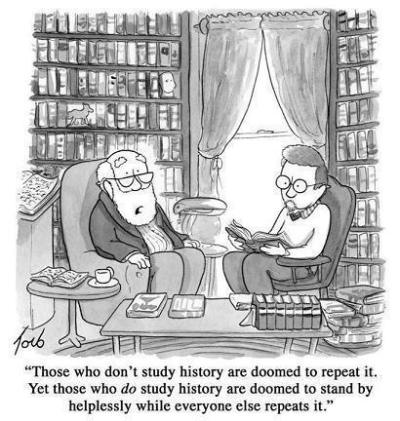
Wall Street Journal reports that Ukrainian people are somewhat baffled by a new law banning the use of Soviet (and Nazi) symbols.
And while the caption does harbor some truth it somehow completely misses the point.
So:
– Those who don’t study the history have all the chances to repeat it but only if they are just as callous as their ancestors.
– Those who do study the history and stand by helplessly while everyone else repeats it have studied it in vain. They still haven’t got a clue about what really happened outside those books they’ve been reading. Had they learned a real understanding of what went on they would have been able, and willing, to explain it to their contemporaries and thus help them move forward, to a totally different set of mistakes waiting to be made.
Just as Plato (and Marx after him) thought of having found the absolute truth and did his best to lead his people to it …
But don’t despair. There is a safer way. To let things take their own course, to develop naturally. Just as Lao-Tzu taught us.







 nicichiarasa
