Medicine and transportation are roughly of the same age.
As soon as people had realized there was a difference between their bodies and the rest of the natural realm, they had started to take care of those bodies and to carry along various things – food, clothes, various implements, etc.

At some point, our ancestors had become ‘industrious’. And actively searched for ‘cures’ and for more efficient manners of transport.

To shorten a very long history, I’ll get directly to the point I’m trying to make.
There are two links between medicine and transportation. Two synergistic links, actually.
Both of them simultaneously increase the autonomy of the individual human being and the social ties between the members of the society. It is very hard to take care of your body when you are on your own and ‘transport’ might come handy when traveling alone but is way more useful in a social context.

Vaccines and automobiles are relative pinnacles in their specific domains.
Vaccines have eradicated or, at least, alleviated some very dangerous diseases. Small pox, rabies, polio, measles… Nowadays even some cancers have become susceptible to be treated with vaccine like treatments.
Automobiles… do I really need to tell you what automobiles did for us? How they have expanded our scope? Our ability to go places, taking with us almost everything we fancy?
And, like the rest of medicine and transport, vaccines and automobiles have not only increased our freedom – from disease and distance, but also the ties between us. Medicine has become even more social – most vaccines need a certain threshold in order to reach their full potential, and the transport infrastructure has become more complex. Thanks to both of them, each of us can go almost everywhere on the planet. For almost any place where a road can be found, there is a cocktail of vaccines to make that place safe for most of us.

Yet we don’t treat vaccines and automobiles in a similar manner.

We ask that all drivers pass certain exams and behave according to certain rules but some of us would like that parents who don’t want their children to be vaccinated to be able to ‘excuse’ them.

And all this just because a … (feel free to use your own words) ‘scientist’ had published a ‘study’ which purportedly established a link between autism and vaccines. Which study had long ago been refuted by the scientific establishment. For being fraudulent.

Furthermore, a few years ago it had become apparent that a major automobile producer had been blatantly and consistently lying  about the exhaust gases emitted by their Diesel engines. In a short time, we learned that many other automobile producers had been doing the same thing…

Then what drives most us to continue to trust those who lied about how ‘dirty’ their cars were  while some – but very vocal, of us continue to distrust those who produce life saving vaccines? Only because some drug producers have ‘inflated’ their prices?

Why do so many of us consider some lies as being worse/better than others?


In many ways, technology has leaped ahead of leaders and organizations, and the human element needs to catch up.

Erica Volini et al, Introduction: Leading the social enterprise—Reinvent with a human focus

I’m afraid there is nothing new here.

‘Technology” has always been the elephant in the china shop.
Only it is very seldom that elephants enter by themselves. Anywhere, let alone in a china shop. And the mahouts who led them there were not always up to the task.

First things first.
“Technology has leaped ahead…” is an oxymoron.
Technology has always been one step behind the humans.
For no other reason than the fact that technology is a human invention. Each and every technological feat has been initiated and put in practice by a human being.

Hence ‘ ‘technology’, (wink) has leaped ahead of leaders and organizations, and the rest of the human element needs to catch up’!

Secondly, the ‘mahouts’ have a relatively easier job than those who drive the ‘rest of the human element’. Developing a technology is fairly easy but making sure that people do not hurt themselves while using it is fairly impossible.

The physical world is straightforward. It’s reaction is always the same. Once the experimenters learn what happens when they execute a certain action, the ‘response’ elicited from ‘that’ physical system by the experimenters’ consistent actions will never change.

On the other hand, people – conscious people, that is, are not that straightforward.
Being self aware, they constantly evaluate the consequences of their responses. They constantly evaluate what happens after they respond to whatever probes them from ‘outside’.
They constantly re-evaluate the consequences their actions produce upon themselves. They learn.
Only they don’t do it ‘mechanically’. Each of them has preferences and a certain freedom of will. Hence their inconsistency. Each of them learns slightly different things from the same situation. And each of them may choose to react in their own manner.
In spite of their assumptions, people are at best reasonable and never fully rational.

Bluntly put, it is fairly easy to evaluate the consequences of a gun being shot at a man but a lot harder to evaluate the consequences of a man shooting a gun.

DSC_6401

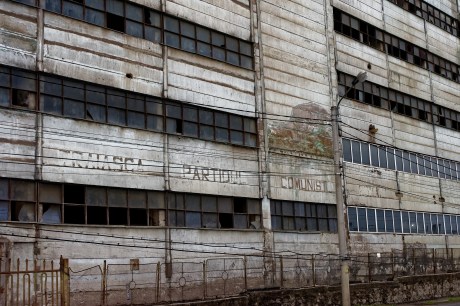
Tot aud că ‘nu-s în stare aștia nici măcar să întrețină tot ce ne-a lăsat Ceaușescu, darămite să mai adauge ceva’!

Judecând după ritmul în care construim autostrăzi, de exemplu, s-ar putea ca zicerea respectivă să nu fie foarte departe de adevăr…

Dar, până la urmă, ce ne-a ‘lăsat’ Ceaușescu?
Sau, mai bine spus, cât de bună a fost moștenirea lui?

Și dacă a fost atât de bună, de ce o ducem noi atât de greu?… Mă rog, unii dintre…
Ne-am bătut noi joc de ea?!?… Iarăși ‘Mă rog, unii dintre …’

Dar ia stai un pic!
Noi, NOI nu suntem cumva tot ‘moștenirea’ lui Ceaușescu?

N-am fost noi crescuți să-i fim ‘demni urmași’?
Nu era el slăvit ca ‘cel mai iubit fiu al întregului popor’? De către părinții și bunicii noștri?
Nu zice înțelepciunea populară că ‘așchia nu sare departe de trunchi’?

Ce-ar fi sa ne luăm și noi un pic de avânt?
Macar acum, dupa 30 de ani… Nu de alta, da’ ne vad copiii astia, puțini, care au mai rămas pe aici… și care nu mai înțeleg nimic…

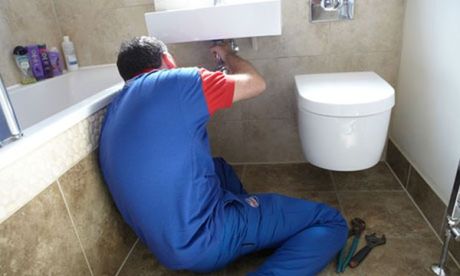
A plumber fixes a bathroom sink

“România se va confrunta în curând cu un dezastru demografic din cauza dezechilibrelor grave de pe piața muncii. Abia ieșiți de pe băncile liceului tot mai mulți tineri optează pentru diverse forme de șomaj deghizate sub meserii ca „DJ” sau „fotograf” evitând meseriile care le-ar putea aduce respectul comunității, cum ar fi cea de instalator sau electrician. 
„Nu știm exact care sunt cauzele acestui fenomen. Ori părinții sunt foarte bogați și atunci își permit să întrețină un DJ sau un fotograf în casă, ori pur și simplu nu vor să muncească. Sau poate o fi vorba de o nouă paradigmă, în care românilor nu le mai plac banii, considerând că câștigă suficient din cerșit”, a explicat socilogul Decebal Popescu. “

‘Evitand meseriile care le-ar putea aduce respectul comunitatii’…

Respect care poate fi masurat, facil, prin observarea imaginii de care se bucura meseriasii in media romaneasca.
Adica prin observarea imaginii de care se bucura Dorel. Inclusiv cel din fografia de mai sus.

“”Dorel” de Calarasi a asfaltat o balta…..
primarul Daniel Ștefan Drăgulin a dat o dispoziție viceprimarului Viorel Ivanciu de a identifica, împreună cu conducerea SPPSV, măsurile disciplinare care se impun. În acest moment se poartă discuții cu privire la ceea ce s-a întâmplat.

Vom reveni cu prezentarea acestor măsuri disciplinare și dorim sa punctăm faptul că ceea ce s-a întâmplat nu caracterizează întregul colectiv al Serviciului Public Pavaje Spații Verzi”, a transmis Primăria Municipiului Călărași.”


“Muncitorul de la Drumuri a fost filmat în timp ce turna asfalt fierbinte direct în gorpile (sic) pline cu apă pe drumul dintre Craiova şi Calafat. Nu a fost deranjat nici măcar o secundă că afară ploua, iar în bălţi apa ajungea până la gleznă.
UPDATE Bogdan Bratu, şeful Direcţiei de Drumuri şi Poduri Craiova, au
(sic) precizat că angajaţii care au turnat asfalat în gropile pline cu apă au fost sancţionaţi. Imaginile cu „Dorel“ în timp ce turna asfalt încins în gropile pline cu apă au ajuns imediat pe internet. Oamenii au declarat că nu este normal să fie executată o lucrare în astfel de condiţii. „Câtă precizie la aruncarea banilor publici pe fereastră“, a scris…”


Si asa mai departe…

Si ce erau sa faca Doreii astia?
Sa le spuna ei sefilor lor ca ploua? Ca din birou nu se vede?
Sa nu iasa pe teren pana nu se usuca baltile? Daca foaia de lucru pe ziua respectiva le spune ca asta au de facut? Chiar daca ploua de trei zile?
Gura copiilor lor nu trebuie ‘sa manance si ea ceva’?

journalism-101-if-someone-says-its-raining-another-person-36442457

Traducere ‘dupa ureche’:

‘Draga jurnalistule incepator,
Atunci cand unul spune ca afara ploua iar altul spune ca e uscat, treaba ta nu este sa-i citezi pe amandoi. Treaba ta este sa te uiti dracului pe geam si sa vezi care este adevarul!’

‘Nu stim exact care sunt cauzele acestui fenomen. O posibila explicatie este ca cei care mai inteleg ceva din ce se intampla dincolo de fereastra au ramas atat de putini incat adevarul a devenit aproape imposibil de decelat.’

Citiți mai întâi textele, dacă nu cumva ați făcut-o deja.

Nici măcar faptul că accepţiile lui removal ţin de zona sanitar-medicală nu e o ironie. Sau o coincidenţă. Dacă te uiţi în dicţionar, vezi că removal înseamnă „eliminare, evacuare, extirpare, înlăturare, scoatere”. Ce se poate deduce aici? Printre altele, că escortarea lui Ilie Năstase în afara arenei de tenis a fost mai degrabă un act de de chirurgie comportamentală decât o pedeapsă. Până la urmă, un act de igienă.

Radu Paraschivescu, Rever,  27/04/2019


Cu cateva zile in urma, vorbeam despre fluviul de insulte la adresa mea, care foloseau cele mai ingenioase combinatii de injuraturi si urari din limba romana. 
Ieri, «aprecierile» au fost incununate de un articol scris de catre Radu Paraschivescu, unul dintre cei mai apreciati scriitori si critici literari ai momentului din Romania.
Opinia dumnealui este ca o judecata de apoi. 
Un om, o viata redusa la «evacuare, extirpare, badaranie, ofensa, anormalitate».
Nimic diferit fata de vorba directa, fara perdea, a altora, folosind insa limbajul rafinat al unui intelectual.”

Ilie Năstase, Smash (la Rever), publicat pe Facebook și preluat de pe Prosport, 29/04/2019

Aș putea începe prin a mă întreba cum de un “bufon” „oţărât şi mojic, cu înjurătura gata să decoleze oricând de pe pista buzelor“ este în stare să scrie cel puțin la fel de ‘savuros’ precum “unul dintre cei mai apreciati scriitori si critici literari ai momentului

Să depășim acest moment…

Și până la urmă?
Despre ce e vorba aici?

OK, cu Năstase ne-am lămurit. Jucător genial, spirit liber…
Ajuns la o anumită vârstă și având prea mult timp la dispoziție intră în niște combinații cel puțin dubioase.
Cu cei care încearcă să se folosească de notorietatea lui Nasty, iarăși ne-am lămurit. Sau ar fi trebuit să ne fi lămurit, dacă am fi fost cât de cât atenți în ultimii 30 de ani…
Gestul care declanșat toată această furtună … ar putea fi considerat o ‘lovitură genială de imagine’!
Un candidat, cunoscut din ‘civilie’ pentru ‘loviturile’ sale neașteptate, și având o oarecare priză la publicul larg, este ‘surprins’ aruncând cu cafea pe afișul electoral al unuia dintre contracandidații săi. Detestat de o largă majoritate, dar care mai are un grup de sustinatori fideli, și despre care ‘umblă vorba’ că ar ști cum se mânuiește paharul… Nimic neobișnuit pentru o campanie electorală ‘modernă’. În care ‘publicitarii’ au capul de afiș iar ‘ideologii’ se întreabă dacă vor mai fi vreodată băgați în seamă…

Cine ar fi cazul să intervină?
Și să-i arate ‘cetățeanului turmentat’, pe limba lui, care sunt alternativele?
Care cetățean, odată trezit, ar urma să ne călăuzească, cu votul său, spre ‘luminița de la capătul tunelului’?

Intelectualii de vază ai momentului?
Gânditorii respectați ai neamului?

Cine ar fi cazul să-i invite pe aceștia înapoi în arena publică?
‘Marile’ grupuri de presă?

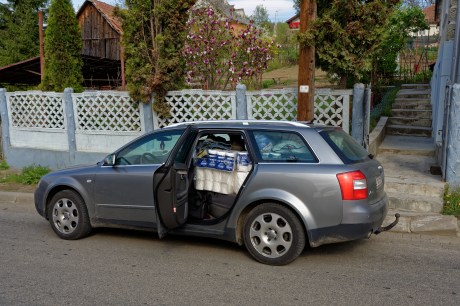
While ‘fitting’ discount priced toilet paper into my new second hand car, something struck me.

DSC_6406

In many ways, we are a first generation.
And by ‘we’ I understand what Americans call ‘the baby-boomers’.

We are the first generation to use toilet paper ‘en masse’. Have you noticed the hole in the Farmer’s Almanac?
We are the first generation to witness new cars becoming less reliable than the older ones. Not to mention less ‘honest’… remember the scandal regarding the Diesel engines emissions…
We are the first generation who has not witnessed a large scale war. As a consequence, very few of us had to flee conflict. My paternal grand parents had to leave their country behind after WWI while my mother was trice displaced during WWII. During my ‘tenure’, I’ve only read about those who had to flee the war in ex-Yugoslavia. Or Syria… We’ve met refugees, indeed, only all of them had come from other continents. While our parents/grandparents had to flee themselves. Had relatives and/or friends who had to run for their lives.
We are the first generation whose children expect to have a harsher life than ours.

Would this be enough explanation for the demographic decline we witness in Europe? And in other civilized places? Japan, South Korea…
As in ‘the reason for which less and less of our children have children of their own’?

OK, and where’s the link between my discount priced toilet paper and the demographic decline?

The fact that we don’t want to get our hands dirty is absolutely normal!
Who, in their right minds, would want such a thing?
There is a second fact though. Which cripples us. We haven’t yet learned that, from time to time, people do have to get their hands dirty in order to survive.

And people actually died because of this.
Boeing was so eager to cut costs – and corners, that didn’t even consider doing the ‘right thing’. ‘Getting their hands dirty’ and treating the 737 Max 8 as the new type of aircraft it really was. Before two of them having crashed due to pilots haven’t been properly trained for the new flying conditions.
Boeing should have designed the plane starting from a clean sheet  and the FAA should have  certified it as such.

“A district judge has ordered the Bernalillo County Sheriff’s Office to release property that deputies took during a child abuse investigation and kept after the charges were dropped.

In October, the District Attorney’s Office dismissed sexual assault charges against a nuclear weapons expert who formerly worked at Kirtland Air Force Base. But the Bernalillo County Sheriff’s Office didn’t release the man’s property, which included thousands of dollars of electronics and a draft of a book.”


They kept the kids in cages. And Excel spreadsheets. And more than 60 other government files and databases that made it nearly impossible to track the thousands of children who have been separated from their parents by the Trump administration while trying to enter the United States.

This is according to a new report released Thursday by the Department of Health and Human Service’s Office of Inspector General, which finds that, since 2017, the Trump administration has separated thousands more children from their parents than it previously disclosed and that it tracked these kids in ad hoc, disparate databases, including Excel spreadsheets and Microsoft Sharepoint accounts, further complicating the already tortured process of figuring out where those children are today.”

I have no first hand knowledge about any of these two separate ‘incidents’.
The first one might have been caused by a series of ‘misunderstandings’ while the second is only a portion of a hugely complex matter.

What really bothers me is what they have in common.

Both have been initiated by people belonging to/working for institutions put in place to protect the greater good of children. Children who are nothing but our future. Our only future.
Each of these ‘actions’ have been botched. By those who initiated them.
The institutions themselves had failed. To control the ‘runaway operators’ and to perform adequate ‘damage control’.

“Why are we doing things like these to our fellow human beings?”

Because we don’t consider them, in earnest, ‘our fellow human beings’?
For whatever reason?

“Profit is a natural by-product of voluntary commerce, exchanging value for value. Increasing profits come from better exchanges of value over time. Accepting a lower value of trade in order to benefit someone else believed to need the benefit is a myth. Self interest has always been a key component of human commerce.”

Paul Garner

The barons who had forced King John to sign the Magna Charta were interested in preserving their privileges, not in the deepening of their fellow citizens’ freedom… yet this was the ultimate consequence of their actions.

“No free man shall be seized or imprisoned, or stripped of his rights or possessions, or outlawed or exiled, or deprived of his standing in any other way, nor will we proceed with force against him, or send others to do so, except by the lawful judgement of his equals or by the law of the land. To no one will we sell, to no one deny or delay right or justice.

This clause gave all free men the right to justice and a fair trial. However, ‘free men’ comprised only a small proportion of the population in medieval England. The majority of the people were unfree peasants known as ‘villeins’, who could seek justice only through the courts of their own lords.”

The heirs of those barons had evicted their Scottish tenants in search of the higher profits yielded by raising sheep, not because they wished to improve the local food market. Yet exactly those ‘clearances’ had constituted the stepping stone for the economic blooming of Scotland. And for the advent of the ‘Scottish Economic Thought’, epitomized by Adam Smith.

Are we to understand that ‘self interest’ will, sooner or later, somehow morph into ‘the greater good’? By its own, according to a yet unknown ‘natural law’?

I’m afraid this is nothing but wishful thinking.

The barons who had rebelled against King John were following an already established tradition.
Being the nephews of the Norman – read Viking, invaders, they were familiar with the Scandinavian things. Their uprising against the king was nothing more than a defense of their fore-fathers’ way of life.

Of their fore-fathers’ free way of life!

The landlords who had evicted their tenants to make way for the more profitable sheep may have created the conditions for the development of a thriving free market… only it was exactly this free market which had represented the doom of the ‘landed aristocracy’…

So. Is freedom the most important aspect of the free market?

I’m afraid that would be an oversimplification.

The markets are free, period.
If anything impedes their (transversal) freedom in ‘space’ – a ruler, a dictator or even a natural set of events, markets will find their (longitudinal) freedom in ‘time’. All dictatorships have been toppled by ‘history’ and all ‘natural’ sets of events have been overcome. As yet, at least.

The most important ‘things’ in the market are the people who animate it.
Any market would be nothing but an empty intersection of roads if not for the people who gather there to trade their wares. To better solve their existential problems by exchanging the ‘fruits of their respective skills’.
And the freer those people are to hone their skills and to take the fruits of those skills to whatever intersection they choose, the better the solutions developed, by them, for their existential problems.

And what about the profit? Is it good?

Of course it’s good. But for only as long as it remains free!
For only as long as it doesn’t depend on external forces and for only as long as it doesn’t become an obsession.
Since most of you understand the perils of monopolistic ‘external forces’ being exerted to limit the freedom of the market, I’ll delve directly into my obsession about the hidden dangers of pursuing profit as an existential goal.

We describe ourselves as being conscious.

In Humberto Maturana’s terms, ‘we are able to catch ourselves red handed’.

As a human being I do what we human beings do, I operate as an observer observing. The observer is not a condition of being, it is not a transcendental entity that exists by itself, it is not a material entity, it is our experience of being aware of ourselves doing what we do as we human beings operating as observers observing. And what do we do as human beings operating as observers in observing? We make distinctions. We make distinctions of objects, of notions, of ideas, of concepts, …,of entities that we bring forth with our operations of distinction together with the domains of existence in which they arise.

When hungry, we not only feed ourselves. We also notice that we feel good once our bellies are full. And we strive to make provisions for the next meal. Thus increasing our chances to survive.

Some of us end up eating too much. They are so keen to reproduce ‘that’ good feeling that they end up morbidly fat. Thus diminishing their life span.

Still others try to make sure they’ll enjoy their next meal by appointing themselves ‘gatekeepers’ to ‘food’.
And, sooner rather than later, every time they succeed, this ‘arrangement’ ends up in abject failure. The most publicized recent example being the failure of the centrally planned ‘popular democracies’. Unfortunately, there had been countless other examples. In fact, in all instances where power had been concentrated in a too small number of hands, the societies which had allowed this to happen have eventually collapsed.

Another example is our addiction to drugs.
All of us enjoy feeling good. Which is an evolutionary device meant to show us we are on the right track. To prod us in the right direction.
Some of us have discovered ‘the short cut’. Instead of doing ‘the right thing’ first and expect the reward afterwards, they just imbibe the ‘right’ substance. Alcohol, sugar, nicotine, heroine, coke, THC

Now, can any of us pretend that a drug addict or a morbidly fat individual is a free person?

Returning to the freedom of the market, we can only say that a market is functionally free for only as long as a functional majority of the trading agents behave in a free manner. Do as they individually see fit.
Compare this to the situation when, for whatever reason, the majority of the trading agents feel compelled to follow a fad.
The Tulip Mania is the first example which springs into my mind every time I discuss this subject. Followed by all other bubbles which had ‘punctured’ our economic history ever since.

The current fad being ‘profit’.
Which profit is essential for the long term well being – read ‘survival’, of any economic enterprise.
Only we need to remember that economic enterprises are meant to solve problems. To be of service to people. So useful to the consumer side of the market that the consumers are willing, on their own accord, to part with enough money to make those enterprises profitable.

If the market is warped so far that things go the other way – enterprises are managed to maximize profits at the expense of the services rendered to the clients and the ‘beneficiaries’ are not aware of what’s going on, or have no say in the process, the whole thing starts to resemble what used to happen inside an opium den.

We somehow managed to weather all economic crises that we, ourselves, have brought upon our heads. And to outgrow our obsession with opium.

I’m sure we’ll manage to free ourselves from our current obsession with profit.

Nota bene!
Under no circumstances we may allow capitalism itself to be left behind in our quest for liberty from the tyranny of ‘profit’.
Capitalism is something else than the unending and callous adoration of the ‘golden god’, just as profit is a very useful indicator but a horrible master.

 

Tin inca minte discursul cu care Basescu incerca sa ne convinga, prin ’98, ca nu aveam nevoie de autostrazi. Si asta pentru ca, atunci, l-am crezut!
Eram atat de pornit impotriva celor care il urmau pe Iliescu incat eram dispus sa cred pe oricine care li se opunea cu un cat de cat succes…
Atat de pornit incat n-am inteles, atunci, cat de mica era diferenta dintre Basescu, Iliescu, Nastase…

Pana la urma, singurul lucru care conteaza este respectul pe care il avem fata de cei din jurul nostru. In ce masura ii consideram oameni asemenea noua. Indiferent de ocupatie, culoarea pielii, limba vorbita…

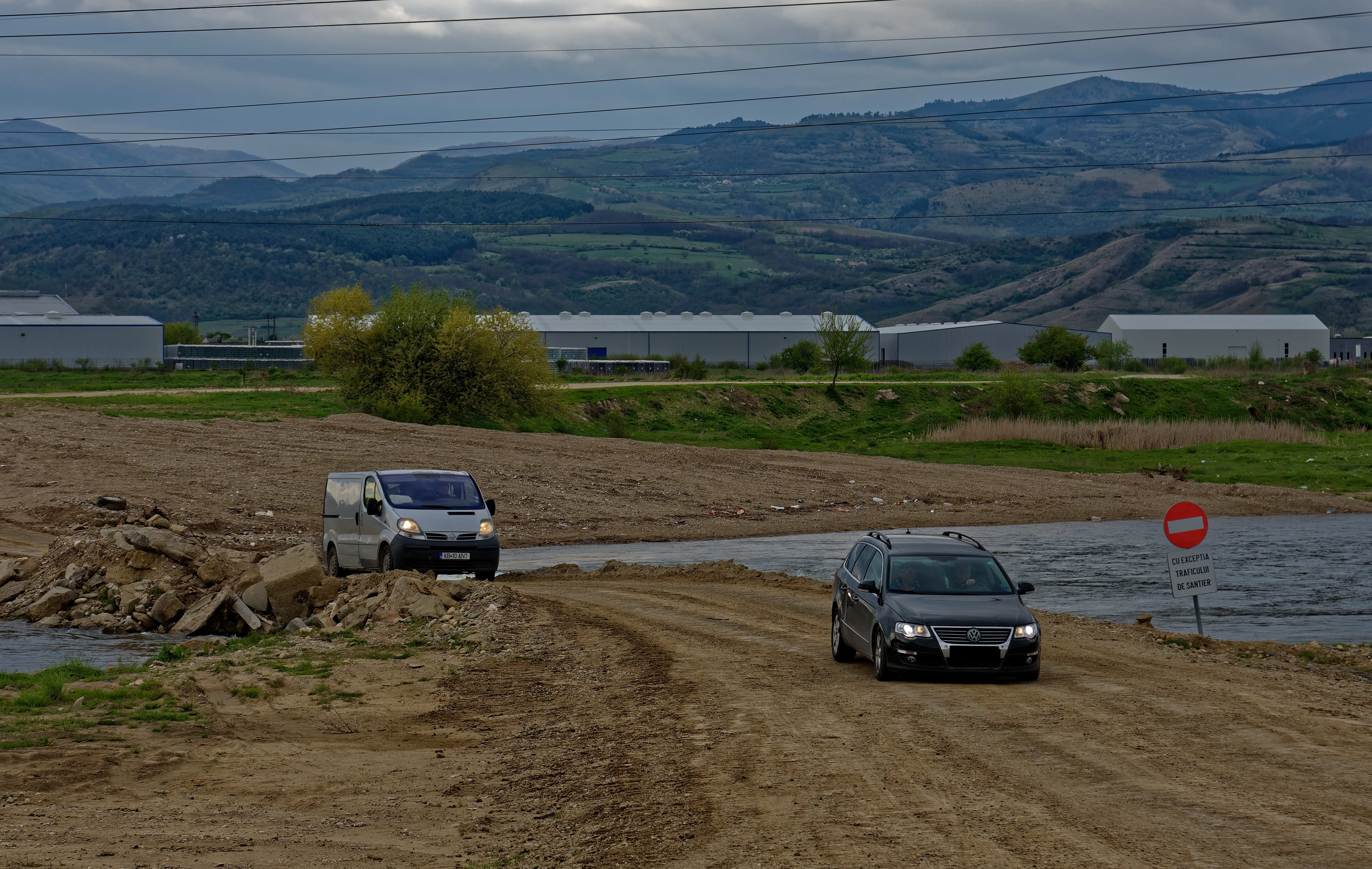
Uite de-asta am fost nevoit aseara sa trec cu masina prin vad. Iarasi!
Era “standstill” intre Sebes si Alba Iulia asa ca Waze mi-a spus sa o iau la dreapta. Apoi la stanga si… pentru ca Waze-ul meu e setat sa ma duca pe orice fel de drum, am ajuns sa traversez un rau. Pe un pod improvizat din tuburi de beton.

De fapt, era un drum tehnologic. Aferent santierului viitoarei autostrazi dintre Sebes si Turda. “Viitoarei”…


Degeaba dam vina pentru necazurile de ‘acum’ pe ‘actuala’ guvernare.
Indiferent care o fi aceea.
Nimic nu se va schimba cu adevarat pana cand nu ne va veni NOUA mintea la cap.

Noi suntem cei care trebuie sa invatam.
Noi suntem cei care trebuie sa nu ne mai lasam invrajbiti.
Noi suntem cei care trebuie sa ne asumam greselile. Si prostiile pe care le-am facut. Noi, cu mainile si cu capetele noastre!

Doar asa vom putea merge mai departe.
Altfel, orice ‘miscare’ pe care o vom face va fi ‘la remorca’ cuiva.
Indiferent cui, in indiferent ce directie.

Pentru a ne putea hotari singuri destinul, pentru a ne putea deplasa, firesc – ‘inainte’, trebuie sa re-invatam ce inseamna cooperarea. Adica sa tragem cu totii la aceiasi caruta.

Altfel… vom da iarasi cu oistea-n gard.
Si iarasi…

Ce m-a apucat?!?
Ca doar n-o fi prima oara cand m-a scos Waze din tot felul de ‘incalceli’ din astea….
Ei bine, imediat dupa ce-am tras pe dreapta sa fac pozele alea, a oprit si o Dacie Dokker. Din care a coborat un OM.
“Veniti dupa noi. Sunteti pe drumul cel bun. Mai avem un pic si iesim in DeNeu”
“Multumesc foarte mult. Nu m-am speriat, doar m-am oprit sa fac niste fotografii!”
“A, OK… V-am vazut cu numar de Bucuresti. Doar localnicii stiu scurtatura asta si am crezut ca aveati ceva ‘indoieli'”.
“Va multumesc inca odata. Nu sunt foarte multi care sa faca asemenea gesturi.”

Adica se poate. Putem sa ne ajutam intre noi.
Nu ne costa nimic.
Iar impreuna putem muta muntii!

Sau traversa rauri.

The theory that each person imposes the moral law on himself. It is opposed to heteronomous morality, which holds that the moral law is imposed from outside of man by another, and ultimately by the divine Other, who is God, which makes the moral law theonomous.

I argued in my previous post that in a perfect world the simple fact that we consider ourselves to have been created, in his likeness, by the God we believe in, would have been enough to make us behave in a certain manner.

We don’t. Behave in that manner.

The world exists. And will continue to exist, regardless of whatever we might do in the foreseeable future. Maybe not the Earth as we know it but it’s rather unlikely that we’ll ever be able to destroy the entire world.
Here, on our home-planet, we’ve more or less soiled everything we’d come in contact with. Willingly or unwittingly.
Which suggests that the world might not be perfect but is more or less OK. And that it is us who haven’t yet risen to the occasion.

We may not have fully risen to the occasion, indeed, but we’ve managed to somehow survive. Until now, that is.
How was that possible, given our imperfect nature?

Was our behaviour shaped from outside as the heteronomous morality theory suggests? By (a) God, as the theonomous morality theory pretends?

“Now the serpent was more crafty than any of the wild animals the Lord God had made. He said to the woman, “Did God really say, ‘You must not eat from any tree in the garden’?”

The woman said to the serpent, “We may eat fruit from the trees in the garden, but God did say, ‘You must not eat fruit from the tree that is in the middle of the garden, and you must not touch it, or you will die.’”

“You will not certainly die,” the serpent said to the woman. “For God knows that when you eat from it your eyes will be opened, and you will be like God, knowing good and evil.”

When the woman saw that the fruit of the tree was good for food and pleasing to the eye, and also desirable for gaining wisdom, she took some and ate it. She also gave some to her husband, who was with her, and he ate it. Then the eyes of both of them were opened, and they realized they were naked; so they sewed fig leaves together and made coverings for themselves.”

What do we have here?
A couple of people, who are already able to speak, who cannot yet make the difference between good and evil but who can see that ‘the fruit of the tree is good for food’ and ‘desirable for gaining wisdom’.
Furthermore, the couple is not only able to communicate between the two of them, they – or, at least, one of them, are also capable to negotiate with ‘outside agents’.
And, in fact, it was a consequence of a ‘negotiation’ that they had learned to differentiate between good and evil.
Moving even closer to Godhood in the process: “The man has now become like one of us, knowing good and evil. He must not be allowed to reach out his hand and take also from the tree of life and eat, and live forever.”

“So the Lord God banished him (them, actually) from the Garden of Eden to work the ground from which he had been taken.”

I must confess that things become more and more complicated instead of becoming clearer.
‘Moral law is imposed’…
Adam and Eve have learned the difference between good and evil as a consequence of ‘freely’ interacting with someone from ‘outside’ their ‘immediate community’.
And got punished for it. On a ‘technicality’!

What is moral in all this?
What are they to learn from this experience?
Since all that God had imposed on them was ‘punishment’, are they (we?!?) to understand that ‘moral law’ is equivalent with ‘gallows’?

In this setting, moral law is supposed to be learned exclusively through ‘trial and error’?
No ‘explanation’? No ‘prep school’?
Is this nothing but a form of ‘radical training’? Like that advertised by B.F. Skinner?
Not to mention that for some ‘sins’, the punishment is to be served ‘later’…