Time is but the consequence of matter/energy interacting with itself.
The post continues after this message.
One-Time
Monthly
Yearly
Make a one-time donation
Make a monthly donation
Make a yearly donation
Choose an amount
$5.00
$15.00
$100.00
$5.00
$15.00
$100.00
$5.00
$15.00
$100.00
Or enter a custom amount
$
As much as I love writing, I do have to eat. And to provide for my family. Earning money takes time. If you’d like me to write more, and on a more regular basis, hit the button. Your contribution will be appreciated! Another very efficient way to help would be to share my posts.
As much as I love writing, I do have to eat. And to provide for my family. Earning money takes time. If you’d like me to write more, and on a more regular basis, hit the button. Your contribution will be appreciated!
As much as I love writing, I do have to eat. And to provide for my family. Earning money takes time. If you’d like me to write more, and on a more regular basis, hit the button. Your contribution will be appreciated!
There was no time to speak about before matter divorced energy.
Nobody was actually aware of time passing by until we started counting Sun’s revolutions.
Earth turning round the Sun is matter interacting with itself.
We, humans, are a consequence of evolution. Of matter interacting with itself.
History – the times be bothered to record, is a consequence of human interactions.
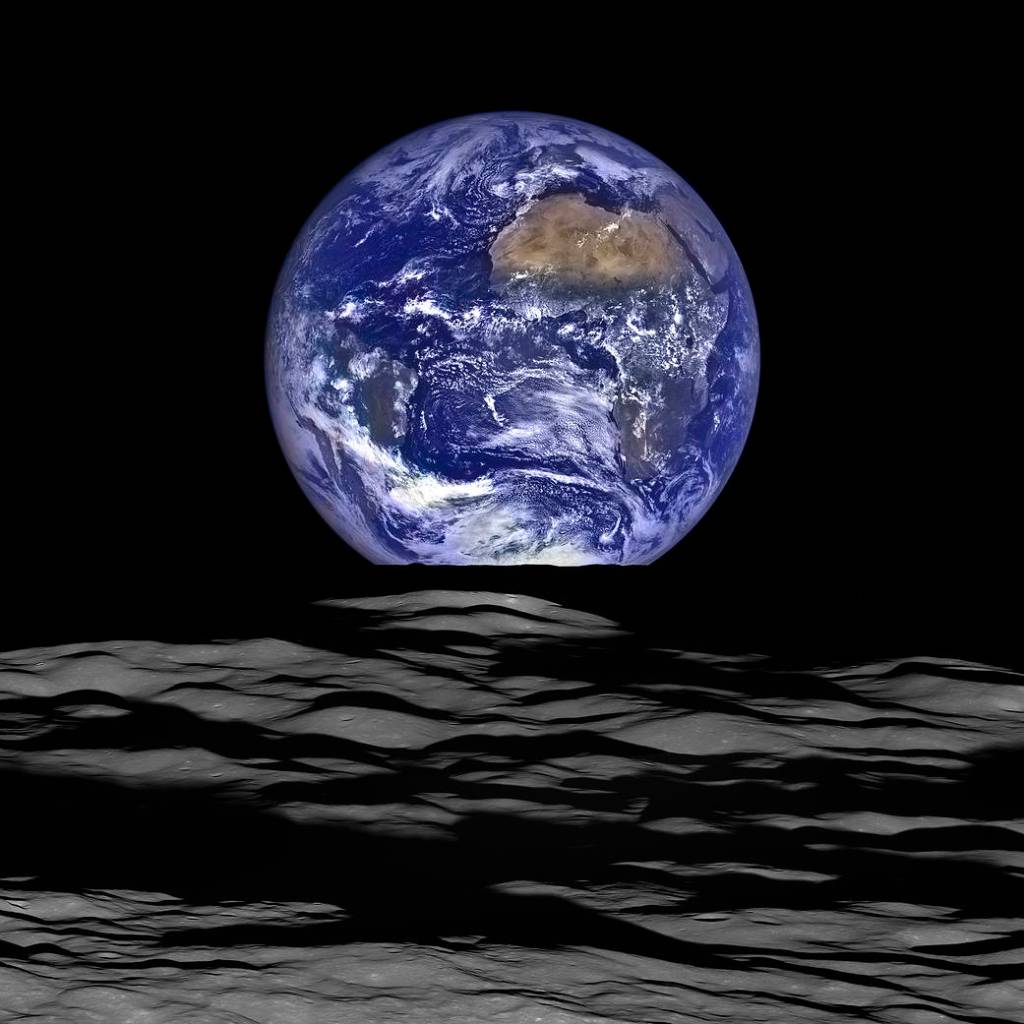
Environment is the consequence of the living things interacting with the rest of the planet. The current state of our ‘backyard’, the Earth, is, increasingly, the consequence of our interaction with the environment.
Time might be passing its own. We used to count it. Nowadays, we’re the ones driving it.
Azi dimineață aveam întâlnire cu Pfizer. Și cu BioNTech…
Când să mă scol din pat, nevastă-mea îmi spune: – Am citit ceva foarte interesant pe net. Cică după ce te vaccinează, țesutul din jur devine magnetic. Pentru câteva ore. Iar la a doua doză cică ține mai mult. Mai ales dacă ți-o face în aceiași mână! – O să verific când mă întorc. Iau un magnet de pe frigider și vedem atunci.
Mă urc pe bicicletă și dăi pedale. Ajung, mă procesează… și o întreb pe asistentă care-i treaba cu magnetizarea. Zâmbește și mă sfătuiește să verific când ajung acasă. Mă duc în sala de supraveghere să-mi treacă ‘sfertul academic’. Injectații au fost mult mai terni decât data trecută. Nimeni nu scotea vreo vorbă, nici unul nu dadea semne că ar fi dispus la vre-un mișto, ceva… Așa că m-am mulțumit cu buletinul de știri de la televizor.
‘Bucuria oamenilor că au scăpat de mască’. ‘Am revenit la libertate’. ‘Guvernul a renunțat la restricții’.
Tre’ să recunosc că nu am înțeles nimic. Până la urmă, care e motivul de bucurie?
Că din ce în ce mai puțini oameni se îmbolnăvesc de chestia asta? Și că, în situația de acum, putem renunța – în anumite situații, la mască? Că nu mai este nevoie de o parte dintre restricții? Că ‘spațiul’ în care ne putem manifesta fără a face rău altora a (re)devenit un pic mai mare?
‘Semantics’… Culmea e că cei care folosesc această linie de argumentare sunt tot aia care predică ‘Sticks and stones may break my bones but words will never hurt’.
Pe bune? Cum să înțeleagă ‘omul de rând’ cât de groasă e situația dacă ‘cel de la televizor’ vorbește despre ‘am scăpat de mască’ și spune că ‘am revenit la libertate’?
OK, am înțeles. Netul e spațiul libertății absolute. Găsești acolo toate tâmpeniile. Inclusiv tâmpeniile mele…
Da’ totuși… parcă televizorul e altceva! Mai ales atunci când vorbim despre posturi cu ‘acoperire națională’…
Și nu cred că abia așteptați să vă spun cum devine treaba cu ‘magnetizarea’. Duceți-vă la ‘întâlnire’. E sigura metodă prin care puteți verifica singuri!
Good Old Politics used to be about identifying the common ground. And making it wide enough to harbor the foundation for a stable – as in ‘sustainable’, future. A future where ‘everybody’ could claim a place. As in ‘fulfilling the American Dream’.
Nowadays, politics is about identifying the most effective way to pull the rug from your opponents’ feet.
How wise is this?
How sustainable is it?
We learn from Michelle Obama’s book – Becoming, 2018, that her father, a blue collar worker, was the only breadwinner who provided for the family. A family of four, leading a decent life in a decent home. Who was earning enough to send both kids to school. Is this still possible today? In America? The Land of Opportunity?
Trump got elected after a huge number of well paying blue collar jobs had been exported. After wealth disparity had become ridiculous.
What convinced so many people into believing that Trump, the billionaire, was the answer to their plight?
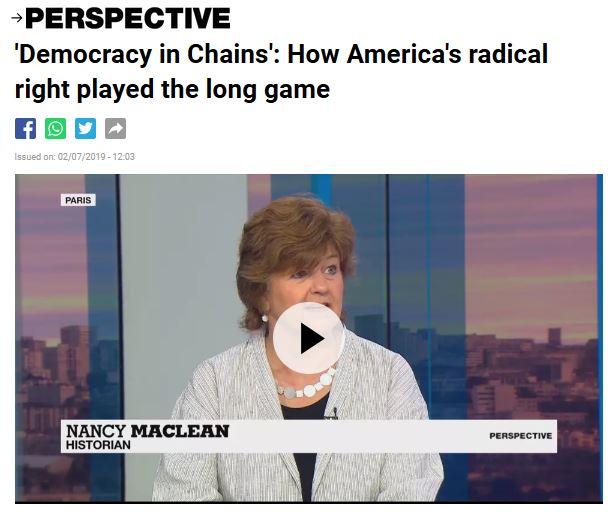
Historian Nancy MacClean has just published “Democracy in Chains”, a book in which she looks at a group of ultra free-market thinkers who have been working to change the government systems of the United States since the 1950s. While Donald Trump was not part of their plan, MacLean says “there is no way Donald Trump would be in the White House were it not for their strategy”, which includes gerrymandering and taking control of the judiciary. She joined us for Perspective to tell us more.
No, this is not yet another post about Trump. This is about Political Science.
You see, physics and chemistry are hugely important sciences. Physics has taught us how to build planes. And atomic bombs. Chemistry how to make life saving drugs. And deadly explosives.
And so on. Science is nothing but a formalized method of gathering consistent information. What we subsequently do with the technology built around the above mentioned ‘consistent information’ is something else. It no longer depends on ‘science’.
It solely depends on us. On what plans we have for the future. On how we – the ‘meaningful’ amongst us, to be more precise – chose to use the above mentioned stash of ‘consistent information’.
Nowadays we’re toying with even more powerful tools. Tools which are able to turn back the flow of history. To make a joke out of the fabled ‘checks and balances’.
The H bomb is such a blunt tool that nobody in their right mind would ever consider using.
Tools made possible by political science are way more insidious. So insidious that most of those who wield them ignore the true amount of fallout their actions will unleash.
Compromise – give some to get some, is debatable to start with. But, ultimately, workable. History is full of successful examples. Kompromat is nothing but mutually assured destruction. MAD. Made worse by its trivial appearance.
By engaging in compromise, you give hope a chance. The other has a scope. For as long as negotiation is going on earnestly, both sides have a fair chance of getting out alive. By engaging in Kompromat, the aggressor actually sends the message: ‘I’ll stop only over your dead body’.
Sustainable?!? Are you kidding me?
One-Time
Monthly
Yearly
Make a one-time donation
Make a monthly donation
Make a yearly donation
Choose an amount
$5.00
$15.00
$100.00
$5.00
$15.00
$100.00
$5.00
$15.00
$100.00
Or enter a custom amount
$
As much as I love writing, I do have to eat. And to provide for my family. Earning money takes time. If you’d like me to write more, and on a more regular basis, hit the button. Your contribution will be appreciated! Another very efficient way to help would be to share my posts.
As much as I love writing, I do have to eat. And to provide for my family. Earning money takes time. If you’d like me to write more, and on a more regular basis, hit the button. Your contribution will be appreciated!
As much as I love writing, I do have to eat. And to provide for my family. Earning money takes time. If you’d like me to write more, and on a more regular basis, hit the button. Your contribution will be appreciated!
Smells like The Dow Theory? Because that was my starting point….
But we should not forget Abraham Maslow. If you think of it, Maslow’s stages are nothing but the three thrusts up which define a bull market. For an individual to be able to master the ‘self actualization’ phase, they need to have mustered enough resources, have had enough relevant social experience and to have ‘properly digested’ the information accumulated during the process.
One-Time
Monthly
Yearly
Make a one-time donation
Make a monthly donation
Make a yearly donation
Choose an amount
¤5.00
¤15.00
¤100.00
¤5.00
¤15.00
¤100.00
¤5.00
¤15.00
¤100.00
Or enter a custom amount
¤
As much as I love writing, I do have to eat. And to provide for my family. Earning money takes time. If you’d like me to write more, and on a more regular basis, hit the button. Your contribution will be appreciated!
As much as I love writing, I do have to eat. And to provide for my family. Earning money takes time. If you’d like me to write more, and on a more regular basis, hit the button. Your contribution will be appreciated!
As much as I love writing, I do have to eat. And to provide for my family. Earning money takes time. If you’d like me to write more, and on a more regular basis, hit the button. Your contribution will be appreciated!
1. Always remember that your ‘ride’ doubles up as your home. And as your pantry! ‘Redecorate’ with extreme caution and be extra careful when it comes to ‘waste disposal’. For the simple reason that today’s stool will, sometime in the near future, become tomorrow’s lunch. No ‘ride’ is infinite, you know… “all come from dust, and all return to dust“, remember?
2. Treat the entire ‘crew’ as your family. For the simple reason that no mutiny has ever ended well… Even the winning parties have been presented with huge ‘cleaning up’ bills… while there is a very short supply of desert – but habitable – ‘islands’ where the loosing parties might be left to fend for themselves. So, in the end, all those interested in continuing their lives must – the sooner the better – find where is the middle ground between them.
3. ‘I’ll be dead long before the hit shits the fan’ is no longer a viable option. If Covid hasn’t taught you that already… There’s a huge difference between dying comfortably in your bed, with a cold glass of water just a wish away, and gasping for air, alone, with other moribund people as your only company!
“Beyond the images, the cremation grounds bear a painful routine of trauma that will weigh on families long after the headlines fade. The pandemic has stripped the final rites of their usual space and dignity. Instead, this intimate ritual has become both a public display, with the world watching India’s crisis, and a lonely burden.”
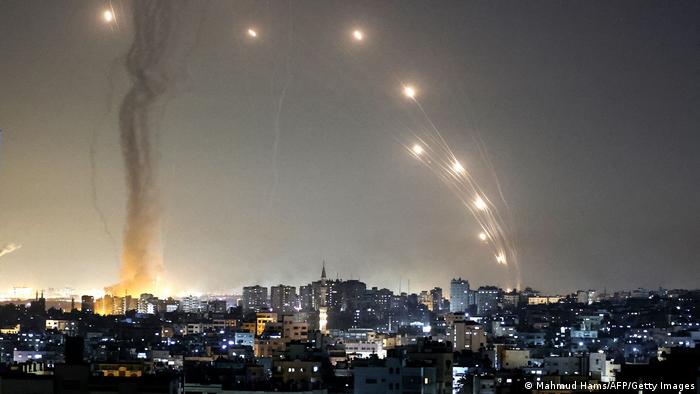
More than 200 rockets fired toward Israel since Monday
Gaza Strip has a 10 miles border with Egypt – which, for a while, kept Hamas at arm’s length. Some 30 miles of Mediteraneean beach. Heavily guarded by the Israelian Navy… And 50 odd miles of border with Israel.
Where did all those rockets come from? How did Hamas lay their hands on those missiles? Built them from scratch?!?
Regardless of their origin, would Hamas have used them if not offered an ‘occasion’?
How wise is it for people to hold their ‘own’ agendas as being more important than the ‘underlying’ problems?
A story opens a space. An explanation sets limits.
A story empowers. An explanation tells how those powers are to be used.
Neither are true. Each wants to be true but neither will ever reach the exact place. ‘Bull’s eyes’ are safe. We keep trying, although those of us who know their way around words are aware how elusive truth is.
The downside of the whole thing being that words, ‘storied’ words, might kill. As in actually! And uselessly…
Unless accompanied by a valid explanation, of course.
Then we start exploring the world our parents – and all their ancestors, have prepared for us.
At first, we’re like sponges. We absorb, unconsciously, everything which takes places around us. Some according to what our parents had in mind for us, some not.
After a while, on our own and/or under our parents’ supervision, our attention starts to focus. More and more of the things which are stored in our memory are learned. Increasingly a consequence of focused labor and less and less a happenstance.
Almost simultaneously, we start adding our transformative efforts to those already effected by our predecessors. Minute at first, more and more significant as we become more experienced.
At some point, we reach something called ‘maturity’. That’s when ‘play’ ceases being a legitimate manner of learning for us. We are allowed to continue playing but only for recreational purposes…
At least we’re still allowed to explore… but from now on, we’re expected to do it in a serious manner. According ‘to plan’, that is. From now on, wandering is considered to be a sin!
‘You’re an adult, for God’s sake. Act like one!’
I’m sure most of you have experimented things. Either as an experimenter or, mostly in school, as a learning apprentice. How many of those experiments had been ‘blind’? As is neither you nor anybody else present had any idea about what was going to happen? And how many had a more ‘modest’ goal? Just to convince the ‘students’ that the ‘theory’ was valid?
If you think of it, the second sentence covers quite a lot of ground. From the second grade teacher pouring water over some sugar ‘Look, it has disappeared’, to the scientists anxiously watching the gauges at the CERN laboratory…
A few short generations ago, people had to decide whether that plant was edible or not. And had developed methods to accomplish that task. They survived, right? Nowadays we design new plants/animals and ‘cook up’ fancy snacks to be sold in supermarkets…
During our parents’ ‘watch’, Popper had come up with a test for what belonged to the realm of science – and had to do with ‘reality’. Nowadays, we brag about being able to create VA. As in virtual reality… Enhanced virtual reality, even!
Nothing good or bad about all this. For as long as we keep our eyes open… and, at least one of them, focused on the ‘hard’ reality… that which makes us possible!
Simple high-school physics teaches us about radio-active elements. And about the fact that some of them can start a so called ‘nuclear chain-reaction‘. For said chain reaction to start, a certain ‘critical mass‘ must exist before-hand.
As soon as that ‘critical mass’ is achieved, the reaction starts by itself. No ‘trigger’ is required since it actually triggers itself.
But there’s one more thing which has a certain relevance here.
“Concentration”.
It’s not enough for the critical mass to exist, it also needs to be concentrated enough.
If the radio-active nuclei are positioned far enough one relative to the other, the decay of each of them goes ‘unnoticed’ by the rest. None of the individual ‘explosions’ can trigger the chain reaction. But if the nuclei are crammed together – as in an A-bomb, a split second after detonation, the reaction accelerates itself until the whole shebang goes bang.
And there’s the ‘cherished’ middle of the road. When the ‘environment’ moderates the reaction. Slows it down to ‘self-sustaining’… as it happens in the (well managed) nuclear power-stations.
‘Yeah… very interesting… but… what on Earth has any of this to do with your professed interest? “Exploring the consequences of our limited conscience”…’
Very few individual humans are naturally ‘radio-active’. And, in normal settings, they are ‘well taken care of’.
Before going forward, I’m going to return, briefly, to the ‘nuclear’ chapter of physics. I’m sure the word ‘plutonium‘ does ring a bell with most of you.
Plutonium is a mostly ‘artificial’ – as in man-made, chemical element. A few scattered atoms can be found in nature – plutonium occurs when uranium atoms absorb ‘extra neutrons’, but the vast majority of the plutonium which exists on Earth has been produced in our nuclear reactors.
Said plutonium can be used to fuel reactors. And to make bombs. Actually, it is far easier to concentrate plutonium for a bomb – if you have enough spent nuclear fuel, than to achieve the same result – a nuclear explosive device, starting from uranium ore.
Let me wrap this up.
Playing God can be dangerous. We’ve been tinkering with Nature for a while now.
At one time or another, we’ve turned various naturally occurring ‘things’ into weapons. From sticks to rocks, then metals… now chemical elements!
At first, we just picked them up and used them as they were. Then we’ve shaped them to better fit our purpose. And ended up changing the sub-atomic composition of Mendeleev’s elements…
Now, that we’ve reached “MAD“, we’re looking for something new.
The latest piece of technology, the Internet, is the latest addition to our Arsenal. To our weapons making factory.
Forgetting that the by-products of our previous ‘explorations’ have already proven themselves to be extremely dangerous. The Three Mile Island, Chernobyl, Fukushima, the huge stockpile of ‘residual’ plutonium we need to somehow dispose off…
Yep. The Internet is being used to distribute – sometimes very exactly targeted, weaponized information. Which information actually transforms the susceptible individuals into time-bombs.
Tell a guy that his freedom is constantly challenged by the government. Then tell him the ‘Covid’ mask isn’t 100% effective. And end up by asking him ‘why does the government demands you to wear something which is not foolproof’?
Each of those three are legitimate.
Put together, they become explosive. They actually blow up people’s minds. Derail people’s ability to think straight. Statistically speaking… Which is enough, of course!
What will happen when the number of ‘deranged people’ will be enough to reach ‘critical mass’?
Only God knows. But it will certainly be far worse than whatever the ‘troll farmers’ have in mind!








 nicichiarasa