hot sau prost

Corupție există în toată lumea asta și la nivele de o mie de ori mai mari, nu la nivele de cârnat. Eu, între un hoț și un prost, prefer hoțul. După hoț mai rămâne ceva. După prost, nu mai rămâne nimic”, a mai spus Țiriac.

Încercând să înțeleg ceva din cuvintele lui, am ajuns la concluzia că singura ‘traducere’ plauzibilă ar fi că un hoț are mai multe șanse de a lăsa ceva moștenire urmașilor decât are un prost.

Analizând la rece, este evident ca are dreptate.

Să facem un pas mai departe.

Să presupunem ca avem o societate constituită doar din proști și din hoți.
Foarte repede întreaga avuție ar ajunge în posesia hoților iar proștii ar începe să moară efectiv de foame – prin definiție, hoților nu le pasă ce se întâmplă cu cei din jurul lor.
După care hoții vor fi nevoiți să se fure între ei – pentru că proștii se vor fi terminat iar hoții, tot prin definiție, nu se pricep să muncească.

Se pare că o societate constituită doar din proști și din hoți nu poate supraviețui prea multă vreme, nu-i așa?

De fapt, hoții și proștii suntem chiar noi.

Sau, mai exact, cei mai mulți dintre noi suntem atât hoți cât și proști în timp ce foarte puțini dintre noi sunt la cele doua extreme. Unii atât de proști încât stau prin azile iar alții au furat atât de mult încât stau prin pușcării. Iar faptul că mulți dintre cei din pușcării au reușit să ‘salveze’ o parte din pradă este cea mai bună dovadă că noi, aștia care producem mai mult decât furăm, suntem într-adevăr proști.

De ce spun că suntem și hoți?

Să nu-mi spuneți că nu ați adus niciodată acasă, de la ‘scârbici’, măcar un top de hârtie. Sau o cutie cu agrafe de birou. „Nu avea ăla mic pe ce să scrie și era închis la librărie”. Sau, cei care aveți firme, că nu ați trecut ‘la cheltuieli’ măcar un rezervor de benzină sau o masă cu prietenii.

Explicații există cu duiumul. Explicații și nu ‘scuze’.

Pentru ca membrii unei populații să dezvolte atât de mult respect reciproc încât să nu mai fure unul de la altul (adică să nu mai încerce să se fraierească unul pe celălalt) este nevoie ca acea populație să petreacă o suficient de lungă perioadă de timp în condiții de relativă stabilitate socială. Adică este nevoie ca lucrurile să se ‘așeze’.

Ceea ce nu s-a prea întâmplat în spațiul Carpato-Dunăreano-Pontic. Adică mai ales în exteriorul arcului Carpatic.
Nu este deloc întâmplător că la câmpie ‘moravurile’ sunt mult mai ‘laxe’ decât dincolo de Carpați sau decât în depresiunile dintre munți – acolo unde cooperativizarea agriculturii nu a ‘desăvârșit’ procesul început de Mihai prin legarea țăranilor de glie iar apoi ‘continuat’ de fanarioți și de arendași.
Idea este că Ardealul, în întregimea lui, a avut parte de o evoluție mai mult sau mai puțin echivalentă ce cea a Europei Centrale iar populația din depresiunile montane a fost ‘constrânsă’ de geografie să coopereze pe când cei de la câmpie au fost, efectiv, în bataia vântului.
Ardelenii au avut la dispoziție, la fel ca restul Europei, întreg Evul Mediu pentru a se maturiza din punct de vedere social astfel încât au putut intra în capitalism ‘cu lecțiile făcute’. Nu atât de bine făcute precum vecinii noștri din vestul Europei – cu cât înaintăm spre Atlantic cu atât populațiile au avut parte de mai multă stabilitate, istorică și socială, dar în orice caz mult mai pregătiți decât țăranii din Muntenia și din Moldova.

Iar capitalismul, pentru a funcționa, are nevoie, în primul rând, de respect. Fiind despre ducerea la bună îndeplinire a unor contracte, capitalismul pleacă de la premiza că părțile contractante chiar intenționeză, cu bună credință, să facă ce au promis.
Adică ceea ce se întâmplă, firesc, între membrii unei populații mature din punct de vedere social. Care a stat suficient de mult ‘împreună’ încât să aibe timp să îi scoată pe ‘hoți’ la periferia vieții sociale.

Exact contrariul a ceea ce s-a întâmplat ‘la câmpie’ în Moldova și în Muntenia. Acolo unde mai întăi s-au perindat nenumarate valuri de popoare migratoare iar apoi istoria s-a comprimat brusc. Dacă în vestul Europei evoluția sociala a trecut prin faza cavalerismului – atunci când regele era doar primul dintre egali, iar abia apoi a ajuns – și asta doar în anumite locuri, la absolutismul monarhic, în Câmpia Romană am avut de-a face, de la inceput, cu un ‘absolutism avant la lettre’. Ștefan însuși era descris ca ‘aprig la mânie și degrabă vărsătoriu de sânge nevinovat’. Iar Vlad a ajuns să fie numit ‘Dracul’. Ce vreți mai absolut de-atât?
În situația asta ‘supușii’, care nu aveau alt exemplu la îndemână, s-au comportat ‘în oglindă’. Boierii îi oprimau pe țărani și complotau împotriva domnitorilor iar țăranii îi furau pe boieri și se fraiereau între ei. Lucrurile s-au agravat și mai tare, evident, după ce Mihai a introdus iobagia și după ce Înalta Poartă – devenită putere suzerana, a început să plece urechea la pârile boierilor. De unde să se mai nască vre-un respect reciproc între cei care trebuiau să supraviețuiască în condițiile astea?
Lucrurile nu s-au schimbat prea tare nici măcar în a doua jumatate a secolului XIX, după abolirea iobagiei și după dezrobirea țiganilor. Apariția arendașilor – care îi furau atât pe boieri cât și pe țărani, a anulat progresul făcut prin dezlegarea țăranilor de glie. Aceștia au continuat să fure pentru a supraviețui, clasa avută nu a reușit să dezvolte un cult al contractului iar amandouă categoriile sociale au continuat să considere statul ca pe ceva impus din ‘exteriorul’ firescului. Cu atat mai mult cu cât până la Războiul de Independență chiar așa era iar după ce a fost adus Carol I a durat o vreme până când dinastia a fost ‘asimilată’. Să adăugăm la acest tablou întârzierea dezvoltării îndustriale – muncitorii calificați tind să se respecte între ei, și imaginea începe să capete contur.
Lucrurile au fost ‘desăvârșite’ de impunerea comunismului de către sovietici.
A fost adus din afară iar asta a contribuit la sentimentul că statul este ceva exterior societății. Adică atunci când ai o problemă cu ‘vecinul’ o rezolvi cum poți, de unul singur, fără să-ți treacă prin cap să apelezi la lege sau să te raportezi la oarecari drepturi. De unde și obiceiul de a da ‘șpagă’. Precum și vestilele zicale „hoțul neprins, negustor cinstit” și „legea e o barieră pe sub care trec câinii, pe care o sar caii și în dreptul căreia se opresc boii”.
Numai că lucrurile nu s-au oprit aici.
Prin introducerea ‘cooperativizării’ – nu doar a agriculturii,  comunismul a mai distrus o cale prin care oamenii ar fi putut să genereze respect mutual. Când proprietatea devine ‘a nimănui’ – să nu uităm că nimeni nu avea nici un fel de respect pentru stat – atunci lucrurile se duc rău la vale. Țăranii furau de la câmp pentru a supraviețui iar muncitorii luau din fabrici ce nu găseau prin magazinele golite de ineficiența sistemului centralizat de luare a deciziilor.

Pe vremea aia nu se putea vorbi despre proști și despre hoți ca fiind doua categorii distincte. Doar cei foarte proști, sau naivi, nu furau. Sau exagerau cu furatul și erau prinși…
Ceilalți, hoții de rând, eram doar atât de proști încât să ne resemnăm la gândul că lucrurile vor merge așa la nesfărșit. Și încă nu ne-am revenit după surpriza din ’89.

Pentru a înțelege ce se întâmplă acum trebuie să ne aducem aminte că nu s-au împlinit încă 30 de ani de la schimbarea de regim. Prea puțin timp pentru o schimbare atat de drastică de mentalitate.

Mai ales în condițiile în care o parte semnificativă din ‘pătura suprapusă’ ‘achiesează’ la ‘să nu mă întrebi cum am făcut primul milion’, îi preferă pe hoți și îi disprețuieste pe proști.
Sau vorbeste despre corupție doar atunci când le aduce aminte străinilor că o parte dintre ei s-au comportat aici altfel decât ni se spune de către guvernele lor că ar trebui să ne comportăm noi.

Numai că e o șmecherie cu bariera aia. Boii nu se opresc chiar de proști. Fiind mai încetuci – munca obosește, ce să-i faci, au avut timp să observe că mare parte dintre căinii care se strecoară pe dedesupt și dintre caii care sar pe deasupra sunt spulberați de trenul istoriei.

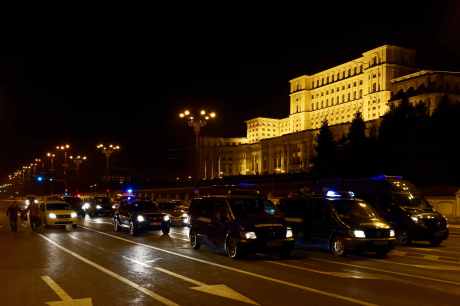
boii la bariera

În Decembrie 1989 manifestam în fața CC-ului pentru susținerea politicii partidului iar Ceaușescu ne promitea încă 100 de lei la salariu.

Ni s-a părut insuficient așa că ne-am mutat în Piața Universității.
Ceaușescu a înțeles mesajul, până la urmă, și s-a cărat.

În Ianuarie 1990, Iliescu și-a transformat Frontul în partid. Unii s-au ofticat și s-au întors în Piață.
Iliescu a aplicat metoda ‘câinii latră, ursul trece’.
Majoritatea a votat – în ‘Duminica Orbului’, minerii au venit să ‘facă ordine’ iar Iliescu s-a simțit dator să le mulțumească pentru spiritul lor civic.

Și uite-așa, ‘pe repede-nainte’, ajungem în Octombrie 2015.
Atunci când un incendiu catastrofal ne-a făcut să înțelegem cât de ‘ucigătoare’ este corupția.
Bine, incendiul acela a fost, de fapt, doar scânteia care a aprins mormanul de nemulțumire care mocnea deja… dar asta e altă mâncare de pește.

Partea proastă este că mulți se fac că nu pricep.
Sau poate că nu se prefac…

Cert este că la o lună după ce OUG 13 a scos din nou lumea în stradă, cineva a propus, în Parlament, să fie grațiate faptele de corupție (inclusiv cele care urmează să fie) săvârșite până la publicarea viitoarei/eventualei legi în Monitorul Oficial.

Se mai miră cineva că nu au trecut încă treizeci de ani de când strigam „Jos Securitatea” iar acum ‘oftăm’, din toți bojocii, „DNA, nu uita, noi suntem de partea ta!”?

_050

‘Doar un singur click’ va desparte de un ‘fotoreportaj de la fata locului’.

Între timp se discută și despre legea salarizării unitare pentru bugetari. ” “Până la pragul de 4.000 lei salariile se dublează, după 4.000 lei este o creștere cu 45% a salariilor, iar după pragul de 7.000 lei sunt creșteri, dar nu foarte mari”, a afirmat ministrul Muncii. “.


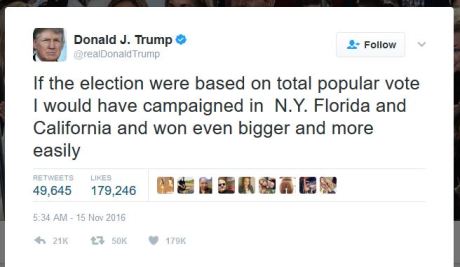
bigger-and-more-easily

Human memory is rather shallow.

Two and a half months later I had already forgotten about this.
My memory has been refreshed by a FB post.

“Just as you don’t have to outrun the bear, just the other guy, your political proposal doesn’t have to be perfect, just better than the other guy’s.”

What do we really mean when we say ‘politics’?

A beauty pageant intended to crown the most skillful public speaker/con artist among us?

Or a social mechanism used by the whole community in its attempt to adjust to whatever fate throws at it?

And how about cooperating with the other guy in taming the bear instead of racing him to our mutual deaths? ‘Cause outrunning all the others doesn’t mean survival.

It only means having to watch all of them being eaten.

Somebody shared this tweet on Facebook:

technicality

Nothing but American ingenuity efficiently solving the problems at hand.

The technicality used to put Capone away was ‘invented’ because Capone had pissed off so many people, so hard, that enough of them had eventually decided to do something about him.

Let’s see what Trump chooses to do from now on.

„Imaginează-ți că te numești Luca Străjescu și ești personajul care colectează cotele țăranilor pentru stat din fragmentul extras din romanul „Moromeții” de Marin Preda.

Redactează un referat (raport scris) adresat conducerii de partid, prin care să denunți calitatea de element dușmănos a lui Ilie Moromete, pe care ai constatat-o când ai fost să colectezi de la el cota”.

Fiecare lucru care iese de pe buzele noastre are o dublă încărcatura semantică.
Primul iese în evidență sensul pe care îl atribuim noi, în mod voit și conștient, spuselor noastre.
În spatele acestuia vine, de la sine – și câteodată divulgând mult mai mult decât am vrea noi să dezvăluim, mai ales atunci când vorbim ‘cu pasiune’, un fel de ‘destăinure’. Pentru un observator atent, și care se poate detașa emoțional de situația în cauză, modul în care ne raportăm la o problemă punctuală relevă foarte mult din starea în care ne aflăm în momentul respectiv. Ce ne procupă, cât de emotivi suntem, cât de maturi în gândire… amanunte de genul ăsta…

Iar analiza de mai sus poate fi făcută atât la nivel individual cât și la nivel social.

Duminica trecută a avut loc faza judeană a Olimpiadei de Limba si Literatura Româna. Unul dintre subiecte, valorând un sfert din punctajul întregii lucrări, a fost ‘raportul scris’ către ‘conducerea de partid’ cu privire la „calitatea de element dușmanos a lui Ilie Moromete”.

Reacțiile apărute, mai ales în presă, spun foarte multe despre tensiunea și dezbinarea care ne macină. Și despre cât de tabloidizată a devenit presa.

SUBIECT HALUCINANT LA OLIMPIADA DE ROMÂNĂ ÎN REPUBLICA LUI ZDREANȚĂ: Un denunț ca în anii 50

Tragi-comedie la români. Şefii învăţământului din Prahova le-au cerut elevilor „să-l denunţe“ pe Ilie Moromete

Cu MOROMETE la DNA: Personajele din Marin Preda fac DENUNȚURI la Olimpiada de Română

Eu unul m-am plictisit deja de senzaționalismul ieftin al titlurilor.

OK, este important să discutăm, serios, despre importanța parchetelor în funcționarea statului și despre rolul cetățeanului ‘activ’ – fără de care parchetele nu ar putea să își îndeplinească funcția socială.

Numai că aici nu avem de a face cu vre-un denunț.
Cu un denunț normal, care își are locul său în orice țară care funcționează cât de cât.

Aici era vorba, de fapt, despre redactarea unui „raport” de ‘poliție politică’.
Cel care a formulat subiectul a fost foarte clar în această privință.
„Raportul” era adresat „conducerii de partid” iar el trebuia să se refere la „calitatea de element dușmanos” al persoanei ‘scoase în evidență’.

Nimeni dintre cei care și-au manifestat, vehement, indignarea nu a făcut această diferență.
După cum nu a făcut-o nici măcar vre-unul dintre dintre oficialii care au încercat să explice situația.

Trebuie să fac o paranteză aici. „Nimeni” de mai sus sună foarte dur. Este o formulare care se apropie foarte tare de cele folosite în presa ‘de can-can’. Ar fi fost mai potrivit ‘nu am găsit vre-o reacție, publicată în presă, din partea societății civile sau a Ministerului Învățământului, care să fi scos în evidență, suficient de precis, acest aspect al problemei’.

Să revenim.
Chiar atât de polarizată să fi devenit societatea noastră?

‘Denunțul’, ca instituție, să fi devenit, pentru majoritatea ‘vocală’ dintre noi, doar o armă politică? Doar un mijloc de răzbunare?

NB Se pare că rezultatele concrete ale învățământului românesc nu sunt chiar atât de ‘groaznice’ precum vor unii să le prezinte.
Probabil că dacă acești copii erau crescuți într-un spirit aliniat cu o sumă de valori, unii dintre ei ar fi ieșit din sală, ca o formă de protest. Ar fi spus că este un subiect care descalifică concursul la care participă, că este un subiect care nu îi încurajează ca elevi și ca personalitate. Probabil, s-ar fi putut ca profesorii care supraveghează să fi făcut un gest de protest, ar fi putut să conteste concursul și să ceară reluarea lui peste o săptămână, cu alte subiecte adecvate. Dar noi nu creștem în școală oameni care se uită critic la ceea ce se întâmplă. Întrebarea este „ce competențe validezi prin acest concurs la olimpiadă?”. Adecvarea la un comportament indezirabil într-o societate democratică? Ceea ce eu trebuie să văd la un absolvent sunt niște comportamente de bun cetățean. Dacă am considerat că valoarea pe care școala trebuie să o formeze este să construiască cetățeni apți să își folosească creativitatea, o calitate valoroasă, ca să scrie delațiuni inventate, înseamnă că lucrurile sunt grave atât în cazul persoanelor care au gândit acest subiect, cât și pentru sistem.

Copiii noștrii, sau măcar unii dintre ei, au înțeles despre ce era vorba.

Subiectele au fost imprevizibile pentru că, de obicei, cam asta înseamnă olimpiada la română. Oricât ai încerca să studiezi din manual sau din program va fi mereu ceva la care nu te vei aştepta. Ar fi o ipocrizie să zic: vai, ce uşoare au fost subiectele. Sincer, mi-au dat de gândit. Mi s-au părut problematice, dar, totodată, şi interesante pentru că până acum nu am mai avut subiecte care să ne propună o astfel de incursiune în trecut şi o transpunere. Efectiv, o parte neagră a istoriei noastre şi din câte am înţeles, au fost destul de controversate subiectele, dar mie mi s-au părut provocatoareIonela Neagoe, elevă în clasa a XII-a la Colegiul Nicolae Grigorescu din Câmpina, declarație dată pentru Mediafax și consemnată de Laura Petrescu

Darwin had wrote “On the Origin of Species by Means of Natural Selection“.
Some of us had mistakenly understood ‘evolution’ as being a ‘fight for survival’.
‘Fight’ as in ‘kill/subdue all those around you’, not ‘strive to improve yourself’, unfortunately.

Ernst Mayr had put things right. ‘Evolution is not about the survival of the fittest but about the demise of the unfit.

Adam Smith, a philosopher, had explained to us that free market capitalism functions because ‘the butcher, the brewer and the baker‘ cooperate across their respective ‘professions’, fully understanding that by respecting each-others work each of them would better serve their individual interests than by struggling individually.
Unfortunately too many of his contemporaries, and some later exegetes, mistook Smith’s words as meaning that ‘Greed is Good’.
And proceeded accordingly. Which was just another ‘application’ of Gresham’s Law. The ‘greedier’ among the capitalists slowly climbed to a dominant position and created a situation later described as ‘savage capitalism.’
Since people have a tendency to over-react, and to make matters worse instead of solving the problem, Karl Marx came up with an even more stupid idea than ‘Greed is Good’. According to him, the world should be run, in an equally authoritative manner, by a different class of people. Not by the ‘greedy capitalists’ but by the ‘virtuous communists’.
As if there ever was any real difference between dictators…

Almost a century later than Smith, Emil Durkheim, a sociologist, revisited the concept of ‘cooperation’ – from another angle, and demonstrated that society had leaped forward when each of its members developed his/hers particular talents instead of toiling together indiscriminately.  And then traded, on the free market, the results of their efforts. Nothing really new, just told in a different manner.
A marked difference from the ‘rantings’ of Marx. Who, by the way, had assessed the situation perfectly. Which makes it all the more baffling the fact that he was able to propose such aberrant remedies.

Almost simultaneously with Durkheim, another guy had noticed two very interesting things.  After a successful career as an engineer Vilfredo Pareto had started to study economics. Then he turned his attention to sociology. As an economist he had noticed the Pareto Principle – 80% of the results (income) are produced by 20% of the causes (agents), while as a sociologist he discovered that whenever social mobility, upwards as well as downwards, is hampered, the society where this happens will, sooner rather than later, experience serious difficulties. In fact this observation is quite straightforward. Whenever young people from the ‘lower strata’ cannot accede, despite being better qualified and harder working, to more meaningful positions because those positions are ‘safeguarded’ for members belonging to the ruling minority, the people from the lower strata stop striving while those from the ruling minority become lazy and careless. The recipe for disaster, don’t you think?
If we put both Pareto’s observations together we discover something similar to Smith’s budding concept of a free market. Whenever an individual, or a group of individuals, become so powerful as to dwarf those around them, economically as well as politically, the free market, economically as well as socially, stops working.

That’s why all monopolies have never failed to collapse.
That’s why all authoritarian regimes, including those built according to Marx’s rantings, have eventually failed – causing great harm to those fool enough to believe in them.

That’s why dinosaurs had disappeared – they had grown too big for their own good.
They behaved as if they were ‘greedy’. They seemed more interested in dominating the world instead of minding their own business.
Fishes – which are older than dinosaurs – survived and thrived.
Crocodiles, alligators, turtles, tortoises, snakes and you name whatever other reptiles come to your mind have survived the same conditions that have cut the mighty dinosaurs down to size.

That’s why Mayr goes on warning us. ‘Evolution is not about the survival of the fittest but about the demise of the unfit.

Let’s not destroy ourselves, as a species, attempting to prove him wrong.

Update
Pareto’s elite theory is rather straightforward.
As soon as a society ‘grinds to a halt’ tension starts to build up. A ‘lion’ – or a coalition of lions, will sooner or later seize the opportunity and ‘make a grab for it’.
By tearing the calcified sinews which tied the society down the lions actions unleash – for the moment, at least, the creative forces that could not assert themselves. Things become markedly better than they used to be.
Because the lions are ‘lazy’ they soon hire ‘foxes’ to run the show. Unfortunately the foxes tend to be rather narrow minded and soon their narrow-mindedness coupled with the decrepitude of the lion ‘in charge’ bring back the society to the original – aka bogged down, situation.
A younger lion/fresh coalition of lions restarts the cycle.
Basically we have the definition of the boom-bust cycle.
A very compelling example would be the manner in which communist states had crumbled under their own weight. Or the manner in which all monopolies – or even companies in dominant positions, eventually screw up. The automobile industry – a mature economic field, would be a very good example for this.
Nothing dramatically different from Schumpeter’s ideas, albeit at a different scale.
Ideally, in a free (aka fully functional) ‘market’ there are a number of lions which keep each-other at bay and a big enough number of foxes to keep the show together. The lions, acting in concert, make sure that the foxes do not take over while the foxes prevent the lions from driving the whole thing over the cliff.
If the circulation of the elites is hampered, in any way, shape or form, the continuous/evolutionary social and economical fine tuning no longer works and the society reverts to the boom-bust cycle.
A really free market would closely resemble Darwin’s, or more exactly Mayr’s, evolution while the present situation is one where the circulation of the elites has been brought almost to a halt.
The whole process tends to be rather ‘circular’. As in a vicious circle.
Or a virtuous one. As it used to be, until very recently.

NB. This blog is more like a collection of notes than anything else.
I write them down because doing this streamlines my thinking process and I make them public because readers’ feed-back (mostly on FB) is very helpful.

We seem to be stuck between two apparently irreconcilable positions.

Both the ‘free-market totalitarians’ and the avid ‘state interventionists’ agree about the present situation being untenable but are unable to identify a mutually acceptable way out.

And the rest of us watch them fighting each-other, as if mesmerized by some irresponsible/immature  hypnotism stage-artist, instead of clearing a path of our own!

But since we’re already gathered around the ring, let’s see first what are they fighting about.

The laissez-faire people maintain that things will eventually get in shape by their their own – only if we’d let them, while the statists say that waiting for that to happen would take too long and provoke too many ‘collateral victims’.

Each of the two sides advocate a very specific solution.
The ‘anarho-marketeers’ are OK with what seems to be going on – relatively fewer and fewer individual people/corporations becoming richer and richer/more and more powerful while the rest are falling behind but not at all OK with the left behind becoming angrier and angrier.
Meanwhile the interventionists demand that the state should take more and more ‘things into its hands’ and ‘solve’ them. As if it knew how.

I must confess that I fail to see any real difference between them. Both imply that a small number of individuals – belonging to the same species and being subjected to the same cultural and social conditioning – becoming extremely powerful relatively to the rest of the people.

Historically, all societies which had allowed power to become concentrated in too few hands had crumbled. The more concentrated the power, the faster the fall.

When confronted with the argument that greed, for both money and power, is bad for you, both sides react in a very fatalistic manner.

‘Greed is natural, hence it must be good!’

The funny thing – if anything about any of this might be considered funny, is that greed has been castigated by all religions. And by mainstream science.

Let both religion and science rest for a while.
Actually this is one instance where common sense is more than enough.

Greed, like appetite, is indeed natural.
But that doesn’t make it necessarily good.

We need indeed to strive towards improving our lot, just as we need a healthy appetite.
Otherwise we’d end up worse than where we were at the start.
Dead by starvation.
Or both.

But hoarding a good thing doesn’t necessarily improve it.

There is a difference between appetite and gluttony.
That’s why we use different words for each of them.

glutonny-for-power

Just found this in my FB feed:

“Why is it that good people are always so far away?”

A few days ago I came across “On God: An Uncommon Conversation” between Norman Mailer and J. Michael Lennon.

Reading it made me wonder.
Most of us are aware that there is no way of knowing God, or his will, and, simultaneously, most of us are absolutely sure about the Devil and his intentions.

Isn’t this ‘inconsistent’, to say the least?

The musing about the ‘good people’ shed a new light upon the object of my wonder.

Bad is a lot easier to recognize that good.
There is nothing remarkable in putting on your old loafers and going for a stroll.
Now try to imagine how would it be if you had to walk, even for a short distance, with a pebble in one of those loafers. Or, God forbid, with a sharp pain in one of your knees.

Our ability to pinpoint the sources of discomfort and to identify (potential) danger did a tremendous job.
We survived.

We are so good at it that right now we are on top of the world.
Precisely because ever since we became aware of what was going on around us we have striven to keep danger, and discomfort, as far away  from us as possible at any given moment.

Unfortunately, by concentrating on identifying evil, we are slowly loosing our ability to see the good.

In a sense we have brought upon ourselves a certain ‘tolerance‘ to ‘good’. By successfully driving so much of the ‘bad’ away from our lives we have become unable to recognize the good moments in our lives.

Simultaneously we have developed a ‘reverse tolerance‘ for bad.
We have grown so adept at identifying it that we see it almost everywhere.

Because we are culturally conditioned to presume that ‘different’ is bad.

As I mentioned before, our ability to identify danger is what kept us alive. I won’t delve into how our brains are hard-wired to run/shoot first and ask questions later. You can read ‘all about it’ over the Internet.
Here is an as good place to start as many others.

“Officers need to build confidence with hand-on techniques

Taking what they admit is a controversial position, the authors argue that officers today may be too quick to use control tools like CEWs or OC, instead of applying hands-on tactics to subdue some unarmed subjects. The researchers say they were “struck by several incidents…that might have easily been addressed [successfully] by going hands-on” instead of resorting quickly to a less-lethal or deadly weapon.

 Sometimes unarmed “rowdy” people need to be “grabbed and secured,” even though they may fight in response, Selby writes. “Officers should be expected not to treat every assault as a life-and-death situation….

 “Over-reliance on TASER or pepper spray has its own set of dangers. Officers who do not practice fighting…risk being surprised by physicality, over-powered or out-maneuvered by those they confront… [T]hose who practice their physical skills are mentally and physically [better] prepared.”” (Force Science News, #314, II. 8 “key findings from new study on killing of unarmed suspects)

Can we do anything about this?

Of course.

Remember the old loafers at the top of my post?
(Almost) None of us trows away a good pair of shoes when they get dirty, right? It makes a hell of a lot more sense to grab a rag and ‘polish’ them, isn’t it?
Also, when judging a person, we’d better ‘examine’ him from top to bottom before passing a ‘sentence’ to the tune of ‘his shoes are dirty, hence I’ll discard him right away’.

And, above all, we need to remember that while ‘beauty is in the eye of the beholder’, goodness is, simply put, the absence of ‘bad’.

So, theoretically, none of them really exists.
Beauty doesn’t exist because we cannot fully agree upon it while nothing is absolutely free of ‘bad’. Hence nothing absolutely good has ever seen the light of day.

It seems that a better definition for a ‘good’ person would be somebody who behaves in such a manner as to be accepted by those around him.

Yeah, I know, I just opened a fresh can of worms… when in Rome…

What if one happens to live on an island run by pirates?

Well… soon enough the pirates will become so obnoxious to the rest of the world that the island will be conquered by the first powerful enough nation which happened to be pushed to the limit of its tolerance. Or, if that doesn’t happen, at some point, the ruling pirates will jump at each others throats.
That’s why all totalitarian regimes, including the communist ones, have failed.
The totalitarians tend to believe that only they are good and that all the rest are bad.

And totalitarian regimes usually start when an authoritarian leader convinces a critical mass of the people that:

  • their ideas right/good
  • all the rest are bad
  • so bad, in fact, that all means are acceptable while fighting ‘the evil.

Even if at first the authoritarian seems almost harmless the very logic of the system – more and more intolerance – leads all authoritarian regimes towards more and more intransigence. Meaning that the forces employed to maintain the regime become more and more adept at identifying ‘evil’, until the pressure eventually cranked up in the process blows open the entire social structure.

The sooner enough members of a given society discover that most of them are in fact ‘more good than evil’, the sooner the authoritarian would be dictators loose traction and things can return to normal.


“A couple drove down a country road for several miles, not saying a word. An earlier discussion had led to an argument and neither of them wanted to concede their position. As they passed a barnyard of mules, goats and pigs, the husband asked sarcastically, “Relatives of yours?” “Yep,” the wife replied, “in-laws.” “

Remember that these two are described as being a couple! Going somewhere together…

And not an out of the ordinary one, judging by what happens around us.

OK, I can understand differences of opinion between people – how ever close their relationship. What I cannot understand is this ‘need’ to aggravate things. To make the other one feel just as bad as ‘I’ do.

Why cannot we focus on the really important issues?

Like in this instance:

“A five-year-old boy was mowing his front lawn and drinking a beer. The preacher who lived across the street saw the beer and came over to harass the kid. “Aren’t you a little young to be drinking, son?” he asked. “That’s nothing,” the kid said after taking a swig of beer. “I got laid when I was three.” “What? How did that happen?” “I don’t remember. I was drunk.” “

Teoretic, și practic, o societate democratică este mult mai flexibilă față de una condusă în mod autocratic.

Bine, în realitate avem de a face cu un proces de optimizare derulat în timp.
Pe termen scurt, a existat întotdeauna tentația ‘concentrării pe rezultat’. Aproape toți dictatorii au fost, aparent, foarte eficienți – cel puțin pe termen scurt.
Din păcate, cei mai mulți dintre ei – eficienți sau neeficienți, fără deosebire, și-au dus, până la urmă, ‘turma’ către dezastru.
Excepțiile – Singapore si Coreea de Sud, pot fi numărate pe degetele de la o mână. Și nici măcar aici dictatura nu s-a terminat chiar ‘pașnic’. Coreea de Sud încă trage ponoasele anilor aceia iar Singapore a rămas, în mare măsură, un stat foarte centralizat.

Același lucru este valabil și pentru partide.

Cei care l-au urmat pe Hitler au sfarsit prin a fi judecati la Nurnberg.
Cei care l-au urmat pe Zelea Codreanu au sfarsit prin a fi fugariti de urmașii lor in ale totalitarismului, comuniștii.

Aceștia, la rândul lor, s-au împărțit în mai multe facțiuni.
Unii n-au înțeles nimic și au rămas împietriți în proiect. Cei care au sudat porțile fabricilor în 22 Decembrie 1989. De exemplu.
Alții s-au prins că nu mai ține și au cotit-o cu prima ocazie. Înțelegerea lor cu privire la cele întâmplate pe vremea comunismului se pare că a fost incompletă de vreme ce s-au regrupat in FSN – și, mai apoi, s-au splitat în FDSN(astazi PSD) și FSN (astazi PDL, fuzionat in PNL). Eu bănuiesc că membrii de rând ai acestor partide pur și simplu au continuat ce au fost condiționați, pe vremea UTC-ului, să considere a fi normal.
Iar liderii lor au crezut că vor fi mai ‘jmecheri’ decât Dej/Ceaușescu și că vor reuși să evite greșelile acestora, menținând totuși un stil de conducere cât se poate de centralizat.

A mai fost o categorie, care a dispărut foarte repede.
Cei care au înțeles cu adevărat fenomenul sau care s-au rușinat pur și simplu de rezultatul ‘muncii de partid’. Care și-au cerut scuze pentru ce-au făcut – măcar în fața oglinzii, și și-au văzut de viața lor.

Constatăm acum rezultatele lipsei de flexibilitate din politica românească.

Stilul centralist și centralizator de conducere practicat de mai toate partidele politice a produs o segregare a populației. Prea mulți dintre oameni nu au încredere în politicieni dar nici nu vor să intre în politică pentru că au ajuns să perceapă orice participare ca pe o înregimentare. Ceea ce, în codițiile de acum, nu este foarte departe de adevăr. Iar acest lucru este relevat foarte bine de către prezența din ce în ce mai scăzută la vot
Iar prea mulți dintre cei care intră o fac fie pentru oarece foloase fie pentru că efectiv le place să facă parte dintr-o organizație semnificativă.

Același stil centralist a produs niște organizații de partid aproape incapabile să se înnoiască singure. Demisiile ‘de onoare’ sunt extrem de puține iar marea majoritate a demiterilor sunt comandate de la centru.
Și uite așa am ajuns în situația în care liderii sunt schimbați abia atunci când încep să fie  anchetați în justiție.

Cum ar fi oare să învățăm și noi odată ce înseamnă aia democrație internă de partid?
Lideri care se dau singuri la o parte atunci când greșesc -știind că nu vor fi aruncați la gunoi?
Organizații care să fie în stare să își dea seama atunci când liderii lor o iau razna? Și nu doar să își dea seama ci să și adopte măsurile necesare?

Nu de alta, chiar organizațiile însele sunt acum în pericol…