Pentru foarte multi dintre noi, 23 August are o valoare cel putin ambigua.

In orasele mari erau organizate manifestatii, la care oamenii muncii erau dusi cu forta si obligati sa ia parte la tot felul de ‘coregrafii’. Cu placute, cu steaguri…iar cei care se bucurau de increderea partidului primeau sarcini cu adevarat importante! Li se incredinta cate un portret al preaiubitului fiu al intregului popor…. Deh, slugarnicia se plateste…

Apropo de ‘prea-iubitul fiu…’ ‘Elementele dusmanoase’ pretindeau ca mama sa ar fi avut o moralitate cel putin indoielnica… altfel cum ar fi fost Ceasca ‘fiu al intregului popor’? Sa trecem peste… Gura lumii, sloboda… Sloboda, sloboda… sa fi spus eu bancul asta intr-o companie nepotrivita pe vremea ‘cealalta’… as fi avut mari sanse sa capat ceva ‘domiciliu obligatoriu’… si nu la Slobozia…

Pe de alta parte, eu nu prea sunt calificat sa vorbesc despre manifestatii din astea.
Am purtat barba de cum am terminat armata – aveam ‘botul imblanit’ chiar si pe livretul militar, nu ma ‘solicitau’ la ‘actiuni’… ‘tovarasul’ nu agreea ‘pilozitatile faciale’… asa ca barbosii erau sfatuiti insistent sa se barbiereasca. Iar daca nu pricepeau erau tinuti la fereala.

Sa recapitulam. Teoretic, era o sarbatoare populara. Clasa muncitoare primea o zi libera.
Practic, multi dintre ei o petreceau marsaluind sub un soare arzator… purtand in carca niste pancarte mincinoase… si fiind obligati sa strige niste  lozinci in care nu mai credea nimeni… Iar asta nu doar in ziua respectiva. Faceau si cateva repetitii pregatitoare… Ca de, totul trebuia sa fie perfect!

Si, de fapt, aproape nimeni nu mai stia cu adevarat ce se intamplase in 1944.
Nu ca le-ar mai fi pasat prea multora dintre ei …

Lipsa de inter5es nu provenea neaparat din defetism sau din descurajare. Aveau si astea contributia lor, nimic de spus, numai ca sursa nepasarii era in alta parte.

Propaganda oficiala se batea cap in cap cu memoria colectiva iar acest conflict producea confuzie.

Termenul tehnic este ‘disonanta cognitiva’.
Fenomen cu consecinte dramatice, mai ales la nivel social.
Un individ pus intr-o astfel de situatie are trei variante. Pur si simplu nascoceste o naratiune care sa rezolve conflictul in favoarea sa, se mentine intr-un echilibru precar dar pe care nu vrea sa-l paraseasca pentru asta ar insemna sa se scufunde cu totul in pacat sau, pur si simplu, innebuneste.

Nu pricepeti mare lucru?
La vreo cativa ani dupa ce comunismul fusese instaurat in urma unei operatiuni care a imbinat forta bruta cu inselatoria abjecta, liderii momentului au dorit sa anihileze orice potentiala dizidenta. Cu alte cuvinte, ‘opozantii’ – adica cei care nu pricepusera de buna voie, urmau sa fie ‘reeducati’.

“Împreună cu alţi câţiva deţinuţi dispuşi la compromisuri pentru eliberarea înainte de termen, manevraţi de înalţi oficiali din Securitate cu complicitatea administraţiei penitenciarului, Ţurcanu a condus ceea ce a rămas cunoscut sub numele de „experimentul” ori „fenomenul” Piteşti, în fapt torturarea continuă şi fără limite a altor deţinuţi politici pentru un dublu scop: smulgerea unor informaţii suplimentare despre activitatea împotriva regimului înainte de arestarea lor şi anihilarea fizică şi morală a victimelor, odată cu compromiterea lor.

Cum se proceda? După o perioadă de câteva luni de înfometare şi restricţii severe (de cele mai multe ori, inclusiv vorbitul era interzis, în timp ce insultarea şi lovirea de către gardieni erau locuri comune), un grup de deţinuţi era transferat într-o celulă în care găsea alţi condamnaţi. Noii sosiţi erau primiţi cu căldură şi prietenie, uneori transferurile fiind astfel realizate încât în cameră se reuneau membri ai aceluiaşi lot, foşti colegi de facultate ori prieteni. Plăcut surprinşi de atmosfera de relaxare din noua celulă, studenţii începeau să discute între ei despre studii, familie, prieteni sau despre activitatea anticomunistă care i-a adus în închisoare. Fraternitatea dura până când şeful camerei (Ţurcanu de cele mai multe ori) dădea un semnal scurt, fizic ori verbal: „Pe ei!”

Deodată, vechii ocupanţi ai celulei scoteau din locuri ascunse bâte, scânduri şi alte obiecte contondente şi se aruncau cu o violenţă greu de imaginat asupra celor cu care discutaseră amical până cu câteva momente înainte. Deşi şocul pentru victime era paralizant, bătaia colectivă putea dura câteva ore bune, fără să mai conteze cu ce şi unde se lovea: la cap, pe spate, în ceafă, în organe, nicio zonă nu era scutită, până când victimele zăceau într-o baltă de sânge. Violenţa acestei prime agresiuni neaşteptate era atât de mare, încât agresorii înşişi erau şocaţi, după cum a mărturisit Maximilian Sobolevschi: „s-a desfăşurat într-un mod îngrozitor, fiind bătuţi de la orele 7 dim[ineaţa] până la 15 în continuu cu pari, ciomege, curele, până la epuizare. În urma aceste bătăi au căzut 3 deţinuţi în nesimţire stând mai multe zile iar restul învineţiţi pe tot corpul. Pot spune că de o astfel de bătaie nici nu am auzit în viaţa mea, ea petrecându-se într-un mod bestial”.

În acest moment victimelor li se explica motivul pentru care au fost supuse violenţelor, şeful de cameră ţinând un mic discurs cu privire la necesitatea „reeducării” în spirit comunist, ceea ce presupunea denunţarea tuturor acţiunilor întreprinse împotriva regimului şi renunţarea la vechea lor mentalitate, responsabilă pentru situaţia lor de condamnaţi politic, în opinia agresorilor. Dacă acest discurs era încă destul de vag, următoarele solicitări din partea agresorilor aveau să lămurească pe toată lumea că nu era vorba nicidecum de o schimbare de mentalitate, de o adaptare benevolă la regulile noii societăţi, ci de lucruri mult mai abjecte: turnătorie, tortură continuă, blasfemie şi compromitere.

Primul lucru care li se cerea victimelor pentru a demonstra că nu mai sunt ostile regimului era să ofere declaraţii verbale şi scrise cu privire la întreaga lor activitate politică de până la arestare, insistând pe acţiunile anticomuniste şi pe cei cu care au activat. În fapt, li se cerea un supliment de anchetă, întrucât regimul ştia foarte bine că mulţi dintre cei deja condamnaţi tăinuiseră în cercetări multe persoane şi fapte. Cei mai mulţi refuzau să vorbească, conştienţii fiind că orice nume declarat putea conduce la arestarea respectivului, astfel că urmau alte reprize de torturi, atât individuale, cât şi colective. Erau schingiuiţi şi cei care denunţau doar parte din informaţiile deţinute, neconcordanţele fiind sesizate prin confruntarea cu declaraţiile celorlalţi sau prin cunoştinţele pe care agresorii le aveau despre cei torturaţi din perioada de relaxare de dinaintea începerii violenţelor. Victimele realizau astfel că prietenia şi căldura cu care fuseseră întâmpinaţi erau simulate, având doar rolul de a îi face să vorbească despre activitatea lor din libertate.
Dincolo de torturile fizice (bătăi la tălpi, la fese, călcatul în picioare, lovituri în stomac ori organe, statul în diferite poziţii fixe zile întregi, fără posibilitatea de se mişca etc.), şi celelalte episoade ale zilei constituiau prilej de chinuire a victimelor. Astfel, mesele erau servite fie prin turnarea mâncării fierbinţi pe gât, fie obligând victimele să se aşeze în patru labe, cu mâinile la spate, şi să se folosească doar de gură, ba uneori să şi guiţe ca porcii. Scoaterea „la program” (adică la toaletă) se făcea în grabă maximă o dată pe zi, iar cine nu apuca să îşi facă nevoile, era nevoit să şi le facă mai târziu în celulă, în gamelele din care mâncau, fără să aibă dreptul să le arunce ori să spele gamela, astfel că unii deţinuţi îşi îngurgitau fecalele de bună voie, pentru a putea primi mâncare. Dormitul era şi el un chin, victimele fiind obligate să stea în pat întinse pe spate, cu pătura până la piept şi mâinile deasupra păturii, ca să nu poată să se sinucidă. Dacă vreunul adormea şi se mişca în somn, plantoanele care stăteau de gardă peste noapte îi loveau violent cu ciomagul, ceea ce, coroborat cu tensiunea strânsă în timpul zilei în urma bătăilor, făcea somnul imposibil pentru mulţi dintre deţinuţi. Alţii nu au fost lăsaţi să doarmă în mod intenţionat timp de câteva zile, ajungându-se până la zece, cincisprezece în cazurile extreme, pentru a-i doborî fizic. La un moment dat a fost introdusă o nouă metodă de tortură – statul în poziţie fixă, care presupunea aşezarea în fund, cu mâinile pe genunchi şi privirea aţintită la vârful picioarelor timp de săptămâni întregi. La orice tresărire, deţinuţii erau loviţi cu bâta, însă după zile întregi de stat în aceeaşi poziţie fixă, mulţi dintre ei preferau (şi chiar căutau) să fie loviţi, pentru că astfel aveau posibilitatea de a se mişca măcar câţiva centimetri. 

Schingiuirile durau între câteva zile şi câteva luni, în funcţie de celulele în care erau aplicate (unele fiind mai mici, erau mai puţine victime), dar şi de momentul în care aveau loc, întrucât au existat momente de apogeu a violenţelor, după cum au existat şi perioade uşor mai liniştite. Bătăile continuau până când deţinuţii acceptau să ofere informaţiile cerute, la început verbal şefului de cameră, apoi în scris, într-o cameră special amenajată în acest scop (de notat că hârtia şi instrumentele de scris erau strict interzise în închisoare, însă agresorii nu sufereau de pe urma acestei restricţii). Ca o umilinţă în plus, din motive bine calculate, victimele erau obligate să aşterne informaţiile sub forma unor denunţuri benevole, pentru a da impresia colaborării cu regimul. Formula standard era „Subsemnatul… deţinut, în urma unui proces de gândire pe care mi l-am făcut singur, am ajuns la concluzia că am fost necinstit în declaraţiile mele date la anchetă în faţa Securităţii şi ţin din proprie iniţiativă să aduc la cunoştinţă următoarele”.”

Cred ca ati inteles mecanismul. Pentru a putea supravietui trebuia sa te ‘dai cu ei’, calcandu-ti in picioare insasi demnitatea ta de om. Sau iti asumai niste riscuri enorme. Ei bine, foarte multi dintre cei care alegeau supravietuirea – iar pentru asta trebuiau sa treaca de partea tortionarilor, isi modificau ‘setul de valori’. Ajungeau sa creada ca victimele, adica si ei insisi, erau cei vinovati pentru ce li se intampla. Foarte putini au reusit sa-si mentina o farama de luciditate in interior – in timp ce exteriorul lor se comporta dupa cum li se ordona, iar foarte multi au inebunit pur si simplu.

Trebuie sa fac o paranteza aici si sa ma intreb daca nu cumva adevaratii nebuni au fost cei care au reusit sa-si pastreze luciditatea atunci cand asistau la ororile pe care le savarseau ei insisi… dar asta e alta problema…

Ce vreau sa spun este ca trecerea printr-o astfel de experienta – atunci cand stii ca ce esti obligat sa executi/crezi nu este bine dar, in acelasi timp, sa nu poti face nimic pentru a aduce lucrurile pe fagasul normal, transforma pe cei mai multi dintre noi in niste umbre ale celor care am fost. Sau am fi putut sa fim…

E adevarat ca lucrurile mai depind si de intensitatea trairilor. Precum si de forta fiecaruia dintre cei in cauza.

Textul citat este o parte din descrierea facuta “experimentului Pitesti”, gasita pe site-ul cu acelasi nume. Ororile, pana la urma repudiate chiar de conducerea PCR, au fost comise intre 1948 si 1952.
Ei bine, fenomenul de disociere cognitiva – cel pe care se bazeaza de fapt ‘reeducarea’ de tip ‘Pitesti’ a fost descris abia in 1957 de Leon Festinger.

Si atunci, de unde au stiut tortionarii de la Pitesti – si cei care le-au dat mana libera, cum sa organizeze intregul ‘experiment’?

Bon, acum ca ne-am lamurit care e treaba cu disonanta cognitiva la nivel individual, sa vedem ce legatura este intre toata tarasenia asta si 23 August.

In scoala generala am facut istoria cu Bucataru. Asa il chema, de meserie era chiar profesor. Unul foarte bun!
Nu mai tin minte ce scria in manualul de atunci dar stiu ca profesorul Bucataru ne-a explicat, foarte exact si fara nici o urma de dizidenta sau de provocare, cum s-au desfasurat lucrurile. Pana la urma chiar asistase in direct la intreaga desfasurare. Avea vreo 20 de ani pe vremea aia… Chiar daca nu statuse ‘in primul rand’, nu avea cum sa nu tina minte lucrurile importante.

Dupa aceea, in cursul diversele sesiuni de invatamant politic la care am fost obligat sa iau parte, am fost ‘victima’ constantului  proces de intoxicare la care era supusa intreaga societate. Pe deasupra, in fiecare an – pe toate canalele media, ni se sublinia ‘rolul hotarator indeplinit de eroicul partid in momentele de apriga cumpana’…

Ei bine, memoria colectiva era depozitara unei versiuni cu totul si cu totul diferita fata ce cea care ne era prezentata ad nauseam.
Poporul tinea minte, de la radio, discursul tinut de Regele Mihai.
Stia ca acesta, la doar 23 de ani, avusese curajul sa-l destuie, privindu-l direct in ochi, pe  autointitulatul “conducator al statului” – un maresal de 62 de ani.
Acelasi popor fusese de fata atunci cand comunistii au falsificat alegerile din ’46, l-au alungat pe rege in ’47 si pe proprietari din casele lor in ’48. Si cand au fost manati, cu mitralierele, sa se inscrie in CAP-uri.

Tot aceluiasi popor i s-a povestit apoi o cu totul si cu totul alta versiune a lucrurilor. Despre cum comunistii au condus lupta anti nazista, despre cum acestia ar fi eliberat Romania, despre cat de bine era sub ‘inteleapta conducere a eroicului partid, in frunte cu…’

Sa nu te strici de cap?
In mod colectiv?
Si asta cu atat mai mult cu cat o serie intreaga de ‘personalitati’ trecusera, cu arme si bagaje, de partea noilor ciocoi? N-am sa ma apuc acum sa trec in revista… cititi si voi Capcanele Istoriei a lui Lucian Boia.

Revin cu intrebarea de mai sus. De unde au stiut comunistii sa confiste ziua de 23 August inca din ’45, ’46 daca Festinger a descris disocierea cognitiva abia in ’57?
Cum de au uitat aproape toti intelectualii evocati in cartea lui Boia de rolul atribuit ‘paturii superpuse’ de catre inaintasul lor, Mihai Eminescu? O fi zbarcit-o el cand vorbea despre ‘bulgaroii cu ceafa groasa’ si despre ‘venituri’ numai ca pe asta cu ‘patura superpusa’ a nimerit-o foarte bine!
Si exact asta era menirea intelectualilor – inclusiv a celor cu preocupari politice.
Sa rezolve disonantele cognitive, nu sa le adanceasca.

Sa ne conduca pe noi spre ‘lumina’, nu sa ne abandoneze prada celui ‘viclean’.

Da, stiu, aberatiile comise de legionari in numele aceluiasi ideal de perfectiune nu aveau cum sa ajute.
Da, numai ca si aberatiile legionarilor au purtat girul unor intelectuali…

Si atunci? Ne mai miram ca poporul nu mai stie ‘cu cine sa voteze’?

Ne revenim si noi odata?
Cica toamna se numara bobocii… din punctul asta de vedere 23 August e bine pus in calendar!

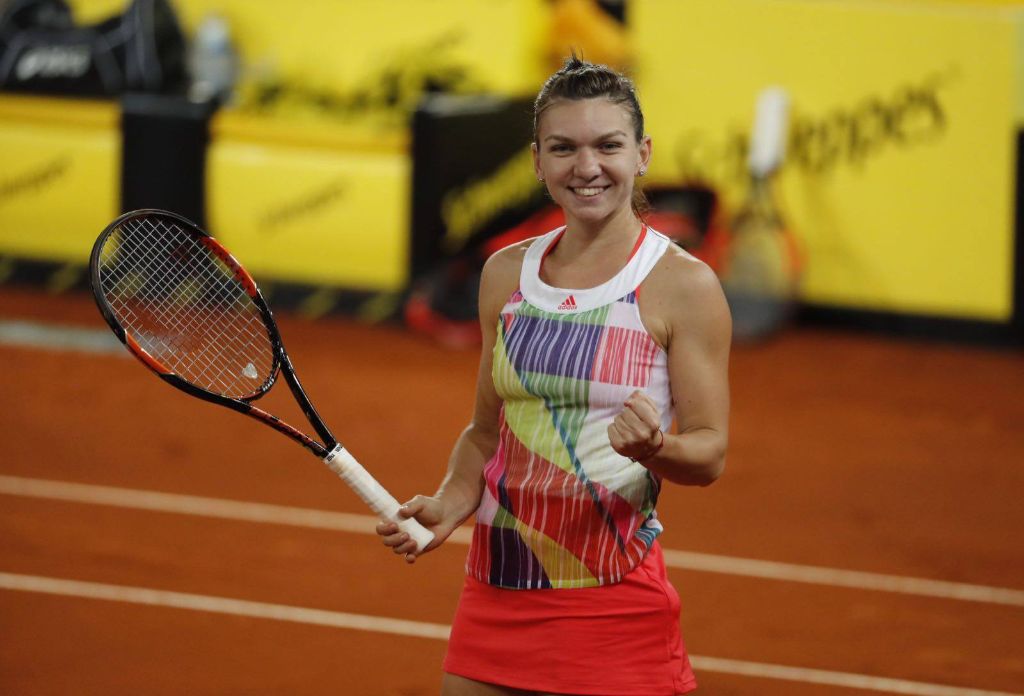
Simona Halep a mai mancat bataie intr-o finala.
Si a ramas tot pe locul 2. Din lume, dar ce mai conteaza chestia asta…

Simona-Halep-winner-at-Madrid

Sa vrei locul 1 e firesc.
Sa faci misto de locul 2… depinde…
N-am sa ma lansez in considerente de tipul ‘se vedea pe ea ca nu s-a straduit destul’. Nu ma pricep la tenis suficient de bine pentru a face judecati de tipul asta. Ba, mai mult, mi s-a parut ca Simona chiar s-a ofticat de cateva ori. Adica a vrut dar nu a putut. Sau nu i-a iesit.
A blama pe cel ajuns pe locul doi mi se pare interesant din alt punct de vedere. Toti avem o oarecare cantitate de invidie. Unii o recunoastem, altii nu. Nici macar in sinea noastra.
Cateodata aceasta invidie, mai ales cea ‘involuntara’, se manifesta oarecum pervers. Sub forma de dispret.
Nu-l putem dispretui pe cel de pe locul 1.
Nu are rost sa-l dispretuim pe cel de pe locul 10.
Dar fraierul ala care iese tot timpul pe 2… De ce sa nu facem misto de el pentru ca nu a fost in stare sa atinga o tinta pe care noi nici macar n-am fost in stare sa o visam?
Si ne dispretuim pentru asta dar nu avem curajul sa recunoastem… nici macar in sinea noastra…

Recent developments have resurrected a Soviet era concept.

Whataboutism.

 “Whataboutism refers to the practice of deflecting criticism by pointing to the misdeeds of others. Oxford Dictionaries defines it as “the technique or practice of responding to an accusation or difficult question by making a counter-accusation or raising a different issue.”
Essentially, it’s an appeal to hypocrisy ― a logical fallacy also known as “tu quoque.” Instead of proving that your opponent’s claim is wrong on its face, whataboutism argues that it’s hypocritical of the opponent to make that claim at all.”

The current bout of whataboutism came about when Trump and his supporters tried to deflect the public condemnation of neo-nazi activism after a young woman had been killed by a white supremacist.

So, which is worse?
Communism or nazism?

I’ll make a small detour here and ask myself ‘what’s wrong with the spell checker? Why insist that nazism should be written with a capital N? Is it a nation? It’s OK for communism to start with a lower case letter, same thing for all other political denominations… what’s so special about nazism?!?’

Back to business.

One way to answer the question would be to asses the damages incurred as a consequence of each of them being put in practice.

Easier said than done. There are a lot of similarities between these two but also a huge difference. Precisely that which makes it very hard to compare the consequences of each of them having been experimented.
Nazism and communism have evolved in totally different social environments and have been fueled by closely related yet different public feelings.

This is why I’m going to change tack.
Why attempt to establish a relative hierarchy on the axis of evil when they can be studied together?
As the left and right wings of the same carrion eating bird which feeds itself on the countless societies ruined by authoritarianism?

After all, any attempt to determine which is worse does nothing but normalizes ‘whataboutism’ itself, doesn’t it?
Regardless of which wing flaps first….

DSC_0138net

I’ve reached the conclusion that thinking and digesting have very much in common.

Citarum 2

We can’t do it by our own. Those of us who don’t cooperate/speak with those around them, don’t have what to eat or what to think about.

Both processes imply three stages. Identification, absorption, use.
We use cultural models to identify both our food and the important issues.
Absorption – through our gut/conscience, is both highly specific to each individual and governed by our common DNA/shared cultural traditions.
The ‘products’ of the digesting/thinking process are, again, used both in public as well as in private. Part of the energy we get from our food is consumed ‘cooperatively’ with our ‘coworkers’ while most of our thoughts end up either verbally expressed or put in practice.

Both processes, digesting as well as thinking, increasingly change the environment where we, and others, live.

Citarum 1

Seven years ago somebody was elected to the Senate of the United States.

Despite

“Candidate’s Words on Vietnam Service Differ From History”

Six years later, another guy became POTUS despite the newspaper who published the article above having mounted quite a vigorous campaign against him.

The really interesting thing is that the second guy uses the information published in the newspaper seven years ago to smear the first guy while constantly accusing the same newspaper of being a relentless purveyor of fake news…

trump blumenthal

Now, which is stranger?

That two guys had managed to muster enough public support to get elected into public office, despite their shoddy relationships with the truth?

Or that newspapers continue to bother themselves?

“Fabrications have long been a part of American politics. Politicians lie to puff themselves up, to burnish their résumés and to cover up misdeeds, including sexual affairs. (See: Bill Clinton.) Sometimes they cite false information for what they believe are justifiable policy reasons. (See: Lyndon Johnson and Vietnam.)

But President Trump, historians and consultants in both political parties agree, appears to have taken what the writer Hannah Arendt once called “the conflict between truth and politics” to an entirely new level.

From his days peddling the false notion that former President Barack Obama was born in Kenya, to his inflated claims about how many people attended his inaugural, to his description just last week of receiving two phone calls — one from the president of Mexico and another from the head of the Boy Scouts — that never happened, Mr. Trump is trafficking in hyperbole, distortion and fabrication on practically a daily basis.”

“Suntem o ciudată cultură a rușinii, în căutarea celui care ne-a făcut de rușine”

Vintila Mihailescu.

Tinerii din corporații, “care muncesc de le sar capacele”, au nevoie de țapi ispășitori pentru faptul că societatea românească avansează prea lent, iar țapii ispășitori pe care i-au găsit sunt țăranii și părinții, spune antropologul Vintilă Mihăilescu, într-un amplu interviu pentru PressOne.

In viziunea lui Mihailescu – care il citeaza pe Sorin Antohi, toate astea se intampla pentru ca ne complacem in starea de ” “bovarism cultural”. Ne visăm ceea ce nu suntem şi cădem în of şi jale pentru că nu suntem ceea ce ne-am dori, dar nu putem fi.

Ei bine, vom continua sa ‘nu fim’ atata vreme cat vom continua sa nu intelegem ca dorinta nu este, si nu a fost niciodata, suficienta.
Ca sa devenim ceea ce ne dorim trebuie, pur si simplu, sa parcurgem distanta dintre locul unde suntem si cel unde vrem sa ajungem.
Daca dormim in cizme, visand frumos, or sa ni se imputa, pana la urma, picioarele.

“– O altă temă a cărții este nevoia de miracole a societăţii românești. Se transferă ea şi în politică? Aşteaptă românii un lider providenţial?
–Ştiu la ce vă referiţi, e o întrebare pusă frecvent în sondaje, iar răspunsul este unul puternic: Da! Dar asta e o inducere a răspunsului.
Spontan, oamenii nu se gândesc la o soluţie, dar dacă li se serveşte răspunsul – Nu e aşa că vrei un tătic care să aibă grijă de tine și să te scape de belele? – Da, sigur că vreau!
Ce altceva să răspundă? În sensul ăsta, este o întrebare care induce răspunsul, iar acesta este unul general uman. În condiții de insecuritate, oricine visează la o “minune” care să-i confere siguranță și previzibilitate în viață.”

Si uite-asa am ajuns la mult mai spinoasa problema a lui ‘ce ne dorim’…

Adica ‘pornim, noi, pornim, dar incotro?’

Locul ala catre care tot vor unii sa ne porneasca… o fi bun pentru toti? Sau doar pentru cei cu ‘initiativa’?

Sa fie asta explicatia pentru numarul mare al celor care ‘au pornit’ peste granita?

Sa explice oare ‘selectia naturala inversa’ enormul numar de ‘guri deschise’ ‘ramas’ in fiecare seara in fata televizioarelor care transmit propaganda politica de ‘ambe sexe’?

Se pare ca avem mare nevoie sa-l recitim pe Eminescu. Vrem, nu vrem, ramanem ‘tributari’ – cititi articolul, ‘paturii superpuse’.
Cata vreme membrii acesteia se vor multumi sa se bata intre ei pentru cat mai multa spuza pe turta proprie in loc sa-si indeplineasca menirea inainte de a intinde mana dupa portia lor din spuza ‘nationala’…

“We are the last (semi) stable democracy on the planet without a universal health care system. Elsewhere in the world, health care is a utility taken for granted, like safe tap water or electricity. They pay for it, just like we pay for garbage service or highways, and it costs far less than our broken system. That is not an opinion. That is a reality easily revealed with a bit of travel. Like embattled cult members, we deny ourselves better policy outcomes to protect our deluded beliefs about the nature of markets and preserve our odd pathologies around race. That’s a choice we make…”

Chris Ladd,
Why Republicans Cannot Replace the ACA, Or Accomplish Anything Else,
forbes.com, Jul 20, 2017

ACA means “Affordable Care Act”.

‘Affordable’ for whom?

For those left out, of course…
And who was going to pay the difference?
Those already in, obviously…

See what I mean?

Health care can be seen in many ways.
As yet another opportunity for profit to be made – one of the best actually, since health is such a valuable commodity.
As a ‘social benefit’ extended by the society at large to (all?) its constituents. America already takes care of its elders, children and veterans, doesn’t it?
A combination of the first two. A free market where many independent health care providers cater for the needs of their customers – free to choose among the various providers – while the bills are picked up by a third party, financed through public contributions.

The only problem with the third option being our current obsession with money.
For as long as we’ll let ourselves be governed by the current mantra, “greed is good”, we’ll continue to perceive health care as nothing but yet another opportunity for some to get rich at the expense of everybody else.

How about an Efficient (Health) Care Act?
Opening the market – by allowing the patients to freely choose their doctors and by preventing  monopolies – would drive down the costs.
Cutting the middle-men – the insurance companies would no longer be needed since the public contributions would be collected by a public authority – would also help.

Would such a scheme work?
As I mentioned earlier, not before we give up ‘greed‘.
In order to trust yet another public authority with even more money we’d need at least some hope about that authority being populated by really honest people.
We’d also need many more ‘health care providers’ who actually love to help their patients – and make a decent living out of it – instead of so many people becoming involved with this ‘industry’ simply because it is among the very ‘rewarding’ ones.
And when I say ‘health care providers’, I mean all of them. Not only the doctors and the nurses – most of them do love their jobs and perform them almost heroically. (Some of/too many of) the Big and Small Pharma, (some of) the hospital ‘owners’, etc., etc….

Should we extend this scheme to other areas? Education, for instance? You bet!

Should we apply the same ‘weltanschauung’ to the rest of the economy?
Minus the ‘single payer principle’, of course?
Well, last time I read his work, Adam Smith was talking about “the Nature and Causes of the Wealth of Nations” and about “Moral Sentiments“, not about greedy individuals becoming filthy rich at the expense of their fellow human beings.

“In almost every other race of animals each individual, when it is grown up to maturity, is entirely independent, and in its natural state has occasion for the assistance of no other living creature. But man has almost constant occasion for the help of his brethren, and it is in vain for him to expect it from their benevolence only. He will be more likely to prevail if he can interest their self-love in his favour, and show them that it is for their own advantage to do for him what he requires of them. Whoever offers to another a bargain of any kind, proposes to do this. Give me that which I want, and you shall have this which you want, is the meaning of every such offer; and it is in this manner that we obtain from one another the far greater part of those good offices which we stand in need of. It is not from the benevolence of the butcher, the brewer, or the baker, that we expect our dinner, but from their regard to their own interest. We address ourselves, not to their humanity but to their self-love, and never talk to them of our own necessities but of their advantages. Nobody but a beggar chuses to depend chiefly upon the benevolence of his fellow-citizens. Even a beggar does not depend upon it entirely. The charity of well-disposed people, indeed, supplies him with the whole fund of his subsistence. But though this principle ultimately provides him with all the necessaries of life which he has occasion for, it neither does nor can provide him with them as he has occasion for them. The greater part of his occasional wants are supplied in the same manner as those of other people, by treaty, by barter, and by purchase. With the money which one man gives him he purchases food. The old cloaths which another bestows upon him he exchanges for other old cloaths which suit him better, or for lodging, or for food, or for money, with which he can buy either food, cloaths, or lodging, as he has occasion.”


Before proceeding any further, let me introduce you to two other, more distanced, cousins of ours. Gorilla and Orangutan.

Orangutan leads a semi-solitary life in the Bornean and Sumatran Jungle. They are fairly large animals, males tip the scales at 200 pounds or so, and need a lot of food. They eat mostly fruit and, in times of scarcity, bark, flowers, insects and eggs.
It was their ‘eating habits’ which had shaped their social lives:
Food is often scarce in the rain forest and that is why the orangutan is a semi-solitary creature. In times of great abundance of food, orangutans may use the opportunity to socialize and gather in small groups.
Because they live solitarily, the young siblings must on one hand learn ‘everything’ before starting their adult lives and they don’t have anybody to learn from but their mothers. Hence they stick around for longest. A baby orangutan will nurse until about six and continue to live with their mothers for a few more years. Two or three for the males, five or six for the females – on top of everything else the females have to learn “mothering skills” and for them the only way to do it is to watch their own mother taking care of the next sibling.
As a consequence of all this, the females give birth only once every 8 years, “the longest time between births of any mammal on earth. (This results in only 4 to 5 babies in her lifetime.)” Not a very efficient survival strategy, for the species I mean…

Gorilla has adopted a different feeding strategy.
This is actually a joke. It wasn’t ‘the gorilla’ which has ever adopted anything, least of all ‘a survival strategy’. The ‘adoption process’ had been fueled by chance, had been ‘censured’ by  the realities of their living places and was later labeled as “evolution” by Charles Darwin.
Coming back to our distant cousins, gorillas are even larger animals than orangutans.
300-400 pounds, for the males, versus 200. Hence they need even more food.
An adult Grauer’s gorilla male is estimated to eat 30 kg of plants every day, an adult female about 18 kg.” The difference being that gorillas eat a lot of leaves.
When they have the opportunity to choose, they will surely pick up fruit but they are much more adapted to eating leaves than orangutans are. As a consequence they do not need to ‘spread around’ as thinly as orangutans do, the young can also learn from the rest of the pack so females can give birth every 4 years instead of every 8.

Is there any link between all this babbling and the stated subject of your post?

Actually yes.

As gorillas and orangutans are teaching us, together is easier than each by its own.
Being able to give birth every 4 years is a huge evolutionary advantage over having to wait 8 years before becoming pregnant again.

But this is not all we can learn from our cousins.
Male gorillas, at 300 to 400 pounds, are formidable defenders. Their only enemies, except for humans, are the leopards.
Compare 350 pounds with less than 100 for a chimpanzee/bonobo male.
That would be a good starting point to figure out why silver-backs – mature male gorillas who despotically reign over their 1 to 5 females – can afford to drive out their sons after they become sexually mature while the chimpanzee alpha males, who lead troops of up to 50 members, will allow other mature males to live by – and to have intercourse with some of the females living in the same group.
The second reason being that gorillas eat, almost exclusively, plant matter, supplemented with some insects, while chimpanzees form hunting parties in order to catch, kill and eat other animals, including monkeys. And one can ‘graze’ by himself while hunting is way easier in cooperation with others.

Feeding habits can explain quite a lot, isn’t it?

Let’s make a step further and turn back, as I promised in my previous post, to the differences between chimps and bonobos.
Well, bonobos hunt, just as efficiently as the chimps do, only they are less inclined to murder their neighbors.
Just one suspected killing observed during “92 combined years of observation at four different sites“, for the bonobos. In the other camp, 152 killings, 58 directly observed and the rest “counted based on detective work“, gathered over “426 combined years of observation, across 18 different chimp communities“.
The second difference, that I find interesting in the context of ‘capitalism’, is the size of the ‘colonies’. Bonobos live in way bigger groups than the chimpanzees. 100 versus 40 to 60, I’m not sure whether this had any impact over the relative fate of chimps or bonobos but it is surely relevant for how capitalism works. Stick around.

One more ‘animal story’ and I’ll wrap everything up.

“We previously reported that chimpanzees were unable to optimally select the smaller of two candy arrays in order to receive a larger reward. When Arabic numerals were substituted for the candy arrays, animals who had had prior training with numerical symbols showed an immediate and significant improvement in performance and were able to select reliably the smaller numeric representation in order to obtain a larger reward. Poor performance with candy arrays was interpreted as reflecting a response bias toward the intrinsic incentive and/or perceptual features of the larger array. In contrast, the Arabic numerals represent numerosity symbolically and appear to promote response choice on the basis of abstract processing of numerosity, with minimal interference from the inherent properties of the choice stimuli. The present study tested the hypothesis that, for mixed symbol-candy choice pairs, the requisite processing of the abstract numeral may foster a mode of numerical judgment that diminishes the interfering incentive/perceptual effects of the candy stimuli. The results were consistent with this hypothesis. Whereas performance on candy-candy arrays was significantly below chance levels, performance on numeral-candy choice pairs was significantly above chance and comparable with performance on numeral-numeral pairs.”

OK, OK, don’t shoot the messenger… those guys were writing a scientific paper, not a blog post… let me ‘translate’ it in simpler words.

There is a relatively simple psychological test involving two bowls full of candy.
One of them containing more pieces than the other.
The test consists of a child being asked to choose between those two bowls, after being told that the candy from the chosen bowl will be given to somebody else and the candy from the second bowl, the unchosen one, will be given to the child. The test is repeated a number of times and most of the children, 4 year olds and above, learn quite quickly to point to the bowl containing the smaller number of candy.
If, instead of children, chimpanzees are asked to choose between the two bowls, they continue to point to the bigger number of candy, even after the umpteenth repetition.
Now here comes the really interesting part.
Dr. Boysen and other scientists from Ohio State University, had previously taught a chimp, Sheba, not only to count but also to read numbers. One digit numbers…
When Sheba was subjected to the test, using real candy, she had responded exactly as the other chimps had done before her. She was unable to wrap her head around the notion that she will get the candy from the OTHER bowl. But as soon as the researchers had replaced the actual candy with digits written on small cartons… bingo! Sheba had become a lot wiser and had very quickly figured out that choosing the bowl with the smaller number (of candy) was a far better option.

Let me put two and two together.

Our cousins, the great apes, have given us a valuable lesson about cooperation.
Orangutans have to raise their offspring as single mothers. A very time consuming process which limits the number of siblings to 4.
Silver-backs don’t need much help to defend their families. So they can afford to drive off any potential competition… but they cannot hunt. Or do anything else ‘in concert’ with their peers.
Chimpanzees have learned to tolerate each-other, to a degree. They can form larger communities and engage in cooperative endeavors. Hunting and warfare.
Bonobos have developed a very efficient method to quell tension which may appear among themselves and to subdue rogue members of the community, without actually killing them. With no apparent benefit… except for us…

History is telling us, shouting at us even, that authoritarian regimes are short lived. Shorter and shorter lived, as we come closer to the present day.
Ancient Rome had lasted for almost a 1000 years. 2000 if we take Byzantium into account.
The British Empire was de facto dissolved, more or less peacefully, after less than 500 years, along with the rest of the European colonial empires.
The Russian Czarist Empire had buckled under its own weight after some four centuries, reinvented itself as the Soviet Union and faltered again after less than a century.
The rest of the ‘modern’ dictatorships have crumbled even faster, with only two notable exceptions: North Korea and Cuba.

Mighty commercial ventures, which had seemed impregnable in their heydays, are now almost forgotten memories. From the British East India Company to the now infamous ENRON…

Yet humankind, as a whole, had fared better and better.
OK, we did bring a lot of ‘man made’ misfortune over our own, collective head.
Only every little piece of that misfortune had been produced and inflicted in an authoritarian setting.

From Alexander the Great (?!?) to Hitler, history is full of ‘leaders’ who had somehow convinced their subjects to foolishly follow orders. Eventually, everybody got killed in the process. The leaders as well as the hapless subjects…
From John Law – ‘the son of a Scottish banker, a gambler and playboy who had killed a man in a duel‘ before insinuating himself at the top of France’s financial establishment during the first part of the XVIII-th century, where he had orchestrated a “system” closely resembling a Ponzi scheme – to Bernard Madoff, the economic and financial history is full of ‘tycoons’ who have led their their subordinates, and a considerable portion of the financial markets, to utter disaster.

And some of us still consider that ‘greed is good’… Maybe they should read again about Sheba and the candy bowls…

I can hear some of them protesting: “In the real world, there is nobody to switch the bowls! ‘Finders keepers, losers weepers'”
Yeah, right… tell that to some of those who had won the lottery… “About 70 percent of people who suddenly receive a windfall of cash will lose it within a few years, according to the National Endowment for Financial Education.

Then why are we still so obsessed with money?
Like Sheba was with those candy?
Why do we collectively continue to behave like a bunch of three years olds?

Maybe because money have proved, over the centuries, to be very reliable tools?
Because profit has been a very good measure for a company’s ability to survive? If corroborated with other indicators, but that’s another story…

At some point I mentioned that capitalism only works if the market where its wares are traded is really free. Meaning that that market has to work under the rule of law and that nobody in that market should allowed to become so powerful as to dominate the others.

Well, that was a lie.
Actually, capitalism works anywhere.
Those running the late Soviet Union have tried to convince the rest of the world that monopolies might work.  Various ‘business men’, including some very successful ones, try to convince us of the same thing. “Competition is for losers” they say… OK, I can understand why they keep trying… That’s what the entrepreneurs are for! “To boldly go where no man has gone before.”
My point being that markets which are not presently free will become free with the passage of time. No matter what!
No political arrangement has ever been strong enough to contain a dysfunctional economy. That’s why the Soviet Union, and the rest of the communist camp, had crumbled. That’s why we have a crises every time the government, with the best intentions, abruptly intervenes in the economy. Or fails to do so and allows monopolies to exist for too long…

Capitalism actually works.
Look around us.
I could give you a myriad examples. I’ll settle for two.
Romania, which less than 30 years ago was struggling under the communist yoke, now has one of the fastest internet in the world.
Some 40 years ago, when my uncle had emigrated to America, long-distance  phone calls were so expensive that he barely afforded to call his mother more than twice a year… nowadays two people can chat for hours across the planet, for free, over the internet. With video…

How about we letting it do its magic without some of us trying to drain ‘undeserved advantages’ from the process?
And no, those trying to ‘drain undeserved advantages’ are not the real culprits for what is going on!
A really free market is not one where a big bully with a huge stick makes sure that nobody steals from its neighbor.
That would be the definition for a police state!
A free market is one where people organize themselves, hire a normal guy with a smallish stick to take care of thieves and then call him every-time when they see a robbery taking place.

Nowadays too many of us actually admire the thieves and try to bribe the guardian.
While the rest idly walk by, as if what’s going on under their own noses is not going to affect them in a very short while …

A huge, and growing, number of people, of all ages and from all social strata, are mad about capitalism.
They see it as the ultimate cause for the misery and unhappiness too many of  us seem unable to escape.
On the other hand, a very vocal and very influential group, most of its constituents belonging to the mature section of the society, keeps  saying that ‘greed is good’.

What’s going on here?

Human minds, yours and mine, have to deal with information belonging to two, actually three, categories. I’ll leave aside the third one – ‘details’ concerning the innards of our bodies.
We have to deal with facts and with impressions/opinions/sentiments.
The facts happen or are ‘perpetrated’ and impressions/opinions/sentiments are felt and/or expressed.
We find out – or are told – about both facts and impressions/opinions/sentiments
Simultaneously, what’s going on around us elicits an emotional response from us, drives us to formulate impressions/opinions and, sometimes, to react. A.k.a, to commit other facts.

In fact, our present situation is the consequence of the accumulated facts ‘perpetrated’ by our predecessors. And, to a smaller but significant degree, by us.

This whole introduction was meant to explain the fact that we are here as a consequence of what we did during our earthly existence, including under ‘capitalism’, and that our impression/opinion/sentiment about capitalism will shape our future. And that of our children.
I’ll make a small intermezzo here and address myself to those of you who believe that our fate is determined by ‘God’.  “No one has ever seen God; if we love one another, God abides in us and his love is perfected in us.” 1 John 4:12

Now please let me make a very short recap of how we got here.

I’ll be using ‘scientific’ information. I know that some of you will find it ‘unreliable’.
The following questions are meant to help you decide ‘on whose side are you’.
Did you ever travel in a plane?
Were you, or a family member, ever saved by modern medicine?
Do you use the internet?
Are you aware that planes, medicine and internet have been brought to us by ‘science and technology’?
I agree with you that individual scientists are prone to making mistakes but will you agree with me that planes most often than not reaching their destination, medicine not killing all its patients and internet being used by so many of us are strong indications that science and technology, on the whole, are ‘right’?

Let me go on.

We, Homo Sapiens, have two close cousins. Pan Troglodytes and Pan Paniscus.
The common and the pygmy chimpanzee. The latter also known as ‘bonobo’.

The differences between the regular chimpanzee and the bonobo are very important for those studying ‘capitalism’.
You see, both are social animals which live in close groups – like us, humans.
Chimpanzees are ‘authoritarians’ by definition. They follow a strict hierarchy – as long as the alpha male is able to impose it – and the leader harshly punishes any misdemeanor. Fights between chimpanzees are rather common and sometimes they end up with the death of one of the opponents.
Sex has a strict reproductive function and the dominant male sometimes discourages ‘his’ male ‘subjects’ from copulating with ‘his’ females.
Bonobos are democrats by excellence. When a male becomes too aggressive a few females – who are individually smaller and weaker than the males – band together and ‘knock some sense into his head’. But this instances are rare, more often any disputes are solved through sex. Yes, sex. The bonobos share our ‘ability’ to have sex, homosexual sex even,  “in a social context, with the same benefits as humans, such as stronger bonding and social hierarchies. It also has been seen to maintain a more peaceful environment amongst their community as aggression amongst the males can be vented through sexual acts.

What both chimpanzees and bonobos have in common is the fact that they have multiple sexual partners – which makes it impossible to know, bar a DNA analysis, who is the father of a certain baby.

I’ll come back to this in a short while.

After coming down from the trees of our early childhood and after having learned to run – as a manner to chase pray and to escape danger – we ‘discovered’ our ‘free’ hands.
And started doing things with them.

One other small thing was ‘the cherry on the cake’. Our ability to articulate sounds.

I don’t know when our brains had started to grow. Before or after we had started to hunt cooperatively, using weapons and verbal coordination. Does it really matter for the problem at hand?

Fact is that at some point in our history we were in possession of certain attributes and certain abilities. Big and flexible brains, the ability to walk using only two limbs – freeing the rest for other uses, the ability to communicate meaningfully with the rest of the gang and the ability to vent our frustrations through sex.

From here, our evolution has been very fast. Determined exclusively by the geography of the places where we happened to live. In the prairies we learned to raise animals and became herders, near rivers we learned to till,  seed and harvest while in the Arctic and in the jungle we remained hunter-gatherers.

The herders and the agriculturalists developed in two different directions.
The herders adopted – unwittingly – what is now called ‘the extensive way of development’ – by increasing the size of their herds – while the agriculturalists have tried to maximize the output of their limited plots of land.
The herders – being on constant move – have coalesced later into states, or never, while the agriculturalists had done it earlier. For reasons pertaining to labor productivity and the administration of justice.
In a herding environment there is no ‘police’ to turn to so individuals tend to fend for themselves. Some coalitions of tribes did organize annual meetings – Loya jirga  and Kurultai being but two examples – where ‘things’ could be discussed and settled but it was more often that people had resorted to a vendetta like justice.
In an agricultural environment things are more stable and a different set of demands have to be met.
Herders have very few property other than their stock and relatively little trade is exchanged among the members of the community.
Agricultural economy works differently. Higher productivity means the division of work is way deeper so trade is a lot more intense in this environment. This calls for ‘police protection’ which, in turn, calls for a relatively stronger state. Anyway, a stronger state was already needed since a richer, and sedentary, agricultural community is way more attractive for ‘thieves’ than a constantly traveling band of herdsmen.

A community which has a powerful group of professional fighters – ‘police’ and/or ‘army’ – is prone to become, sooner rather than later, an authoritarian regime. Where the ruler imposes his will over the entire community.
If we look closely this is what had happened all along human history. All states which depended heavily on agriculture had become authoritarian regimes. From Ancient Egypt and Sparta to the Medieval France and from the Aztec and Inca empires to China, on either side of the globe.
The problem with authoritarian regimes being that they inevitably fail. History doesn’t offer us a single example of an authoritarian regime which had been able to survive his own increasing weight. Rome was crumbling long before it was finally sacked by Odoacer, the American empires so easily conquered by the Spaniards were riddled by superstitions and by individual people being unable to think for themselves – living under terror tends to have that effect on those who survive – and there are countless more examples.

On the other hand, herders and those who trade in wares  made by others tend to behave ‘democratically’. Simply because herding and trading asks for a more individualistic and quicker thinking person. Compare Ancient Athens to Sparta, Medieval England and her Viking traditions to Medieval France and her Romanic reminiscences.
And also the democratic precursors I’ve already mentioned. The Mongols had their Kurultai, the Afghans their Loya Jirga.

By looking closely at all these examples I’ve reached the conclusion that people ‘yield’ better results whenever they enjoy as much individual autonomy as possible in a given situation.

The authoritarian Sparta had time and time again been beaten by the democratic Athens.
Athens had been destroyed as soon as it had lost her democratic status – Pericles was a dictator, you know…
The Roman Empire had been build as a democratic Republic and had started to crumble as soon as it was run as a dictatorship.
Slavery used to be a just as widely spread institution in Europe as it was in Asia at a time when Europe was extremely backward compared to Asia. Slavery had remained widely spread in Asia until recently while in Europe it had almost but disappeared since the VI-th century. Now consider the differences which existed between Europe and Asia around 1900…

The Soviet Union had crumbled under the combined weight of the apparatchiks while the US had become, for a while at least, the sole hegemon.

Now some people want to give up capitalism!
And replace it with what?

But what exactly is capitalism?

We currently use the history as it had been ‘layered’ by Marx.
He had done that using his preferred criterion: ‘who owned the “means of production”‘.
According to him we had three main historical stages and one bright future.
‘Slavery’, ‘Feudalism’, ‘Capitalism’ and ‘Communism’.
We already know that Communism has failed, abysmally, so let’s see what Marx might have overlooked.

‘Slavery’ means that the owner has every right over his possessions, even when those possessions are other human beings, while the ‘possessed’ individuals have absolutely none. A slave had no more rights than a modern day hammer. I can do whatever I want with my hammer – except using it to kill someone – just as I could have done with a slave in Ancient Rome. Including burning both of them, alive!
Can we speak of any autonomy being enjoyed by the slaves? Other than that extended, ‘haphazardly’, by the owners?
And you know what? The people were OK with all that. They simply thought that ‘that was how it was meant to be’. Until Spartacus had a different opinion…

‘Feudalism’ means that the king has every right over everything under his domain, including that of burning alive any of his subjects. But he was the only one to enjoy such  rights. A marked improvement over slavery!
The lords acted as the trustees of the king. They were given certain pieces of land, or other ‘perks’ – to collect a tax at a river crossing, for example – but not the right to dispose at their will of those living on the land at their disposal. And, at first at least, the lords were not entitled to sell those lands – only to bequeath them to their children, or other relatives, and even that was subjected to royal approvement.
A marked improvement – individual autonomy wise – from what was going on when Slavery was in full swing, at least for the commoners, but still far from what we have today. Ordinary people could not own much of anything, usually they could not live where they chose or exert the ‘profession’ they  liked without somebody allowing them to, etc., etc.,… Trade was also tightly ‘regulated’, whenever some merchandise was traveling from one place to another a lot of ‘right of way taxes’ had to be forked out towards various landlords.
The landlords, and the king, were also the ‘keepers of justice’. OK, they usually followed the ‘rule of the land’ but they were also able to ‘bend’ it to suit their will.

Not quite harsh as ‘slavery’ but still a very authoritarian regime, right?
Remember what I said about authoritarian regimes? That they tend to buckle under their own weight? As the French Monarchy did during the Revolution?

Now, who would initiate anything while living under an authoritarian regime? Where everything has to be ‘approved from above’? Specially when that ‘anything’ was an untried novelty or, God forbid, something that might have produced the slightest controversy?
Well this is exactly why authoritarian regimes have very little ability to innovate/adjust to external change.

Now that we’ve learned how authoritarian regimes dig their own graves – by insisting that there is only one correct way – ‘theirs’ – and that nobody may cross certain limits – those that have been drawn by ‘them’ – let’s examine what ‘capitalism’ looks like.

People usually associate capitalism with ‘money’.
Not even Marx had made that mistake. In his view ‘capital’ was everything that could be used to produce something: land, tools and raw materials and capitalists were those who owned that ‘everything’.
What Marx had forgotten to mention – or to understand – was that ‘merely’ owning something was never enough.
In order for ‘something’ to be truly ‘productive’ somebody must use it.
And in order for somebody to embark on an enterprise more complex than his ‘cooking his next dinner’ that somebody must be reasonably convinced of two things. That nobody would try to rob him of whatever he was going to do and that he will be able to trade the results of his work for anything he might covet.

See what I mean? For capitalism to flourish it is not enough for people to own things. People must be able to freely transform those things, according to their skills and abilities, and to trade them at their will.
In this sense capitalism needs to happen under the rule of law and its wares must be traded on the free market.

Then what went wrong? According to what I have written until now, everything couldn’t be better.  A considerable number of us do live under the rule of law, the markets are reasonably free in a considerable number of states… then why is so much unhappiness oozing from almost everywhere?
And how long are we going to remain steeped in it? To what consequences?

To be continued.

Humankind is a work in progress.

We’ve changed the planet we’re living on and we’ve changed ourselves.

We’ve invented the automobile and we’ve become more autonomous.
By driving we’re now able  to cover more space in less time, carrying a lot more with us.
To achieve that we’ve straddled the globe with seemingly endless ribbons of tarmac.
The changes which had appeared as a consequence of ‘automobile’ are enormous. Some conspicuously visible – the roads and our increased individual autonomy, a few less so – we’re not only more autonomous but also more ‘socially dependent’, building cars and maintaining roads depend on a lot of us ‘working together’, while ‘the jury is still out’ on yet others – global warming, for instance.

We’ve invented vaccines and we live longer and better. Small pox has disappeared, polio is likely to follow suit, being bitten by a rabid animal is no longer a death sentence and so on.
I don’t need to explain how this has changed us, right?

All these have come with some costs attached.
Thousands, if not millions, die each year in traffic accidents and many more are injured.
Children suffer side-effects after immunization.

What intrigues me is that we treat these two phenomena in two completely different manners.

We’ve introduced tough regulations when we’ve discovered that some car companies were cutting corners in their attempt to increase margins. We insist for wide-spread ‘call-backs’ whenever we hear about a batch of cars having systemic troubles. Some of us try to produce self driving cars – even if these would be somewhat ‘counter-productive’ – in our very orderly life, where many of us are reduced to following procedures, driving is one of the few areas where we still retain full responsibility.

Yet I don’t know of people dissuading their children from learning to drive or from buying a car. Even if some of them will, helas, die as a consequence of traffic accidents.

Then why so many parents refuse to vaccinate their children? Not only putting them into harm’s way but also extending a warm invitation for many diseases to make a dramatic come-back. Measles have killed tens of children in both Italy and my native Romania in the wake of recent anti-vaxxer militancy…

OK, there might be a back-lash against ‘big-pharma’. I can understand more indignation being felt against huge corporations profiteering from people being sick than against big corporations making a faster buck by selling ‘lemony’ cars… but why throw away the baby along with the bath water?

Why give away the shared safety of herd immunity instead of introducing better safety measures? Instead of cutting down to Earth the virtual monopolies which produce most of our vaccines, making it easier for the ‘safety inspectors’ to do their jobs?

One of the possible explanations being that vaccination is ‘prevention’ while learning to drive is a matter of improving one’s skills.

And prevention means paying the price up-front while having only an expectation for a possible pay-back while skills improvement is seen as something having a certain outcome.
Corroborate this with the ‘fundamental attribution error‘ and things become a lot clearer.

For those unfamiliar with this term, the whole thing boils down to how we tend to ‘apportion’ blame and praise. When something good happens to us we tend to attribute it to our skills while when something bad falls on our heads we blame the bad luck we had in that moment.
And this is only half the picture. When things happen to other people we tend to turn the tables. When something good happens to a guy we attribute it to his luck while when somebody is subjected to a misfortune we are inclined to believe that ‘he had somehow brought it upon himself’.

Hence we get sick only as a consequence of misfortune – but we consider ourselves lucky, don’t we? – while safety on the road depends exclusively on our driving skills.

In this situation blunt reason tells us to ‘let all the other children be vaccinated’, ‘constantly improve our driving skills’ and ‘check our cars often’.

Well, the same blunt reason tells the others the very same thing. That’s why they insist that all children must be vaccinated – individual ‘specifics’ must, of course, be taken into account, all drivers must be vetted and all cars checked periodically.