Archives for category: Uncategorized

What we currently call ‘science’ is both an activity and an attitude. Something some of us do and the way in which some of us see the world.

In current lingo, those who ‘do science’ are involved in ‘technology’ while those who see the world ‘scientifically’ partake in a certain philosophical tradition.
If we look at things in this way, it becomes obvious that doing science and thinking scientifically might not be the same thing.

Science, as an attitude, had sprung up in Ancient Greece, been kept alive by the early Islamic scholars, rekindled by the Medieval Catholic theologians, come of age during the Renaissance and ‘exploded’ after the Enlightenment.
Technology, on the other hand, is way older. And had been developed mainly elsewhere than the scientific attitude. China and India had been technological powerhouses and thriving civilizations in times when Europe was still learning to wash its hands before dinner.

‘Modern’ science – what we have now, appeared only after technological prowess had been married to the right attitude. 

OK.
It is easy to accept that technology, the more widely distributed part of ‘science’, had appeared as a consequence of mere necessity. People needed things in order to survive, then wanted things in order to increase their comfort… things which had to be produced… as efficiently as possible… hence people had put their minds to it and … voila!
But what had driven some of those around the Mediterranean Sea to develop the scientific attitude?

The same thing which drives us?
The attempt to find out the future, one second earlier than it really happens?
Because they thought, like we do, that reality is unique and that man is meant to master it?

Man, the guy who was made by God in His own image and who was told to rule the world?

Roger Bacon, Duns Scotus, Occam,  Galileo, Newton, Darwin, Georges Lemaitre… some of them might have been persecuted by the church – personally or had their their ideas ‘challenged’, but they all had been raised in the Christian tradition and had been active members of their religious communities. Even Galileo, the only one among these who had been ‘physically’ affected by the way in which his ideas had been received by his contemporaries, had a more or less ‘functional’ relationship with the heads of the Church… he had died in his own bed, arrested in his own villa, not at the stake …


Anumiți activiști politici și-au adus aminte că „dacă nu votezi, nu exiști”.

Ceea ce este perfect adevărat.
Pentru alegerile ‘normale’!
Locale, legislative, prezidențiale, pentru Parlamentul European….
In situația de mai sus, orice absență este un vot în alb dat întregii clase politice.

„Dați-i înainte că pe mine chiar nu mă interesează ce faceți voi acolo. Și voi accepta, cu ochii închiși, orice vă trece vouă prin cap.”

La referendum, la orice referendum, chestia e un pic diferită.
Din cauza pragului. Daca nu vin suficient de mulți oameni la vot, rezultă că subiectul nu este suficient de interesant pentru cetățeni așa că lucrurile vor fi lăsate așa cum erau și pănă atunci.
Cu alte cuvinte, la cele mai multe dintre referendumuri, absența echivalează cu un vot negativ.

„Nu mi-ați stârnit interesul. Ați ridicat o flamură mincinoasă!”

La referendumul ăsta, în mod special, absența devine o necesitate.
De data asta, însuși actul de a vota – indiferent cum, denotă că respectivul cetățean a acceptat deja principiul că drepturile omului pot fi reduse prin vot.

Referendumul acesta reprezintă, pur și simplu, o întoarcere în timp.

Cineva spunea că drepturile omului nu se votează iar altcineva îi replica că toate drepturile au fost înființate prin vot.
Amândoi au dreptate. Drepturile omului au fost, peste tot, confirmate prin vot. Al cetațenilor, al parlamentarilor… nici nu contează. Confirmarea drepturilor a fost, într-adevăr, un demers politic și democratic.

A le restrânge, chiar dacă tot prin vot, este extrem de periculos.

După îngustarea definiției cu privire la familie vor urma dreptul de a face avort, de a da divorț, de a  ‘glumi cu cele sfinte’, egalitatea femeii cu bărbatul, dreptul la vot al femeilor … iar lista poate fi prelungită până la infinit.

Educația pe care am primit-o, adică toată istoria pe care am citit-o până acum, mă obligă să stau acasă. Și să sper că mai puțin de o treime din electorat va considera că este normal să se bage în viețile concetățenilor lor.
Folosind cabina de vot pe post de scurtătură.

„Dacă nu vii la vot, doi bărbați vor putea adopta copilul tău!”

Vrei să eviți asta?

Crește-ți singur copilul! Nu-l abandona în brațele statului.

Ia tu acasă un copil dacă nu vrei să ca acesta să fie crescut de cineva în care nu ai încredere! 20 000 dintre cele 57 000 de suflete aflate în grija statului stau la grămadă în orfelinate.


I just finished reading an excellent article about AI.

And it hit me.

We are simultaneously capable of noticing our limits and utterly incapable of dealing with them.

Well… if you think of it, this is the very definition of a ‘limit’.
Something which cannot be overcome…

We have a limited understanding of the world, we know this and yet we’re arrogant enough to embark on building  autonomous mechanisms to help us react to something we haven’t yet fully understood ourselves…

Archimedes was famous for “give me a place to stand, and a lever long enough, and I’ll move the Earth”.
Robert K Merton warned us about the ‘Law of the unintended consequences’.
The last financial melt down was yet another proof of what happens when highly leveraged instruments are used without any shred of ‘modesty’.
All major religions warn us about the consequences of building our own idols.

Despite all this, we barrel on.
Regardless.

In Nature, ‘evil’ is suicidal.

‘Evolution is not about the survival of the fittest but about the demise of the unfit’.

Ernst Mayr, What Evolution Is, 1964.

In ‘social’, a sub-domain of Nature, Evil has to be weeded out. By us.
For no other reason than here it is us who determine what is evil or not. By honestly assessing how detrimental that thing is to our own well being.

And we need to act diligently yet sparingly.
Diligently, lest we become engulfed by ‘weeds’.
And sparingly, lest we become evil ourselves.

“One of the main arguments for Durkheim’s theory is that since crime is found in all societies, it must be performing necessary functions otherwise it would disappear in an advanced society. (Hamlin, 2009). One of these necessary functions is social change. Crime is one of the most effective sources of social change in any society. When crime goes against social norms, eventually a society’s collective belief will transform thus bringing about social change. A prime example is the Anti-miscegenation laws in the United States that promoted racial segregation. As society progressed many people began violating the laws at the time until society reached a point where it was considered a norm for inter-racial relationships in society. Eventually racial segregation was abolished and in today’s society would violate social norms.One of the main arguments for Durkheim’s theory is that since crime is found in all societies, it must be performing necessary functions otherwise it would disappear in an advanced society. (Hamlin, 2009). One of these necessary functions is social change. Crime is one of the most effective sources of social change in any society. When crime goes against social norms, eventually a society’s collective belief will transform thus bringing about social change. A prime example is the Anti-miscegenation laws in the United States that promoted racial segregation. As society progressed many people began violating the laws at the time until society reached a point where it was considered a norm for inter-racial relationships in society. Eventually racial segregation was abolished and in today’s society would violate social norms.”

Mike Larsen, Durkheim: Crime serves a Social Function, 2012


BetterFailling's avatarOK, But What If?

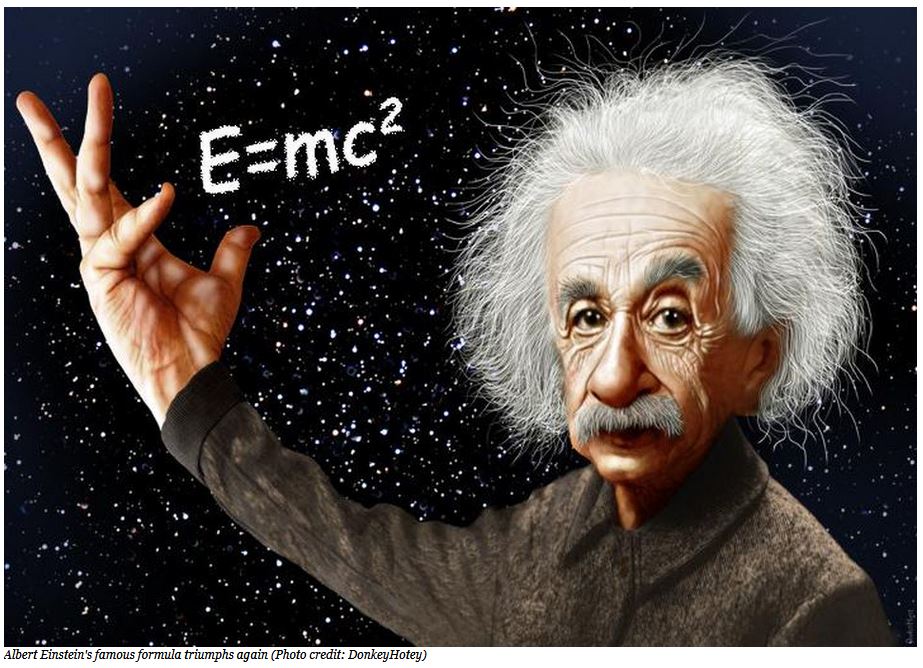
einstein energy

According to Einstein’s theories – and verified by rather numerous nuclear experiments, matter can be transformed – some of it, anyway, into energy.

According to some mathematical rule, E=mc2 introduces the notion that m=E/c2.

Otherwise said, energy might somehow/someway transform itself/be transformed by some very skilled alchemists or even through a natural process into matter.
Never yet observed by us but that doesn’t mean it cannot/could not happen.

Some modern alchemists actually plan to put this idea in practice. Read all about this here and here.

Now let me point your attention towards the ‘missing’ energy/matter. A.k.a. dark energy/matter problem.
According to the mainstream cosmologists, in order to make sense of what we already ‘know’ about what’s going on around us we must consider that “that roughly 68% of the universe is dark energy. Dark matter makes up about 27%. The rest – everything on Earth, everything ever observed…

View original post 316 more words

BetterFailling's avatarMan as a measure of all things.

DSC_1905Enchanted by the trees

You’ve already glanced at the picture above. Before going back to it, make a mental note about what you felt when you first noticed it.

Have a second, unhurried, look at the scene above and compare notes.
What you felt one minute ago with what are you feeling now.

When did you notice that the two guys are slightly out of focus?
What influence this had over your whole experience?
Do you mind the fact that the duck is sharper than the humans? As if it was the main character instead of the humans? As an aside, this was true. The duck was marching purposefully from place to place as if it was surveying the area – a botanical garden in Tenerife, Spain.

My point being that it’s absolutely normal for humans to give precedence, ‘by default’, to other humans.
On the other hand, the essence of becoming adults is…

View original post 257 more words

In my previous post, Loyalty, I proposed a four dimensional analysis of an interaction.

The nature of the interaction.
Who are the participants.
The intensity of the interaction.
The manner in which the interaction is changed by the passage of time/changes the passage of time.

I’m going to use the method in my attempt to understand the legislative process.

Hammurabi, “the best known and most celebrated of all Mesopotamian kings“, is famous for, among other things, having compiled one of the best preserved – hence best known, ancient codes of law.

“When he began ruling the city-state of Babylon, he had control of no more than 50 square miles of territory. As he conquered other city-states and his empire grew, he saw the need to unify the various groups he controlled.
Hammurabi keenly understood that, to achieve this goal, he needed one universal set of laws for all of the diverse peoples he conquered. Therefore, he sent legal experts throughout his kingdom to gather existing laws. These laws were reviewed and some were changed or eliminated before compiling his final list of 282 laws.”

Having learned that, it becomes safe to say that a ‘legislative process’ is a development which clarifies the relationship between a ruler and his subjects.

But why would an absolute ruler – as they used to be in those times, put a cap on his own authority? Why would he limit his own powers? Why not judge each case individually? Why not do according to his ‘present mood’ on each occasion?

For two reasons.
As his empire grew, he wasn’t able anymore to judge all the cases by himself. He had to delegate at least some of his judicial powers. And he didn’t want the appointed judges to do as they pleased, without any ‘guidance’.
Secondly, as his empire grew, more and more people – following diverse traditions and bylaws, became incorporated in his empire. He wanted all of them to enjoy the same level of justice and he didn’t want to alienate any one of them.

For this he had first gathered the existing laws throughout his kingdom. He didn’t want to impose his own ‘weltanschauung’ on everybody else, he only needed to build an effective ‘governing tool’.
And he had understood that a law actually makes sense only if it reflects the mores of those asked to abide by it. This way, those who have to ‘police’ those people have to deal exclusively with the relatively few trespassers. Had his laws been a ‘wholesale invention’, the job of the government/police would have been enormous, the costs incurred would have been prohibitive and the result uncertain – to say the least.

I’m sure that most of you noticed that the last paragraph was about the intensity of the relationship so I’ll jump directly to the last dimension.

We have the history of the legislative process and we have history itself.
Is it farfetched to consider ‘history itself’ as the ‘success and failure’ story of how the legislative process has influenced the fate of various people?

Hammurabi had a predecessor. He wasn’t the first to have conquered the entire Mesopotamia. Sargon the Great of Akkad had done the same thing a few centuries before him. There is though a marked difference between Sargon and Hammurabi.

“It is a testimony to his rule that, unlike Sargon of Akkad or his grandson Naram-Sin from earlier times, Hammurabi did not have to re-conquer cities and regions repeatedly”

Joshua J. Mark, Hammurabi, http://www.ancient.eu/hammurabi/

From then on, history is choke full of examples leading to the same conclusion.

The ancient Romans were sticklers for the rule of law – and everything went OK as long as the rulers kept their part of the bargain, yet the first major ‘Roman’ code was compiled by Justinian, the Byzantine emperor, long after the Western part of the Imperium had collapsed. And is imperious for us to remember, in this context, that so many of the Roman emperors had a rather ‘erratic’ behavior…

This example also suggests that there’s no real need for complex and all encompasing code. All it takes is for both rulers and ruled to do their respective jobs in a responsible manner by implementing the existing rules of the land in a reasonable manner.

Fast forward to Great Britain.
The only modern country without a written constitution.
And one of the best working countries in the world, too… except for the last two years or so… I’ll leave it there, for now.
OK, it resides in an island, which somehow insulates it from outside intervention and provides better conditions for stability. Yet it would be very hard to deny the correlation between the legislative stability and relative political continuity that can be observed throughout the British history. Specially when you compare them to what happened in the rest of Europe during the same period.
France is at it’s fifth Republic in less than two and a half centuries.
Germany had morphed from an aggressive Reich to a republic, but not before bringing the whole world to the brink. Twice!
Italy cannot get a grip on itself… Spain almost killed itself during the Civil War, the Greek people had allowed some of its citizens to ‘steal’ almost everything in the country…

What is the common point between all these countries? All of them had been run, during the last 10 centuries or so, in a lot more centralized manner than Great Britain? Their legislative processes have been mostly a top down thing while the one in England had started with Magna Charta? Which was anything but top down!

Coda.

I still need to educate my writing.
I started putting my thoughts down on paper – up in the Cloud, actually, as a manner of bringing my mind to some sort of order.
My success is relative.
I start writing about a certain subject having a certain goal in mind. Yet sometimes that particular goal fades as I write and others, more important, jump at me from various corners.

Now, there’s this ‘small’ issue regarding the ‘Constitution’.

Like any other Law, it defines an interaction between people. Hence, it belongs to the same ‘legislative’ realm.
On the other hand, while the Law defines what a certain person might or might not do and what is the punishment for trespassing, the Constitution delineates the whole environment where the entire social life will take place.
In a sense, the early constitutions were contracts between an erstwhile ruler and his ‘former’ subjects. Both parties entering this contract transforms the relationship between them changes.
While an absolute ruler would give a law as a promise – I’ll behave in such and such way if/when you, the people, will do such and such, when entering the contract known as constitution the ruler acknowledges a new statute for his erstwhile subjects.

Erstwhile ruler and erstwhile subjects become sort of equals.

Constitutions adopted by countries organized as republics go one step further. They actually proclaim the status of equality among all their citizens.

Unfortunately there’s a second similarity between Law and Constitution. Both have to be read and implemented by people.
And there is a difference if most of the people choose to read and implement them in good faith – for the common good, or whether too many of ‘the people’ choose to interpret the law/constitution in a manner that would be beneficial exclusivelly for them.
For those powerful/skillful enough to manipulate enough of the rest into believing that ‘this is how it has to be’.

This is how ‘the road to hell is paved with good intentions’ has come to be coined…


PS. I borrowed the first block-quote from ushistory.org and they implicitly asked me to publish this information.
I’m only happy to oblige, given the wealth of information which is available on their site.
Thank you.
The origin of the rest of the quotes can be determined by simply clicking on them. All the links will open in new tabs.

AUTHOR ushistory.org
TITLE OF PAGE Hammurabi’s Code: An Eye for an Eye
TITLE OF PROGRAM Ancient Civilizations Online Textbook
URL OF PAGE http://www.ushistory.org/civ/4c.asp
DATE OF ACCESS Monday, March 19, 2018
COPYRIGHT 2018

2018 -01- 24 ziua unirii

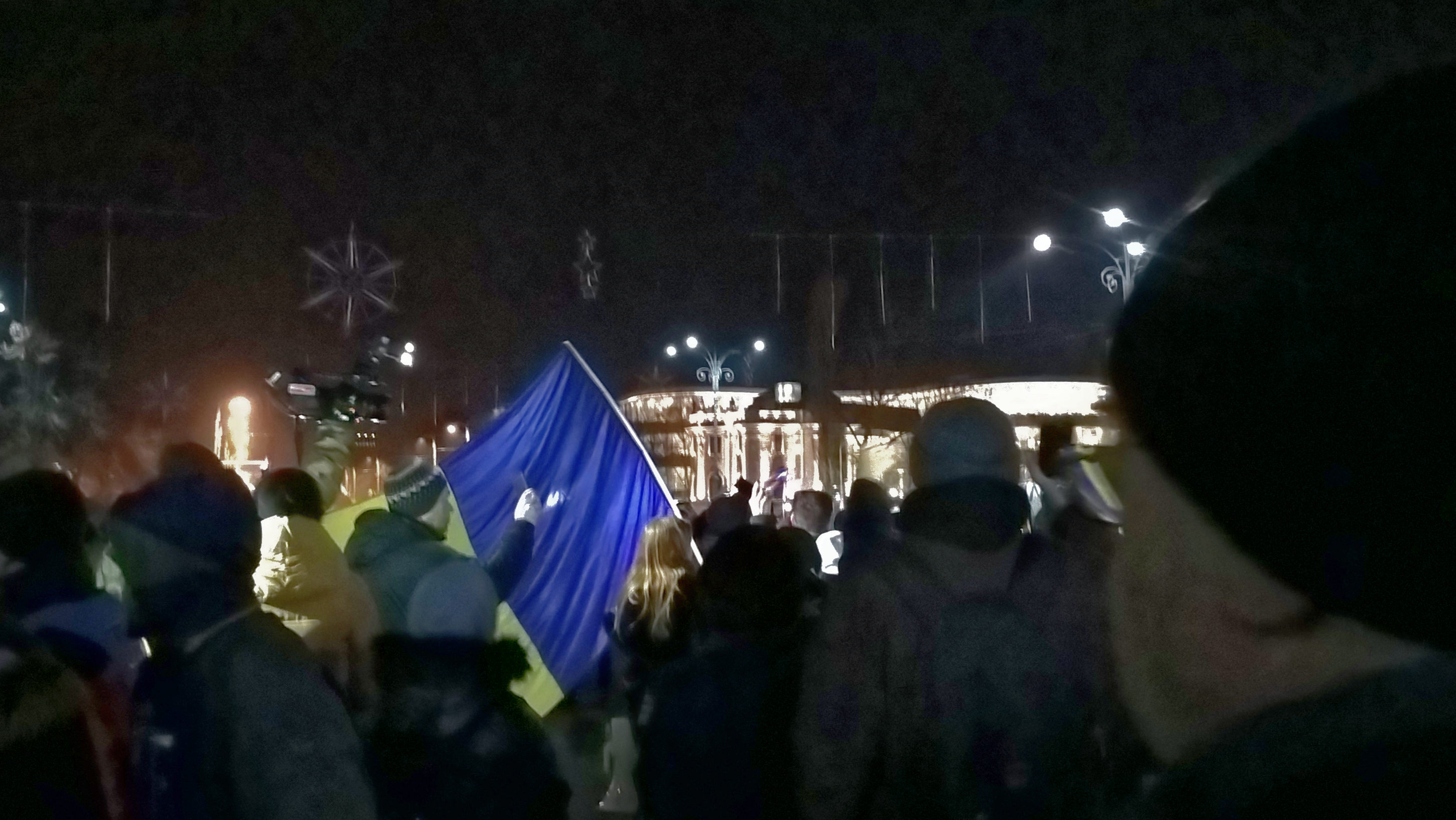
Numai că oamenii cu care ‘am dat mână cu mână’ – în Piața Victoriei !!!, erau adunați să protesteze și nu să se bucure.

La Iași, acolo unde era organizată de obicei ‘sărbătoarea oficială’, a sărit în ochi dezinteresul oficialităților. „Pentru prima dată în istoria recentă a manifestărilor dedicate zilei de 24 ianuarie, ni­ciun oficial cu rang înalt din conducerea statului nu a venit la Iaşi. Anul trecut au participat doi membri ai Guvernului. Singurul ministru prezent a fost Monica Babuc, de la Ministerul Culturii din Republica Moldova.

Nu știu ce considerente de natură ‘politică’ le-a convins pe notabilitățile momentului să evite întâlnirea cu publicul.
Știu însă că nu se poate face politică de unul singur.

Îi aud pe câte unii că au relații ‘instituționale’ cu ‘ceilalți’.
Foarte bine. Fiecare dintre ei reprezintă câte o insituție iar treaba instituțiilor este să interacționeze. Teoretic, în interesul cetățenilor.
Numai că ‘relații instituționale’ înseamnă ‘relații bazate pe proceduri’.

‘Și ce-ai vrea? Fiecare să facă ce-l taie capul? Nu vezi că și-așa e o bulibășeală de te doare  sufletul?’

Păi nu vedeți că exact asta se întâmplă?!?

Cei mai mulți dintre așa zișii ‘factori de decizie’ se ascund în spatele procedurilor și nu decid, de fapt, nimic? Bine, nimic în afară de ce-i doare pe ei…

In democrațiile funcționale, ‘procedurile’ sunt percepute ca liniile care ‘desenează terenul de joc’. Care arată limitele între care se poate manifesta liberul arbitru al politicienilor. Precum și cel al cetățenilor obișnuiți. Spațiul în interiorul căruia are loc colaborarea cunoscută sub numele de politică – mă refer la cea autentică, nu la politicianism.
În democrațiile de fațadă, cele care se bazează mai degrabă pe domnia gloatei decât pe transparență și dialog, procedurile devin arme. Bâte cu care își dau unul altuia în cap cei care își dispută puterea politică. Politicianiștii.

Și atunci?

Treaba e relativ simplă.
De-a-lungul timpului, țările au funcționat mai degrabă după principiul ‘unde nu-i cap, vai de picioare’.
În ultima vreme, națiunile care au reușit să se doteze cu o democrație funcțională au schimbat radical macazul. Au abordat o paradigmă foarte apropiată de ‘capul face, capul trage’.
Dar pentru asta e nevoie ca ‘picioarele’ să rămână vigilente…

Pentru că vă este bine, pentru că aveţi IKEA, Ryanair, Blue Air, Carrefour, Mega Image, e-Mag, H&M, Zara, Starbucks, aţi lăsat puterea PSD, pentru că ei ştiu ce să facă cu ea.

Pentru că este democraţie, în deplină cunoştinţă de cauză, aţi lăsat să voteze pentru voi Teleormanul, Mehedinţiul, Caraş-Severinul sau Vrancea.

Cristian Hostiuc, Ziarul Financiar.

Cu alte cuvinte, cei care se mulțumesc cu accesul la IKEA, Ryanair, etc…  nu mai au legături funcționale cu ‘Teleormanul’. Dar nici ‘Teleormanul’ nu are vre-o legătură funcțională cu ‘hipsterii’…
Și cum ‘hipsterii’ sunt mai degrabă satisfăcuți cu viața pe care o duc pe când ‘Teleormanul’ nu are după ce bea apă… unii au stat ‘mulțumiți’ acasă iar ceilalți au ieșit frumos și disciplinat la vot.
Decizii perfect „raționale”, ca să-l cităm din nou pe Cristian Hostiuc… ‘De ce să schimbi ceva ce funcționeză satisfăcător?’ precum și ‘De ce să nu-l votez pe cel care-mi promite ceva ce îmi doresc de mult?’

N-ar fi fost totuși mai bine ca cele două Românii să se fi înțeles între ele înainte de alegeri – așa cum prevede practica democratică, în loc să strige acum una la cealaltă prin intermediul televiziunilor de știri?
Unii ar fi aflat cum o duc ceilalți, ceilalți ar fi aflat de ce n-au după ce bea apă și împreună s-ar fi lămurit odată unde și cum sunt sifonați banii tuturor.

Cred c-ar trebui să ‘învârtim’ mai des Hora Unirii în loc să tot luam leapșa prin cabinele de probă de la H&M…