Archives for category: 1989

Evoluția nu este despre ‘supraviețuirea celui mai puternic’.
Evoluția este despre supraviețuirea celui capabil să facă față schimbărilor!

Ernst Mayr

Până acum cinci minute, aveam o mare nedumerire!

Știam, din fragedă pruncie, că există două feluri de obiceiuri. De ‘culturi’, în limbaj sociologic/antropologic.
Într-una copii primesc tot ce e mai bun de mâncare, în cealaltă ce rămâne după ce se satură ‘capul familiei’.

OK, știu că unii dintre voi s-au oripilat deja. Și că ceilalți – adică cei care mă cunoașteți în carne și oase – vă întrebați ce m-a apucat!

Cert este că aceste două seturi de obiceiuri există. Încă!
Eu, de exemplu, port numele unui străbunic celebru. Celebru în interiorul familiei mele… nu foarte numeroasă!
Omul ăsta, Sarkis, avea o gospodărie frumoasă. În Rumelia – adică în Turcia, pe malul European al mării Marmara. De unde a trebuit să fugă, la un moment dat. Dar nu despre asta e vorba în propoziție.
Tipul era foarte priceput. Și foarte întreprinzător. Atât de priceput și de întreprinzător încât atunci când a trebuit să fugă din Turcia avut suficiente resurse să ajungă – din prima și fără ajutor – până în România. Pentru un țăran amărât, chestia asta era o adevărată realizare. În 1923….
Omul ăsta se ocupa cu de toate. Avea o grădină în care străbunica creștea o mare parte din legume. Câțiva pomi din care străbunica făcea tot felul de gemuri. Câteva rânduri de vie din care făceau tot felul de dulciuri. Poveste lungă, erau în Turcia. Găini pentru ouă… și cam atât în afară de caii de povară. Era și priceput. Dulgherie și tot ce mai putea face pe lângă casă la începutul secolului. Dacă ar fi avut curent sau apă curentă, probabil că s-ar fi băgat și la astea.
Din ce și-a ținut copiii la școală? Bunicul făcuse câțiva ani de profesională la Istambul… Străbunicul făcea vara cărăușie în port – cu căruța – iar iarna contrabandă cu alcool. Cu aceiași căruță… Bulgaria era aproape iar turcilor le plăcea rachiul bulgăresc.

Și ce legătură are chestia asta cu diferența dintre culturi?
Ei bine, străbunica nu mânca niciodată la masă odată cu el.
Statea în spatele lui și-l servea.
Întâi pe el și, după ce îi umplea lui farfuria, pe copii.
Abia după aceea, după ce toți ceilalți se declaraseră mulțumiți, își punea și ea de mâncare. Avea ce, că străbunicul era suficient de ‘productiv’, dar asta era altă poveste.

Vorbeam despre două culturi.
Tata este armean, maică-mea era româncă. Bucovineancă, mai precis. Pe meleagurile alea, primii se satură copiii. Abia după aceea mănâncă și părinții/bunicii. De, obiceiuri nemțești…

Până acum 10 minute – scriu deja de vreo cinci, credeam că ‘de, fiecare popor/regiune cu obiceiurile lui/ei’.

Brusc, mi-am dat seama că e vorba despre ‘supraviețuire’. Depre supraviețuirea familiei!

Despre situația în care întreaga familie depinde de ‘bărbatul din casă’.
Care trebuie să fie puternic pentru a putea ‘pune pe masă’ pentru ceilalți!

Bineînțeles că pentru noi, cei care trăim acum, chestiile astea par absurde.
Cum adică să mănânci tu, bărbat în toată puterea, înainte ca restul familiei să-și fi potolit foamea?!?
Pentru noi, viitorul este mai important decât prezentul. Copiii devin centrul atenției! Cel puțin declarativ…

Păi da, doar că acum – dacă mori de foame – poți să te duci în prima intersecție și să speli un parbriz. Sau să stai cu mâna-ntinsă!
Pe vremea aia, dacă bărbatul cădea la pat – din varii motive, restul familiei murea, efectiv, de foame. N-avea cine să-i ajute! Nici măcar rudele apropiate, dacă existau, nu puteau să rupă de la gura copiilor lor ca să-i hrănească pe-ai altora. Urzeala socială era atât de ‘rară’ – și productivitatea atât de redusă – încât oamenii efectiv nu-și permiteau să se ajute unii pe alții.
Statistic vorbind și făcând diferența dintre viața unei minoritați defavorizate care trăia într-o țară ‘străină’ și situația/obiceiurile dintr-o zonă destul de bogată – pe vremea aia. Care aparținuse – până nu demult, tot pe vremea aia – direct de imperiul Austriac.

Și să nu uităm că obiceiuri din astea ‘paternaliste’ nu erau chiar atât de rare în părțile rurale ale vechiului regat…
‘Eu te-am făcut, eu te omor!’
Până la urmă, nu a fost o mare diferență între viața țăranului din Bărăgan – mai ales pe vremea fanarioților, adică nu foarte demult – și ce a celorlalți supuși de rând ai padișahului.

“Better to be a dog in times of tranquility than a human in times of chaos.”
The true version of the Chinese ‘curse’
too many times translated in English as
“May you live in interesting times”

Not so long ago, a presidential candidate told his audience “People… my people are so smart!….And loyal! you know, I could shoot someone on the 5th Avenue and not loose votes!”

As things happened, he was right. His people did vote for him.
He, a guy who had previously bragged about ‘grabbing women by the pu$$y’.

Four years later, the People changed their mind. And voted to send him back to Mar-a-lago…
He told ‘his’ people the vote had been rigged.
The ‘smart ones’ believed Trump to the tune of eventually chasing Vice-president Pence all over the Capitol in an attempt to convince him to ditch the result of the vote. Against all evidence, as certified by all pertinent authorities.

Currently, there is an increasing number of people floating the idea that ‘democracy’ isn’t for everybody.
The notion isn’t exactly new – see the ‘debate’ pitting ‘republic’ against ‘democracy’ – but lately its promoters have become even more brazen. They posit that since people are not equally endowed – intellectually, mostly – they should be tested before being allowed to vote.
Nothing new under the sun? The whole thing is nothing more than a rehash of the notion put forward by Robert Heinlein in Starship Troopers?

Not exactly!
Heinlein proposed that full citizenship – including the right to vote – should be extended exclusively to those willing to put their life on the line. ‘If you want to decide the future, you need to commit yourself to defending the present. With your life, if necessary’.
Quite a difference from ‘I’m not OK with how you may vote so I’m going to look for ways to disenfranchise you, under various pretenses.’

The way I see this, we’re confronted by two things.
An increasing lack of trust amongst us. And an burgeoning amount of intellectual dishonesty.


A well regulated Militia, being necessary to the security of a free State, the right of the people to keep and bear Arms, shall not be infringed.

As per the United States Constitution, Arms are supposed to be kept and borne with the main goal of protecting the free State. Which State was supposed to be governed by a government “of the people, by the people, for the people“.
Nowadays, under the pretext that ‘the government is more often the problem than the solution’, the defenders of the Second Amendment “as it was written” maintain that Arms are necessary so that the people may defend itself against an overbearing government.

Otherwise put, whenever I don’t like the outcome of an election, I need to be able to start a(n) (un)civil war. An attitude born out of a complete distrust in our fellow citizens’ ability to vote ‘right’.

And a simpler version.
I don’t trust all my fellow citizens’ ability to vote reasonably but I trust all my fellow citizens enough to let them walk around armed to their teeth. Unconditionally, in some states.

Coming back to Marcus Aurelius’ pronouncement, who is the one smart enough to determine whether those 10 000 actually have no idea about the subject at hand?
Not to mention the fact that Marcus Aurelius never actually said it…. Wrote it, more precisely.

And why do I choose to believe this guy Sadler instead of trusting the bloke who had created the meme? Because Sadler makes sense. And because Sadler had put his name forward – remember Heinlein? – instead of cloaking himself in the shadows of the internet.

Parastas de 6 luni pentru mama soției mele.
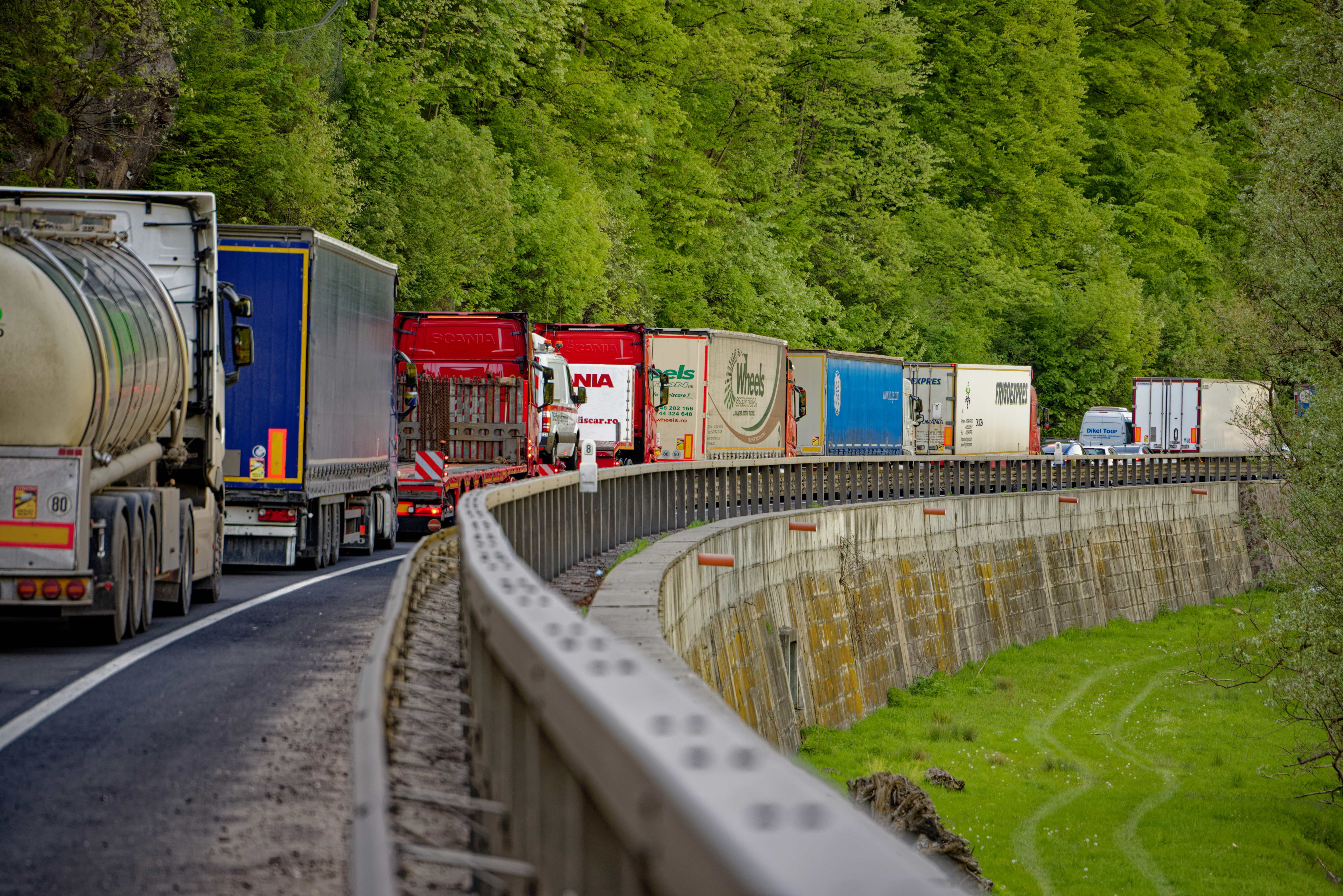
Ne urcăm frumos în mașină și începem să măsurăm țara cu circumferința roții. Sunt cinci sute și ceva de kilometri de la București la Dej, mai mult de jumătate sub formă de autostradă sau drumuri expres. Cea mai nasoală parte, adică Valea Oltului, e în continuare ‘pe două benzi’.
De vre-un an, la capătul dintre Sibiu e o porțiune ‘gâtuită’. Se circulă pe o singură bandă din cauza unor lucrari de consolidare.
În funcție de noroc, stai 10 minute sau faci 12 km în 3 ore și jumătate. Așa cum am făcut noi ieri.
Pentru unii ciumă, pentru alții mumă… Înainte de a fi exploatate, resursele trebuie identificate ca atare. O mulțime de oamenii blocați în mașini reprezinta o oportunitate majoră pentru cerșetori.
Câteva mame și-au adus copiii la produs. Unii purtați în brațe, alții trimiși de unii singuri printre mașini.
Soția îi dă 10 lei unei fetițe de vreo zece ani. Lângă noi, șoferul unui Mercedes electric de ultimul răcnet care fuma cu geamul deschis se uită lung și dă dezaprobator din cap.
Peste nici două minute vine o altă fetiță, cam de aceiași vârstă. Se duce direct la vecinul nostru și „dă-mi și mie un leu să-mi iau ceva de mâncare”.
„Tu ar trebui să fii la joacă, nu să cerșești pentru bețivul de tac-tu.”

I’m not sure what ‘timid’ meant in those times.

I would have used ‘coward’.

On the other hand, it would have been politically incorrect…

And ‘somewhat’ inefficient! Being blunt, often scares your audience.

And makes them impervious to what you need to share with them.

People act as if the world is as each of them sees it.

The briefest glance into our evolutionary past is enough to see that the more ‘sophisticated’ an animal is, the more it depends on its visual ability. On its ability to see things in a manner which is consistent with its ‘way of life’.
Herbivore mammals, for example, have a very wide vision field while the carnivores feeding on them have a narrower field but a binocular vision. Which makes perfect sense. The ‘defenseless’ herbivores need to see everything around them – so they might be able to flee, while the predators need binocular vision in order to hunt efficiently.

Our evolutionary ancestors, who lived in trees, needed binocular vision in order to travel in their 3D world. They also needed better hand-eye coordination for picking the fruit they were eating. Hence their, and ours, very tight connection between our eyes and our brains. And the big portion of our brain allocated to processing visual information.

At some point in our evolution – we were still animals at that point, we have learned to use sound in order to warn/grab the attention of our ‘correspondents’. Why? Because sound can go around obstacles while in order to notice visual cues the potential recipient needs to… you got it, I’m sure!

Fast forward to when our direct ancestors, already homo sapiens, have started to actually speak. To consciously use sound to convey meaning. Not only to warn but to transmit actual information. Information which could be acted upon. Acted upon as different from reacted to…

And now I wonder. How much time had passed between learning to speak and uttering the first lie?
Lie as in intentionally misrepresenting reality, as opposed to unintentionally failing to convey the entire reality…

Hard to even imagine an answer to that question.

But since I’ve already mentioned the subject, let me make two observations.
It’s a lot easier to lie using language than in any other way.
And it’s a lot easier to be fooled by what you see – and sometimes hear, than by information gathered through the rest of the senses. Unless, of course, that information was a ‘message’ sent/meant to/for us. A perfume versus a naturally occurring smell, for instance. Or an artificial sweetener/flavoring…

I’ll wrap this thing up pointing your attention to the fact that since learning to read we, individual human beings, have shared more information using the ‘visual channel’ than ever before.
Which has produced momentous consequences.

Verba volant, scripta manent!
A written culture is more resilient than a spoken one.
A written lie reaches more people, potentially, than a told one.

For two reasons.

A ‘verbal’ lie needs to be retold in order to survive. It has not only to impress strongly enough the target as to transform it into a relay but also to be reinterpreted convincingly enough by the former victim as to reignite the process.
Meanwhile, a written lie just lies in waiting. Waiting to be read… Not to mention what happened after we had invented the printing press…
The second reason is less obvious. I’ve already mentioned the fact that a spoken lie depends on the teller. On the ability of the ‘interpreter’ to convey it in a convincing enough manner. The problem being here that if the target has the slightest doubt, the lie flops. The liar has lost an opportunity. On the other hand, a written lie can be honed at will before hand. Under no pressure.

Now that I have finished the theoretical part of my post, let’s interpret the following message.

“Dishonesty and intellectual chaos…”

According to some of those with whom we share the planet, it’s OK for a human individual to choose their name but not their gender. Choosing your own name – as in changing the name you have been given at birth, is acceptable while changing/widening the gender you had been assigned to – by others, before you had any opportunity to contribute to the process – is considered to be dishonest and liable to cause intellectual chaos.

On the other hand, we – all of us – should be fully aware of the fact that those who – since always – have ‘found joy’ in ‘exposing’ themselves will use every opportunity available to them.

The way I see it, the situation is ‘chaotic’ enough.
No need for any of us, from any ‘camp’ and belonging to any ‘persuasion’, to further weaponize an already volatile situation.

Do you remember what happened when our not so distant ancestors had ‘determined’ that witches were meant be burned?

People act as if the world is as each of them sees it.

The world is as it is.
Only nobody knows how…
And, probably, never will.

What we act upon, and interfere with, is the world as we see it.
Here being the interesting part.

All other living things mostly react to the world.
Even our brain uses much – some say ‘most – of its processing power to react rather than act.
Our body is able to survive even when our frontal cortex – the portion of the brain where thinking takes place, has been knocked out of action. When we’re fast asleep, drunk, ‘high’, low, in a coma…
In fact, an organism doesn’t need to ‘see’, in order to react. To breathe, to eat, to perform bodily functions, to reproduce…

Things become more and more complicated, indeed, as we climb the evolutionary ladder.
Complicated for us… who attempt to understand what’s going… not for those living on each of the steps… Things are complicated only for those trying to ‘see’!

It’s easy, for us, to consider that a dung beetle which carries food for its future offspring is acting instinctively.
It’s a little bit more complicated when we observe a troop of chimpanzee and notice how deliberately the alpha male leads his ‘subjects’ and the complex social life of the community …

But the difference between how the chimpanzee and the humans interact with reality is wide enough for us, humans, to consider ourselves as having risen ‘above the fray’. As being special enough to deserve a special status!

And what is it which makes us so special?
Our ability to speak? To walk on two legs? To write?
None of the above!

It’s our ability to ‘see’ the difference between us and the rest of the world!

All other living organisms behave as if they belong to nature. To the reality surrounding them.
We humans, behave as if we own reality.

While the rest of the living things react to what’s happening to them – even when they plan ahead – we, humans, deliberately – and presumably in a conscious manner – transform the reality according to what we consider to be our needs.

According to what we ‘see’ as being our needs…

Am aflat de pe FB că Iulia Marin – o ziaristă de 32 de ani, nu mai este printre noi.
Goagal și… ajung la un articol care descrie cariera ei de jurnalist.
Pasiunea cu care își făcea meseria.
Pasiunea cu care încerca să aducă informații relevante la cunoștinta cititorilor. A ‘consumatorilor de presă’.
Și lupta Iuliei cu depresia.

La finalul articolului am fost îndemnat să continui.
Să citesc în continuare.
Să mă informez despre celelalte subiecte importante ale zilei.

Simt cum mă apucă depresia!
Și un fel de furie pasiv-agresivă.
Oare oamenii aștia nu-și dau seama că își taie singuri craca de sub picioare?
OK, deocamdată au reușit să ne fure nouă valiza… și se fâțâie mândri cu ea prin oraș…
Dar cât o să mai dureze chestia asta?
Poate că om fi noi mulți dar proști… numai că foamea e cel mai bun profesor.

De la un moment dat încolo tot o să ne dăm seama că om fi noi proști… dar suntem mulți!

Not even on paper!

If you read carefully Marx’s communist manifesto, you’ll realize that it doesn’t. Work. Not even on paper!
According to Marx, communism will come to be when enough people formerly belonging to the middle class will have become poor. As a consequence of their wealth having been siphoned away from them.
Becoming poor will make those former middle class people open to communist ideas. And will convince them to follow the already ‘enlightened communists’ into revolution.
For a while – again, according to Marx, the society will have to be led by the successful revolutionaries. In a dictatorial manner, because not all people will have risen to the communists’ level of understanding.
So. ‘Communism’ will be instated by some disgruntled people using dictatorial methods.
How auspicious is this?
Let me go even further.

Why were those people disgruntled in the first place?
Because capitalism!
Not so fast. The Adam Smith kind of capitalism worked just fine. Only after it had been warped by greed it had started to sputter. Specially after Milton Freedman had enshrined greed…
This being the moment when I need to remind you that Adam Smith’s first book on this subject was “The Theory of Moral Sentiments”…

‘Those’ people had become disgruntled after too many in that society had been convinced, at least for a while, that ‘greed was good’. And what was Marx’s proposed solution for that disgruntlement?
That all ‘means of production’ – meaning all property/wealth, to be taken away from individual people. And entrusted to ‘the people’.
Since ‘the people’ were going to be led by the “communists”, in practice the communist revolution meant that all wealth was going to be confiscated from those who happened to own it and entrusted to a very small number of people. Who happened to own the secular power in that moment. As the main consequence of the communist revolution. Apud Karl Marx’s Communist Manifesto…

Let me revisit now Milton Friedman’s words.
‘Greed is good’.
According to this line of thinking, wealth becoming as concentrated as possible is a good thing. Since greed is already good, concentrated wealth is but a logical consequence…

Then Marx’s Communist Manifesto was nothing but an avant-la-lettre short-cut for an easier implementation of Milton Friedman’s greed hailing ideology!

See what I mean?

Karl Marx communism did not and cannot work.
Because it leads into a vicious circle.
It creates a monopolistic situation which cannot be avoided. Time and time again, history has proven that ‘this time is different’ is nothing but wishful thinking. Whenever too much decision power is concentrated in a too small number of hands, the situation becomes untenable. The more concentrated the decision power, the faster – and more dramatic – the eventual collapse.

How about a ‘different’ kind of communism?
The only sustainable kind of anything – ‘social arrangements’ included, had been ‘natural’. Had appeared in an evolutionary manner.
In contrast, all revolutionary developments have produced counter-revolutions. In many instances even more destructive than the revolutions themselves.
What will come after democratic capitalism? I don’t know!
But it better be better than what we have now.

And come in quietly!

Otherwise…

How about a return to bona fide democratic capitalism?
To Adam Smith’s kind of capitalism?
The one whose entrepreneurs used to put ‘moral sentiments’ above greed!

Wishful thinking?
Maybe!
But is there any other way to achieve anything? Other than to start by wishing that something?
And since Smith’s brand of capitalism did work, communism always failed and a viable alternative has yet to appear…

Holidays are very good opportunities to reconsider,
And to learn new things.

These days I learned that while having nothing makes you feel ‘uncomfortable’, having too much can be very limiting.

If you have just enough, you can go forward. Explore new venues. Learn new things.
Enjoy life!

If you have too much, you spend too much time and energy protecting what you already have. Trying to get more…
The venues open for you to explore are suddenly reduced to one! Only one… You become the guardian of your fortune!
Can you enjoy such a life?
Are you sure? Have you examined the alternatives? In earnest?

‘Are you implying that all wealthy people are unhappy?
Unable to enjoy their lives?!?’

On the contrary, my dear Watson!
I’m only saying that being wealthy is complicated.
“Just enough” is a matter of individual ability to cope.
That enjoying wealth needs a lot of skill.
And that being wealthy comes with a lot of responsibility!
Towards yourself in the first place!

And towards your kids, family and the rest of the gang…

Evreii nu-s catolici?
Nu.
Păi atunci de ce sărbatoresc Paștele în același timp cu catolicii?
Evreii sărbătoresc altceva. Ieșirea din Egipt. Momentul când Moise i-a condus către libertate.
Din sclavia egipteană către libertatea pe care aveau s-o găsească în Palestina.
Ce sărbătoresc ei nu are nici o legătură cu Christos.
Păi Christos nu a fost evreu?!?
Ba da. Doar că pentru marea majoritate a contemporanilor lui, evrei,
Christos a fost un sectant. Un răzvrătit.
Cât de multe lucruri nu știu…

Din păcate, discuția s-a întrerupt aici.
Prietenul meu a ajuns la casă – făcea cumpărături pentru Paște, și a trebuit să ‘închidă’.

Nu l-am mai sunat înapoi…
Cum să-i dai cuiva telefon și să-i spui:

Tu ești cel mai creștin om pe care îl știu.
Nu judeci pe nimeni.
Ne tratezi pe toți la fel. Cu la fel de mult respect.
Femei, bărbați, copii, negri, verzi, albi, turci, români…
Nu te-am văzut vreodată să-ți bați joc de cineva!
Nu te duci la biserică? N-ai citit Biblia?
Ce nevoie ai să faci ceva din toate astea?
Atâta vreme cât te comporți cât se poate de creștinește.
În adevăratul sens al Cuvântului!

„Nu oricine-Mi zice: «Doamne, Doamne!» va intra în Împărăţia Cerurilor,
ci doar acela care face voia Tatălui Meu, Care este în ceruri.
Mulţi Îmi vor zice în ziua aceea:
«Doamne, Doamne, n-am profeţit noi în Numele Tău?
N-am scos noi demoni în Numele Tău?
N-am făcut noi multe minuni în Numele Tău?»  
Atunci le voi spune limpede:
«Niciodată nu v-am cunoscut! Plecaţi de la Mine, voi, cei ce săvârşiţi fărădelegea!»”
Matei 7:21-23