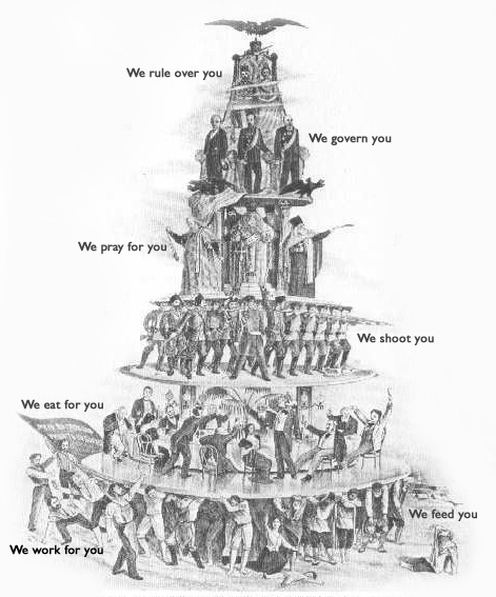
Archives for category: 1989 and the Global Financial Crisises.

Smarter people than me are already prepping for the aftermath.
For the opportunities which will have ripened by then.

Which, let’s face it, is a wise thing to do. Most of us would have done it. Prepping for what we fear. And for what we covet.

Also wise would be for us to remember that everything we experience today – the good and the bad of it, together, is the consequence of how we have chosen to use the opportunities opened up by the previous crisis.

And by that before it …

My previous post was about the parallel fate endured by those who had experienced nazism/fascism and/or communism.

My point being that nazism/fascism had been powered by the feelings of those attempting to regain their previous, higher, status while communism had been powered by the feelings of those not allowed to ‘move forward’ by the social constraints paralyzing their societies.

Currently, people are ‘confused’.
Some say communism had been better than nazism – for various reasons.
Others find various excuses for the way both regimes had treated the general population and, mainly, the ‘dissidents’. Or, specially for the nazi, the ‘differents’.
There is, though, a convergence point. Nominally, at least. All sides declaratively abhor the violence employed by both regimes.

To add to the confusion, after the 2007 financial meltdown, more and more ‘concerned individuals’ have fingered capitalism as the main culprit for all the tragedies experienced by humankind in the last century and a half.

For me, this is the straw which will break the camel’s back.

So.
Nazism/fascism – which is nothing but a ‘condensed’ form of corporatism, is bad.
Communism – a similarly centralized manner of social decision making, only differently sold to differently feeling masses, is also bad.
Capitalism – a decentralized manner of resource allocation, is considered to be more or less equivalent to both nazism/fascism and communism. All three of them have been declared equally criminal…

Then what?
What are we to do next? Hang ourselves in despair?
Reheat either fascism or communism?

Or look forward than our own noses?

Both those who had followed Hitler and Lenin/Stalin were feeling desperate. Desperation drives you to do stupid things. And there are plenty of unscrupulous people willing to profit from this kind of situations.

Do we really want to prevent ‘unpleasant’ experiences?
Then we need to go beyond blaming the likes of Hitler and Lenin/Stalin.
They should be dealt what’s rightfully theirs, no doubt about that.
But we also need to make sure that the ‘run of the mill’, the ordinary people who make things work in this world, no longer feel desperate.

How to do that?
Taking into account that contemporary capitalism seems to be faltering?

What was the common thing between nazism/fascism and communism?
The fact that decision making was concentrated in a very small number of hands? Which had led to both regimes ending up in abysmal failure?

What is the apparently unstoppable trend in our contemporary societies?
The apparently unstoppable wealth polarization?

Then let’s tax ourselves out … America worked fine during the ’50s and ’60, when the highest marginal tax was 91%…
Yeah, only those years had been followed by stagflation.
And let me remind you that communism can also be interpreted as ‘100% tax followed by a comprehensive redistribution’. And it also failed.

Then how about ‘libertarianism’? No taxes, no government…

But how about less extremism? Of any kind?

How about remembering that liberal capitalism has made possible all that we have today? Liberal as in free-market capitalism, of course.

Free market as in competition working both ways.
Entrepreneurs competing among themselves for clients AND resources. The workforce being, of course, a resource.
The ‘compensated’ workforce representing the bulk of the clients…

What we seem to have forgotten today is that the circle must be round. If we want the ‘show to go on’, of course.

If some of us concentrate too much control over the rest of us – either way, the circle becomes lopsided. And everybody has everything to loose.

No matter whether this happens as a consequence of nazism/fascism, communism or even capitalism.

At least, capitalism has proved to be manageable.
Let’s make it work, again.

Until we discover something better, of course.

People may find themselves in three situations.
‘Coasting’, trying to climb back up to their former position or hitting a glass ceiling.

All societies – past, present and future, were, are and will forever be composed of various mixtures of ‘coasters’, ‘back climbers’ and ‘glass ceiling hitters’.

Please note that I’m dealing in self-referentials here. This is about how individual people describe themselves when speaking to themselves.
The coasters enjoy the life they had designed/expected for themselves.
The ‘back-climbers’ attempt to regain the position/status they believe it was rightfully theirs but had been robbed of in circumstances outside their control.
The ‘glass ceiling hitters’ are… busy hitting the famous glass ceiling.

If a society is composed of a ‘healthy’ number of coasters combined with a manageable number of ‘back-climbers’/’glass ceiling hitters’ then the frustration felt by the latter – which tends to tear apart the social fabric, can be compensated by the sheer mass/inertia of the joy experienced by the former. Hence the society can be described as being ‘stable’.

Whenever the ‘back climbers’ or the ‘glass ceiling hitters’ get the upper hand, things start to unravel. Or to fall apart…

To understand what I’m driving at, please consider the pre-revolutionary Russia and the German society after WWI.

Russia was an extremely hierarchical social organism. The birth-place was ‘definitive’. And most of them led to very unpleasant lives. The vast majority of the population, from muzhiks to intelligentsia, could not break through the glass ceilings allocated to each of them, at birth.

The defeated German population had found itself in a very unpleasant situation. After having been told they had been instrumental in preserving order in Europe – as the back bone of the army who had defeated Napoleon Bonaparte and kept in check Napoleon III, they found themselves at the receiving end of history… After their fathers had witnessed the Parisians eating their zoo animals during the 1870 siege, the Germans were reduced to hunting food scraps themselves.

A horse being butchered on a Munich sidewalk in 1918 or 1919.

Hence the difference between communism and nazism. Both equally authoritarian in nature, each of them springs from completely different social circumstances.
Which explains why ‘progressives’ have such a high tolerance for communism…

While the ‘back climbers’ attempt only to reinstate the order they were accustomed to – order which has already been proven dysfunctional by what had happened, the ‘glass ceiling breakers’ are always attempting to open new roads. Very enticing from the ‘progressive’ point of view…

Fact is that both communism and nazism/fascism are artificial.
Figments of frustrated intellectual imagination.
Both ideologies have been put together by thinkers and only followed by ordinary, desperate people.

“Please” is an attempt to maximize your chances to get something.
“Thank you” is an attempt to maximize your chances at ‘second helpings’.
“I’m sorry” is an attempt to ‘reconnect’ after committing a ‘blunder’.

All of them, simultaneously, serve the individual uttering them and knit the community.

But there’s something which sets one of them apart.
While “please” and “thank you’ are ‘upfront’, “I’m sorry” has a more ‘hidden’ nature. And is a lot less used…

Both “please” and “thank you” have a very clear message. “I want/am grateful for something’ and ‘I acknowledge the fact that I cannot function/exist by myself’.

“I’m sorry” is far more complex and a lot less upfront.
‘I acknowledge not only that something went wrong but also that I have anything to do with the occurrence’. And ‘please do not banish me for what I have done’!

If we dig deeper, we’ll find some more ‘intricacies’.

“Please” and “Thank you” are ‘face to face’. You know what you want/are grateful for and by uttering them you transmit that information to your audience. Those who might fulfill your wishes or have already done that.

“I’m sorry” identifies you as the ‘culprit’. Or, even worse, tells the ‘victim’ that something nasty is going to happen.

It is here that things become really interesting.
Conscience is a function. A feature which helps the individual. To survive and to thrive. In order to do that, conscience must – first and foremost, to take care of itself. To protect and cherish itself. More about how it does that in my next posts. The point of the present one being that is far easier for ‘conscience’ to ‘please’ and ‘thank’ rather than to ‘apologize’.

First of all, ‘gratification’.
1.0 versus 2.0.
Getting what you want/need versus avoiding punishment.
Which is never as direct.

The ‘buried head’ fallacy.
‘What if/maybe they never find out’?
‘Who did it’ or even that it had happened at all …

The ‘I cannot afford to appear weak’ fallacy.
Or the ‘I cannot afford to accept having been wrong’ situation.

That’s why it is far easier to say ‘I’m sorry’ after stepping on somebody’s toe than to leave a sorry note on somebody’s windshield after denting their fender in an unsupervised parking lot.
That’s why it is far easier to apologize to a a coworker than to admit guilt, as a CEO, in a shareholders meeting.
That is why it is almost inconceivable for a dictator to publicly admit an error which had been committed under their watch.

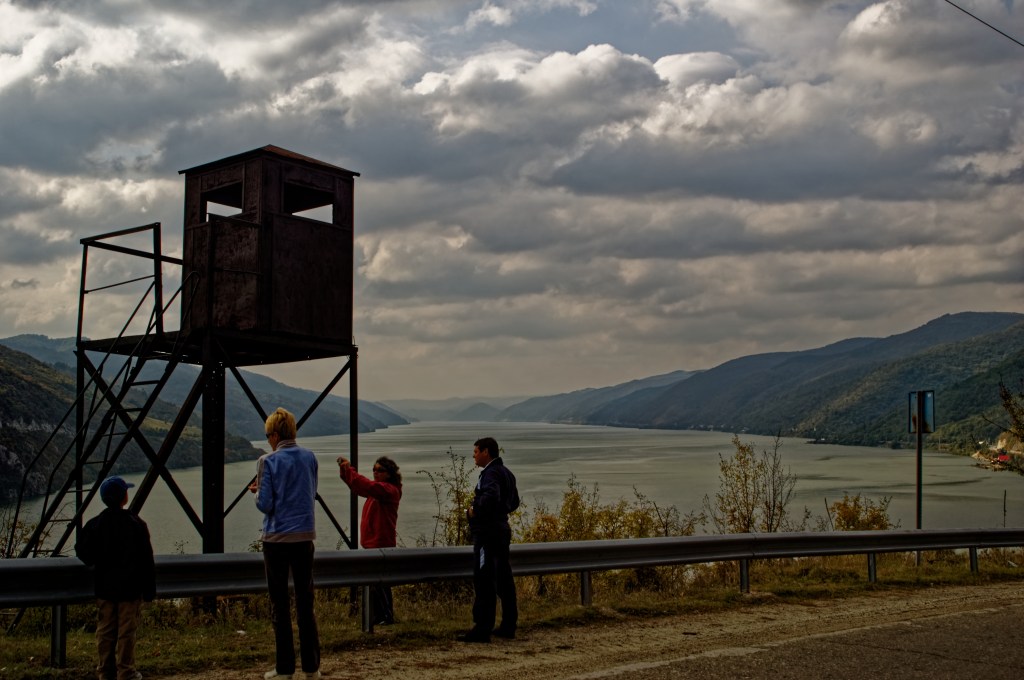
Clisura Dunarii, 2006

Foișorul ăsta a fost construit pentru a apăra frontiera.

Adică pentru a împiedica fugarii să-și încerce norocul în lumea liberă. Asta pe vremea când CSP-ul comunist planifica bunăstarea clasei muncitoare…

Apoi pentru a împiedica ‘contrabandiștii’ să ‘exporte’ combustibil în Serbia pe vremea embargoului.

Între timp a fost vândut la fiare vechi… acum vreo doi ani n-am mai văzut nici unul pe malul Dunării.

PS.
CSP = Comitetul de Stat al Planificării. „Înainte de 1989 Comitetul de Stat al Planificării (CSP) era instituţia centrală care  coordona activitatea de planificare a economiei naţionale şi repartiza materiile prime şi produsele necesare  diferitelor ramuri şi subramuri ale economiei.
Această planificare se baza pe cifrele raportate de ministere şi de judeţe. Dar, acestea, pentru a se evidenţia, raportau producţii mărite,  fără legatură cu realitatea. La rândul lor, întreprinderile îşi planificau producţia pe materii/materiale care în realitate nu existau întotdeauna. Situaţia devenea stânjenitoare când era vorba de export, de respectarea unor contracte
…” Octavian Silivestru, Rador.

Embargoul sârbilor, paradis pentru români”.

Hunters and growers.

Then fighters, doers and rulers.

Now, doers and ‘commentators’.

Some people actually do something – be it ‘fighting’, producing something or being involved in government, while other just ‘speak’. OK, their ‘speech’ does have consequences.
So we might say they also ‘do’ something… yes, true enough, only their deed is more than indirect. And no, teachers don’t belong here. Nor ‘actors’. Or even writers. All these people might do nothing but ‘speak’ only they produce something through their speech. Education, show, literature…
‘Commentators’ is very straightforward. Even more straightforward is ‘talking heads’. But ‘talking heads’ isn’t wide enough!

The philosophers have only interpreted the world, in various ways; the point is to change it. ” Karl Marx, Theses on Feuerbach

We all know the consequences of people following Marx’s advice…
But what could have gone wrong? Weren’t philosophers supposed to be the brightest amongst us?
Wasn’t Plato – the founder of Western philosophy, advocating the very same thing? That society should be run by specially trained philosopher kings?

Let’s go back to the original division of work.
Not all people have become farmers. There still are a lot of humans who survive as hunter-gatherers. Some don’t need to bother – there’s enough food to be gathered where they live , while others couldn’t possibly farm anything. The Inuits, for instance.
Among the farmers, there’s further division. Some farm plants while others farm animals. Because of the specifics of local soil, geography…
Also, farmers need tools. Hence wood workers, metal workers, weavers… etc.
The farmers need protection. Hence soldiers.
Society, as a whole, needs organizing. Hence government.

Let me pause for a moment. These arrangements work simply because they are more efficient than each individual providing everything they need for their own survival.
The soldier protects so the farmer might plow in peace. Some farmers use better plows because of the woodworkers and the metal workers who have cooperated to produce it. The farmers with the better plows produce more than those who use a rudimentary one, built by themselves. And so on. But please remember that each of these people have a first hand experience in their domain of expertise. And that their livelihood depends directly on their expertise.

Now, the next level of analysis shows us that organized societies fare better than those who lack any ‘structure’. ‘Fare better’ in no other sense than having a better chance of survival, as a social organism.
Nota Bene! While an Inuit – or an Inuit family, has a far better chance to survive in the Arctic than you and me, we, together, have a better chance at surviving – and even thriving, anywhere on the planet. Including in the Arctic. But only as long as we act as an organism. Only as long as we cooperate among us.

And whose job is to organize this cooperation?
The government and the ‘commentators’, who else…
The government to act as a referee – to prevent the rogue among us from ruining the game, and the ‘commentators’ to convince us that behaving is a lot better than mis-behaving.

Yeah… only this is nothing more than an ideal… seldom maintained for long…
Usually, the ‘government’ becomes too powerful, the ‘commentators’ convince us – both ‘government’ and general public, that this is how it should be… tensions build up… and something snaps!

And the problem becomes even more acute when the ‘commentator’ pretends to become king. Pretends to have the ultimate truth. Pretends to be obeyed. Convinces us – this being his only skill, to obey him.

This being the moment for us to remember that the commentators have only indirect knowledge about the world. While each of the doers has at least some first hand experience about something, the commentators have nothing but second hand expertise. Everything they know, they know it because somebody has told them so. Or because they have read about it somewhere.
The commentators’ vision might be far wider than that of the doers but it is at least ‘once removed’ from the reality.

And this is the reason for which societies who have used Marx as their spiritual leader have failed. They have not respected the main principle which makes division of work function properly. Let those who know about it make it their job.
Let the doers do and let the commentators gather and aggregate knowledge.

Don’t mess up things.

Îl scoli de la 7. Poate, dacă are noroc, de la 7 jumate.
Îl îmbraci și-l bagi în mașină. Adormit și nemâncat, o să-i dea ăia ceva acolo.
Ajungi, odată cu traficul, și începi să cauți loc de parcare. De multe ori blochezi un garaj. Și te înjură câte cineva care întârzie el din cauza ta.
– Dă-l în mă-sa, uite ce căsoi are. În mijlocul Bucureștiului. Când o să am banii lui, am să-mi fac o casă în mijlocul câmpului, să nu mai miros eșapamentul altora.
O să ridici din umeri dacă te întreabă cineva cum o să meargă la școală copilul pe care îl duci la creșă. Acum ești prea ocupat să ajungi repede la servici. Iar o să te fută șeful la cap cu chestia aia care trebuia făcută ieri. Ca toate celelalte…

Pleci, în sfârșit. Bine că trebuie să-l iei pe ăla micu’, că altfel te mai ținea nebunul cine știe căt. Chiar dacă ai stat deja o oră peste program și iar o să fii ultimul părinte. Bine că măcar o să-l îmbrace educatoarea … Nu de alta, dar vrea și ea să plece odată acasă. La copiii ei…
Nici tu nu știi cum ai ajuns. Nebunia de pe stradă crește de la o zi la alta. Descoperi că nu ești ultimul. Atât de ne-ultimul încât și la ora asta singurul loc de parcare e tot în fața garajului celui cu care te-ai certat azi dimineață.
– Dă-l în mă-sa, doar n-o veni chiar acum!
Fugi înăutru și descoperi că trebuie să-l și îmbraci. Mai sunt cinci copii și educatoarea stă cu ei la povești. Nu poate să-i îmbrace pe toți odată și, oricum, ar muri de cald. Îl bagi cumva în haine, îi dai banana care trebuie să-i țină de foame până când ajungeți acasă, îl iei de mână și…
Bine măcar că n-a venit ‘căpcăunul’ acasă. Mai stai un minut să termine prâslea banana. Arunci coaja pe jos – de unde coș de gunoi pe străzile astea mici și doar n-o să murdărești mașina firmei. Pleci în sfărșit spre casă.
Unde-o să ajungi peste vre-o oră…

Poate că ai folosi și tu transportul în comun, ca cei care n-au mașină… dar cea mai apropiată stație e la aproape un sfert de oră…. și asta doar dacă-l iei pe ăla mic în brațe… iar drumul e plin de gropi și bălți… afară e întuneric… și dimineața și seara… bine că măcar au strâns căinii vagabonzi…

Uite, Ceaușescu a făcut creșele astea când i-a adus pe muncitori de la țară! Îl duceai frumos luni de dimineață… și-l luai tocmai sâmbăta! Nu te interesa că era departe de stație. Aștia de ce nu mai fac altele? Poate mai mici și mai dese, să nu mai pierzi atâta vreme pe drum… Că tot spun ei că-i interesează îmbătrânirea populației și lipsa forței de muncă!

Dar tu, tu ce faci?
Ce faci ca să ieși din ‘cercul ăsta strâmt’?
Și nu singur… că ieși degeaba, dacă toți prietenii tăi rămân acolo!

Liberty is freedom from being constricted, in any way, shape or form. Period.

Liberty is more of an adjective rather than a verb. A situation more than an action.

Liberty can be attached to a space, to an agent or to both.

A free space would be a space where no constriction may occur, whatsoever.
A free agent would be an individual entity outside any constriction, whatsoever.

Mathematically, both definitions are possible.
Philosophically, both definitions are imaginable. By philosophers, of course.

Oscar Hoffman, a Teacher, kept telling us, his students, “For a proposition to be true it is not enough for it to be logically correct. It also has to make ontological sense. For those of you who don’t remember what ontological means, a true proposition must describe something which has to be at least possible”

In the real world, where there is no such thing as absolute freedom, liberty has to be first noticed/invented. And then constantly negotiated.

‘No such thing as absolute freedom?!? But liberty is a (God given) (human) right!!!’

Do you remember what Hoffman had (just) said about things which can exist in practice and things which can exist only in our minds?
Liberty might be a right – for those who enjoy it, but that doesn’t mean that everybody has it. And, even more important, that there is – or ever will be, something even close to absolute liberty.
If you don’t believe me, try to fly off a balcony without any ‘mechanical’ help. Or stop eating for a day or two. The Earth will surely ‘constrict’ you back towards its center and your stomach will certainly constrict itself for lack of food. And both Earth and stomach will constrict you back to reality.

‘OK, so no absolute freedom for individuals. How about ‘free spaces’?’
‘As in spaces where no constriction, whatsoever, may be exercised?’
‘Yes.’
‘Well, that would be possible. If a space is completely empty… no constriction might be exercised in there, right? On the other hand, as soon as something, anything, populates that space, constrictions start to appear. For instance, since no two things can simultaneously exist in the very same place, the mere existence of a speck of dust in a whole stadium induces the restriction that no other speck of dust may exist in the very same spot. Sounds trivial, true, but this is it… No absolute freedom. Not for individual agents and nor for spaces.’

‘Then why are writing a post about ‘Free market’? Doesn’t make much sense, isn’t it?’

Let me finish with liberty before going any further.
I mentioned earlier that liberty must be first noticed and then negotiated.
You see, right or no right, liberty is, above all, a concept.
We’d first observed that a flying bird is freer that a crawling worm and bam!!! We realized that some of us were freer than the others. Then that freer groups/societies fared better than the more ‘stifled’ ones.
But only where liberty was more or less spread around, not concentrated in one hand. Dictatorships – where all liberty is concentrated at the top, are way more fragile than any democracy. I’ll come back to this.
Now, for the negotiation part.
‘Your freedom to swing your fist ends where my nose begins’. And vice-versa. Only this is rather incomplete.
Let me examine the situation where you are a person who likes to swing your fist. In the air, not with any aggressive intent, of course. So you were swinging your fist, after you had determined, in good faith, that there was no nose close enough to hurt. But what if I am a ‘nosy’ guy? ‘Nosy’ enough to bring my actual nose inside your reach? You having to restrict your swings – or to go somewhere else, isn’t a limitation of your freedom? An absolutely unnatural limitation of your freedom?
Has it become a little clearer? What I mean by negotiation when it comes to individual freedom?

OK, time has come for me to go to market. To the free market!

A market is a place. Obviously, right?
A place where people trade their wares. Because they have noticed that it is easier for each of them to do what each of them do better and then trade the results of their work instead of each of them providing everything for themselves. As in everything each of them needs. Or fancy.

Initially, markets were far from being free. First of all, supply was sorely limited. Transportation means were practically nonexistent so supply varied seasonally and was severely influenced by weather, soil and other similar factors. And, maybe even more importantly, supply was influenced by the sheer will of the most powerful ‘free agent’ who happened to be around. Or, more exactly, supply was heavily influenced by the whims of the most powerful free-agent who happened to be around.
Don’t believe me? Then consider the extreme famine experienced by the Bengalis in 1943. Or by the Romanians during the last years of Ceausescu’s reign.
Slowly, people have learned that freer markets tend to be a lot more stable than the less free. ‘Freer’ markets meaning freer from both exterior and interior limitations. For a market to become free(ish) the participants need to have a big enough pool of resources at their disposal and to be wise enough to organize themselves in a ‘free’ manner.

And what happens when at least one of the two conditions remains unfulfilled?
Time has taught us that while markets tend to be limited in space and that some of the participants tent to impose themselves over the rest there is one dimension where the liberty of the market is very hard to be limited. ‘Liberty’ here meaning that things tend to evolve more in their own terms rather than ‘according to plan’. Or according to anybody’s wishes.

Whenever the available resources dry up, the participants to the market move someplace else. Or die of starvation.
Whenever a market looses too much of its freedom – as in some agent controls too much of what is going on there, the market itself no longer functions properly. Whenever too many of the participants loose their ability to determine their fate/future they slowly become ‘sitting ducks’. Not as much easy to hunt down but actually unable to feed themselves.
And since hunger is the best teacher, they either learn to fight for their freedom or… die of starvation. Pol Pot’s Cambodia would be a good example, even if somewhat extreme. The fall of most communist regimes also makes a compelling case for what I have in mind.
Even more interesting, though, is what had happened to the American Automobile Industry. General Motors and Chrysler Corporation, once the dominant stars of the market – along with Ford, had to be rescued by the government. Quasi monopolistic positions tend to be bad for the monopolists also, not only for the rest of the market. Given enough time, true enough…

For a (free) market to function, at all, it needs active economic agents.
Which economic agents need, in their turn, certain amounts of concentrated resources at their disposal. A certain amount of ‘capital’. Regardless of who owns it. Or disposes of it.

In this sense, no matter where each of them finds itself on the individual to socialist spectrum, all societies are ‘capitalist’.

On the other hand, individual capitalists – economic agents, do not need a free market to thrive. The do indeed need a market to sell their products/services, only that market does not have to be free. On the contrary, even.

OK, no monopolistic market has survived for long. And all monopolies have eventually failed. Even those who had grown ‘too big to fail’!

But go and tell this to any of those who happen to be at the helm of a monopoly… be it of economic or political nature …

When was it the last time that a craftsman has ever told you “This is not the proper way to do this!”?

OK, no matter what we ask them to do, most artisans won’t, yet, do obviously idiotic things. Like outright and evidently dangerous.
But most of them are increasingly willing to cut corners in order to please us, their customers.

What’s going on here?

The customer is king?!?
Even the drug addict?

And how about the ‘boss rules’?
1. The boss is always right.
2. Whenever the boss is not exactly right, refer to rule #1.

Now please take into consideration the fact that decisions are taken according to ‘the chain of command’. Which tends to be unidirectional. From top to bottom.
While information circulates on other grapevines. Usually only ‘on demand’. Whenever the boss asks, he gets whatever information those bellow him dare to share…
Of course, there are also the ’emergency cases’. When the hard reality slaps us in the face. Bosses and foot soldiers alike. But only too late…

No wonder then that too many of those who actually do something give up to the whims of the paying customers/’narrow minded’ bosses.

Or give up altogether.
And demote themselves to the rank of the unthinking robots.

Do/shoot first and damage control/ask questions later….

https://www.improgrammer.net/wp-content/uploads/2014/01/BOSS-is-always-RIGHT.jpg

And you’re still wondering ‘were did all these rules and regulations came from?’ Why is ‘the government’ so adamant that we need ‘guidance’?

Because we no longer pay any attention?
Hence nobody speaks up anymore….
Neither bothers to learn in earnest!