If medieval advances in the plough didn’t lift Europe’s peasants out of poverty,
it was largely because their rulers
took the wealth generated by the new gains in output
and used it to build cathedrals instead.

And this has happened many more times across the world/along human history.

The fact that Stonehenge exists is ample proof that those people had been able to generate enough ‘wealth’ to build it.
We’ve been able to find out that the boulders had been sourced from two places. The 20 tons hard-sandstone sarsenes ‘traveled’ about 20 miles while the 2 tons blue-stones had been schlepped for about 220 miles. According to Mark Pitts, writing for the British Museum. And we think we have a fair idea about how the whole thing had been put together. Read the paper.
But we know close to nothing about the people who did it.

The stone ring is all that’s left of them.
Isn’t it strange? For such a technologically sophisticated people – and rich enough to afford such a herculean endeavor – to disappear in the mist of history?

And here’s a selection of other abrupt endings/’hibernations’:

Mohenjo-Daro and Harrapa in Pakistan.
Angkor Wat.
The Great Chinese Wall
The Egyptian pyramids
The Athenian Parthenon
The Roman Coliseum and the roads cris-crossing more than half of Europe
Kuldhara, the ghost-city
Machu Picchu
And, last but not least, the cathedrals mentioned by Reuter’s Mark John.
Europe did take a break after finishing building those cathedrals….

What am I trying to ‘suggest’?

That we, as a cultured species, have a tendency to evolve in fits and starts.
We tend to reach pinnacles only to descend – sometimes temporarily – in abject ‘marasmus’.

Could ‘self-sufficiency’ explain at least some of this?

While the spinning jenny was key to 18th century automation of the textiles industry,
they found it led to longer working hours in harsher conditions.
Mechanical cotton gins facilitated the 19th century expansion of slavery in the American South.

NOTA BENE!

Don’t tell me capitalism is at fault for any of this.
Capitalism is but a way of doing things. A road. Which we followed to where we are now.
How we behaved en-route and what we decide right now was/is our own contribution!

if I hope to learn from you,
and if I want to learn in the interest of truth,
then I have not only to tolerate you
but also to recognize you as a potential equal;
the potential unity and equality of all men
somehow constitute a prerequisite of our willingness
to discuss matters rationally

Karl Popper

Learning from who’s experience?
A wise man is supposed to learn from other people’s experiences, right? No need to make your own mistakes, as long as they have already been committed… and the consequences made public!

‘Admitting that I may be wrong’ … easier said than done, for obvious reasons!
Very few people enjoy being proven wrong. Specially when ‘others’ get the upper hand. And even more so when those ‘others’ have nothing special. When those ‘others’ are nothing more but our “potential equals.”

We’re doing it for a noble cause.
In pursuit of the truth!

How about us being led into a wild goose chase?
Not by Karl Popper, mind you!

the asymmetry between verification and falsation: actually, if we use the hypothetico-deductive method, we know that purely logical reasons make it impossible to verify any statement however numerous the positive reasons in its favor may be, whilst a single contrary case would suffice to show that the statement is false” (Mariano Artigas, 1997)

Modern propaganda, and particularly the kind currently permeating the social-media, is shaped and propagated by very skilled operators. Who are familiar with all the tricks in the psychology book and conversant in most ideological tenets currently whirling in the public space. And each of these propagandists has their agenda… Each of them tries to pull as many of us into their orbit… One of their favorite tools being Popper’s “I may be wrong and you may be right and, by an effort, we may get nearer the truth”.
In fact, these operators use Popper as a lever to break open our skepticism. To soften our disposition and to prepare the soil for the seed they want us to accept. And nurture…
How to resist? Given the fact that we are mere novices while they are masters of their chosen profession? Masters at ‘brain fogging’…

They try to mis-use Popper, we’ll use Popper as an antidote.
Do you feel treated as an equal?
Being invited as an equal member into a truth searching party?
Are you involved in a real debate? Do you get to say anything?

Or you, along with the rest, are simply told what to believe?

Have you no sense of decency, sir, at long last?
Have you left no sense of decency
?”
Joseph Nye Welch, 9 June 1954,
replying to Senator Joseph McCarthy.

As an European, I’m fascinated with how intense the Americans are.
‘knows nothing (nor cares) about Kommunism’…
As if Joe McCarthy had never existed – btw, he was a fascist – and Kommunism had been a German thing. All other languages use “c” when spelling the word, you know…

As a Romanian – who had spent the first 30 years of his life under the yoke – I can pretend to know a thing or two about the subject. Given the fact that Romania had been subjected to both fascist and communist rule. 1938-1945 and 1945-1989, respectively.

Apparently, and declaratively, those two are at the opposing ends of the political spectrum.
In the day to day practice, both belong to the totalitarian mode of controlling a society/country.

Before going any further, I’m going to mention a few traits shared by both modi operandi.

Communism had been first formulated – by Marx – and only then put in practice.
Fascism, like most other political ideologies, had been first practiced and only later put into words.
As far as I know, for communism to be successfully instated in a country, that country had to have had experienced a bout of fascism. Even if it had not been declared as such. This is a necessary condition but it isn’t sufficient. Fascism had been invented – declaratively – in Italy, but Italy hasn’t – not yet, anyway – become communist.
All communist and fascist regimes had ended in abject failure.
While all communist regimes had been instated in former fascist(oid) countries – to the best of my knowledge – fascistoid regimes may be, and already have been, reinstated in former communist countries.

There are also a few notable differences.
Communism pretends all property belongs to the entire people while fascism allows individuals to retain the ownership of their ‘belongings’. But only theoretically and subject to various limitations.
Under communist rule, the ‘democratic process’ is used exclusively to rubber-stamp whatever decisions had already been made by the current dictator while some fascist regimes use the electoral process to gouge the ‘social temperature’ of the ‘political organism’.
While the communist regimes tend to crumble under their own weight, the fascists usually grow too big (cocky) for their own good.

Before ending, I must mention the fact that both China and Russia have become fascist countries, despite China’s leaders pretending their country, literally their country, continues to be communist and despite Putin pretending Russia is a democracy. A democracy which attempts to denazify Ukraine…

that which is divinely natural,
but must be learned humanly; a phenomenon of Science.

Mary Baker Eddy

Well, we are indeed in the presence of a miracle.
In the presence of a wonderful miracle!
In spite of the entrenched obstinacy of some ‘infallible’ and very powerful agents – who had Giordano Bruno burned in a public square for maintaining exactly the same thing – we have finally accepted this as a fact.

Some of us, at least…

„Aşadar, Înalta Curte reţine că, prin probele administrate în cauză, inclusiv în apel, s-a făcut dovada unor interacţiuni ale organelor de stat (chiar organe ale Securităţii) cu mai multe persoane determinate, însă nu s-a făcut dovada existenţei, în perioada în care se reţine comiterea infracţiunii de către inculpaţi, a unui conflict (adversităţi) între autorităţi şi populaţie sau parte din aceasta, în cadrul căruia să existe o preocupare sistematică a autorităţilor de exterminare fizică sau psihică a populaţiei sau a unei părţi din acesta pe diverse motive (aşa cum s-a întâmplat în perioada anilor 1948-1965, împrejurări reţinute prin hotărârile penale la care s-a făcut referire în cele ce preced).

Un conflict limitat la câteva persoane determinate nu poate fi considerat ca situaţie premisă a infracţiunii de tratamente neomenoase. Or, exact această situaţie premisă de intenţie sistematică de exterminare din partea autorităţilor face diferenţa dintre infracţiunile contra păcii şi omenirii şi infracţiunile individuale cu acelaşi element material cuprinse în celelalte titluri ale Codului penal (omor, supunere la rele tratamente, tortură etc.)”Un conflict limitat la câteva persoane determinate nu poate fi considerat ca situaţie premisă a infracţiunii de tratamente neomenoase. Or, exact această situaţie premisă de intenţie sistematică de exterminare din partea autorităţilor face diferenţa dintre infracţiunile contra păcii şi omenirii şi infracţiunile individuale cu acelaşi element material cuprinse în celelalte titluri ale Codului penal (omor, supunere la rele tratamente, tortură etc.)”

Am întâlnit tot felul de explicații și păreri cu privire la soluția dată de judecători. De la ”fosta securitate’ și-a păstrat o ‘oarecare’ capacitate de a influența justiția’ până la ‘procurorii au încercat să facă ‘procesul securității’ iar judecătorii s-au folosit de chestia asta pentru a-i face scăpați pe cei doi’.

În Giuleștiul meu natal, pe vremea când Ursu era călcat în picioare de securiști, umbla o vorbă.

‘S-antâlnit hoțu’ cu milițianu’.

Adică s-au întâlnit doi oameni cu aceiași mentalitate dar care se află – cu totul și cu totul întâmplător – pe părțile opuse ale baricadei.

Ce vreau să spun cu chestia asta? Ce spuneau și Giuleștenii de rând. Care vedeau cum hoții furau liniștiți iar milițienii se făceau că nu văd în timp ce-și primeau tainul de la hoți. Asta atâta vreme cât hoții nu săreau calul…

Așa și în situația asta. Ursu e mort, toată lumea știe cine l-a omorât iar procuratura și judecatoria au reușit să-i facă scăpați pe cei doi nemernici. Din greșeală, din incompetență, din-adins… nici nu mai contează!

Tot ce contează este că omul de rând, precum Giuleșteanul pre-revoluționar, are din ce in ce mai puțină încredere în chestia aia care se cheamă ‘stat’.

Thou shalt not make unto thee any graven image, or any likeness of any thing that is in heaven above, or that is in the earth beneath, or that is in the water under the earth: Thou shalt not bow down thyself to them, nor serve them: for I the LORD thy God am a jealous God, visiting the iniquity of the fathers upon the children unto the third and fourth generation of them that hate me

“The Reuters/Ipsos poll, which surveyed 4,414 adults nationwide online, showed a tight race in the November 2024 general election should Trump face Democratic U.S. President Joe Biden, who is seeking reelection and is not expected to face serious competition for his party’s nomination.

Biden led Trump 37% to 35% in a hypothetical matchup, with the remaining 28% saying they weren’t sure who to pick or would vote for someone else or no one at all.
Neither Biden nor Trump were widely liked by people outside their parties. Just 31% of independents had a favorable opinion of Trump and 32% thought as much about Biden.
At 80 years old, Biden is the oldest U.S. president ever to sit in the White House, and 63% of Democrats in the poll agreed with a statement that he was too old to work in government. Thirty-seven percent disagreed.

Still, Biden leads the Democratic contest by even more than Trump leads the Republican field, with 63% of Democrats’ support compared with 15% for anti-vaccine activist Robert F. Kennedy Jr.”

What’s going on here?
What happened with/in the greatest/most powerful democracy on Earth?
Why has the American People allowed itself to be split in half? Each of those halves bowing to its own idol…

Only because ‘they had avocados’?!?

And what about Reagan? He was right, after all… Trump was the government, wasn’t he?

Reagan was incomplete.
Government is nothing but a tool. A tool for the society to govern itself with. “of the people, by the people, for the people“. But also a tool for a dictator to exploit a country.
Blaming the tool never takes the blamer out of the ‘unpleasant’ situation.

A more complete statement would have been:

‘Any unchecked government tends, sooner rather than later, to become a problem.’

The key word here being ‘unchecked’, not government. For the same reason which had prompted ‘god’ to warn us:

Any graven image you will ever make will inevitably be incomplete. Not because of your incompetence but because of my infinite complexity. I, your god, am infinite. Hence incomprehensible. You might glimpse some, or even a lot, about my ‘true’ nature but you’ll never find out enough. Enough for you to make a ‘usable’ graven image.
A reliable idol…

Căci rupti sunt ca din tare stâncă
Românii orișiunde cresc

Versurile au fost scrise de Ioan S. Nenițescu, sublocotenent de dorobanți la Plevna in 1877, doctor în filozofie la Leipzig in 1886 si membru corespondent al Academiei în 1896. Tatăl său a fost negustor de pânzeturi fine la Galați.

După cum bine știm, în a doua jumatate a secolului XIX românii luaseră calea Occidentelui.
Cei mai mulți să învețe, cu toate că a fost vorba și despre un număr semnificativ de ardeleni care au plecat în America. Să facă bani.

Din 1990 încoace, de la căderea comunismului, românii au re-început să plece.
O primă tranșă după reprimarea brutală a Pieții Universității.
Au urmat cei pentru care granițele nu reprezintă un obstacol. Și care au fost acuzați, pe nedrept, că ar fi mâncat lebedele din Viena.
Apoi, încet-încet, au început să plece toți.
Muncitorii la muncă, studenții la școală și profesorii la catedre. Am constatat, cu stupoare, că cel mai comunist dintre profesorii pe care i-am avut la Politehnică ajunsese să predea la o universitate medie din America. Daca știa carte…

Da mă băieți, da’ pentru asta s-au războit oamenii ăia la Plevna?
Ca să avem noi de unde pleca?

„Românii orișiunde cresc”, în viziunea lui Nenițescu, înseamnă „românii sunt în stare să facă față la orice”.
Eventual oriunde…

Eventual, nu obligatoriu!

Exploring the consequences of our limited consciences

A truth is, first and foremost, an expression.
A message, formulated by an observer, describing a portion of what the person expressing themselves considers to be a ‘portion’ of ‘reality’. Being a message, any truth is formulated by means of a language.

Does anybody know everything about any subject? About anything, actually?
No, nobody knows everything about anything. Hence there is no such thing as a complete truth.

Furthermore, being expressed by means of a language, a truth – any expression, actually – will never be able to convey to the person receiving the message everything the transmitter intended to say. The transmitter is never able to cram ‘everything’ inside an inherently limited message, no language is absolutely ‘precise’ and no receiver will ever interpret any message the way the transmitter intended it to mean. Hence even if anybody will ever learn everything about anything, that person will never be able to convey that knowledge to anybody else. Let alone to everybody else…

What next?
‘Never ever believe anything? Anymore?!?’

Is it possible for us, humans living in concert, to cooperate in this manner?
Knowing that nothing which is being said, one way or another, is ‘true’? Completely true?

Well, we did get this far, didn’t we?
We’ve been expressing ourselves, in the imperfect manner I described above, since we’ve learned to use language. Since we’ve learned to speak…

70 000 years ago, give or take a few millennia, is when some scientists believe we’ve started to communicate more or less like we do now. The people living then had the same genes we have now and the bones they have left us to dig up and stare at are similar to ours. Hence the only thing which differentiates us from our ancestors is our culture. A treasure of knowledge which has been noticed – bit by bit, formulated using language – message by message, and remembered, one way or another. Hence the only difference between us and our ancestors is a collection of incomplete – and imperfectly interpreted – pieces of truth.

Then again, is it possible for us – humans living in concert – to cooperate by means of incomplete and ‘misinterpreted’ pieces of truth?
Well, we came this far going (up?) this way, didn’t we?
It seems that as long as we do it ‘in good faith’ things will, eventually, ‘mesh up’ just fine!

Which leads us to ‘the truth’. ‘The’ as different from ‘A’ truth.

While a truth is a message, the truth is a state of mind.
The understanding of the fact that what we call ‘reality’ can be learned only ‘in concert’.
Only as long as we help each-other along the process. Only as long as each time we formulate ‘a message’ we do our best to ‘speak the truth’.

https://www.ontology.co/heidegger-aletheia.htm

“For a proposition to be true, it is not enough for it to be logically correct.
It also has to make epistemological sense.”

Oscar Hoffman, 1930-2017

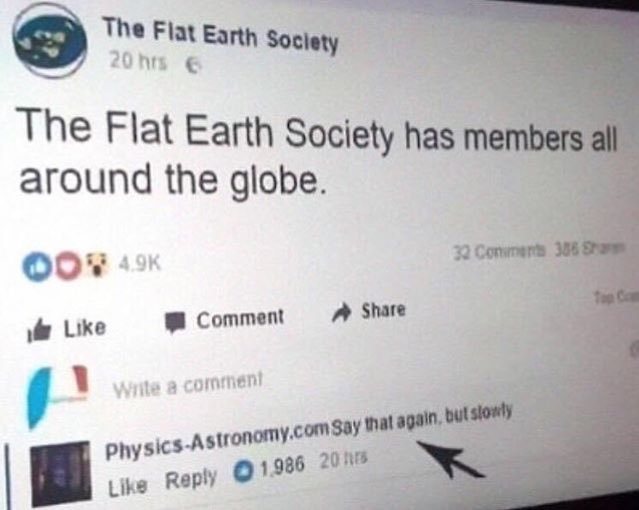
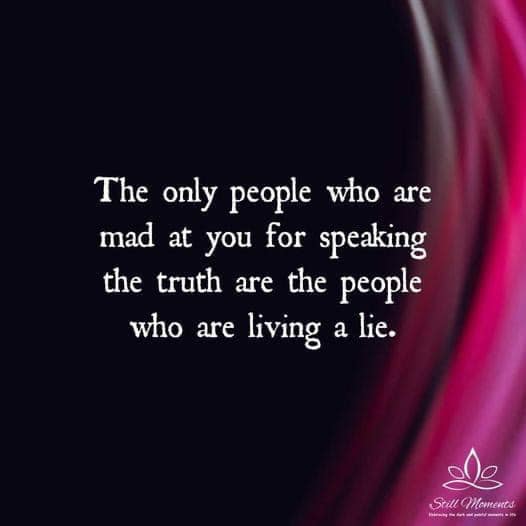
‘Only’ excludes. The rest, the un-excluded, become the chosen.

‘Mad’ is bad. Being mad is unreasonable. Being mad at ‘you’ is the worst.
The fact that ‘you’ are the target of their madness introduces a personal dimension and makes it easier for you to exclude the mad ones.

‘Speaking the truth’ is commendable. In all cultural environments. No exclusionary process is possible in this case. ‘You’, the one who is ostracized for speaking the truth, are the innocent victim here.

‘Living a lie’. By the time you have reached these words you have been already primed. Primed enough to accept, prima facie, that what these people live is actually a lie. There’s no chance left for you to be mistaken.

There’s a lot of psychology at work here.
It doesn’t really matter whether the person who had written this was using psychology to achieve a purpose or this phrase had just ‘happened to be’, the psychological aspects are still at work. Does it really matter whether the monkey understands how a rifle works? Or was it enough that the monkey had squeezed the trigger?

After so much priming, who has enough energy left to evaluate, again, who makes more sense? The ‘primed’ person itself or the ‘mad opponent/denier’? Whose ‘madness’ had already shrouded the primed person’s ability to behave in a reasonable manner?

‘Claiming the moral high ground’ does make a lot of tactical sense.
But is it right strategically?
Are our beliefs enough entitlement? Us believing in them makes them valid enough for us to impose them upon all the others? Simply because we can?

The sign itself is simply true.

The only intriguing aspect in all this is the courage of the person who had affixed it!

You see, the first religious beliefs/cosmological explanations maintained that the whole ‘creation’ had been given birth by the ‘First Mother’. People in those times – like all of us – were just extrapolating their everyday knowledge into the metaphysical realm. Which hadn’t yet been given that name…

After the advent of agriculture – which had introduced the notion of property/inheritance, hence the need to defend those things – men took over. As owners – better suited for war – and then as dispensers of meaning. A.k.a. priests.
God followed suit. It had become a Father and a Shepard. It still is in the minds of the ordinary believers.

Reading some theology – it’s enough to scrap the surface – I found out that most theologians maintained that God was unfathomable. That its main characteristic is the fact that it is ‘hidden’.

Then how come some of us are so sure about its gender? About its will? About what it means for us to do?!?