Archives for category: altruism

Cică poporul are întotdeauna dreptate!
Nu?!?

Teoria susține că democrația merge singură înainte.
Că democrația, spre deosebire de dictatură, nu are nevoie de cineva care să-i spună ce să facă.
Cum să facă…
Că democrația – că poporul care se autoguvernează în mod democratic – e în stare să aibă grijă de propria sa soartă.

Istoria ne arată că da, dictaturile se prăbușesc în mod firesc. Asta e natura lor.
Modul dictatorial de conducere inhibă capacitatea unei societăți de a se adapta la schimbările din jurul ei.
Greșelile sunt băgate sub preș. Se acumulează acolo și constituie o piatră de moară.
Atunci când societatea – oricum anchilozată de dictatură – încearcă să facă față unei provocări neașteptate capacitatea ei de reacție este grav afectată de greșelile acumulate și nerezolvate la timp.
Democrația, atâta vreme cât ramâne autentică – adică funcțională, elimină elementele care o trag înapoi. Pe cei care bagă greșelile sub preș.
Democrațiile se prăbușesc și ele. Sunt nenumărate exemple. Dar abia după ce își îngăduie luxul de a renunța la ceea ce face posibil modul cu adevărat democratic de luare a deciziilor.

Funcționarea democratică a societății se bazează pe două condiții.
Fiind o strategie de supraviețuire – chiar dacă doar implicită – necesită ca cei care o aplică să aibă atenția focusată pe scopul comun.
Fiind o strategie de supraviețuire în grup – chiar dacă această caracteristică este doar implicită – funcționează doar atunci când măcar o majoritate a grupului acționează în comun. Dacă se respectă și se ajută unii pe alții.

Ați fost vreodată pe munte? Acolo sus, unde n-ai ce căuta dacă n-ai bocanci?
Acolo unde trebuie să fii nebun să te duci de unul singur?
Acolo unde vremea se poate schimba de la o oră la alta?
Ați asistat vreodată la o intervenție a Salvamontului?

Ce-i face pe oamenii ăia să-și riște viețile pentru a salva niște necunoscuți?
Credința că fiecare dintre semenii noștri merită să fie ajutați?
Credința că doar împreună – cu toate că nu ne cunoaștem între noi – putem merge mai departe?
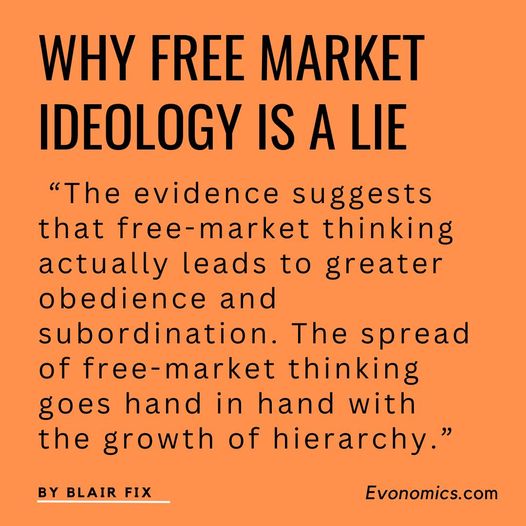
“So the free market, it appears,
is not about freedom. It’s about power.
Free market thinking is successful,
I argue, because it uses the language of freedom
to cloak the accumulation of power.”

Blair Fix

Free market works for only as long as it remains free!

Which is the problem.

Before meddling with the free-market, we need to agree first about freedom. About what we mean when we think/speak about freedom.

Freedom for all versus freedom for only those who happen to fit a certain set of criteria. To be wealthy, in this case.

Functional freedom – as in the kind of freedom which preserves, which remains sustainable over the long run – versus ‘absolute’ freedom. The kind of freedom which leads to anarchy. Which anarchy, necessarily and very shortly, becomes a rigid hierarchy. Then ends up in shambles…

Free market works for only as long as it remains functionally free. Free enough to do its thing.
To provide enough for enough of those contributing to the collective effort to make ends meet.

To understand what Blair Fix has to say, we need to identify the key words in his speech.
“It appears” and “I argue”.
In fact, he tries to convince us to see ‘the world’ as he sees it. He tries to convince us to be ‘on his side’.

He divides ‘the problem’ and then takes sides… which only contributes to the world/market losing its freedom.

As for what ‘evidence suggests’…
It suggests two things.
That yes, the ‘free market’ has, indeed, become an ideology. There are too many people who consider the market should be left to the mercy of the powerful. Who don’t understand how freedom actually works…
The second thing being an evidence. Not a suggestion.
All other markets but the free one work worse.

Dacă nu noi, atunci cine?!?

– „Nu este absolut nici o scuza, opriti-va din a le plange de mila. E plin de locuri de munca, doar sa vrei sa iesi din cacat.”
– „Dacă nu aveți dureri, nici insomnii e bine. Nu vă faceți griji. Multă minte vă doresc.”

Foarte interesant fenomenul…. adică reacțiile…

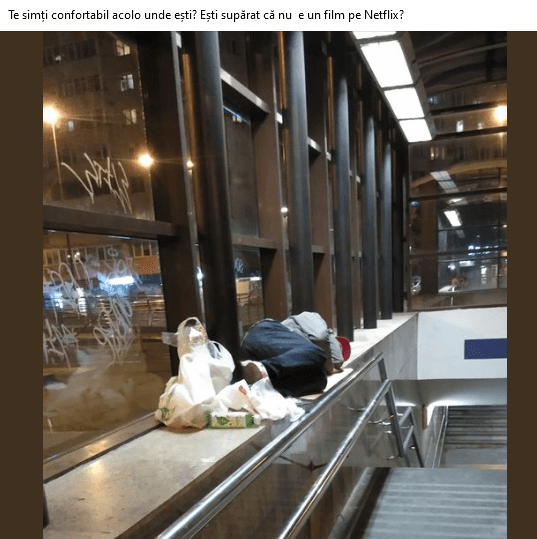
Păi dacă nouă nu ne mai pasă de soarta semenilor noștri, atunci de ce le-ar păsa guvernanților de soarta noastră?
Dacă noi – cei mulți, care am putea ajunge în situația asta – considerăm că cel aflat în necaz e singurul vinovat pentru situația în care se află și, ca atare, nu merita sa fie ajutat … atunci de ce s-ar agita cei cărora le este peste putință să înțeleagă că și ei ar putea – chiar dacă mai greu – ajunge ‘pe stradă’?
Păi dacă noi – care spunem că ne pasă – ne apucăm să-i bălăcărim pe cei care nu pricep – din indiferent ce motive – de ce ar mai încerca ei să priceapă ceva?

Let me put it the other way.

We make history.
We write history.
We read the history we wrote about the things we’ve done.

Then we keep ruminating about what we (don’t) learn from and about history…

Are we nuts?

But is there anything to be learned from history?

Yep!
What happens when we fail to learn from the mistakes which keep shouting at us from the history books our ancestors had written for us. Had written to warn us…

There’s chess and there’s bridge.

There’s managing your resources – on your own, while trying to outsmart – out, in the open, your opponent.

And there’s team-work. An attempt to make the most of what lady-luck had put on the table by exchanging information. With your partner and in the presence of the competing team. This time only the conversation is out in the open, the resources themselves remain hidden. During the initial phase of the competition and, partially, during the end game.

Until WWI, war was more like chess than anything else. Resources were, more or less, out in the open. The soldiers had no other role but to do and die. The whole responsibility belonged to the guys who called the shots. One for each side…

WWI had ended indecisively. Hence WWII.

Each of the winning parties – there had been two victors, had learned something different from the experience.
The Western allies had learned the value of cooperation while the Eastern ‘block’ had reached the conclusion that brute force trumps everything.

The Americans had started playing bridge with the Brits and taught the game to the rest of the world.
The Russians had honed their skills at playing chess. Something they were already very good at.
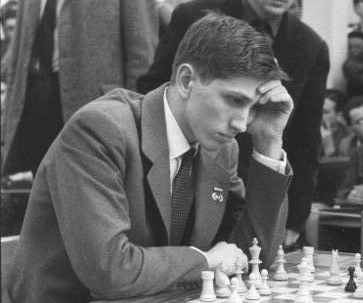
For a while, the Americans have tried to compete with the Russians. Remember a guy named Fischer? Bobby Fischer?

Soon, too soon, the Americans had given up.
After building a computer smart enough to outsmart all human chess players…

The even worse part was that the Americans had given up bridge too!
And forgot the most important lesson of WWI and WWII. That the victor needs to take care of the vanquished if they want to enjoy peace. To actually win the peace process after they had already won the war.

Which brings us to the end of the Cold War.

Communism – and practically all communist states, had crumpled under its own weight.
The westerners assumed it was something they had done themselves. Declared victory.
And the end of history

Having already given up bridge, they forgot to take care of the vanquished… and allowed Russia – the party who had taken most of the blame over their shoulders, for reasons to be discussed some other time, to slide down the slope inaugurated by post WWI Germany.
Did I mention that Russia was still fond of chess? Very much in love with brute force? And not very fond of respectful cooperation?

Now, that we all try to peek into the future – attempting to figure out how the current aggression ordered by Putin will end up, we need some people to learn about bridge.

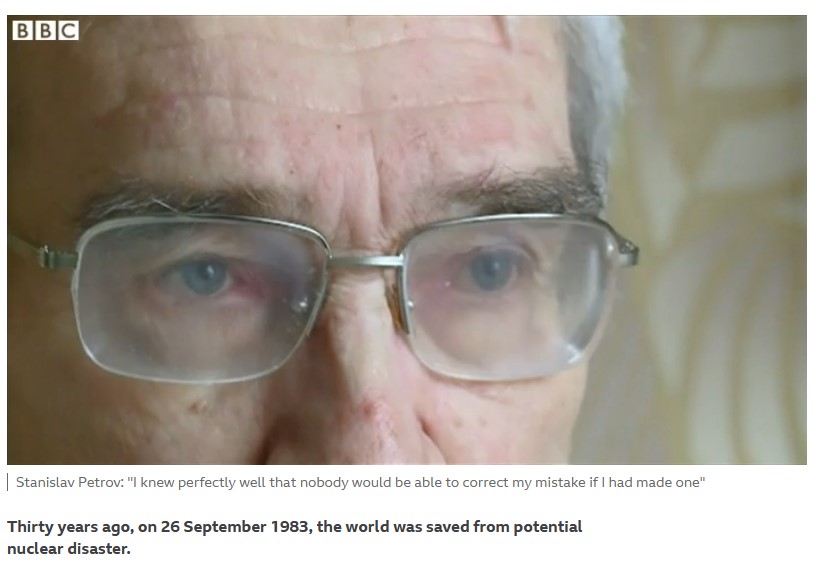
Putin cannot launch by himself the nuclear missiles he had been brandishing lately.

Now, can those around him reset the chess board on which they are but pawns into a bridge table?
And invite the rest of the world into the game?

Will the rest of us understand the invitation?
If, and when, it will come?

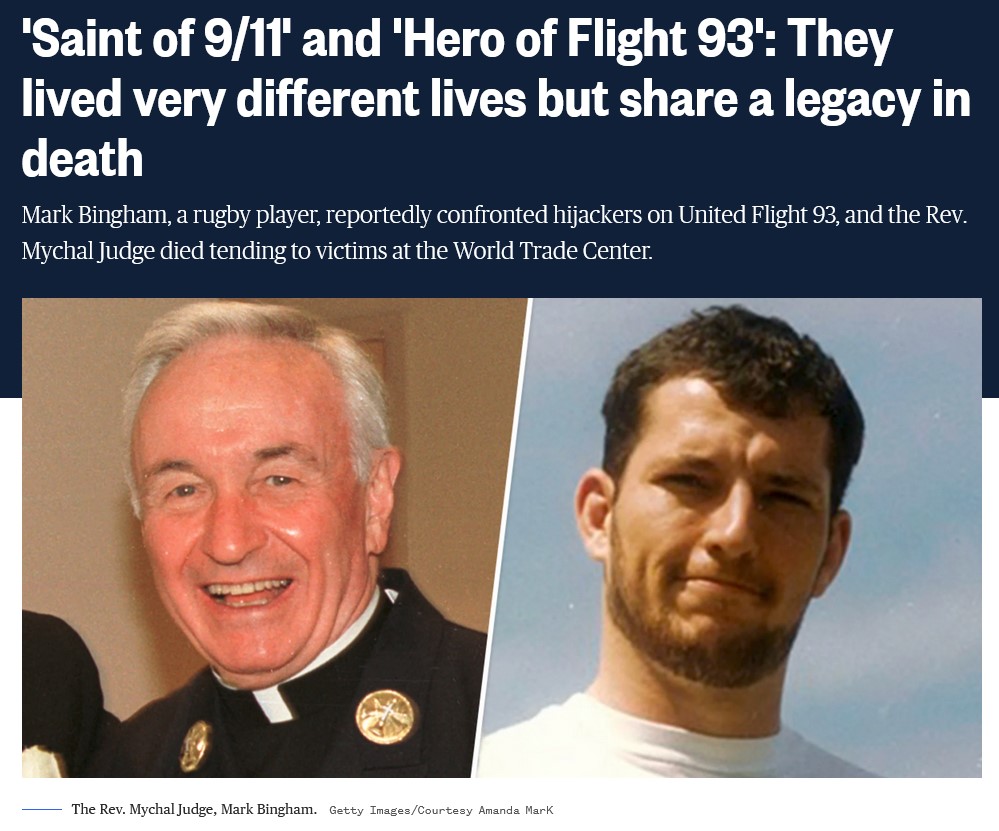
A bunch of ideologically motivated criminals got together and perpetrated a horrible act of terrorism.
A group pf courageous passengers got together and partially foiled the terrorists’ plans.

Both the terrorists and the courageous passengers eventually died.
The terrorists died killing people while the heroes died saving lives.
The terrorists didn’t reach their ultimate goal – the US is still standing proud.
The heroes did achieve their goal. The hijacked plane crushed in a field, far from the target the terrorists aimed to destroy.

Doing something alongside others isn’t enough.
For that something to end up well, the goal must be wholesome!

On the face of it, the two men couldn’t have been more different: Bingham was 31 when he was killed; Judge was 68. Bingham, a former college rugby player with a 6-foot-5, 220-pound build, was a gay public relations executive with an active dating life. Judge was a kindly Franciscan friar who was “selectively out,” according to longtime friend and LGBTQ activist Brendan Fay.

But both men showed courage beyond comprehension that day, saving lives and perhaps even souls.”

https://www.nbcnews.com/nbc-out/out-news/saint-911-hero-flight-93-lived-different-lives-share-legacy-death-rcna1979

Basically, Adam Smith and Ayn Rand had the same thing in their minds.

How society works and how individuals meet their needs in a social context.

And both of them had reached the same solution.
That capitalism was good.

Unfortunately – for Ayn Rand’s fans, any similitude between them stops here.

Adam Smith had described a reality.
Something which had evolved, naturally, in the cultural milieu to which he had happened to belong.

Ayn Rand was trying to push a social model.

The fact that what Rand was trying to push was very close to what Smith had described is, indeed, important.
But the difference between something which had evolved naturally and the very same something which had been imposed, by force, is also important.

Let me give you an example.

Christianity.
Much of what we have today – from ‘human rights’ to the very concept of ‘science’, has it’s roots down in the principles exposed in the Bible.
South America is, now, a Christian territory. Populated by people who had immigrated as Christians and by people – just as Christian as the first category, who had been born to parents having other beliefs. Parents who had been forcefully ‘conversed’ to Christianity.

It’s easy to notice that people in South America don’t fare as well as those in Europe, North America or Australia.
Why? They are Christians, South America uses the same capitalism and the same democracy as the rest of the ‘civilized’ world… why are the results so different?

Don’t bring ethnicity into discussion!
The explanation is simple and has nothing to do with ethnicity.

While in Europe, North America and Australia Christianity and capitalism had evolved naturally – in the sense that they had occurred in Europe and had been translated by the European immigrants to North America and Australia, in South America – and in other places, Christianity and capitalism had been forcefully imposed by the immigrants upon the much larger local populations.

Just as Communism had been forcefully imposed by the Lenin led Bolsheviks upon the Russian People.

Forget about the fact that communism had failed, no matter how hard some people have tried to make it work, while capitalism works for real – when used properly.
My point is that whenever somebody tries to force something upon somebody else, the results will never rise to the expected level. No matter how good that ‘something’ might be.

Are you familiar with ‘you can lead a horse to water but you cannot make it drink’?
Leading it to water is enough.
Whenever somebody becomes ‘enthusiastic’ enough to try to force a horse to drink, the results …. no matter how skillful the ‘enthusiast’ might be…

And there’s another ‘small’ thing which makes a hell of a difference.
Adam Smith’s main point was that the whole society benefits from the functioning of the free market. Where each ‘agent’ competes with the others towards meeting his own goal. Which competition – as long as it remains free, results in everybody – well, almost, having a better life.
Ayn Rand’s point being that the free market is there only for the benefit of the ‘strongest’. Which is in line with Lenin’s view on the matter… ‘The Bolsheviks merit to lead the revolution because they are the strongest…’

‘I need a gun to protect myself from those who do not obey all of God’s words but I don’t need a mask to protect me from any of God’s creations. Even from a virus’.

‘A mask protects both of us, regardless of who wears it. And if we both do it, the benefits are bigger for both of us.
On the other hand, if you decide to trust our immune systems that will dramatically increase the chances that both of us will get the disease. Actually, your confidence in our immune systems/God is similar to shooting guns blindly. Statistically there are not that many chances to hit someone, right? Unless you do it in a public space…
That’s why we need to wear a mask in public and to keep all guns away from the hands of those who might use them indiscriminately.’

One-Time
Monthly
Yearly

Make a one-time donation

Make a monthly donation

Make a yearly donation

Choose an amount

$5.00
$15.00
$100.00
$5.00
$15.00
$100.00
$5.00
$15.00
$100.00

Or enter a custom amount

$

As much as I love writing, I do have to eat.
And to provide for my family.
Earning money takes time.
If you’d like me to write more, and on a more regular basis, hit the button.
Your contribution will be appreciated!
Another very efficient way to help would be to share my posts.

As much as I love writing, I do have to eat.
And to provide for my family.
Earning money takes time.
If you’d like me to write more, and on a more regular basis, hit the button.
Your contribution will be appreciated!

As much as I love writing, I do have to eat.
And to provide for my family.
Earning money takes time.
If you’d like me to write more, and on a more regular basis, hit the button.
Your contribution will be appreciated!

DonateDonate monthlyDonate yearly

I’m not OK with businesses refusing flowers/cakes for gay marriages but I can understand their owners’ point.
On the other hand, I also understand people who don’t want to wear masks. I’m not OK with it but I understand their quest.

What I don’t understand is the insistence with which some people want to ‘discriminate’ between these two situations.
Why should a business be able to refuse to serve a gay couple but not able to refuse to serve those who refuse to wear masks?!?

How can people discriminate between liberties? What makes a liberty more valuable than the other?
Specially when love between two people sharing a similar sex is still love while sharing viruses is potentially deadly…

And what’s so ‘progressive’ in calling other people ‘assholes’?!?

When are we going to cool down and start making some sense of what we’re living through?

One-Time
Monthly
Yearly

Make a one-time donation

Make a monthly donation

Make a yearly donation

Choose an amount

$5.00
$15.00
$100.00
$5.00
$15.00
$100.00
$5.00
$15.00
$100.00

Or enter a custom amount

$

As much as I love writing, I do have to eat.
And to provide for my family.
Earning money takes time.
If you’d like me to write more, and on a more regular basis, hit the button.
Your contribution will be appreciated!
Another very efficient way to help would be to share my posts.

As much as I love writing, I do have to eat.
And to provide for my family.
Earning money takes time.
If you’d like me to write more, and on a more regular basis, hit the button.
Your contribution will be appreciated!

As much as I love writing, I do have to eat.
And to provide for my family.
Earning money takes time.
If you’d like me to write more, and on a more regular basis, hit the button.
Your contribution will be appreciated!

DonateDonate monthlyDonate yearly

Titlul este cea mai succintă descriere a unei ‘spirale istorice’.

Care spirală se poate îndrepta în orice direcție. Și cu orice viteză.
Putem avea cercuri vicioase și cercuri virtuoase.
Putem avea dezvoltări fulminante, prăbușiri catastrofale, baterea pasului pe loc sau, în cazurile cele mai fericite, dezvoltări organice.
Toate astea în funcție de ce s-a priceput fiecare comunitate să facă în condițiile pe care i le-a pus norocul la dispoziție.

1990 a fost un an de inflexiune. Anul în care am fi putut face orice.
Bine, nu chiar orice. ‘Orice’ doar în sensul celor de mai sus. Am fi putut să schimbăm direcția în mod fundamental. Și viteza.
Am preferat să continuăm, în ritm de melc.

N-a fost foarte rău.
Dacă ne uităm în urmă, cu ochii deschiși, vom constata că ne este – în medie, mult mai bine decât ne era atunci.
Întrebarea care se pune este dacă mai putem continua în felul acesta. Și unde vom ajunge.

Ionuț Sociu, Românii și instituțiile. Trei decenii de neîncredere.

Nu-i așa că-i interesant?
Avem încredere în armată. Care doar a existat – în ultimii 70 de ani, fără să demonstreze – de fapt, nimic. În afară de niște rezultate cu adevărat excepționale obținute undeva unde n-am fi avut, de fapt, ce căuta. Doar că acele rezultate sunt mai degrabă consecințele unor eforturi și abilități individuale decât rodul unei ‘funcționări sistemice’.
Avem încredere în biserică. În ciuda unor manifestări de-a dreptul aberante ale câtorva dintre capetele presupus luminate care gestionează destinele ‘spirituale’ ale credincioșilor ortodocși. Chestie care, de fapt, nu mă miră. Fiind doar încă o dovadă a întelepciunii populare… „Fă ce spune popa, nu ce face popa!”
Avem încredere în sistemul de educație. Unde, iarăși, rezultatele sunt mai degrabă datorate eforturilor individuale. Ale profesorilor dedicați, ale elevilor cu adevărat interesați să învețe, ale părinților care au grijă de educația copiilor lor.
Și nu avem încredere în parlament/guvern. Instituții a căror funcționare rezultă direct din viața de zi cu zi a fiecăruia dintre noi. Din alegerile pe care le facem în cabina de vot. Din modul în care cei care lucrează ‘la stat’ – adică noi, împreună cu rudele și prietenii noștrii, aleg să-și ‘facă datoria’. Din reacțiile pe care noi alegem să le avem în fața realităților cu care ne confruntăm zi de zi. Care alegeri – toate cele de mai sus, sunt influențate direct de educația pe care am primit-o acasă, la școală, în armată – care am trecut pe-acolo, în biserică și – dar nu în ultimul rând, de interacțiunile zilnice cu ceilalți membrii ai societății din care facem parte.


Astea sunt circumstanțele actuale. Adică situația în care ne aflăm.
Hai să vedem acum cine sunt cei care iau deciziile.
Cum stăm la capitolul „agency”.

Nu este cert unde se trage linia corigenței la analfabetism funcțional sau dacă este nevoie să se tragă vreo linie. Însă este cert că analfabeții funcțional sunt victimele ineficienței sistemelor naționale de educație. Ei sunt cei care nu înțeleseseră adunările, atunci când s-a trecut la înmulțiri. La maturitate, ei devin un cost social mai mare pentru comunitate decât un cetățean instruit. Totuși, ei sunt capabili să funcționeze în comunități mici, cu puține reguli sociale. Pot învăța o meserie, cum ar fi condusul mașinii, pot întemeia familii și pot lua credit de la banca. Nu sunt oameni răi ci doar unii cărora trebuie să le explici de multe ori ca să priceapă.

Cristian Lică, Cum recunoști un analfabet funcțional, Republica.ro, 2019-12-24

Consecințe?

„1. „Campania de vaccinare în mediul rural este un dezastru”, îmi spune un oficial guvernamental, care cunoaște bine cifrele vaccinării. „Oamenii sunt speriați de ce văd la televizor, stau toată ziua pe un singur post TV de unde li se spune că fac cheaguri de sânge de la vaccin sau chiar pot muri”, completează. „Sunt comune de 2000 de locuitori unde doar 15 oameni doresc să se vaccineze”, îmi dă un exemplu.
2. În două săptămâni maximum, vom avea mai multe doze de vaccin decât doritori. Vom fi la circa 3 milioane de oameni imunizați. Mai e nevoie de alte 6-7 milioane de români care trebuie convinși, ca să ajungem la rata de imunizare de 60 la sută. Atunci va începe greul.
3. Criza politică nu poate ascunde adevărata criză din România, cea de încredere. Propaganda antivaccinistă nu ar fi avut succes dacă statul n-ar fi dinamitat toate punțile de încredere între autorități și cetățeni. S-au deschis fronturi și conflicte inutile, s-au aruncat bani în presă în campanii de informare fără niciun impact, s-au călcat unii pe alții pe coadă și pe atribuții, s-au comis erori de comunicare stupide.”

Florin Negruțiu, Facebook, 2021-04-20

O mai lălăim mult?
Sau pricepem odată că deciziile din 1990 aveau de a face doar cu viteza de evoluție? Pentru că pe vremea aia nu aveam altă variantă decât ‘în sus’.
În timp ce acum totul ‘este pe masă’. Suntem într-o situație ‘de supraviețuire’. De supraviețuire colectivă. Iar noi am rămas la faza în care tot încercăm să ‘optimizăm’. Să mai agonisim ceva foloase pentru noi înșine.

Problema fiind că dacă mai tragem mult de spuză, râmân toate turtele crude.