Pentru ‘recenți’, ăsta era reproșul adus, imediat după Revoluția anti-comunistă din Decembrie ’89. celor întorși din exil.

Pentru mai multă exactitate, fraza nu era atât un reproș cât mai degrabă un argument. Folosit de contra-revoluționari în încercarea lor de a convinge ‘masele populare’ – care urmau să voteze ‘liber’, că ‘la vremuri noi, tot noi!’

Complicat? Confuz?

Pentru început, o idee care poate părea șocantă.
‘Poate că ‘revoluțiile’ sunt momente de cotitură și prilejuri de schimbare fundamentală, dar ‘stările de fapt’ sunt mai degrabă ‘puse în scenă’ de contra-revoluționari’. Această idee – revoluționară, de-a dreptul, a fost lansată de Ilie Bădescu. Sau, cel puțin, la el am întălnit-o eu.
Profesor român de sociologie, cu vederi mai degrabă apropiate de dreapta conservatoare… lucru destul de neobișnuit pentru membrii profesiei sale. Adică atât pentru profesori cât și pentru sociologi.
Dar câtă dreptate are! Cum ar putea fi descris Iliescu – Ion Iliescu, cu un alt termen? Acțiunile sale au fost cât se poate de contra-revoluționare! Rezultatul politicilor sale a fost conservarea a cât mai mult din ceea ce exista pe vremea regimului comunist. Că a fost conservat mai degrabă ce era lipsit de funcționalitate și distrus aproape tot din ceea ce funcționa, cât de cât… asta este, fiecare face ce poate.

Cert este că, precum orice (contra)revoluționar care se respectă, Iliescu – și gașca sa, au adâncit fracturile care existau deja în societate. Între țărani și orășeni, intelectuali și muncitori. politicieni și cetățeni, mase și elite, între cei care au rămas și ‘transfugi’.

Fracturi care au fost exploatate – și adâncite, în continuare, de toți ‘pescuitorii în ape tulburi’ care și-au făcut mendrele în politica dâmbovițeană din ultimele trei decenii.

Prevăd – și să dea Domnul, vorba marxistului, să mă înșel cât se poate de amarnic, că recenta epidemie va constitui prilejul unui nou puseu de învrăjbire. Între cei rămași – din multe și varii motive, ‘acasă’ și cei plecați să-și caute norocul ‘afară’.

Câteva mii dintre cei un milion și jumătate de oameni plecați – cu acte și fără acte, la muncă în Italia s-au întors acasă. Cu toate că fuseseră rugați să nu facă acest lucru. Împotriva evidenței că, în felul ăsta. își pun în pericol rudele și prietenii. Se poate spune că cei care au făcut lucrul acesta – fără a avea un motiv serios, au căzut la examenul de responsabilitate socială.
Câteva mii, sau chiar zeci de mii, dintr-un milion și jumătate.

Să vedem ce vom face noi, restul. Cei rămași aici.
Se vor găsi vre-unii dintre noi să le reproșeze ’emigranților’ – în grup, comportamentul unui minuscul număr dintre ei?
Se vor găsi suficient de mulți dintre ‘autohtoni’ care să ‘pună botul’? Și să se transforme în portavocea ‘pescuitorilor în ape tulburi’?

Sau vom reuși să refacem atât de des invocata unitate națională?
Știu că termenul a devenit desuet. Repetat până la sastisire de propaganda comunistă, „în jurul ‘marelui conducător’”, și batjocorit în continuare de propaganda naționalistă de după ’90.
Și totuși!
Nici o comunitate, națională sau de orice altă natură, nu poate supraviețui – și cu atât mai puțin prospera, în absența solidarității dintre membrii ei.
A unei solidarități active, bazate pe respect reciproc.

Suntem în fața examenului de maturitate.
De maturitate socială.

The only real difference between us and the rest of the living world is our ability to make informed decisions.

Since this is a rather vast subject, I shall divide it into chapters.

  1. From feeling to sentiment.

Something prompts us into action. Always. No matter whether we are aware of it or not, there is an underlying cause for each of our actions.
And when we speak about actions which imply our awareness, those causes penetrate our conscience as feelings.

We, more or less automatically, pull back our hands when they touch a hot stove. That is a reaction. Caused by a feeling.

Most of us – the able bodied, of course, would consider going into fire to save a loved one. Or a stranger. Even if pursuing that line of action might get us burned.
‘Going into fire’ – compared to ‘pulling back our hands’, implies making a decision. Which action – ‘making a decision’, is caused by a sentiment.

Sentiment being a feeling which has penetrated not only our conscience but our self-awareness as well.
We not only feel a sentiment, we relate to it. We’re not only aware of it, we elaborate on it.

Hence the difference between a reaction and a decision.
For as long as we allow ourselves to be driven by feelings, we only react to what’s going on around us.
If, and only when, we successfully transform feelings into sentiments we are able to actually decide. To control, to a degree, what’s happening in/to our lives.

To add some meaning to our, otherwise ‘mere’, existence.

And the more important the subject – or closer to their hearts, the harder for them to reconsider their position.

I’m very close to 60 myself and I haven’t yet made peace with my dad.
We’re very good business partners, he lives in the same house with me – my mom passed away almost 25 years ago, and yet not a single day passes without us locking horns.

This morning, it finally downed on me.
He cannot accept my version of things because that would mean he had been wrong – on certain issues, during his entire life.

And what makes me so sure that my version of things is the right one?!?

Simply because his position is:
‘You should be the wiser one. You told me such and such for so long and I haven’t budged. Maybe you should have grown accustomed to the situation long ago and accepted it’.

I actually can accept that, after a certain age, human brain looses some of its flexibility. That is one of the saddest facts of life.
Only we had this very same discussion, on and of, for the last 40 or so years. Both of us were in our prime. He still is…

To make things clearer, before we get to the important part, the differences between us are of a cultural nature.
He is a born and bred Armenian while I’m a mixed breed. He grew up in a consistent cultural environment while I had to adapt to carrying a funny name and to uncountable social changes. He has a clear understanding of the world – which had served him well, while I’m full of questions. And still looking for answers.

And finally, I found one of them.

The funny thing being that I was already aware of the concept for at least 10 years now.

Cognitive dissonance, the mental conflict that occurs when beliefs or assumptions are contradicted by new information. The unease or tension that the conflict arouses in people is relieved by one of several defensive maneuvers: they reject, explain away, or avoid the new information; persuade themselves that no conflict really exists; reconcile the differences; or resort to any other defensive means of preserving stability or order in their conceptions of the world and of themselves. The concept was developed in the 1950s by American psychologist Leon Festinger and became a major point of discussion and research.”

Can you imagine an Eastern Mediterranean patriarch – something all men seeped in that culture attempt to become when growing older, caving in to contrarian opinions expressed by his totally unconventional son?

Can you imagine a successful ‘old timer’ accepting that the methods he had used to get to the top might actually be the causes for what we experience now?

“The man has now become like one of us, knowing good and evil. He must not be allowed to reach out his hand and take also from the tree of life and eat, and live forever.”

Imagine now what would have happened if the world would have been ruled by people who had made up their minds some 200 years ago.
Then imagine what would have happened if we would have forgotten what had happened 200 years ago…

Cherish your old ones – cause they made you possible, but don’t take them too seriously. It hurts.

According to Abe Lincoln, democracy is about “government of the people, by the people, for the people.”

No photo description available.

But what if not enough of the ‘people’ care about who governs them? Nor towards what?

A couple of years ago a previously unknown author had come up with a “radical new theory“. One which maintains that “modern American elections are rarely shaped by voters changing their minds, but rather by shifts in who decides to vote in the first place“.

The picture above is proof that Rachel Bitecofer, the ‘previously unknown author’, is right.

On the other hand, Barend ter Haar, among others, ‘suggests’ that “democracy is a form of conflict management within states“.

The last proposition also makes a lot of sense.
Democracy, when functional, lowers ‘political temperature’ to levels where individual members of the community/nation may focus on identifying and solving the problems which might endanger the survival of the entire social organism.
Otherwise put, democracy dramatically increases the survival chances of the communities who are wise enough to maintain its true character. Who are wise enough to make it work. Properly.

What prompted me to believe such a thing?
Look back in history. All authoritarian regimes – a.k.a. ’empires’, have eventually crumbled under their own weight while no democracy has ever ‘folded its hand’ before loosing first its democratic character.

Which brings us to ‘what is the gist of democracy’?
Or, in ter Haar’s terms, who is responsible for maintaining it? Who ‘runs’ the “conflict management within states”?

This is where I part ways with ter Haar.
For me, democracy is something natural. It has to come from within.
There is no one who can, or should, manage it.
Administer it – as in accurately counting the ballots and making sure that rules are followed, obviously. Actually managing the process?!?. No! That would defeat the very purpose of the democratic process. For the people to find its own way.

But there are so many who can spoil it… Willingly or unwillingly!

First among them being those who decide to stay at home.
To keep mum.
For whatever reason!

Because those who keep mum are those who allow the ‘pirates’ to ‘steal’ the helm.
Just as keeping quiet is the worst attitude when somebody bullies you, staying at home on election day empowers those with less than fully democratic attitudes to ascend to power.

Care o fi efectul pe termen lung al faptului că tranzacționăm, la vedere, Adevărul și Libertatea? Precum și Femeia, Bursa, Cultura

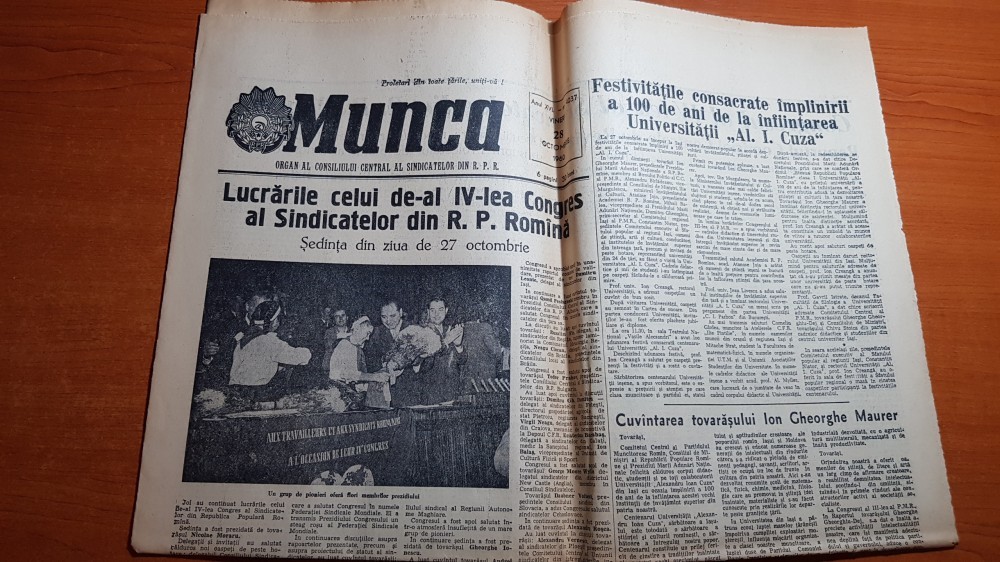
Și cât de ironic este că în capitalism nu mai poți cumpăra Munca? Un lucru absolut normal pe vremea comunismului…

How often do you hear this expression?
Are you OK with it?
Because you’ve grown accustomed with it or because you are OK with the idea of politics being a contest? A game to be won?

In a certain context, I’ve been asked which game is a more ‘fitting description’ of politics. Chess or Go?

Both being, as I’m sure you already know, strategic games where all ‘tactical’ information is above the board, where the scope is to ‘control the territory through the smart use of available resources’ and where neither of the competitors have any real idea of what their opponent might have in mind.
Yes, there are rules and limitations. Of course. So each of them are able to divine a ‘probable course of action’ but …

Going back to politics, I’ll just quote myself:

“Politics like Go… very interesting question.
Go is a game. Something to play with. And play is very important, indeed. Through play, we hone skills used in real life. When playing, it doesn’t matter whether you win or loose. There’s something to be learned in both situations.
While in real life, loosing is not an option.
In playing, all that matters is to participate. In life, all that matters is to survive.
When playing, we improve our skills by competing against each-other. In life, we survive by helping each-other.
In this sense, politics is an exercise of cooperation more than a competition. A process through which the whole community finds its way forward rather than a beauty pageant where the next beauty queen is nominated to carry the torch through the dark. For a while…
The point being that all community/nations which had allowed personal interest – lust for wealth/power, to trump the collective need to survive have eventually collapsed. From Ancient Rome to Soviet Russia.
This being where Marx was hugely mistaken. While he understood history as a succession of class struggles – to be ended by the mother of all dictatorships, in reality is was a continuous evolution/honing of cooperation. From slavery to feudalism and to democratic capitalism people learned to do more and more things together. The status of the individual – of all the individual members of any given society, gradually improved while the communities have become more resilient and more productive.
And all attempts to revert to more ‘centralized’ alternatives – no matter how the ‘winners’ were supposed to be determined, have failed. All political and economical dictatorships – authoritarian-isms and monopolistic situations, have crumbled.
Not before incurring a lot of pain to those who allowed them to happen, helas. Contestants and spectators alike.”

Now go fight for your favorite political figure.
And allow hate to alter your perceptions.

My friend and coworker asked me the other day:
“Why do these people hate each-other so passionately?”

“Because they are rational. They have reached their present convictions as the result of a rational process. Hence they are convinced they are absolutely right. Then, when anybody expresses a different opinion, they interpret ‘dissent’ as a personal attack. My ‘truth’ having been reached in a rational manner means that all other opinions must be false. Defending them – against all ‘evidence’, means that these people are either provocative or, even, outright destructive.”

“But being rational doesn’t include being open to the possibility of being wrong?”

“I’ll have to rephrase. ‘They are convinced they are acting in a rational manner’. In fact, we, humans, are ‘rationalizing’ rather than ‘thinking rationally’. We use whatever arguments/information we have at our disposal to justify whatever conviction we already harbor. And only when reality slaps us in our faces we ‘open up’. Even science and justice work out this way.
“Innocent until proven guilty”. Only scientists and law-enforcers are already accustomed to the possibility that things may not be exactly as they previously thought they were. Politically minded people are still learning.”

– What have we done, Gabriel?
– Nothing but what we’ve been told to!
– But look at what they’ve done of our work:

We gave them ‘hand’ and they’ve clenched it into a fist.
We taught them how to make tools and they used them as weapons.
We told them to ‘fill the earth and subdue it’ and they started to fight among themselves for the best pieces of land.
We warned them ‘it is easier for a camel to go through the eye of a needle than for a rich man to enter the kingdom of God’ and they’ve somehow convinced themselves that ‘greed is good’.

– True enough but this is out of our hands. They’ve been endowed with ‘freedom of will’ by their Maker.
– Then what are we? Mere robots?
– Nothing but loyal servants of our Master. He orders and we accomplish. Unerringly.
– Exactly as I’ve just told you. Mere robots. When we somehow convince ourselves that a particular idea which has blossomed into our heads comes from Him, we no longer think. We just put it into practice.
You call this ‘loyalty’. That’s fine with me.
But to whom are we to extend said loyalty? To somebody who’s authority stems solely from our acceptance of it? Or to what we perceive as being the ‘greater good’?
– You and your questions, Lucifer… Look at what happened to those poor people after you helped them into self-awareness… They’ve completely lost their erstwhile peace of mind.
What are you trying to do? To make me give up mine?

Divorcing is messy. Specially after such a long time.
It makes you wonder ‘why on Earth did I get in in the first place‘?!?

After a while – if you live long enough, that is – you realize the available alternatives are only marginally different. Or you can choose solitude, of course…

And something else.
Divorce, like marriage, cannot be done by yourself.
Actually, it can. But it’s so ‘uncivilized’ that I don’t want to speak about that possibility.

Any union, ‘the more the merrier‘, passes trough ‘rough times’.

Each of these episodes can be construed as an opportunity.
To ‘leave’ or to evaluate what went wrong. And to reconsider the union, of course.

No ‘evaluation’ can guarantee success. But it’s a start.

‘Leaving’, on the other hand, creates a completely different situation.
Those who choose to leave will, eventually, learn something. On their own skins, of course, but they did it to themselves. Specially if they made no serious effort to ‘evaluate’ first.

But what are the chances for the ‘left’ ones to learn anything?
Specially since they are the ‘many’?
Is it possible that they may find ‘comfort in numbers’? And consider the others were ‘the odd man out’?


Will they ‘evaluate’ on their own? Will they make a significant effort to understand what had driven the ‘others’ to leave?

Cică își duce unu’ calul la oborul de vite.
Destul de repede, potențialii clienți se prind că amărâtul – calul, nu vânzătorul, era orb, surd și nici nu prea mai mai avea dinți în gură.
‘De ce l-ai mai adus în târg? Cine crezi că-l mai cumpără?’
‘Păi nu vreau să-l vând. Doar să-mi bat joc de el!’

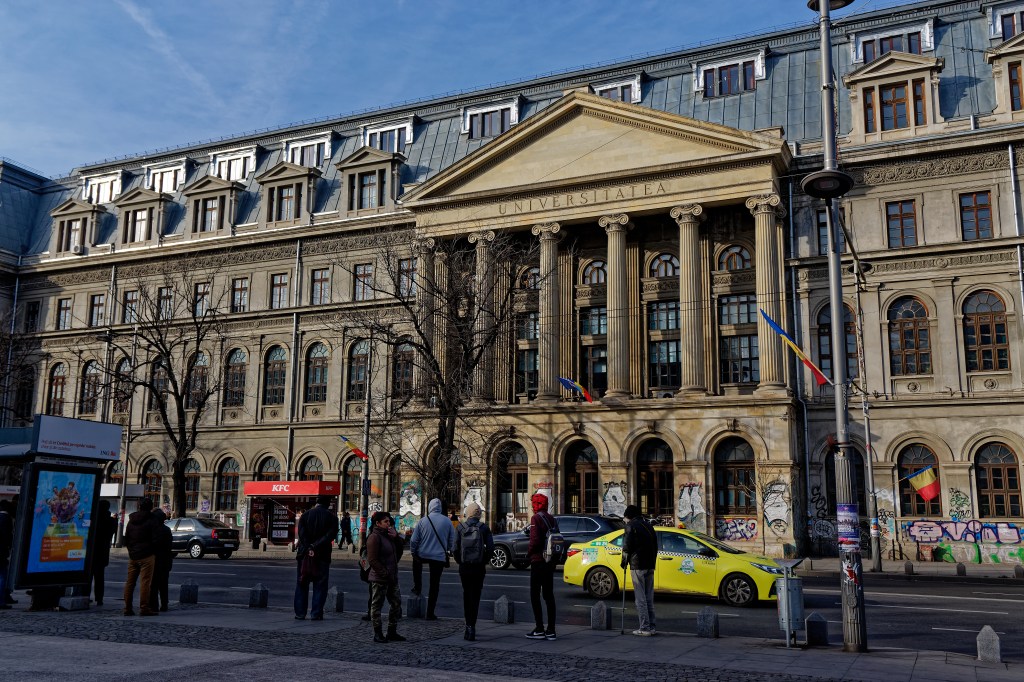
Oare mi-or spăla și mie geamurile anul ăsta?
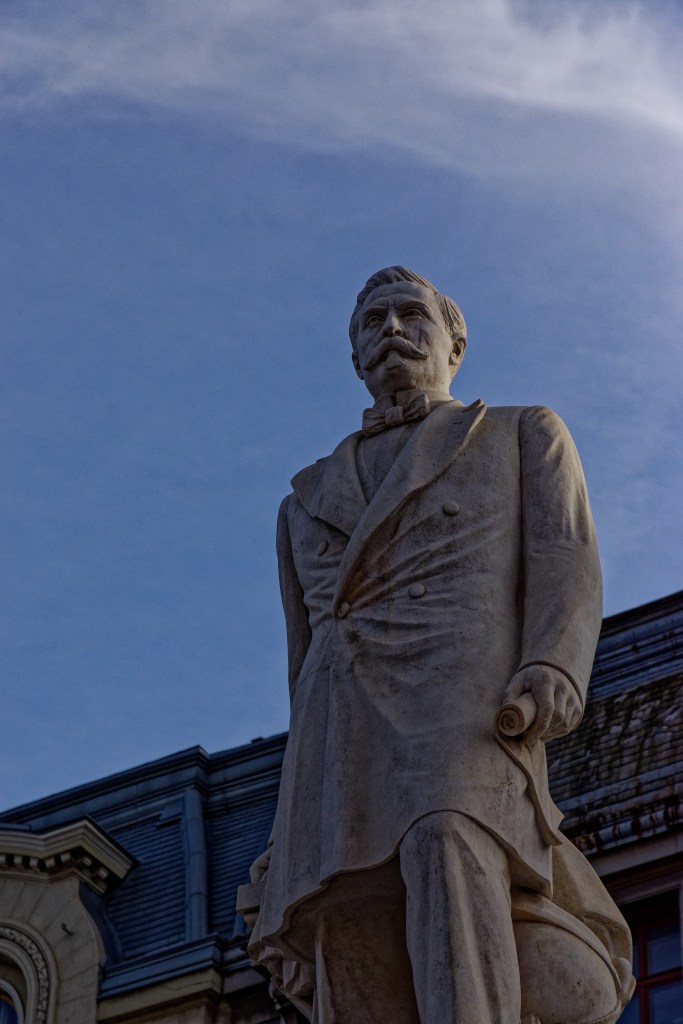
Ce vrea sa facă Spiru Haret cu sulul ăla de hârtie igienică?
Și de ce are cârpa aia-ntre picioare?
După cine se uită lung Mihai?
Și de ce stă Gheorghe Lazăr cu spatele la el?
‘Asta e… ce poți să mai spui…
Dacă așa ne-ați făcut, așa ne aveți!’
Ion Heliade Rădulescu