So. Let me present you with a sociologically fictitious scenario.
We have an intelligent observer and and a trans-galactic vehicle.
There are no details available about the observer except for the fact that it has access to a comprehensive real time stream of data about what is going on inside – or, more exactly, on the surface, of the trans-galactic vehicle.
And here’s what the observer had recorded.
The vehicle is being continuously transformed by its passengers. In fact, there are two manners in which the passengers change their vehicle. By interacting directly with it. And as unintended consequences of the interactions which take place between the passengers themselves.
The passengers are evolving. During the observation period, some of them had become dominant. But no matter whether they had become dominant or not, most of the passengers had disappeared. Both as individuals and as species.
The current dominant species is the most intriguing ever.
It displays a strange mix of intelligent behaviors and suicidal tendencies.
It is composed of rather autonomous individuals who are adept at finding ingenious solutions to almost intractable problems. But, strangely enough, they haven’t yet been able to figure out two basic things: The limited nature of the vehicle on which they live. In both time and space. Nor how to balance their individual functional autonomy with their need to cooperate towards their natural goal. The survival of their own species.
If the whole ‘project’ were a SF movie, the text above would have been the opening. Followed by:
Currently, the dominant passengers are being taught a lesson by the apparently most insignificant amongst those transported by the vehicle. By a virus, as the dominants refer to it. The virus – like all of its kind, is able to hijack other organisms and somehow convince them to work for him. At a very high cost for the hijacked organisms. In this case, the hijacked organisms belong to the dominant species.
And what have the individuals belonging to the dominant species chosen to do? Inform each-other promptly and cooperate earnestly towards the common goal?
Not exactly. Not yet, anyway.
Homework: What would the intelligent outside observer think about the whole situation? Would He consider to lend a helping hand?
I’m not pointing fingers here. I just try to convince you how hard it is to make the right decisions. ‘Going forward’ as opposed to ‘looking back’. I just try to convince as many of you as possible to stop for a moment and think about it. As dispassionately as possible.
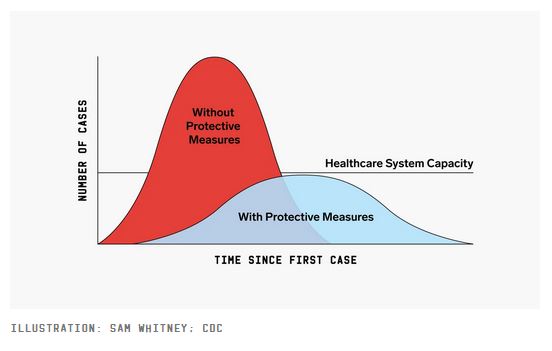
We’ve also been told that we need to flatten the curve. That our systems were not prepared enough for the onslaught that was going to happen.
Some people continued ‘as they were’ while others tried to ‘flatten the curve’.
For a while. Now, after some time, people from both categories have started to entertain second thoughts.
Trying to figure out what’s going on here, I’ve asked my self a couple of questions.
Who had chosen to go on as usual and who had chosen to distance themselves from the rest of the society?
‘Go on as usual’ first: – Those who don’t trust the government. – Those who are convinced nothing can happen to them. – Those who felt they had no alternative. Who live paycheck to paycheck or who provide essential services to the society. Like healthcare for instance. Or those who bake our daily bread. Pump the water we drink. Tend the generators who lighten our bulbs and power the computer I use to write this post.
Now those who attempt to ‘flatten the curve’: – People who tend to trust the authorities. – Those who understand they should really protect themselves. Who are older and/or already sick. – Those can work from home. – And people who are otherwise fine but afford to distance themselves from the fray. Those who have enough resources to do it.
Am I imagining things or the picture is already a lot clearer?
And the other question now. Why the second thoughts?
Because things have unfolded more or less as the government said they were going to. Because things have started to happen. If not to them, directly, at least to some of those living around them. Because there still is no alternative in sight. And because there is nothing much to convince them that their efforts are appreciated by the rest of the society.
Because the government might have been right to tell them to ‘lie down’. But because the same government has failed to do enough in the meantime. Not to mention what it had failed to do before. Because staying put allows you to start thinking. ‘What next? For how long can we go on like this?’
So. What next? What are we doing to convince those who actually keep us going to continue doing so? What are we doing to convince those who have chosen to restrict their lives to a barren minimum that their efforts are worth it?
What are we doing to convince everybody that there will be a life worth living at the end of all this?
Un număr de cadre medicale și-au dat demisia. Unii invocând lipsurile din spitale, unii circumstanțe personale… alții pur și simplu fără motiv.
Internauții români de pe Facebook au început să se poziționeze. De la brutalul ‘dezertori’ până la ‘primul lucru pe care trebuie să-l cerem de la guvernanți după ce trece criza este să reconstruiască din temelii sistemul de sănătate’. Trecând prin ‘Toți sunt de vină. Chiar dacă nu luau toți șpagă, toți știau ce se întâmplă. Nimeni n-a făcut nimic. Singurul mod prin care unii dintre ei și-au manifestat dezacordul a fost plecarea. S-au dus și nu s-au mai uitat înapoi.’
Ce ziceți despre ‘Toți suntem de vină!’?
E adevărat că nu toți medicii cereau șpagă. Din păcate, aproape toți acceptau. Plicurile pe care le strecuram noi. În buzunarele lor. În buzunarele halatelor lor albe…
Până nu demult, logica noastră era simplă. ‘E firesc să primească, au salariile foarte mici.’
Salariile angajaților din sistemul de sănătate erau într-adevăr mici. Iar noi am fost atât de înguști la minte încât am lăsat-o așa cum căzuse. ‘Dă-i încolo. Au destui bani!’
Asta până în momentul în care din ce în mai mulți dintre ei au preferat să-și ia ei singuri talpășița. În loc să mai accepte șpaga noastră.
Abia atunci am înțeles cât de rămas în urmă era sistemul nostru de sănătate. Abia atunci când personalul medical a continuat să plece și după măririle atât de substanțiale ale lefurilor din sistem.
Cred că a venit momentul unei reale schimbări la față. Cred că a venit momentul să încetăm a mai cere ceva celorlalți înainte de a ne uita un pic în sufletul nostru.
Înainte de a cere guvernanților restructurarea sistemului de sănătate. Înainte de a cere celor din sistemul de sănătate să-și pună în pericol sănătatea lor pentru a apăra sănătatea noastră.
Înainte de a cere toate aceste lucruri este momentul să înțelegem că noi suntem cei care am dat șpăgile. Că noi suntem cei care am îngăduit, mai ales după 1990, sistemului să devină din ce în ce mai corupt. Da, noi suntem cei care acum tragem ponoasele. Cu toții. Medici, asistente, infirmiere, brancardieri, femei de serviciu, pacienți, aparținători. Toți.
Victime și Vinovați. În același timp.
Tocmai de aceea va fi suficient să ne schimbăm noi.
Iar după ce ne vom fi schimbat noi, nu va mai fi nevoie să le cerem celorlalți să se schimbe. Pentru că ne vom fi schimbat, deja, cu toții.
Well, we must remember that solutions came a lot easier when we refuse to think inside a box. Inside any box. No matter how large or how nice.
Every time I understand/notice that somebody tries to frame my thinking process, I go ‘ballistic’.
I try to raise my mind perpendicularly above the frame. So that I may observe the limits.
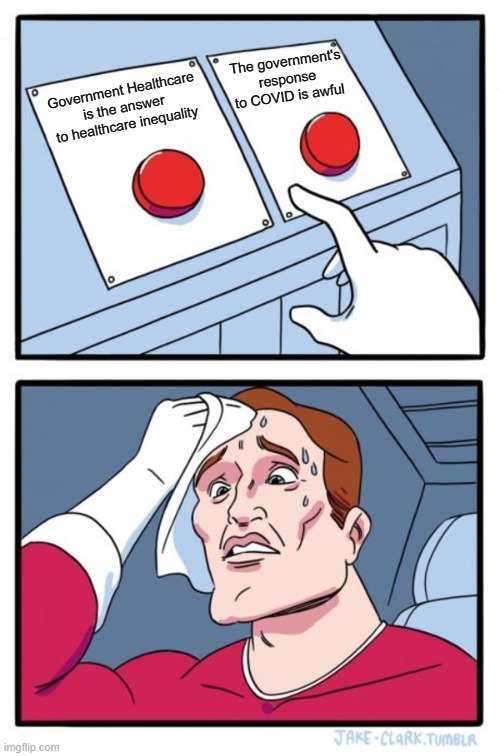
Every time when somebody is presented with an ‘either/or’ option there is a strong likelihood that the situation merits a more nuanced approach. As in ‘yes, the government was terrible at handling COVID-19’ and ‘yes, the government – as our servant, should be mandated by us, the people, to coordinate the help we need in our hour of need’.
How can we reconcile these two? Simple. Hire a better government and keep a keen eye on it!
And, if I’m not mistaken, wasn’t democracy meant to do exactly this?
Shanghai is in China. A country so far away that hourly wages are a fraction of those in Europe. Or in the US. That being the reason for so many of our manufactured goods coming from there.
United States confirms its first case in Washington state, a man who traveled to the Wuhan area.
China confirms two additional deaths, a sixty-six-year-old man and a forty-eight-year-old woman
New cases are announced in China, including in Beijing, Shenzhen, and Shanghai.
Chinese state media raises number of confirmed cases to 291 and confirms 15 medical workers in Wuhan have been diagnosed with pneumonia.
Hong Kong confirms its first case, a person in their thirties.
Taiwan confirms its first case, a woman in her fifties.
The above timeline was ‘borrowed’ – through the Internet, of course, yet another example for how close we are of eachother, from https://www.thinkglobalhealth.org/article/updated-timeline-coronavirus on 3/28/2020, 12:30 GMT Which Internet pulls us together by pooling information/data while simultaneously rips us apart by feeding us a constant stream of fake news.
We are so close together that you can send/receive almost everything (from) almost everywhere. We are so close together that everybody who has a smart phone can see their similarly equipped buddies halfway across the world.
We’re so far apart that we still have to make up our collective mind about which comes first. The Economy or the People. We’re so far apart that we haven’t figured out yet that there’s no such thing as a running economy without enough able bodied and mentally sane people. To produce, transport, distribute and buy the things we need. We’re so far apart that we haven’t yet figured out that the present number of people cannot survive – let alone maintain a decent living standard, without a running economy.
Life, in general, is a matter of calibrating the intercourse between the inside of the organism and the environment in which it tries to survive. Or thrive…
Social life, both in general and in particular, is a matter of calibrating social intercourse between the members of a society in such a manner that, statistically speaking, the individual members would find it easier to survive/thrive in the given physical environment. Simply because each surviving/thriving individual adds resilience to the social organism/network.
COVID-19 is nothing but yet another test. For now – for as long a so many of us are still in ‘surviving mode’, it doesn’t matter “how” or “why”. All that matter is ‘what’.
“What WE do about it!”
Distance ourselves from the others and allow the pandemic to cool down? Distance ourselves from the others and allow each of our individual minds to think for itself?
While keeping in mind that long term survival requires the physical presence of as many of us as possible? That our own long term well being requires us to cooperate towards that common goal? As Adam Smith taught us?
I’m sure you’ve already learned everything worth knowing about how to flatten the curve…
My post is about something else. About the need to think with our own heads. Individually. Each on their own.
More damages are caused by the manner in which we have chosen to react than by the pathogen itself.
‘Then what should we do?’
I don’t know. And I just told you to stop taking cues, blindly.
There is something I do know. Nobody can get out of something like this on its own. Alone. And another thing. If we get out of it as a herd, we’ll very soon end up in another trap.
‘Damned if you do, damned if you don’t… I really can’t figure out what you want to say….’
OK. We, humans, are social animals. We not only raise our young – all mammals do that, we raise them in a social context. We live in groups and we raise our children to belong there.
Living in a social context has consequences. From being prone to infestation to having adopted specific behaviors. Humberto Maturana is actually convinced that our very conscience – ‘our ability to observe ourselves while observing‘, a paraphrase, is a product of us leading our lives in close community.
One of these specific behaviors is the herd instinct. Whenever in a dire strait, the members of a group pay a lot more attention to the rest of the group than in the ‘peaceful moments’. This has two bright sides and one huge drawback.
All members of a group paying close attention to the others makes it easier for those who need it to get attention. And help. All members of a group paying close attention to the others makes it easier for the group to follow when one of them finds a way out. All members of a group paying too close attention to the others makes it very likely that the entire group will dash out at the first opportunity. Without checking first where they’re going to land. Nor whether there are any other opportunities.
Another specific behavior is ‘opportunism’. Some of us have figured out that by keeping their chill in a crises they are more likely to identify whatever opportunities might exist in that moment. And the deeper the crises, the bigger the opportunities.
Theoretically, these two should work like a charm. The opportunists keep their chill, look around, identify the best way out and the rest of the herd follows them to safety. A win-win situation.
Yeah… but!
Wouldn’t it be a way lot better whether all (or, at least, ‘more’) of us would keep their chill? Wouldn’t we be able to identify even more ways out? It would take a lot more time? We’d need to discuss things over, to negotiate… we’d have to exert a lot of discretion… True enough. Hence we’d need to evaluate two things. First, how urgent the dangerous situation is and, then, whether a better alternative would be worth searching.
And something else. In a ‘follow me blindly’ situation there’s no going back. The consequences for a hasty choice might be tremendous.
We might end up with more people being hurt by our blunder-some reaction than by the cause which had spooked us.
Yet another specific behavior is responsibility. Living in a social context means that, sooner rather than later, individuals are censored for their actions. By the rest of the community or, sometimes, by the stark reality. Unfortunately, sometimes entire communities are censored, by the stark reality, for not behaving responsibly. For not imposing responsibility upon their members.
For not taking enough time before choosing between flight and fight.
Let me put things into perspective. How many of you have chosen to continue smoking despite having been warned? How many of you have emptied the shelves despite being told there’s enough for everybody? Or that there will be soon enough? How many of you do not smoke in the presence of your children? Because you know it will hurt them? How many of you have taken active measures to protect the elderly? For the very same reason…
As for the economy being the main casualty of the present scourge… I’m afraid ‘the economy’, as we know it, has been dying for quite a while now. That’s why it is so susceptible to SARS CoV-2.
The Ancient Greeks had come up with the concept of ‘oeconomia’ as the art of making the ends meet. Adam Smith had described the free market as the place/environment where competing agents made it so that people – solvent demand, could satisfy their needs. Nowadays, too many of us understand/accept ‘economy’ as the art of getting rich. ‘Free’ in ‘free market’ is understood as ‘free’ to do anything you want. Because very few are asked to answer for the long term consequences of their actions.
The economy, as the manner in which we cooperate towards fulfilling our needs, has fallen prey to our gluttony. And to our nearsightedness. Greed is not good. And SARS CoV-2 is only an eye opener, not the cause for the current implosion.
Pentru ‘recenți’, ăsta era reproșul adus, imediat după Revoluția anti-comunistă din Decembrie ’89. celor întorși din exil.
Pentru mai multă exactitate, fraza nu era atât un reproș cât mai degrabă un argument. Folosit de contra-revoluționari în încercarea lor de a convinge ‘masele populare’ – care urmau să voteze ‘liber’, că ‘la vremuri noi, tot noi!’
Complicat? Confuz?
Pentru început, o idee care poate părea șocantă. ‘Poate că ‘revoluțiile’ sunt momente de cotitură și prilejuri de schimbare fundamentală, dar ‘stările de fapt’ sunt mai degrabă ‘puse în scenă’ de contra-revoluționari’. Această idee – revoluționară, de-a dreptul, a fost lansată de Ilie Bădescu. Sau, cel puțin, la el am întălnit-o eu. Profesor român de sociologie, cu vederi mai degrabă apropiate de dreapta conservatoare… lucru destul de neobișnuit pentru membrii profesiei sale. Adică atât pentru profesori cât și pentru sociologi. Dar câtă dreptate are! Cum ar putea fi descris Iliescu – Ion Iliescu, cu un alt termen? Acțiunile sale au fost cât se poate de contra-revoluționare! Rezultatul politicilor sale a fost conservarea a cât mai mult din ceea ce exista pe vremea regimului comunist. Că a fost conservat mai degrabă ce era lipsit de funcționalitate și distrus aproape tot din ceea ce funcționa, cât de cât… asta este, fiecare face ce poate.
Cert este că, precum orice (contra)revoluționar care se respectă, Iliescu – și gașca sa, au adâncit fracturile care existau deja în societate. Între țărani și orășeni, intelectuali și muncitori. politicieni și cetățeni, mase și elite, între cei care au rămas și ‘transfugi’.
Fracturi care au fost exploatate – și adâncite, în continuare, de toți ‘pescuitorii în ape tulburi’ care și-au făcut mendrele în politica dâmbovițeană din ultimele trei decenii.
Prevăd – și să dea Domnul, vorba marxistului, să mă înșel cât se poate de amarnic, că recenta epidemie va constitui prilejul unui nou puseu de învrăjbire. Între cei rămași – din multe și varii motive, ‘acasă’ și cei plecați să-și caute norocul ‘afară’.
Câteva mii dintre cei un milion și jumătate de oameni plecați – cu acte și fără acte, la muncă în Italia s-au întors acasă. Cu toate că fuseseră rugați să nu facă acest lucru. Împotriva evidenței că, în felul ăsta. își pun în pericol rudele și prietenii. Se poate spune că cei care au făcut lucrul acesta – fără a avea un motiv serios, au căzut la examenul de responsabilitate socială. Câteva mii, sau chiar zeci de mii, dintr-un milion și jumătate.
Să vedem ce vom face noi, restul. Cei rămași aici. Se vor găsi vre-unii dintre noi să le reproșeze ’emigranților’ – în grup, comportamentul unui minuscul număr dintre ei? Se vor găsi suficient de mulți dintre ‘autohtoni’ care să ‘pună botul’? Și să se transforme în portavocea ‘pescuitorilor în ape tulburi’?
Sau vom reuși să refacem atât de des invocata unitate națională? Știu că termenul a devenit desuet. Repetat până la sastisire de propaganda comunistă, „în jurul ‘marelui conducător’”, și batjocorit în continuare de propaganda naționalistă de după ’90. Și totuși! Nici o comunitate, națională sau de orice altă natură, nu poate supraviețui – și cu atât mai puțin prospera, în absența solidarității dintre membrii ei. A unei solidarități active, bazate pe respect reciproc.
Suntem în fața examenului de maturitate. De maturitate socială.



 nicichiarasa