For the outsiders, it seems like Gorbachev ‘made’ Putin. Gorbachev had destroyed the Soviet Union and, thus, had set the scene for Putin to take over.
I’m afraid things are a little more complicated than that.
Gorbachev – at that time, the best informed decision maker in the whole USSR – had been smart enough to understand that no matter what he might had tried to do, the corpse was already rotten. That everything but a major ‘upheaval’ could not accomplish anything more than prolong the agony. What he had done was nothing more than allowed the things to happen according to their nature.
I’ll make a short break here and remind you that all ‘imperium’ had eventually ended in failure. The tighter the control exercised by the ruler, the more abject the eventual failure. Check your history book.
So. Gorbachev had taken the appropriate steps. What he had done was in step with the natural flow of history.
Eltsin and Putin, on the other hand, had done the exact opposite. Eltsin had tried and Putin had succeeded in regaining the ‘reins’ of the government. The reins, the whip, ever stronger control over the barn where the whole stash of hay is deposited…
Why things had unfolded like this? Because they – Eltsin and Putin, had chosen this venue and because nobody else had been able to do anything about it.
OK, Gorbachev, Eltsin and Putin had made their respective calls in basically the same social and political environments. The economic situations were ‘somewhat’ different but this doesn’t change what I want to stress out. Each of them had done what had crossed each of their individual minds. Each had been able to do whatever each of them had wanted because… Because that particular ‘social arrangement’ allows the ruler to make whatever decisions they may see fit. Because that particular ‘social arrangement’ – dictatorship, no matter how much window-dressing had been slapped on it, allows the person who happens to clamber ‘on top’ to keep making mistakes until the whole ‘carriage’ disintegrates.
Ce facem în situatia asta? Acum, că ne-am dat seama?
Cautăm pe cineva în cârca căruia să punem vina? ‘Străinii’, ‘trădătorii’, la o adică ‘forțele de neoprit ale naturii’…
Sau ne uităm în oglinda? Și ne întrebăm:
Da’ noi am fost cu adevărat vrednici? Am făcut lucrurile alea cu pricepere? Așa cum trebuie?
Foarte mulți se întreabă care a fost – și continuă să fie, diferența dintre Romania și Cehia. Polonia. Și chiar Ungaria. Toți am avut industrie, a lor a rămas, a noastră e vraiște. Catolicismul/protestantismul, tradiția, bla-bla, bla-bla, bla-bla!
Toate astea sunt explicații. Mai mult sau mai puțin plauzibile… Dar diferența? Care e diferența? Pe ce punem degetul atunci când încercăm să înțelegem de ce lucrurile făcute de ei au rămas, în mare parte, în picioare? În timp ce ale noastre s-au cam prăbușit… prea multe dintre ele!
Până la urmă, fiecare dintre noi am avut câte un dictator care ne spunea ce să facem și câte o clasă muncitoare care punea în practică ‘indicățiile’. Și, judecând după rezultatele obținute de diaspora românească, clasa noastră muncitoare – de la strungari la ingineri, nu e cu nimic mai prejos decât celelalte clase muncitoare.
„Până la dumnezeu te mănâncă sfinții”!
Ceaușescu o fi fost mai brutal decât restul dictatorilor comuniști. Poate cu excepția lui Stalin… O fi fost și mai puțin educat. Dar nu poate fi el, singur, întreaga explicație pentru dimensiunea dezastrului! Poporul, singur, … e greu de crezut că românii au ceva defect. Atât de defect încât… Mai rămâne ‘interacțiunea’ dintre popor și dictator. Interfața…
Cât timp mai are la dispoziție un profesionist în zilele noastre?
Conform unora dintre specialiștii în marketing… mult! Foarte mult… Are atât de mult timp la dispoziție încât abia așteaptă să stoarcă manual roșii din fontă!
Bineînțeles, cu ajutorul unei scule construită dintr-un „material rezistent de înaltă calitate”!!!
There is an old Romanian saying which goes like this:
A bat is all you need to break a wagon-full of pottery.
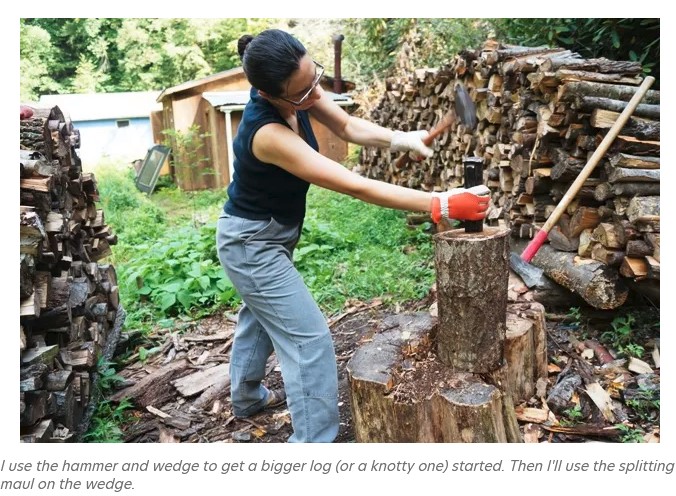
When it comes to splitting fire-wood, things are no longer that simple. Using the same blunt force approach, even if theoretically possible, would yield disappointing results. ‘Destroying’ has nothing to do with ‘re-shaping’.
Hence ‘wedge’.
On the other hand, a wedge can accomplish the same results as a bat by using a lot less brute force. Simply because the wedge concentrates more effectively, and in a more precise manner, the available energy in a very small area.
But the more important difference is the fact that using a wedge demands a way more skilled operator than a ‘mere’ bat.
‘Why don’t you cut the crap and just spill out what you have brewed in that twisted mind of yours?’
Darius, Alexander, Genghis, Napoleon, Hitler. All of them had started their campaigns in a very successful manner. Two of them had even ended their careers that way. Undefeated. The fact that all of them, including the successful ones, had been nothing but tyrants is irrelevant here.
And where is the difference?
Darius, Napoleon and Hitler had been, eventually, defeated. Each of them by a coalition.
Alexander had basically vanquished one enemy. Which was already past its prime. And Genghis had successively conquered a long list of ‘unrelated’ targets. In both cases it was more about blunt force being applied in a more or less skillful manner and nothing about splitting anything. Except for some skulls…
Each of Darius, Napoleon and Hitler had been successful at first. They had started as skillful splitters of coalitions. But each of them had been eventually bogged down. In their own respective successes…
You see, a bat remains a bat. You have to shatter a huge amount of pottery before the bat wears down. In fact, most of the times the batter goes out before the bat…
When it comes to wedging… While pottery is ‘consistent’ – equally fragile, ceteris paribus, no two logs had ever been created equal. Furthermore, even when dealing with a single log, some sections may be easily split apart while others may so ‘tough’ that it’s easier to ‘destroy’ them than to use a wedge on them. In these situations, being a skillful splitter means being able to recognize which sections should be left alone…. But which would-be emperor has ever been able to let somebody else be? Live in peace…
If they live long enough, all emperors will eventually ‘attempt’ an impossible-to-split coalition!
But when has a would-be emperor been born wise enough to recognize such a situation?!? Or every one of them, to date, have seen each coalition they happened to encounter as an opportunity? As a log waiting to be split?
Which makes me wonder… Why are would-be emperors so blind when it comes to reading history? And how about their courtiers? Also ‘blind’?
Bonus reading. An excellent piece by Cynthia Calhoun.
Social cohesion is a key concept in modern sociology. There are many definitions – most of which complement each other, and the gist of them is ‘glue’.
Do you actually perceive modern society as being glued? Bonded? Together?!?
As an engineer – MSc in Mechanical Engineering, Bucharest Politechnica University 1986 – I’m primarily interested in ‘consequences’. ‘Causes’ come second. A close second but still second. Because it’s ‘consequences’ we have to face/endure directly, not ’causes’. Whenever I feel bad, really bad, I begin by stopping everything that I was doing. To have enough time to determine the proper cause for my malaise. Identifying/dealing with causes ‘on the go’ – usually by having faith in what I already know, without realizing that it was exactly that which had led me to where I am now – is not such a good option.
Very few societies (countries, nations) continue to behave coherently. Many of them – most of them, actually, used to. Until very recently. Yet most of my ‘recent’ colleagues – B in Sociology, Bucharest University 2009, continue to discuss about ‘cohesion’.
Communities continue to be cohesive. And, as a consequence, continue to behave coherently. Why? The easiest answer is ‘by definition’. That’s how you recognize a community. A group of people who act coherently because they are ‘bound together’ by ‘social cohesion’. How that happened to be? Some other time!
Societies, on the other hand, no longer are. Nations, which used to be whole, are now ‘fractured’. Not entirely, but they certainly behave a lot less coherently than, say, 50 years ago. OK, this is not the first time that something like this had happened….
Civil wars are nothing new. None of them had been ‘civil’ though. Which makes ‘civil war‘ an oxymoron… Something so ‘impossible’ that we haven’t coined a proper word for it. Something so horrible that we speak about it using an ‘impossible’ name in order to properly mark its utter impropriety.
What is new is the amount of knowledge we currently have about the whole matter. About the inner workings of our collective psyche. How we use that knowledge, what we have understood from learning it, the manner in which we allow that information to shape our actions … that’s another matter!
Whose consequences are in the making. There are no other ‘makers’ but us. Also, there are no other people to bear the consequences of what we’re doing now.
Scholars tend to favor precision while preserving the bias towards what is perceived as being “the established order”:
“A civil war” is “an armed conflict that meets the following criteria:
Because it illustrates perfectly the prevailing trend. How things change because of us. How we – collectively, change the world around us.
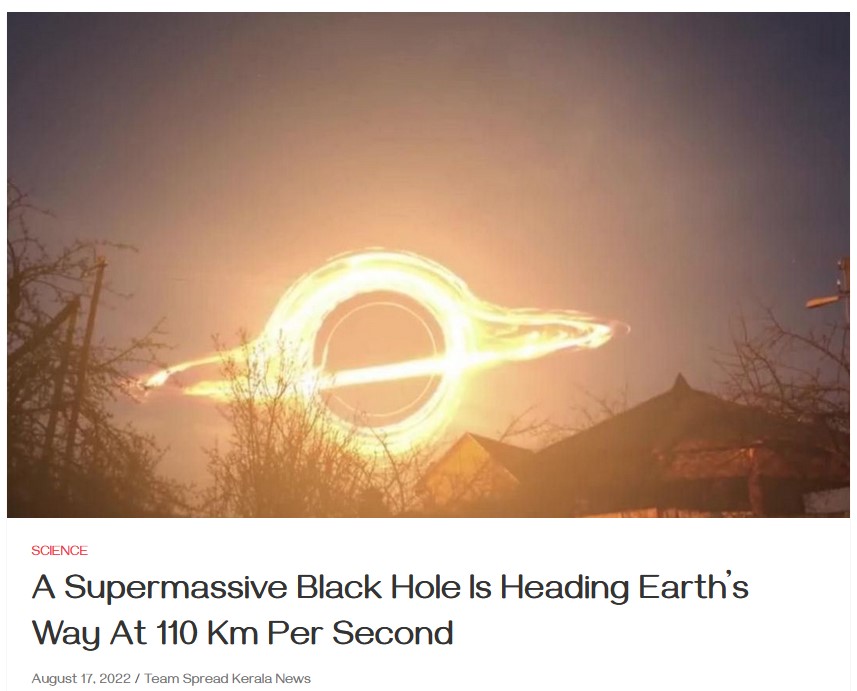
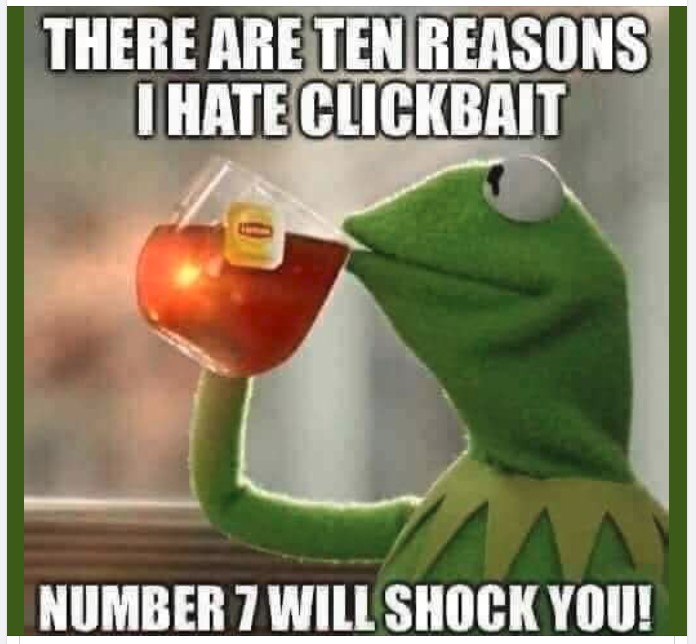
At first, click-bait had been used by ‘fraudsters’. ‘Publishers’ who used to cram completely useless information under some very ‘enticing’ titles.
Now… you may say that the information about our galaxy – the Milky Way, being on a collision course with Andromeda – our closest galactic neighbor, is also useless. Maybe… After all, that will only happen after 4 billion years had already passed… Anyway, this time, the targeted public is rather different than before. More ‘scientifically minded’… Which proves my point. That using click-bait has become a lot more acceptable.
The new normal…
Which brings me to the next question. How many of you are going to watch this?
Now I’ll attempt to offer an ‘alternative’ understanding of inflation. Not what it is – we all know that, but what it does. It will be a functionalist view of the matter. Evolutionary, even. As in ‘why do we still have inflation’. Why inflation continues to ‘survive’.
For most of our history, economy had been about solving needs. Regardless of the market being momentarily free or not, for things to go on a balance had to be struck. Demand had to be balanced by supply. Hence ‘price’.
Demand was mostly driven by the number of people needing something while supply was driven by the available natural resources AND by our ability to transform those resources into actual commodities. For example, the price of wheat was influenced by the number of people living in a certain area, by the amount of arable land AND by the agricultural technology used at any given time. OK, the weather also had an impact but it was mitigated by the technology.
‘But how about imports? After all, ‘international’ grain trade is three millennia old. Ancient Athenian ships had been distributing ‘Ukrainian’ wheat all around the Aegean sea since before the Trojan war…’
Yeah, and how about emigration… the Irish had gone to America to escape famine, didn’t they? We’ll get there. ‘Baby steps’, otherwise we may trip!
When population increased, they tried to add more arable land. If they could. If not – and/or in parallel, they tried to increase yield. But the process was not linear. They could not ‘fine tune’ the increase of yield – by either method, exactly to the population growth. Hence the variation of price. Hence the ‘secondary mitigation measures’ – import/export and emigration.
‘OK, I understand. But prices can go both ways. Up AND down! Inflation only goes up…’
You’re speaking about individual prices. Which, indeed, go both ways. And, yes again, inflation goes – in medium to longer time frames, only up!
You see, we have ‘price adjustments’ and (compounded) inflation.
Price adjustment is the mechanism through which the market – free or otherwise, balances the market for individual ‘items’. Encourages the consumption of wheat when the price is low and encourages the farmers to plant more wheat when the prices are high. Same thing for, say, shoe-shinning! Meanwhile, (compounded) inflation is the mechanism through which the market – again, free or otherwise, balances itself.
‘Huh?!?’ For example, if wheat becomes too expensive, consumers (and suppliers) might decide to replace it with something else. Rice. Or potatoes. Or, when grain prices become prohibitively low, farmers might abandon their plows and buy, say, shoe-shining tools.
‘But if rice – or anything else – would yield a lot more than wheat per the available arable land, the over all prices for food – and everything else, should go down, right? Not up…’
Well… in a rational world… maybe. That’s another long discussion. The short version being that we usually wait for too long before making the necessary changes. Which is not necessarily wrong but that’s yet another long discussion. Only hindsight is 20/20…
Let’s say it would be possible to grow wheat and rice on the same plot of land without making any technological adjustments. If the growers would know what kind of weather would come in the next season, they would be able to plant the right crop. But they don’t. And it takes time for people to grasp the weather patterns have changed – and adjust the pertinent technology. On top of that, adjusting technology requires money. Investment. Fresh ‘inputs’.
And who would do such a thing – plowing money into the ground, literally – without expecting an increased return? Something ‘extra’ for their effort?
In economic terms, nobody invests their money in a deflationary environment. Why would anybody do such a thing? Buy now when waiting till ‘tomorrow’ would make it possible to buy more for the same money?!?
That’s why inflation goes up. Period. Cause otherwise the whole economy would become obsolete. We’d all be waiting for ‘tomorrow’.
NB. This was a gross ‘simplification’. A bare sketch. Even in a deflationary environment, some prices do go up. For years overall prices have gone down – because of our increased technological prowess – while housing, education, healthcare and insurance have become more and more expensive. ‘Tilting’ the whole market. More about this in the next post on the subject.
Just finished reading a very interesting article on BBC.com/future. Why do we die. Authored by William Park. Just click on the picture above and read it.
Despite the “we” in the title, it’s a compendium of plausible explanations for why most individual organisms eventually die. And an interesting row of examples of species comprised of individuals which live practically for ever.
Here’s another explanation.
Charles Darwin’s Evolution was about ‘species’. Not about individuals!
Very few species have been able to survive without ‘killing’ their individual ‘members’. Hydra, the species of fresh water jellyfish pictured above, is one of those species. Each individual hydra is able to survive practically everything but total annihilation. Cut it into pieces and each piece would regenerate the rest of the organism. Allow a big enough (?!?) piece of it to survive while attempting to eat a hydra… and you may be able to eat it again! If you live long enough for the encounter to happen again…
Since when have we been observing this species? A hundred years? Two hundred? Have we had preserved an individual hydra since the start of our observations? Is is still alive? In the ‘original form’? And even if ‘yes’, so what? That would only prove that an individual hydra is able to survive for more than, say, two hundred years. Not that it would live forever…. Again, being able to regenerate a portion of an organism doesn’t mean the whole organism would be able to live indefinitely. As in live forever. Never die… The way I see it, being able to regenerate the rest of the organism is only yet another form of ‘reproduction’, not the ability to live forever. Bacteria use the very same mechanism. We the ones who use a different name for it, under the pretext that bacteria are unicellular organisms…
Now, the fact that there are so few species whose individual members are able to regenerate parts of their organisms does tell us something. And the fact that it’s only the ‘simply organized’ species – among the animal kingdom, at least – which share this ability must surely mean something. Evolutionary wise!
We need to eat. At some point, we discovered that by cooking it we got more out of the food we had at our disposal. Then we learned to cook tastier and tastier meals.
Because we’ve some how convinced ourselves that being happy trumps being alive.
Evolutively speaking, pleasure is a ‘heads up’. It tells us that we do ‘the right thing’. That the food we eat is suitable for us. Nourishing. Evolutively speaking, happiness is a heads up. That we’re on the right track. That we’re doing nothing to jeopardize our survival.
Those ‘heads – up’ were valid. Once… And they still are. When ‘used with discretion’.
The problem being that we’re currently harnessing the horse behind the cart.
We’re no longer pursuing life as a wholesome experience. We just want to be happy! We no longer eat to remain alive. We just want to have a better experience! An even better experience than the previous one…
Should we return to the Stone Age? When so many of us died of hunger? Of illness? Should we give up the ‘pursuit of happiness’ as a legitimate goal?!?
How about being happy while pursuing a meaningful life?








 nicichiarasa