Shortly after becoming aware of his own awareness Man figured out that, from then on, his real job will be to attach meaning to everything that was, is and will be happening around him.

The very same moment He freaked out – because of the enormous responsibility that had just fallen upon his head – and invented god to help Him.

There is, of course, no way of knowing for certain whether a real God had interfered, in any way, shape or form, in our evolution.
The fact that so many of us think the world can be explained ‘through itself’ – that there is enough information available to construct a plausible narrative about what went on since the Big Bang – is the real proof of nothing more but the huge cockiness harbored by our inflated egos.
OK, nothing more but a long held tradition suggests that God exists for real only this is no factual demonstration about the nonexistence of God.

On the contrary. The very fact that the tradition held for so long means that God had a real contribution to our life.

It doesn’t really matter whether that God was real or contrived by us.

And the fact that so many of us use their respective gods as pretexts to commit heinous acts sends no other message than that those who commit such crimes have no real understanding about what God really means.

In 2014 electoratul roman s-a dus la vot insufletit, in mare masura, de nevoia de a scapa de coruptie. Si uite asa a fost ales Iohannis. Ca sa nu iasa Ponta – despre care se vehiculau tot felul de informatii, inclusiv cea despre teza sa de doctorat – si nu atat pentru ca lumea ar fi avut vreo parere extraordinar de buna despre Iohannis.

In 2015 o multime furioasa l-a alungat  din Palatul Victoriei pe acelasi Ponta – ramas prim ministru cu toate ca pierduse alegerile,  sub sloganul “Coruptia Ucide!”. Nemultumirea populara, care ajunsese la un nivel greu de gestionat, daduse in foc din cauza tragediei de la Colectiv. De fapt aceasta tragedie fusese un fel de pretext, daca ea nu ar fi avut loc nemultumirea generalizata si-ar fi gasit alt motiv pentru a rabufni.

In iunie 2016 alegerile locale consemneaza patru premiere pentru Romania:

O femeie este aleasa ca primar al capitalei.
PSD-ul castiga toate primariile din Bucuresti.
Interesul alegatorilor scade dramatic, mai ales in randul tinerilor si in special in capitala.
Mai multi candidati condamnati sau anchetati pentru coruptie sunt realesi in functii. Printre ei se numara Catalin Chereches, aflat in arest preventiv, care a fost votat de 70.28% dintre baimarenii care au iesit la urne.

Mircea Toplean concluzioneaza (avant la lettre), in Blogary.ro, ca Romania sufera de o prea mare toleranta la coruptie.
Cred ca familiarizarea cu practica indelungata a coruptiei ne-a facut pe noi romanii extrem de toleranti la ideea de coruptie. Suntem aproape incapabili sa ne indignam sincer in fata coruptilor (dosare penale ale politicienilor, doctorate plagiate ale unor oameni iubiti si votati de tot poporul etc.). Cand mergem la spital sau avem de-a face cu vreun hop administrativ, dam noi insine spaga.
Adrian Papahagi, si mai realist (?!?), ne spune verde-n-fata: “Prefer ca România să fie condusă de pişicheri corupţi. Vanghelie e de o mie de ori preferabil lui Mungiu: incultura lor esentiala este aceeasi, doar gradul de alfabetizare difera. Vanghelie macar e mai tolerant si mai simpatic.

Acuma, daca e s-o spunem pe-a dreapta, toate astea au fost prevestite de excelentul eseu “Istoria si Mitologia Exceptionalismului Coruptiei Romanesti”, prezentat de Adrian Severin la conferinta organizata de Fundatia Europeana Nicolae Titulescu pe 26 noiembrie 2011:

“Sancţionată atât de regula morală cât şi de drept, corupţia nu are o definiţie legală ci numai aplicaţii legale (mită, trafic de influenţă, abuz în serviciu, înşelăciune etc.). Cum dreptul (în special cel penal) necesită precizie, lipsa unei definiţii legale a corupţiei ca atare, pune problema relaţiei între drept şi morală.”

Pai?

Intelectualii, in afara ca nu se inteleg cu privire la ‘relatia intre drept si morala’, se gratuleaza intre ei folosind termeni de tipul “monstru de aroganta, intoleranta si ideologie tampa“.
O parte dintre politicieni fura iar alta parte declara sus si tare ca ‘nu se mai poate cu coruptia asta’: ”Bucureştenii au vorbit şi au vorbit clar ! Noi, PNL, suntem de vină, nu alţii! Una am spus şi alta am făcut! Noi am iniţiat criteriile de integritate şi am sfârşit prin a defila cu persoane «penale», noi am susţinut cotele de gen şi am fost primii care am renunţat la ele, noi am stabilit reguli pentru desemnarea candidaţilor, dar am luat deciziile în funcţie de interesele şi sforile trase de unii şi de alţii. NOI nu am fost consecvenţi!
La randul ei, o mare parte din presa trateaza fenomenul in termeni de ‘coruptia lor’, ca si cum rolul ei ar fi mai degraba sa apere/promoveze interese de partid si nu sa informeze, cat se poate de onest, pe Maria Sa Cetateanul. Ba, mai mult, atunci cand este anchetat cineva din tabara ‘proprie’, de multe ori anchetatorii insisi ajung sa fie acuzati ca ar avea motivatii politice.

Nu ca nu ar fi si unii care or avea.

Dar asa cum in cazul acuzatilor functioneaza, sau mai bine spus ar trebui sa functioneze, prezumtia de nevinovatie, tot asa ar trebui sa functioneze si avertismentul “Fiat justitia, ruat caelum”.

In sensul sau mai larg.
‘Aveti grija sa se faca cu adevarat dreptate pentru ca altfel vi se va prabusi cerul in cap’.

Iar asta e valabil pentru noi toti. Cata vreme coruptia ‘noastra’ va fi socotita acceptabila/scuzabila si doar coruptia ‘lor’ va fi aratata vehement cu degetul nu vom reusi sa urnim carul din loc.

8d99cf9b636a698e5bb1d4c6644dcc84

The moment we try to appraise the value of human life, in monetary terms or in any other way, is the threshold to man made hell.
By simply accepting the notion of collateral damage – that the ‘ultimate goal’ might be considered important enough to justify damage suffered by innocents – we enter the realm of ‘fantasy world’.
The place where wishes trump reality and where desires are considered – by those who entertain them, of course – more important than anything else.
In this realm people cannot get along with each-other, simply because they cannot find any common ground. Whenever a group of people accepts the notion that one life can be considered more important than any another – that individual human lives can be ‘filed’ according to their individual values, sooner or later its members will start fighting each others for preeminence.
‘Top dog’ position becomes not only desirable but also the only thing a ‘rational’ individual will ever pursue. Simply because no other position comes even close and because, by agreeing that human life can be appraised, the members of that group have proclaimed that ‘social life’ is more about competition than about cooperation.
The problem with ‘no holds barred’ competitions being that some of the spectators think they are fun to watch while those in the pit discover very quickly that survival is almost impossible but for the briefest lengths of time.
zahar ulei

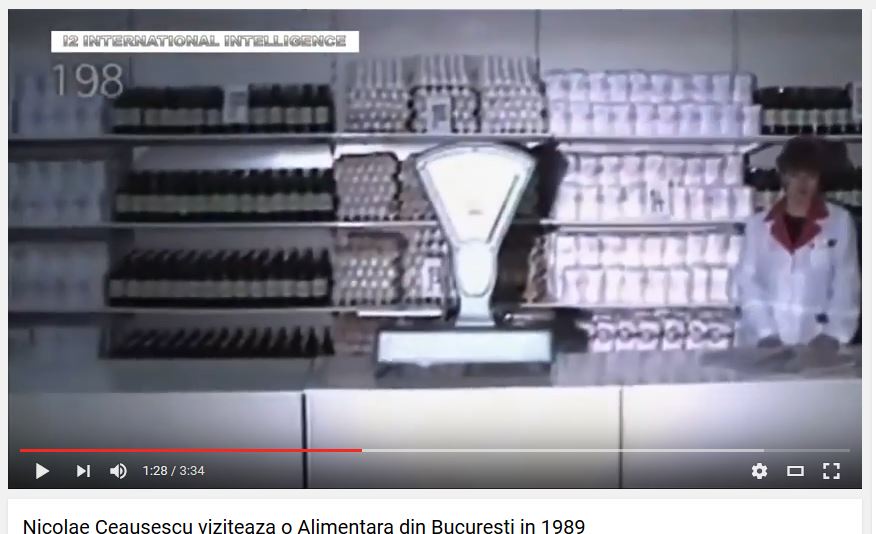
Cineva a pus clipul de mai sus pe Youtube.

Chestia asta îmi aduce aminte de bancul ăla cu ferma de porci. Cică Ceașcă, în vizită la o fermă de scroafe gestante, vede una deosebit de ‘umflată’. Și, pentru că ăsta-i era stilul, ‘rostește’: ‘asta sigur face doisprezece purcei’.
Evident, toată asistența își notează scrupulos: ‘scroafa din ‘celula’ F19 trebuie sa fete macar 12 pui’. Peste cateva zile ii vine sorocul. Și, ce să vezi, ies doar 2.
Îngrijitorul – îngrijorat, evident – raportează șefului de hală: ‘A fătat. 4.’
Acesta, îngrijorat la rândul lui, către directorul fermei: ‘Tovarașe director, avem o problemă. Scroafa aia, știți dumneavoastră care, a fătat. Doar 7!’.
Directorul fermei către secretarul de partid pe județ: ‘Toa’r’șe secretar, avem o problema. Scroafa ‘aia’ a făcut doar 9 pui.’
Secretarul de partid către ministrul agriculturii: ’10’.
Ministrul agriculturii către secretarul cu agricultura din CC al PCR: ’11’.
La partid se adună o celulă de criză. ‘Ce dracu facem cu nebunu’? Dacă îi spunem ăstuia că scroafa aia despre care a spus el că o să fete 12 purcei a facut doar 11 o să ne reproșeze că ne batem joc de el!’.
Ion Dincă, zis Teleagă, ia problema în mână și își asumă responsabilitatea: ‘Las că rezolv eu!’
Intra la cabinetul 1 și: ‘Tovarășe Secretar General, permiteți să raportez!’
‘Zi bă!’
‘În urmă cu două săptamâni, în cursul vizitei de lucru pe care ați efectuat-o la ferma de scroafe gestante din județul… ați pronosticat că scroafa din celula F19 va da naștere la 12 purcei. Raportez cu mândrie patriotică că a facut 13.’
‘Bine, foarte bine. Doi să fie trimiși la export iar restul să fie alocați pentru consumul intern.’

donald-trump-short-fingered-vulgarian-fingers-bruce-handy-ss13
When trying to understand a rather complicated phenomenon one has two options.
Amass as much pertinent information as possible and then try to put it together or watch out for questions posed and opinions offered by others on the same subject. And, then again, put them together in your own way, of course.
A friend of mine posted this on FB:
“Trump’s trick is that he has never run on substance, yet his opponents and detractors attempt to attack the substance of how he is wrong. Because there is no substance, they cannot help but miss.”
See what I mean? Why strain your own head when there are people who already have the answer to your question?
All that is left for me to do is elaborate a little.
Well, as the man said, it is hard to be a ‘Trump detractor’ since there is nothing there to detract in the first place!
As for the ‘Trump’s opponents’… here again it’s a matter of understanding the mechanics of human interaction.
This whole thing started when Trump, the ‘perfect opportunist’, noticed that the ‘anti-Establishment’ sentiment was strong enough to present a ‘workable opportunity’.
Which he gleefully grabbed. And started to position himself as the ‘quintessential anti-Establishment candidate’.
As a matter of fact this is also the explanation for why he joined the Republican camp… after lavishing so much money on Clinton, for instance.

Among the Republicans the anti-Establishment feeling is stronger than among the Democrats – Sanders doesn’t seem able to uproot Clinton.
Now I have to remind you what most Trump supporters were saying a year ago:
‘I don’t like him, as a person, but by supporting him I’m sending a strong message to the Establishment’.
What happened during the last 10 months or so – that so many people have started to ‘like him as a person’ – is very simple to understand. Trump was skillful enough to position himself effectively while those who disliked him started to ‘oppose’ him. And, by doing so, gave him ‘substance’.
You see, engaging a conversation – no matter how ‘heated’ – with somebody means acknowledging his presence. Speaking to somebody means lending him some of your own legitimacy.
The second mistake made by Trump’s opponents was ‘calling names’ to those who spoke in his favor. And, just by doing so, transformed those who at first only wanted to vent their frustration into full-fledged supporters.
What we have now is a perfect example of a man made ‘perfect storm’.
A ‘loose cannon’ candidate whose supporters are experiencing a double layered frustration. A basic one fueled by the bleak economic perspectives faced by the entire middle class which is exacerbated by the disdain so oftenly felt by Trump’s supporters whenever they express their political opinion.
Hopefully Trump will eventually loose. But the ‘perfect storm’ will remain and it will have to be treated with utmost care.
The point being that we should not forget who brought us here.
The Establishment.
Reason tells us that in its own interest the Establishment – who has the most to loose – would be the first to look for a solution.
As we’ve just seen, the Republican half has failed miserably and the Democratic one is following in their footsteps. Judging by the quality of the candidates, of course.
Could this be the reason behind Kim’s endorsement for Trump?

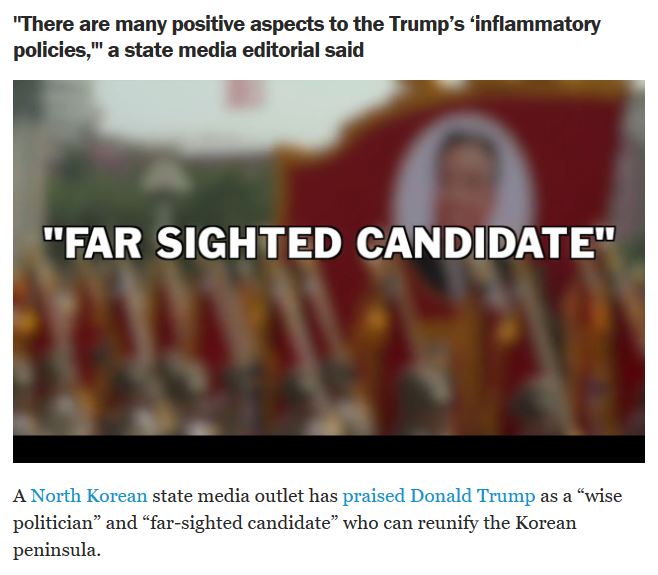
trump, far sighted politician

North Korea supports Trump over “Dull” Hillary

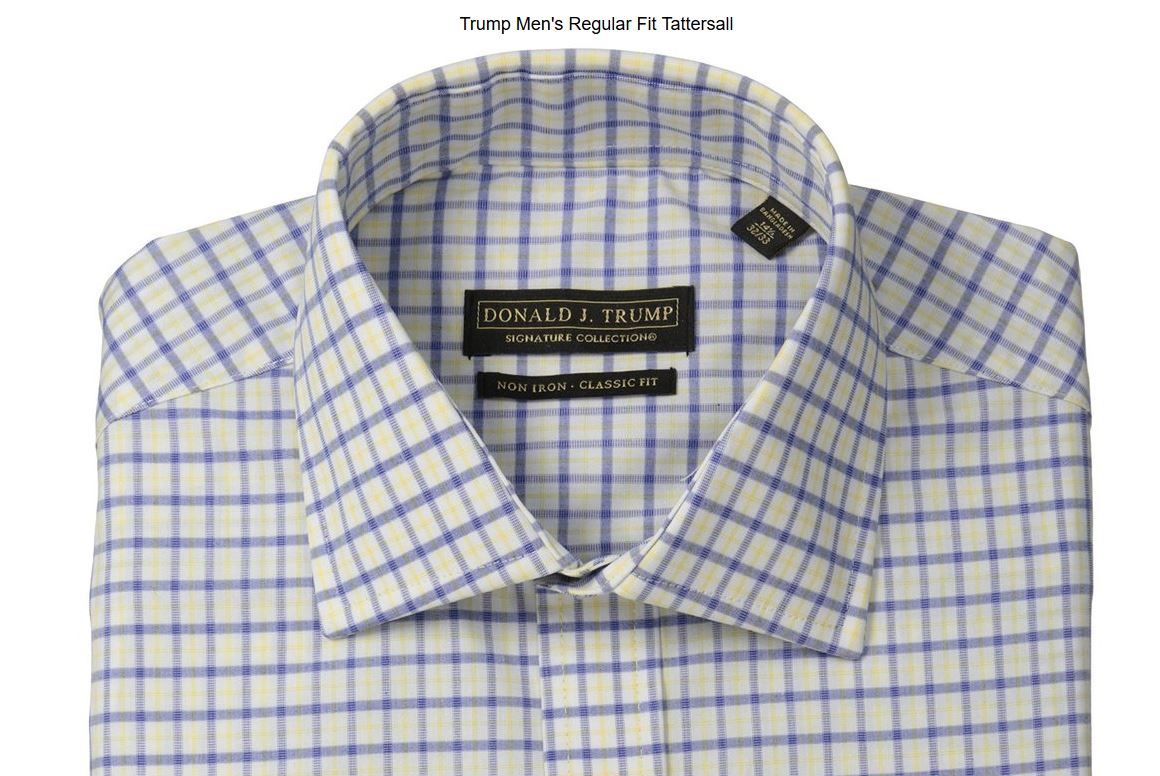
Trump's shirts


Did you know that Trump was selling shirts over the Internet?

Yes, Trump, the guy that so many Americans are going to vote for simply because they are convinced he will completely change the way America works.

Why?
Because he says so.
He presented himself as the quintessential anti-establishment candidate and they bought it.

OK, something has to be changed so I fully understand their exasperation with the current state of the Union.
But is he “the” guy?

And since deeds are, or should be, more convincing than words, lets see if he is as anti-system as he pretends to be.

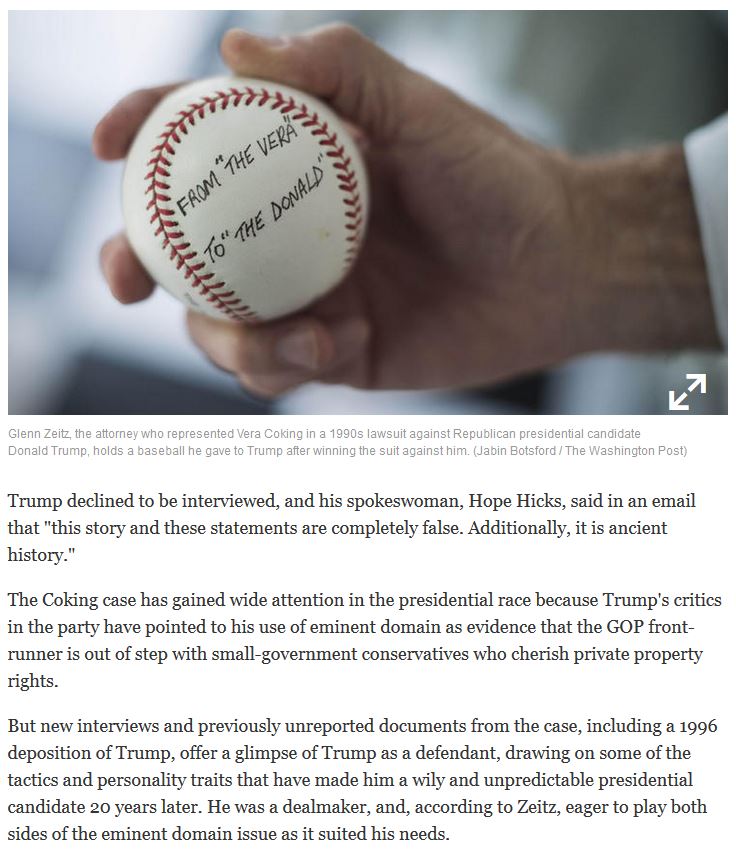
Well… at some point he did try to use the power of the government in order to con an old lady out of her house, didn’t he?
from the vera to the Donald

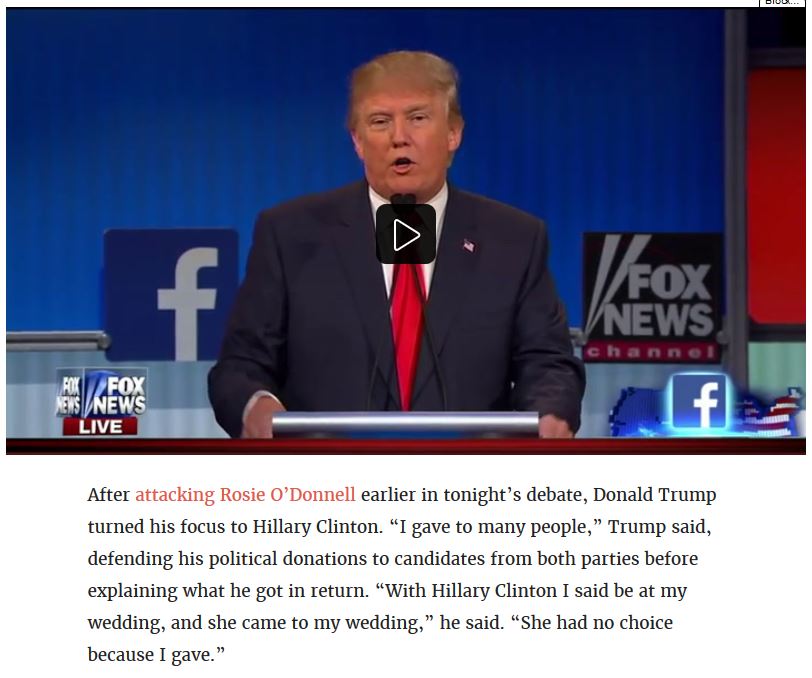
And he did ‘bribe’ Senator Clinton to come to his wedding. Simply because he had the money…

clinton came because I gave


And now this.
The way I see it the real problem is not the fact that he makes his shirts in Bangladesh in spite of being vocal about the need to preserve American manufacturing jobs. After all it’s his job to conduct his business as he sees fit. And if he is comfortable with doing one thing while saying the complete opposite…. that’s his job too.

But how come so many people take his words for real, without at least perfunctorily checking the facts?
How come so many are they so convinced he is ‘the right guy’ when he sells himself so cheap?

Oh, you didn’t know you could buy a “Donald J Trump Signature Collection” shirt for as little as $12.56!
Why is he doing this? Because he is so anti-Establishment that he doesn’t care about money?
You’re already laughing, right?

Or he simply does it because he can get away with it!
Because we don’t really care. Not anymore…

As one of my friends said about Hillary Clinton, Trump’s ‘Democratic’ counterpart:
” Hard to fathom how someone so openly, unapologetically corrupt can be the front runner. I think that says a lot about what we really expect from our politicians.”

I’m afraid she’s absolutely right.
We are the real culprits here.
‘They’ are simply doing what they are good at, grabbing gleefully whatever opportunities are within their reach, but we are the ones providing those opportunities.

Not only in America.

The New York Times, from the other side of the Atlantic Ocean, has found out that Calin Popescu Tariceanu, currently the second most important political persona in Romania, as the Speaker of the Senate, is being investigated “for giving false testimony to aid suspects in a wider real estate graft case.

Prosecutors said Tariceanu made untrue statements under oath in April when he was called to testify in an investigation in which …

OK.
So he isn’t investigated for anything he might have done then but for something he had (not?!?) recently said about the whole thing, now.

“Tariceanu denied wrongdoing and fired back at magistrates, saying “we live in a republic of prosecutors based on the politics of dossiers and handcuffs”.”

At this point it is very important to remember that Mr. Tariceanu has been at the fore front of the Romanian political stage for the last 25 years – for instance he was the Prime Minister from 2004 to 2008, and to mention that he is only one amongst  the many Romanian politicians being criminally investigated who deplore the growing importance of the role recently assumed by the Romanian prosecutors.

I’m not going to discuss here the individual merits of each of the corruption cases that have been investigated recently. It is very possible that some of them were started, or closed, because ‘somebody’ had made specific ‘recommendations’. The prosecutors are human beings themselves.

But isn’t it rather strange that so many of the people who have actually honed the finest inner wheels of the contemporary Romanian state are now complaining about the way it works?

During the last 26 years this rather small group of people had countless opportunities to put things on the right track.
It seems that they didn’t succeed. For various reasons.
But it also seems that some of them, at least, had ‘ulterior motives’ for not succeeding.

Some of which are now being unearthed by the prosecutors.

The point being that we shouldn’t become mesmerized by the process.

Let the prosecutors do their job. Under close supervision, of course.
Learn the appropriate lessons.
“Do not steal” is important not so much because it is one of the Ten Commandments but because no society that has condoned theft on a large scale has ever thrived for long long enough to really enjoy the spoils.

Coming back to the Romanian political class – and to the people itself, everybody eventually gets to sleep in the bed each of us has prepared for itself.

If corruption wasn’t so widespread as it is today the prosecutors wouldn’t have been able to launch so many investigations.
If corruption wasn’t so widespread as it is today the ordinary people would have undoubtedly enjoyed a way better life. Maybe one close enough to the point where they wouldn’t have minded so much ‘a little’ corruption.

I have to end this by quoting Traian Basescu, the former President, also a very controversial figure:

“Corruption rests with two sides. I do not want to change responsibility, but it must be shared and assumed. A corrupt civil servant cannot be corrupt if they do not have a partner to put money into their hands, a ministry cannot pay by 50 percent more if there is not a consultant to sustain what the constructor says: ?Yes, we’ll raise the bill’. The ministry finds it impossible to act, because anyone wins in court if one also has the consultant’s advice that they should increase the public works price by 50 percent’, Basescu said at the launch of the Report on the Competitiveness of Romania, an event organised by the Romanian-based American Chamber of Commerce.

The President went on: ‘I believe we must, first and foremost, leave hypocrisy behind. The state alone cannot be corrupt, it has a partner, if there is corruption. The state alone cannot be non-performing, it has a partner. Let us together assume what we have to do. The easiest thing for the private sector to do is to criticise the state and the easiest thing for the state to do is to show indifference to the problems facing the business environment. I believe we are not in such a situation. We all want to have performance, to be competitive.”

Those of you who are interested in learning more about how we got here might start by reading this report by Oxford Business Group.

Clinton, trump, unpopular

Not so long ago I was asking myself “What’s going on there?“.

Now, that my nightmare is very close to becoming reality – both major American parties are about to nominate unpopular candidates for the 2016 presidential elections, I’m wondering about the current meaning attached to the very concept of ‘politics’.

For an impersonal and very theoretically minded observer ‘politics’ would seem to describe the job of those who make it possible for the rest of us to lead our lives in an orderly fashion.

I believe you are familiar with what a ‘super’ does. ‘Super’ as in ‘superintendent’ for a residential building.
“The super must be conversant with every mechanical and technical system in the building, work diplomatically to solve problems in the building, be responsive to residents and be able to work as a team member with the board and the managing agent.”
Not exactly ‘rocket science’ but a very important role. So important that when poorly played the whole thing might very quickly deteriorate beyond repair.

After all, ‘the government’ should do nothing more, and nothing else, but act as a nationwide ‘superintended’ while ‘politics’ should be nothing more, and nothing less, than what we, all the inhabitants of a country, do in order to make sure that the government, our government, does its job. Properly.
Especially when living in one of the so called ‘democratic countries’.

Then how come I’ve got a growing feeling that ‘politics’ have become just another set of means towards specific goals? Goals that are more often than not detrimental to the society, as a whole?

PS.
This is for those of you who are not familiar with how this site works.
By clicking on the pictures, or the highlighted text, you are automatically linked to the sources of the quoted material. Sometimes they might be interesting, to some of you.

Islam Europe

I’ve just found this cartoon in my e-mail.
It was captioned: “The Winning cartoon in an organized competition.”

I instantly remembered some very wise words I’ve read long time ago:

Do not be deceived: God cannot be mocked. A man reaps what he sows.
Whoever sows to please their flesh, from the flesh will reap destruction; whoever sows to please the Spirit, from the Spirit will reap eternal life.
Let us not become weary in doing good, for at the proper time we will reap a harvest if we do not give up.
Therefore, as we have opportunity, let us do good to all people, especially to those who belong to the family of believers.”

“Beware! Whoever is cruel and hard on a non-Muslim minority, or curtails their rights, or burdens them with more than they can bear, or takes anything from them against their free will, I (Prophet Muhammad) will complain against that person on the Day of Judgment.”

All religious teachings, all of them, maintain that ‘a man reaps what he sows’. It doesn’t really matter if the ‘result’ will come as a sentence delivered by a divine judge or if it will be just another bead in the string representing the life story of an individual.
I, for one, don’t see much difference between ‘fate’ and ‘karma’.

Then how come we keep acting as if we’ve never been warned?

“In my two visits to Auschwitz, the Nazi concentration camp in Poland, I learned that holocausts and genocides do not occur in a vacuum. Rather, there is almost always a vicious campaign of incitement directed against the target group preceding them. What is troubling today, with the recent uptick in anti-Semitic and Islamophobic incidents worldwide, is that extremists and zealots are not the only ones inciting their followers. In a number of Arab countries, Muslim children are taught ideas that distort the true meaning of the Quran and hadith too.”

o-gay-prophet-570

Love, more powerful than hate.

This is probably the biggest bone of contention between the conventional sides of the political spectrum.

The conventional right claims that we’d be a lot happier with a considerably smaller government while the conventional left would, if left to its own devices, transform the government into a huge, and ‘smothering’, nanny.

Is there any reasonable way of determining the right size of the government or we should just try to reach a compromise between the warring factions?

I don’t think I’m smart enough to determine how big a government should be.
I also dislike the very concept of compromise – if I have to settle something I prefer to negotiate instead of compromising.
And that’s is why I’d rather approach this problem from another angle.

What KIND of government!

Let me take you on a short, and very condensed, historical ride.

Basically humankind has used, somewhat alternatively, two systems of running things.

Authoritarianism and democracy.

Specifics do not matter much. If decision making was centralized it was authoritarianism, if decisions were made by those directly affected by the results of those decisions being put in practice it was democracy.

What’s really important here is the fact that those two different manners of decision making generated different forms of government.

Authoritarian regimes employed ‘administrative’ (meaning ‘directorial’) forms of government while democracies were served by ‘referential’ forms of government.
And it was only natural that things happened this way.
Authoritarian regimes need nothing more than a ‘transmission belt’ to convey orders from the very top to the base of the social pyramid while democracies need a team of referees to keep the playing field level and nothing more than that.

Of course that I’m presenting a very simple sketch here. Things are more complicated than that.

And there are at least two main complications. ‘Human greed’ and ‘international relations’.

It doesn’t really matter if that greed is for money of for power. Whenever greedy individuals are allowed to enter the government and to cater for their ‘special needs’ things are headed south. And the only difference between this situation occurring in a democracy or under an authoritarian regime is that the latter has no natural defense against this kind of ‘mishaps’.

‘International relations’ play a less obvious role. The main job a government has to fulfill is to keep the state together. If a hypothetical state would exist in a vacuum – and have no neighbors, things would be a lot simpler. Since in the real world states do have neighbors the governments have to organize armies, secret services, engage in arms races…
Also in the real world states are very different. In size, for instance.

For all these reasons it’s very hard to ‘calculate’ the ‘proper’ size of a government.

Specially so without defining clearly what’s expected from that government.
An authoritarian regime would ask the government to preserve the privileges of those at the helm of the regime while a truly democratic minded people would expect their government to safeguard, using legitimate means, the independence of their country on the international level while simultaneously making sure that the individual members of that people enjoy enough personal autonomy so that their political regime remains democratic.

After those expectations are clearly formulated, the size of the government will simply be a consequence…