
1886

De la Amarandei Lucian, DP, https://ro.wikipedia.org/w/index.php?curid=327965
2016
Vom reusi oare sa urmam exemplul stramosilor nostri?

1886
De la Amarandei Lucian, DP, https://ro.wikipedia.org/w/index.php?curid=327965
2016
Vom reusi oare sa urmam exemplul stramosilor nostri?

For me, the most interesting side of this phenomenon being that the ‘reaction’ is innate in the nature of things. None of the two objects that interact need to do anything in order for Newton’s law to be obeyed.

Google Paramoecium – the unicelular organism depicted here, and you’ll get a lot of pictures resembling this one. None of them even mentions ‘membrane’. That’s an eloquent enough proof about the fact that membranes are, unreasonably, taken for granted.
The next level of this is the ‘membrane’. That thing that separates the ‘inside’ of an living organism from its ‘outside’ and which not only distinguishes between these two spaces but also controls whatever enters and exists the organism – as long as all goes in a regular manner. If something irregular happens to that particular organism its membrane might be overpowered and the organism dies.
At this level also things happen according to some innate laws, without outside intervention and without any need for deliberation on the part of the organism itself. Even when we speak of evolved animals and even with us, humans, most of the inner workings that take place inside our bodies happen ‘under the radar’.
And it seems that what we call ‘deliberation’ isn’t that important after all. Newton’s laws have organized the Universe ever since mass has been around while membranes have made life possible on Earth for the last billion years or so.
The third level, what we call human conscience, has started to develop some 200,000 years ago. Approximately, of course. Humberto Maturana has proposed a very interesting explanation about how it came to be and you can read about it here. For what I have in mind, it is enough for me to mention that Maturana says that we are not only conscious but also aware of our consciousness.
And it is this awareness that has the most important consequences.
I started this post by quoting Newton’s third law of motion. I’ll go back to him and remind you of the first two:
“An object either remains at rest or continues to move at a constant velocity, unless acted upon by a net force” Meaning that things have a tendency to keep doing whatever they are doing at any given moment until something from outside messes with them and
The vector sum of the forces F on an object is equal to the mass m of that object multiplied by the acceleration vector a of the object: F = ma Meaning that the end result of an interaction is not commensurate only with the amount of energy spent during that interaction but also with the manner in which that interaction has taken place. The ensuing ‘vector sum of the forces on an object’ depends essentially on two things. How big are the individual forces at play and in which direction are each of them pulling at the object.
I’ve been speaking about ‘three levels’.
At the first two levels the amount of force that was messing with our objects and its orientation relative to the objects (Vector sum) depends only on ‘chance’. The objects themselves – who have no say on the matter, the interactions following blindly some innate rules – can not influence in any way the outcome of the interaction. The results have already been settled at the moment when ‘chance’ had met with the individual characteristics of each object involved in the interaction.
The third level, though, has a very interesting characteristic. At least one of the objects involved – the human individual – is, at least somewhat, aware of its own existence and of its ability to interfere in the development of the interaction. To influence the outcome of interactions that take place within his reach.
This very awareness, how ever partial, explains why most individuals do their best to survive: they are aware of their mortal nature so they do everything in their power to stay alive, in fact to respect Newton’s first law.
Also it is the same awareness that is responsible for our ‘rational’ behaviour. We have discovered that the results depend heavily not only on the amount of effort spent on the occasion but also on how that effort was applied to the task. Hence the conscientious manner in which we try to get as much bang for our buck.
And the same awareness makes me wonder how come so few people understand the difference between ‘reactive’ and ‘constructive’.
Why so many people, when confronted by a new situation, tend not only to fall back on the ‘tried and trusted’ but also to defend them as ‘the only valid option’. Not taking into account that it is the very novelty of the entire situation that is the most challenging aspect of the whole thing.
So instead of putting all the cards on the table in an attempt to find out a mutually acceptable solution for all – or at least for as many as possible – participants in a given interaction tend to jealously keep their cards close to their chests, negating any chance of cooperation.

The Opposable Mind by Roger Martin, 2007 A good lesson about how to overcome this tendency.

Pe 22 Aprilie 2016 Liviu Dragnea, presedinte al PSD, a fost condamnat, definitiv, pentru frauda electorala. Este, in continuare, presedinte al partidului sau.
Pe 6 Iulie Curtea Constitutionala a determinat ca o lege aflata in vigoare din 2004, 393/2004 cu privire la Statutul Alesilor Locali, este neconstitutionala.
“O singură decizie am luat astăzi, în unanimitate, aceea de a admite sesizarea preşedintelui cu privire la legea 393/2004, pe care am declarat-o în totalitate neconstituţională. Am avut în vedere că s-a creat un regim discriminatoriu şi că soluţia pe care a ales-o Parlamentul ar fi deturnat scopul legiuitorului, acela de a apăra integritatea, responsabilitatea funcţiei de ales local.
Suspendarea este tot o formă de executare a pedepsei. S-ar fi creat inechităţi”, a declarat Valer Dorneanu, preşedintele interimar al Curţii Constituţionale.”
“Judecătorii argumentează că, dacă aleşilor locali condamnaţi cu suspendare nu le-ar înceta mandatul, acest lucru ar echivala „cu un privilegiu creat acestora, împrejurare care este de natură să nesocotească prevederile art.16 alin.(1), (2) şi (3) din Constituţie”.”
“Decizia CCR vine după ce preşedintele Klaus Iohannis a sesizat Curtea Constituţională cu privire la legea statutului aleşilor locali, votată de Parlament, care prevede că cei care au fost condamnaţi cu suspendare pentru fapte de corupţie nu îşi pierd mandatul.”
“Noua opţiune a legiuitorului este conjuncturală, nu ia în considerare un interes social real şi vine în contradicţie cu valorile sociale ocrotite prin lege. În opinia noastră, a permite unei persoane care a adus atingere unei valori sociale ocrotite de legea penală şi cu privire la care instanţa a considerat că prezintă un pericol social să continue exercitarea mandatului de ales local nu este de natură să asigure exercitarea funcţiilor şi demnităţilor publice în coordonatele statului de drept”, se arată în sesizarea înaintată CCR.
Tot pe 6 Iulie 2016, Gabriela Vranceanu Firea, proaspat aleasa primar al Capitalei – cea de a doua functie in stat ca legitimitate democratica, dupa numarul de voturi exprimate pentru alegerea persoanei care ocupa aceasta functie – a afirmat: “Liviu Dragnea, presedintele PSD, ar fi “foarte potrivit” pentru a fi prim-ministru, iar condamnarea acestuia la doi ani de inchisoare cu suspendare nu a fost insotita si de o interdictie de a ocupa aceasta functie“
Teoreticienii naivi, adica cei care – la indemnul lui Max Weber, construiesc ideal tipuri despre cum ar trebui sa decurga procesul politic plecand de la ce pare sa functioneze in democratiile avansate si incercand sa evite greselile facute de acestea, pornesc de la premisa ca politica este o activitate umana care se bazeaza pe trei piloni.
Interesul obstei pentru ceea ce i se intampla.
Respectul reciproc dintre membrii acesteia.
Constientizarea de catre membrii comunitatii ca aceasta are cel putin un scop comun – ‘supravietuirea’, si ca atingerea macar a acestui tel necesita cooperarea intregii comunitati.
Simpla enumerare a acestor principii sugereaza ca, in ciuda aparentei naivitati, aici nu este vorba despre ‘vanare de vant’.
Daca obstea nu este, cu adevarat, interesata de soarta ei atunci fraiele destinului sunt preluate, mai devreme sau mai tarziu, de tot felul de impostori care vor cauta sa-si ‘traga spuza pe turta proprie’ fara sa le pese de ceea ce se intampla in jurul lor.
Daca partile constitutive ale angrenajului democratic – plecand de la premisa ca discutam despre o societate democratica, principiile raman valabile pentru orice fel de aranjament – adica indivizii si gruparile de indivizi – partidele politice si celelalte organizatii para-politice – nu se respecta intre ele atunci colaborarea dintre ele nu este reala. Daca partile aflate in dialog democratic nu sunt absolut convinse ca ‘celalalt’ voteaza cu buna credinta si fara ‘scopuri ulterioare’ atunci democratia este retrogradata la ‘domnia gloatei’.
In locul unei discutii rationale, cu toate argumentele pe masa, vom asista la o multitudine de incercari de manipulare, in care vor fi folosite toate instrumentele de marketing politic aflate la dispozitia partilor.
Daca suficient de multi dintre membrii unui grup social inteleg ca scopul lor comun este, in primul rand, supravietuirea comunitatii ca mediu in interiorul caruia fiecare dintre membri pot sa se apropie cat mai mult de realizarea potentialului propriu atunci acestia vor putea sa isi coordoneze in mod eficient actiunile iar ‘supravietuirea’, si chiar prosperitatea, grupului va depinde doar de intensitatea eforturilor depuse de membri si de cat de mult ‘noroc’ au acestia.
Daca prea multi dintre membrii grupului nu inteleg importanta acestei colaborari, eforturile indivizilor se ‘decupleaza’ iar comunitatea, dupa ce o perioada continua sa functioneze in virtutea inertiei, incepe sa se dizolve. Situatie descrisa de Durkheim folosind conceptul de anomie.
Revenind la situatia de la care am plecat trebuie sa aduc in discutie conceptul de ‘stat de drept’.
De fapt acesta sintetizeaza toate cele trei principii pe care le-am mentionat mai sus.
Pentru ca statul de drept sa functioneze cu adevarat este nevoie ca cei interesati de buna lui functionare sa depuna eforturile necesare pentru ca acest lucru sa se intample.
Pentru ca un stat sa poata fi ‘de drept’ este nevoie ca toti membrii sai sa fie egali in fata legii si sa o respecte. Adica sa se respecte intre ei, indiferent de ranguri si pozitii sociale.
Pentru ca un stat de drept sa ramana asa, adica de drept, e nevoie ca indivizii care il compun sa colaboreze in mod onest, nu ca unii sa se cocoate in spinarea celorlalti iar acestia sa se resemneze, tacuti.
Si acum, ca ‘pregatirea de artilerie’ s-a terminat, sa revenim la oile noastre.
Adica la viitorul prim ministru al tarii.
Din faptul ca PSD-ul a facut zid in jurul presedintelui sau rezulta ca marea majoritate a partidului considera condamnarea acestuia ca fiind cel putin nedreapta. Sau chiar o imixtiune abuziva a justitiei in viata politica.
Sa acceptam, de dragul discutiei, aceasta ipoteza.
Nu ma voi intreba, retoric, care este contributia acestui partid la starea – presupus jalnica, daca s-a putut preta la asa ceva – a justitiei. Asta avand in vedere ca PSD a fost la putere, singur sau in coalitie, pe fata sau ‘din umbra’, timp de 18 ani din ultimii 26. Voi pleca de la premisa ca noua echipa reprezinta altceva decat ‘vechiul FSN’. Chiar daca amendamentele aduse legii 393/2004 (PSD-ul este in majoritate in actualul parlament) si pozitia inca semnificativa ocupata de Ion Iliescu in partid sugereaza o oarecare continuitate.
Voi pune alte intrebari.
Cum va putea noul prim-ministru sa aduca justita pe calea cea dreapta din postura de condamnat, fie si cu suspendare?
Cum va fi reprezentata Romania de un prim ministru condamnat, cu suspendare, la negocierile legate de intrarea in Spatiul Schengen? Negocieri in timpul carora, cel putin pana acum, ni s-a tot aratat o pisica care avea forma unui raport MCV chiar pe tema functionarii justitiei in Romania.
Este trasa de par concluzia ca PSD-ul pune interesele membrilor sai mai presus de cele ale tarii in ansamblu? Chiar si in ipoteza ca Dragnea ar fi fost condamnat din ‘greseala’…?
Doar in matematica doua minusuri dau, si doar in anumite conditii, ‘cu plus’. In viata de zi cu zi repetarea unor greseli nu face decat sa ne adanceasca pe calea pierzaniei.
Din pacate starea de spirit conform careia partidele politice reprezinta ‘grupuri de interese’ si nu echipe care incearca sa atinga, pe cai diferite, acelasi tel – bunastarea a cat mai multi dintre membrii comunitatii nationale – este dominanta in intreaga societate. Si nu numai in Romania.

For the last 3500 years humankind has been busy writing Laws.
Which can be grouped in two main categories.
Natural laws and man made (normative) laws.
According to this classification while all laws have been written by Man those belonging to the first category are active regardless of Man being aware of their existence and those who belong to the latter come to life only as long as Man chooses to enforce them.
Another classification could be ‘phusical’ laws – ‘phusis’ being an ancient Greek term for ‘grown naturally’, all things that came to be in a ‘natural’ manner – ‘statistical’ laws and, again, ‘normative’ laws.
Both these classifications depend on how much influence Man has over how the laws work, besides the obvious fact that the wording, in all cases, belong to Him. To Man, of course.
The difference between them being that while the first sees Man as an individual making decisions by himself the second takes into consideration the fact that Man cannot function properly outside of a community.
Before going back to discuss some more about both classifications I have to note that laws are important mainly because they define areas of opportunity.
People are, from a functionalist point of view, self aware decision makers. But since none of them has an infinite amount of knowledge at his disposal nor an infinite capacity to process what ever information he has on a subject, people find it very useful to have the reality around them partitioned into ‘safe’ and ‘enter at your own risk’ areas.
In this respect it doesn’t matter whether the law itself belongs to either of the 5 categories. The consequences of the law are the same. Those who are aware of its existence have a lot easier job at discerning the safe from the potentially dangerous places than the ignorant ones. What each of them does after finding that out is another matter.
Coming back to the first classification, ‘natural’ versus ‘normative’ laws, let me elaborate a little about what ‘natural’ means in this situation.
It is obvious that the law of gravity, the one formulated by Isaac Newton, belongs here.
It started to produce consequences as soon as ‘mass’ came into existence – regardless of who, if anyone, made the necessary ‘arrangements’ and regardless of anyone being aware of its very existence or not.
But how about the law against killing another human being?
Animals belonging to the same species occasionally do kill each-other so this doesn’t seem to be an all encompassing natural law.
On the other hand history has compellingly taught us that communities where individuals are treated fairly by their peers fare a lot better than communities where some of the members kill (some of) the others. In a Darwinian sense the communities who do protect the lives of their members have an evolutionary advantage over those who don’t.
In this sense the ‘do not kill’ law becomes ‘phusical’. It is both ‘man made’, hence ‘normative’, and acts regardless of people being aware of its existence.
And no, this is not the same thing as ‘ignorance of the law offers no excuse‘.
As I said before, the first classification, ‘natural’ versus ‘normative’ considers Man mainly as an individual – who cannot hide himself under the cloak of ignorance and who has to bear the consequences of his acts, if apprehended – while the second classification, ‘phusical’, ‘statistical’ and ‘normative’, considers Man as an individual member who both depends heavily on his community and contributes decisively to the well being of the place where he lives.
In this respect ‘do not kill’ becomes a ‘statistical’ law. If enough individuals refrain from killing other people and if the community successfully puts in place and operates a protection mechanism to guard the lives of its members, without otherwise stifling the ingenuity of its people, that community will fare better than those who either fail to protect their members or protect them so jealously that transform them into hapless puppets unable to fend for themselves. Those who are interested to find out more about the equilibrium between protection and freedom of expression might want to check Crime and Deviance, Functionalist Perspective.
By now you must have noticed that ‘statistical’ laws are both ‘objective’ – in the sense that they will produce consequences even if people are not aware of/do not care about their existence, and ‘normative’ – in the sense that those consequences do depend, heavily, on how people act.
So. Does this make me a staunch defender of ‘normative’ laws?
Not at all. Just as Durkheim noticed long ago telling people what to do will only stifle their ability to adapt. To cope with change.
That’s why I strongly feel that ‘normative’ laws, the few that are really necessary, must be written in a ‘negative’ way. Do not kill, do not rape, do not discriminate, do not steal are quite different from ‘all of us have to be maintained alive’, ‘we must assign an armed guard to every nubile woman’, ‘we must write millions of pages of rules to cover every possible act of discrimination’, ‘we must arm ourselves to the teeth in order be able to defend our property against all odds’.
I recently read an excellent article about how the ever-growing lack of trust in public institutions, governments and experts included, is generating aberrations like Donald Trump becoming the darling of a sizable proportion of the American Republicans.
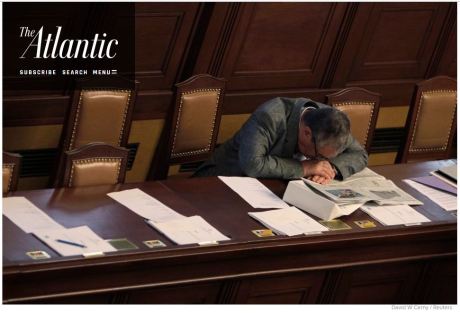
I’m afraid that all of us have contributed to this.
People who get elected to power use it to fulfill their own goals yet continue to get elected despite the fact that many of those goals do not add anything to – and too many times even subtract from – the general well being.
People who, for various reasons, vote for those mentioned above.
Media pundits who fill the airtime with their versions of the reality, purposefully crafted to fit their own goals instead of honestly trying to present to the public what they have seen/understood of what had happened.
What’s bothering me most is that all of them are behaving in an absolutely ‘rational’ manner.
In the sense that all of them are convinced they are following the current mantra.
“Make the best of the opportunities at hand”
Given the current ethos – that only the pussies do not grab everything within their reach – each of those in places where they might be given things would act foolishly not to accept those ‘gifts’. If they might find a ‘legal’ way to do it.
And the Supreme Court of the US concurs.
“In a unanimous decision, the U.S. Supreme Court threw out the corruption conviction of former Virginia Gov. Bob McDonnell.
“There is no doubt that this case is distasteful; it may be worse than that,” Chief Justice John Roberts wrote for the court. “But our concern is not with tawdry tales of Ferraris, Rolexes, and ball gowns. It is instead with the broader legal implications of the Government’s boundless interpretation of the federal bribery statute.””
What happened was that former Gov. Bob Mc Donnell had accepted various gifts from a certain business man called Williams and then (because of them?) ‘set up meetings, hosted parties and called Virginia officials to discuss a series of meetings to discuss aspects related to William’s businesses.
Now, is this an example of corrupt behavior or not?
According to the Government and to the lower courts that have sat on this matter, it is.
According to the Supreme Court, it is ‘distasteful and even possibly more than that’ but not yet corruption. Or, at least, not in the way the Government has presented its case.
The way I see it this is nothing but ‘hiding behind technicalities’.
From a formal point of view the Supreme Court’s decision is absolutely correct.
On the other hand almost everybody speaks out, some very vehemently, against ‘pork barrel politics’.
Yet nobody does anything when occasion arises. Forgetting that this is exactly what we, humans, are supposed to do. Make decisions and assume responsibility for them. Otherwise, if we only look out for pretexts to do nothing when those around us keep making ‘good’ use of whatever opportunities they identify, the whole world will soon become, again, encased in the kind of straight jacket Hitler and Stalin were trying to put on us.
Here’s another example.
Less than a fortnight from now the Republican and the Democratic conventions will likely nominate Trump and Clinton as their respective presidential candidates. Each passionately defended by their followers and viciously attacked by their adversaries.
Yet both almost equally disdained by the general public.
“More time on the campaign trail isn’t improving the image of either major-party presidential candidate, Hillary Clinton or Donald Trump, a new Wall Street Journal/NBC News poll finds.
Some 60% of registered voters held a negative view of Mr. Trump, the presumptive GOP nominee, compared with 58% in May. Some 29% viewed Mr. Trump positively this month.
Mrs. Clinton, the former secretary of state and presumed Democratic nominee, fared somewhat better, with 55% viewing her in a negative light, compared with 54% in May. One-third of registered voters held a positive view of her.” (Peter Nicholas in Wall Street Journal, June 27 2016)
What’s going on here?
Why has any of them been picked up as candidate in the first place?
And why none of their detractors mentions the trait of character that both of them have in common?
The complete disrespect both of them have for ‘comme il faut’.
You see, ‘properly’ doesn’t necessarily mean ‘being a stickler for the word of the law’ but certainly means following the ‘spirit of the law’.
You’d expect as much from the two contenders for the Oval Office, don’t you?
Yet Donald Trump has a history of trying to use the law in order to drive an old woman out of her house so that he could have build a parking lot for one of his casinos while Clinton is being currently investigated for the highly irregular manner in which she used to manage her e-mails when she served as Secretary of State.
To me this is a pertinent enough explanation for why a majority of the people do not trust that any of them would have ‘the better interests of the country’ in mind if and when any of them will be elected to office.
Making a step further people might soon develop a distrust for the whole concept of democracy – simply because the system was unable to deliver better candidates/alternatives. Not only in America.
And since the idea of democracy starts with trusting your fellow citizen to be able to make pertinent decisions – even if they happen to be contrary to your own ideas on the matter – it is highly likely that we’ll soon live in a very untruthful world.
De cativa ani incoace finalul lunii iunie este marcat de controverse pe marginea “Examenului de Capacitate“.
Un timp discutiile s-au invartit in jurul examenului in sine iar mai apoi in fiecare an au fost gasite motive punctuale pentru alte controverse destul de aprinse.
‘Era mai bine pe vremea noastra. La sfarsitul scolii dadeai un examen de intrare la liceu si gata. Daca erai in stare sa intri la liceul pe care ti l-ai ales, bine. Daca nu, treaba ta… cine te-a pus sa incerci la liceul ala. Inseamna ca nu te-ai evaluat bine.
Acuma… vin dom-le unii de pe la tara cu niste medii… te doare mintea… si ocupa locurile de la liceele bune din orase… de parca nu stim si noi cum merge treaba acolo’.
Pe vremea cand am trecut eu prin experienta asta partidul sustinea sus si tare: “copiii sunt viitorul tarii”.
Si, in copilaria mea, chiar asa parea sa fie. Vaccinurile se faceau la timp, manualele nu lipseau la inceputurile fiecarui an scolar, parintii aveau unde muncii ca sa ne creasca, blocurile crestau ca din pamant si toata lumea avea un acoperis deasupra capului.
Iar noi, copiii, stiam foarte clar ca singura cale pentru a face ceva in viata era sa punem burta pe carte. Varianta PCR – pile, cunostinte, relatii – era luata in calcul doar de parintii nostri. Macar din punctul asta de vedere noi traiam intr-o naivitate totala.
Apoi lucrurile au inceput sa se imputa.
Mancarea a disparut treptat din magazine, hainele cat de cat aratoase se dadeau pe sub mana, sapunurile mai de soi devenisera atat de rare incat oamenii mai degraba isi parfumau rufele cu ele in loc sa le foloseasca la spalat.
La inceput oamenii spuneau ‘ai carte, ai parte’.
Pe la jumatatea anilor ’80 a inceput sa circule poanta cu ‘de ma, ce sa-ti fac eu daca ti-a placut cartea’. Pentru generatiile mai tinere era vorba despre doi colegi de liceu. Unul se dusese mai departe la facultate, ajunsese profesor de istorie, facea naveta la tara si traia inca in apartamentul primit de parintii lui cu chirie de la intreprinderea unde lucrau. Celalalt facuse scoala de macelari – carnea era la mare pret, nu se mai gasea in magazine – si la treizeci de ani avea deja casa lui, masina, etc, etc… Toate astea din spaga, bineinteles.
Imediat dupa revolutie scoala a devenit din nou la moda. Foarte multi dintre absolventii relativ tineri de facultate – in jur de 30 de ani – si-au gasit slujbe extrem de bune prin strainatate iar chestia asta a inceput sa-i remotiveze pe tineri. Cuplat cu faptul ca invatamantul superior din Romania era, in ciuda unor carcotasi, capabil sa dea absolventi de calitate, fenomenul a generat o noua efervescenta legata de educatie.
Din pacate ‘efervescenta’ asta era legata si de diplome in sine.
Ceea ce a dus, pe de o parte, la inflatia de doctori pe care o observam acum iar pe de alta la aparitia unei intregi pletore de institutii de invatamant superior, private dar si de stat, unde era foarte usor de intrat. Ce invatai acolo… asta era alta problema…
Intre timp s-a mai intamplat ceva.
Parintii au inceput sa petreaca din ce in ce mai multe ore la servici si sa paseze din ce in ce mai multe asteptari si responsabilitati pe umerii scolii in ceea ce priveste educatia copiilor lor.
‘Eu ma spetesc sa-i asigur cele mai bune conditii, el (copilul) trebuie doar sa invete. Iar profesorii sa puna mana sa-i educe, ca doar de aia primesc leafa din impozitele platite de mine’.
Problema e ca niciodata scoala nu va putea sa le ofere copiilor cei 7 ani de-acasa. Anii aia in care inveti sa ai grija de tine si sa-i respecti pe cei din jurul tau.
Uite asa cele doua tabere au inceput sa se certe intre ele. Parintii dau vina pe profesori ca ‘nu se mai face scoala ca pe vremea mea’ iar profesorii sa le reproseze parintilor ca ‘nu sunt in stare sa-si tina copii in frau’.
Evident, toti uita ca si profesorii au copii – care nu se comporta deloc diferit de ceilalti – dar si ca toti profesorii, absolut toti, sunt si ei copiii cuiva.
Daca adaugam la asta si faptul ca prestigiul profesorilor a scazut foarte mult in ultima vreme… Ca sa nu mai vorbim de salariiile aproape derizorii, mai ales la nivelul debutantilor.
Ce chef de munca or avea acestia?
Sa plece daca nu le place?
Si copii nostrii sa fie educati doar de suplinitori?
Sa revenim la ceea ce s-a intamplat anul asta.

Se pare ca problema din diagrama a creat unele dificultati unora dintre copii.
Si suficienta emotie astfel incat 40000 dintre parinti sa faca o petitie pentru ca doua variante de raspuns, atat cea buna cat si una dintre cele gresite, sa fie luate in calcul.
Pe motivul ca formularea problemei nu a fost suficient de clara.
Ori tocmai asta este insusi scopul examenului de capacitate.
Sa determine daca cei care il dau, si in ce masura, sunt capabili sa jongleze cu informatia si sa o organizeze in mod eficient.
Cred ca inainte de a avea pretentii de la copii nostri, sau de la cei chemati sa ii invete, ar trebui sa ne uitam un pic in ochii nostri.
Ce vrem noi de la viata noastra si de la copiii carora le-am dat nastere?
Cum ne propunem sa ii ajutam si ce exemple le dam?
Ce inteleg copiii astia daca noi ne apucam sa injuram guvernul pentru ca unii dintre ei nu au inteles o problema?
Ce inteleg copiii astia daca noi facem petitii la nivel national pe tema ‘merge si asa’?
Cum adica
“Dlui ministru Adrian Curaj
La subiectul 6 cu diagrama, nu este menţionat că axa ox reprezintă notele şi axa oy elevii. Unii elevi au văzut invers, nu le poţi cere să fie subtili. Cel mai corect este să le acorde punctaj maxim indiferent cum au văzut.”
Cum ar fi trebuit sa fie formulata problema?
‘Nu-i asa ca din aceasta diagrama rezulta ca 3 elevi au luat nota 5 dar si ca ea ar putea fi interpretata in sensul ‘de fapt au fost 8 elevi care au luat 5′?’
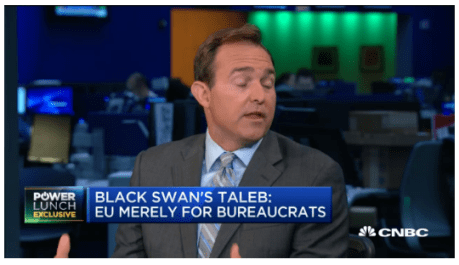
“It was a fair vote. They may not like the outcome but nobody’s saying that the vote was tainted. Maybe by the misinformation ahead of it … but the actual voting process…”
If there is something to be learned from the current debacle is that democracy is about way more than honestly counting the votes.
In fact, if we resume ourselves to that, we’ll end up tied down in a cage known as ‘mob rule’. Who ever succeeds to stir up more efficiently the public sentiment will rule the day and ‘apres nous, le deluge‘.
In order for the democratic process to be efficient – actually democratic, that is – the electorate must have at its disposal all the pertinent information that is available at that moment. If the electorate doesn’t really care and doesn’t mind that information… that’s it. But the information has to be readily available.
And there’s the catch.
If those ‘in charge’ use the media to spur up public sentiment instead of honestly informing the people about the situation at hand then we’ll have a beauty pageant instead of a democratic election. Or referendum.
What we really need to remember, fast, is that for a democracy to maintain its function – weed up the really bad leaders/ideas proposed in the public square – we need to add two things to ‘honestly counting the votes’.
‘Mutual respect’ among all members of a given society and a keen enough interest of a majority of the members of that society in the well being of their community.
‘Democracy’ won’t work properly unless the voters respect each-others, and the government they had, themselves, elected. Simultaneously the government has to treat ‘the people’ with utmost respect, not as if they were hapless children in dire need of close guidance.
At the same time no democracy ever successfully maintained its character unless the ‘leaders’ were constantly remembered of their ‘mortal’ status.
“And the Lord God said, “The man has now become like one of us, knowing good and evil. He must not be allowed to reach out his hand and take also from the tree of life and eat, and live forever.”” Genesis, 3:22
The point being that those who think they can make the difference between good and evil need their feet constantly brought back to the Earth.
In Heaven it was God who did that. Here on Earth God works through the hands of Man. Hence we have to take good care of our own fate.
We won’t be able to do that efficiently unless we start respecting each-others, and each-others’ opinions – because none of us will ever be able to know the entire truth so we’ll be better off collectively if we share our knowledge.
For the very same reason – no one can master all the information that floats around us – all those who try to grab too much power must be treated with ‘extreme caution’. Again, this can be done more efficiently in a collaborative, and respectful, manner.
That’s why I’m convinced that the EU needs to be remodeled, not bulldozed.

“Isn’t it funny?
You know, when I came here 17 years ago and I said that I want to lead the campaign to get Britain to leave the EU, you all laughed at me.
Well, I have to say, you are not laughing now, are you?”
Now let me get something straight.
This guy has been going to work, as an elected official, with one goal in mind. And one goal only.
To undermine the very institution he was working for.
Not to improve it in any way but to simply dismantle it.
I’m not going to discuss here whether he is right about the shortcomings of the EU or not. (He is)
But I am going to question his modus operandi.
OK, he did point out, very astutely, which are the weak points of the European Union.
And then, instead of proposing ways to mend those problems, he did his ‘best’ to make matters even worse.
That was all that he could do in those circumstances. That’s it. Nobody’s perfect.
But why elect a guy like this, time and time again, into a position where he gets to be paid, handsomely, for making trouble?
And no, he wasn’t a ‘whistle-blower’. He never came forth with anything new.
He just kept milling around a few otherwise well known ideas – most of which are absolutely correct – and then turned them on their head, effectively morphing them into ‘seeds of doom’.
And yes, he was the guy “who has repeatedly criticised wasteful EU spending” and then used 58 000 pounds of EU money to cover a security bill “for just five events held in modest venues such as a darts arena in Essex where there was not a single demonstrator.“
Now go figure.
There are people out there who consider him to be “The Hero of Brexit”….
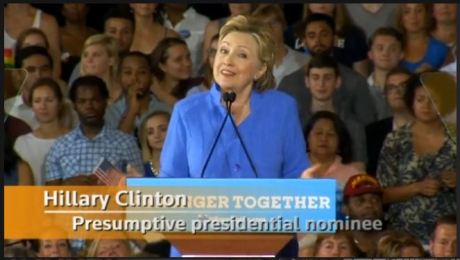
‘I just love how she gets under Donald Trump’s skin.’
Supposedly the democratic process was about presenting your program – as reasonably as you possibly can, so that people would start to trust you – and then letting the electorate decide.
Unfortunately things have become anything but.
People belonging to both sides of the political divides, on both sides of the Atlantic, are acting more like spoiled brats than like the responsible politicians they are supposed to be. Instead of presenting their ideas using a rational discourse they ‘energize’ their followers using all kinds of tricks developed by ‘political marketeers’ until reason is completely numbed.
And the worst thing is that by repeated mutual validation individuals generate social norms. That’s why so many of us don’t find anything odd in the way politicians are currently pandering to their ‘special needs’.
Because of our lassitude and at our own expense.
It was by meeting their ideologically blind ‘hypocrisy and inconsistency’ with despondency that we, ‘the people’, have allowed this to happen.
Pretending that our side is nevertheless better than the other one will only prolong the agony.
We must imperatively ask that both sides mend their ways. Comprehensively.
And for that to happen we must stop pretending that any of the naked emperors have any clothes left on their backs.

