Homo had become sapiens when he had started to learn.
To actively discover information and to discuss the findings with their peers.

This was how our ancestors had developed both consciousness and language.

The next stage was reached when people were no longer satisfied with mere survival. And attempted to glimpse into the future.

” “But ask the animals, and they will teach you,
    or the birds in the sky, and they will tell you;
or speak to the earth, and it will teach you,
    or let the fish in the sea inform you.
Which of all these does not know
    that the hand of the Lord has done this?
10 In his hand is the life of every creature
    and the breath of all mankind. ” (Job 12:7-10)

Until that moment, the deal was simple.
People followed the rules – which had already been set in ‘stone’ and passed over from ‘the beginning of time’, and things continued unabated. Hence no need for further inquiry.

From that moment on, everything had changed.
People still had a set of rules to guide them. But they had also been endowed with ‘free will’:
“You, my brothers and sisters, were called to be free. But do not use your freedom to indulge the flesh ; rather, serve one another humbly in love.” (Galatians, 5:13) and
“Anyone who chooses to do the will of God will find out whether my teaching comes from God or whether I speak on my own.” (John, 7:17)

So, there were rules, there was freedom and there was the Will of God – which had to be determined if it was to be followed.
How to determine it? Nothing simpler. ‘Ask the animals and they will teach you.’.
Meaning that the answer of any question our ancestors might have had about the Will of God was accessible to them. And that they had the liberty – the obligation even, to look for that answer. By studying the nature.
Because understanding the nature – which was the incarnation of God’s Will, was considered by our grandfathers to be the key to understanding the Will of God. And, implicitly, a keyhole through which they could glimpse into the future. Their future, of course.

It was a very recent development that more and more people had become convinced that science had killed God. By producing ‘scientific evidence’ for more and more things which used to be considered ‘acts of God’.
Franklin’s lightning rod and Georges Lemaitre’s Big Bang are but two small examples.
Benjamin Franklin was convinced that ‘God governs by his Providence and that the most acceptable service we render to him is doing good to his other children‘ while Lemaitre was an ordained Catholic priest. Yet many of our contemporaries construe their endeavors as scientific proofs that there is no such thing as a Creator God.

And what about ‘science’?
What is it, after all?
An attempt to understand God’s Will or a method to prove that God does not exist?

How about science as an attitude?
Which maintains Man can, and should, learn about things. Regardless of the name each of us chooses to call them: ‘Nature’ or ‘the Will of God’.
Which also maintains that Man, in their quest for knowledge, must preserve its modesty. Nature and/or the Will of God might be ‘accessible’ but it would be actually presumptuous, for each and for all of us, to consider that we’ll ever be able to know/explore every nook and cranny of the World.
To learn, and express, all the Truth there is.
‘Things are not at all what they ‘really’ are but only what they seem to be.’

Confusing?

What we have here is the intersection between ‘reality’ – a.k.a. ‘absolute’ truth, and knowledge – a.k.a. logos or relative truth.

‘Things’, ‘existence’ and ‘reality’ are concepts.
Developed by us, conscious people, through the use of ‘logos’ and starting from two implicit premises.
That there must be something outside our consciousness – both the individual and collective ones.
And that our perceptions do have at least some correspondence in that ‘outside’.

By adding layers and layers of logos, collectively known as ‘culture’, upon our initial perceptions we’ve actually built an alternative reality. The one we call ‘civilization’.

The ‘thing’ being that this second reality is just as ‘outside’ our grasp as the original one was. And continues to be.
Because of our own consciousness, which both separates and connects us to ‘reality’.

What we are left with are our ‘perceptions’.
And with our understanding, for those who had reached it, that ‘perceptions’ are ‘real’ only in the sense that they do correspond to some segments of ‘reality’ but they are not necessarily similar to them.

Our concepts, not matter how gingerly refined and thoroughly revised, are only representations of ‘reality’.
‘Real’, in their own right: developing them produced, and continues to, its own set of consequences – a.k.a. ‘civilization’.
The downside being that some of those concepts have begotten rather unpleasant consequences.

‘Moral depravation’, ‘pollution’, ‘corruption’…

It doesn’t really matter how many of these consequences are the result of ‘direct’ action or unintended spin offs.

What matters is that we have to understand there will always be a distance between what we believe at some point and the object of our belief. That that distance may have enormous consequences. And that our only chance to avoid those consequences is transparency.

Heidegger was speaking about ‘unhiddenness’.
The limited nature of both our consciousness and rationality produces the distance between our concepts and their ‘real’ correspondents.
Only by openly, and respectfully, sharing what we know about ‘things’ we’ll be able to shorten that distance.
Otherwise, the limited nature of the reality we live in – the planet itself, will no longer be able to accommodate the hiatus between our concepts and the only reality we have at our disposal.

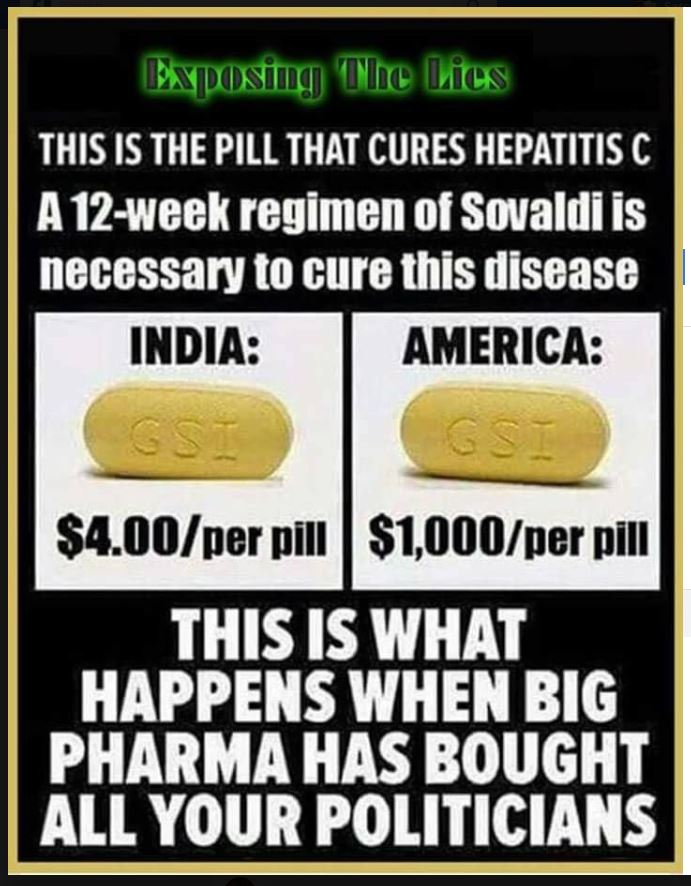
https://www.snopes.com/fact-check/hepatitis-c-drug-prices/

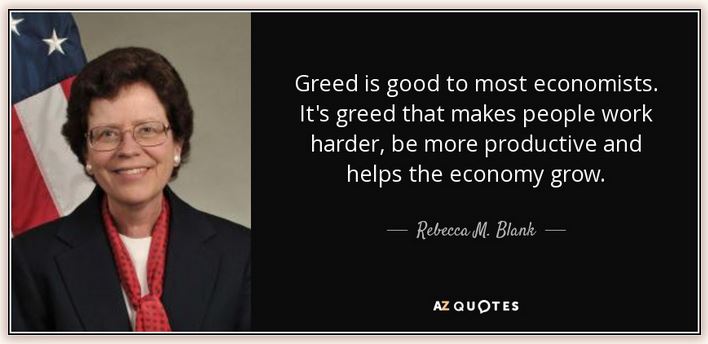
https://www.azquotes.com/quote/1133913

Then, if ‘greed is THAT good’, why blame Big Pharma for ‘buying’ politicians in order to extract as much profit as possible from their work?

Specially when it does work as advertised?

We priced the product at exactly the same as the existing standard of care, which worked about 50% of the time, and are providing a benefit that, based on real world experience, works about 98% of the time. From our perspective, it was a very good value.

I think our failure, if I have to take a step backwards, we were unable to have a good enough conversation with the payers. Perhaps we were a little conservative about what we could have or should have said to them to allow them to prepare for the number of patients that came forward. Honestly, it was far more than we thought. We did not think the system could or would try to handle as many patients as it did. We essentially quadrupled the number of patients treated in a year. That surge really created a lot of pain.

Ooops… so it’s the ‘payers’ who are hurting, not the patients themselves…

Gilead’s CEO Admits To ‘Failures’ In Setting Price of $1,000-A-Pill Breakthrough

Hepatitis C Treatment Highlights Disparity in Worldwide Drug Prices

“Tolerance without reasonable limits is like walking around with a “KICK ME” sign that you put on your own back.”

John Faithful Hamer

Well…

‘Tolerance’ is a two dimensional thing.
‘Intensity’ and ‘wideness’.
What I tolerate and how far I allow things to go before I react to them.

Indiscriminate and limitless tolerance is, indeed, incompatible with life as we know it.

Actually.
It would mean total surrender to the first ‘bidder’.

(Absolute) intolerance would mean ‘constant warfare’.
A.k.a. beating the crap out of anybody who even dares to look up.
…. Being (feeling) compelled to attempt to …

Your choice.

Our choice?

Clorinarea apei este cea mai ieftină metodă de a reduce încărcarea microbiologică a apei. În același timp, prezența clorului în apa care intră în contact cu organismul uman este periculoasă pentru acesta. Mai ales atunci când sunt depășite anumite limite.

Un anumit număr de locuitori ai Bucureștiului au sesizat că apa care curge ziele astea la robinet miroase prea tare a clor.

Ministrul sănătății, om politic, le-a recomandat să nu mai folosească apa de la rețea. Să n-o mai bea și să nu se mai spele cu ea. ‘Nu este periculoasă pentru un om normal dar poate produce neplăceri persoanelor cu anumite sensibilități’.

O persoană suspusă în ierarhia furnizorului de apă potabilă – firmă cât se poate de privată, a dat asigurări că apa este cât se poate de potabilă și că prezența clorului este tocmai dovada eforturilor făcute de compania pe care o reprezintă pentru asigurarea potabilității apei furnizate.
După care a atras atenția asupra faptului că ei, ApaNova, au fost cei care au atras atenția ‘Apelor Române’ – regia de stat care furnizează apa brută către ApaNova, că ‘materia primă’ care intră în stațiile de epurare are foarte foarte mult amoniu – ceea ce impune folosirea unei mari cantități de clor.

Această situație a împărțit populația Bucureștiului în mai multe categorii.

Unii au băut apă plată și s-au spălat cu apă din puț.
Sau nu s-au mai spălat.
Alții au fost nevoiți să se spele cu apă de la robinet pentru că…
Sau au fost chiar nevoiți să bea apă de la robinet. Pentru că…

Și când o să dispară clorul din apă?

Încărcătura suplimentară de amoniu ar proveni din topirea bruscă a zăpezii. Ceea ce ar fi produs ‘spălarea’ terenurilor agricole de pe malurile Argeșului și ale Dâmboviței. Spălare care ar fi antrenat gunoi de grajd, azotat de amoniu și uree din îngrășăminte, alte gunoaie, etc., etc.,…
Când s-o termina de topit zăpada asta….

Dar nu toată apa cu care este alimentat Bucureștiul provine din Argeș și/sau Dâmbovița. Mai sunt forajele și încă câteva alte surse.
Mai scumpe însă. Nu e același lucru să lași Argeșul să-ți intre în stație sau să pompezi apa freatică de la o adâncime de 150 m…

Și uite-așa începi să te gandești la diferențele dintre o întreprindere privată și o companie de interes public.

Compania privată – tocmai pentru că acționarii ei pretind un anumit profit din partea administratorilor, va încerca să genereze măcar acel profit. Și, abia în subsidiar, va avea grijă doar de siguranța – nu și de confortul, mai ales când are monopol pe piața respectivă, celor cărora le furnizează apa.

Compania de interes public – controlată de politicienii aflați la putere în respectivul moment, va avea grijă – măcar declarativ, o foarte mare grijă față de confortul votanților și doar o preocupare secundară față de eficiența economică a demersului.

Asta în ipoteza – nerealist de optimistă, că atât ‘privații’ cât și ‘politicienii’ sunt oameni rezonabili. Care nu fură exagerat, care nu mint cu nerușinare…

Și-atunci?

Ce facem? Bem toți apă plată? Tot timpul? Și cum ne spălăm?

Dar care ar fi variantele?

Prima alternativă ar fi inlocuirea clorinării cu ozonificarea.
Să vorbesc românește?!?
Tehnologia folosită acum în București implică amestecarea unei anumite cantități de clor în apă. Care clor este dozat în funcție de încărcarea microbiologică a apei și care, în final, sterilizeaza respectiva apă.
Dezavantaje? Mirosul, clorul este toxic în sine iar combinațiile sale chimice cu alte substanțe dizolvate în apă sau întâlnite pe conducte pot fi și mai toxice.
Avantaje? Prețul și, mai ales, remanența! Adică acea cantitate minusculă de clor care rămâne în apă până în ‘ultima clipă’. Până când paharul cu apă ajunge la buzele noastre. Și care omoară agenții patogeni ajunși în apă, după ce aceasta a părăsit stația de epurare. Atunci când se tot peticesc conductele…
Ozonificarea – adică sterilizarea apei brute cu ajutorul ozonului, o forma foarte activă de oxigen, este cel puțin la fel de eficientă ca clorinarea, puțin mai scumpă, nu lasă nici un fel de miros, nu produce nici un fel de compuși toxici. Și nu usucă pielea după ce faci duș. Dar acționează doar în interiorul stației de tratare. Orice mizerie ‘cade’ în apă după ce aceasta a pornit pe conductă către robinetele noastre… acolo ajunge… O gasim ‘intactă’ în paharele noastre.

Asta înseamnă că dacă am vrea să trecem la ozonificare ar trebui să începem prin a aduce rețeaua de apă la niște parametri rezonabili de fiabilitate…
Cu ce bani?
Orice investitor privat ‘cere’ un profit. Care profit crește foarte mult costurile.
Din bani publici? Proveniți din majorarea taxelor? Orice majorarea ar duce la creșterea costurilor politice. Ca să nu mai vorbim de neîncrederea publicului în capacitatea administrației publice de a gestiona ‘banul cetățeanului’…

Ne-nvârtim într-un cerc vicios?
Nu vrem să plătim nici costurile bănești și nici pe cele politice?
Pentru ca nu mai avem încredere?
În nimic și în nimeni?

Și-atunci ce facem?
Ne săpăm fiecare câte un puț? Degeaba… apa din primii 20 de metri nu mai e potabilă iar mai jos e atât de scump ca nu mai merită. Și, oricum, ai nevoie de autorizație.
Ne lăsăm să murim de sete?

Și totuși… cercul ăsta vicios continuă să se învârtă doar pentru că ne furăm singuri căciulile… Unii fură/mint crezând că nu-i vede nimeni iar ceilalți se fac că nu văd… de lene. Asta într-o parte. În partea cealaltă … e invers. Fură unii dintre cei care se făceau că nu văd și închid ochii unii dintre cei care se știu deja cu musca pe căciulă…

O mai ținem mult?
Nu ni s-a facut sete încă?
Sau măcar un pic de scărbă?
De noi înșine?


– History is the story of what we remember of what had happened, right? Based on our shared individual recollections, the ‘written sources’ we have at our disposal and our interpretation of any other material traces we might have found… and properly preserved…

– Yep!

– Then no history, no matter how diligent and well intended the historian, will ever be the actual representation of what had really happened, back then!

– Well, you seem to be quite familiar with Heidegger’s work.

– I can’t say that. Popper’s injunction that science is more about being prepared to acknowledge your ignorance than about really knowing is enough for me.

– Then we might be soon delivered from History, after all.
When enough people will share your attitude/paradigm – that no matter how hard we’ll ever try we’ll never know anything for sure… it will be impossible for any would be dictator to pretend they have the ‘right’ answer for any problem we might encounter.

Socrul meu a trecut ‘în rândul drepților’
Soția mea era deja acolo așa că am făcut de unul singur cei 550 de kilometri care ne despărțeau.
La volan. Pe ninsoare. Noaptea, în cea mai mare parte.

Fiind singur, am avut timp să gândesc.

Cei mai mulți dintre cei din jurul meu erau șoferi de TIR.
99.5% dintre ei conduc aproape perfect. Chiar dacă, de multe ori, condițiile sunt improprii. .
Accidentele produse de tiriști sunt rare. La fel de rare, din punct de vedere statistic, sunt și cele produse de restul șoferilor profesioniști.

Care șoferi profesioniști cară economia în cârcă.
De la pâinea proaspătă pe care o savurăm în fiecare dimineață până la betonul de la fundația caselor noastre.

Și atunci?
De ce avem o părere atât de proastă despre acești oameni?
De ce îi alintăm ‘neamul lui Manivelă’?
Doar pentru ca 0.5% dintre ei produc niște accidente suficient de dramatice încât să ajungă ‘subiect de presă’?
Doar pentru că patronii lor le pun la dispoziție niște camioane care nu merg chiar atât de repede pe cât am vrea noi să mergem?
Sunt ei de vină pentru faptul că noi, toți, n-am fost în stare să construim suficient de multe autostrăzi?
Sunt ei de vină că ….?
0.5% dintre ei sunt. De vină. Pentru multe lucruri.

Iar noi, restul, suntem de vină pentru faptul că nu suntem în stare să facem deosebirea dintre adevărații vinovați și cei care ne pun în față ‘pâinea noastră cea de toate zilele’ în fiecare dimineață.
Pe ploaie, pe ninsoare…

The worst thing about your parents passing away is the fact that from that moment on, every time you’ll turn to anybody for help that somebody will first pass judgement on you.

And why are we still trying to solve this riddle?

‘Cause this is indeed a riddle…

Remember those metaphorical stories whose heroes end up having to find the answer to one in order to save themselves/the day?
Like Sophocles’ “What walks on four feet in the morning, two in the afternoon and three at night?”

A riddle, of course, being a question which cannot be answered until the individuals attempting to solve it stick their heads out of the box into which the riddle had been framed.

So. Individualism? Collectivism?

Having grown up under communist rule – supposedly the most collectivist social arrangement to date, I can testify that there is no such thing as collectivism without individualism nor individualism without collectivism.

Libertarians’ mantra is that socialism/communism – and even liberalism, as Americans understand it, is a form of collectivism. And, of course, that collectivism is bad for you.
Socialists, on the other hand, maintain that the current situation – which is seen as being bad, is the consequence of the growingly extreme individualism which plagues modern societies.

Interestingly enough, both sides are simultaneously right.
Communism is indeed bad for you and the bad aspects of today’s society are a consequence of callous selfishness.

On the other hand, all communist societies are composed of a huge mass of obedient subjects AND a small number of individual, and very individualistic, leaders.
Similarly, all developed capitalist societies – including those sporting huge discrepancies between the shrinking number of haves and the growing number of utterly destitutes, have reached the current level of sophistication because most of their members continue to share the belief that ‘all men have been created equal and that all of them have certain, nonnegotiable, rights: Life, Liberty and the Pursuit of Happiness’.

“Share the belief…”
But wasn’t this the very definition of collectivism?
A social arrangement where the most important possession belongs to THE public?
Was there anything more consequential for what is currently known as the ‘Euro-Atlantic’ civilization than this shared belief? Other peoples have been in possession of way more abundant natural resources. Had reached ‘astronomical’ levels of civilization way before we were even able to wipe our noses… And yet…

Haven’t we, individual thinkers, figured out yet that unless we agree on ‘the basics’, we’ll be easy prey for the callous ‘snake oil merchantmen’ who have no qualms to use collectivist slogans to pitch some of us against the others?

Haven’t we figured out, yet, that there is no ‘political collectivism’ without fear? All collectivist social arrangements, both socialist and fascist/nazist, have been built using fear/contempt (of the other) to cement ‘the people’ into believing the lies proffered by false prophets. Lenin, Mussolini, Stalin, Hitler, Mao… Lies proffered by callously individualistic political agents… bent on satisfying their own domineering instincts and making ‘good use’ of pre-existing conditions.

Haven’t we figured out yet that individualism, the tame version developed along with the good aspects of the Western Civilization, is, by nature, the very beneficial consequence of the mutual respect which (still) exists among the members of our societies?

So, to answer the riddle, we need to understand that there is no real conflict between bona fide individualism and bona fide collectivism.
Just as there is no conflict between two perpendicular lines.

Since, by trade, I’m a mechanical engineer, I’ll use a very practical metaphor to illustrate this idea.
Consider a pressurized Oxygen tank. The more pressure inside, the more Oxygen you can store in it. The more useful the tank. Only if you ramp up the pressure too much, you end up with an explosion.
In this situation, you might consider ‘pressure’ to be in conflict with the ‘walls of the tank’, right?
Wrong. The conflict is only in your mind. Pressure is simply perpendicular to those walls. The more pressure those walls can withstand, the more useful that tank is for you.

But it’s your responsibility to determine the thickness and resilience of those walls. It’s your responsibility to choose how much to ramp up the pressure.
For the very simple reason that that tank is yours.
It is you who will suffer the consequences.


Yeah, right… then please show me the Mongolian version of how they had conquered most of Eur-Asia during the XIII-th century…

Anyway, the fact that this saying is so popular tells more about us than about who actually writes history.

First of all, we seem to be convinced that history is nothing more than the story of back to back ‘the winner takes it all’ kind of battles we had to win in order to survive to this day.

Secondly, we seem to be OK with this vision…

But what does it mean?
That (written) history reflects only what the victors have to say/want to disclose about what had happened?

Are we OK with this?

And still wondering why ‘history keeps repeating itself‘?

Wanna break the vicious circle?
Then how about ‘history is written by those who care enough among those who are able to write among those who have survived’?

This version of history is still incomplete. All history will always be incomplete, no matter how many people will have written it. How many sides of the events will have been covered.
But this version will be more inclusive. Hence more relevant.
Presenting survival, instead of winning, as being the essential part of any battle will diminish the intensity of the conflict. Hence allow us to learn more from it.

For instance, it will help us understand that war is the price paid, by both sides, for failing to figure out that cooperation works better than confrontation.

Just compare how the victors of WWI treated the vanquished with how the (same) victors of WWII treated (mainly) the same vanquished. And the aftermaths of WWI and WWII.