There is a technical reason. And some subjective ones. Acting in a synergic manner.

Trump had bean the darling of the high ratings/low expectations media for most of his adult life. During this period he had learned how to use it towards his own goal – an ever increasing notoriety, and those involved in the media had learned to love him back for the amount of publicity they had been able to sell on his back.

Now for the subjective ones.
First of all, he is a very ‘penetrant’ person. Like him or not, but you can’t ignore him.
Secondly, he happens to be the most powerful individual on Earth. Simply because he had been elected the President of the United States of America. Which is not only the most potent/civilized/democratic/you name it country, but also the leader of the free world. Meaning that the rest of the planet, democratic or not, sets it’s time after America’s clock. Willingly or unwillingly.
So the rest of world is watching anxiously everything that is going on in Washington. Wondering whether ‘Trump-ism’ will spread around. Or will remain yet another measure of American exceptionalism.

Thirdly, but maybe the most important reason, Trump can be analyzed as a symptom rather than as a cause.
In fact, there are a lot of Trumps scattered around the world.
Basically, there is very little difference between Trump and Putin. Trump and Erdogan. Trump and Bolsonaro. Trump and Dragnea – the most powerful politician in today’s Romania, my country. Even between Trump and Modi. Only none of these countries is similar to the US of A. None of them has such a distinguished democratic tradition.
And this is why so many people try to understand what’s going on.
Is Trump nothing more than an unhappy accident? Or the visible symptom of democracy becoming decrepit?

PS.
Even Abe is showing signs of contagion.
Post WWII Japan had survived by feeding whales to its people.
Now it is going to resume commercial whaling. In spite of all other previously whaling nations asking him to reconsider.
Really Abe? You need whale meat to survive?

“One of Pareto’s most noteworthy and controversial theories is that human beings are not, for the most part, motivated by logic and reason but rather by sentiment.”

Coming from an engineer – Pareto had started as one, this concept becomes even more noteworthy.
Why would a ‘professional using precision measurements and seeking consistently reproducible results’ focus his attention on sentiment rather than reason?

Because this is the reasonable thing to to?

And one of the reasons for which I tend to agree with him – besides being an engineer myself, is that he had started his studies using the most ‘reasonable’ instrument ever devised by man: “Residing in Florence, he studied philosophy and politics and wrote many periodical articles in which he first analyzed economic problems with mathematical tools.”

So, Pareto had reached the conclusion that human beings are driven mostly by sentiment after rationally analyzing the economic (and political) life.

OK. But what lies behind ‘sentiment’?

Pareto had proposed ‘residues’ as ‘motivation’ for sentiment. His theory is interesting only rather complicated. Almost byzantine. A well written summary can be read here.

What I find fascinating about Pareto’s theory is the rather veiled but certain correspondence which exists between his ‘residues’ and Maslow’s “hierarchy of needs”.

I’ll try to ‘raise the veil’ at a later date, today I’ll just point you towards a very relevant ‘coincidence’.

The psychologist had traveled the same road as the engineer.

Maslow (1943) initially stated that individuals must satisfy lower level deficit needs before progressing on to meet higher level growth needs. However, he later clarified that satisfaction of a needs is not an “all-or-none” phenomenon, admitting that his earlier statements may have given “the false impression that a need must be satisfied 100 percent before the next need emerges” (1987, p. 69).

Both had started ‘deterministically’, trying evidentiate ‘the’ (ironclad?) link between behavior and conditions – and expecting that link to be of a rational nature, only to reach the conclusion that individual sentiment/evaluation is at least as important – if not more so, as reason in the decision process. In shaping human behavior.


https://www.digi24.ro/stiri/actualitate/justitie/eliberari-in-masa-in-trei-dosare-celebre-deciziile-luate-de-instanta-suprema-1052295?fbclid=IwAR3nnHuF18rLpQvA3KoNutXU19rSW3K4q6xGiUbL9mRbSpJiLPI2zxIEM4Y

Chestia asta nu e chiar atat de simpla precum pare la prima vedere.
Nici astia, si nici aia care or urma, n-ar fi iesit daca intregul sistem judiciar ar fi respectat, ‘la sange’, “litera legii”.
A scoate pe cineva nevinovat pe baza de ‘tehnicalitati’ tine de arta avocatilor. Nu discutam aici moralitatea fenomenului.
A nu da nastere unor astfel de ocazii tine de profesionalismul celor care aplica legea. Nu este suficient ca acestia sa fie ‘bine intentionati’ – in orice directie, mai trebuie ca actul de justitie sa fie si convingator pentru restul societatii.

Fiat justitia, ruat caelum inseamna mult mai mult decat “faca-se dreptate chiar daca ar fi sa se prabuseasca cerul” (condamna-l cu orice pret daca il crezi vinovat).

Bunicii nostri romani erau, ‘la baza’, razboinici. Scrijeleau cuvintele cu varful sabiei, nu le mangaiau cu varful vreunei pene. Spusele lor erau mai degraba niste avertismente si mai putin indemnuri metafizice.
Erau mult mai interesati de amanuntele practice ale guvernarii imperiului decat de aspectele morale ale justitiei abstracte.

Ai grija! Daca dreptatea pe care o faci nu este cu adevarat dreapta, mai devreme sau mai tarziu cerul de asupra capului iti va cadea de sub picioare‘!

Democracy works. Authoritarianism works too.

Athens, the Ancient version, had become the dominant power of the Ancient Greece as a democracy. Only the Parthenon was build under Pericle’s rule. And Pericle was, for all intents and purposes, a dictator.
Rome, the Ancient version, had build a huge empire. As a democracy. Then enlarged it some more. As a growingly authoritarian and eventually discretionary regime.

England had started as the most democratic kingdom in Europe. Building upon the democratic traditions developed by the Vikings, the barons had forced King John to sign Magna Charta Libertatum. Way back in 1215.
Meanwhile, France – England’s neighbor and long time competitor, had become the dominant power in Medieval Europe. As an increasingly absolutist monarchy.

At some point, the people living in the future United States of America had decided that they had enough. That they wanted to enjoy the same privilege as their British counterparts. “No taxation without representation”.  George III would have no such a thing so the US had been established as the first democratic modern state. And the most successful to date. By almost every measure.
Following on America’s foot steps, the French had their Revolution. After a very short – and very tumultuous, democratic stint, they had reverted to authoritarianism. And conquered almost all Europe, under the command of Napoleon Bonaparte the First. Only to be eventually defeated by a coalition led by the more democratic British empire.

On the other side of Eur-Asia, things had been more linear.

The Russian Empire was developed in fits and starts. When the dictating ruler knew what he was doing – Peter the Great, for instance, things went forward. When not…
India had been, for all but the last 70 years or so, a melting pot of feuding dictatorships. Yet had developed a fascinating culture and much of what we currently call science and technology. The numbers our computers crunch had been invented there. And the steel we use to build our cars
The Chinese Middle Kingdom had once been the most civilized country on Earth. Then had crumbled under the assault of the marauding already democratic Europeans… only to revive, like the famous Phoenix… and all these while remaining submissive to a succession of authoritarian regimes.
Japan is a story by herself. Never fully authoritarian and yet still ‘imperative’ in many ways even today, she had somehow managed to put up a relatively good show. But for the period when she had succumbed to the ‘charms’ of hard core dictatorship, of course.

Coming back to Europe, I have to note that in the last century the inevitable tension between democracy and authoritarianism has produced immense tragedy.
WWI was the consequence of the inflexibility inherent to the authoritarian regimes. The leaders of the Keiserlich und Koniglich Habsburgic Empire, the Deutches Reich and the Russian Empire were not able to solve their disputes otherwise than dragging the whole continent into a huge mess.
Which, unsolved, had given birth to a second, and more horrible, one.
To complicate things even more, the battle was not fraught between the democratic regimes and the authoritarians.

An old Romanian saying posits that when God wants to punish someone, He starts by dulling their wits.

What if ‘fake news’ are a symptom of (some of the) journalists having earned the wrath of God?
Or is it the whole countries whom God wants to teach a lesson? Or two?


https://www.independent.co.uk/news/world/europe/vladimir-putin-says-he-has-never-made-a-mistake-because-god-wanted-him-to-be-perfect-10309628.html

What we currently call ‘science’ is both an activity and an attitude. Something some of us do and the way in which some of us see the world.

In current lingo, those who ‘do science’ are involved in ‘technology’ while those who see the world ‘scientifically’ partake in a certain philosophical tradition.
If we look at things in this way, it becomes obvious that doing science and thinking scientifically might not be the same thing.

Science, as an attitude, had sprung up in Ancient Greece, been kept alive by the early Islamic scholars, rekindled by the Medieval Catholic theologians, come of age during the Renaissance and ‘exploded’ after the Enlightenment.
Technology, on the other hand, is way older. And had been developed mainly elsewhere than the scientific attitude. China and India had been technological powerhouses and thriving civilizations in times when Europe was still learning to wash its hands before dinner.

‘Modern’ science – what we have now, appeared only after technological prowess had been married to the right attitude. 

OK.
It is easy to accept that technology, the more widely distributed part of ‘science’, had appeared as a consequence of mere necessity. People needed things in order to survive, then wanted things in order to increase their comfort… things which had to be produced… as efficiently as possible… hence people had put their minds to it and … voila!
But what had driven some of those around the Mediterranean Sea to develop the scientific attitude?

The same thing which drives us?
The attempt to find out the future, one second earlier than it really happens?
Because they thought, like we do, that reality is unique and that man is meant to master it?

Man, the guy who was made by God in His own image and who was told to rule the world?

Roger Bacon, Duns Scotus, Occam,  Galileo, Newton, Darwin, Georges Lemaitre… some of them might have been persecuted by the church – personally or had their their ideas ‘challenged’, but they all had been raised in the Christian tradition and had been active members of their religious communities. Even Galileo, the only one among these who had been ‘physically’ affected by the way in which his ideas had been received by his contemporaries, had a more or less ‘functional’ relationship with the heads of the Church… he had died in his own bed, arrested in his own villa, not at the stake …


Christians call it fate while Buddhists call it karma.
Christians’ main goal is called salvation while Buddhists’ is called nirvana.

And no, these are not exactly the same thing.
Not different enough to separate them easily, not similar enough to consider them the same thing.

Fate depends on what God has in mind for you while karma depends exclusively on what you have decided all along your life.

Salvation is even more complicated.
Catholics believe that each individual can obtain it, regardless of what they had done until that moment, by simply acknowledging ones sins and by repenting before God/priest. Protestants, on the other hand, believe that individual salvation is entirely at God’s mercy. Mortal individuals can do nothing more than putting their faith in God’s all encompassing love and waiting for it.
Meanwhile, since Buddhists don’t have a God, they believe that accomplishing nirvana is the responsibility of each individual… All somebody has to do in order to achieve this goal is to transform their inner self. There is no outside, objective (?!?) benchmark to be reached here… no other arbiter to please…

Yet fate and karma are not that different either… Life experience in Asia may be different from that in Europe but the differences aren’t huge enough to consider them two different things. Not to mention the growing number of Buddhists living in the Euro-Atlantic region and the burgeoning number of Christian converts in Asia….

As for salvation versus nirvana… the man made Catholic one is almost similar – even if a lot easier to obtain, to the Buddhist nirvana while the Protestant one is just as dis-similar from it’s Catholic equivalent as it is from the Buddhist nirvana.
Yet, again, is it really possible for peace of mind to be that different on the opposing ends of EurAsia? Peace of mind experienced by very similar human individuals…. The only difference between them being the culture they have grown into….

Which brings us to chance.

Rationally minded people – scientists, economists, etc., are convinced that any decision can be perfect… If  only people were diligent enough to educate themselves properly, to think with their brains instead of allowing their hearts to take over…

‘Rationally minded people…’
But how rational is to expect a human being – an animal, first and foremost, to behave in a perfectly rational manner?
How rational is to expect a human being to overcome all emotion AND all biases? Known and unknown….
How rational is even to expect a human being to ‘diligently’ research all available data before making a decision? How much time would that take? When should someone be satisfied enough with the information gathered about a particular subject?

How much is each of us indebted to Lady Luck about the place we’ve born into?
Christian Europe or Buddhist Asia?
About the time of our birth? Before any of Christ/Buddha had preached or after?
How much is each of us indebted to Lady Luck about the amount of opportunity each of us have had to decide about during our lives?

My last question was a tricky one, indeed.
OK, Lady Luck is responsible for many things. For the place and time of our birth. For the fortunes of the families we’ve been born into and for the mental and physical each of us enjoys. Or lacks…

Only we do share in the final responsibility for our fate/salvation/karma/nirvana!

Our decisions are equally shaped by the circumstances in which we’ve reached those decisions AND by our diligence in making them.
Each of our decisions opens up some new doors and shuts down others. Or, at least, turns our heads towards new openings and away from others.

‘And your point is?’

Don’t blame others for your bad decisions and don’t praise yourself too much for your good ones.
Don’t blame others for their bad decisions. Are you sure they had a real alternative for the situations you found them in? Mind you, not whether there was a real alternative! Did THEY had access to that alternative?
Extend a helping hand. You’re not responsible for saving everybody else but to see somebody in need and not offer your help sets the stage for you needing help and everybody else passing by without noticing you.
Don’t overdo it. When you see someone drowning, get them out to safety. That’s enough. Don’t lecture them about the dangers of getting into water. Firstly, you don’t know how they got in and, secondly, if they are not able to figure this out by themselves you’re wasting your time.
Don’t prevent everybody else from getting in simply because somebody had (nearly) drowned. You’re not God. You don’t know everything. You just happened to be there when somebody was drowning and you was strong and brave enough enough to save them. That’s all there is to it.


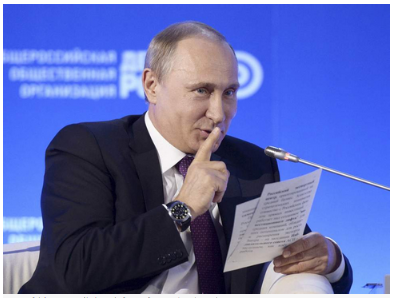
And no, this is no joke! Alas…

Populism is scientific because its ‘adepts’ have a very rational behavior and use scientific tools to increase the appeal of their public messages.
And, on the other hand, populism is scientific because its advent is perfectly explainable given what we currently know. About our society, about our brains, about our psychology….

Let me start from the beginning.
In Thomas Kuhn’s terms, the last 60 or so years have witnessed a tremendous paradigm shift.
Science has replaced religion as the main paradigm and ‘religion’ has been demoted to  ‘religions’.

Science becoming the main paradigm means that we have grown confident about our knowledge. We might be aware that we don’t know everything yet but we continue to believe that we’re able to learn everything. That if we are diligent enough we’ll sometimes be able to look under every rock that is.
This attitude has led us to search for ‘perfection’. ‘Efficiency’ has displaced ‘redemption’. We have ceased our quest for salvation and are now obsessed with ‘buy low, sell high’. In other words, ‘make the most of it but strain yourself as little as possible’.

Which makes a lot of sense, doesn’t it?

A lot of sense… mainly when you no longer perceive the guy next to you as being a full-fledged member of your community. Your religious community, that is. Of your church.

You see, ever since Emil Durkheim, the sociologists have been aware that religion was not so much a story about the making of the world as a ‘common ground’. The ‘common core’ shared by the members of a given community. Which ‘common core’ makes it possible for those who share it to have respect. For themselves and for the other faithful members of the community. By sharing that common core, the individuals find their bearings in the ‘wide, wide world’ and, thus, know how to behave relative to their ‘neighbors’. With enough mutual respect among the individual members that the community is able to function. To survive, that is.

We no longer have that kind of community.
Our primary allegiance is no longer towards ‘church’. Most of us consider themselves primarily as members of a nation – something governed more by formal laws than by public sentiment, and only secondarily – if at all, as members of a ‘religious’ community.

Now, putting two and two together, it’s very simple to understand that in the given circumstances ‘populism’ was inevitable, right?

Too many of the would be leaders have no qualms about how they get what they want.
Power.
‘Buy low, sell high’ is the current mantra, remember? Accepted by all of us. Buyers, sellers, by-standards…
Too many members of the general public are willing to accept promises which are in line with their own expectations, even if those promises being put in practice means a lot of misery for OTHERS. Who cares about those others, anyway? They are not members of OUR ‘church’!

I’ll let you decide how sustainable is such a situation. I was going to use ‘community’ instead of ‘situation’ but it would have been horribly wrong. We no longer live in communities. We only happen to live in the same place.

For how long?

The relatively flat layout of most parliamentary chambers has induced in us the idea that society is linear. From left to right and backwards.
Also, the current almost ubiquitous existence of parliaments drove us to forget that until recently – historically speaking, of course, most societies have been punctiform. The sovereign king was the only one able/entitled to make any significant decision…

Meanwhile we are told by the political scientists that long term political stability can be achieved only through ‘checks and balances’. Meaning that the state has to be organized in such a way that nobody can get amass too much power.
Actually most modern states have an executive, a legislative body and a judiciary. Each of them performing their specific tasks while keeping a jealous eye on the other two.

The problem with long term political stability being that it is a very abstract goal while most people just want to be happy. And are willing to go at considerable lengths in order to achieve their goals….

And it’s exactly here where ideologues start to argue among themselves

Some say that the individual is sacrosanct. That individual freedom is the most important value that is and the most fundamental ‘human right’.
Others say that society is more important than any individual. That all individuals should put themselves at the service of the society and that individual liberty pales when confronted with social necessity.
And a third category consider that democracy is a waste of time and of opportunity. That the best for any society is that a capable person/group of persons to be given absolute power over it. The rationale being that ‘the capable’ will take good care of their ‘property’. A far better kind of care than any group of bickering politicians would ever be able to offer….

On the practical side, those preoccupied with ‘freedom’ consider that the main duty of the state is to preserve/protect individual liberty. That people, once free, will know how to achieve their personal happiness.
The socially minded consider that individual happiness cannot exist before/outside the well being of the entire society. Hence the ‘rational citizen’ has to postpone (read forget) any personal goals and sublimate their own persona into the society.
‘The more capable than the rest’ consider that the ‘incapable’ cannot be trusted with defining their own goals and have to be told what to do. For their own good!

It is very easy to observe that none of the three ‘ideal types’ described above doesn’t work on its own. That each have been experimented and found to be ‘unpractical’, to say the least.

Individual absolute freedom exists. The Saan living in the Kalahari desert and the  Baka in the Cameroon don’t have any formal rules, no social hierarchy and are absolutely free to do as they please. Both have been easily overcome, their habitat is being encroached/destroyed by their ‘neighbors’ and have been able to survive only by going further and further away from anything.
Socially minded people have, time and time again, congregated. Only to witness their communities dissolve or develop malignantly. From the early christian settlements to the XiX-th century phalansters.
The ‘know better’ is, apparently at least, the most successful arrangement. All kingdoms and empires have been organized according to this principle.
And all of them eventually failed. Even Plato’s idea of ‘king priests’ has led to Alexander the Great’s ultimately disastrous campaign into the Middle East. Not to mention the fact that the erstwhile mighty Athens had fallen into anonymity just after starting to be governed by specially trained rulers.

Since the pure ideal types didn’t work, let’s see what we get if we combine them.

Since I’ve been experimenting it for the first 30 years of my life, I’ll start with the result of crossing ‘social minded’ with ‘know better’. Does ‘communism’ ring any bells with you?
Let’s cross ‘liberty’ with ‘know better’. Actually this has already been done. It was about liberty for those who knew better… Nazism, and its newer variants, are the first examples which come to mind.
And the most interesting result comes from crossing freedom with social minded. This has also been experimented. In the democratic Ancient Athens and in during the truly Republican phase of the Roman Empire. The same combination was used by the vikings and somehow perpetuated to this day. Its offshoots being the western style democracy.

Which democracy – just like the Roman Empire, will survive for only as long as it will conserve both individual freedom and social mindedness while allowing, but only when needed, the ‘know better’ to take over for the short periods of time when their presence at the helm is absolutely necessary.

I am determined to fly.
Only my actual flying is relative to my ability to ‘negotiate’ the absolute determination with which my body and the rest of the planet pull at each other.

Translation:

There are three kinds of ‘determination’.
Absolute, relative and teleological.

‘Absolute determination’ is that situation where everything is under the same constriction. For instance, (almost) everything substantial in this Universe is affected by the gravitational field which permeates everywhere and everything.

Relative determination is that situation where either a special characteristic of something or a special circumstance induces a specific relation between that something and an ‘overpowering force’. For instance, any electrically charged particle is under the influence of the electromagnetic field while the ‘neutral’ ones are indifferent to the said field. Also, a dead leaf which happens to fall in a stream is under a double determination. It is simultaneously pulled towards the center of the Earth and helplessly transported by the water. OK, the flow of the water is indeed powered by the same gravity which pulls the leaf but, again, it is relative to the local relief.
Please note that even if the absolute determination might seem insignificant due to the effects of the relative one, the absolute never ceases. An electron which spins happily around a nucleus only seems impervious to the gravitational pull. Simply because the latter is way weaker than the former, at that scale.

Teleological determination is that situation where the determinant has an active role in shaping the influence it exerts over the determined. NB, ‘active’ and not necessarily ‘conscious’. For instance, no two working bees belonging to the same hive  will ever do exactly the same thing in the same (broad) situation, despite both being under the same absolute determination and under almost similar relative determination – they are twin sisters.

Things become way more interesting when we start discussing the influence of ‘intent’.
When the teleological determination becomes intentional.
Where the scope of the active action is influenced by the consciousness of the determinant instead of depending exclusively on ‘rules’ and chance.