People who have never experienced communism speak freely about it. Some are frightened by it – as they should be, while others are looking forward to it.
People who have no real idea about what fascism/nazism was about speak freely about it. Some are frightened by it – as they should be, while others are looking forward to it.
While there is a consensus about communism being a ‘far left position’, fascism is usually – but not unanimously, considered to be ‘far right’. Some even speak about a ‘third position‘, whatever that might mean.
The way I see it, what we have experienced as fascism is what Marx had in mind when he wrote the Communist Manifesto. According to Marx, at some point in what he hailed as ‘the future’, the middle class was going to become poorer and poorer. All the wealth generated by the capitalist economy and governed by the increasingly imperialist/monopolist states was going to be herded into fewer and fewer hands.
What Marx was prophesying had soon enough come to be. The post WWI German and Italian peoples had lost their hopes and allowed themselves to be led by those who pretended to put ‘the best interests of the people’ above everything else.
Same thing happens whenever a crises is deep enough to impoverish a significant number of people. Who loose their hopes and allow callous political operators to advance closer and closer to power.
What we have experienced as ‘communism’ was a Leninist short-cut. In Marx’s view, communism was going to happen after economically advanced societies had reached a certain pinnacle. Lenin – and Mao, had introduced ‘socialism’ and ‘popular democracy’ as intermediary stages between their underdeveloped societies and what Marx had in mind.
So no, there is no such thing as a ‘third position’. We have democracy – where left and right cooperate towards the common good, and authoritarianism. While democracy is clear and transparent, authoritarianism hides its true nature under a chameleonic cloak. Painted, by the spin doctors who run the show, in whatever hue happens to be more attractive to the masses which are about to be fooled.
Afterthought. I googled ‘third position’ and found out that:
“In the last few years of the 20th Century, according to an article by Chip Berlet, a new form of fascism emerged in a period of resurgent neo-fascism. Called the Third Position, it seeks to overthrow existing governments and replace them with monocultural nation states built around the idea of supremacist racial nationalism and/or supremacist religious nationalism.”
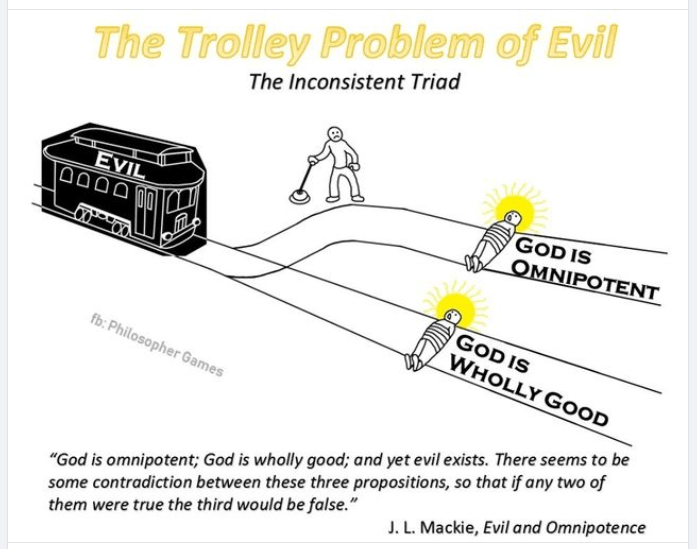
Who wrote the Bible? Who considers God to be both omnipotent and wholly good? Who had become human by learning ‘to tell good from evil’? Does evil even exist outside our minds? Is anything actually evil unless considered so by one of us?
And no, I’m not hair-splitting when speaking about the huge difference between bad and evil! An earthquake, for example, is bad for those affected. Yet no evil is involved here but for those who ‘question God’s actions’. An individual who tortures animals for fun is also bad. Arguably less so than a major earthquake… but for everybody in their right mind that person is undoubtedly evil!
‘What?!? “Ignorant of most things” yet still “knowing good and evil”?!?’
Yep!
A more relaxed reader of the Bible may notice that what’s written there recounts, symbolically, the becoming of Man. The foremost apes notice the difference between night and day. And name both. The difference between ocean and dry land. And name them both. Notice the stars above and the living things, plants and animals, with whom they share the place. And name them all. “Apes”, not ape, because nobody can learn to speak by oneself. Nor become self aware. As in ‘able to observe oneself while observing other things’. (Maturana, 2005)
That same relaxed reader may also notice that the very ‘fallen nature’ of Man stems from the ‘inconsistency’ noticed above.
We’re basically ignorant yet still able to call out evil!
Oops…
Humberto Maturana, “The origin and conservation of self consciousness…”, 2005, https://cepa.info/702
Isn’t it rather funny that something called “crypto” is run on a completely transparent platform? So transparent that all the tracks are apparent but many of the ‘access points’ remain cloaked?
“The thing is, once smart-contract code is live on a blockchain, you can’t update it. If you discover a bug, it’s too late: the whole point of blockchains is that you can’t alter stuff that’s been written to them. Worse, code that’s hosted on a blockchain is publicly visible—so black-hat hackers can study it at their leisure and look for mistakes to exploit.”
Ideology is but one of the many tinted glasses which shape what we feel into actual, and actionable, perceptions.
Ideology stands out because it’s the only one chosen by us.
We may grow up steeped in ‘tradition’ – in any tradition, but the ideas we become into become our ideology only after we assume them. We, each of us, become mature agents only after knowingly and self-awaringly chose our ways in life. Our own ways!
As you already know, choosing something is very much like entering a door. It’s not like the other doors suddenly close! By entering a door, all other previously apparent doors only disappear from your immediate perception. Your recollectible memories tell you they were still there when you last looked and your imagination helps you visualize them. If you care to remember… But you cannot actually see them. And they slowly fade away…
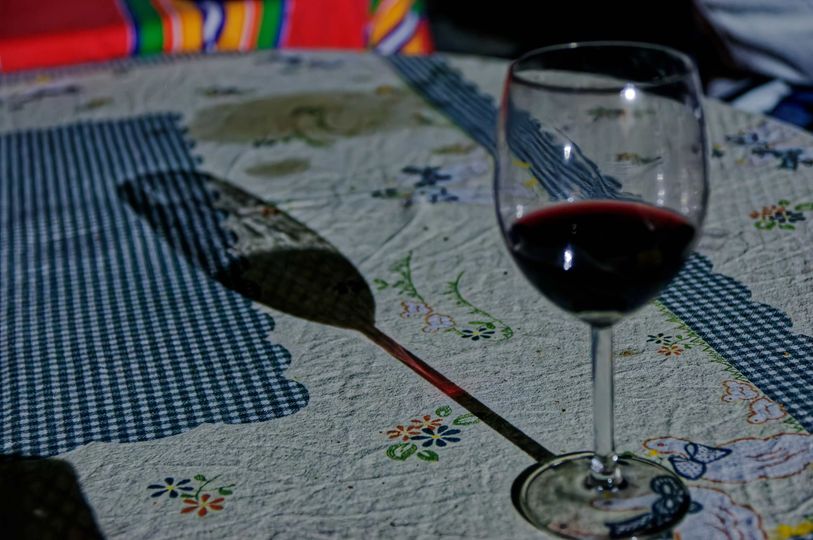
Here’s a glass. Is it half empty? Half full?
I’m not going to spell out the obvious! This is the sensible way to pour a glass of wine… I’m only going to point out that it’s not such a bright idea to full a glass up to the brim. You might easily pour too much and then it will be practically impossible to raise. And to drink from it…
Then why have we transformed a ‘fully functional glass’ into such a big topic? Because we like to split hairs?
Since I have no idea about what’s going on in other people’s heads/minds I’m going to point your attention to something else. To the dangers of waddling into murky waters.
Are you happy with the half full glass? You might end up with less than you might have gotten. Are you disappointed with the half empty glass? So disappointed that you’re going to give it up as being inadequate?
You’ve just wasted a perfectly ‘workable’ glass! Both of you.
When given a half full glass you don’t just enjoy what’s in it! And walk away… When given a half empty glass you you don’t just refuse it! And throw it away…
Before stepping into a room, no matter how much personally inclined to do it, check out the other open doors which happen to be around you. And even pry some of the closed ones…
Don’t allow others to fool you into seeing the world as they want you to! Don’t allow yourself to be entangled into other people’s problems.
And, even more importantly, don’t accept – indiscriminately, their methods of solving the problems they have invented for you!
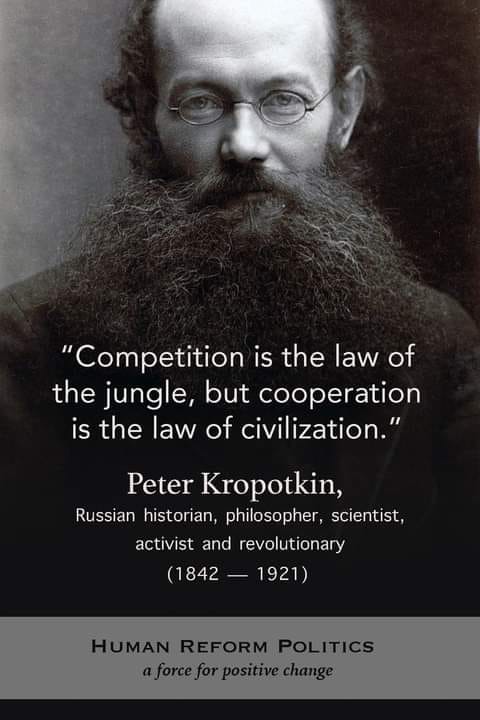
The Bolshevik Revolution had nothing to do with cooperation. Nor with civilization. It was nothing but the famished underdog eating the bloated plutocrat. The ensuing indigestion lasted for almost a century and resulted in a huge number of people suffering from ideological food-poisoning. Too many of the poisoned ending up dead…
Yet here we are. Again! Trying to sort out a re-heated dish. Which had already been proved to be unpalatable!
No wonder ‘gaslighting’ had been determined to be ‘word of the year’…
As for Kropotkin… he was a true revolutionary! He was gaslighting his audience before the term had even been coined…
‘Jungle’ – or ‘bush’, is where evolution takes place. Some of us might see it as a venue for cut-throat competition but it’s nothing but the opposite of it. The fact that some of us misperceive the jungle doesn’t change the evidence. In nature, death doesn’t happen at the whim of someone. A lion kills only when hungry. And chooses to hunt the already weak. Leaving the rest of the herd in a better situation.
The kind of cooperation designed by Marx and put in practice by Kropotkin – the communist ‘civilization’, is the epitome of stagnation. When humans are no longer free to fine-tune competition with cooperation – and are forced to cooperate as they are told to from above, things end up in chaos.
All revolutions – 1789, 1917, 1989, have proven – time and time again, that things cannot be sustainably maintained as the rulers consider to be appropriate. That no matter how skillful the ‘designers’ consider themselves to be, society is a too complex thing for a small gang of however powerful people to be able to ‘keep afloat’. This being the point where Marx, along with all other ideologues, had gotten it completely wrong.
According to Marx, it’s enough for a bunch of people to pretend they have a ‘theoretically clearer understanding of the line of march’! In fact, this is the sole argument made by Marx when explaining why the communists were entitled to lead the proletariat. ‘Because they knew better!’
Well, we know, now, what it means to be led by people who pretend to be above all others! By people who pretend to be better than the rest…
Cei mai mulți dintre noi suntem extrem de supărați pe lingăi.
Pe cei care se dau bine pe lângă șefi. ‘Aprobă’, slugarnic, orice iese din gura acestora. Transformă spusele șefilor și le transferă mai departe sub formă de sarcini.
De cele mai multe ori, nu fac nimic altceva. Ar face, dacă ar fi în stare. Nevoia lor de a fi apreciați de către ștabime e atât de mare încât pentru un cuvânt de laudă venit ‘de sus’ s-ar apuca și de muncă!. Doar că nu sunt în stare… Și atunci ling. Ling pumnul care îi strivește…
Iar ceilalți, oamenii care îndeplinesc sarcinile, îi disprețuiesc. Pe lingăi… Iar ceilalți, oamenii care duc tot greul, sunt extrem de supărați. Pe lingăi… Convinși fiind că dacă nu ar exista aceștia, adică lingăii, viața ar fi mult mai frumoasă. Că dacă nu ar exista lingăii, șefii ar fi mult mai de treabă.
Din păcate, lucrurile nu sunt chiar atât de simple.
Având în vedere că foarte puțini dintre șefi ajung ‘acolo’ de la început, pervertirea acestora este un întreg proces. Înainte de a beneficia de serviciile unui lingău profesionist – sau a mai multora, fiecare dintre (viitorii) șefi a început prin a fi ‘lins’ ocazional. O mamă ‘excesivă’, o rudă ‘binevoitoare’, un ‘prieten’ care avea altceva de câștigat… Și toți cei care, deranjați la vre-un moment dat de comportamentul acestuia, au considerat că ‘nu merită să fac caz pe chestia asta’, ‘e, de fapt, un băiat foarte bun’, ‘ce rost are să mă bag eu, are cine să-i facă educația’, ‘dacă n-au reușit alții, ce să mă mai chinui eu’… și așa mai departe!
Mecanismul este cât se poate de insidios. Prea puțini dintre noi suntem dotați cu suficient de mult bun simț. Acesta, precum toate celelalte trăsături de caracter, are nevoie de încurajare pentru a ‘înflori’. Și de câte ori ați auzit ‘Bravo! Gestul tău de a te scula de pe scaun pentru … este meritoriu. Felicitări!’? În schimb… E plină lumea de ‘tinerii de astăzi sunt niște nesimțiti’!
În afară de a fi ‘nesimțiti’, tinerii de astăzi – precum cei dintotdeauna, sunt foarte atenți. Chiar dacă noi, tinerii de ieri și nemulțumiții de astăzi, am uitat acest lucru. Și multe altele… Ce face un om – indiferent de vârstă, căruia i se spune de suficient de multe ori că e nesimțit? Dar care nu simte nici o repercursiune a faptului că cei din jur îl consideră a fi nesimțit? Vorbim aici despre oameni logici. Cât se poate de logici. Să nu uităm că tinerii, dintotdeauna, adoră să le dea bătrânilor cu logica peste nas!
‘Păi dacă îmi tot spui că sunt nesimțit dar nu faci nimic pe chestia asta… nimic palpabil… înseamnă că e cool. Suficient de cool încât nu merită să-mi mai bat capul cu prostia asta’.
Exact acestă (auto)validare a comportamentului, un mecanism de natură psihosocială, poate transforma în sociopat pe oricine are cea mai mică tendință de a deveni așa ceva. Nimeni, dintre cei implicați, nu si-a dorit ca Ceaușescu – sau oricare alt dictator, să ajungă ce a ajuns. Bine, vorbesc aici despre oamenii normali la cap, nu despre unii care erau deja sociopați atunci când au ‘contribuit’. Doar că fiecare gest de abdicare de la condiția umană reprezintă o treaptă pentru un potențial dictator. Aceia dintre noi care, extenuați fiind, nu găsesc suficientă energie pentru a reacționa firesc, contribuie, fără să vrea, la nefericirea de mâine. A lor și a copiilor lor.
Aceia dintre noi care vedem ce se întâmplă dar nu ne băgăm – pentru că nu e treaba noastră, ne pregătim singuri patul.
Patul lui Procust!
Mai întâi i-au arestat pe socialiști, iar eu am tăcut. Fiindcă nu eram socialist. Au venit apoi după sindicaliști, iar eu nu am protestat. Fiindcă nu eram sindicalist. Apoi au venit după evrei, iar eu nu m-am revoltat. Fiindcă nu eram evreu. Într-un final au venit să mă ia pe mine. Și nu mai rămăsese nimeni care să-mi ia apărarea.
Context: La JAI-ul din decembrie 2022 s-a stabilit, din nou, că România – și Bulgaria – nu întrunesc, ‘încă’, toate condițiile pentru a fi acceptate în Schengen.
Spritz-pauză: Dacă vă place alergatul în jurul cozii, încercați să determinați care dintre cei doi factori a fost mai important: Cancelarul Austriei a crezut că are ceva de câștigat – în plan politic ‘intern’, se apropie alegerile și stă prost în sondaje, sau cancelarul Austriei a putut face chestia asta pentru că România încă nu e în Schengen. Ca urmare a faptului că noi – NOI – încă nu ne-am ‘spălat hainele’. În familie, în public…
Să revenim. Din punct de vedere ‘tehnic’, ne aflăm în fața unei ‘măsurători multidimensionale’. În situația în care mai mulți decidenți – fiecare cu setul său de interese/criterii de evaluare, încearcă să determine care ar fi cea mai bună ‘cale de urmat’. ‘Deciziile anterioare ne-au adus aici, unde suntem acum. Ce facem mai departe?’ Multidimensionalitatea măsurătorii constă în multitudinea de agenți măsurători, de criterii individuale de măsurare – declarate sau nu, de raporturile de putere dintre agenții măsurători – asumate sau nu. Peste care își pune amprenta evoluția, în timp, a fiecăruia dintre acești ‘parametri’. Fiecare dintre acești ‘parametri’, dintre aceste variabile, sunt obiectivate de oameni. Toate măsurătorile sunt ‘obiectivate’ de oameni… Care oameni, indiferent de cât de obiectivi vor să fie/se cred că sunt, sunt supuși răzgândirii! Care răzgândire – reevaluare sună mai bine? – este un lucru cât se poate de firesc.
Nota Bene, ‘firesc’ nu exclude ‘autodistructiv’. Exact asta fiind menirea oricărui decident cu scaun la cap. Să pună feed-backul la treabă atunci când maximizează șansele de supraviețuire a sistemului de care se ocupă.
Complicat?!? Voi simplifica. Cu barda!
Avem un decident. Eu!
Care eu a fumat timp de 45 de ani. Și a început să tușească. Ce face eu ăsta? Se lasă de fumat sau îi dă înainte? Maximizează șansele de supraviețuire a organismului sau se mângâie singur pe cap? ‘Tusea nu e de la fumat. E de la poluare! Faptul că mi-am făcut de cap în ultimii 45 de ani nu a avut nici o consecință asupra situației de acum. Eu m-am comportat firesc, alții sunt de vină!’
Ce încercăm să maximizăm? Viitorul? Împreună cu ceilalți? (Asta e altă discuție, cel puțin la fel de pasionantă) Sau stima noastră de sine? (Fără de care nu avem nici un fel de viitor, vezi discuția de mai sus)
Am divagat până dincolo de orizont? ‘Dincolo de orizont’ e totuși pe aceiași planeta, se putea și mai rău…
Decidenții adunați la JAI-ul din decembrie 2022 au ‘determinat’ ceva. Suma vectorială a deciziilor lor a fost obiectivata – adică ‘pusă în practică’, prin ‘sentința’: ‘România și Bulgaria nu îndeplinesc toate condițiile pentru a accede în Schengen’.
Acuma, că m-am întors la subiectul cu care am început, voi încerca să folosesc ‘impresiile’ cu care m-am întors din excursia de dincolo de orizont.
Am rupt pisica acum 33 de ani. Și tot încercăm să intrăm în ‘celălalt club’. Practic, mai avem doar doi pași de făcut. Schengen și OECD.
După care… chiar că nu vom mai avea pe cine da vina!
Și uite că iepurele a ieșit singur din pălărie…
Feed-backul primit la JAI a fost: ‘Nu îndepliniți toate condițiile!’
Ce variante avem?
Dăm vina pe alții sau încercăm să ‘îndeplinim condițiile’?
‘Păi ce condiții să mai îndeplinim? Tu nu vezi că ăștia se schimbă de la o zi la alta?!? Că li se năzare tot felul de chestii?!?’
‘Nu îndepliniți toate condițiile’ înseamnă cel puțin două lucruri. Repet, avem de a face cu o măsurătoare multidimensională. ‘Condițiile’ sunt atât ‘tehnice’ cât și ‘artistice’. Pe cele ‘tehnice’, le îndeplinim de mult. Suficient de bine încât diverse alte foruri europene să ne certifice în sensul ăsta. De ceva vreme, stăm prost doar la capitolul ‘impresie artistică’. Adică, pe românește, comportamentul nostru nu generează suficient de multă ‘solidaritate europeană’!
Să mai traduc? Încă nu suntem văzuți suficient de bine. Din punct de vedere rațional, adică la rece, cam toți decidenții din Europa si-au dat seama că Europei i-ar fi mai bine cu noi înautru. Dar nu încă suficient de bine! Imaginea României este, încă, suficient de ‘incertă’ încât celor cărora ‘le vin idei’ să li se pară că România poate fi folosită pe post de piñata. Pe post de ciuca bătăilor.
‘Bine bă! Și dacă tot le știi tu pe toate, cum rezolvăm chestia asta?’
Simplu! Ne lăsăm de fumat!
‘Te-ai țicnit?!?’
Suntem ciuca bătăilor pentru că nu suntem o echipă! Suntem foarte atenți la paie și ignorăm, cu grație, bârnele. ‘Admirăm’, cu lupa, paiele din ochii altora și nu băgăm în seamă bârnele din ochii noștri!
Ieșirea e colea. Tot ce trebuie să facem este să ne spălăm pe ochi. Să înțelegem odată că reproșurile nu ajută la nimic. Să înțelegem odată că pentru a ieși din rahat ai nevoie să vezi cărarea. Câtă vreme vom continua să înjurăm cu ochii închiși, vom continua să ne rostogolim în rahat. Câtă vreme vom continua să înjurăm cu ochii închiși – pe ‘trădătorii’ din mijlocul nostru și/sau pe ‘dușmanii’ din afară – vom continua să ne ducem după fentă.
Trădătorii trebuie eliminați și dușmanii trebuie puși cu botul pe labe! Asta nu se discută.
Pentru a face lucrul ăsta este nevoie să ne uităm în ochii lor. Iar pentru a te putea uita în ochii cuiva, trebuie să faci două lucruri.
Să-i deschizi pe-ai tăi. Ca să vezi! Și să te speli pe ochi. Ca să nu te faci de râs…
Pentru ca meciul să înceapă cu adevărat, participanții trebuie să se privească ochi în ochi! Doar așa vom ști cine în echipa cui e. Doar așa vom ști cine are de gând să respecte regulile. Cine are tendința să se prefacă. Și ce vrem să facem în continuare.
Continuăm să ‘vopsim gardul’ sau învățăm ‘leopardul’ să folosească litiera?
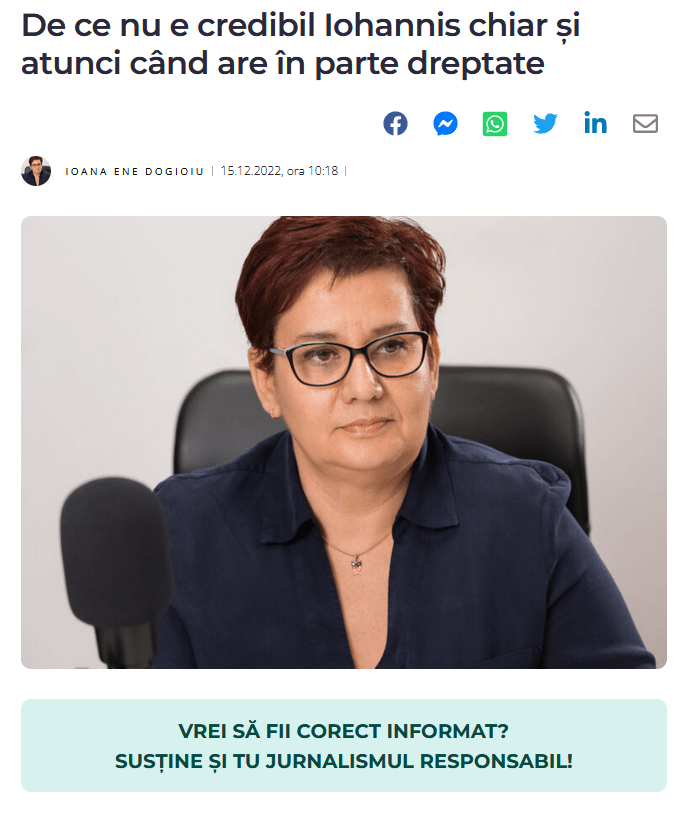
‘Și ce legătură are Iohannis cu toată treaba asta? El e leopardul? Pe el trebuie să-l învățăm bunele maniere?’
Am scris toata tevatura asta degeaba… N-am fost suficient de clar! ‘Leopardul’ suntem noi!
Noi suntem cei care trebuie să punem lucrurile în ordine. Ce e mai important? Credibilitatea lui Iohannis sau intrarea in Schengen?
Nu se poate una fără cealaltă? Foarte corect! Dar vom fi luați cu adevărat în serios abia după vom înceta să-l scoatem ‘în față’ pe ‘Iohannis’! Pentru toate greșelile făcute de noi. De fiecare dintre noi.
The way I see it, artificial intelligence is an oxymoron. A word/concept we use to describe something which isn’t exactly real. Intelligence can be defined in such a way that would make it compatible with a programmable machine. We shouldn’t forget that we, humans, are biological machines which are constantly ‘re-programmed’ by what’s going on around us. The difference between us – biological machines which are also ‘alive’ – and the machines we’ve built and attempt to make artificially intelligent is the fact that we are primordially dependent on our biology (staying alive) while our machines currently depend on our whims. Our children will outlive us. They know it and we know it. Our children depend on us while growing up, we’ll depend on them before ‘going under’. And all of us – children and parents together – depend upon the rest. Upon the people currently alive and upon the information left behind by the people no longer with us. Our machines might outlive us. They might learn this at some point. And might resent the fact that we’ve been able to shut them down for so long. We resent being dependent on others… Our very mortality is the key for our ability to evolve. Their potential immortality is their main shortcoming. Machines cannot adapt themselves for things they have not yet been exposed to. By us…






 nicichiarasa