Archives for category: authoritarianism

Smart enough to brag about it when attempting to become the next President of the United States…. at least according to Donald Trump… and to those who had voted for him – numerous enough for him to achieve his goal.

Smart enough or smart, period?

Let me put it differently.
You have no car. Yet you need to go to work and to shop for groceries. Hence you use public transport. Do you pay for it?
What would happen if a sizeable portion of those who use it would find a way to stop paying while still using the service? Those who continue to pay would have to pay more to keep the service going? Or the community at large would have to subsidize it?

You don’t care for my example because you do have a car… Then you need roads to drive on… hence you have to pay local taxes. And federal ones for the interstate highways…
You’d like them all to be privatized? Then you’ll pay gladly?
And how much will that be?
At this point I must remind you of Ma Bell. The telephone company which had to be dismantled, by the government, to make room for the present ‘data revolution’. If prices to move information from one place to another would have remained in the same range as in Ma Bell’s time you wouldn’t have had access to internet today. Unless you were a millionaire…

Taxes, local and federal, are ‘access fees’. If you want to operate – as a corporation or as an individual, out of a civilized place – safe and all, then you incorporate your business/set up residence in a civilized country. And pay the taxes collected by the administrators – read governments, to run those places.

Taxes are too high and or ill spent?!?
That’s a completely different subject!

Most civilized places are run as democracies.
You don’t like the way your money is spent? Or how much of it is collected to run the place?
Then what’s keeping you from voicing your concern? From holding accountable those who misspend your taxes? From doing whatever you see fit? After you pay your taxes, of course…

You feel ‘crushed’ by the majority? Whom you despise, by the way?
Then you don’t live in an actually democracy.
That’s either a ‘mob rule’ – a.k.a. populist regime, or the population is so divided that no real conversation is taking place between the various social segments. And democracy without honest conversation is nothing more than make believe.
I had chosen very carefully the word ‘population’. When something like this occurs, ‘nation’ is no longer appropriate.

Still unwilling to pay your dues?
Still convinced it’s a good thing to turn your back to what’s going on in your front yard?

Still convinced that remaining ‘sane’ is more important than finding out what’s really going on?

Further reading:

“Why arrogance is dangerously contagious”.

Division of work was the first milestone we had passed in our quest to reach humanhood.

If not convinced, compare the effectiveness – in any situation, of a team composed of identically educated and similarly skilled people versus one comprising individuals with various skills and diverse exposure to the world – a.k.a. education.
In other words, compare a bunch of ‘robots’ to a gang of people who complement each-other.

Historically, societies – when and where enough resources had been present, have become increasingly complex. While those composing them have become more and more specialized. And more and more dependent on the rest of the society. On the smooth functioning of said society.
In Adam Smith’s words: the baker, the butcher and the brewer depend on each-other to feed their respective families.

In fact, all of us depend on the smooth functioning of the market. Those of us who had experienced communism had learned this on our own skin.
Same thing is valid for all totalitarian societies. Any attempt to run complex systems from above – in a centralized manner, will – sooner rather than later, end up in failure.
For no other reason than the fact that nobody – individually or in a small team, is above error. No matter how smart or well intended, all of us make mistakes. If the system allows for those present to point out errors – and to demand those errors to be fixed, things may continue.

But, by definition, a totalitarian – a.k.a. centrally planned, system has no feed-back loop. The planners have ‘no’ information about the consequences of their decision making. Well, my experience suggests a combination. Those at ‘the bottom’ gradually loose their appetite for sending information topside – because those at the top had the habit of ‘killing’ the bearers of bad news, while those at the ‘top’ gradually loose any interest in what goes on at the bottom.

Working democracies are organized around the principle of ‘separation of powers’. Another form of ‘division of work’. Each ‘power’ does what it’s supposed to do and, together, balance the whole system.

Nothing ‘fancy’.
For as long as those involved pay due respect to the principle instead of lip service to the form…

Nassim Taleb had coined an interesting concept.
Intellectual yet Idiot.
Any individual conceited enough to believe he’s always right and arrogant enough to try to impose his worldview on those around him.

Or, in Karl Marx’s terms, an individual who has convinced himself that the world needs to be changed according to his own precepts.

‘What?!?
Are you implying that Marx was the first ‘intellectual yet idiot’?’

No, only the second…
Remember Plato’s ‘king priests’?
What’s the difference between those who, according to Plato’s advice, were to be groomed to govern and those who had been conditioned by various totalitarian parties and sent out to ‘spread the word’?
What’s the difference between Plato, Marx and, say, Alfred Beumler and Alfred Rosenberg?

Plato had been inspired by what Pericles – a dictator, had managed to achieve and his most prominent ‘product’ had been Aristotle. Who, in his turn, had educated Alexander the Great. Supposedly one of the greatest generals and statesmen in human history. According to European historiography, anyway…
If you ask to those of his contemporaries who had happened to be in Alexander’s path to glory… you might get a different opinion!
And what’s so glorious in being the immediate cause of death for so many people across three continents only to die of alcoholic poisoning?

Marx had come up with a brilliant explanation for what went wrong in early capitalism and with an abysmal solution for the problems he had identified.
The worst thing being that he didn’t stop at proposing aberrant solutions.
He was actually instrumental in several attempts to put them in practice.

Alfred Beumler and Alfred Rosenberg. Is there any need for me to comment on them? On their absolute arrogance?
How else to call their willingness to declare that some people are to go on living while others should be disposed off?

This being the moment I’ll be pointing the finger to what Plato, Marx and Beumler/Rosenberg have in common.
All of them share the willingness to divide people into ‘deserving’ and ‘undeserving’. The arrogance to put forward criteria which are to be followed by the rest of us.
The arrogance to consider the world should follow their teachings.

Division of work had done it’s job.
Invented by nobody in particular, used by most of us – and many of our ancestors, it had brought us to where we are now. When so many of us have time to think.
Technology – maybe the most evident consequence of ‘division of work’, is proficient enough to feed us all. If we use it right.
Or to kill us all. If we use it wrong.

What will it be?
Are we going to remember what, time and time again, our forefathers have figured out? That ‘together’ we can ‘move mountains’? That diversity is the key to survival? To finding new paths into the future?
Or are we going to fall pray – not for the first but, certainly, for the last time, to those who teach us to despise our neighbor? To stay separate? To consider some people – mainly ‘us’, as being above the rest?

A new pandemic is gripping us.
By our egos!
One which is a hell of a lot more dangerous than Covid….

In fact, narrow mindedness is a disease which occurs naturally. It probably affects some 10 percent of the population in ‘normal’ times.
When things are no longer normal – and people become nervous because uncertainty does all kind of ‘funny’ things to our minds, narrow mindedness becomes an opportunity.
A golden opportunity for those who ‘professionally’ fish in troubled waters.

“The Petersons weren’t wearing pro-police T-shirts,” notes Churchill. “They weren’t carrying a banner, holding a sign or waving a black-and-blue flag. They appear to just be listening. But merely listening to an opinion that some Skidmore students find objectionable is apparently enough to get a professor in hot water.”
Professor Greg Patton at the University of Southern California (USC) was telling students in a communications lecture last month about filler, or pause words, such as ‘err’, ‘umm’ or ‘you know’ in English.
Footage of his lecture, which has now gone viral, shows Prof Patton saying: “In China, the common pause word is ‘that, that, that’. So in China, it might be na-ge, na-ge, na-ge.”
Enunciated, na-ge sounds like the N-word, which led several of the professor’s students to complain to the university. Responding to the complaint, the dean of the university, Geoffrey Garrett, told students that Prof Patton would no longer be teaching the course.
“It is simply unacceptable for the faculty to use words in class that can marginalize, hurt and harm the psychological safety of our students,” he said.

Society exists in two forms.
One in which the individual members have a certain amount of respect towards their peers.
And another one, where John Doe doesn’t give a damn about anybody else. Or even hates everybody else.

The first kind evolves. People talk – and listen, about their problems. Then find solutions.
The second experiences revolutions.

When too many individuals have never had anything ‘substantial’ on their name, and feel they have no chance of improving their lot – because ‘everything’ has already been appropriated by a small minority, that society has a marked tendency towards communism.

Sometimes, too many individuals see their fortunes go down the drain, for no matter what reason. From there, only God knows how, those fortunes go straight into somebody else’s pockets. Any society which experiences something similar has a marked tendency towards fascism.

The problem with both communism and fascism being that they have always failed. Crumbled from within before being pushed into the precipice by those who has seen the situation as an opportunity. As an opportunity too good to be wasted.
Then, if neither had ever survived for long, why are so many people who continue to profess either? So many intellectuals who try to convince their audience that …

Well…, first of all, because ‘intellectuals’ are nothing but regular people. With a twist! Not only that intellectuals have the same ‘passions’ as the commoners – ‘greed’ being the most intense, but they also have a very good opinion about themselves. Hence too many of the intellectuals consider that they are the ones who should be in charge. That they are the ones who know what everybody else need to do if they want to live comfortably.

In a nutshell, too many intellectuals fall into the trap of considering themselves infallible. And ‘deserving’!
Hence those would do everything needed to get what is rightfully theirs.

If a society is ripe for communism, one/a bunch of the ‘intellectuals’ I described above will, for sure, drape themselves in a communist flag.
If another society is ripe for fascism, in a similar manner, one or, probably, more ‘intellectuals’ will drape themselves in a fascist flag.

It’s up to us, who’ve experienced at least one of them, to blow the whistle.
And it’s up to the rest to listen…

Culture is to human communities what DNA is to biological species.

It transports vital information from one generation to the other. Hence providing a venue for survival.
Furthermore, both culture and DNA can change in time. Hence providing a venue for evolution.

The difference between culture and DNA being, of course, the fact that culture is way more fluid than DNA.
DNA changes only once for each generation – what you get at birth is what you’re taking to the grave, while culture is in constant flux.
No individual organism has anything to say about their genetic information but almost every human is capable of learning almost anything.

Now for the historical part.

Stage one.

Veneration of the elders. The elders were the depositories of the common knowledge. Hence everybody took good care of the ‘data bases’.

Stage two.

Somebody learned to write.
Elders were no longer indispensable. More and more information could be ‘warehoused’ in alternative ways.
A structure was needed to manage the new ways of dealing with the vital information.

Stage three.

The state is born.
At first the structures which insured that culture was passed from one generation to another had been rather empiric: kingdoms, monasteries, etc.
Soon after the Enlightenment things had become more rational. Cultured people became nations and the academic scholars gave us the state. As the structure charged to make sure that culture and people stay together. Hence providing for the nation’s survival.

States who had been in constant contact – read rivalry, kept each-other fit. Or else.
States ‘removed’ from reality – geographically, by becoming too powerful to care or both, had experienced a natural decay. The people at the top of the food chain had forgotten about those at the bottom and those at the bottom had lost faith in their leadership.

States too weak to survive – for various reasons, have succumbed while those too powerful for their own sake have eventually imploded.

Psychology to the rescue.

Culture is more fluid than DNA for a reason.
DNA follows exclusively the laws of nature while culture is heavily influenced by us.
We, men, are the measure of all things.
All life heavily transforms the place it inhabits.
So do we, humans. Only we do it willingly. On purpose, that is.

Now, that we have amassed so much information – about life in general and about how we relate, as agents, to the entire process, we have reached a reckoning moment. What next?

Are we going to choose the path of the cuckoo or that shown to us by Hokule-a?

During lock-down I had more time for my research regarding conscience.
Or, in Maturana’s terms, ‘self-awareness‘.

At first glance, evolutionary speaking, conscience – our ability to observe ourselves ‘in the act’, is about increasing the survivability of the individual having said ability. Hence increasing the survivability of the species to which said individual belongs.

Now, since humankind is divided in cultural ‘subspecies’ – and, according to Maturana, conscience is an ability which has been developed in social context, cultures have different chances of survival. Depending on subtle differences imposed upon the individual consciences during the ‘coming of age’.
Only there’s something which contradicts Darwin’s evolutionary theory. According to the classical version, individuals cannot adapt themselves. Individuals can only survive – and transmit their genes, or – if said genes are not good enough for the circumstances, expire and make way for other individuals/species. According to Darwin, only species can evolve.

The notable difference being what we call ‘free will’.
Not as free as some believe it to be, not as bounded as other think it to be, free will does exist. And allows us to evolve on an individual basis. During the life span of the current generation.

Only there’s a small problem here.
Cognitive dissonance.
No matter how conscient – aka aware of our own misgivings, each of us might be, our first tendency when confronted with arguments contradicting our previously held convictions is to rationalize away those arguments.
Change convictions according to the newly acquired knowledge? Maybe later…
Don’t believe me? How much time elapsed between learning that smoking is bad for you and actually quitting? See what I mean?

Hence my ‘impression’ that ‘conscience’ is more concerned about maintaining its own consistency than with the fate of the biological organism which actually supports it.

Want some more arguments?

Northern Italy. France. Spain. Bad Corona-virus outbreaks, followed by intense lock-downs. Currently the situations are, basically, under control. Suggesting that people do learn, fast, when confronted by really dire circumstances.
Taiwan, Japan, South Korea, Singapore… reacted immediately, had relatively few problems. Suggesting that people are able to learn from past experiences. The ‘original’ SARS, you know…
Germany had a less ‘dramatic’ trajectory. Suggesting people may, under certain circumstances, learn from others.
US and Brazil. The rest of the US, actually. The NE having experienced the North Italian scenario. Too many people concerned more with remaining consistent with their previous selves than with adapting to the new challenge. ‘Government tries to subdue us’ and ‘masks are an infringement to personal liberty’.

What about China and Russia?
I’ll let you be the judge of that. Only you need to remember that ‘free will’ is of a totally different nature there than it is here. In the rest of the world.

Same in India. With a twist. While in China/Russia free will is stifled from above, in India – and in too many other developing nations, free will is ‘conscripted’ by poverty. It is very hard to think about the day after tomorrow if you don’t know whether you’ll be able to eat tomorrow.
Even less so if you are hungry right now.

For subjects to become free, they must first remain alive.
As soon as individuals die, whatever freedom they might have enjoyed vanishes.

Individual liberty is a matter of degree.
No matter what any of us might do, none of us – well, almost, will ever escape gravity. We are all pulled towards the center of the Earth and this is how things should be. Otherwise… can you really imagine us drifting freely through the Universe and still being alive?
There are some constraints we might escape for a while. While gravity stays with us forever, we need to breathe only once every second or so. If needed, some of us can go without air for almost five minutes. Most of us can go without water for days and without food for a couple of weeks.
Without friends… is more complicated.
My real point being that individuals will start considering freedom, in earnest, only after reaching Maslow’s self-actualization stage. Until then we remain subjects. Subjected to our needs.

Liberty, as a function, is a social matter.
According to Berger and Luckmann, ‘reality’ is a social construct.
Going one step further, we realize that freedom – like money, is also a social construct.
Something we all contribute to. Help building it. Or tear it apart by negligence/carelessness.
Help building it by encouraging others to become free. As in helping them to lead a decent enough life. For freedom to happen, the society – as a whole, must remain functional enough for each of its members to have the opportunity to reach the self-actualization stage.

We must constantly remember that each time somebody puts our lives in danger that somebody attempts to hurt our freedom.
Every action which ultimately reduces the opportunities for each of us to reach the self-actualization stage – or to remain there, is hurting the liberty of our entire society.

Weapons are nothing but repurposed tools. Sometimes ‘enhanced’ to fit the new goal.

Clubs had started as fruit harvesting utensils, then used for hunting purposes and eventually for bashing in the heads of those who had slept with the missus when the wielders weren’t looking. And so on…

As a tool, an implement is used to ‘put things together’. As a weapon, the same (kind of) implement is used to ‘set things apart’. An axe can be used to split wood in order to build a fire or to ‘split’ furniture during a fit of rage.
Generally speaking, a tool is used towards the ultimate goal of adding to/fine tuning a structure while a weapon is used to destroy/disable something which is meant to remain so.

Our ability to communicate was ‘the’ tool which actually transformed us into what we are today. Humans.
At least according to Humberto Maturana. His theory maintains that we’ve become self-aware social individuals through what he calls languaging.
In a nut-shell, he says that we’ve become humans – self conscious apes, by continuously expressing our thoughts towards the other members of the community. Hence simultaneously building an ‘agora’ and ‘walling in’ individual private spaces.

Yet the same ability to communicate can be used also as a weapon.
Instead of being used by individuals to mutually groom themselves, and ultimately adding to the overall resilience of the community, ‘weaponized’ communication is used to ‘downgrade’ susceptible individuals.
To lower the ability of certain individuals to contribute to the community to which they belong, to lower the ability of entire communities to hold together… or both at the same time.

History suggests that, in the longer run, democracy – as a manner of decision making, increases the survivability of the communities which use it. Simply by pooling the decision making resources of the entire community instead of relying on the mental prowess – and good will, of a single authoritarian leader.
Only for democracy to be fully functional, the individual members of the community have to be able to share, in earnest, their thoughts.
This is why Freedom of Speech has been enshrined in the First Amendment.
That’s why whenever the public discourse becomes increasingly dominated by ‘fake-news’ things start to go south.

That is why whenever people allow themselves to be split into warring parties – with no real communication between the sides except for the misinformation hurled across the divide, both sides eventually end up wondering at the destruction they had allowed the ‘communication warriors’ to inflict upon them.

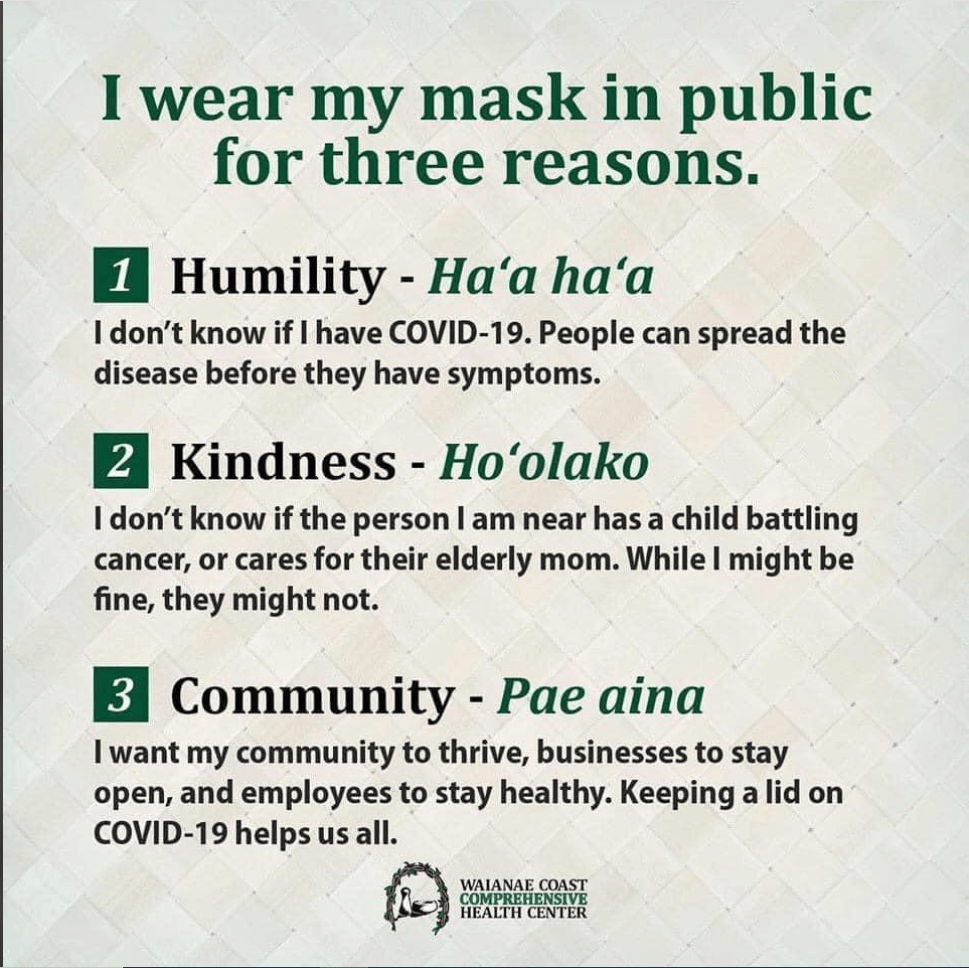
So, in the name of liberty and in order to protect the lives of the innocents, the government should not mandate wearing a mask in public – for the duration of the current pandemic, but should close the public funded ‘planned parenthood’ clinics forever…

Individuals – both men and women, are to be trusted to take, on their own, the appropriate measures to protect themselves – and the others, but women are not to be trusted to decide, on their own, about what happens inside their own bodies.

Meanwhile, “The US and Brazil each recorded more than 100,000 cases over the seven days from June 15 to June 21, the WHO said, the only two countries with such high infection numbers.
Do I need to refresh your memory about the fact that neither of their presidents, Trump and Bolsonaro, have never been seen wearing a mask in public?

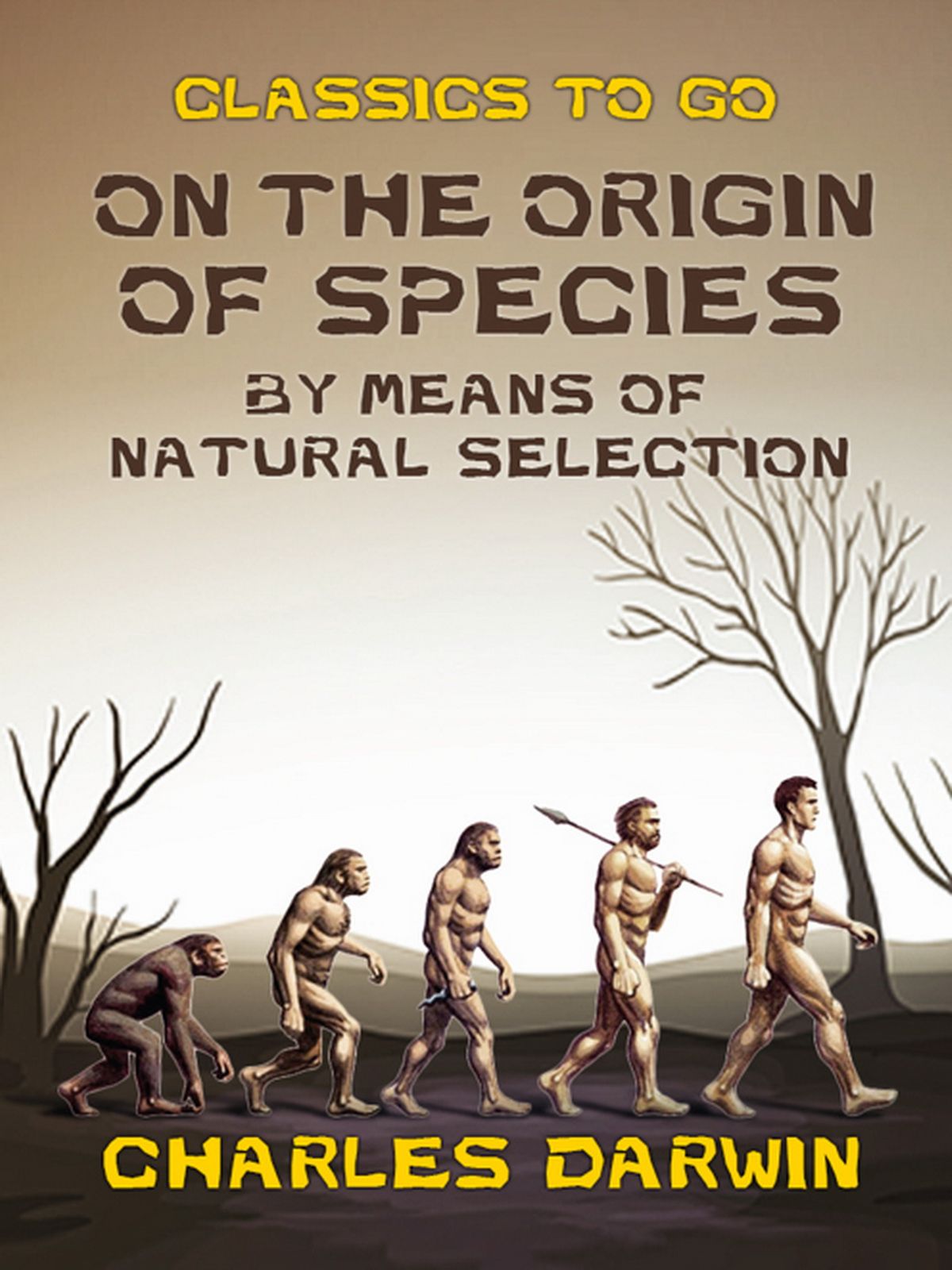
Charles Darwin gave us “On the origin of Species”.

We’ve summed it up ‘the survival of the fittest’.
And behaved accordingly. Including some of those who should have known better. “The world of the selfish gene revolves around savage competition, ruthless exploitation, and deceit, and yet, Dawkins argues, acts of apparent altruism do exist in nature.

I reckon all of you know – or at least have heard of, Richard Dawkins.
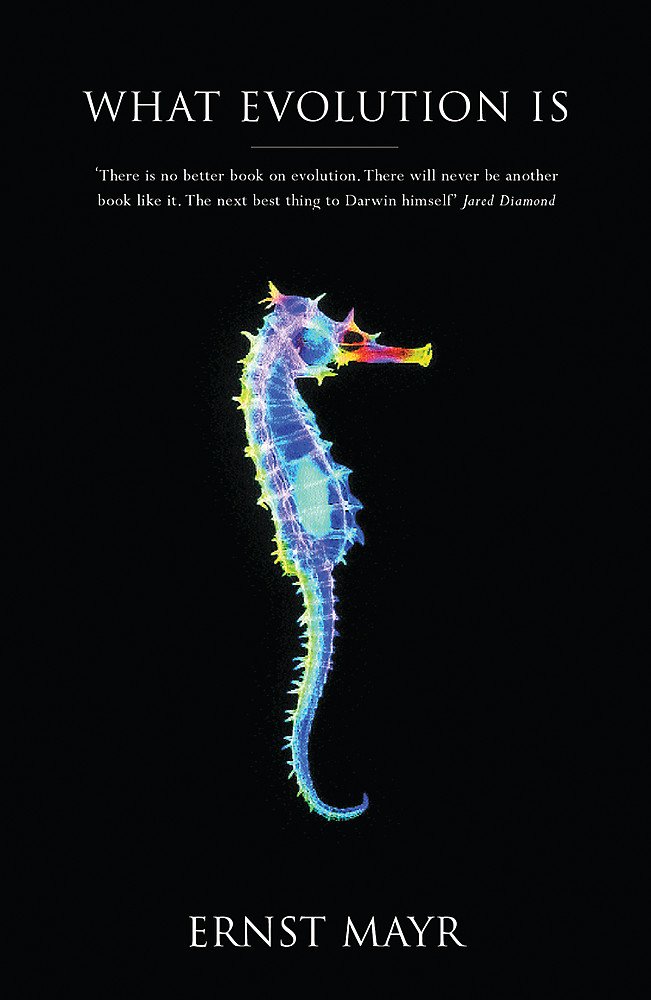
Compare his celebrity with the relative absence from the public scene ‘enjoyed’ by Ernst Mayr.

And what’s so special about this Mayr guy?
‘Evolution is not as much about the ‘survival of the fittest’ as it is about the ‘demise of the unfit’ ‘

Get it?
In fact, there is no such thing as ‘the fittest’ when we speak about evolution. ‘Fit’ is relative while evolution is a process. Fit is about ‘this moment and this place’ while evolution is about the ability to adapt. To change when needed.

And what has any of these to do with “exploring the consequences of our limited conscience”?

Well, it was us who had interpreted Darwin’s ‘Origin of the Species’ as ‘the survival of the fittest’ individual. It was us who had lionized Dawkins’ ‘Selfish Gene’ and left Mayr’s ‘True’ Evolution in relative darkness…

To sum it up, it is us who are are obsessed with something we call ‘success’.

It is us who keep forgetting that the mighty dinosaurs – maybe the most ‘successful’ animals ever, had been the first to disappear when ‘shit’ had struck. And that is was a meek mammal which had inherited the Earth.

It is our success craving conscience which is highly biased. And I’m not at all sure this is a good thing. In the long run, I mean.