050c31042a04e93467298c7458c219af4cbcc6-wm

For some time now I’ve been wondering how come so many people who define themselves as being Christians – “Again I tell you, it is easier for a camel to go through the eye of a needle than for a rich person to enter the kingdom of God.“, Matt 19:24 – are so passionately defending the very concept of (private)”property”.

Could it be that Marx was right after all: “Private property is the result of alienated labor.” ?!? And so many of us have been wrong for so long?

“The right to private property is the social-political principle that adult human beings may not be prohibited or prevented by anyone from acquiring, holding and trading (with willing parties) valued items not already owned by others. Such a right is, thus, unalienable and, if in fact justified, is supposed to enjoy respect and legal protection in a just human community.”

Trying to understand the source of this dichotomy I adopted a two pronged strategy. First I looked up the word itself and then I tried to deepen my understanding of the entire concept.

It’s absolutely obvious that ‘property’ comes from ‘proper’.
‘Proper’, in its turn, has two basic meanings: ‘fit for use‘ and ‘pertaining to one individual‘. The first one has evolved into ‘propriety’, “the state or quality of being correct and proper” while the second has become ‘property’, “thing owned“.

So, do all these etymological arguments make it any easier for us to accept that respecting each others’ right to private property is what introduced a certain degree of functionality in the human society?

‘But aren’t you contradicting yourself?
At the beginning of your post you suggested that ‘property’ might not be as good as advertised and now you say that the ‘right to private property’ is ‘good for you’?
Will you make up your mind, for Christ’s sake?’

Now, that I’ve reached the conceptual stage of my analyses, I must bring to your attention the fact that a right is nothing but an opportunity while each (piece of) property is a thing – even those  which are not of a ‘substantial’ nature. ‘Intellectual property’, for instance, is a ‘measurable thing’ even if you cannot put your finger on it while the ‘right to intellectual (or any other kind of) property’ is (an infinite) something which patiently waits for (a rightful) somebody to make (proper) use of it.

Maybe this is what Christ tried to tell us in the first place. That it’s not property itself that stands between us and our salvation but our (improper) attitude towards it. That it’s not the object of our property that is the problem but how we make use of our right to private property.
After all Christ told the “young rich man” “If you would be perfect, go, sell what you possess and give to the poor, and you will have treasure in heaven; and come, follow me.” (Matt 19:21). ‘Go sell, give and THEN follow me’, not ‘come help me ABOLISH the very right to private property’, as Marx used to preach to his followers.

To understand the difference between what Christ and Marx said about this subject let’s see how these two relate to the notion of ‘Man’.

In Christ’s book God took a lump of dirt and ‘made Man in His own image’ while in Marx’s narrow materialistic vision “it is not the consciousness of men that determines their existence, but, on the contrary, their social existence that determines their consciousness.”

Basically both of them start with the same ‘materiel’ – the mundane ‘star dust’ that Mendeleev distributed throughout his table – but what a difference at the end of the ‘assembly line’!
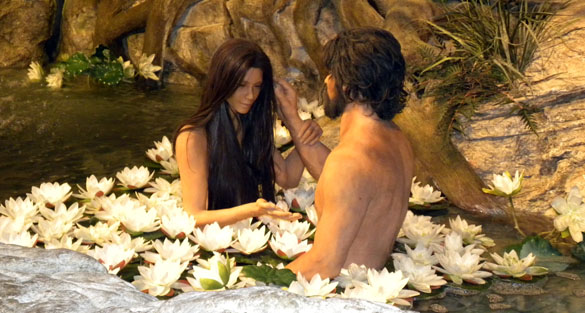
adamevebefore

Being made ‘in His Own image’ not only means that all Men (and Women) are created equal but also that each of them shares in His Divine Nature. Hence the origin of our free will, of our ability (‘right’, opportunity) to be saved. Compare this to how Marx described the human society:
“The Communists, therefore, are on the one hand, practically, the most advanced and resolute section of the working-class parties of every country, that section which pushes forward all others; on the other hand, theoretically, they have over the great mass of the proletariat the advantage of clearly understanding the line of march, the conditions, and the ultimate general results of the proletarian movement.

The immediate aim of the Communists is the same as that of all other proletarian parties: formation of the proletariat into a class, overthrow of the bourgeois supremacy, conquest of political power by the proletariat.

The theoretical conclusions of the Communists are in no way based on ideas or principles that have been invented, or discovered, by this or that would-be universal reformer.

They merely express, in general terms, actual relations springing from an existing class struggle, from a historical movement going on under our very eyes. The abolition of existing property relations is not at all a distinctive feature of communism.”

articlefiles-mv003370610000-96750_bd

As somebody who has lived for 30 years under communist rule let me translate this from ‘Newspeak‘ into plain English:
‘History suggests that those who figure out the inner workings of this world  have, from time to time, the opportunity to take over the show. Now is one of those moments. The ‘fat cats’ have been so greedy lately that the regular people are growling under the very heavy yoke that has been placed on their shoulders.  That’s why we have the opportunity to unsettle the ‘old’ from their positions and to plant our fat asses in their comfortable chairs.
And the first thing we must do in order to achieve that goal is to abolish the right to private property. People are so fed up with what was going on lately that they’ll go along. They have grown to hate so much the ‘greedy plutocrats’ that most of them won’t notice that in the (revolutionary) process they’ll lose the very last shrouds of personal autonomy they still have. Without the right to dispose of the results of their own labor they’ll be at our mercy’.

Who was right between the two?

Well… Both, unfortunately.

The communists did run the show, at least for a while. And we all know to which results.
On the other hand it seems that in the longer run miss-using the right to private property is indeed a powerful drawback. The already too long sequence of economic crises caused, ultimately, by nothing else but our own greed has indeed given birth to a generalized state of psychological malaise.

I don’t know about what’s gonna happen in the next world – or if it exists at all – but I’m sure that if we don’t learn, fast, how to use, properly, the right to private property things will become too hot for our own good in this one.

The only one we are sure about.

Further reading.
During my research for this post I found this very interesting take on the same subject:
“Zwolinksi argues that libertarians are right to support private property, but also that private property is more complicated than we sometimes think.”

20090421-ceci-nest-pas-une-pipe-rene-magritte

As a child I was introduced to the chicken and egg paradox by my grandmother – a very wise woman, despite (because?!?) the fact that she had very little formal education.

As I grew up I found out that even the adults are passionate about it. Just Google it if you don’t believe me. Last time I checked the search engine had come up with 26 million (26 000 000 000) entries….

Then I was introduced to a slightly more interesting version of it.
Who is responsible for what is going on around us.
“Who created the World”, that is.

Apparently we have three three camps.

The theists, of various denominations – some of whom would cut each-other’s throats attempting to convince the ‘others’ that their God is the true one, believe that an outside agent is wholly responsible for the ‘Big-Bang’ and all its consequences. Or, at least, for ‘jump-starting’ the process.
The atheists, some of whom are ‘rabid’ enough to be as obnoxious as some of the theists, who blame it all on Lady Luck.
And the agnostics, like myself, who cannot make their minds one way or another.

Now, and I hope you won’t mind, I’m going to enumerate some facts.

  • We, the humans, are the ones who came up with the Big-Bang theory.
    Which is nice. It offers a generous canvas on which we might eventually thread a lot of ‘science’, but doesn’t, in any way, shape or form, offer even the slightest opportunity for the most imaginative amongst us to propose the flimsiest hypothesis about what started the whole process.
    Hence those of us who follow a far longer tradition feel free to consider that a Divine interference is the sole rational explanation. For everything that hasn’t yet a ‘scientifically proven’  one. As if science ever offered us a definitive answer to anything…
  • The Big Bang Theory was initially devised by a Catholic priest, Georges Lemaitre, as yet another attempt to understand God’s ways.
  • No matter what the various prophets and religious teachers have told us, all books – including the ‘holy’ ones – have been written by people. They might have been inspired by (a ?!?) God, there is no way of telling what happened in the minds of the writers, but all those books have been written by human hands.
  • We, the humans, are the ones who consider this problem to be a very important one.

So important, in fact, that even a newspaper otherwise busy with economic and political issues occasionally looks (up ?!?) at it.

In its Christmas Day edition the Wall Street Journal published “Science Increasingly Makes the Case for God” by Eric Metaxas.
Basically he author tells us the story of how Sagan started the hunt for ‘Extraterrestrial Intelligence’ and how the seemingly simple task ended up in a cul-de-sac.
While Good Old Carl thought “that there were two important criteria for a planet to support life: The right kind of star, and a planet the right distance from that star” in time “our knowledge of the universe increased” and “it became clear that there were far more factors necessary for life than Sagan supposed”.
So many in fact that some of us, Eric Metaxas included, now believe that “Probability said that even we shouldn’t be here”.

In this context I’d like to bring to your attention the words uttered by Lord Kelvin in 1895 – by that time already elected president of the Royal Society: “Heavier-than-air flying machines are impossible.”

“Yet here we are, not only existing, but talking about us existing here.”

Do you see the pattern?

The usual claptrap, because something can’t be explained, it must be God.” (Mark Baxter’s comment on my FB wall) Or outright impossible, I might add, following Lord Kelvin’s example.

In other words ‘if WE cannot figure it out then it either doesn’t exist or has been made by God’.

But who made ‘God’ in the first place? And why?

Are we even aware that what we call ‘God’ is nothing but an image?
I’m not going to delve far into such intricacies like reminding you that no Orthodox Jew would ever pronounce the ‘true’ name of God but this is a powerful indication that our Elders were aware of the difference between reality and our ability to figure it out.

So why do we keep making this mistake? Why do we still try to ‘invent’ an ‘outside agent’ whenever we don’t have enough information about how something came to be?

That outside agent might very well exist, of course. Someplace, ‘out there’…. Or not. For all we know some things might happen just by pure chance. However improbable that might seem. To us!

We cannot determine, as of now at least, either way.

Then why insist? Any way?

Some of you will tell me, quite appropriately,  that ‘believing’ has brought us where we are now.
That ‘faith’ has guided us through the dark nights when we would have otherwise lost our hope. That following the ‘ten commandments’ has kept us from killing each-other much more ‘passionately’  than we’ve done it.

But now that we’ve understood what religion has done good for us, what’s keeping us from behaving ‘as if’?
Without ‘God’, or whatever name you want to use for the reality that harbors us at its bosom, having to ‘strike’ us down from time to time?


BetterFailling's avatarMan as a measure of all things.

democracy_thumb

“People Aren’t Smart Enough for Democracy to Flourish, Scientists Say”

“The democratic process relies on the assumption that citizens (the majority of them, at least) can recognize the best political candidate, or best policy idea, when they see it. But a growing body of research has revealed an unfortunate aspect of the human psyche that would seem to disprove this notion, and imply instead that democratic elections produce mediocre leadership and policies.”

I’m afraid that (not only) this time “the scientists” have gotten it all wrong.

By speaking about “the best” (political candidate, policy idea) they demonstrate a completely false understanding of what democracy is.
They mistakenly define it as an optimization process (that is supposed to identify the best available opportunity) while functional democracy is nothing but a weeding out process.

Even pretending that anybody can identify ‘the best political candidate/policy idea’ is presumptuous, to say the…

View original post 309 more words

Since my main blog – Nicichiarasa.wordpress.com – has become a pell-mell of subjects connected solely by my subjectivity I decided to put things in order.
Hence the birth of my second blog, Man as a measure of all things.
Enjoy it, if you can find anything interesting in here.
And Merry Christmas to those of you who celebrate it.

BetterFailling's avatarMan as a measure of all things.

150721183714-donald-trump-large-169

This morning, while browsing through Facebook, I came across a very good question. The kind that really gets your mind spinning in overdrive.

“If you were to be a scientist, would you prefer to be:
a) super smart and moderately curious
b) moderately smart and super curious?”

First of all I don’t think being a scientist matters in any way. This question is valid for all of us.

I pondered for a few minutes – b) – and then read the entire discussion that followed. After a couple of hours it hit me. BTW, b)  means I’m aware about my limited brightness – which is why it took me so long to figure this out.

Being smart is only part of the whole equation.

Intuitively a smart mind must be very mobile, hence very curious.
Well, that would mean that all really bright people would necessarily develop encyclopedic minds, right?

View original post 535 more words

Adoptarea acestei legi a impartit România in două tabere si a determinat Banca Centrala Europeana sa ne trimita un aviz extrem de ciudat dar care lamureste multe.

Unii se bucura ca in sfarsit cineva le-a dat peste nas bancilor, bancile – sau mai bine spus bancherii si actionarii – spumega de furie iar cei de la UE nu prea stiu pe unde sa mai scoata camasa.

Treburile nu sunt totusi chiar atat de complicate.

Pe vremea cand toata lumea era plina de sperante bancile au dat o gramada de credite cu garantie imobiliara iar „consumatorii” s-au angajat voiosi sa le plateasca. Bancile isi facusera calculul ca nu pot sa piarda – doar ele insele facusera evaluarile cu privire la bunurile puse sub ipoteca. In plus exista si prevederea ca atunci cand executarea garantiei nu acopera valoarea datoriei banca se poate indrepta asupra altor bunuri ale debitorului sau chiar asupra veniturilor sale viitoare. Iar clientii nu fusesera atenti la amanunte de genul asta.

Dupa criza situatia a devenit paradoxala. Oamenii s-au trezit ca au de platit rate enorme pentru o proprietate care valoreaza jumatate din pretul platit pe ea cu doar cativa ani inainte dar bancile inca nu aveau prea mari probleme. Toti cei care mai aveau slujbe – adica majoritatea debitorilor – au continuat sa plateasca ratele pentru ca nu aveau alta alternativa. Daca s-ar fi oprit banca le-ar fi luat casa – pe care ar fi vandut-o la un pret ridicol de mic – iar ei tot ar fi trebuit sa plateasca restul datoriei. In plus fata de chiria pentru noua locuinta.

In situatia asta nenea Parlamentul European de mana cu nenea Consiliul Europei s-au gandit ca macar de acum in colo sa ii protejeze pe consumatorii europeni de credite. Asa ca au emis Directiva 2014/17/UE. 50 de pagini din care rezulta ca incepand cu data de 21 martie 2016 contractele de credit ipotecar incheiate in Europa sa semene cu cele din America. Adica datoria sa fie stinsa in intregime atunci cand imobilul care face obiectul ipotecii intra in posesia bancii.

Parlamentarii romani au facut un pas mai departe si au prevazut in noua lege posibilitatea ca si cei care au incheiat contracte de credit inainte de aceasta data sa poata iesi din ele prin aceiasi metoda.

Din momentul acesta „formalistii” au sarit in sus. Cum se poate ca statul sa intervina legislativ intr-un contract deja incheiat, de comun acord, intre doua parti?
Cum se poate ca un act legislativ sa aibe efecte in mod retroactiv?

Pai hai sa o luam altfel.
Atunci cand a fost incheiat contractul banca a fost cea care a trimis un evaluator la fata locului si tot ea a stabilit cat din valoarea stabilita de acel evaluator va fi luata in calcul la stabilirea ipotecii.
Acea valoare nu face si ea parte din contract? De ce acum, cand debitorul nu mai poate – sau nu mai vrea, pentru ca nu mai are nici un sens din punct de vedere „economic” – sa ramburseze creditul nu se mai face in nici un fel vorbire despre acea „valoare”?
Nu este si asta o forma de modificare, chiar daca implicita, a contractului?
A manifestarii de incredere reciproca dintre parti?

Adica banca are voie sa spuna „pardon, am gresit” dar clientul nu?

Sincer sa fiu, inteleg foarte bine temerile bancherilor.
Si pe cele ale Bancii Centrale Europene.
Ba chiar si pe cele ale proprietarilor de case – daca legea va intra in vigoare in forma actuala preturile vor mai scadea, cel putin pe termen scurt.

Numai ca lucrurile trebuie lamurite repede.
Daca am inteles ca principiul dupa care au functionat lucrurile pana acum nu a fost bun – si asta este foarte clar, inclusiv din directiva citata mai sus – atunci situatia trebuie remediata pentru toti, nu doar pentru viitor.

Sau poate ca la asta se refera cei care vorbesc cu atata patima despre „hazardul moral”?
La faptul ca daca situatia nu se reglementeaza repede lumea isi va pierde de tot increderea in sistemul bancar?

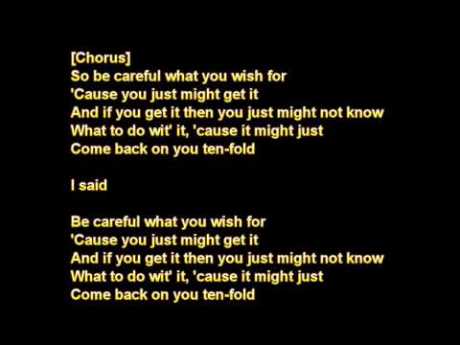
unless fully prepared to deal with all the consequences of getting that something.

putin-on-bear-obama-in-tutu

dkyyy1lzegpux28x_o_eminem-be-careful-what-you-wish-for-cover-by-cruthe

Click here and read all the lyrics. Carefully. Twice!


crochetcapforgentleman1866sm

In calitate de fumator caruia nu-i place sa stea in fum – da, exista si din astia – regula asta mi se pare de bun simt.
Si totusi. Simplul fapt ca mie mi se pare de bun simt nu cred ca are mare valoare… S-ar putea sa fie nevoie de niste argumente mai solide.

Pentru inceput iata unul de ordin istoric.
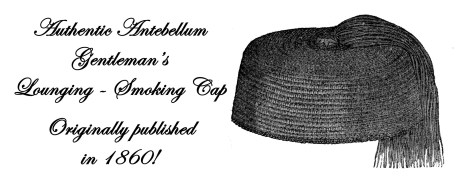
Prin secolul XIX, atunci cand Europa de Vest incepuse sa se civilizeze – adica sa faca lucrurile dupa reguli si nu dupa bunul plac al fiecaruia – fumatul avea un anume tipic. In primul rand tutunul era destul de scump asa ca oamenii – de obicei barbatii – fumau cate o tigara (de foi) sau cel mult doua. Si nu neaparat in fiecare zi. Dar musai dupa masa de seara si doar dupa ce femeile se retrageau in alta camera. Iar copiii fusesera trimisi de mult la culcare. Si pentru ca mirosul de tutun ars nu era nici atunci considerat a fi foarte placut barbatii respectivi foloseau o anume jacheta doar pentru chestia asta.
Mai apoi acea jacheta a intrat in uzul curent si acum i se spune ‘smoching’, dar asta e alta poveste…

Revenind in contemporaneitate voi sari cu o gratie elefantina peste argumentele de natura medicala – care nu conving pe nimeni pana cand nu este prea tarziu – si voi aduce in discutie o problema draga noua.

Libertatea.

Am citit pe FB ca “Este o mare lipsă de fair play să interzici total fumatul. Aceasta deoarece victime sunt oameni aflați deja sub o puternică dependență. Deoarece multe afaceri aducătoare de locuri de muncă și taxe sunt deja construite în jurul acestui viciu.”

Fiind eu insumi in aceasta situatie mi s-a parut ca omul avea o oarecare dreptate.

Altcineva a introdus in discutie o ‘chestiune de principiu’: restringem o libertate sau o anulam pentru ca ponderea abuzului derivat din fapta incepe sa produca efecte suparatoare la nivel societal”

In momentul acela mi-am dat seama ca treaba e un pic mai complicata decat pare la prima vedere.
Despre care libertate vorbim aici?

A fumatorilor sa isi strice singuri sanatatea, a fumatorilor sa-i afume pe toti ceilalti, a ‘celorlalti’ sa isi asume riscul de a fi afumati sau a ‘celorlalti’ sa manance intr-o carciuma unde miroase doar a mancare?

Ca sa nu mai vorbim si de libertatea carciumarilor de a organiza sesiuni de sinucidere colectiva pentru clientii lor…atat pentru cei activi cat si pentru cei pasivi.

Hai ca m-am zapacit de cap, tot ratacind printre valatucii astia de fum.


ban muslims

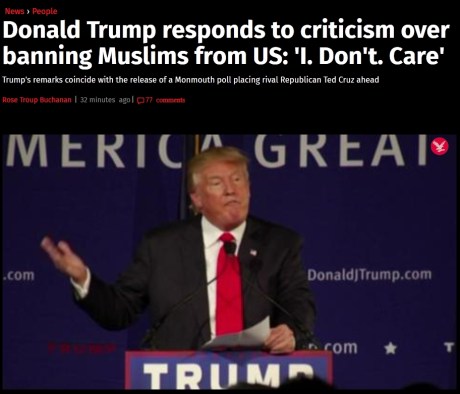
A lot of pundits on both sides of the aisle are bending over backwards trying to explain how come Trump has captured so many ‘hearts and souls’.

Here’s a very poignant explanation from a seemingly independent minded, hence free, commentator who calls himself Tonkerdog1:

“The left will revulse at this and rightly so, but he is only appealing because the masses have had their culture irrevocably changed, by the policies and plans of that very left. They won’t take this anymore.

Frank Luntz, the Republican’s spin doctor, concurs:

“This is a different cat. This is a different phenomenon,” Luntz told reporters after conducting the focus group. “This is real. I’m having trouble processing it. Like, my legs are shaking,” he added.

“I want to put the Republican leadership behind this mirror and let them see. They need to wake up. They don’t realize how the grassroots have abandoned them. Donald Trump is punishment to a Republican elite that wasn’t listening to their grassroots.”

What we seem to have here is a classic case of people so fed up with what they perceive as happening around them that they fall for the first con man callous enough to grab the opportunity.

I’m not going to bore you with facts about how many times Trump changed his mind and things like that. You can read them by yourself. Just click here. I’m not even going to ask you why didn’t you saw this coming when he said that:

‘You have to take out their families’

What I am going to ask you is:

What if he’s actually sincere when he says that he doesn’t really care (for anything else but his own ego)?

And why should he?

““We need a total and complete shutdown of Muslims entering the United States while we figure out what the hell is going on,” he said, prompting a huge roar. The crowd of about 500 Trump faithful stood up as one and bellowed its approval.”

It seems that his ‘bellowing’ followers do not read much.
“Trump Wrongs the Right”?
So what?
The Internet is choke full with ‘the Media is full of shit’ messages. Why should people start believing what the media publishes now?

When are we going to understand that the Trumps of this world don’t come out of the blue?
Not a single one of them could have become what he is today without enough of us giving him a lot of credit.

Despite the fact that not a single one of them cares a iota about any of us.

And ugly too!

Despite the fact that there is no shortage of obese women in the real world and tonnes of bad jokes about them lurk on the Internet – one of them pictured above – sensible people do not speak much on this subject. Not that the subject isn’t relevant but because normal people refrain themselves from hurting other people.

And the closer those ‘other people’ are to the speaker the more carefully he/she chooses his/hers subjects/wording.

And why is this?

Behaviorists would argue that through the constant push-pull interaction that takes place between the members of a community each of them learn to behave in a manner acceptable to everybody.
‘Insults are not acceptable’ that is.

Evolutionary psychologists would argue that useful information that is presented in an insulting manner has practically no chances to penetrate the ‘ego filter’. Hence effective communicators have learned to ‘dress’ information they really need to convey to their audience in a ‘palatable’ manner.

Take your pick.


Does any of you remember the final ‘battle’ in Spiderman 3?

Not the special effects and not even the reconciliation between Peter and Harry. Or that between Peter and Flint Marko.

Do you remember how the ‘people of New York’ and the media were watching the encounter as if it was a MMA fight?

As if the outcome was of no importance for any of them?