All people, men and women alike, are born, nursed and initially educated by their mothers.
By their mothers, inexorably women!

Some of the feminists, mostly women, act as if they want to exact revenge over their former ‘masters’.
Over men. Whom they perceive as oppressors.
Most of the feminists, from both genders, believe that women should be equal to men. That they are not yet so and that this is the most important problem which has to be solved in order for mankind (?!?) to go forward.

Being raised under communist rule – where women had been put to work, hence granted a lot of ‘equal rights’ – by a very ‘progressive’ pair of women – mom and grandmother – I grew up having the impression that men and women considered themselves partners. That being how my father and mother treated each-other.

I used scare-marks around progressive because neither my mother nor my maternal grand-mother considered themselves as such. Only behaved in that manner. Which I grew up considering to be normal.

Illusions, like always, end up being shredded.
Very soon I learned that not all people had been born equal.

And that I had been dealt ‘the better hand’…
So I didn’t waste any more time/energy to consider the matter!
For 40 or so years…

This is not the good moment to delve into details.
Enough for me to say that my quest – to understand as many as possible of the consequences ‘inflicted’ by the limited nature of our consciousness – led me to feminism. To ‘feminism’ seen as a social phenomenon.

Already convinced – since early childhood, conviction beefed up by the relation built in concert with my wife, that men and women are equal partners in the adventure called life, I was confronted by a huge dilemma:


Why on Earth so many women raise their children – both future men and future women – in the conviction that men are entitled to be served and women are meant to indulge their wishes?!?

Is it an attitude imposed by the overbearing men?
Hence easy to unlearn?

Or is it an evolutionary thing?
Hence harder to leave behind…

I continue to be under the impression that my most important break-trough to-date is that each individual conscience is primordially concerned with its own survival. Not as much with its ‘physical’ survival as with the conservation of the good impression it has about itself. With maintaining its self-esteem!
For instance, this is the reason for so many of us having such a hard time when trying to ditch a bad habit! Because we have to admit first, before ourselves, that we’ve been wrong for so long! That we’ve been acting foolishly since adopting that habit.

Coming back to the main subject, who would like to be?
The proud mother of a highly successful man or the mother of a below average Joe?
Small wonder then that in the current cultural environment we continue to raise highly assertive men. And, sometimes, women.
On the other hand, if you’ve been a submissive woman all your life, how do you feel in the presence of assertive women? Uncomfortably? Even more so if the assertive woman happens to be your daughter?

So, could it be possible that we are stuck in the present situation because we’ve conditioned ourselves to over-value the glitzy part of what we call ‘success’?
And because we’ve not yet learned to forgive ourselves for past mistakes?

Ernst Mayr, an evolutionist, put it this way:
‘Evolution is no way about the survival of the fittest.
“Fittest” to what ?!? since evolution is about being able to cope with change…
In reality, evolution is about the demise of the unfit!’

Same here.

We can fight ourselves into the ground, chasing ‘success’.

Or we can thrive together.
As equal partners, complementing each = other.

“Better to be a dog in times of tranquility than a human in times of chaos.”
The true version of the Chinese ‘curse’
too many times translated in English as
“May you live in interesting times”

Not so long ago, a presidential candidate told his audience “People… my people are so smart!….And loyal! you know, I could shoot someone on the 5th Avenue and not loose votes!”

As things happened, he was right. His people did vote for him.
He, a guy who had previously bragged about ‘grabbing women by the pu$$y’.

Four years later, the People changed their mind. And voted to send him back to Mar-a-lago…
He told ‘his’ people the vote had been rigged.
The ‘smart ones’ believed Trump to the tune of eventually chasing Vice-president Pence all over the Capitol in an attempt to convince him to ditch the result of the vote. Against all evidence, as certified by all pertinent authorities.

Currently, there is an increasing number of people floating the idea that ‘democracy’ isn’t for everybody.
The notion isn’t exactly new – see the ‘debate’ pitting ‘republic’ against ‘democracy’ – but lately its promoters have become even more brazen. They posit that since people are not equally endowed – intellectually, mostly – they should be tested before being allowed to vote.
Nothing new under the sun? The whole thing is nothing more than a rehash of the notion put forward by Robert Heinlein in Starship Troopers?

Not exactly!
Heinlein proposed that full citizenship – including the right to vote – should be extended exclusively to those willing to put their life on the line. ‘If you want to decide the future, you need to commit yourself to defending the present. With your life, if necessary’.
Quite a difference from ‘I’m not OK with how you may vote so I’m going to look for ways to disenfranchise you, under various pretenses.’

The way I see this, we’re confronted by two things.
An increasing lack of trust amongst us. And an burgeoning amount of intellectual dishonesty.


A well regulated Militia, being necessary to the security of a free State, the right of the people to keep and bear Arms, shall not be infringed.

As per the United States Constitution, Arms are supposed to be kept and borne with the main goal of protecting the free State. Which State was supposed to be governed by a government “of the people, by the people, for the people“.
Nowadays, under the pretext that ‘the government is more often the problem than the solution’, the defenders of the Second Amendment “as it was written” maintain that Arms are necessary so that the people may defend itself against an overbearing government.

Otherwise put, whenever I don’t like the outcome of an election, I need to be able to start a(n) (un)civil war. An attitude born out of a complete distrust in our fellow citizens’ ability to vote ‘right’.

And a simpler version.
I don’t trust all my fellow citizens’ ability to vote reasonably but I trust all my fellow citizens enough to let them walk around armed to their teeth. Unconditionally, in some states.

Coming back to Marcus Aurelius’ pronouncement, who is the one smart enough to determine whether those 10 000 actually have no idea about the subject at hand?
Not to mention the fact that Marcus Aurelius never actually said it…. Wrote it, more precisely.

And why do I choose to believe this guy Sadler instead of trusting the bloke who had created the meme? Because Sadler makes sense. And because Sadler had put his name forward – remember Heinlein? – instead of cloaking himself in the shadows of the internet.

Acu’ vreo câteva luni, am fost ‘surprins’ de aparatul radar circulând cu 160 km/h pe autostradă.

După discuția foarte civilizată cu ‘omul legii’ mi-a căzut fisa.
Regula cu privire la cei 5o de km/h în plus e mult prea blândă.

În condițiile actuale, rămâi fără carnet abia după ce depășești cu mai mult de 50km/h viteza maximă de pe tronsonul unde te-au prins.
Conform acestei reguli, să mergi cu 81km la oră pe o străduță îngustă – eventual în dreptul unei grădinițe, e la fel de periculos ca atunci când mergi cu 181 km/h pe o autostradă dreaptă și uscată.

Pe bune?!?

Parastas de 6 luni pentru mama soției mele.
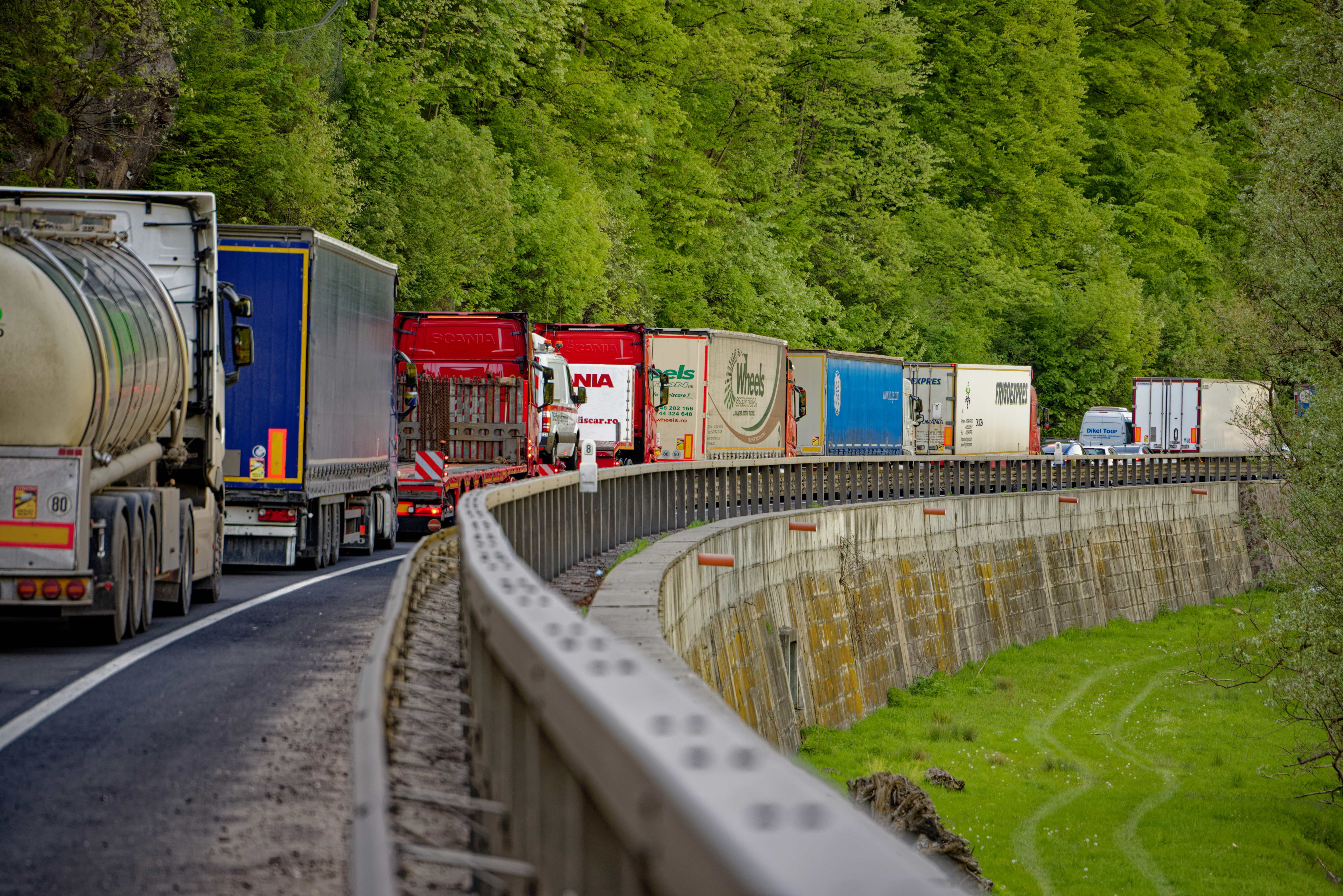
Ne urcăm frumos în mașină și începem să măsurăm țara cu circumferința roții. Sunt cinci sute și ceva de kilometri de la București la Dej, mai mult de jumătate sub formă de autostradă sau drumuri expres. Cea mai nasoală parte, adică Valea Oltului, e în continuare ‘pe două benzi’.
De vre-un an, la capătul dintre Sibiu e o porțiune ‘gâtuită’. Se circulă pe o singură bandă din cauza unor lucrari de consolidare.
În funcție de noroc, stai 10 minute sau faci 12 km în 3 ore și jumătate. Așa cum am făcut noi ieri.
Pentru unii ciumă, pentru alții mumă… Înainte de a fi exploatate, resursele trebuie identificate ca atare. O mulțime de oamenii blocați în mașini reprezinta o oportunitate majoră pentru cerșetori.
Câteva mame și-au adus copiii la produs. Unii purtați în brațe, alții trimiși de unii singuri printre mașini.
Soția îi dă 10 lei unei fetițe de vreo zece ani. Lângă noi, șoferul unui Mercedes electric de ultimul răcnet care fuma cu geamul deschis se uită lung și dă dezaprobator din cap.
Peste nici două minute vine o altă fetiță, cam de aceiași vârstă. Se duce direct la vecinul nostru și „dă-mi și mie un leu să-mi iau ceva de mâncare”.
„Tu ar trebui să fii la joacă, nu să cerșești pentru bețivul de tac-tu.”

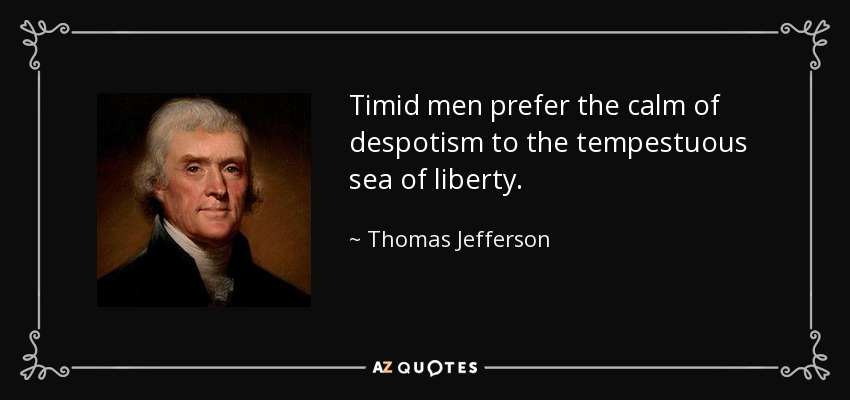
I’m not sure what ‘timid’ meant in those times.

I would have used ‘coward’.

On the other hand, it would have been politically incorrect…

And ‘somewhat’ inefficient! Being blunt, often scares your audience.

And makes them impervious to what you need to share with them.

People act as if the world is as each of them sees it.

The briefest glance into our evolutionary past is enough to see that the more ‘sophisticated’ an animal is, the more it depends on its visual ability. On its ability to see things in a manner which is consistent with its ‘way of life’.
Herbivore mammals, for example, have a very wide vision field while the carnivores feeding on them have a narrower field but a binocular vision. Which makes perfect sense. The ‘defenseless’ herbivores need to see everything around them – so they might be able to flee, while the predators need binocular vision in order to hunt efficiently.

Our evolutionary ancestors, who lived in trees, needed binocular vision in order to travel in their 3D world. They also needed better hand-eye coordination for picking the fruit they were eating. Hence their, and ours, very tight connection between our eyes and our brains. And the big portion of our brain allocated to processing visual information.

At some point in our evolution – we were still animals at that point, we have learned to use sound in order to warn/grab the attention of our ‘correspondents’. Why? Because sound can go around obstacles while in order to notice visual cues the potential recipient needs to… you got it, I’m sure!

Fast forward to when our direct ancestors, already homo sapiens, have started to actually speak. To consciously use sound to convey meaning. Not only to warn but to transmit actual information. Information which could be acted upon. Acted upon as different from reacted to…

And now I wonder. How much time had passed between learning to speak and uttering the first lie?
Lie as in intentionally misrepresenting reality, as opposed to unintentionally failing to convey the entire reality…

Hard to even imagine an answer to that question.

But since I’ve already mentioned the subject, let me make two observations.
It’s a lot easier to lie using language than in any other way.
And it’s a lot easier to be fooled by what you see – and sometimes hear, than by information gathered through the rest of the senses. Unless, of course, that information was a ‘message’ sent/meant to/for us. A perfume versus a naturally occurring smell, for instance. Or an artificial sweetener/flavoring…

I’ll wrap this thing up pointing your attention to the fact that since learning to read we, individual human beings, have shared more information using the ‘visual channel’ than ever before.
Which has produced momentous consequences.

Verba volant, scripta manent!
A written culture is more resilient than a spoken one.
A written lie reaches more people, potentially, than a told one.

For two reasons.

A ‘verbal’ lie needs to be retold in order to survive. It has not only to impress strongly enough the target as to transform it into a relay but also to be reinterpreted convincingly enough by the former victim as to reignite the process.
Meanwhile, a written lie just lies in waiting. Waiting to be read… Not to mention what happened after we had invented the printing press…
The second reason is less obvious. I’ve already mentioned the fact that a spoken lie depends on the teller. On the ability of the ‘interpreter’ to convey it in a convincing enough manner. The problem being here that if the target has the slightest doubt, the lie flops. The liar has lost an opportunity. On the other hand, a written lie can be honed at will before hand. Under no pressure.

Now that I have finished the theoretical part of my post, let’s interpret the following message.

“Dishonesty and intellectual chaos…”

According to some of those with whom we share the planet, it’s OK for a human individual to choose their name but not their gender. Choosing your own name – as in changing the name you have been given at birth, is acceptable while changing/widening the gender you had been assigned to – by others, before you had any opportunity to contribute to the process – is considered to be dishonest and liable to cause intellectual chaos.

On the other hand, we – all of us – should be fully aware of the fact that those who – since always – have ‘found joy’ in ‘exposing’ themselves will use every opportunity available to them.

The way I see it, the situation is ‘chaotic’ enough.
No need for any of us, from any ‘camp’ and belonging to any ‘persuasion’, to further weaponize an already volatile situation.

Do you remember what happened when our not so distant ancestors had ‘determined’ that witches were meant be burned?

People act as if the world is as each of them sees it.

The world is as it is.
Only nobody knows how…
And, probably, never will.

What we act upon, and interfere with, is the world as we see it.
Here being the interesting part.

All other living things mostly react to the world.
Even our brain uses much – some say ‘most – of its processing power to react rather than act.
Our body is able to survive even when our frontal cortex – the portion of the brain where thinking takes place, has been knocked out of action. When we’re fast asleep, drunk, ‘high’, low, in a coma…
In fact, an organism doesn’t need to ‘see’, in order to react. To breathe, to eat, to perform bodily functions, to reproduce…

Things become more and more complicated, indeed, as we climb the evolutionary ladder.
Complicated for us… who attempt to understand what’s going… not for those living on each of the steps… Things are complicated only for those trying to ‘see’!

It’s easy, for us, to consider that a dung beetle which carries food for its future offspring is acting instinctively.
It’s a little bit more complicated when we observe a troop of chimpanzee and notice how deliberately the alpha male leads his ‘subjects’ and the complex social life of the community …

But the difference between how the chimpanzee and the humans interact with reality is wide enough for us, humans, to consider ourselves as having risen ‘above the fray’. As being special enough to deserve a special status!

And what is it which makes us so special?
Our ability to speak? To walk on two legs? To write?
None of the above!

It’s our ability to ‘see’ the difference between us and the rest of the world!

All other living organisms behave as if they belong to nature. To the reality surrounding them.
We humans, behave as if we own reality.

While the rest of the living things react to what’s happening to them – even when they plan ahead – we, humans, deliberately – and presumably in a conscious manner – transform the reality according to what we consider to be our needs.

According to what we ‘see’ as being our needs…

People act as if the world is as each of them sees it.

Nobody does anything unless they are convinced that there is some merit in ‘that’ particular something being put into practice.
Otherwise put, nobody starts doing anything before believing that the thing being started is well worth the effort.

In fact, doing – anything, in a voluntary manner – is an act of faith.

‘OK, I can live with that.
But which faith? Cause there are many…’

This is the moment when I’ll start commenting on the difference between creed and faith.
Creed is very specific. Personal creed, Christian creed, Islamic creed, even professional creed…
Faith, on the other hand, is more general. The concept itself encompasses creed and goes a lot further.

Personal faith is both the conviction which drives each of us to do something and the specifics about how we implement that something.
Those of us who are faithful Christians derive their energy from their faith and the particulars of their action from their Christian creed.
Those of us who are faithful Muslims derive their energy from their faith and the particulars of their action from their Islamic creed.
Those of us who are agnostics – or atheists, derive their energy from their faith and the particulars of their action from their specific creed.
In this sense, faith is more like a state of mind – shared by all faithful people, while creed is specific to each category of people. Down to each individual.

Am aflat de pe FB că Iulia Marin – o ziaristă de 32 de ani, nu mai este printre noi.
Goagal și… ajung la un articol care descrie cariera ei de jurnalist.
Pasiunea cu care își făcea meseria.
Pasiunea cu care încerca să aducă informații relevante la cunoștinta cititorilor. A ‘consumatorilor de presă’.
Și lupta Iuliei cu depresia.

La finalul articolului am fost îndemnat să continui.
Să citesc în continuare.
Să mă informez despre celelalte subiecte importante ale zilei.

Simt cum mă apucă depresia!
Și un fel de furie pasiv-agresivă.
Oare oamenii aștia nu-și dau seama că își taie singuri craca de sub picioare?
OK, deocamdată au reușit să ne fure nouă valiza… și se fâțâie mândri cu ea prin oraș…
Dar cât o să mai dureze chestia asta?
Poate că om fi noi mulți dar proști… numai că foamea e cel mai bun profesor.

De la un moment dat încolo tot o să ne dăm seama că om fi noi proști… dar suntem mulți!

“And Jesus said unto them,
Because of your unbelief: for verily I say unto you,
If ye have faith as a grain of mustard seed,
ye shall say unto this mountain,
Remove hence to yonder place;
and it shall remove;
and nothing shall be impossible unto you.”
Matthew, 17:20

Apparently, the quote above doesn’t make much sense.
No matter how much faith one has, telling a mountain to ‘remove to yonder place’ will yield nothing more than a wasted breath.

On the other hand… 2000 years is a lot. Erosion has moved many a mountains in this time… After all, Jesus didn’t say anything about how fast will the mountain remove itself after it had been told to…

OK, jokes aside, nowadays it’s a lot easier for us to remove a (smallish) mountain than it was in those times. We currently use cranes and lorries instead of mere words … but we still wouldn’t start before convincing ourselves that it’s possible.
That our goal is within our grasp. At least notionally.

The truth of the matter being that we live now in a better world.

According to our benchmarks.
We live longer and have it a lot easier!

But is our world really better?
According to other benchmarks…
Biodiversity loss, spoiled environment, continued human exploitation…

Let me put it differently.
What was the thing which had set apart the abrahamic faith from all other religions?
The notion that all people had been made in the image of the creator god.
As a consequence of how they’ve been made, they – the people – are not only equal – cast in the same mould, but also harboring a divine spark. The image they share being that of a god, not an ordinary one…

What difference does this make?
Democracy, capitalism, free market… all things we consider to be capital to our well being are based on the notion that all people are equal and have to be treated as such.
Otherwise why bother with what the other has to say about anything?

I’ll repeat the question.
Is our world really better?

Forget about biodiversity, pollution and quality of life.
Do we continue to consider our brethren to be equal to us?
Do we really hear them out when they speak to us?

How are we to achieve our goal – whatever that might be, if we don’t coordinate our faith?
If we don’t hear out what the others have to say about anything?

My previous post was about reification.
About the fact that each of us acts according to their faith. According to their belief that the world is as each of us sees it.
|How are we going to coordinate our efforts towards a common goal – a better place for all of us to live in, if we don’t hear what each of us has to say about where we’re going?