De cativa ani incoace finalul lunii iunie este marcat de controverse pe marginea “Examenului de Capacitate“.

Un timp discutiile s-au invartit in jurul examenului in sine iar mai apoi in fiecare an au fost gasite motive punctuale pentru alte controverse destul de aprinse.

‘Era mai bine pe vremea noastra. La sfarsitul scolii dadeai un examen de intrare la liceu si gata. Daca erai in stare sa intri la liceul pe care ti l-ai ales, bine. Daca nu, treaba ta… cine te-a pus sa incerci la liceul ala. Inseamna ca nu te-ai evaluat bine.
Acuma… vin dom-le unii de pe la tara cu niste medii… te doare mintea… si ocupa locurile de la liceele bune din orase… de parca nu stim si noi cum merge treaba acolo’.

Pe vremea cand am trecut eu prin experienta asta partidul sustinea sus si tare: “copiii sunt viitorul tarii”.
Si, in copilaria mea, chiar asa parea sa fie. Vaccinurile se faceau la timp, manualele nu lipseau la inceputurile fiecarui an scolar, parintii aveau unde muncii ca sa ne creasca, blocurile crestau ca din pamant si toata lumea avea un acoperis deasupra capului.
Iar noi, copiii, stiam foarte clar ca singura cale pentru a face ceva in viata era sa punem burta pe carte. Varianta PCR – pile, cunostinte, relatii – era luata in calcul doar de parintii nostri. Macar din punctul asta de vedere noi traiam intr-o naivitate totala.

Apoi lucrurile au inceput sa se imputa.

Mancarea a disparut treptat din magazine, hainele cat de cat aratoase se dadeau pe sub mana, sapunurile mai de soi devenisera atat de rare incat oamenii mai degraba isi parfumau rufele cu ele in loc sa le foloseasca la spalat.

La inceput oamenii spuneau ‘ai carte, ai parte’.
Pe la jumatatea anilor ’80 a inceput sa circule poanta cu ‘de ma, ce sa-ti fac eu daca ti-a placut cartea’. Pentru generatiile mai tinere era vorba despre doi colegi de liceu. Unul se dusese mai departe la facultate, ajunsese profesor de istorie, facea naveta la tara si traia inca in apartamentul primit de parintii lui cu chirie de la intreprinderea unde lucrau. Celalalt facuse scoala de macelari – carnea era la mare pret, nu se mai gasea in magazine – si la treizeci de ani avea deja casa lui, masina, etc, etc… Toate astea din spaga, bineinteles.

Imediat dupa revolutie scoala a devenit din nou la moda. Foarte multi dintre absolventii relativ tineri de facultate – in jur de 30 de ani – si-au gasit slujbe extrem de bune prin strainatate iar chestia asta a inceput sa-i remotiveze pe tineri. Cuplat cu faptul ca invatamantul superior din Romania era, in ciuda unor carcotasi, capabil sa dea absolventi de calitate, fenomenul a generat o noua efervescenta legata de educatie.

Din pacate ‘efervescenta’ asta era legata si de diplome in sine.
Ceea ce a dus, pe de o parte, la inflatia de doctori pe care o observam acum iar pe de alta la  aparitia unei intregi pletore de institutii de invatamant superior, private dar si de stat, unde era foarte usor de intrat. Ce invatai acolo… asta era alta problema…

Intre timp s-a mai intamplat ceva.
Parintii au inceput sa petreaca din ce in ce mai multe ore la servici si sa paseze din ce in ce mai multe asteptari si responsabilitati pe umerii scolii in ceea ce priveste educatia copiilor lor.
‘Eu ma spetesc sa-i asigur cele mai bune conditii, el (copilul) trebuie doar sa invete. Iar profesorii sa puna mana sa-i educe, ca doar de aia primesc leafa din impozitele platite de mine’.

Problema e ca niciodata scoala nu va putea sa le ofere copiilor cei 7 ani de-acasa. Anii aia in care inveti sa ai grija de tine si sa-i respecti pe cei din jurul tau.

Uite asa cele doua tabere au inceput sa se certe intre ele. Parintii dau vina pe profesori ca ‘nu se mai face scoala ca pe vremea mea’ iar profesorii sa le reproseze parintilor ca ‘nu sunt in stare sa-si tina copii in frau’.
Evident, toti uita ca si profesorii au copii – care nu se comporta deloc diferit de ceilalti – dar si ca toti profesorii, absolut toti, sunt si ei copiii cuiva.

Daca adaugam la asta si faptul ca prestigiul profesorilor a scazut foarte mult in ultima vreme… Ca sa nu mai vorbim de salariiile aproape derizorii, mai ales la nivelul debutantilor.
Ce chef de munca or avea acestia?
Sa plece daca nu le place?
Si copii nostrii sa fie educati doar de suplinitori?

Sa revenim la ceea ce s-a intamplat anul asta.

exercitiu-mate-diagrama

Se pare ca problema din diagrama a creat unele dificultati unora dintre copii.
Si suficienta emotie astfel incat 40000 dintre parinti sa faca o petitie pentru ca doua variante de raspuns, atat cea buna cat si una dintre cele gresite, sa fie luate in calcul.
Pe motivul ca formularea problemei nu a fost suficient de clara.

Ori tocmai asta este insusi scopul examenului de capacitate.
Sa determine daca cei care il dau, si in ce masura, sunt capabili sa jongleze cu informatia si sa o organizeze in mod eficient.

Cred ca inainte de a avea pretentii de la copii nostri, sau de la cei chemati sa ii invete, ar trebui sa ne uitam un pic in ochii nostri.

Ce vrem noi de la viata noastra si de la copiii carora le-am dat nastere?
Cum ne propunem sa ii ajutam si ce exemple le dam?

Ce inteleg copiii astia daca noi ne apucam sa injuram guvernul pentru ca unii dintre ei nu au inteles o problema?
Ce inteleg copiii astia daca noi facem petitii la nivel national pe tema ‘merge si asa’?
Cum adica
“Dlui ministru Adrian Curaj
La subiectul 6 cu diagrama, nu este menţionat că axa ox reprezintă notele şi axa oy elevii. Unii elevi au văzut invers, nu le poţi cere să fie subtili. Cel mai corect este să le acorde punctaj maxim indiferent cum au văzut.”

Cum ar fi trebuit sa fie formulata problema?
‘Nu-i asa ca din aceasta diagrama rezulta ca 3 elevi au luat nota 5 dar si ca ea ar putea fi interpretata in sensul ‘de fapt au fost 8 elevi care au luat 5′?’
tainted vote

“It was a fair vote. They may not like the outcome but nobody’s saying that the vote was tainted. Maybe by the misinformation ahead of it … but the actual voting process…”

If there is something to be learned from the current debacle is that democracy is about way more than honestly counting the votes.

In fact, if we resume ourselves to that, we’ll end up tied down in a cage known as ‘mob rule’. Who ever succeeds to stir up more efficiently the public sentiment will rule the day and ‘apres nous, le deluge‘.

In order for the democratic process to be efficient – actually democratic, that is – the electorate must have at its disposal all the pertinent information that is available at that moment. If the electorate doesn’t really care and doesn’t mind that information… that’s it. But the information has to be readily available.

And there’s the catch.

If those ‘in charge’ use the media to spur up public sentiment instead of honestly informing the people about the  situation at hand then we’ll have a beauty pageant instead of a democratic election. Or referendum.

What we really need to remember, fast, is that for a democracy to maintain its function – weed up the really bad leaders/ideas proposed in the public square – we need to add two things to ‘honestly counting the votes’.

‘Mutual respect’ among all members of a given society and a keen enough interest of a majority of the members of that society in the well being of their community.

‘Democracy’ won’t work properly unless the voters respect each-others, and the government they had, themselves, elected. Simultaneously  the government has to treat ‘the people’ with utmost respect, not as if they were hapless children in dire need of close guidance.

At the same time no democracy ever successfully maintained its character unless the ‘leaders’ were constantly remembered of their ‘mortal’ status.

And the Lord God said, “The man has now become like one of us, knowing good and evil. He must not be allowed to reach out his hand and take also from the tree of life and eat, and live forever.”” Genesis, 3:22

The point being that those who think they can make the difference between good and evil need their feet constantly brought back to the Earth.

In Heaven it was God who did that. Here on Earth God works through the hands of Man. Hence we have to take good care of our own fate.
We won’t be able to do that efficiently unless we start respecting each-others, and each-others’ opinions – because none of us will ever be able to know the entire truth so we’ll be better off collectively if we share our knowledge.
For the very same reason – no one can master all the information that floats around us – all those who try to grab too much power must be treated with ‘extreme caution’. Again, this can be done more efficiently in a collaborative, and respectful, manner.

That’s why I’m convinced that the EU needs to be remodeled, not bulldozed.

the brexit hero

“Isn’t it funny?
You know, when I came here 17 years ago and I said that I want to lead the campaign to get Britain to leave the EU, you all laughed at me.
Well, I have to say, you are not laughing now, are you?”


Now let me get something straight.

This guy has been going to work, as an elected official, with one goal in mind. And one goal only.

To undermine the very institution he was working for.

Not to improve it in any way but to simply dismantle it.

I’m not going to discuss here whether he is right about the shortcomings of the EU or not. (He is)

But I am going to question his modus operandi.

OK, he did point out, very astutely, which are the weak points of the European Union.
And then, instead of proposing ways to mend those problems, he did his ‘best’ to make matters even worse.

That was all that he could do in those circumstances. That’s it. Nobody’s perfect.

But why elect a guy like this, time and time again, into a position where he gets to be paid, handsomely, for making trouble?

And no, he wasn’t a ‘whistle-blower’. He never came forth with anything new.
He just kept milling around a few otherwise well known ideas – most of which are absolutely correct – and then turned them on their head, effectively morphing them into ‘seeds of doom’.

And yes, he was the guy “who has repeatedly criticised wasteful EU spending” and then used 58 000 pounds of EU money to cover a security bill “for just five events held in modest venues such as a darts arena in Essex where there was not a single demonstrator.

Now go figure.
There are people out there who consider him to be “The Hero of Brexit”….

under trump's skin

‘I just love how she gets under Donald Trump’s skin.’

Supposedly the democratic process was about presenting your program – as reasonably as you possibly can, so that people would start to trust you – and then letting the electorate decide.

Unfortunately things have become anything but.

People belonging to both sides of the political divides, on both sides of the Atlantic, are acting more like spoiled brats than like the responsible politicians they are supposed to be. Instead of presenting their ideas using a rational discourse they ‘energize’ their followers using all kinds of tricks developed by ‘political marketeers’ until reason is completely numbed.

And the worst thing is that by repeated mutual validation individuals generate social norms. That’s why so many of us don’t find anything odd in the way politicians are currently pandering to their ‘special needs’.

Because of our lassitude and at our own expense.

“The fourth lesson is that voters don’t seem to care about the hypocrisy and inconsistency of the anti-elite politicians. Never mind that Oxbridge-educated politicians were railing against the elites and the EU. Never mind that Trump loves outsourcing and immigrant labor in his struggling businesses, while campaigning against, um, outsourcing businesses and immigrant labor.

The sense of betrayal by and distrust of the elites is so rampant, it doesn’t matter who says it. “I think people in this country have had enough of experts,” said Michael Gove, the Oxford-educated justice secretary, who also compared pro-EU economists to Nazi scientists.”

It was by meeting their ideologically blind ‘hypocrisy and inconsistency’ with despondency that we, ‘the people’, have allowed this to happen.
Pretending that our side is nevertheless better than the other one will only prolong the agony.
We must imperatively ask that both sides mend their ways. Comprehensively.

And for that to happen we must stop pretending that any of the naked emperors have any clothes left on their backs.

they keep telling us.

As if it would always be obvious where ‘up’ and ‘down’ are…

In his efforts to figure up how society works Max Weber has introduced the concept of “ideal type”:

Ideal type, a common mental construct in the social sciences derived from observable reality although not conforming to it in detail because of deliberate simplification and exaggeration. It is not ideal in the sense that it is excellent, nor is it an average; it is, rather, a constructed ideal used to approximate reality by selecting and accentuating certain elements.”

In other words, Weber proposed that in order to better understand social interactions we should first divest everything we consider unimportant from whatever we are studying and then concentrate our attention on what, in our opinion,  ‘makes the world go round’.

Key words here, in my opinion, being “our opinion”.

Common lore, somewhat older than organized ‘science’, used to speak about ‘put yourself in his shoes’.

To me this way of putting it shows two different things.
Commoners are more humble than scientists – none of them pretends to know which are the aspects that have to be taken into account and which are those that should be discarded –  and, maybe even more important, a lot more ‘democratically minded’ – ‘put yourself in his shoes’ plainly states that both opinions, ‘his’ and ‘yours’, have equal value.

In this sense ‘look from above’ seems a rather ‘scientific’ attitude, don’t you think?
By telling somebody that he should search a vantage point and then examine the situation from there actually suggests him to construct one of Weber’s ideal types.

Now, please, don’t get me wrong.
Of course this is exactly how human minds work.
Whenever we look at something – no matter how open minded we believe ourselves to be about it – we do it from a personal point of view. There’s no way that we can reasonably pretend otherwise.

The real problem is what we do next.

When ever we try to put ourselves in somebody else’s shoes we have to make a choice.

We can either try to understand/feel what we would have understood/felt if those things would have happened to us or we can try to imagine what the original owner of the shoes understood/felt then, when things were actually happening to him, in ‘real time’.

I’m sure you all see the difference.

This is why, whenever I’m asked ‘please look at this situation from above and tell me your conclusion’, I always start with ‘all I can do is offer my opinion on this, accompanied by a stern warning: My opinion is just that, an opinion. It can happen to be more accurate than yours but it can also be wrong. If you still want it I’ll gladly put it on the table and let us all discuss it.’

On the practical level Nicholas Nassim Taleb proposes that we should shift our focus from trying to determine which is the best option in a given situation to doing our best to avoid choosing the obviously wrong ones.

‘Obvious’ to those who do not allow themselves to become mesmerized by the illusion that ‘best’ can be identified, o course.

WP_20160613_12_03_45_Pro

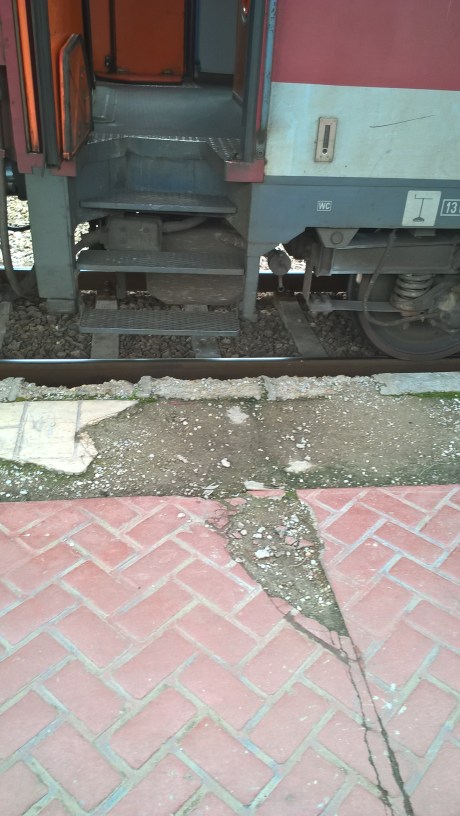
Mi-am dus nevasta la gara.
Nu va bucurati degeaba, se intoarce. A plecat in delegatie.

Trebuie sa ajunga la Miercurea Ciuc.
Trenul catre acea destinatie pleaca, cel putin cel de la 12:15, de la peronul 13.
Vagonul 7 era oprit in dreptul gaurii pe care o aveti in fata.

De unde si intrebarile care urmeaza.

Toata Gara de Nord e in halul asta sau peronul 13 e pastrat special pentru unguri?

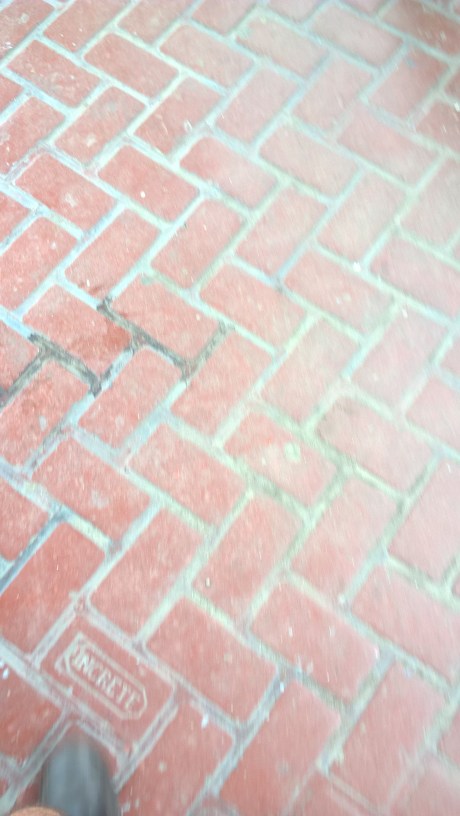
Si care o fi fost desteptul care a pus genul asta de paviment acolo unde fiecare al doilea trecator taraste dupa el o valiza pe roti?

WP_20160613_12_04_00_Pro

Sa nu uit. Daca vi se face sete in Gara de Nord duceti-va la supermarketul de langa casele de bilete. E singurul loc unde au mai multe feluri de apa – la chioscuri exista doar Dorna – si unde flaconul de juma de litru costa 2 lei, ca in restul orasului. La chioscuri e cu 50% mai scump.

About 8 years ago a girl meets a guy and they get married.

After four months her family intervenes and helps her get out of a dysfunctional relationship.

He starts another one, has a son, and later kills 50 people in a gay bar some time after a gay couple kissed each-other in front of his child.
“They were kissing each other and touching each other and he said, ‘Look at that. In front of my son they are doing that.”

Isn’t this whole thing very descriptive of the situation we are facing now?

Her family noticed something was wrong – he was abusing her – and helped her out.

Eight years later – after having another relationship, after being investigated by the FBI and issued a gun permit – he snaps and kills 50 people.

Where was his family? His friends? His neighbors? His co-workers?

“In other words, Mateen who according to preliminary reports, had been on a terrorist watchlist, and who still managed to obtain weapons thanks to his various licenses and permits just last week, was employed by one of the world’s largest security companies”.

More than 100 years ago, Emile Durkheim, a French sociologist, discovered that suicide, while being a very personal decision, is heavily influenced by the strength and quality of  the social relations that connect the concerned individual to the rest of the society.

I’m not going to argue now that most acts of terrorism, specially the ones perpetrated in the last 20 or 30 years, are of a suicidal nature. They are but this is a somewhat different problem from what I have in mind right now.

What I’m afraid of is that we, in the West, are killing ourselves.

As a society.

We have stopped caring about the guy next door to the tune of no longer being able to notice that he has become crazy and is about to start shooting.

Left and right.

Us.

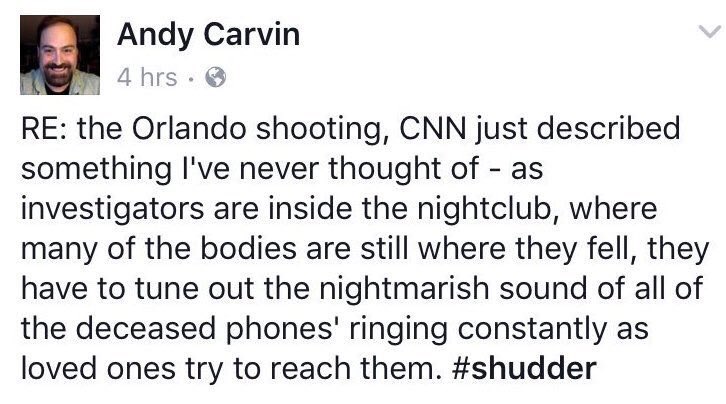
Let’s wake up, before there will be no one left to answer the phones.

phones ringing

Nu stiu daca asa o fi de obicei.
Tot ce pot sa va spun este ca asa a fost ieri seara.

Am iesit sa ne intalnim cu niste prieteni.
In piateta din fata Hanului Manuc ne-am bucurat ca niste copii urmarind un spectacol de acrobatie oferit cu extrema dezinvoltura de o trupa din Kenya. Click aici pentru fotografii.

Doua ore de discutii extrem de interesante la o carciuma. Curtea Berarilor Timisoreana.
Mancare banala, serviciu tern, prietenii la inaltime.

Incepe al doilea meci. Nici habar n-am avut ca fusese deja unul.
Din motive pe care n-am reusit sa le intelegem, atunci cand a inceput Anglia-Rusia cineva a dat sonorul atat de tare incat nu ne mai puteam auzi gandurile din cap. L-am intrebat pe chelner, a spus ceva despre management si si-a cerut scuze, in nume propriu.

Plecam, evident.

Ne mutam la Hanul lui Manuc sa bem o cafea.

La usa, maitre d’, o domnisoara, ne spune ca toate mesele sunt rezervate… ca ar avea o masa de 2 (noi eram 6)… ca daca mai asteptam un pic…
Era deja 10 jumate iar cel putin o treime din mesele din curtea interioara erau goale. Dupa vreo doua minute de ‘parlamentari’ descopera ca ar mai fi o masa la care ar putea sa ne ‘plaseze’. Abia cand ajungem acolo incep sa ma intreb daca nu cumva o fi asteptat ceva de la noi… Eu stiam ca se lasa ceva chelnerului, daca esti multumit de serviciu… si ca doar la curve e cu plata inainte… poate ma insel si atribui motivatii care exista doar in capul meu… sper din tot sufletul sa fie asa.
Stam vreo ora, timp in care terasa se goleste vazand cu ochii. Cand iesim uitam sa o intrebam pe maitre d’ unde e aglomeratia promisa.

Hai la taxi.
Cand sa ne urcam: “unde mergeti?”
Ne uitam in jur. O multime de oameni umbla printre taxiurile parcate in fata si in jurul Magazinului Unirea.
Toate cu lampa verde aprinsa pe tavan, semn ca sunt libere. Marea majoritate a soferilor vorbesc la telefon si toti intreaba: ‘unde mergeti’?
Cei mai multi dintre potentialii clienti ii injura si fac comanda pe telefoanele mobile. Strainii se urca, neavand alta optiune.
Cineva din apropiere ii spune unui prieten: ‘Un taximetrist mi-a cerut 30 de lei pana in Dorobanti’. Cam de trei ori mai mult decat pe ceas.

Mergem la autobuz, daca tot au introdus liniile de noapte.

In doua minute vine N104. Nu ne credem ochilor ce noroc avem. 104, cel de zi, trece foarte aproape de unde locuim noi.
Incercam sa ne urcam. Singura usa deschisa e cea de la sofer. Aglomeratie. Unii vor sa urce, altii vor sa coboare ‘la prima’. Asa ca stau un usa si nu ai cum sa te urci. Cineva il intreaba pe sofer de ce nu deschide si celelalte usi. ‘Asa e regula pe cursele de noapte!’. N-ai cum sa-l contrazici, cu toate ca celelalte doua autobuze din statie au toate trei usile deschise.
Reusim sa ne urcam, vreo 4 oameni raman pe din=afara cu toate ca autobuzul era gol in spate.
La prima statie: ‘Faceti-ne va rog loc, vrem sa coboram’. Vreo 4 dintre noi coboara, doar pentru a face loc. Ii intreb pe cei care coboara: ‘Ce ar fi fost daca faceam si noi ca dumneavoastra? Daca nu ne-ati lasat sa urcam, de ce sa va facem loc sa coborati?’
Evident ca mai raman cativa in statie, din fericire nu dintre cei 4 care coborasem.
Se incinge discutia cu soferul. Acesta o tine tare pe a lui – ‘Asa e regula si pe mine ma da seful afara daca nu o respect’ – iar calatorii mai au putin si sar la bataie.
Cu toate astea multi prefera sa se inghesuie la usa din fata in loc sa se duca toti in spate si sa se apropie de usa doar cand vor cu adevarat sa coboare. Loc ar fi fost berechet, chiar daca s-ar fi urcat si cei care ramasesera pe jos.
La un moment dat autobuzul iese din traseul lui 104. De, era N104, nu 104 normal. De ce or fi folosit un indicativ care sa produca confuzie? De ce nu i-r fi spus N-IJGBTZ in loc de N104 daca traseul e comun doar in prima treime iar destinatia cu totul si cu totul alta?
Spiritele se incing din nou intre sofer si calatori, noroc ca intre timp acesta primise ‘intariri’ – in ‘ghereta’ din fata autobuzului aparuse un ghertoi de cel putin 100 de kile. Chiar daca avea mai mult de 50 de ani era suficient de malac incat sa mai domoleasca furia calatorilor.

Coboram.

Trecem strada si ne speriem ingrozitor.

Nu, nu era nici un spectru. Doar o reprezentare post modernista a lui Cajal.

Noapte buna.

WP_20160612_00_34_55_Pro 2

PS. Intr-adevar regulile RATB prevad ca pe liniile de noapte “Accesul publicului călător se realizează numai pe la uşa 1” dar si ca “Abonamentul eliberat pe o linie/două linii RATB este valabil şi pe liniile de noapte care au traseu comun cu aceasta/acestea, dar numai pe porţiunile de traseu comun.” iar “Controlul titlurilor de călătorie se efectuează de către conducatorii de vehicule”.
Acum ati inteles de ce se deschide doar usa din fata?

http://www.ratb.ro/v_noapte.php

Shortly after becoming aware of his own awareness Man figured out that, from then on, his real job will be to attach meaning to everything that was, is and will be happening around him.

The very same moment He freaked out – because of the enormous responsibility that had just fallen upon his head – and invented god to help Him.

There is, of course, no way of knowing for certain whether a real God had interfered, in any way, shape or form, in our evolution.
The fact that so many of us think the world can be explained ‘through itself’ – that there is enough information available to construct a plausible narrative about what went on since the Big Bang – is the real proof of nothing more but the huge cockiness harbored by our inflated egos.
OK, nothing more but a long held tradition suggests that God exists for real only this is no factual demonstration about the nonexistence of God.

On the contrary. The very fact that the tradition held for so long means that God had a real contribution to our life.

It doesn’t really matter whether that God was real or contrived by us.

And the fact that so many of us use their respective gods as pretexts to commit heinous acts sends no other message than that those who commit such crimes have no real understanding about what God really means.

In 2014 electoratul roman s-a dus la vot insufletit, in mare masura, de nevoia de a scapa de coruptie. Si uite asa a fost ales Iohannis. Ca sa nu iasa Ponta – despre care se vehiculau tot felul de informatii, inclusiv cea despre teza sa de doctorat – si nu atat pentru ca lumea ar fi avut vreo parere extraordinar de buna despre Iohannis.

In 2015 o multime furioasa l-a alungat  din Palatul Victoriei pe acelasi Ponta – ramas prim ministru cu toate ca pierduse alegerile,  sub sloganul “Coruptia Ucide!”. Nemultumirea populara, care ajunsese la un nivel greu de gestionat, daduse in foc din cauza tragediei de la Colectiv. De fapt aceasta tragedie fusese un fel de pretext, daca ea nu ar fi avut loc nemultumirea generalizata si-ar fi gasit alt motiv pentru a rabufni.

In iunie 2016 alegerile locale consemneaza patru premiere pentru Romania:

O femeie este aleasa ca primar al capitalei.
PSD-ul castiga toate primariile din Bucuresti.
Interesul alegatorilor scade dramatic, mai ales in randul tinerilor si in special in capitala.
Mai multi candidati condamnati sau anchetati pentru coruptie sunt realesi in functii. Printre ei se numara Catalin Chereches, aflat in arest preventiv, care a fost votat de 70.28% dintre baimarenii care au iesit la urne.

Mircea Toplean concluzioneaza (avant la lettre), in Blogary.ro, ca Romania sufera de o prea mare toleranta la coruptie.
Cred ca familiarizarea cu practica indelungata a coruptiei ne-a facut pe noi romanii extrem de toleranti la ideea de coruptie. Suntem aproape incapabili sa ne indignam sincer in fata coruptilor (dosare penale ale politicienilor, doctorate plagiate ale unor oameni iubiti si votati de tot poporul etc.). Cand mergem la spital sau avem de-a face cu vreun hop administrativ, dam noi insine spaga.
Adrian Papahagi, si mai realist (?!?), ne spune verde-n-fata: “Prefer ca România să fie condusă de pişicheri corupţi. Vanghelie e de o mie de ori preferabil lui Mungiu: incultura lor esentiala este aceeasi, doar gradul de alfabetizare difera. Vanghelie macar e mai tolerant si mai simpatic.

Acuma, daca e s-o spunem pe-a dreapta, toate astea au fost prevestite de excelentul eseu “Istoria si Mitologia Exceptionalismului Coruptiei Romanesti”, prezentat de Adrian Severin la conferinta organizata de Fundatia Europeana Nicolae Titulescu pe 26 noiembrie 2011:

“Sancţionată atât de regula morală cât şi de drept, corupţia nu are o definiţie legală ci numai aplicaţii legale (mită, trafic de influenţă, abuz în serviciu, înşelăciune etc.). Cum dreptul (în special cel penal) necesită precizie, lipsa unei definiţii legale a corupţiei ca atare, pune problema relaţiei între drept şi morală.”

Pai?

Intelectualii, in afara ca nu se inteleg cu privire la ‘relatia intre drept si morala’, se gratuleaza intre ei folosind termeni de tipul “monstru de aroganta, intoleranta si ideologie tampa“.
O parte dintre politicieni fura iar alta parte declara sus si tare ca ‘nu se mai poate cu coruptia asta’: ”Bucureştenii au vorbit şi au vorbit clar ! Noi, PNL, suntem de vină, nu alţii! Una am spus şi alta am făcut! Noi am iniţiat criteriile de integritate şi am sfârşit prin a defila cu persoane «penale», noi am susţinut cotele de gen şi am fost primii care am renunţat la ele, noi am stabilit reguli pentru desemnarea candidaţilor, dar am luat deciziile în funcţie de interesele şi sforile trase de unii şi de alţii. NOI nu am fost consecvenţi!
La randul ei, o mare parte din presa trateaza fenomenul in termeni de ‘coruptia lor’, ca si cum rolul ei ar fi mai degraba sa apere/promoveze interese de partid si nu sa informeze, cat se poate de onest, pe Maria Sa Cetateanul. Ba, mai mult, atunci cand este anchetat cineva din tabara ‘proprie’, de multe ori anchetatorii insisi ajung sa fie acuzati ca ar avea motivatii politice.

Nu ca nu ar fi si unii care or avea.

Dar asa cum in cazul acuzatilor functioneaza, sau mai bine spus ar trebui sa functioneze, prezumtia de nevinovatie, tot asa ar trebui sa functioneze si avertismentul “Fiat justitia, ruat caelum”.

In sensul sau mai larg.
‘Aveti grija sa se faca cu adevarat dreptate pentru ca altfel vi se va prabusi cerul in cap’.

Iar asta e valabil pentru noi toti. Cata vreme coruptia ‘noastra’ va fi socotita acceptabila/scuzabila si doar coruptia ‘lor’ va fi aratata vehement cu degetul nu vom reusi sa urnim carul din loc.