Archives for posts with tag: respect

Adio dar rămân cu tine…

35 de ani.
Atât a durat.
După care au ajuns la concluzia că ‘așa nu se mai poate’.
‘Fiecare dintre noi are o viață de trăit’!

Divorțul – adică desfacerea căsătoriei – a fost simplu. Copiii – o fată – erau majori, amândoi voiau același lucru… o declarație a fost suficientă.
Partajul, în schimb…

Aveau un apartament mare, în centrul orașului. Două masini, ușor de împărțit, și niste bani. Cu atât mai ușor de împărțit. Apartamentul e suficient de mare și de bine amplasat încât din vânzarea lui să poată fi cumpărate altele două, mai mici. Doar că apartamentul are o problemă.

Problema fiind nepoata. Fata fetei lor.
Mama e în Germania. La muncă. Câștigă bine, aproape a terminat de plătit un apartament, mai mic și mai la periferie. Nepoata abia a intrat la liceu. Nu poate să stea singură și ar fi aiurea să tot facă naveta de la unul la altul.
Și cum nici unul dintre ei nu vrea să renunțe la ‘privilegiul’ de a o vedea regulat… sau poate că nici unul nu vrea să-l știe pe celălalt ‘liber ca pasărea cerului’!

Întorcând toate astea pe toate fețele… au înțeles că problemele erau în capetele lor!
Că împreună aduseseră relația în punctul în care erau.
Că de relația dintre ei mai depindeau și alte destine. În afară de ale lor.
Și că, una peste alta, le-a fost mai bine împreună. Decât fiecare separat…

Dacă ar reuși să treacă peste rănile pe care și le-au făcut de-a lungul căsătoriei!

He was my friend. We trusted each-other.

He was huge. 150 pounds of muscle. Pitch black.
Some people feared him. Specially when seeing him for the first time.

He had earned the respect of many. Canine friends in the park. People who had come in contact with him.

Respect is a tricky thing.

Fear is simple. Not that different from love. Somewhat contrary…
Trust is simplish. After enough time spent together, you learn whether you can trust the other.
Respect, on the other hand….

You cannot respect something/somebody which/whom you find repulsive.

You can ‘trust’ a bully to make your life miserable but you cannot respect them.

Do you fear a bully?
Not necessarily. You don’t need fear to avoid a danger. You only need to understand what’s going on.

Then what is ‘respect’?
Something you learn about. While trust is something you learn to.
Trust is something to be rather felt while respect is something you experience with your mind. First and foremost.

Furthermore, nobody fakes trust. Unless presented as ‘respect’.

Why have I chosen an animal to illustrate this post?
Because ‘fear’ is what drives awareness. Fuels conscience. And, as far as evidence suggests, it is widely felt in the animal kingdom.
Our family. Our only home in this world!

What happened to our capacity to compromise?
When did life become nothing but a zero sum game?

Our capacity to compromise – in the good sense of the word – has diminished when religion – the thing which keeps us together – has been split into religions.

And it completely drained out when we’ve become too confident in our ability to think things over.

We’re so confident now that our solution/decision is not only better than any other but the only one possible that we’re no longer capable of considering a compromise.

While religion taught us to respect and trust each-other, religions have split us into factions.
Our intellectual arrogance has done the rest.

”Tatăl are 40 de ani.
Ce vârstă va avea tatăl când băiatul va avea 18 ani,
știind că atunci când fiul s-a născut, tatăl avea 30 de ani?”

„Problemele din manualele de matematică de clasa I îi pun uneori în dificultate nu doar pe copii, ci și pe părinți sau alți adulți care îi ajută la teme. Deși la prima vedere problemele nu sunt foarte complexe, de multe ori sunt dificil de rezolvat pe înțelesul copiilor. În plus, pentru a ajunge la rezultatul cerut de problemă, elevii trebuie să parcurgă mai mulți pași, iar pe unii îi pot omite.
Una dintre problemele care îi pun în dificultate pe mulți elevi de clasa I sună în felul următor: Tatăl are 40 de ani. Ce vârstă va avea tatăl când băiatul va avea 18 ani, știind că atunci când fiul s-a născut, tatăl avea 30 de ani?
Cum se rezolvă corect problema
Deși pentru adulți poate părea simplu, problema trebuie rezolvată pe înțelesul copiilor. Mai întâi, trebuie să aflăm câți ani are băiatul în prezent, apoi peste câți ani va împlini 18 ani și abia apoi calculăm câți ani va avea tatăl atunci.
Rezolvare:
Câţi ani are băiatul în prezent?
40-30=10 (ani)
Peste câţi ani va avea băiatul 18 ani?
18-10=8 (ani)
Câţi ani va avea tatăl peste 8 ani?
40+8=48 (ani)
Copiii trebuie să înțeleagă că anii trec atât pentru părinte, cât și pentru copil în egală măsură, pentru a calcula rezultatul corect.”

Cică e plină lumea de analfabeți funcționali.

Hă? Ce e aia analfabet funcțional?
Suferă de analfabetism funcțional – și atunci nu poate funcționa la capacitate – sau e funcțional cu toate că e analfabet?!? Hotărăște-te…

„Ministerul Educației susține, într-o clarificare trimisă Edupedu.ro, că “nu există o definiție, un indicator sau o valoare asociate la nivel internațional a noțiunii de analfabetism funcțional”.”
Adevărul fiind că e cam greu să definești o chestie denumită cu ajutorul unui joc de cuvinte…

Analfabetism funcțional este o noțiune care se referă la persoanele care știu să citească, dar nu înțeleg ceea ce au citit. Mai precis, o persoană poate să reproducă verbal sau în scris un text, dar nu îl înțelege suficient pentru a-l folosi ca resursă în reușita unei acțiuni sau în performanță.

Bine că s-au descurcat ăștia de la Wikipedia…

Și ce legătură e între problema cu care ai început postarea și analfabetismul funcțional?

‘Nu reușeste să ‘exploateze eficient’ informațiile conținute în textele pe care le citește?
Informațiile conținute în instrucțiunile pe care le primește atunci când îi este încredințată o sarcină?!?’

Sau ‘Nu știe să formuleze niște instrucțiuni ‘operaționalizabile’?!?’

Orice copil normal face o socoteală simplă.
Cât avea tac-su când i s-a născut plodul? 30 de ani?
Ce tre’ să aflăm? Cât o să aive tac-su când o ajunge plodu’ la majorat? Dacă nu moare până atunci?
Mare rahat. 30 cu 18 face 48. Cam puriu…

Dacă lași copiii să socotească în felul acesta, ei nu vor înțelege că timpul trece la fel de repede pentru toată lumea. Că un an e la fel de lung pentru ei cât este și pentru părinții lor.

Pe bune?!?

Nu cumva analfabetismul ăsta disfuncțional apare mai ales datorită faptului că prea mulți dintre profesori se cred mult mai deștepți decât elevii lor?
Că prea mulți dintre cei care au avut norocul să primească o educație formală confundă informația memorată – mai ales pe cea memorată de ei – cu deșteptăciunea?
Confundă informația acumulată (osificată?!?) cu capacitatea de a folosi informația accesibilă?

Dacă v-ați apucat deja să zâmbiți subțire…
Ăsta n-a înțeles nimic! S-a plimbat degeaba prin școală… N-a priceput că mintea e ca un mușchi. Care trebuie antrenat de mic. Și că degeaba te apuci la bătrânețe să mai înveți mersul pe bicicletă… N-o să mai fii niciodată în stare de performanță!

Ce-am înțeles eu?
Din școală și din viață?

Că oamenii au inventat mai întăi lucrurile importante. Și mai apoi scrisul. Ca să țină minte… Să nu mai fie nevoiți să reinventeze tot felul de chestii. Rezolvate deja de străbunii lor.
Că oamenii care s-au crezut deștepți au sfârșit prost. Mai prost decât ar fi ajuns dacă și-ar fi cunoscut lungul nasului…
Și că oamenii capabili să facă lucruri sunt cel puțin la fel de importanți ca cei capabili să scrie despre lucrurile alea. Cu toate că oamenii care fac sunt mai mulți decât cei care scriu! Pentru simplul motiv ca un om care face pâine poate hrăni un număr limitat de guri pe când o rețetă pentru pâine poate fi citită, după ce va fi fost scrisă, de un număr infinit de ochi!

I’m afraid hating the flag doesn’t solve anything. Precisely because it’s an inanimate object!

How about making good use of the successfully defended rights and convince the others that putting the poor guy in harm’s way wasn’t a good idea in the first place?

But in order to be heard, one needs to keep the conversation going!
One needs to be perceived as caring and respectful by the intended audience…


I’ve been talking about complementarity, equality and freedom.
The implication being that unless people treat each other fairly – as in consider the others as being equal, and equal with themselves – none will be actually free. Free to fully complement each-other. Free to ‘boldly go where no one has yet been’. Together.
What’s keeping us from doing it?
To figure that out, we need first to understand how we got here.
‘I’ve been talking about…’
To talk about something means the talker is aware about the existence of that something. They may not fully understand what’s going on but they have already noticed that something’s afoot.
Furthermore, for a human to attempt to communicate about something means that that human considers there’s at least a small chance that others will understand the message. That others understand the language used and that those others already have a modicum of interest in that matter.
In other words, any attempt to communicate means that those involved are not only aware that something’s afoot but also have reached a certain degree of consciousness. That they are not only aware of something being there but also aware that they, together, can/should/must do something about it.
They key word here being “together”.
Why bother talking about it when/if you’re able to deal with it on your own?
Which brings us to ‘war’!
How many do we need to be in order to ‘deal’ with this ‘thing’?
How many of us will be able to ‘feed’ themselves after this ‘thing’ will be dealt with?
How much will each of us have contributed to the whole process?
How will the spoils be distributed among ourselves?
How will we deal with the ‘loose cannons’ among ourselves?
How will we know who will do what?
Who will lead? Who will be responsible for the whole thing?
This is the moment when I’ll remind you that this is a blog about the consequences of our limited consciousness. A blog where I gather my attempts to understand the limits of our ability to make decisions – as individuals, and the manner in which different societies have come up with different methods to mitigate the consequences of those limits.
Happy reading, every one.

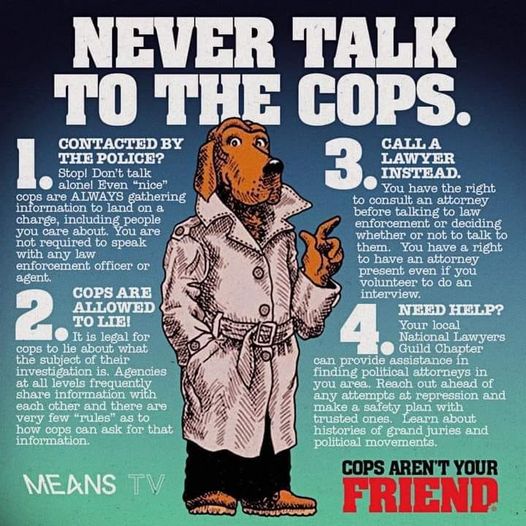
Just came across this meme.

It was shared on a FB-wall and somebody had commented that “Institutionally they are not your friends.”

My ‘jerked’ comment was:

“Institutionally, cops should be your ‘last resort’ friends.

The fact that too many of them are not, and the fact that too many of us consider them, as a category, to be unfriendly, is proof of how dysfunctional our society has become.

Cops used to be ‘unfriendly’ when I grew up. In communist Romania. When the cops were used, by the communist state, to preserve their power. The communist power over the entire society.

In the free countries of today, the cops are the sole barrier separating our persona and private property from the hands of the criminals.

Without their presence…

Or, putting it the other way around, we have but the cops we deserve. Train and motivate them properly and you’ll have good cops!”

At a second glance, I had an inkling.
Is it possible for the whole thing to be nothing more than a ‘marketing campaign’? Organized by the only people interested in increasing litigation?

Interested in altering the relative stability of our political establishment?

The police, by properly performing their duties – the world over, not only in the communist countries, contribute to the political stability of those respective countries.
For the police to properly perform their duties, there must to exist a proper trust between the general population and the police itself. The population must see the police as their friends of last resort while the police must see the general public as both their employer and their responsibility.
The population must be open in their relationship with the police while the police must treat respectfully every individual, including the suspects and the convicts.

In the communist regime I grew up, the police couldn’t fulfill its duties. Exactly between there was a ‘trust’ barrier between the general public and the police. Between the oppressed and the armed hand of the oppressor.
The communist regime I grew up under, in Romania, had eventually collapsed.
Exactly because of the malignant mistrust between the general public – The People, and the government. The police being nothing but a portion of the government itself.

Who is interested in the collapse of the democratic regimes?
Who is mostly interested in wedging apart the government from The People?

For knowledge to become actionable, it has to be trusted.
It has to be believed as being true!

In order to cooperate with somebody, you need to trust that person.

But trusting a person is far more complicated than believing that a piece of information is true!

Evaluating a piece of knowledge is a uni-dimensional business. That piece of knowledge either corresponds with (what is considered to be) reality – it is ‘true’, or it doesn’t. Hence it is false.
And it’s only after you have satisfied yourself about an information being true that you may start to ‘own’ it. To act upon it.

When it comes to trusting a person, you are confronted with a bi-dimensional endeavor. Which makes it a real problem.
In order to be able to cooperate with somebody, you need to be satisfied on two accounts.
That that person is qualified enough for the business at hand AND that that person ‘means well’.

Not that simple, is it?

One-Time
Monthly
Yearly

Make a one-time donation

Make a monthly donation

Make a yearly donation

Choose an amount

$5.00
$15.00
$100.00
$5.00
$15.00
$100.00
$5.00
$15.00
$100.00

Or enter a custom amount

$

As much as I love writing, I do have to eat.
And to provide for my family.
Earning money takes time.
If you’d like me to write more, and on a more regular basis, hit the button.
Your contribution will be appreciated!
Another very efficient way to help would be to share my posts.

As much as I love writing, I do have to eat.
And to provide for my family.
Earning money takes time.
If you’d like me to write more, and on a more regular basis, hit the button.
Your contribution will be appreciated!

As much as I love writing, I do have to eat.
And to provide for my family.
Earning money takes time.
If you’d like me to write more, and on a more regular basis, hit the button.
Your contribution will be appreciated!

DonateDonate monthlyDonate yearly

We live.
Hard to deny that, no matter what we may think about it.
The very fact that there are so many of us who do live simultaneously makes it a near certainty.

Since we do live, then there must be a place where this whole charade unfolds.

That place is called, by us, ‘Reality’.
Which reality had started to exist only after we, the living things, have become aware of its existence.

‘Hey, wait a minute!  a short moment ago you were arguing that our mere existence was absolute proof for the existence of ‘reality’ and now you pretend that ‘reality’ has appeared only after we’ve  noticed it… We’d been alive for way longer than that, dude!’

Of course. Our very existence does depend on the presence of a certain place where we may exist. Only there’s no need for us to know that. Nor for us to be able to name that place. The ants don’t ‘know’ there’s a whole world around them. Nor have a word to describe it!

What we call reality and the ‘place’ where we live are two separate things.
There is an intersection, of course. What is correct of what we think we know about the ‘reality’ and the collection of things that really exist. Only we don’t exactly know what is correct of what we think we know…

And it is here that things become really interesting.
We not only think that we have meaningful information about the thing we call reality. We also act based on that information, with the deliberate purpose of fulfilling our intentions. And in so doing, we decisively change the place. In ways we fail to understand comprehensively.

My point being that we change the place we depend on, for our lives, without having a clear understanding of how the place itself really works. Nor of the changes we implement – willingly and/or unknowingly.

At least, let’s have some respect. For the place itself.
And for us, as an important component of that place.

There’s a seemingly unending debate about what “my liberty ends where yours begins” really means.

The initial saying was a little longer, Your right to swing your arm leaves off where my right not to have my nose struck begins.”, and had been coined during the disputes between those who tried to impose the Prohibition and those who opposed it.

In that context, it made sense.
‘How close to my house – a teetotaler, should you be allowed to open a bar and why should I be able to tell you what to drink/serve in your house.’

In a wider setting – individual rights, for instance … not so much!

‘Your right to swing your arm leaves off where my right not to have my nose struck begins’ only if at least one of the following is true:
– My arms are as long as yours AND I’m willing/able to defend my nose.
– You are a civilized person.
– We, the entire community, have reached the conclusion that we are better off, together, if we observe – and enforce, this rule.

The first sentence describes a situation of generalized conflict. Not necessarily ‘hot’ but, nevertheless, always ‘waiting to happen’.
In the second situation, ‘one side’ depends, decisively, on the ‘other side’ behaving ‘properly’. Nice and commendable but what happens when one of them goes berserk?
The third describes the de facto functioning of any civilized nation. Which nation, any nation, is composed of individual people. ‘Endowed’ with ‘free will’ and not always ‘well behaved’.

Hence the danger of narrowly defining freedom as a collection of individual spaces where each of us might do as they please – as long as the consequences of their actions remain inside that space.
Which spaces would have to be constantly defended.
Or could be extended, whenever any of the neighbors wasn’t on the lookout.

How about ‘our mutually respected individual liberty is the well deserved consequence of our collective effort to enlarge OUR freedom’?