20 years ago, very few people were talking to (by?!?) themselves while walking around the city.
And most of the passers-by were tempted to call 911 because they considered the ‘talkers’ had forgotten to take their medicine.

Nowadays, when quite a lot of people walk around speaking blindly – to a naive onlooker, nobody cares anymore.

As in nobody cares to check whether the ‘speakers’ have any ear-plugs stuck in their ears…

It was Hegel who first noticed that how much of ‘something’ was available at some point in place and/or time was determining the evolution of things.
Later, Marx and Engels ‘hijacked’ the idea and then corrupted evolution into revolution but I’ll set aside that subject for the time being.

“It is said that there are no sudden changes in nature, and the common view has it that when we speak of a growth or a destruction, we always imagine a gradual growth or disappearance. Yet we have seen cases in which the alteration of existence involves not only a transition from one proportion to another, but also a transition, by a sudden leap, into a … qualitatively different thing; an interruption of a gradual process, differing qualitatively from the preceding, the former state”

Georg Friedrich Hegel, Science of Logic

According to Ernst Mayr, evolution is a process which weeds out the misfits.
Which ascertains that at any given moment only those individuals/species who can survive the present conditions continue to enjoy life.
Regardless of who’s responsible for any changes in those conditions, of course…

And did I tell you that evolution is an impersonal process? Which has no goal, whatsoever?

We are currently witnessing an accumulation of heat on our Planet.
I’m not going to argue whether we are the main culprits or not. I don’t command any expertise in this domain, except that I know for a fact that increasing the relative content of CO2 in the atmosphere does increase the retention of heat by the aforementioned atmosphere.
I also know for a fact that we’ve burned in the last three centuries fossil fuels which had been accumulated during God only knows how many millennia. Releasing a huge amount of CO2 ‘in the aforementioned atmosphere’
Was it enough to raise the level of CO2 to the present figure? I don’t know… Volcanoes are another ‘prolific’ source for this fateful gas…

„Then why are you writing this post? Only to acknowledge your ignorance? Why should we bother?”

Dead saiga antelopes

Dead saiga antelopes in a field in Kazakhstan. About 20,000 of the species were found dead in one week. Photograph: Reuters

„The scientists on the ground pinpointed blood poisoning as the cause, but were puzzled as to why whole herds were dying so quickly. After 32 postmortems, they concluded the culprit was the bacterium Pasteurella multocida, which they believe normally lives harmlessly in the tonsils of some, if not all, of the antelopes. In a research paper published in January in Science Advances, Kock and colleagues contrasted the 2015 MME with the two from the 1980s. They concluded that a rise in temperature to 37C and an increase in humidity above 80% in the previous few days had stimulated the bacteria to pass into the bloodstream where it caused haemorrhagic septicaemia, or blood poisoning.”

You see, this post is indeed about ignorance.
We just don’t know what will happen if enough of something accumulates somewhere.
Until it does, of course.

And to find out we’ll need to survive the ‘happening’…

Some of us loose our patience when in close contact with age related ‘peculiar behaviors’.

There are a few ‘real’ facts about this phenomenon and I’m going to list them before letting you in on what I feel about this whole thing.

We live way longer than our parents and grand parents. Statistically, of course.
Which means that everybody gets a fair chance at reaching well into their 80-ies, something which was ‘available’ only to those smart enough to navigate around the perils of life, rich enough to hover over them or both at the same time.
Most of the run-of-the-mill-s and the outright dumb-asses used to die long before that.

Brain is both an organ and a muscle. Like any other organ, it deteriorates with age. Like any other muscle, if trained properly, it keeps for longer.

People are lazy. Most of them don’t like to compete on their own. And, even more importantly, most of them stop training after reaching the top. Even a relative one.

Simplistically, one could say age is an opportunity each of us has to demonstrate their true nature.
Both the quality of our ‘natural endowment’ and how well each of us has treated/trained theirs.

A more comprehensive approach suggests that age might be something a little more complicated than that.

The present is a combination between whatever resources were at the disposal of our ancestors and the accumulated ‘consequences’ of our ancestors living in those conditions. Basically, a combination between nature and human decision making.

We live today in the world we inherited from our parents and our children will live in the world we’ll bequest upon them.

Yep, only living longer also means having to retire at some point.
It means having to give up calling the shots.

And this is the real litmus test.
How one behaves after they realize they can no longer call the shots but are not yet ready to die and how one behaves after being called to call the shots yet still having to care for the former ‘bosses’.

This is when people have to face the consequences of how they trained their brains during their life times.
This is the moment when people meet the real results of how they had interacted. Among themselves and with their children.
This is the moment when people meet the consequences of their former choices.

And, also, this is the moment when the children have the opportunity to prove themselves.

In a nutshell, one may say that humankind is like wine.
Both depend very much on terroir, are the results of collective efforts and age demonstrates their true nature.

Or, one could say that age is more of a social disease than a mental illness.

My close friends know that I’m a strong supporter of the Second Amendment.

In a mature enough society, gun ownership promotes both individual responsibility and social cohesion. As intended by the Founding Fathers.

“A well regulated Militia, being necessary to the security of a free State, the right of the people to keep and bear Arms, shall not be infringed.”

At the time when the US Constitution was drafted, the American state didn’t have a proper army, nor any real need for one. The neighbors were few and very far away, in contrast to what was going on in Europe at that time.
It didn’t make sense, at that time, for a strong army to be mentioned in the Constitution but the Founding Fathers very aptly told their constituents to build up a strong self defense capability. You never know what might happen in the future.
Hence the “well regulated Militia” which was deemed “necessary to the security of a free State”. NB, for a “free State”, not for any random individual citizen who wishes to free himself from a democratically elected government…

In this sense, the Second Amendment should be primarily defended as a stringent need of the entire society, instead of being promoted mainly as an ‘individual right’.

And it should be enforced accordingly. Keeping in mind the needs of the entire society, not only those of particular individuals.

Periodically, we are reminded of what may happen when society forgets to actually ‘regulate’ itself. When rules which have been agreed upon are put in practice in a ‘creative’ manner.
One has to pass ‘back-ground checks’ if he wants to buy a gun from a store but he can also buy one anonymously from a gun show.
Assault guns have been forbidden yet until this very morning those who ‘needed’ one could legally  buy a ‘bump stock’. A “device” which “causes the gun to buck back and forth, repeatedly “bumping” the trigger against the shooter’s finger. Technically, that means the finger is pulling the trigger for each round fired, keeping the weapon a legal semi-automatic.

Not only that people kill themselves using their own guns. Not only that gangsters kill each others in turf wars. Not only that policemen get killed in the line of work.
Not only that from time to time individuals attempt a particularly murderous form of suicide – by indiscriminately shooting people and waiting for the police to shoot them back.
Time and time again students, some of them very young, are brought back from school in coffins.

And after each of such incidents, various ‘authors’ attempt to put things into ‘perspective’.

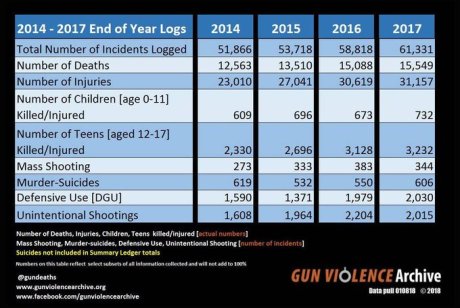
In 2017, with 300,000,000-plus guns in the hands of Americans, there were 15,549 gun deaths. This ranks less than half the number of automobile deaths even though there are fewer cars in existence than guns. In 2017, there were 253,000,000 cars in existence and 41,000 auto deaths.

It’s exactly this kind of warped perspective which makes it perfectly intelligible what’s going on. Some people would say anything which seems to prove their point. Only to make it obvious how wrong they are.

Cars are meant for transportation and are widely used by their owners. For the reason they were meant to. Therefore, death by car accident is just that, an accident.
Guns are meant to be deadly. Reasonable people use them for for practice and, only when they absolutely have to, to defend themselves. In theory, death by gun shot would exclusively be accidental or as a result of people rightfully defending themselves or their property.

So, should we compare those two numbers?

15,549 more or less intended gun related murders – this figure doesn’t include most suicides, with the 41,000 of more or less unintended car accidents?

Are these two figures really comparable?

gun violence archive

If we compare apples to apples, then yes, guns are less accident prone than cars. 2,015 shootings – let’s assume all of them were fatal, versus 41,000 death by car accidents.
We can also say guns are a little less deadly than cars. According to the CDC preliminary published data, in 2016 the total number of gun related deaths – including suicides, was 38,000. Almost 10% smaller than the number of car related deaths.

But then again, how many cars have been used to intentionally kill someone? Or to commit suicide?

And since it’s true that guns don’t kill by themselves, it’s obvious that’s up to us to solve the situation. For no other reason than ‘we are the ones who might get killed otherwise’!

culture of violence


Remember Midas, the character who, after being granted a wish by a grateful Dionysus, “asked that everything he touched would turn into gold“?
And who was happy as a pig in mud after his wish was fulfilled … only to find out that he was going to die of hunger since everything he touched did turn into gold? Including his beloved daughter who had enthusiastically embraced her father upon his return from the fateful meeting with Dionysus?

Under the Violent Crime Control and Law Enforcement Act of 1994, the “Three Strikes” statute provides for mandatory life imprisonment if a convicted felon: (1) has been convicted in federal court of a “serious violent felony”; and (2) has two or more previous convictions in federal or state courts, at least one of which is a “serious violent felony” (the other offense may be a serious drug offense). The sentencing enhancements in this law can have a significant impact on a criminal defendant.

Now wait a minute! What has this got to do with anything?

Well, more than two and a half millennia after Midas had driven himself into a tight corner we continue to ignore his lesson. As a species…

And the key words here are ‘continue to’.

The axe.

Very soon after our flint knapping ancestors discovered that a shaped stone is very useful at chopping wood they tied it to a shaft and started bashing the heads of their neighbors with it.

stone axe

‘Corrupting’ tools into offensive weapons, strike one.


Articulated language.

Soon after learning to fight our fellow humans, we started to speak to each-other.
It might have started while hunters tried to coordinate their efforts or when strangers tried to barter things… Does it really matter?
For me, it’s enough that very soon after we learned to speak we were masters in the art of lying.

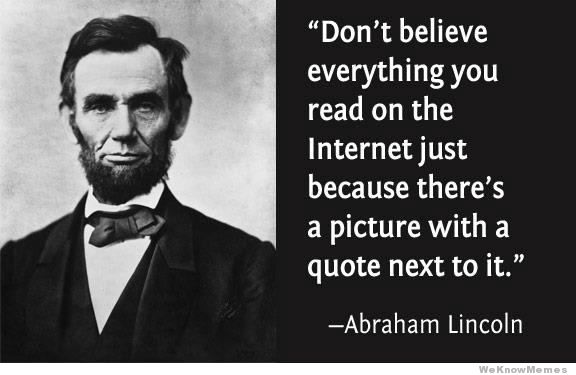
internet lies lincoln

Corrupting words into lies, strike two

Money.

At some point in our more recent history, we discovered that it was easier for each of us to learn a particular skill and to exchange goods among rather than each of us providing for all his (family’s) needs. Eventually we invented money and replaced barter with proper trading.
Soon after, some of us forgot that money was meant to facilitate trade and started to hoard it.

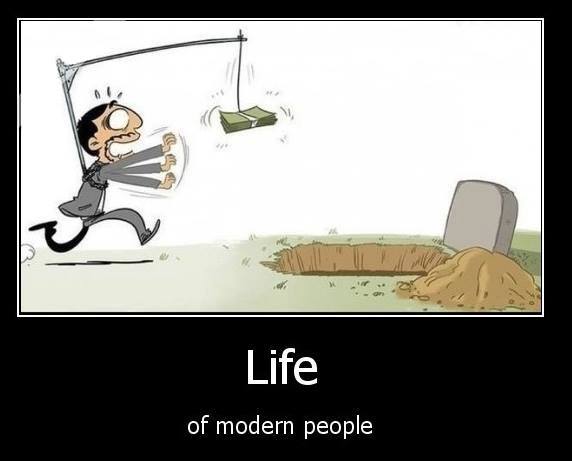
follow the money

Elevating money to stardom against all historical advice, strike three.


Are you wondering whether I’ve lost it entirely?
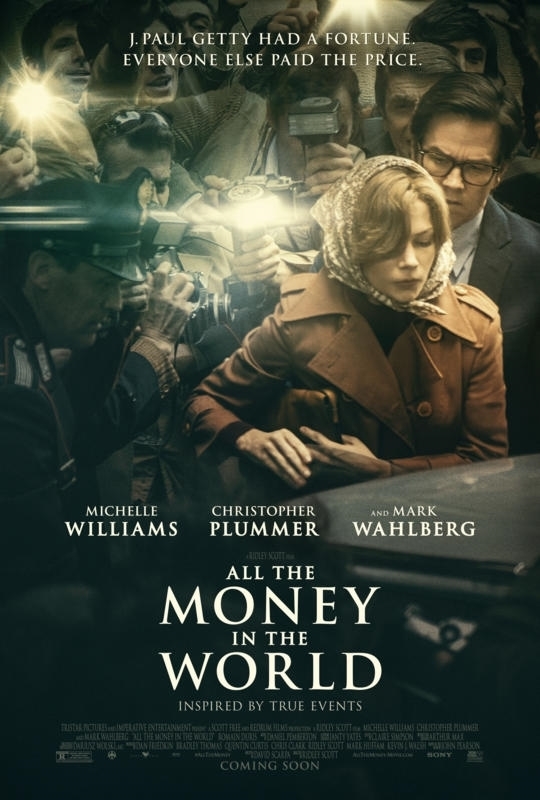
Neah… just came home from the movies…

All the money in the world

Since the movie ended on the bright(-ish) side, I’m going to remind you that Midas also found a way out of his predicament.
The ‘golden’ King begged Dionysus to lift the cursed blessing bestowed upon his head, was instructed to wash his hands and everything else he wanted turned back to its original state in the Pactolus River – in present day Turkey, and presto, everything was fine again.

There’s only one small problem left.
Where are we going to wash our hands…. or should we cleanse our minds first?

Hopefully, before experiencing the hunger pangs which had driven Midas to wisdom…


Enciclopedia Britannică susține că Magna Charta ar fi fost doar un fel de ‘pubertate’ a conceptului de habeas corpus și că ‘rudimente’ ale acestuia fuseseră deja formalizate înainte de 1215.

The origins of the writ cannot be stated with certainty. Before the Magna Carta (1215) a variety of writs performed some of the functions of habeas corpus. During the Middle Ages habeas corpus was employed to bring cases from inferior tribunals into the king’s courts.”

Să le luăm pe rând.

Pentru ‘civili’, „Habeas corpus” – „Aduceți corpul inculpatului în fața instanței” în latină, înseamnă două lucruri.
– Cei care au puterea ‘fizică’ să rețină pe cineva au nevoie de autorizație din partea unui judecător pentru a face acestu lucru ȘI
– Că persoana care urmează să fie reținută trebuie să fie prezentată instanței înainte ca această autorizație să fie emisă.

Pantru ‘analiști’, subiectul este mult mai generos.

Unde?

Varianta relativ modernă a conceptului a apărut și a evoluat, aproape fără întreruperi, în Anglia.
Țara a cărui rege mitic, Arthur Pendragon, a construit o Masă Rotundă pentru a le demonstra ‘supușilor’ (?!?) săi că nu se consideră superiorul lor ci doar ‘Primul Dintre Egali’.
Și, în același timp, țara care a (re)definit, aproape de una singură, cam toate cutumele a ceea ce este cunoscut acum sub numele de ‘civilizație euro-atlantică’. Și asta indiferent de ce cred celelalte țări europene.

Pe ce bază?

Re-ul din paranteza de mai sus se referă la evidența faptului că, de la un moment dat încolo, englezii au reluat niște concepte din Antichitatea mai ales grecească precum și la amănuntul că civilizația euro-atlantică se bazează în foarte mare măsură pe idei care curg firesc din credința iudeo-creștină.
Habeas corpus însuși provine direct din credința că oamenii trebuie să se trateze între ei în mod egal – tocmai pentru că au fost creați după ‘același chip și aceiași asemănare’. Și, mai mult decât atât, din credința că oamenii trebuie să se trateze între ei cu respect pentru că acel chip după care au fost creați era de natură divină.

Ce efecte a avut?

Spuneam mai sus că Anglia a pus bazele civilizației euro-atlantice moderne. Faptul că a făcut acest lucru în paralel cu dezvoltarea și punerea în practică a conceptului de habeas corpus sugereză că s-ar putea să existe o corelație între aceste două dezvoltări. Un cerc virtuos, ca să mă exprim mai simplu.
Faptul că fiecare spațiu cultural care a reușit să importe, și să adapteze specificului său, conceptul de habeas corpus  a înflorit din punct de vedere civilizațional dă o oarecare credibilitate acestei ipoteze, nu-i așa?

Ce mă roade pe mine?

Orice lucru poate fi abuzat. Indiferent de cât de bun o fi.
Iar dacă nu mă credeți… încercați să mâncați 30 de mici și/sau 30 savarine… puteți să alegeți ce variantă vă place mai mult că tot o să vi se facă rău dacă le mâncați suficient de repede.
La fel s-a întâmplat și cu idea de ‘corectitudine politică’. De la ‘hai să scoatem din uz cuvintele care au fost folosite pentru a-i jigni pe ceilalți’ am ajuns la tot felul de aberații.
Exemple? Am scos ‘cioara’ din vocabular. Și foarte bine am făcut, numai că unii vor acum să-l scoată și pe ‘țigan’ în afara legii… Ce-o urmeze? O să le spunem ‘nemților’ ca sunt ‘Deutsch’?
Mai vreți? Cică limba română ar fi ‘romanică’. Adică de origine latină, nu ‘francină’! Și atunci de ce se supără doamnele noastre când li se spune că sunt muieri? De ce li se pare, unora dintre ele, că franțuzitul ‘femeie’ e mai elevat?

E o deosebire între numărul de mici pe care îl poate mânca fiecare dintre noi și sensul cuvintelor? Primul ține mai degrabă de biologia fiecărui individ iar al doilea de interacțiunile dintre cei care folosesc cuvintele?

Aha…

Păi nu s-o fi întâmplând cam același lucru și când e vorba de ‘drepturi’?
Indiferent de cât de divine or fi ele, noi suntem cei care le punem în practică.
Noi suntem cei care am construit – sau încercăm să ne racordăm la, civilizația euro-atlantică.
Poate că ar fi cazul să înțelegem că cercurile se pot învârti și invers. Că orice abuz de drept poate transforma un cerc oricât de virtuos într-unul vicios.

De la 1 Ianuarie până pe 15 Februarie 2018 Statele Unite au deja fost martorele a 18 incidente armate petrecute în școli, 8 dintre ele soldate cu morți sau răniți.
Să existe oare vreo corelație între dreptul de a poseda arme de foc – înscris în Constituția Americană, și numarul de decese prin împușcare?
Nici o armă nu poate omorî de una singură? Adică oamenii sunt cei care fac legătura dintre (numărul de) arme și victime? Și tot oamenii sunt cei care hotărăsc în ce condiții poate fi exercitat dreptul de a poseda arme? Dreptul, nu obligația…

De ce?

Și, mă rog, ‘de ce ne tot batem capul cu drepturile astea? Le respectăm și gata!’

Și ce ne facem când drepturile se bat cap în cap?
Când dreptul de a avea armă se bate cap în cap cu dreptul de a trăi? Cât mai întreg la trup și în suflet? Ce-o fi fost în inima părinților care își trimiseseră copiii la vreuna dintre cele 18 școali din America? Ce-o fi în inima celor care mai au copii în toate școlile din America?
Când dreptul de a ne exprima opiniile se bate cap în cap cu dreptul la demnitate individuală?
Când habeas corpus, adică exact dreptul la libertate și demnitate individuală a celor acuzați de autoritățile publice de săvârșirea unor fapte de natură penală, se bate cap în cap cu dreptul celorlalți la o viață normală? Cu dreptul celorlalti de a nu fi furați, violați sau uciși? Indiferent cum?

Quadratura cercului sau despre cum să faci din rahat bici.

Spuneam mai sus că e foarte ușor să transformi un cerc virtuos într-unul vicios și că sensul în care se învârtesc cercurile este dat de rezultanta interacțiunilor dintre oamenii care le pun în mișcare.
Acoperirea spuselor mele poate fi găsită în orice carte de istorie…

Ne trezim și noi odată?

treziti-va ma


Avertisment.
Acest text a fost scris la repezeală, în urma provocării primite din partea prietenului meu Lucian Ștefănescu.
Lipsa coerenței în argumentație și abundența de scurtături se datorează exclusiv nerăbdarii mele.
Promit că voi reveni.

Mai țineți minte regulile idioate care ‘guvernau’ comerțul socialist de stat pe vremea Odiosului?

„Cine nu papă bătăturică nu capătă ochișor!”

Suntem, de fapt, în aceiași situație.

Ruxandra Lungu – nu știu cine e, am dat de blogul ei încercând să găsesc textul bancului de pe vremuri, ne atrage atenția că ‘avantajele’ de care se bucură cei din vestul Europei vin la pachet cu ‘partea neplăcută a lucrurilor’:

„Noi, cei din Est am vrut sa traim ca in Vest. Pe scurt, democratie, pluripartidism, economie de piata, stat de drept, libertate de asociere, de deplasare si de exprimare. Libertatea de a bea Cola si a vorbi din fundul pamantului la telefonul mobil. Atunci, sa incetam cu vaicarerile ipocrite. Sa incetam sa ne aratam surprinsi ca toate aceste libertati au venit insotite si de alte bonus-uri: somaj, droguri, coruptie la cel mai inalt nivel, polarizare sociala, cipuri subcutanate (vin si ele!), politicieni-caricatura, personaje gen Magda Ciumac si sexy-porno-diverse fete care tin pagina 1 a ziarelor si a emisiunilor TV.”

Din păcate, situația e mult mai gravă de atât.
Chiar și ‘pendula’  după care își potrivea ceasurile întreaga lume liberă a început să bată într-o dungă și să-și pună căruțele în cerc.
În două cercuri separate, ca să fiu mai precis. Iar cei care se adăpostesc în interiorul fiecăruia dintre cercuri refuză cu obstinație să asculte ce spun cei din cealaltă tabără.

Am să folosesc un citat din Sorin Cucerai pentru a aduce nivelul discuției într-o zonă care să permită un schimb real de idei:

„Acea parte a stângii care se consideră, simultan, progresistă și anticapitalistă e la fel de toxică pentru un regim democratic ca acea parte a dreptei care se consideră simultan pro-business și conservatoare din punct de vedere social.”

Dacă-mi permiteți licența poetică, mă voi aventura să compar fraza de mai sus cu un haiku. Reușește să condenseze aproape toate confuziile cu care ne confruntăm în momentul de față.

– ‘Progresismul’ militant al unora dintre cei de stânga,
– Încercarea de a demola capitalismul fără a avea o alternativă măcar cât de cât plauzibilă,
– Convingerea unora – din ambele tabere, că democrația și capitalismul sunt două chestii diferite,
– Convingerea altora – de dată foarte recentă, că business-ul ar putea supraviețui atunci când toți ceilalți – ‘consumatorii’ tratați regește până nu demult, sunt reduși la mizerie – și eventual ținuți pe linia de plutire cu ajutorul unui „venit minim garantat”,
– Militantismul – total contra naturii, din ce în ce mai vehement al neo-conservatorilor…

Să le luăm pe rând.

Progresul este o chestie reală.
Chiar dacă unii se întreabă ‘Ce le-or fi trebuit strămoșilor noștri să se apuce de agricultură, în condițiile în care aveau nevoie de doar 17 ore de muncă pe săptămână pentru a aduna suficientă mâncare și de încă 19 ore pe săptămână pentru muncile gospodărești, în condițiile în care acum petrecem 40 de ore pe săptămână la scârbici și încă 36 de ore dereticând prin casă?
Am să folosesc legea talionului și le voi răspunde acestor anti-progresiști cu o întrebare în oglindă: ‘Câți dintre voi sunteți dispuși să vă bucurați de condițiile de viață cu care se desfată cei 10 000 de Ju/’hoansi care mai viețuiesc de-o parte și de alta a graniței dintre Namibia și Botswana?’ NB, cei mai mulți dintre noi se referă la oamenii aceștia folosind apelativul de ‘boșimani’. Sau ‘hotentoți’.
Realitatea progresului nu poate justifica însă, indiferent chiar de eventuala generozitate a activistului progresist, pretenția acestuia de a ști el ce este mai bine pentru mine. Cu atât mai puțin  aroganța unora dintre ei de a-mi băga mie pe gât, cu forța, varianta lor de progres.
Noi, ăștia din estul fost comunist al Europei, ar trebui să înțelegem foarte ușor chestia asta. Comunismul nu a fost nimic altceva decât instrumentalizarea pretenției arogante a unora că știu ei mai bine decât toți ceilalți ce este cel mai potrivit pentru întreaga societate.
Este mai puțin important, în faza asta a discuției, că această aroganță are rădăcini multimilenare. Ar trebui să fie suficiente suferințele produse de experimentarea ei pe scară largă.

Alternativele la capitalism pe care le-a inventariat Sorin Cucerai sunt mercantilismul și socialismul industrial. Pot fi găsite argumente de ordin intelectual pentru amândouă. Nu am loc să le demontez acum. Prima mea profesie fiind aceea de inginer am să invoc un argument de natură practică. Amândouă au eșuat. E adevărat că mercantilismul a reprezentat o treaptă în evoluția Europei de Vest și că socialismul industrial a fost o scurtătură prin care Uniunea Sovietică a trecut de la un feudalism primitiv la un fel de contemporaneitate dar…
Toată discuția asta îmi aduce aminte de stigătul de luptă cu care își îmbărbăta Spartacus tovarășii de suferință: ‘Trăiască feudalismul, viitorul luminos al omenirii!’ O fi fost, … pentru ei. Noi ce facem, să o luam de la început? Și cât de mult avem de gând să ne întoarcem – vezi faza cu ‘de ce ne-am apucat de agricultură’?

Am să sar, deocamdată, peste simbioza dintre capitalism și democrație – cuiul lui Pepelea, după părerea mea, și-am să mă ocup de chestiile relativ ușoare de la sfărșitul enumerării.

Penultima chestie este elucidată magistral chiar de Sorin Cucerai.
La fel de toxice sunt stânga anticapitalistă și neprogresistă/antiprogresistă, dreapta anticapitalistă și antiprogresistă sau dreapta pro-business (nu pro-market, ci pro-business).”
Cuvintele cheie fiind aici, evident, „nu pro-market, ci pro-business”.
Acuma, dacă ne scărpinăm un pic în creștetul capului, „pro-business” este un oximoron.
Cum adică business fără piață?
Cui o să mai vândă ceva business-manii (sic) aștia după ce toți ceilalți vor fi reduși la starea de lumpen-proletariat?
Ar fi vorba, de fapt, de un socialism industrial cu altă față – nici asta umană, bineînțeles. Socialismul industrial de sorginte sovietică era o economie planificată de la centru sub pretextul expertizei materialist științifice și dialectice de origine marxistă în timp ce ‘capitalismul pro-business’ este o concepție economică unde planificarea monopolistă – adică la fel de centralizată precum cea socialistă, este justificată prin eficiența financiară. Adică o întoarcere la mercantilismul 2.0 de care vorbea Sorin Cucerai…

Cu militantismul unora dintre conservatori… nu cred că are rost să vă bat prea tare la cap. Suntem în aceiași situație ca în cea a militantismului progresist.
Fără conservatori am lua-o pe arătură la prima curbă a istoriei. Fără progresiști am ajunge să se-mpută locul sub noi.
Câtă vreme moderații din cele două curente au reușit să țină deschise căile de comunicare dintre cele două grupuri, societatea, ca întreg, a continuat să evoleze.
Când militanții ‘progresiști’ au reușit să rupă echilibrul, societatea a luat-o atat de repede (înainte ?!?) încât unii dintre membrii ei au fost descăpățînați în piața Bastiliei sau au putrezit prin Gulaguri în timp ce majoritatea s-au trezit înnămoliți dincolo de marginea drumului. De unde au trebuit să fie scoși de aceia dintre conservatori care reușiseră să-și păstreze mintea limpede.
Când militanții conservatori au reușit să rupă echilibrul… societatea s-a oprit atât de brusc încât ‘inerția’ (concetățenilor) a permis ca unii dintre membrii ei să fie mânați în lagăre de concentrare sau să fie ‘dispăruți‘ fără urmă prin pampasul argentinian.

Și iată-ne ajunși la ‘cuiul lui Pepelea’…
Se poate capitalism fără democrație? Dar democrație fără capitalism?

NU! și NU!

Nu sunt profesor și nu suntem la cursuri așa că am să o iau de-a dreptul.

Capitalismul și democrația sunt cele două fețe ale celei mai prețioase monede batute vreodată de către oameni.

Monedă ‘metalică’ și nu bancnotă tipărită. Cunoscătorii știu la ce mă refer.

Și dacă valoarea unei monede de aur este și ea mai degrabă convențională decât reală – aurul, în sine, nu este o chestie prea folositoare, aliajul din care este bătută moneda la care mă refer acum este pur și simplu neprețuit!

Capitalismul și democrația ‘ascund’ între ele un amestec bine dozat de încredere și respect reciproc între membrii societății care le folosește.

Petru ca doua părți să intre, de bună voie, într-o ‘Relație de Producție Capitalistă’ – adică să încheie un contract, este absolut necesar ca fiecare dintre cele două părți să aibă încredere că cealaltă parte își va îndeplini obligația contractuală pe care și-a asumat-o. Și, dar numai în subsidiar, că se va bucura de protecția statului dacă cealaltă parte va încerca să-i tragă țeapă.

Iar e cazul să ne scărpinăm în cap. Și să observăm că încrederea în intervenția neutră a statului este expresia respectului reciproc dintre membrii societății.
Până la urmă, la asta se reduce contractul social, implicit, în care devenim parte – cu voie sau fără voie, atunci când suntem născuți într-o țară democratică.

Piua! Poate că nu e locul dar… e blogul meu! Scriu ce vreau în el.
‘Se spune’ că „m-am născut” sau „s-a născut”.
Pe bune?
Care dintre noi ‘s-a născut’ singur? Pe sine se?!?

Să revenim.
Contractul ăsta social are sens doar dacă măcar o majoritate funcțională dintre cei implicați se simt egali în drepturi între ei. Atena Antică a funcționat ca un organism (auto) condus democratic chiar dacă doar unii dintre bărbații ei erau considerați cetățeni cu drepturi depline. Și a prosperat, ca democrație, până când Platon s-a apucat să propovăduiască că unii dintre fii ei trebuie în mod necesar să se bucure de mai mult respect din partea ‘vulgului’ decât toți ceilalți din Agora. Că doar pentru asta au fost crescuți și educați.

Ce definiție perfectă, chiar dacă avant la lettre, pentru aristocrația feudală… cea care considera că efectiv merită, individual și în grup, să stea în fruntea bucatelor…

Am să trec în viteză peste amănuntul că aristocrația europeană era, prin excelență, de confesiune creștină. Convinsă până în măduva oaselor că omul a fost creat după chipul și asemănarea lui Dumnezeu. Că TOȚI oamenii au fost creați după același chip și aceiași asemănare a aceluiași Dumnezeu.
Deci, frați fiind – între ei și, în același timp, cu supușii lor, s-au luat la bătaie. S-au pus în fruntea supușilor lor și s-au luat la omor.
Că doar așa scrie în Biblie.

Si Cain a zis catre Abel, fratele sau: “Sa iesim la camp!” Si a fost ca’n timp ce erau ei pe camp, Cain s’a aruncat asupra lui Abel, fratele sau, si l-a omorat”.

De unde importanța respectului reciproc, necondiționat, dintre membrii oricărei societăți care se dorește a fi democratică.

M-am lăbărțat cam mult.
Ce vroiam să spun este că piața liberă descrisă de Adam Smith este esențială atât pentru eficiența comerțului cât și pentru cea a politicii.
N-am să intru în explicații de natură psiho-socială ci am să vă provoc să cautați în istorie un singur caz de imperiu care a supraviețuit în mod ‘sustenabil’ și un singur monopol care a reușit să facă același lucru.

De unde și diferența despre care vorbea Sorin Cucerai dintre capitaliștii pro-market și cei pro-business.
De unde și imposibilitatea unei societăți să supraviețuiască democratic în absența unui dialog real între membrii săi.

Și cum nu poate exista libertate reală – atât individuală cât și socială, într-o societate ai cărei membri nu se respectă între ei și nu au încredere unul în celălalt… iar atât comerțul cât și dialogul au nevoie de agenți liberi…

The early believers were convinced that God’s ‘real’ name could not be uttered by their ‘mortal’ lips.

Their logic was simple. Using a single word to ‘differentiate’ something from everything else is somewhat arrogant. It implies that the ‘god-father’ knows all that there is to be known about that something – or at least enough to give credence to that naming.

As faith became stronger, so did the self confidence of those involved in the process.
When writing about their beliefs, some of them circumvented the initial shyness by using multiple names to describe the object of their adoration – hoping that in this manner they’ll get close enough to the real thing.
“To begin with, God is referred to by a number of names in the Bible—not just a single name. By some counts there are more than 20 different names for God mentioned in the Bible. And each of these names has great significance. Each one tells us something important about God—His character and how He relates to us.”
Others still stick to the ‘no name’ policy, refer to their God using a title, Allah – the ‘One and Only Who Deserves to Be Worshiped’ – instead of a ‘proper’ (?!?) name, and use a number of attributes to describe him. Such a large number of attributes as to make it evidently clear that stringing attributes is in no way enough to ‘exhaust’ the inner nature of any god. Of anything, really.
“”If We had sent down this Quran upon a mountain, you would have seen it humble itself and shatter out of fear of God.  Such are the parables which We put forward to mankind that they may reflect. He is Allah, there is no deity but He.  He is the Knower of the unseen and the seen.  He is ar-Rahman (Most Compassionate), ar-Raheem (Most Merciful).  He is Allah besides Whom there is no deity.  He is al-Malik (Sovereign), al-Quddus (Most Pure), as-Salaam (Giver of peace), al-Mumin (Giver of security), al-Muhaiman (Vigilant), al-Aziz (Migthy), al-Jabbar (Overpowering), al-Mutakabbir (Glorious).  He is pure from whatever they ascribe to Him.  He is Allah, al-Khaliq (Creator), al-Bari (Perfect Maker), al-Musawwir (Fashioner); to Him belong the most beautiful names.  Whatever is in the heavens and the earth glorifies Him.  He is al-Aziz (Mighty), al-Hakeem (Wise).” (Quran 59:21-24)”

After writing for long enough about their beliefs, the worshipers had become emboldened enough to transform their convictions into precepts. To be not only followed by the believers themselves but also imposed upon others.

And this is how various groups of people have traveled from “The Truth Shall Make You Free” to defining heresy as being the most heinous crime… so heinous that the congregations felt the need to punish it in the most eloquent manner.
Does it seem logical that heretics were burned alive, with their mental faculties intact, to give them one last chance to repent before being sent into the “eternal fire”? Could it be that burning an individual at the stake was seen as a merciful death, as a means of giving that person one last chance to save his or her soul before final damnation??? I have read that “burning at the stake was believed by some medieval authorities and scholars to liberate the sinner from his or her formerly damned state and offer some hope of salvation to the now ‘cleansed’ soul”.

After some of us have somehow survived that era, a few parts of the world have become ‘the lands of the free’.
The countries where a majority of the inhabitants believe that “your right to swing your arm leaves off where my right not to have my nose struck begins.”

It’s here that things get really interesting.

The quote defining freedom as stemming from the relation between your fist and my nose logically leads us to observe that those who define liberty in this manner are a bunch of tired, and maybe wised up, fist-fighters.
Who have finally reached the understanding that it’s better to negotiate it rather than fight over it.

‘Negotiate? What is here to be negotiated?’
‘The distance between our noses? How close am I allowed to bring mine to yours before you becoming allowed to defend your intimacy?
After all, if my nose is so far away that you’ll never be able to touch it, this particular definition of liberty ceases to make any sense while if you’re never allowed to punch mine then I’ll be able to use it to crowd you out of your own life.
And vice-versa.
Capisci?’

Which points out the cruel reality that we cannot negotiate everything.

To start any negotiation we must first have something in common.
A common language would be fine indeed but I have something else in mind.
Both sides involved in any negotiation need to share the same attitude.

This is the hardest thing to convey.
To convince the other side that you’re going to keep your end of the bargain.
Only after both sides have reached this ‘belief’, they will feel free enough to discuss the real issues.
This is where ‘religion’ comes in handy. It teaches us that all people are to be treated equally – all of them have been molded in a single cast, and that they share a spark from the same divine fire.
God created mankind in his own image, in the image of God he created them“.

“I am astonished that you are so quickly deserting the one who called you to live in the grace of Christ and are turning to a different gospel, which is really no gospel at all. Evidently some people are throwing you into confusion and are trying to pervert the gospel of Christ. But even if we or an angel from heaven should preach a gospel other than the one we preached to you, let them be under God’s curse! As we have already said, so now I say again: If anybody is preaching to you a gospel other than what you accepted, let them be under God’s curse!

Am I now trying to win the approval of human beings, or of God? Or am I trying to please people? If I were still trying to please people, I would not be a servant of Christ.” (Galatians, 1:6-10)

 Which brings us back to the original question.

Is any liberty possible, outside the one we continuously build ourselves, through constant negotiation?
Is any bona-fide negotiation possible without a healthy dose of mutual respect among all those involved in it?
Why do we, grown-ups, still need our father to constantly remind us to stop bickering?

a-mans-ethical-behavior


(http://www.bibleinfo.com/en/questions/names-of-god)

https://www.islamreligion.com/articles/10827/chapter-59-verses-21-24/

http://biblelight.net/burn-heretics.htm

https://quoteinvestigator.com/2011/10/15/liberty-fist-nose/

http://biblehub.com/niv/galatians/1.htm


“Try” implies intent, right?
Towards the professed goal… otherwise it makes no sense…

Which begets yet another question:
‘But how do we determine intention?’
‘The ‘perpetrator’ must have wished for it, given what they’ve done/said!’ ?!?

Let me give you something to chew on…


Jordan Peterson, (12 Rules for Life, 2018) is a smart guy who has just published a rather controversial book – read ‘all about it’ here.
Cathy Newman, a “presenter for Channel 4 News” has recently become “a minor Internet phenomenon, thanks to the journalist’s extraordinary interviewing style.”
The excerpt above belongs to that interview but, unfortunately, proves that there is nothing extraordinary about this interviewer’s style. Oversimplification has become a pattern rather than an exception.

But why?
What’s going on here?
Why would seemingly sensible people, in pursuit of commendable goals, put themselves in such untenable positions? “A British broadcaster doggedly tried to put words into the academic’s mouth.” A rather harsh commentary, specially when published by the Atlantic, a magazine promoting more or less the same ideas as those ‘defended’ so passionately by Newman.

The “invisible gorilla” to the rescue.

Not familiar with the concept? Click on the link.

I won’t bother you with the details of this very modern experiment but I’m gone quote a ‘classic’ Romanian proverb
‘As soon as people gaze long/deep enough into a single spot/subject, their knowledge horizon becomes ‘their’ point of view’.
At this point, I have a confession to make. I don’t know how classic it is, nor whether it is actually a proverb. I was introduced to it by my 7-th grade history teacher, Mr. Bucataru. More than 40 years ago, at least 20 before the ‘invisible gorilla’ strolled across the basket ball court, ‘blissfully’ unnoticed by half of the people ‘present’ for the occasion.

So.
Was Newman really trying to sound dumb? As in ‘assuming the perceived dumbness as a cost towards a more valuable goal’?

Or was she so absorbed by the ‘more valuable goal’ – which ever that might be, I cannot pretend to know what she was after, that she wasn’t even aware that her very behavior was detrimental to whatever she attempted to achieve?

Could it be that sometimes we concentrate so much on whatever we consider to be  ‘the occasion’ that we fail to actually be there?

Why Can’t People Hear What Jordan Peterson Is Saying?”

Conor Friedersdorf, the Atlantic, Jan 22, 2018

If this book has a blind spot, it’s largely a function of the fact that Peterson is a professor. If you’re an academic, especially a Canadian academic, living in a real city, you rarely (if ever) meet right-wing crazies. But you’re exposed to left-wing crazies on a fairly regular basis. This tends to skew and distort your conception of where the crazies are to be found mightily….
.
.
I share Peterson’s deep discomfort with any mode of analysis that reduces individuals to the status of group representatives. But to say that this pernicious mode of analysis is solely a function of “Marxism” or “postmodernism” is a gross oversimplification. Among other things, it makes it seem like this is a uniquely left-wing problem—when clearly it’s not. Right-wing reactionary racists regularly reduce individuals to the status of group representatives. And they’re doing pretty well politically lately.

John Faithful Hamer, Commiting Sociology, Feb 2, 2018.

“So you’re saying … we should live like lobsters?” or: Why does politics make us stupid?

Pascal Boyer, Blog, Cognition and Culture, Feb 1, 2018

PS. I’ve just realized that the ‘Romanian proverb’ I mentioned above is somewhat related to Nietzsche’s: “Beware that, when fighting monsters, you yourself do not become a monster… for when you gaze long into the abyss the abyss gazes also into you.”
And since ‘becoming a monster’ basically means loosing the ability/willingness to fit into the society where you have been born,  the logical conclusion of Nietzsche’s advice is ‘never attempt to fight monsters by yourself’. It’s easier to retain your humanity when belonging to a team and even more so when the teams involved in any competition behave fairly and respectfully to each other.

Are you done laughing?

It isn’t funny?

Well, it wasn’t meant to be funny… only illustrative for the way in which some people understand freedom… ‘they’ being free to impose their will upon others while all the rest are free to obey. Or else.

My point being that freedom is nothing more and nothing less than what we make of it.

In order to make myself understood I have to mention that there are two kinds of liberty and that, historically, there have been two only apparently conflicting visions on whether freedom is real or not.

Freedom, like most things human, is both a concept and a reality.
We think about it, hence it is relatively simple to accept ‘freedom as a human concept’.
If you find it hard to accept that liberty is also real… when was the last time you took a dog to a park where you can unleash it? To a meadow where it can run its heart out without you being afraid of the city warden? And no, I’m not thinking about the joy experienced by the dog…

We have ‘internal’ freedom – the manner in which each of us relates, in their heads, with the concept, and ‘social’ freedom – the vectorial sum of all that the members of a certain society put in practice about freedom.
It’s a matter of ‘obvious evidence’ that these two may swirl in two directions.
Form a virtuous circle – the natural evolution of humankind, from slavery to feudalism to democratic capitalism, sometimes interrupted by ‘vicious’ epicycles –  the last two being fascism and communism.

Before discussing whether liberty is real or just an illusion let me poke another wasp nest.
How big is this thing we call ‘freedom’?
How big can this ‘vectorial sum’ be?

Infinite? Nobody can live that long, anyway…

Then where does it stop? At the ‘tip of our collective nose’?
It’s up to us to decide? Through constant negotiation? Always keeping in mind that all ‘imperial’ endeavors have failed, sooner or later? That no human being has ever been able to survive alone for any considerable length of time, let alone to grow up by him/herself?

Communism and fascism being only the last two examples of what happens when too many of us forget the most important lesson history teaches us?

One more thing. I still owe you an explanation about why I consider the conflict between the ‘promoters’ and  ‘deniers’ of liberty to be a false one.
Currently, most people agree – even if most of them only implicitly, about ‘your liberty to swing your fist ending where my nose begins’.
From time to time various ‘hot headed’ individuals have contested this.
Either philosophically – Nietzsche, Marx, or practically – Lenin, Stalin, Hitler, Pol-Pot…
The most interesting aspect of all this being that there still are ‘philosophers’ (?!?) who continue to argue one side of the argument against the immense historical evidence which keeps growing. Not only ‘against’ the immense… but also producing fresh pretexts for the ‘willing practitioners’ to try for yet another time. And to continue to increase the mountain of evidence…

‘But what are the arguments marshaled by the ‘freedom deniers’?
What if they are right, after all, only the ‘practitioners’ have not yet been able to ‘do it right’? You, of all others’ – that would be me, ‘should remember that “Critics of early steam-spewing locomotives, for example, thought “that women’s bodies were not designed to go at 50 miles an hour,” and worried that “[female passengers’] uteruses would fly out of [their] bodies as they were accelerated to that speed”!
And, even more importantly, who are you to tell us that freedom is real?’

OK.
As I mentioned before, there are two categories of deniers.
‘Relative’ and ‘absolute’ deniers. The ‘Nietzsche-s’ and the ‘Marx-s’.
The ‘Nietzsche-s’ argue that freedom is up for grabs, that it can – no, actually that it should – be cornered by those having the strongest “will to power”. ‘Finders keepers, losers weepers’.
The ‘Marx-s’ argue that freedom is nothing but an illusion and that everybody must observe the implacable laws which derive from the world being made of nothing else but matter. Hence, according to Marx, the ‘communists’ – those who have understood the ‘scientific’ nature of the world/society, have the duty to take over the society and to take it, forcefully if needed, to its ‘scientifically’ determined destination.
‘Quite a Platonic vision of the world, don’t you think?’
‘Well… I’ve already covered this subject…’
Coming back to the apparent conflict between the promoters and the deniers of freedom, it is now rather simple to observe that ‘Marx’ is nothing but ‘Nietzsche’ dressed up in ‘scientific’ garb – don’t be fooled by the fact that Nietzsche was way younger than Marx, they had been kindred souls, while ‘Nietzsche’ had been a very focused ‘freedom fighter’ – focused exclusively on ‘his’ freedom, that is.

A petty conflict about ‘who has the bigger one’, hidden under pretentious make-up…

‘And were does all this leave us?’

At the conclusion that being free means, before and above anything else, being responsible?
For one’s own fate and for at least some of what’s going to happen in the (near) future?