Archives for category: teleology

Let’s face it!

Santa is a lie.
A white one, indeed, but still a lie.

Then why do we continue to ‘confuse’ our children?
Because for as long as they will remain convinced that it was Santa who brought their presents, they will not pester us with their demands?
It’s easier for us to tell them ‘Santa didn’t consider you worthy enough’ than ‘we didn’t have enough dough’?
It’s a ‘subtle’ manner for them to learn that deception is acceptable? If driven by ‘noble goal’? And who gets to determine how low the benchmark for ‘noble’ must be set for a deception to become acceptable?

But the strangest thing pertaining to this habit of ours is the number of fake Santas hanging in the most peculiar places.
The one above, for instance…
Why would a sensible person – me, drill a hole in the middle of an otherwise pristine wooden door just because his wife loves to hang bearded figurines?

Meanwhile, this guy has become a permanent fixture. He’s been there for years …

„The pandemic’s transition toward becoming a disease that the world can manage more easily and learn to live with.
“Really?!?It’s the disease which needs to become something we might be able to learn how to live with?!?””

„That’s how pandemics work. Like the 1918 flu…”

„Well…The virus itself is being passively selected by the naturally occurring ‘evolutionary forces’.
We, as a conscious species, act more or less ‘uncoordinatedly’. We develop vaccines, determine that masks are good for us and then refuse to use them to their full potential.
Doesn’t make much sense, evolutionary speaking…”

On the other hand, the article is interesting. Like so many other times, the content is ‘somewhat’ different from the click-bait title/presentation….

And, maybe, I should remember you that ‘nicichiarasa’ is the Romanian word for ‘don’t overstep it’, …

https://www.japantimes.co.jp/news/2021/12/31/national/covid-endgame-omicron

In physics, ‘temperature’ measures the intensity of the interaction between the elements which ‘inhabit’ a certain place.
The more energy exists in a certain place, the more intense the interaction. If the place is inhabited by a gas, each molecule is able to ‘travel’ a short distance before actually hitting one, or more, of its neighbors. If the place is occupied by a liquid, the molecules glide against each-other and if we speak about a solid, the components just shimmy together.
The more energy exists inside a place – the higher the temperature, the more intense the interaction between the individual components. And if, for whatever reason, ‘too much’ energy accumulates into a given space the interaction becomes intense enough for ‘change’ to happen. As temperature raises, solids melt, liquids boil and evaporate while gases become plasma.

Adding energy isn’t enough to determine change. Temperature might rise without anything noticeable to happen. Specially when we speak about liquids and solids. If enough outside pressure is applied, the liquid cannot start to boil and the solid stays in place.

Same thing when it comes to a society.
High output societies need a very intense social interaction to make things happen.
To make so many things happen at once… that being the reason for which those societies need to be democratic. Autocracies are too rigid, they cannot accommodate the continuous adjustments needed to ‘absorb’ the huge amount of ‘social change’ warranted by the amount of energy ebbing through the system.

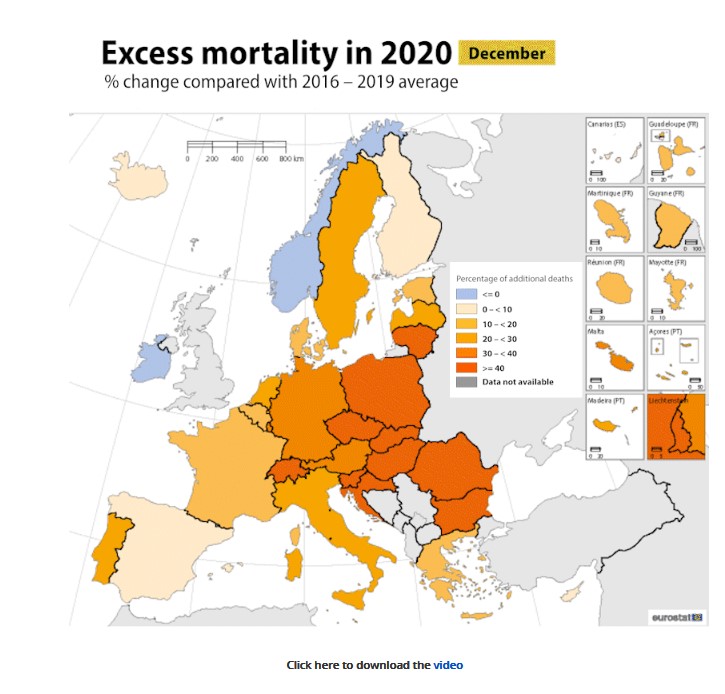
One way to measure ‘social temperature’ – other than the ‘output’ of that society, is to gouge how vulnerable a society is when confronted with a highly infectious disease which is transmitted through direct contact. Cholera will sweep through an entire community which drinks from the same well, regardless of how much contact individual people have with each-other. Covid, and Ebola, need people to ‘touch’ each-other in order to jump from one to another.

But don’t forget to factor in ‘pressure’. And other things specific to each individual ‘place’.
Otherwise the analysis might produce less relevant results.

“You have a right to defend yourself, be armed, be dangerous and be moral.”
Madison Cawthorn, Representative for NC

In the context of Kyle Rittenhouse’s trial, a friend asked me ‘which right takes precedence?’

A ‘right’ can be understood in two ways.

As something granted to somebody by somebody else.
Or as a consequence of modus vivendi. A consequence of how people interact among themselves.

People who see it in the first way, will ‘fight’ to establish that ‘precedence’.

Those who understand rights as being a consequence of social evolution will negotiate among themselves about the order in which rights should be exerted.

Hence my assertion. No guns should be present at a ‘peaceful’ manifestation. Where people come to manifest their grievances. Where a car or two might get torched. Where a window or two might get smashed.
But where – if things go as ‘planed’, nobody will loose more than a couple of teeth. No matter what!

But as soon as guns are brought along, the ‘atmosphere’ is changed. People start loosing their lives.
And while a car, or a window, can be replaced… lost life cannot be brought back!

And for me, life takes precedence over property. I would aim a gun – If I had one, at somebody trespassing through my bedroom but I would not shoot at them unless my – or others, life was in danger.

So yes, Rittenhouse was right to defend himself but he shouldn’t have brought that rifle to a manifestation. No matter how riotous. It wasn’t his job to police the town. A town which wasn’t his home, where he owned no property… but where he eventually had taken two lives while ‘protecting property’. While asserting “his right to bear arms“.

Kyle Rittenhouse: Calls for calm after US teen cleared of murder.
These Are the Victims Killed in the Kyle Rittenhouse Shooting in Kenosha.
A Tale of Two Shootings.
St. Louis couple who brandished guns at protesters plead guilty.

For knowledge to become actionable, it has to be trusted.
It has to be believed as being true!

In order to cooperate with somebody, you need to trust that person.

But trusting a person is far more complicated than believing that a piece of information is true!

Evaluating a piece of knowledge is a uni-dimensional business. That piece of knowledge either corresponds with (what is considered to be) reality – it is ‘true’, or it doesn’t. Hence it is false.
And it’s only after you have satisfied yourself about an information being true that you may start to ‘own’ it. To act upon it.

When it comes to trusting a person, you are confronted with a bi-dimensional endeavor. Which makes it a real problem.
In order to be able to cooperate with somebody, you need to be satisfied on two accounts.
That that person is qualified enough for the business at hand AND that that person ‘means well’.

Not that simple, is it?

Mult mai frică decât mi-a fost la începutul pandemiei.

Atunci a fost vorba despre un simplu virus. Omenirea a mai făcut față unor chestii de genul ăsta.
Niște carantină, la un moment dat un vaccin, mai devreme sau mai târziu urma să revenim la un nou normal.

Toate astea au venit. Fiecare la timpul lor.
Mai întâi carantina și masca au temperat intensitatea pandemiei, apoi a venit speranța dată de vaccin.
Distanțarea socială produsă de concediile de peste vară a făcut minuni. Ajutată și de vaccin.

După care au venit lecțiile grele!

Am aflat că unii dintre noi nu vor să se vaccineze pentru că, pur și simplu, nu le pasă de cei din jurul lor.
Că nu vor să-și pună „botniță”. Din exact același motiv.
Că sunt semeni de-ai noștri care după un an și ceva de zile încă nu acceptă realitatea. Sunt încă convinși că boala produsă de acest virus este doar o „gripă”.
Alții încearcă să ne convingă, în continuare, să refuzăm vaccinul. Că provoacă infertilitate, că ne distruge sistemul imunitar, că bilgheitz, că doar cei cu imunitatea compromisă au nevoie cu adevarat de vaccin, că vaccinul asta a aparut prea repede… Iar culmea culmilor este numărul prea mare de medici care răspândesc, și ei, genul ăsta de informații.

Se vehiculează tot felul de explicații pentru numărul mic de vaccinați din Romania.
Că oamenii nu mai au încredere în autorități. Că neîncrederea în politicieni s-a transformat într-o neîncredere generalizată.
Că sunt prea mulți analfabeți funcționali. Care chiar dacă știu să citească, nu înțeleg nimic.

OK, ambele explicații se bazează pe niște realități. Triste dar cât se poate de reale.
Doar că aceste explicații nu sunt suficiente.
Neîncrederea și analfabetismul funcțional explică doar comportamentul masei.

Ar mai fi nevoie de explicații cu privire la comportamentul elitei.
La modul inept, politicianist, în care a fost tratată criza de către ‘clasa politică’.
La modul de-a dreptul lipsit de responsabilitate în care s-a comportat o prea mare proporție din clerul ortodox.
La faptul că o prea mare parte a presei a vânat senzaționalul în loc să ofere informație de calitate.

Nu mi-e atât frică de virus cât mi-e frică de ceea ce suntem dispuși să ne facem unul altuia.
Mai bine spus, mie frică pentru cât de puțin suntem dispuși să facem unul pentru celălalt.

Și imi mai este frică de faptul că prea mulți dintre politicieni sunt mai degrabă dispuși să ne dezbine – pentru a se putea ei cocoța mai ușor în scaunele vizate, în loc să ne dea un exemplu despre ce înseamnă colaborarea în caz de pericol.
De faptul că prea mulți dintre noi sunt dispuși să-i înjure pe cei care nu sunt de acord cu ei – indiferent de tabăra din care fac parte, în loc să încerce să înțeleagă ce se întâmplă.

Mi-e frică de faptul că, la un secol și jumătate de la Unire, am uitat cât de greu este să răzbești singur.
Și de cât de ușor le-a venit pescuitorilor în ape tulburi să ne dezbine!

Remember this puzzle?

To solve it, you have to break the box your own mind has assumed. The limitations your own mind had imposed, at least initially, over the whole thing.
You have here the psychological intricacies.

But ‘breaking’ the box isn’t enough. You also need to ‘see’ the lines…
Giving yourself enough ‘space’ to solve a problem is an absolutely necessary step but will not necessarily take you there.

There are other approaches.

There’s a guy, very successful, apparently, who advocates rethinking the boxes. You can start exploring his ideas here:

There’s another guy who argues that there is no box. No box at all!
And that what you should do if you really want to ‘boldly go where no one has gone before’ is to “Set your box on fire
Ooops… the guy really needs to make up his mind! Before giving advice to others …
How can you “set your box on fire” before acknowledging its existence?!?

Which brings me to conclusion.

The first step towards solving a problem, any problem, is to determine the box which contains that problem. The limits you have to cross in order to be able to build a solution!

Which solution might not become apparent the moment you have crossed those limits! Or ever….
But which solution would have never crossed your mind had you remained inside the original box.

Inside the box in which you had originally confined yourself!

Stage 1
You are the prisoner of the box you have assigned to the problem you have to solve.

Stage 2
You’re still inside the box but your thinking outside it.
The box had become porous. ‘Inflatable’, even.
You can make it as big, or as small, as you deem necessary.

Stage three.
You have removed yourself from the box.
You are aware of the fact that the problem must still be solved inside of a box.
Inside your knowledge and inside whatever resources may be made available for the task.
But your current relation with the box containing the problem makes it possible for you to understand – and, maybe, solve, the meta-problem.
From the outside it’s easier to figure out that it is you who needs to muster the pertinent knowledge, the necessary resources and the stamina to solve the problem.
If you really want it solved, of course.

https://www.forbes.com/sites/chuckswoboda/2020/08/03/why-thinking-outside-the-box-is-the-wrong-way-to-approach-innovation/
https://www.psychologytoday.com/us/blog/inside-the-box/201402/thinking-outside-the-box-misguided-idea
https://www.youtube.com/watch?v=MrQwNFaVaZ8

Until recently – historically speaking, people had two ideologies to choose from.

Conservative and liberal.

The conservatives used to posit ‘law’ as a ‘cage’ which didn’t allow any transgression while the liberals understood ‘law’ as an agreed upon environment which allowed people an individual but orderly pursuit of happiness.

The advent of Marx’s communism changed everything. His promotion of ‘class warfare’ as a legitimate political instrument had effectively muddled that which had previously been considered a clear choice.

After communism proved itself to be an abject failure, the naifs have forgotten about Marx.
Flying under the ideological radar, ‘class warfare’ has metastasized.

Nowadays, Regular Joe is confronted with three ideologies. And to make things worse, their names – attributed and/or assumed, are misleading.

We have a line of thought which uses (natural) ‘law’ as a line of defense against any kind of change. And as a means of bringing back the ‘better yesterday’.

Another line of thought which sees (man made) ‘law’ as an instrument to implement – forcefully, if needed, whatever the ‘implementer’ wants to achieve. One of the most often professed goals being ‘equality’. Close on its heels comes ‘diversity’.

And the ‘classical’ liberals who are squeezed between the previous two.

The state/government – whose job is to keep ‘the playing field’ level and functional, is paralyzed by the first two factions fighting to control it.
The ‘conservatives’ want to use the state/government as a ‘preserving agent’ for what they consider to be their (natural) ‘rights’.
The ‘progressives’ want to use the state/government as an instrument of (forceful, if needed) change towards what they consider to be ‘the common good’.

Meanwhile, the classical liberals – berated by both of the above, have a hard time explaining to a shrinking audience that the state/government is an extremely dangerous instrument if allowed to fall into the hands of ‘single-minded’ operators. That as soon as the freedom of the markets (the economic and, way more importantly, the ideatic ones) is curtailed, everything starts to go south. Fast!

Democracy and the free market have brought us so far.
The freedom of thought/expression and the freedom to act as an honest entrepreneur have been instrumental in us reaching the present state. With the goods and the bads in it.

Each instance in which the state/government had fallen prisoner in the hands of ‘men of state’ with ‘focused vision’, history started to run backwards.
No matter whether that ‘limited vision’ had been focused in the past or on “a certain” future.

Each time this subject comes about I remember about Francis Fukuyama’s The End of History.
About how concentrated he was on the future he considered to be forthcoming.
About how his ‘hard focus’ had prevented him from noticing the sunken part of the iceberg.

https://www.theguardian.com/world/2021/oct/10/texas-abortion-law-jonathan-f-mitchell-profile
https://www.marxists.org/archive/marx/works/download/pdf/Manifesto.pdf

Let me put this another way.

Nobody can survive alone.
Not for a considerable amount of time, anyway.

“It takes nothing to join the crowd”.
To join, maybe… but if you choose to remain, you must ‘follow the rules’.

So yes, it takes everything to stand alone… Your very life!
And the ‘membership price’ is your ‘absolute’ freedom…

Hard to make up your mind, eh?
Then let me raise up a few points.

I started this argument by mentioning that nobody can live alone. Not for long and not very comfortably. No matter how hard you may prepare yourself.
Don’t kid yourself. All those hermits and preppers you hear about – on ‘social media’!, are able to do that because of modern technology. Which technology has been developed by somebody else…
On the other hand, most individuals are able to survive, alone or in small groups, while jumping from ‘one boat to another’. Think emigration, for instance. Or ‘acculturation’.

But no crowd will ever survive its members leaving in droves!

The single truth which is accessible to us is that while there is a single truth – we may call it ‘reality’, if you want, we’ll never know it in its entirety.
We may get ever closer to getting there but we will never arrive.

The corollary – which is an integral part of the kernel truth, being that the effort to get closer to that single truth can be exerted only as a collective endeavor. Any other approach will, sooner rather than later, end up in a cul-de-sac.

The sooner we agree about this ‘kernel’ truth, the more peaceful the journey to never get there will become.