Archives for posts with tag: dictatorship

‘Revolution’ might be sexy and hype but our lives are shaped by counter-revolution.
Ilie Badescu, PhD

Marx, Karl Marx, is considered the quintessential revolutionary philosopher.

Ilie Badescu – a Romanian Professor of Sociology, proud of his reactionary convictions – makes a very poignant argument. ‘We live in counter-revolutionary times. Almost always. After each revolution, whatever was changed during the upheaval has been mitigated by the survivors to fit with the existing circumstances.’

The Communists are distinguished from the other working-class parties by this only:
1. In the national struggles of the proletarians of the different countries, they point out and bring to the front the common interests of the entire proletariat, independently of all nationality.

2. In the various stages of development which the struggle of the working class against the bourgeoisie has to pass through, they always and everywhere represent the interests of the movement as a whole. The Communists, therefore, are on the one hand, practically, the most advanced and resolute section of the working-class parties of every country, that section which pushes forward all others; on the other hand, theoretically, they have over the great mass of the proletariat the advantage of clearly understanding the line of march, the conditions, and the ultimate general results of the proletarian movement.
The immediate aim of the Communists is the same as that of all other proletarian parties: formation of the proletariat into a class, overthrow of the bourgeois supremacy, conquest of political power by the proletariat.
The theoretical conclusions of the Communists are in no way based on ideas or principles that have been invented, or discovered, by this or that would-be universal reformer.
They merely express, in general terms, actual relations springing from an existing class struggle, from a historical movement going on under our very eyes. The abolition of existing property relations is not at all a distinctive feature of communism.

The Communist Manifesto

Karl Marx and Friedrich Engels wrote this in the first half of the XIX-th century. During quite revolutionary times… Or rather?!?

‘The communist ideas have not been invented or discovered by this or that would-be universal reformer’…

Those familiar with the history of communism know – or should – that both Marx and Engels had been born and raised in Prussia. At that time, until 1848, Prussia was run as an absolute monarchy.
Engels came from a wealthy merchant family who owned textile factories in both Barmen, Prussia, and Salford, England.
Marx was born into a well off family. His father, Heinrich, owned a number of vineyards and was an attorney. Eventually, after an engagement spanning 7 years, Marx married the educated daughter of a liberal aristocrat, but not before befriending his future father-in-law.

Neither had any blue-collar experience. Yet they co-authored the Communist Manifesto…

What is going now in China – and in Russia, for that matter –
has nothing to do with the ‘left’.
With what is understood as “left” in Europe…
Instead, it has many similarities with fascism.
‘Corporatist’ states imbued with revindicative nationalism.

Nassim Nicholas Taleb has introduced the concept of “Skin in the Game“.
In short, it is about the fact that the decisions made by people who do not directly and immediately ‘enjoy’ the consequences of their choices have a high probability of being bad. A phenomenon that is accentuated as bad decisions are not immediately sanctioned by those who suffer.

Taleb’s observation only confirms the fact that all dictatorships/authoritarian regimes have collapsed.
Without exception!
Alternatively, it is very easy to see that democracies ONLY last as for long as they manage to maintain their ‘functionality’. That is, for as long as people can – and undertake – to voice their grievances. And for as long as people listen to each other. Respectfully! In vain, some shout about being ‘hungry’ if nobody listens/cares ..

Returning to the idea of ​​’leadership’, yes, countries are led. By some who consider themselves/are considered to be ‘elite’. ‘Led’ only from the operational point of view, however…
Countries are living things, ‘natural selection’ still has the last word!
Ernst Mayr, a biologist, said that ‘evolution is not about the survival of the fittest, but about the disappearance of those who cannot find their ‘right’ place. The misfits. ‘. That’s right, countries have big problems if/when they don’t manage to take down the ‘misfits’ who happen to have clambered into power.
Why countries don’t succeed to do this in a timely manner? How did they clambered there in the first place…
Everything starts when the popular dissatisfaction reaches a critical level. Which dissatisfaction is engendered when the members of that country no longer care for each-other. When mutual respect has disappeared.

I will conclude by returning to the major difference between communism and fascism.
Both of them appeared in situations when enough dissatisfied people were ‘wandering aimlessly’ while looked down by the rest of the society.
Some low-life profiteers seized the occasion and ‘grabbed the helm’. Profiteers who have been able to operationalize the dissatisfaction festering in the society. And the lack of vision of those who hated the others. I repeat myself, both communism and fascism had appeared when various sections of the society despised, and sometimes hated, the ‘others’.
The minor difference consists in the fact that the proto-communist dissatisfied looked up without having any chance to get there, while the proto-fascist ones wanted to return to where they had once been. The Russian muzhiks dying during WWI versus the unemployed German workers who had just lost WWI.

This being where the difference appears.
The difference which makes it hard to recognize what’s going on now in Russia/China as being a form of fascism.
Both the Russians and the Chinese have a lot better lives now than they had under communist rule. Statistically and from the material point of view! Psychologically speaking…
Those who live in well-established democracies – people who respect each other – have a greater tolerance for ‘insecurity’. Each of them knows they can rely on the others. In that environment, failure is temporary. People try as many times as they need to succeed. Or that’s how it used to be…
In communism, we had learned – the hard way, that one was not allowed to make mistakes.
When Russia and China switched to ‘capitalism’ and people saw what could happen to them – to make mistakes while trying – they had become frightened!
And, at least some of them, chose to return – especially psychologically, in the past. Where they felt safe…

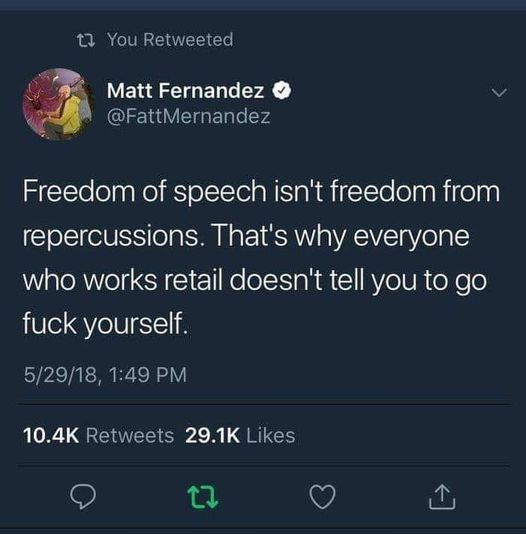
“Only freedom of speech with repercussions isn’t anything special.
That has existed throughout every dictatorship.
If we consider freedom of speech as a value,
it must be something else.”

Whenever somebody opens their mouth, they reveals things about themselves.

That’s a repercussion.

Whenever somebody acts upon information gleaned this way, those acts also have repercussions.

The repercussions belonging to the second category are the ones which ensure that, in the end, every dictatorship ends up in failure. In abject failure.

Out of fear, everybody shuts up. So nobody yells anymore ‘The emperor is naked. And about to be run over by a bus’. So the emperor, and his henchmen, end up hanged by an angry mob. Process usually called retribution. Or revolution?

““We are not extremists. We are just angry,” explains Lazar Potrebic, a 25-year-old from a Hungarian minority in Serbia who is entitled to vote.

He – and many of his peers – are worried about the future, and feel that the more traditional parties are not listening to their concerns.

“We feel like our needs are not being met. People our age are taking really important life steps. We’re getting our first jobs, thinking about starting a family…but if you look around Europe, rent prices are going through the roof – and it’s hard to get work.”

.

.

Of course the feeling of not being listened to when you’re young, of not being part of the equation, is nothing new. But many of the parties on the far right are actively courting the young vote, says Dave Sinardet, a professor of political science at the Free University of Brussels.

“The radical right channels anti-establishment feelings,” he told the BBC. “They have a bit of a rebellious vibe – especially when it comes to their anti-woke agenda – and that appeals to young people.””

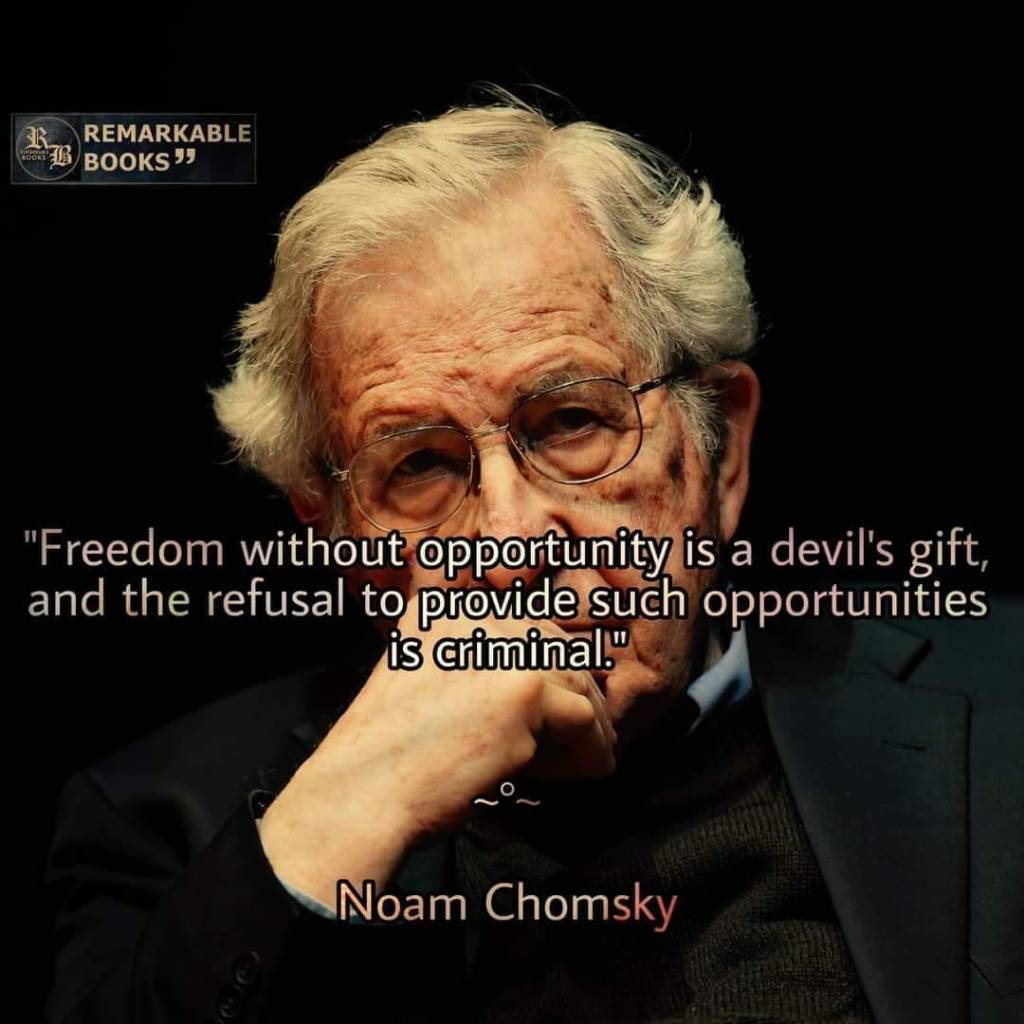
As usual, Chomsky is only half-right.
Opportunities shouldn’t be provided. Period!
In fact, nobody should be able to control/provide sizable amounts of opportunity!

On the other hand, making it so that only a small number of people enjoy all the opportunities in the world is, indeed, criminal.
Unsustainable for the longer time frame, actually!

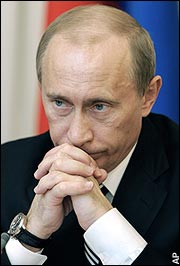
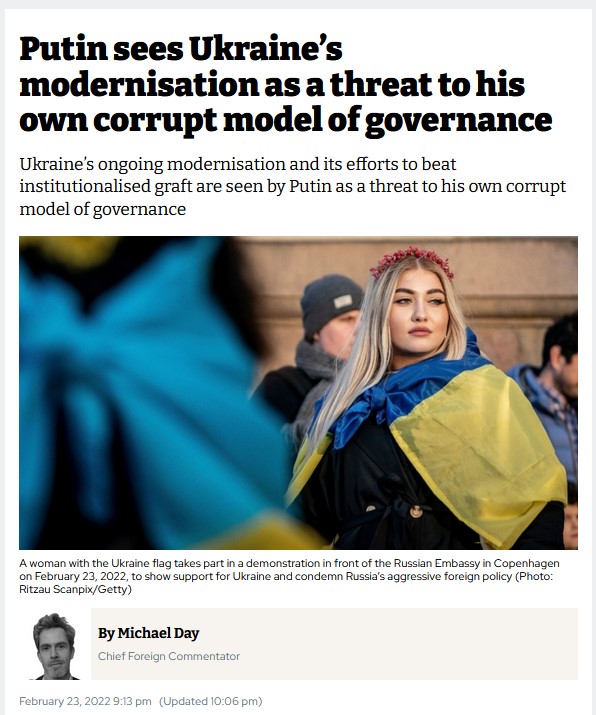
The internet is full of articles attempting to understand Putin’s motives starting from what he had said about the subject.

Here’s but the last I’ve read.
Why has Russia invaded Ukraine and what does Putin want?

Nothing special inside but it illustrates well enough the point I’m trying to make.

At first, Putin’s words are summarized and then proven ‘wrong’. Misleading. Or plain false.
In the next section of the article, the author – Paul Kirby, like many more before him, attempts to divine what Putin will do. Starting from the same words which have just been proven false and/or misleading.

?!?

No, the author is not ‘dense’.
He simply does what he was trained to do.

We, here in the land of democracy, understand language as a medium for negotiation.
And negotiation as an exchange where we let our needs be known, in earnest. As an exchange where we ‘trade’ information with the goal of finding the best mutually acceptable solution for whatever problem we attempt to solve.
In this sense, a negotiation is a form of cooperation. And compromise is something which both sides find beneficial.

For people conversant in ‘dictatorian’, ‘compromise’ is something to be shoved down the throat of the weaker side. The bigger the power differential, the harder to swallow becomes the ‘compromise’.

Doesn’t make much sense?
To us, democrats?
Because we know that shoving things down the throat of now weaker people doesn’t work on the longer time frame?

‘Assuming’ is the worst thing a negotiator may make.

We keep assuming that dictators are rational. Even worse, that they follow the same ‘ratio’ as we do.
That we – as in we and them, see the same world and have ‘slightly’ different goals.
And express those different goals in the same manner. Using the same kind of language.

We are wrong.

We, the democratically minded, are trained – conditioned is a truer word, to consider ‘the other’ as being equivalent to us.
At least some of the others, but that’s another discussion.
We actually ‘know’, in our bones, that we cannot ‘do’ anything by ourselves. That we exist only in cooperation with those around us. That everything we have ever accomplished was the result of a common effort.

People conditioned in dictatorial regimes see things rather differently.
They don’t cooperate, they just obey.
Their existence does not stem from the common effort but from following orders.
Language is not at all a medium where information is being passed between equivalent agents but a two way conduit. Orders are flowing from top to bottom and acknowledgments crawl from bottom to the top.

‘And what about ‘information’?!?
How does it travel among those people?’

Piecemeal.
Exclusively on a ‘need to know’ basis.
Nobody ‘volunteers’ any information unless expressly asked about it by a superior.

This is why dictatorships end up crumbling under their own weight.

That’s why we don’t understand, for real, what Putin attempts to communicate.
That’s why he is extremely annoyed right know.

Putin no longer understands what’s going on.
Let aside the fact that nobody around him dares to volunteer any information – which would be contrary to what Putin wants to hear.
My point being that Putin had been accustomed to having his way.

I’m not going to enumerate all the things he had done. Things we should have reacted against…
As in ‘reacted’, not meowed meekly.
As a consequence, he had grown accustomed to shoving things down our throats…

Suddenly, we have stopped swallowing!
Without giving him a ‘reasonable’ reason…
A reason he could understand!

Do you remember what I’ve told you?
A few moments ago? That dictators don’t care about those who are weaker? Nor about the long term consequences of their decisions?
That dictators are concerned exclusively with their own survival?

Savvy?

This is a stub.

‘This time is different’. https://www.economist.com/media/pdf/this-time-is-different-reinhart-e.pdf

History teaches us that each and every empire has collapsed. Usually under it’s own weight. Pareto has given us a valid explanation – each structure which doesn’t have to ‘refresh’ itself tends to become clogged with self serving individuals, near-sighted enough to ‘forget’ that none of them (none of us, actually) is able to survive ‘outside’. Yet each ’emperor’ allows themselves to believe that this time is different. I’m better than all my predecessors. And their followers allow this to happen, just as Pareto had taught us.

‘They is a rational operator hence they must have a reasonable objective’.
That’s how people raised/educated in a reasonable environment think/interpret the actions of other people.
This being the reason for democratically groomed leaders having such a hard time when they need to understand how dictators operate. This being the reason for democratically groomed political operators having such a hard time when it comes to identify skillful would be dictators.

https://www.journalofdemocracy.org/articles/russias-road-to-autocracy/

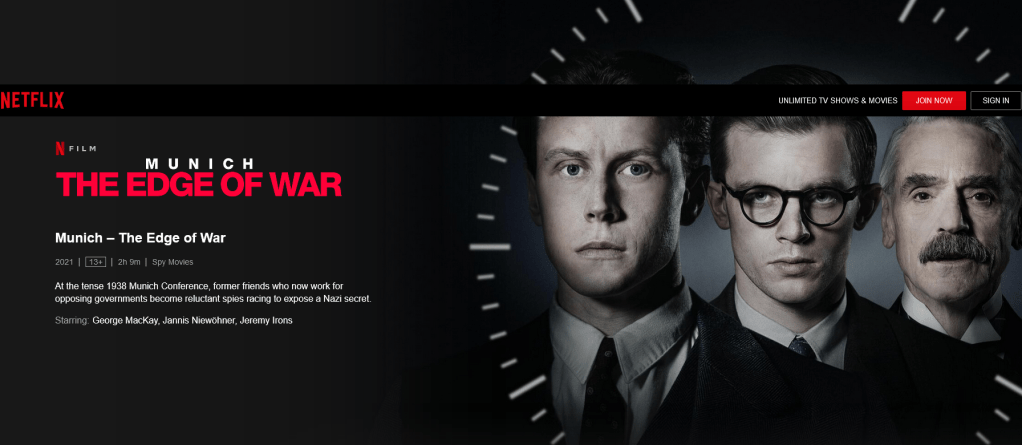
Spune cineva pe net că filmul se termină cu discleimărul:

“UK a mai câștigat un an de pregătire și, în cele din urmă, a învins”

Nu l-am vazut. Nici n-am de gând…

Dacă se vede cineva cu scenaristul, vă rog să-i transmiteți din partea mea că anul ăla de pregătire a fost valabil și pentru Hitler.

Diferența dintre cele doua spații socio-culturale fiind că nazismul era deja ‘copt’ în timp ce englezii nu erau, încă, pregătiți din punct de vedere psihologic pentru un ‘nou’ război.
În anul ăla de pregătire, Hitler a construit tancuri și avioane în timp ce englezii s-au obișnuit cu gândul că vor trebui să mai învingă odată Germania.
Hitler a început războiul tocmai în 1939 pentru că abia atunci a avut la dispoziție suficiente arme. Dacă le-ar fi avut in 1938, intra atunci în război.

Cam același lucru se întâmplă și acum. După WWI, americanii s-au retras dincolo de Atlantic, englezii dincolo de Marea Mânecii iar francezii au impus despăgubiri imense de război Germaniei învinse. Economia germană s-a scufundat în mocirlă iar mizeria rezultată a constituit ‘îngrășămantul natural’ în care au înflorit aberațiile lui Hitler.
După WWII, americanii au fost mai isteți. Și-au dat seama că dacă se mai retrag odată, Europa va relua ciclul. Poate cu alți actori, doar că războiul s-ar fi întors cu aceiași regularitate. Așa că planul Marshall și NATO. Europenii, care învățaseră și ei lecția, au constituit UE. Aranjament care a ‘conținut’ comunismul în spatele Cortinei de Fier, unde s-a prabusit sub propria greutate – precum toti colosii cu picioare de lut.
Odată cu sfârșitul Războiului Rece, am reintrat în ‘necunoscut’. “Neconoscut” pentru că l-am uitat deja, dacă l-om fi înțeles cu adevărat vreodată…
Euroatlanticii au clamat victoria – vezi ‘sfârșitul istoriei’ prevăzut de Fukuyama, analist la State Department pe vremea când i-a venit ideea, în Martie 1989 – iar postsovieticii au refăcut traseul urmat de naziștii nemți. Au dat vina pe trădătorii interni – adică pe ‘Gorbaciov’- refuzând să recunoască – cu toate că abia ce se confruntaseră cu ele, ‘limitările’ intrinseci modelului autoritar.

Din păcate, euroatlanticii au uitat de învațămintele trase la sfârșitul WWI. Au lăsat spațiul ex-sovietic să se descurce singur. Și pentru că shit happens… it did!

Revenind la Hitler, francezii ar fi trebuit să reocupe Germania în 1936. Când Hitler a intrat in Renania, încâlcând brutal tratatul de la Versailles. Doar că ‘elitele politice’ franceze și britanice ale momentului nu erau ‘pregătite’. Drept pentru care a venit momentul 1938. Nici atunci nu ar fi fost târziu. Armata germană încă nu era suficient dotată pentru a face față unui asalt hotărât, declanșat de toate țările din jurul Germaniei. Dar, din nou, elitele politice nu erau suficient de ‘pregătite’.

Suntem, iarăși, în aceiași situație.
Ne punem, din nou, aceiași întrebare. Merită să-l înfruntam pe dictator?
Mai ales că acum dictatorul ne poate distruge.
Și pe el s-ar putea să nu-l intereseze ce rămâne in urma lui!

Întrebările la care trebuie să găsim răspunsuri sunt următoarele:

Cât de departe sunt dispuși să meargă cei din jurul dictatorului?
Cei care fac posibilă dictatura ‘internă’.

Iar după ce vom fi aflat răspunsul la prima întrebare va trebui să ne uităm în sufletele noastre și să ne întrebăm

CUM DRACU’ DE-AM AJUNS, DIN NOU, ÎN ACEASTĂ SITUAȚIE!?!

“Friedrich Engels in a thinker’s pose
The four-meter-tall bronze sculpture of the other philosopher of communism, Friedrich Engels, is a bit smaller than the planned Marx statue in Trier. This Engels monument in his hometown, Wuppertal, was also made by a Chinese artist and offered by the government of China in 2014.”

I grew up under communist rule.
We studied marxism in school.
At some point, I was about 16, the teacher asked us about the relative merits of the different brands of materialism he had mentioned during his classes.
My answer was ‘dialectic materialism is better than all others because those who apply it into practice constantly gouge the consequences of their (political) decisions and fine tune policies accordingly’.
Some 15 years later the communist lager had imploded simply because those who were supposed to act in a dialectic manner had failed to put the principle in practice.
Coming back to the original question, ‘was Marx a determinist’, the answer is yes.
Marx’s dialectics is only a procedure. Meant to help the communists exercise the dictatorship mandated by Marx in the name of the proletariat. And dictatorships are determinist by definition.
Why mandate one if you are not convinced that things can be ruled?
For the long run and in a comprehensive manner?

Liberty is freedom from being constricted, in any way, shape or form. Period.

Liberty is more of an adjective rather than a verb. A situation more than an action.

Liberty can be attached to a space, to an agent or to both.

A free space would be a space where no constriction may occur, whatsoever.
A free agent would be an individual entity outside any constriction, whatsoever.

Mathematically, both definitions are possible.
Philosophically, both definitions are imaginable. By philosophers, of course.

Oscar Hoffman, a Teacher, kept telling us, his students, “For a proposition to be true it is not enough for it to be logically correct. It also has to make ontological sense. For those of you who don’t remember what ontological means, a true proposition must describe something which has to be at least possible”

In the real world, where there is no such thing as absolute freedom, liberty has to be first noticed/invented. And then constantly negotiated.

‘No such thing as absolute freedom?!? But liberty is a (God given) (human) right!!!’

Do you remember what Hoffman had (just) said about things which can exist in practice and things which can exist only in our minds?
Liberty might be a right – for those who enjoy it, but that doesn’t mean that everybody has it. And, even more important, that there is – or ever will be, something even close to absolute liberty.
If you don’t believe me, try to fly off a balcony without any ‘mechanical’ help. Or stop eating for a day or two. The Earth will surely ‘constrict’ you back towards its center and your stomach will certainly constrict itself for lack of food. And both Earth and stomach will constrict you back to reality.

‘OK, so no absolute freedom for individuals. How about ‘free spaces’?’
‘As in spaces where no constriction, whatsoever, may be exercised?’
‘Yes.’
‘Well, that would be possible. If a space is completely empty… no constriction might be exercised in there, right? On the other hand, as soon as something, anything, populates that space, constrictions start to appear. For instance, since no two things can simultaneously exist in the very same place, the mere existence of a speck of dust in a whole stadium induces the restriction that no other speck of dust may exist in the very same spot. Sounds trivial, true, but this is it… No absolute freedom. Not for individual agents and nor for spaces.’

‘Then why are writing a post about ‘Free market’? Doesn’t make much sense, isn’t it?’

Let me finish with liberty before going any further.
I mentioned earlier that liberty must be first noticed and then negotiated.
You see, right or no right, liberty is, above all, a concept.
We’d first observed that a flying bird is freer that a crawling worm and bam!!! We realized that some of us were freer than the others. Then that freer groups/societies fared better than the more ‘stifled’ ones.
But only where liberty was more or less spread around, not concentrated in one hand. Dictatorships – where all liberty is concentrated at the top, are way more fragile than any democracy. I’ll come back to this.
Now, for the negotiation part.
‘Your freedom to swing your fist ends where my nose begins’. And vice-versa. Only this is rather incomplete.
Let me examine the situation where you are a person who likes to swing your fist. In the air, not with any aggressive intent, of course. So you were swinging your fist, after you had determined, in good faith, that there was no nose close enough to hurt. But what if I am a ‘nosy’ guy? ‘Nosy’ enough to bring my actual nose inside your reach? You having to restrict your swings – or to go somewhere else, isn’t a limitation of your freedom? An absolutely unnatural limitation of your freedom?
Has it become a little clearer? What I mean by negotiation when it comes to individual freedom?

OK, time has come for me to go to market. To the free market!

A market is a place. Obviously, right?
A place where people trade their wares. Because they have noticed that it is easier for each of them to do what each of them do better and then trade the results of their work instead of each of them providing everything for themselves. As in everything each of them needs. Or fancy.

Initially, markets were far from being free. First of all, supply was sorely limited. Transportation means were practically nonexistent so supply varied seasonally and was severely influenced by weather, soil and other similar factors. And, maybe even more importantly, supply was influenced by the sheer will of the most powerful ‘free agent’ who happened to be around. Or, more exactly, supply was heavily influenced by the whims of the most powerful free-agent who happened to be around.
Don’t believe me? Then consider the extreme famine experienced by the Bengalis in 1943. Or by the Romanians during the last years of Ceausescu’s reign.
Slowly, people have learned that freer markets tend to be a lot more stable than the less free. ‘Freer’ markets meaning freer from both exterior and interior limitations. For a market to become free(ish) the participants need to have a big enough pool of resources at their disposal and to be wise enough to organize themselves in a ‘free’ manner.

And what happens when at least one of the two conditions remains unfulfilled?
Time has taught us that while markets tend to be limited in space and that some of the participants tent to impose themselves over the rest there is one dimension where the liberty of the market is very hard to be limited. ‘Liberty’ here meaning that things tend to evolve more in their own terms rather than ‘according to plan’. Or according to anybody’s wishes.

Whenever the available resources dry up, the participants to the market move someplace else. Or die of starvation.
Whenever a market looses too much of its freedom – as in some agent controls too much of what is going on there, the market itself no longer functions properly. Whenever too many of the participants loose their ability to determine their fate/future they slowly become ‘sitting ducks’. Not as much easy to hunt down but actually unable to feed themselves.
And since hunger is the best teacher, they either learn to fight for their freedom or… die of starvation. Pol Pot’s Cambodia would be a good example, even if somewhat extreme. The fall of most communist regimes also makes a compelling case for what I have in mind.
Even more interesting, though, is what had happened to the American Automobile Industry. General Motors and Chrysler Corporation, once the dominant stars of the market – along with Ford, had to be rescued by the government. Quasi monopolistic positions tend to be bad for the monopolists also, not only for the rest of the market. Given enough time, true enough…

As the only defendant at the Nuremberg Trials to admit to his share of guilt in the crimes of the Third Reich, Speer had been sentenced to twenty years in Berlin’s Spandau jail. He was released in 1966. Some ten years later, the Canadian high school in Lahr, West Germany, which looked after the education of our children, invited Speer to speak to the student body. I was invited to the dinner that concluded the evening. I found it more than a little humorous when Speer was asked bya very confident grade eleven student: “Mr Speer, how could a group of talented people like yourself be convinced to follow a madman like Hitler?”
Speer was quiet for a few seconds, giving the impression he had never been asked the question before. Then he responded, “young lady, probably because we were all trained as engineers!. We were pragmatic to the extreme, and we thought every problem could be solved by an equation or by adjusting the numbers. Not one of us had any education in the humanities – even Hitler fancied himself an architect, in spite of his lack of formal training.

Louis MacKenzie, Soldiers Made Me Look Good.

Well, there’s a small problem here.
While I agree with Speer about the importance of ‘humanities’ I also must notice that Marx had been another example of an individual convinced that the world can be ‘tweaked’ by following a ‘blue print’. He used the term ‘ideology’ instead but… And we cannot say that Marx was stranger to ‘humanities’.

But there’s another observation made by Speer. “We were pragmatic to the extreme”. While their ‘deficient’ education might have made Hitler’s job easier, I’m afraid it was their ‘nearsightedness’ which had been the catalyst.

It was their obsession with their immediate goal – transform the reality according to their own wishes, which had made them blind towards the future consequences of their actions.

It was not ‘humanities’ they lacked but ‘religion’.

“Thou shalt not make unto thee any graven image” is not really about what you pray to as about what you convince yourself about. That the ‘image’ you have developed about your surrounding reality is good enough to be ‘graven’. For ‘future reference’ and for it to be imposed upon others. By force if necessary.