Allow me to put it bluntly. To cut the .. c…orner. -;).
People act as if the world is as they see it!
Would you get up in the morning if there was no tomorrow?!? So, in reality, it’s faith which keeps the world spinning!
Our world… Earth spins on its own! But our world, the one we live in, is kept together by our faith! By our own conviction that we’ll get up from bed tomorrow. That there’s something worthwhile getting up for.
If you read carefully Marx’s communist manifesto, you’ll realize that it doesn’t. Work. Not even on paper! According to Marx, communism will come to be when enough people formerly belonging to the middle class will have become poor. As a consequence of their wealth having been siphoned away from them. Becoming poor will make those former middle class people open to communist ideas. And will convince them to follow the already ‘enlightened communists’ into revolution. For a while – again, according to Marx, the society will have to be led by the successful revolutionaries. In a dictatorial manner, because not all people will have risen to the communists’ level of understanding. So. ‘Communism’ will be instated by some disgruntled people using dictatorial methods. How auspicious is this? Let me go even further.
Why were those people disgruntled in the first place? Because capitalism! Not so fast. The Adam Smith kind of capitalism worked just fine. Only after it had been warped by greed it had started to sputter. Specially after Milton Freedman had enshrined greed… This being the moment when I need to remind you that Adam Smith’s first book on this subject was “The Theory of Moral Sentiments”…
‘Those’ people had become disgruntled after too many in that society had been convinced, at least for a while, that ‘greed was good’. And what was Marx’s proposed solution for that disgruntlement? That all ‘means of production’ – meaning all property/wealth, to be taken away from individual people. And entrusted to ‘the people’. Since ‘the people’ were going to be led by the “communists”, in practice the communist revolution meant that all wealth was going to be confiscated from those who happened to own it and entrusted to a very small number of people. Who happened to own the secular power in that moment. As the main consequence of the communist revolution. Apud Karl Marx’s Communist Manifesto…
Let me revisit now Milton Friedman’s words. ‘Greed is good’. According to this line of thinking, wealth becoming as concentrated as possible is a good thing. Since greed is already good, concentrated wealth is but a logical consequence…
Then Marx’s Communist Manifesto was nothing but an avant-la-lettre short-cut for an easier implementation of Milton Friedman’s greed hailing ideology!
See what I mean?
Karl Marx communism did not and cannot work. Because it leads into a vicious circle. It creates a monopolistic situation which cannot be avoided. Time and time again, history has proven that ‘this time is different’ is nothing but wishful thinking. Whenever too much decision power is concentrated in a too small number of hands, the situation becomes untenable. The more concentrated the decision power, the faster – and more dramatic – the eventual collapse.
How about a ‘different’ kind of communism? The only sustainable kind of anything – ‘social arrangements’ included, had been ‘natural’. Had appeared in an evolutionary manner. In contrast, all revolutionary developments have produced counter-revolutions. In many instances even more destructive than the revolutions themselves. What will come after democratic capitalism? I don’t know! But it better be better than what we have now.
And come in quietly!
Otherwise…
How about a return to bona fide democratic capitalism? To Adam Smith’s kind of capitalism? The one whose entrepreneurs used to put ‘moral sentiments’ above greed!
Wishful thinking? Maybe! But is there any other way to achieve anything? Other than to start by wishing that something? And since Smith’s brand of capitalism did work, communism always failed and a viable alternative has yet to appear…
Holidays are very good opportunities to reconsider, And to learn new things.
These days I learned that while having nothing makes you feel ‘uncomfortable’, having too much can be very limiting.
If you have just enough, you can go forward. Explore new venues. Learn new things. Enjoy life!
If you have too much, you spend too much time and energy protecting what you already have. Trying to get more… The venues open for you to explore are suddenly reduced to one! Only one… You become the guardian of your fortune! Can you enjoy such a life? Are you sure? Have you examined the alternatives? In earnest?
‘Are you implying that all wealthy people are unhappy? Unable to enjoy their lives?!?’
On the contrary, my dear Watson! I’m only saying that being wealthy is complicated. “Just enough” is a matter of individual ability to cope. That enjoying wealth needs a lot of skill. And that being wealthy comes with a lot of responsibility! Towards yourself in the first place!
And towards your kids, family and the rest of the gang…
Evreii nu-s catolici? Nu. Păi atunci de ce sărbatoresc Paștele în același timp cu catolicii? Evreii sărbătoresc altceva. Ieșirea din Egipt. Momentul când Moise i-a condus către libertate. Din sclavia egipteană către libertatea pe care aveau s-o găsească în Palestina. Ce sărbătoresc ei nu are nici o legătură cu Christos. Păi Christos nu a fost evreu?!? Ba da. Doar că pentru marea majoritate a contemporanilor lui, evrei, Christos a fost un sectant. Un răzvrătit. Cât de multe lucruri nu știu…
Din păcate, discuția s-a întrerupt aici. Prietenul meu a ajuns la casă – făcea cumpărături pentru Paște, și a trebuit să ‘închidă’.
Nu l-am mai sunat înapoi… Cum să-i dai cuiva telefon și să-i spui:
Tu ești cel mai creștin om pe care îl știu. Nu judeci pe nimeni. Ne tratezi pe toți la fel. Cu la fel de mult respect. Femei, bărbați, copii, negri, verzi, albi, turci, români… Nu te-am văzut vreodată să-ți bați joc de cineva! Nu te duci la biserică? N-ai citit Biblia? Ce nevoie ai să faci ceva din toate astea? Atâta vreme cât te comporți cât se poate de creștinește. În adevăratul sens al Cuvântului!
„Nu oricine-Mi zice: «Doamne, Doamne!» va intra în Împărăţia Cerurilor, ci doar acela care face voia Tatălui Meu, Care este în ceruri. Mulţi Îmi vor zice în ziua aceea: «Doamne, Doamne, n-am profeţit noi în Numele Tău? N-am scos noi demoni în Numele Tău? N-am făcut noi multe minuni în Numele Tău?» Atunci le voi spune limpede: «Niciodată nu v-am cunoscut! Plecaţi de la Mine, voi, cei ce săvârşiţi fărădelegea!»” Matei 7:21-23
Basically, reasoning is nothing more than a ‘dialogue with myself’. When I ‘consider a thing’ in my mind, consciously, I practically put my brain to work. I order my memory to summon up all the data it has on the subject and I ask my frontal lobe to process that data and to reach a conclusion. In theory… In the real world, my amygdala – the piece of the brain where emotions are processed – already has an opinion about everything which crosses my mind. The more familiar the thing, the stronger the opinion. The more often my mind – meaning I, had expressed itself regarding a subject, and the more recently, the stronger the opinion my amygdala already has about the matter. If the matter is considered for the first time, and has no connection with anything else I had already ‘conclusioned’ about, only then my amygdala might keep its opinion for itself. The key word here being ‘might’…
Since this is nothing more than a blog post, I’m not going to prove my opinion. To discuss the importance of the fight-flight mechanism and to mention that this mechanism had done more – evolutionary wise, than reason for our survival. For us having the opportunity to develop this vaunted capacity for reason…
I’ll just end it abruptly. Mentioning that our individual consciousnesses use reason as a tool. To arrange facts in such a manner as to confirm the already reached conclusionary opinions put forward by our amydalae. “To win arguments”, if you will, including when debating with ourselves. Only when the facts – the harsh reality, contradict in a flagrant manner the already held convictions we might change our minds. The more immediate the danger we put ourselves into by sticking to our convictions, the more likely we are to cave in to the facts.
To the facts as we perceive them… Which is yet another story!
“Tough times create tough men. Tough men create easy times. Easy times create weak men. Weak men create tough times.“ American proverb “Wealth lasts only for three generations: one to make it, one to keep it, one to squander it“ Chinese proverb “If you raise your children, you get to spoil your grandchildren. If you spoil your children, you get to raise your grandchildren.“ Popular word of mouth
There’s no denying that, on average, each generation fares better than its predecessor.
Then why some people end up worse than their parents? Is it a social thing? Is it in their upbringing? Is it the consequence of bad personal choices?
The easy way out would be to consider that legislation, material status, the culture one was born into and even the upbringing offered by the parents are nothing but circumstances. And, ultimately, it’s the individual who makes the call. And bears the consequences… But the above mentioned individual doesn’t rise from and into a complete void… so I need to go deeper!
An equally true but somewhat more useful observation would be that we’re dealing here with something more important than mere wealth.
‘There’s no such thing! Nothing is more important than Wealth!’
Yeah, right… Individual people keep squandering the personal wealth accumulated by their forefathers, the humankind keeps going forward and you tell me personal wealth is the most important thing here…
But you do make a good point. Your insistence, obsessive even, about wealth being the crux of everything is very relevant. Since I agree with you that wealth is important, indeed, then maybe it’s the ‘insistence’ which is causing the problem…
First of all, allow me to make a simple distinction.
There is wealth – structured opportunity, I’ll discuss this notion in another post, and there is personal wealth. Opportunity which belongs to somebody. When an individual squanders the wealth inherited from their parents – or even that which they had managed to put together themselves, the wealth itself – the accrued opportunity – doesn’t disappear from the face of the earth. It just passes from one hand to another. Most of it, anyway. For the simple reason that most of today’s wealth is expressed in money. Which is fungible.
‘OK. So individual people squandering their inherited wealth do not represent such a big problem. The total wealth already present ‘on the face of the Earth’ remains (more or less) the same, no matter who owns it. And since new wealth is created everyday, the humankind, on aggregate, goes forward.’
That’s how things used to be. That’s how things had evolved for the last ten millennia or so. Ever since our forefathers had invented agriculture. Agriculture and money… Land and money cannot be destroyed. Buildings and almost everything else which carries value can. Be destroyed. Land and money also, actually, but it’s a lot harder to do it.
But there’s a catch here.
For wealth to do its trick – to function as an opportunity, people have to have access to it. That’s why, for example, people do not keep their money under the mattress. When deposited in a bank, money will end up being used. The bank will lend them to somebody who needs it and that somebody will put that money to work, In no matter what shape or form. Kept under a mattress, money becomes mostly useless. At least for the time being… And this is where ‘insistence’ – our obsessive insistence – that money is the only worthwhile goal for any respectable person becomes counterproductive.
‘Are you a communist?!?’
On the contrary, my dear Watson!
In fact, Marx had been just as infatuated with money as Milton Friedman was going to be a century later. With more or less similar results… Friedman taught us that greed is good. Profit uber alles. That getting money trumps everything else. That getting money is not only good for the individual itself but also commendable. That everybody should make it their goal to become rich! Marx, on the other hand – please remember that the ‘other’ hand is nothing but similar to its twin – advocated for all wealth to be stripped from its rightful owners. See what I mean? Both Marx and Friedman had been thinking only about ownership. Who owns that wealth!
On average, we deal with the same situation. According to Friedman – pushing his advice to the very limit, there’s no problem if someone owns all the money in the world. If it so happened, so be it. According to Marx, nobody should own anything. On average, the wealth corresponding to each living human in both situations would be the same.
We already know the consequences of Marx’s teachings. When all the wealth present in one country is managed by a very small number of people, the whole situation goes south. Fast. Very fast! We also know what happens when the market is cornered. Becomes suffocated by a monopoly. The whole situation goes south. That’s why we cherish the freedom of the market!
Doesn’t make much sense? To insist that the market must be free and simultaneously maintain that ‘greed is good’?
Yep! My point exactly…
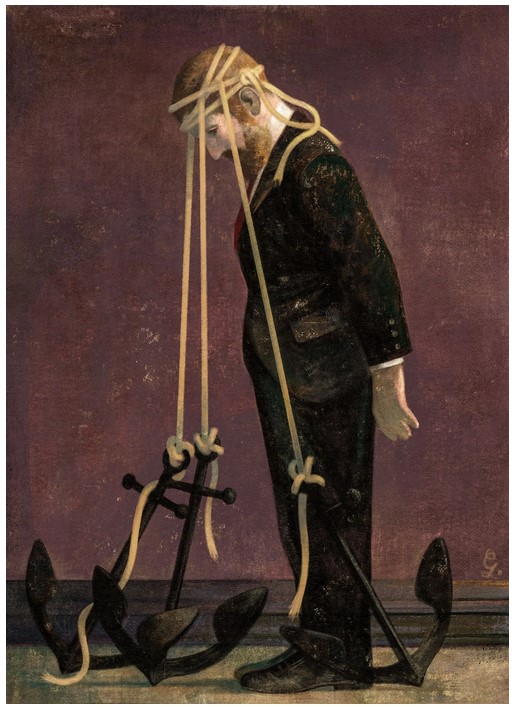
The vaunted human capacity for reason may have more to do with winning arguments than with thinking straight. Illustration by Gérard DuBois Why Facts Don’t Change Our Minds New discoveries about the human mind show the limitations of reason. By Elizabeth Kolbert February 19, 2017 https://www.newyorker.com/contributors/elizabeth-kolbert
For some reason, there still exists a considerable number of people not yet convinced that what had been experienced in the Soviet Union was “a true socialist/communist form of government”
The sad reality is that the Russian Revolution did establish a true socialist form of government! As per Marx’s teachings. The communists had been in charge of things, and the things failed to become better. In fact, they had become worse. Eventually, the Soviet Union – along with all other socialist attempts, had crumbled under their own weight.
Those who want to find better alternatives to democratic capitalism – good luck with that – need to find another word but socialism to describe their goal. Or wait a few generations before attempting to give it a new meaning. The current one had been wasted by the likes of Marx, Lenin, Stalin, Mao, Kim, Ceausescu…
Happiness is an illusion. A figment of our own imagination. Hence we shouldn’t waste our time thinking about it. Various sources all over the internet.
Here’s my take on this subject. The more imaginary a thing is, the easier it is to make it happen. IF you do it your own way! According to your needs and wishes…
Now that I’ve put behind the easy part… Like many other natural things, happiness is a gift. You get a healthy dose of endorphins after a workout, an orgasm after having sex and a moment of happiness after doing something right. IF you put your heart in it! In any of the above…
But there’s more to it. While you can work-out anytime you wish, you need a partner in order to build an orgasm. Did I hear a chuckle? Thinking about working out a single handed orgasm? Can you do it without using your imagination? Really?!? Not only that you need a partner – at least an imaginary one, the intensity and quality of the orgasm vastly depend on the interaction between you and your partner. And on your mind set before, during and after the ‘close encounter’. Happiness, whatever moments of happiness we’re blessed with from time to time, is the result of a far more complex interaction. To experience it, you have to be in sync with the universe. Not with yourself or with your partner. With as much of your patch of the universe as possible.
When working, out or in any other way, you’re basically alone. The quality of your involvement depends basically on you. Irrespective of you working alone or you being part of a team, you ‘come first’. When making love, you and your partner become one. For a while, your two me-s get close enough to experience synchronicity. Getting in sync with the universe – doing the right thing, is like making love ‘on steroids’.
There are a couple of catches though.
You need to conserve your me. Your inner self. Not your identity. That, your I, is only the exterior shape of yourself. Constantly rebuilt to match your exterior. What you need to preserve is the inner spectator. The entity constantly watching over your identity. The entity which maintains the coherence of your identity during its constant reshaping. Your inner spine, if you will. And you must refrain from hunting it. From hunting happiness.
You can build up muscles through training. Hard. If you do it right, you get endorphins. Because you’ve done it right, not hard. If you do it only hard, you get torn muscles, not endorphins. Or you could build up muscles by swallowing chemicals. And end up with a ruined liver. While experiencing absolutely no endorphin rush. Because you fucked up. You chased ‘muscles’ and forgot about yourself. About the self ‘inside’ yourself.
You can get ‘relief’ by wanking. But that’s no orgasm… You’d prefer ‘masturbate’ instead? Would that make any real difference? Bring the experience any nearer to an orgasm?!?
Same thing with happiness. If your goal is to be happy, you’re too focused. On your ‘identity’.
Your inner self bestows too much attention on its ‘skin’. On your identity. And not enough on what’s happening farther away. That being the reason for you not being able to get in sync with the rest of the world around you. Not being able to do the right thing.
‘Six packs’, orgasms and happiness must come naturally. As a consequence of things well done. Otherwise neither are genuine.
Some people become milder. Because they realize how dependent they’ve become. Others get feistier. They’ve had to eat so much of it that they’ve had enough. Bull shit. Many somehow manage both of the above…
Most experience a strange condition. Their hands grow longer. And longer… Until they make up their minds and start sporting spectacles.
Many become deaf. What? Speak up and no mumbling this time!
And do you know that saying? After your 50-th birthday, if you wake up in the morning and nothing hurts… then you’re dead, my friend!
But there is a benchmark far more precise than any of the above. And any other you might think of! As you grow older, you become more efficient. You learn how to accomplish things with far less movement. For obvious reasons… Yet you don’t realize how efficient you have become. And you start getting fatter. Because you still love to eat!
I’ve just figured out what makes them so good at it. And why it’s us studying them instead of they simply discarding us as being too ordinary to be of any interest.
Spill it out then!
Even if they are not yet fully aware of the whole thing, they are fueled by emotion. Reason is only a tool for them, not a way of life. Furthermore, their manner of gathering and sharing information – what they call ‘languaging’, is precise enough to be effective yet imprecise enough to make it possible for ‘imagination’ to work wonders.
Whoa! You’re learning to speak like them. Sometimes I don’t fully understand what you want to convey. Take this ‘work wonders’ for instance. I’ve already checked the dictionary, I know what each word means but…. I’m still not sure what you really need to say to me. Not to mention this ‘imagination’ thing. ‘Making things appear in your mind’…
I knew I could count on you! I just knew it! You’re asking the very same questions which I’ve just answered. Let me proceed. For us, everything is straightforward. We always know what we have to do. What our current task is, what’s expected of us and how we’re going to fulfill our jobs. When we need to determine ‘what’s next’ we check a schedule, make an inference based on already available data or proceed to gather the information we need to perform the inference we need. And when was the last time you ever wondered “Who am I?”
That ‘wonder’ word again… You’re killing me!
‘Insecure’. You do have a good grip on what this word means, right?
Yeah. The situation when you don’t have enough information to determine which way. AND when there’s no way of gathering more pertinent information other than proceeding along any of the possible ways. Like in that famous experiment designed by Schrodinger.
OK. We, both you and me, know what ‘insecure’ means. Both of us have been in situations similar to what you have just described. But neither of us has ever experienced the feeling. How it feels to be insecure. How it is, what it means, to wonder ‘will I be alive tomorrow?’ ‘Will I have enough food for my children?’ And so on. ‘Wonder’ is a complex concept. It encompasses both a question you don’t have an answer for and an answer you don’t know where it came from. Like ‘the unexpected food one might find, out of the blue, exactly when their children were hungry’.
This is the difference between them and us.
They can ‘wonder’ while we don’t.
They can formulate ‘stupid’ questions – then come up with unexpected answers, while we can’t. They can perform ‘wonders’ while we can’t. Even though we already know far more than they’ve ever learned…


 nicichiarasa