Plant and fungi simply exist.
Animals ‘perform’.

Basically the main difference between plants and animals is that while plants – and fungi, ‘digest’ parts of their environment, the animals actively search for food and perform other activities which help them survive or result in the individual performer experiencing ‘pleasure’.

Most animals, number-wise, behave as if they were pre-programed. They act ‘instinctively’. Almost plant-like, only enjoying a lot more physical freedom. A bed bug will move a lot more than the plant on your night-stand but that doesn’t mean the bed-bug is considerably more intelligent than the lavender which guards your sleep.

At least some of the animals can learn. Meaning that individuals can alter their behavior, consistently, to suit changes in their environment. As if the ‘programs’ that have been ‘hard wired’ in them allow the individual members some leeway. As if parts of those programs can be re-written, at will, by the individual members themselves. And they don’t even need a brain to do that. These kinds of animals seem to enjoy a different sort of liberty than the simple liberty of movement

As we climb higher and higher up the evolutionary tree we encounter ‘trainable’ animals.
Which can be ‘convinced’ to perform a certain skill. For instance Norman, a dog, who has been bribed/trained to ride a bike.

dog-riding-a-bike

Animals who can be trained usually can also learn by themselves. Wolves, and dogs, learn how to hunt by watching their brethren while a simple slime, as we learned earlier, can learn how to deal with certain chemicals.

Men have taken this to the next level.

Animals, as opposed to plants, have a certain liberty. They can move. It’s exactly this liberty which sets the stage for their ability to be trained. By the environment – the wolf who doesn’t learn to hunt ends up hungry, or by a trainer – the dog who rides a bike gets tasty treats.

People, the human beings, enjoy an even wider liberty than the rest of the animals. Those who grow up surrounded by other human beings, of course.
The handful of individuals who had the misfortune to grow up lacking adequate attention from members of their own species had failed to develop a certain part of their mind, hence they remained prisoners, even after being ‘found’, in the ‘animal kingdom’.
It’s as if a certain ‘opportunity window’ has to be used before it inexorably closes, sometime between the 5-th and the 10-th anniversary.

If all goes well, human individuals are conditioned – first by training and later by learning – by those around them into something which is deemed to be the ‘acceptable behavior’, as per the social standards valid at that moment in time.
During this conditioning process most individuals also learn – mainly by trial and error, as opposed to ‘being trained into it’, how much individual freedom is included in those social standards.

At some point during this conditioning process, which actually never stops, the individual is considered ‘mature’ enough to be held fully responsible for his fate/actions.
This ‘moment’ has varied significantly during our history and it depended on many variables besides the obvious one – individual proficiency. Well… usually even that was measured indirectly, by considering the age of the individual.
And, for most of the time, Lady Luck has been the most important factor in determining how much freedom was going to be enjoyed by a certain individual. One could have been born a slave, a slave owner, a free person, a man, a woman, a serf, a landowner, in Europe, in sub-Saharan Africa during the TransAtlantic slave trade, in Hitler’s Germany, in Stalin’s Russia, in Pol Pot’s Cambodia, in North Korea…

In each of these situations he had to learn, fast, a skill. In order to make himself useful enough to the rest of ‘his gang’ so that they would ‘make some room’ for him. So that he would be able to trade the results of his skillful work for the ‘resources’ he needed in order to survive or even to prosper.
In order to be efficient, one must also become ‘meta-skilled’. Being skilled, at anything, is almost never really useful if one doesn’t know when/how to use his skills.

And, on top of all this, one should also learn to what end to use his skills.
Choosing properly one’s goals – and being able to evaluate correctly what others do or promise to do, is important not only for each individual but also for those who had helped into his conditioning – if they are still around, for his other contemporaries and also for their children.

Let me give you an example.
Driving a car is a skill. A rather basic one. So basic that a monkey could do it.
Learning to refrain from driving when you are too tired, or in a blizzard if the vehicle is not suitable, is a meta-skill. Sometimes a lot more important than the mere ability to start a car and to drive it from A to B.
Volunteering to drive an unsuited vehicle trough a blizzard to save somebody’s life or refusing, despite being offered a huge bribe, to drive a lorry full of hazardous waste to an illegal dumping site is what gives the real measure of your true self.

And, also, how free was the society that helped in your ‘conditioning’.


“There are known knowns. These are things we know that we know. There are known unknowns. That is to say, there are things that we know we don’t know. But there are also unknown unknowns. There are things we don’t know we don’t know.”

Donald Rumsfeld (b.1932)

“Of all things the measure is man, of the things that are, that [or “how”] they are, and of things that are not, that [or “how”] they are not.”

Protagoras of Abdera (c.485 – 415 BCE)

“Making (political) decisions requires judgement and skill. It should, Plato urges, be left to the experts.”

Plato (c.425 – 348/347 BCE, ‘translated’ by Johnatan Wolff in
An Introduction to Political Philosophy, 2006)

“The Prime Mover causes the movement of other things, not as an efficient cause, but as a final cause. In other words, it does not start off the movement by giving it some kind of push, but it is the purpose, or end, or the teleology, of the movement. This is important for Aristotle, because he thought that an effective cause, giving a push, would be affected itself by the act of pushing. Aristotle believed the prime mover causes things to move by attraction in much the same way that a saucer of milk attracts a cat. The milk attracts the cat but cannot be said to be changed in the process! “

Aristotle (384 – 322 BCE)

“Give me a place to stand and I’ll move the Earth”

Archimedes (c.287 – 212 BCE)

“For every action there is an equal and opposite re-action”

Sir Isaac Newton (1642 – 1727)

“As many more individuals of each species are born than can possibly survive; and as, consequently, there is a frequently recurring struggle for existence, it follows that any being, if it vary however slightly in any manner profitable to itself, under the complex and sometimes varying conditions of life, will have a better chance of surviving, and thus be naturally selected. From the strong principle of inheritance, any selected variety will tend to propagate its new and modified form”

Charles Darwin (1809 – 1882)

“The Communists, therefore, are on the one hand, practically, the most advanced and resolute section of the working-class parties of every country, that section which pushes forward all others; on the other hand, theoretically, they have over the great mass of the proletariat the advantage of clearly understanding the line of march, the conditions, and the ultimate general results of the proletarian movement.

The theoretical conclusions of the Communists are in no way based on ideas or principles that have been invented, or discovered, by this or that would-be universal reformer.
They merely express, in general terms, actual relations springing from an existing class struggle, from a historical movement going on under our very eyes.”
Karl Marx (1818 – 1883)

“Einstein deduced that there is no fixed frame of reference in the universe. Everything is moving relative to everything else….
… space has three dimensions, and the fourth dimension is time.
Space-time can be thought as a grid or fabric. The presence of mass distorts space-time.”

Albert Einstein (1879 – 1955)

“”Heidegger’s analysis of Plato attempts to show that a transformation occurs in the nature of truth in Plato’s philosophy, as a consequence of which Being is subordinated to the correct perception of beings. This subordination, Heidegger maintains, characterizes the history of Western philosophy as metaphysics.
The allegory of the cave is, for Heidegger, an illustration of the nature and process of paideia. At each level of ascent — within the cave to the light, and out of the cave to the sun — the individual experiences a painful blinding. Each stage requires an adjustment and transformation in vision. This transformation in vision expresses the turning of the soul from what is disclosed in one region to what is disclosed within another. This is paideia, according to Heidegger. The relationship of paideia, in this new sense, to alétheia is not apparent because, as Heidegger sees it, we have not only misunderstood the nature of education but, more importantly, have misconceived the nature of alétheia by conceiving it as “truth.” If paideia is a transition from one abode to another, affected by the soul’s receptivity to what is disclosed within each region, then alétheia is disclosure itself: “At first truth meant what was wrested from a concealment. Truth, then, is just such a perpetual wresting-away in this manner of uncovering.
Heidegger indicates that what “truth” means is not so much a correspondence as it is a disclosure.”

Martin Heidegger (1889-1976)

The depth of the uncertainty principle is realized when we ask the question; is our knowledge of reality unlimited? The answer is no, because the uncertainty principle states that there is a built-in uncertainty, indeterminacy, unpredictability to Nature.

Werner Heisenberg (1901 – 1976)

“Contrary to the tenets of classical economics, Simon maintained that individuals do not seek to maximise their benefit from a particular course of action (since they cannot assimilate and digest all the information that would be needed to do such a thing). Not only can they not get access to all the information required, but even if they could, their minds would be unable to process it properly. The human mind necessarily restricts itself. It is, as Simon put it, bounded by “cognitive limits”.

Herbert Simon (1916-2001)

‘Evolution is not as much about the survival of the fittest as it is about the demise of the unfit’

Ernst Mayr, (1904 – 2005, What Evolution Is)

“We human beings can reflect on ourselves, on what we do as well as on what we do not do, on what we imagine and on what we do not imagine, that is, we are self-conscious beings. Yet, how do we do this has been, and still is a mystery for many philosophers, scientists, and mystics that reflect on the matter. So, the search for an explanation continues, with some people hoping to Þnd some unique entity, different from what we connote or intend to connote as we speak of our self, that by itself may provide us (that which we are without it?) with this ability. Others look for some property of the operation of our brain that realises in us the ability that we call our self-consciousness. The old dilemma entailed in these and other different attitudes can be stated as follows: Is our operation as self-conscious beings a property of our brain, the gift of some external agent, or does it consist in some particular manner of our operation as organisms in our interactions?”

Humberto Maturana (b. 1928)

” “Consider a turkey that is fed every day,” Taleb writes. “Every single feeding will firm up the bird’s belief that it is the general rule of life to be fed every day by friendly members of the human race ‘looking out for its best interests,’ as a politician would say.

“On the afternoon of the Wednesday before Thanksgiving, something unexpected will happen to the turkey. It will incur a revision of belief.” “

Nassim Nicholas Taleb (b. 1960)

It seems rather obvious that humankind has ‘consistently’ oscillated between two opposing views on things.

Some of us are convinced that the (whole) truth can be achieved (and that ‘they’ had already done that) while others have reasons to believe that while ‘individual efforts’ are indeed the source of everything that exists, the final results of those efforts are always being shaped/conditioned/reacted to by the medium where they are exerted and by those who bear the consequences.

Coming back to Rumsfeld’s words it seems that the most important (dangerous?) category is, contrary to our first impression, the (presumptive) ‘known – known’.
We cannot do anything about the unknown-unknowns, except for preparing ourselves in a ‘general manner’, and we can always ‘dig up’ something fresh about the known-unknowns but it seems that nothing can convince us that what we consider to be the known-known is but a thin layer of ice floating on a very deep lake.

So the real question that awaits our response is ‘What are we going to do, now that so many have told us what’s been going on?’

Quite a lot of things are currently going on on our Earth.
Many of them have a planetary importance and some of them make it into the news bulletins.
The manner in which they are selected by the editors speaks volumes about our, collective, mind set.

So let’s see what BBC, one of the most important news outlets, deemed as being important enough to make the cut this early morning – September 8, 2016.

news

US elections, Technology, A peek into how the Chinese Government manages its country, A little ‘human touch’ – an Australian family caving in to mental illness, A short but heated discussion about ‘ugly buildings’

An so on…

The Middle East Crises is buried somewhere in “More World News” but still only two clicks away from the main page while if you want to find out more about the “Worst SE Asia Haze for 20 Years” you have to specifically search for it despite BBC itself wondering, only three short days ago: “Could air pollution cause brain damage?”

OK, but what about those ‘damned phones’?

So don’t you find it rather strange that ‘Apple’s new IPhone ditches headphone socket‘ makes it to the ‘first page’?


Abraham Maslow, the initiator of ‘humanistic psychology’, has been described as being “concerned with questions such as, “Why don’t more people self-actualize if their basic needs are met?” and basically why don’t people try to reach their full potential.”

“To over simplify the matter somewhat it is as if Freud supplied to us the sick half of psychology and we must now fill it out with the healthy half. Perhaps this health psychology will give us more possibility for controlling and improving our lives and for making ourselves better people. Perhaps this will be more fruitful than asking “how to get unsick”. (A. Maslow, Toward a Psychology of Being,)

In a sense Maslow follows in the footsteps of J.J. Rousseau.

“Although, in this state [civil society], he deprives himself of some advantages which he got from nature, he gains in return others so great, his faculties are so stimulated and developed, his ideas so extended, his feelings so ennobled, and his whole soul so uplifted, that, did not the abuses of this new condition often degrade him below that which he left, he would be bound to bless continually the happy moment which took him from it for ever, and, instead of a stupid and unimaginative animal, made him an intelligent being and a man” (J.J. Rousseau, The Social Contract)

In more than one sense.

Both consider that society presents its members with almost endless opportunities for self em-betterment, both wonder how come so few make good use of those opportunities and both have been accused of things they have never done.

Rousseau has been falsely accused of being the father of the ‘Noble Sauvage’ – and the quote above proves his complete innocence, ‘stupid and unimaginative animals’ can be mistaken for ‘noble savages’ only by those ‘abused’ by their ‘new condition’ – while Maslow’s detractors – who have failed to scientifically validate all aspects of ‘the hierarchy of needs’ – are questioning the scientific nature of Maslow’s ideas instead of reconsidering their own positions. (The truth being that Maslow had stated upfront that “I yield to the temptation to present it (his notion of a ‘Psychology of Health’, which includes the concept of ‘self-actualization’) publicly even before it is checked and confirmed, and before it can be called reliable scientific knowledge“)

Unfortunately it is rather obvious that while Maslow has successfully detailed what it takes for an individual to ‘ripen’ into the situation of being able to ‘reconsider its own self’, he failed to reach as far as Rousseau was able to. While the latter deplored the fact that ‘the abuses of his new condition often degrade him below that which he left’ the first blindly entertained the notion that self-actualization is necessarily a positive process.

I’ll use only two examples to illustrate my theory, even if by doing so I’m presenting myself as a target for the ‘science-nazi’.
First take a glance at those who founded/were involved in running LTCM. All of them had very respectable careers behind them at that moment. Why did they feel the need to get involved in such a risky business? For those of you unfamiliar with the financial world LTCM was a hedge fund which had to be bailed out in 1998 after losing $4.6 billion, a huge amount of money for those times.
Then tell me what drove Bernard Madoff, an already very successful ‘operator’ in the financial market  to transform the wealth management branch of his company into a huge Ponzi scheme that eventually lost some $18 billion of actual money ($65  billion if the fabricated gains are added to the total)? Not to mention the fact that he involved his family into the daily operation of his company, leading to his brother being sentenced to 10 years in prison and one of his sons committing suicide… – the other one died of lymphoma a few years after Madoff had been incarcerated.

Could it be that this ‘self-actualization’ business depends on two things, the character of the individual involved and the kind of interaction that exists between him and the community of which he is a member? Meaning that if the ties are weak the character of the individual becomes the dominant factor?

And since nobody’s perfect…

“It is not power that corrupts but fear. Fear of losing power corrupts those who wield it and fear of the scourge of power corrupts those who are subject to it.” (Aung San Suu Kyi, Freedom from Fear)

But also

All governments suffer a recurring problem: Power attracts pathological personalities. It is not that power corrupts but that it is magnetic to the corruptible.” Frank Herbert, Chapterhouse: Dune

I’ll end up saying that it’s not the governments that have a ‘recurring problem’ but the peoples themselves. By definition governments come and go, it’s the peoples that stay behind and must suffer the consequences of ‘self-actualizations’ went wrong.

Recent riots in the US and the need to respond in force to the ever growing number of terrorist acts happening in the Western Europe has prompted some to worry about the specter of a potential ‘police state’ that might be lurking somewhere in the future.

Those who have first-handedly witnessed what it means to live in a real police state have a dissenting view on this subject:

“I live in a bona fide, real world, living, breathing police state: the People’s Republic of China. I live, in short, in the real thing, not in the cartoonish caricature of a police state that people have in mind when they hear the term. . . . The role of the police in a police state isn’t to control citizens’ lives. That’s a myth that’s almost laughable. . . . The role of the police in a police state is to protect the power structure from change. That is it in its entirety. Anything which doesn’t endanger the powers that be is unimportant to the police. Anything which does endanger the powers that be is brutally suppressed. . . . I have more direct, personal freedoms here in China than I ever had in Canada. So do most Chinese people. The only freedom they (we) lack is the freedom to criticize the government in public. . . . A competent, stable, secure police state doesn’t need brutality to keep itself in power. It’s insecure states (of any kind!) that find the need to brutalize their citizens to ensure compliance.” Michael Richter courageously posting on his FB wall.

Having myself lived for 30 years in a real police state – one that was insecure enough to terrorize its citizens – I can vouch for what Michael Richter tells us.

On the other hand police, in every society, acts like an ‘immune system’. Its job is to maintain the status quo. Basically it tries to maintain the entire ‘organism’ in ‘working order’. And here come the differences.
If that society is a normal one the police tries to maintain an ‘unbiased’ order.
If the society itself is biased the police will favor one side of the society.
Those who are favored by the police will consider this to be ‘normal’. Those who feel the brunt of the police action will reach the conclusion that they live in a ‘police state’.

Evolutionary theory teaches us that living things are able to maintain, for quite long time, a certain level of in-balance. For instance, warm blooded animals are, for most of their lives, either hotter or colder than their environment. And yet they manage to survive.

If the balance is not tilted too much, in either direction.

Same thing with the ‘police state’.

Basically all societies are biased. And all police forces in the world have to guard an in-balance or other.

As I mentioned before, as long as that in-balance is manageable – and the population at large is OK with it – the police can do its job without stepping over too many toes.

But if the in-balance that the police has to maintain becomes unmanageable, more and more people will consider they live in a police state and, at a certain point, something will break. The people’s acceptance of the police, the police-men’s willingness to impose that in-balance over their fellow citizens or even both at the same time.

This is so obvious that even the Ancient Romans issued a stern warning on the subject.

In reality ‘Fiat justitia, ruat caelum’ doesn’t mean “Let justice be done though the heavens fall.” but ‘Let justice be just, otherwise the heaven will fall upon your (collective) head’.

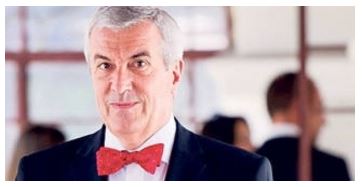
tariceanu permis 1

tariceanu permis 2

Foarte interesanta chestia asta.
De vreo cateva zile ‘o anumita parte’ a ‘opiniei publice’ e ocupata sa il injure pe Tariceanu:

‘De ce nu stai ba la coada?!?’

Pai de asta avem nevoie noi? De un presedinte de Senat care sa stea la coada?
Daca ar fi sa judecam dupa rezultatele obtinute de presedintele care se ducea la mall cu Loganul personal – si dupa aia confisca telefoane de la tiganci imputite‘ – poate ca ar fi cazul sa o lasam mai moale cu ‘populismele’ astea.

N-ar fi mai bine sa-i intrebam pe toti presedintii astia, de Senat, de Tara, de bloc… s.a.m.d.:

‘De ce mai este nevoie sa stam la coada in secolul XXI?’

Aud?!?

PS. Pana nu demult personajele atat de marete nici macar nu se deplasau atunci cand aveau de rezolvat chestii din astea marunte. Se ocupau altii si veneau cu carnetul in dinti.
Tariceanu s-a dus pana acolo si a intrat prin spate. Mie unuia mi se pare un progres.
Dar daca ni s-a pus pata pe el…

Traditia este o institutie foarte importanta.

Prin intermediul ei comunitatile pastreaza o suma de informatii care stau la baza functionarii comunitatilor respective. Renuntarea cu prea mare usurinta la respectul cuvenit traditiei a dus, de prea multe ori, la o adevarata dezradacinare a comunitatilor care au facut acest lucru. ‘Om fara Dumnezeu’ nu este chiar o vorba aruncata in vant.
Degringolada morala care a inceput sa devina evidenta de pe vremea comunismului si care face acum ravagii printre noi are niste cauze oarecum obiective numai ca a fost facilitata si de usuratatea cu care noi toti am acceptat ‘noul’, fara sa luam in calcul toate consecintele actiunilor noastre.

Pe de alta parte nici ‘incremenirea in proiect’ nu reprezinta un panaceu.
Apelul la ‘traditie’ doar de dragul ‘traditiei’ sau, si mai rau, pentru ca in felul acesta poate fi construit pretextul pentru un ‘atac la persoana’ impotriva unui dusman, ‘personal’ sau ‘de clasa’, nu reprezinta o alternativa cu adevarat viabila. Nu de alta, mai devreme sau mai tarziu realiatatea are prostul obicei de a ne da cate un branci – tocmai pentru a ne ‘readuce pe calea cea drepta’.

“„Problema calendarului există demult, dar a căpătat o însemnătate deosebită în zilele noastre, când devine tot mai evidentă necesitatea folosirii unui calendar comun, acelaşi cu calendarul folosit în celelalte ţări ale Europei şi în America. Din toate părţile Biserica primeşte cereri şi doleanţe de a se stabili un calendar comun în viaţa laică şi religioasă, nu numai pentru ca creştinul să fie în armonie cu sine însuşi, ca cetăţean şi creştin, ci şi pentru a contribui la unirea tuturor creştinilor chemaţi în numele Domnului, care să poată sărbători în aceeaşi zi Naşterea şi învierea Sa”.

Aceleaşi motive sunt invocate de către patriarhul Meletie şi în cuvântarea sa la deschiderea Congresului ”pan-ortodox”: Devine evident că principiile directe care au dus la reforma calendarului bisericesc îşi aveau rădăcinile nu în tradiţie, teologie,  în  viaţa  liturgică  şi  normele  canonice  ale  Bisericii  Ortodoxe,  ci  în dimensiunea orizontală a gândirii semilaice, semireligioase, în cultul ecumenic al ideii politico-religioase a unităţii creştine.”
(“125 de la proclamarea autocefaliei BOR, cadoul masonului Meletie Metaxakis pentru SCHIMBAREA CALENDARULUI în România ortodoxliber.wordpress.com

Cei care continua sa ‘apare’ calendarul iulian, indiferent de motivul pentru care o fac, uita un lucru. Peste vreo cateva sute de ani Craciunul ar fi cazut in mijlocul verii iar de Paste am fi savurat in exclusivitate miei congelati – de unde unii proaspeti prin septembrie, octombrie… Dar poate ca ar fi fost si unele avantaje… Posturile ar fi fost mai usor de tinut, avand in vedere bogatia de legume si fructe proaspete, de Paste am fi avut parte de tulburel…

2500 later

Rio 2016: The Syrian Refugee who swam for her life – all the way to the Olympics. BBC.Com

At some point in time 12 tribes of nomadic herders had settled down on the banks of Jordan.

Conditions were good so they had enough time to think about things further than meeting their immediate needs.
For me it doesn’t matter much whether their religious teachings were a gift from their God or just a product of their own minds. The fact that they are choke full of useful advice for all of us and that the sharpness of that advice has not been dulled by the passage of time should be enough. We’d better continue to pay attention.

“For this reason was man created alone, to teach thee that whosoever destroys a single soul of Israel, Scripture imputes (guilt) to him as though he had destroyed a complete word, and whosoever preserves a single soul of Israel , Scripture ascribes (merit) to him as thoough he had preserved a complete world. Furthermore, (he was created alone) for the sale of peace among men, that one might not say to his fellow ‘my father was greater than thine’, and the minim might not say ‘there are many ruling powers in Heaven; again to proclaim the greatness of the Holy One, blessed be He: for if a man strikes many coins from one mould, they all resemble one another, but the supreme king of kings, the Holy One, blessed be He, fashioned every man in the stamp of the first one, and yet not one of them resembles his fellow. Therefore every single person is obliged to say: the world was created for my sake”

How come, then, that we are still killing each other in an organized manner?

OK, some go bonkers and kill themselves.
Some go so bonkers as to blame others for their unhappiness. They decide to go out with a bang and to kill as many of the ‘others’ as possible in the process.
The number of people going bonkers is naturally swelled by the present economic and social crises. Emile Durkheim, one of the fathers of sociology, had written an entire book on the subject, more than a century ago.

I can dig all this. It’s unacceptable but sort of explainable – aberrant behavior is not un-natural. That’s what evolution is for, to weed out aberrations that are too unfit to survive.

What completely baffles me is how come two and a half millennia after some simple herdsmen have demonstrated such acute but also noble thinking, some of us, most of whom pretend to be sophisticated intellectuals, continue to fashion religious teachings and ethnic/cultural values into wedges.
And use them to drive us into warring factions.

Why are they still doing this?
Why are we still heeding to their prodding?

Not only that we allow ‘them’ to ‘organize’ civil wars that kill hundreds of thousands of us and drive millions of the rest in exile but then we also allow some of ‘them’ to rule over some of the media that, supposedly, keep us informed.

“Unfortunately, some of the celebration was overshadowed by a completely unnecessary “omission” or outright censorship by Hungary’s public broadcaster. Refugee athletes are participating in the Rio Summer Games. Yusra Mardini, originally from Syria, is one of them and she has garnered a great deal of media attention, including in the Toronto Star.

“In the water, Yusra Mardini feels alive. In the water, Yusra Mardini swam for her life. In the water, Yusra Mardini helped to save the lives of many others”–writes Rosie Dimanno in The Star. The 18 year old ended up winning in the one hundred metre butterfly heat on Saturday. Not too long ago, Ms. Mardini had to swim to safety, fleeing her war-torn homeland, through Turkey and then across the waters in Greece. She and her sister swam for over three hours straight and, incredibly, made it to Europe safely. (They also helped save the 20 people that were in the boat they had been towing during those three hours) She trained for the Olympics in Germany.

Disappointingly, during the Hungarian public broadcaster M4′s coverage of the one hundred metre butterfly, they completely and seemingly deliberately neglected to mention Ms. Mardini. Jenő Knézy Jr., who is reporting live from Rio on behalf of the public broadcaster, mentioned four out of the five females competing–the only one he did not utter at all was the name of the Syrian refugee. It was as though she did not even exist– even though viewers could see her on their television screens. Mr. Knézy managed to avoid mentioning her, even after she won.

The hvg.hu news site wondered aloud after the incident: “Is it forbidden to even utter the name of a refugee on Hungarian public television?”

Mr. Knézy claims to have made an innocent mistake, when he forgot to mention the name of the winner of the competition.” (Christopher Adam, Hungary wins gold, breaks record on Olympics Day 1, but why did public television censor the coverage? August 7, 2016, hungarianfreepress.com)


“The Brexit vote may or may not have been a tragedy, but Prime Minister Viktor Orban of Hungary appears determined to follow with a farce. On Monday, he scheduled a referendum on keeping out refugees for Oct. 2, further threatening to undermine the weakened European Union. The referendum question — “Do you want the European Union to be able to order the mandatory settlement of non-Hungarian citizens in Hungary without parliament’s consent?” — is a textbook example of voter manipulation.

This isn’t really designed to address the EU’s plan to settle 1,294 refugees in Hungary — the country’s share of the 160,000 people that European authorities have proposed resettling from the Middle East. Hungary and Slovakia are already suing the EU over the refugee quotas, and, in theory, Orban could veto any such plan. The referendum will help him prop up his domestic popularity and give him a “democratic” bargaining chip with other EU leaders — even though his strategy will be glaringly obvious because the question is framed in a way that produces only one answer.

Direct democracy’s biggest vulnerability may be that it can be subverted by political players who ask the people loaded, incomprehensible or otherwise rigged questions.”

“Orban has no one to correct him. Earlier this year, Hungary’s Supreme Court approved the referendum question. So now a Hungarian voter has a choice between agreeing with Orban or effectively recognizing that the EU can do whatever it pleases in Hungary without any national authorities having any say. The only other option is not to show up, thus refusing to be manipulated. If enough voters do that, Orban will be made to look a fool. But given the combined popularity of Orban’s party, Fidesz, and the hard-right Jobbik, whose thunder Orban is trying to steal with the vote, there’s a good chance the turnout will be sufficient.” (Leonid Bershidsky, Hungary’s Manipulative Referendum, July 5, 2016, Bloomberg.com.

Going back to Durkheim’ Suicide,  there is something there that I find of enormous importance. After studying how suicide rates vary, both in time and across borders and religions, Durkheim has noticed that each suicide act was indeed determined by the individual itself who, in his turn, was influenced by prevailing socio-economic conditions but that there could be noted another very important influence.
The members of the Jewish communities were the least likely to commit suicide, the Catholics came next while the Protestants were the most likely to end their lives, of those belonging to any of these three categories.
Durkheim explained this phenomenon by using  the concept of ‘social solidarity’ – for a society to survive its members need to stick together.
Then Durkheim went further and elaborated on the matter. ‘While it is good for a society to develop strong bonds among its members – the Jews have survived for so long and against such odds, these ties must not be allowed to become strong enough to stifle the individuals – otherwise that society would loose its ability to innovate, hence to adapt itself to the inevitable change that befalls upon its head, no matter what.’An equilibrium has to be met between social solidarity – which pushes us to think alike and to align ourselves to the values shared by the entire community – and individual freedom – that which allows each of us to depart, somewhat, from the social norms without being punished by the rest of the society.

I’m going to use, again, the Jews as an example. They have survived, as a people, for so long and against such odds that they must have done something right. Well… they do take care of their own and they do cherish individual autonomy.

After all they are the ones who came up with ‘God created Man in His image’. Hence all men are considered equal – because they have been cast in the same mould – and assigned a spark of ‘something special’.

Jews have done well in this world. Given the circumstances and until some of us have completely lost their minds.
Why don’t the rest of us follow their example?

They don’t kill each-other!
Not physically and not even symbolically.
No matter how much two of them might hate their respective guts, when push comes to shove  they’ll help each-other out of the mess.

Why have we, the goyim, ignored for so long such a fine example?
Why do we continue to do so even now, after we’ve found out that the only one Planet we can call home is rather small and that no one seems to be coming, anytime soon, to rescue us from ourselves?
And even if there was anybody who could have done this… would any of you lift a finger to help a bunch of quarreling idiots who are continuously threading on each-others toes? Specially when/if each of us would get their due after their death…

Then why would He?

Why would He help us before we start helping each-other?

At some point some of our ancestors figured that saving for tomorrow some of today’s bounty might increase the chances of survival for those who consistently practiced the habit.

Probably this happened in the temperate regions, where’s a marked difference between seasons and where the cool winters make it easier to store food.

And this is how thrift has become a commendable behavior.

Flash forward to the Enlightenment.

Drawing heavily from the Christian tradition prevalent in that cultural area – ‘God made Man in His own likeness’ – the ‘enlightened’ thinkers of the era determined that ‘Men were (created) equal’ – since all of them bore a certain likeness to the same standard.

Hence they must enjoy equal rights too. Including the right of pursuing happiness.

Go ahead. Click that link and read all about it. The guy writes a lot better than I’ll ever be able to. He even has an PhD on the subject.

The only problem is that he’s got it upside down. Using logic as a flash light to flush out happiness is like raping a woman in order to help her experience an orgasm.

But there’s another way to get there.

Csickszentmihalyi, who also has an PhD in psychology, noticed that people are a lot more likely to experience happiness by doing things and enjoying the results of their work than when trying to reach happiness ‘directly’. Even if he still uses the same term, “pursuit of happiness“, his approach is completely different from the one I mentioned first.

In this second scenario, happiness is no longer a goal per se but simply an indication that we are on the right track.

Towards what?

I simply don’t know.

I started with what our ancestors figured out. Imagine, for a moment, what those guys felt when a handful of them were gathered around a fire inside a cave, in the middle of February, munching on some fried meat that had been ‘preserved’ sometime in the autumn, specially when the north-easterly winds were howling outside. Was it happiness?

Again, I don’t know.
But please consider this: Did those guys stash wood, smoke hams and gather berries all autumn so that they might enjoy some moments of happiness in February or they did it in an attempt to survive the winter?

So why do we keep speaking about ‘gratification‘?
What’s the real difference between ‘instant’ and ‘delayed’ gratification? As long as we continue to see it as ‘the ultimate goal’?
A junkie who stretches his stash of dope for longer is any wiser than his mate who ‘enjoys’ his in one go?

last day 1

last day 2

row your boat

While discussing with a FB friend the last video posted by Price Ea – you can watch it by clicking on the picture above – something hit me.

We were exchanging ideas about how much control each of us has over his own life when I realized that our very insistence on using precisely this term is what causes a lot of trouble.

The notion of control divides the world in two.
The controller and the controlled.

And since we are social animals, things become very quickly very complicated.

Being ‘animals’ means we that we have ‘animalic’ needs. Air to breathe, water to drink, food to eat, shelter from the elements… The first floors of Maslow’s pyramid, as you surely remember.
Being ‘social animals’ means that we not only depend on having access to enough physical space and resources but also on the cooperation of the people who happen to be in our vicinity.

The control hypothesis ‘leads’ us into a competition for both space and authority above those around us.
Our world becomes divided into what ever space we already control and the rest. Meaning the (yet) uncontrolled areas from where it is very possible that a challenger might spring up anytime so that the controller must somehow extent his control over those areas as well, as soon as possible.
Our neighbors become divided into our ‘slaves’ and our direct competitors. Who have to be, sooner or later, subdued into slaves – lest they do the same thing unto us.

In conclusion, the ‘control hypothesis’ sees the world as a constantly busy battlefield where each of the dwellers is in constant conflict with everybody else.

Luckily, even the most perfunctory  glance down the history teaches us that human success is more about cooperation than about conflict.

Only the conspiracy theorists believe that most wars are started by business people trying to sell their wares to the warring parties. The reasonable business people know that while a certain amount of tension is good for their business – tension sells guns, among other things – an actual war exhausts both parties and destroys solvent demand.
While it is possible that some callous business people or political actors might try to foment war, for various reasons, that doesn’t mean they are behaving reasonably.

Which brings us to the alternate hypothesis.

How about we replace the concept of ‘control’ with the idea of ‘autonomy’?

How about we give up the ‘tiresome’ notion of control and replace it with the peaceful concept of cooperation?

Since we have already figured out that we depend on both those around us and on whatever resources we can identify, how about we enroll the cooperation of as many of the like minded that surround us as possible and search together for those resources?
Instead of each of us simultaneously trying to run faster than everybody else and to hold back as many as possible – the true meaning of generalized conflict?

Which brings me to the notion of ‘autonomy’.
Being autonomous means being engaged in a special kind of relationship. It means being part of a flexible structure. One that is strong enough to resist but flexible enough to allow a variable amount of leeway for each of its components.
The very concept of autonomy recognizes the mutual dependency that exists between the autonomous members of the said structure and also the fact that the very strength of the structure comes from each of the members being able to solve problems on his own.

Autonomously, that is.
Drawing resources from the structure, sometimes enrolling the negotiated cooperation of some other members but, on the whole, most of the problems get to be resolved ‘under the radar’. To the great benefit of the entire structure.
The vast majority of the structure not even noticing the huge numbers of situations that get solved this way.

Compare this situation to the one described in the first scenario, the one where everybody fights, openly or covertly, with every body else and tell me what you prefer.

“Control” or “Autonomy”?

An all out incessant war for ultimate control or a continuous process of negotiation?