Archives for category: 1989

On the other hand… letting go, emotionally speaking, may not be as beneficial as advertised.
We might lose some bitterness but we might become more liable to ‘repeat the experience’

As in …

Forgive but don’t forget is a lot easier to be said than done, you know…

Which brings us to:

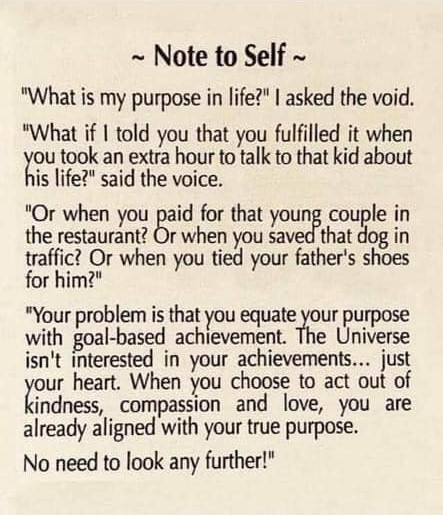
Do we really need ‘a purpose’?
As in ‘an ideologically determined goal’?
Remember Marx’s “The philosophers have hitherto only interpreted the world in various ways. The point, however, is to change it.”. Then the consequences produced by those who had followed Marx’s teachings…
But not only Marx’s!

All set goals which go ‘against the grain’ incur costly consequences.
Which are detrimental to survival! Of the leading trespasser, of those in the following or of those hapless enough to be too close to that particular goal being pursued.
Remember Marx? Nothing unpleasant had happened to him. Not as a consequence of his attempts to change the world! But to others…
Which is equally valid for all other ‘world changers’. Along with all ‘world preservers’ who run along ideologically drawn paths.

Then what should we strive for?
Simply ‘follow the heart’ to achieve ‘peace of mind’?!?
Would that be enough?

Enough for what?!?

https://www.goodreads.com/book/show/56083.In_Dubious_Battle

„Mă consider un fel de jurnalist, în măsura în care ceea ce mă interesează este actualitatea, ce se petrece în jurul nostru, ce suntem, ce se întâmplă în lume. Filosofia, până la Nietzsche, avea ca rațiune de a fi eternitatea.
Primul filosof-jurnalist a fost Nietzsche. L-a introdus pe „azi” în câmpul filosofiei. Înainte de el, filosofia cunoștea timpul şi eternitatea. Nietzsche, însă, avea obsesia actualităţii.
Consider că viitorul noi îl facem. Viitorul este felul în care noi reacţionăm la ceea ce se petrece, este modul în care noi transformăm în adevăr o mişcare, o îndoială.
Dacă vrem să fim stăpâni peste viitorul nostru, trebuie să ne punem în mod fundamental problema zilei de azi. Iată de ce, pentru mine, filosofia este un fel de jurnalism radical.”

Michel Foucault

„Stăpâni peste viitorul nostru”…
Dacă nu definim bine termenul – și care o fi „binele” ăsta?!? – s-ar putea să nu ne placă viitorul ăla odată ajunși acolo!

„Stăpâni” adică ‘prin noi înșine’? Fără inputuri venetice?
„Stăpâni” adică unii dintre noi la butoane iar ceilalți ‘după marea mila noastră’? Și ce ne facem dacă ajung ceilalți la butoanele alea?!?
„Stăpâni” adică având atâta încredere în noi înșine încât facem ce ne taie pe noi capul? Doar ce ne taie pe noi capul? Fără să ne mai uităm în jur?
Stăpâni în primul rând peste pulsiunile noastre? Capabili să ne ascultăm între noi înainte de a purcede spre un viitor asumat ca fiind incert? Și cu toate astea încă încrezători că împreună putem răzbi mai ușor decât separați?

Pentru cei cu amintiri încă proaspete de la lecțiile de materialism științific și dialectic – ăsta era numele de cod pentru marxism pe vremea când mă duceam eu la școală – și pentru cei cu nostalgii comuniste am să mai adaug câteva considerații.

Poate că cel mai atrăgător aspect al marxismului a fost, și continuă să fie, ‘certitudinea’. Atât pentru ‘gânditori’ cât și pentru oamenii de rând.
Oamenii de rând au nevoie de siguranță. De siguranța zilei de mâine și de măcar impresia/aparența că îi pasă cuiva de ei.
Gânditorii – fie ei oameni de știință sau filozofi – au nevoie să-și ostoiască disonanța cognitivă. Toți oamenii cu o educație rațională știu foarte bine că realitatea nu poate fi cunoscută. Că toți agenții cunoscători pot dezvolta, chiar și împreună, doar o înțelegere limitată a celor ce se întamplă. Sunt multe explicații cu privire la chestia asta dar putem accepta acest lucru, pe moment, ca pe o axiomă.
Pentru a-și ostoi această disonanță, gânditorii raționali – adică atei sau agnostici – au nevoie – și ei, similar cu teiștii – să se agațe de o ancoră exterioară lor.

Ecce materia!
Materia cu legile ei imuabile… Determinismul de toate nuanțele… Aproape cu nimic diferit de determinarea cu care Zeul își apleacă atenția asupra creației sale.
Aspectul delicat introdus de determinisme – indiferent de natura și originile acestora – este că acestea reduc prea tare disonanța cognitivă. Disponibilitatea omului de a-și păstra mintea liberă. De a mai fi dispus să analizeze variante… după ce a ajuns la o ‘concluzie rațională’!
Indiferent dacă premiza pentru raționamentul dus până la capăt a fost de natură științifică sau de natură divină, raționamentul însuși devine literă de lege. Acesta fiind, de fapt, procesul prin care comportamentul rațional se transformă în comportament raționalizator.
Neajunsul fundamental al oricărui proces rationalizator fiind acela, ați ghicit, că induce cecitate. Adică ‘orbește’. ‘Ia mințile’. Îl face pe om incapabil să se mai adapteze. Individual și în grup.
Devine incapabil să mai genereze variante. Alternative care să-i faciliteze evoluția. Merge înainte indiferent de consecințele faptelor sale. Care fapte/acțiuni au avut la bază niște concluzii raționale, nu? Așa trebuia acționat în momentul ăla! Și ăsta este drumul pe care trebuie mers în continuare.
Ei bine, asta este una dintre semnificațiile conceptului de ‘stăpân’.
Și explicația pentru faptul că orice dictatură, orice ‘stăpânire’ – inclusiv cea comunistă, se termină, inexorabil, în prăpastie.
În disperare.

Mai puțin ‘stăpânirea de sine.’
Disponibilitatea de a ‘întoarce și celălalt obraz’. De a asculta, cu respect și atenție, alte păreri în afară de cea proprie. În afară de părerea deja proprie…

An inhabited planet where some of the people have finally figured out the inherently limited nature of their world.
Global warming, pollution, soil erosion, loss of biological diversity, dwindling and unevenly distributed natural resources…

Two hot wars. And a huge trilateral economic contest involving a third of the population which leaves the other two thirds in relative misery.

Most of the conflict – hot and cold alike – can be pinned down to old people doing their best (worst, more likely) to conserve their status. Wealth, power, influence…

As things happen, currently there is one collective agent which yields enough power to decisively influence the outcome of the two hot wars. And to negotiate the economic contest.
The attention of the people constituting that particular collective agent has been hijacked by an insurrectionist ex-president attempting to regain that position.
The ex-president has curried the favor of significant political party by making it possible for the party-activists to succeed in their attempt to limit women’s access to abortion.
The ex-president and soon to be presidential candidate is currently involved in a penal process. The trial attempts to determine whether the hush money he had used to silence a porn actress regarding a ‘close encounter of the third kind’ had been spent legally.

Bertrand Russell a fost întrebat cum a început nazismul, iar el a răspuns:
“Întâi i-a fascinat pe proști.
Apoi i-a cenzurat pe cei inteligenți.”

Citeam deunăzi despre rolul ateilor. Pilda era oferita de Rabbi Tzvi Freeman:

‘Credincioșii cred că universul este condus de Dumnezeu. Care știe tot ce se întâmplă și are un motiv pentru toate. Inclusiv pentru toată suferința care există.
Credincioșii au tendința de a spune „Dumnezeu să te ajute. Mă voi ruga pentru tine!”
Ateii, unii dintre ei, pun mâna și fac ceva. Ajută fără să creadă!’

Dar dacă ‘Dumnezeu’ are un rol și pentru cerșetori? Unul oarecum similar cu cel jucat de atei?
Eu cred ca cerșetorii ne oferă prilejul să ne întrebăm : ‘Eu ce fac dacă ajung în situația asta? Cui pot eu să cer ajutor?’

Iar observația făcută de Bertrand Russel răspunde foarte bine la întrebarea ‘CUM a fost posibil să se întâmple așa ceva!’

Pe de altă parte, fascismul și comunismul au apărut doar atunci și acolo unde au fost întrunite condițiile necesare.
Tot un englez, nu-mi aduc aminte numele, a fost întrebat la un moment dat:
‘Ce s-ar fi întâmplat dacă Hitler s-ar fi născut în Anglia?
Nimic, tipul ar fi ajuns la balamuc.’
Atât fascismul cât și comunismul au nevoie, înainte de oportuniștii care să ‘pună în valoare’ circumstanțele, de un clivaj social foarte adânc. De o imensă masă de nemulțumiți!
De un număr suficient de mare de nefericiți care nu văd cum ar putea ieși din situația extrem de neplăcută în care se află.
Adică exact situația în care se aflau Germanii care trăiau în anii 1930. Rușii din timpul primului război mondial. Americanii care credeau că Trump urma să refacă măreția Americii.

Șmecheri care să se pună în fruntea nemulțumiților se vor găsi întotdeauna…
Nemulțumirea să fie suficientă!


Unii spun că romanii au făcut treabă bună.
Că au construit un imperiu care a dăinuit vreo 9 secole în varianta originală. Și alte aproape 9 în varianta 2.0.
Care imperii au fost ‘construite’ folosind tehnologia ‘divide et impera’.

Care tehnologie este ‘apropriată‘ – scuze pentru barbarism – fără nici o jenă de toți cei care se visează ‘împărați’. Și se folosesc de internet pentru a susura otravă în urechile noastre.

Căci care ar putea fi dezbinarea mai eficientă decât cea dintre generații?!?
Cum poți pregăti mai bine o societate pentru a fi ‘preluată’ – mai întâi ideologic?
Intensifici conflictul dintre generații…

Îi faci pe adulți să uite că ei sunt cei care și-au crescut copiii. Că ei sunt cei care i-au făcut pe tinerii de astăzi să fie ceea ce sunt acum. Cu bune și cu rele!
Și îi faci pe tineri să ignore exact aceleași lucruri. Că cei care le reproșează astăzi tot felul de chestii sunt exact cei care i-au răsfățat ieri. Fiecare cât a putut!

Iar pentru aceia dintre colegii mei de generație care au uitat despre ce era vorba în poza de mai sus, am să le aduc aminte că era vorba despre sclavie.
Copiii ăia, adică noi, au fost luați de la școală și trimiși pe câmp să strângă recolta.
Nu culegeau via bunicilor lor ci via Gostatului! Sau a CAP-ului…

Am fost si eu acolo. În timpul liceului, în timpul facultății…
Și nu ne drogam cu ‘prafuri’. Doar ne îmbătam, cot la cot cu profesorii trimiși cu noi să ne ‘îndrume’.
Cu cei normali la cap, mai erau și ‘comuniști’ printre ei…
Turnam în noi cantități impresionante de vin, oferit cu generozitate de cramele unde eram trimiși.
Sau cumpărat de la țărani atunci când culegeam porumb sau legume.
Bine, vinul ăla era, de fapt, o poșircă. Dar o beam cu un fel de disperare.
Repet, cot la cot cu cei mai mulți dintre profesorii care veneau cu noi.
Ne îmbătam să uităm de locul unde eram.
De faptul că nu puteam să ne spălăm după ce muncisem o zi întreagă în soare și praf.
Și să uităm de idioții care ne conduceau. Spre dezastru!

Nu pot să închei înainte de a menționa două lucruri.
Că imperiul roman s-a prăbușit abia atunci când populația ajunsese atât de dezbinată încât nu a mai fost în stare să facă front comun în fața dușmanilor.
Și un comentariu pe care am să-l citez:
„Ăștia-s trolii de la Tiraspol!”

Pentru că se poate!

De ce mănâncă elefantul iarbă și crenguțe?
Pentru că îi este foame?
Cei mai mulți elefanți mor de foame. Cei care nu sunt împușcați…

Elefanții mor de foame pentru că rămân fără măsele.
Mor de inaniție, fiindu-le foame până în ultima clipă, pentru că nu mai pot mesteca.

De ce cad bețivii pe stradă?
Pentru că au băut?
Sau pentru că Newton?

Nu mai e chiar atât de simplu ca atunci când vorbeam despre elefant?

E natural pentru elefanți să moară de foame dar nu e firesc ca oamenii să umble beți pe stradă?
Perfect de acord!
Și totuși. De ce cad bețivii pe stradă?

Păi întrebarea este manipulatorie.
‘De ce cad unii dintre oamenii beți care se întâmplă să meargă pe stradă…’ ar fi o întrebare mult mai firească!
Nu toți oamenii care cad beți pe stradă sunt bețivi și nu toți bețivii cad pe stradă… Cei mai mulți dintre ei ajung bine mersi acasă!

Da’ hotarăște-te odată!
Postarea asta este despre relațiile de cauzalitate sau despre imprecizia limbajului?

Relațiile de cauzalitate sunt un subiect de gândire iar noi gândim cu ajutorul limbajului.
Asta în timp ce limbajul este doar o sculă! O unealtă! Consecințele utilizării limbajului depind mai degrabă de priceperea și intențiile utilizatorului decât de natura lui. Și de natura lui, bineînțeles, dar mai ales de intențiile și priceperea utilizatorului.
Și asta este valabil pentru orice relație de tip unealtă-utilizator!

1944
Tatăl meu avea aproape 11 ani.
Și-a petrecut după amiaza ascuns în subsolul bibliotecii Dudian din curtea bisericii armene din București.
Împreună cu restul clasei, cu doamna învățătoare Bogdan și cu profesorul Levon Balijian. Pe atunci episcop și din 1955 Catholicos al Bisericii Armene.
După ce s-a terminat, a plecat acasă. Pe jos, tramvaiele nu mai mergeau. Un drum de jumătate de oră. 15 copii de clasa a 4-a, de unii singuri prin orașul proaspăt bombardat.
Mama soției mele avea 4 ani. Locuia în Chitila. Statea la niște vecini, mama ei era la spitalul Filantropia. Undeva în zona gării vizate în după-amiaza aia. Tocmai ce născuse al doilea copil, o fetiță. După ce a început, o asistentă i-a pus un pahar cu coniac în mână și pruncul în brațe. „Dă-l pe gât și du-ți copilul în adăpost”. A doua zi, când s-a întors în Chitila, și-a găsit primul copil bine-sănătos și casa una cu pământul. Bărbatul îi era prizonier la ruși – unde a murit, fără să-și vadă al doilea copil – nu mai avea unde să stea … așa că a trebuit să se întoarcă de unde venise. În Ardealul ocupat pe atunci de unguri….
2024
Eu am aproape 63 de ani.
Tocmai ce ne-am întors de la cimitir. Un prieten de-al tatălui meu…
Intrăm în casă. Ne spălăm pe mâini, bem apă, dăm drumul la televizor.
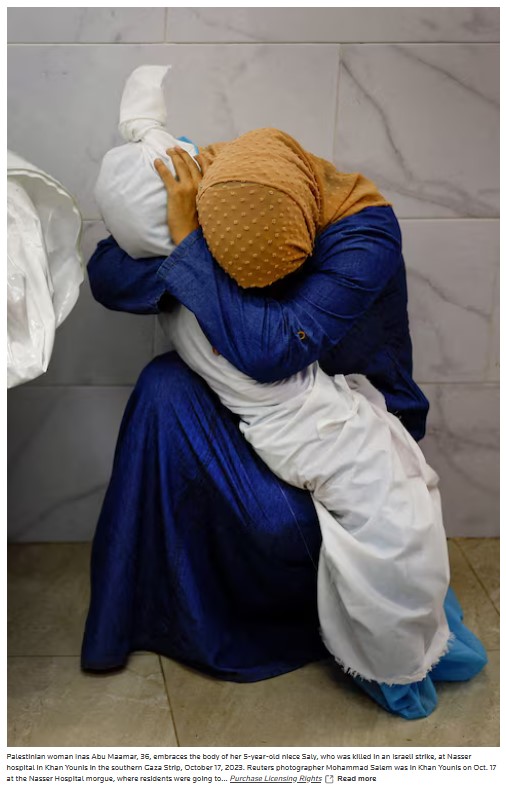
Bombardamente în Ucraina, 7 oameni uciși în Gaza după ce tocmai descărcaseră un convoi cu ajutoare…

Conserving the subjective self-perception

“Objective through shared subjectivity”

‘Popular belief’ posits that ‘objective’ is based on facts while ‘subjective’ is based on whim.
True enough but facts need to be identified as such first and then agreed upon before they become ‘facts’. Before they are recognized as facts by the interested parties. Before they become the foundation for objective knowledge.
On the other hand, ‘subjective’ is indeed personal. A personal ‘take’ on something which has happened inside the same reality where facts take place. In fact, all the facts we agree upon have started their lives as subjective impressions. Which had been shared with other people and eventually stated as facts after ‘negotiation’.
Furthermore, no matter how subjective a perception, all perceptions are perceived using the same senses. And ‘processed’ using the same brains. According to culturally accrued ‘habits’.
Even a hallucination will conserve some degree of normalcy. If of a visual nature, for example, the hallucinatory perception will be experimented and described in visual terms. Pondered upon and discussed with others using the same brain which usually deals with facts. Shared with others using language and evaluated according to ‘customs’.

Self-preservation

According to the Cambridge Dictionary, a rationalization is “an attempt to find reasons for behaviour, decisions, etc., especially your own“.

According to my research, all conscious agents will first attempt to arrange all information at their disposal in such a manner as to conserve the subjective impression they have already acquired about themselves.

Salvation

According to Merriam-Webster, salvation is “deliverance from the power and effects of sin
Having to do with religion, some people will say salvation is subjective by its very nature.
Being understood in the very same way across various cultures and religions, salvation becomes objective.
Not real in the materialistic sense of the word but real in the sense that belief in salvation has very real consequences. Real enough to become material. Set in stone!
Shared belief in Christian salvation has driven people to build churches while shared belief in Buddhist salvation has driven people to build monasteries. The fact that people involved in so different religions as Christianity and Buddhism share their faith in salvation makes salvation an objective ‘thing’.
Makes salvation something ‘natural’.

Self-actualization

According to Abraham Maslow, an American psychologist, for a person to be able to attempt self-actualization that person must have fulfilled all other needs they might have had.
Having fulfilled those ‘previous’ needs is no guarantee for self-actualization being a success, only a prerequisite.

Copernican Revolutions

In a sense, each Copernican revolution humankind has sailed through – of which there have been many – has been a self-actualization.
I’m going to mention three and wrap up this post.

Instrument and possession

Many animals – relatively speaking, are able to use tools. To purposefully alter pieces of matter in order to be more useful towards the intended goal. But nobody except us carry them around.
Furthermore, a lion will defend its pray. And its hunting ground. In a sense, a lion behaves as if it defends its possessions. But only us, humans, talk about possession.
It was us who have conceptualized possession. Who have instrumentalized the notion of property.
This has happened more or less simultaneously with the advent of organized agriculture. Which needs instruments and order. Tools to work the land and the expectation to be able to enjoy at least some of the end-results of your work.

Money and nation

Systematic agriculture has thoroughly transformed human society.
Or, more exactly, the humans who had invented systematic agriculture had to adapt themselves to the new reality brought upon their heads by their own invention.
The spoils of systematic agriculture – abundant food – have created vast opportunities. Some of the people involved in the process were ‘free to do other things but toiling the fields. Hence specialization of work and social division. ‘Professional people’, priests, soldiers.
The source of this new found abundance, and the spoils themselves, had to be protected. And organized…. a.k.a. taken advantage of! Hence ‘rulers’. Arable land had been taken into possession along with the people working the fields. Nation building had begun.
The hoarded produce could be traded. Hence they were. Along with the ‘things’ produced by the ‘professionals’ fed with the accumulated ‘excess’ food.
Trading would have been easier if money was available. Hence it was invented. And used. By traders as a tool for trading merchandise and by rulers as a tool for ruling ‘their’ nations. Which weren’t yet called as such. Only functioning as such…

Rights and reason

Systematic agriculture and trading had been the stepping stones for the advent of ‘industry’. For professional people producing things for sale.
Oekonomy – the art of making ends meet on a yearly bases, as understood by the Ancient Greeks – had become ‘the Economy’. The engine moving society along the passage of time. A process so complicated that a single agent was no longer able to control it. L’etat had become so complex that even Louis XIV could no longer claim it as his own. For the ‘system’ to maintain its ability to function, to go forward, individual agents had to be freed.
Hence the freedom of the market and the human rights.
Hence individual human beings indulging in the habit of thinking for themselves…

Salvation no longer came in an organized manner. According to rules.
To each their own. Reason had been freed once and for all.
Each of us has assumed the freedom to rationalize according to their own wish.
To their own purposes.

To which end?
Only history will tell…
But before proceeding we’d better remember Ernst Mayr’s words.
‘Evolution has nothing to do with the survival of the fittest.
There’s no such thing as ‘the fittest’! The fittest to what since everything changes all the time?!?
Evolution is about the demise of the unfit.’

Until now, evolution has been ‘blind’.
Increasingly, some have become cocky enough to consider they know better. To consider they know where they should lead ‘their subjects’. Lenin, Hitler and Stalin are but a short selection from a long list.
Those who have followed the advice and have facilitated the ‘pestilence’ put in practice by this kind of people are those who have forgotten the deeper meaning of “You must not make any idols. Don’t worship or serve idols of any kind, because I, the LORD, am your God”.

Which ‘God’ brings us back to where we started.
To ‘objective as something agreed upon by many subjective agents’.
You see, I quote the Bible and I mention God quite a lot. And still define myself as being ‘agnostic’.
The fact that I don’t know whether God had actually created the world doesn’t alter the fact that the Bible is a trove of knowledge. As for God’s very existence… things are complicated!
How do you determine whether something exists? You check for the consequences of its existence, right?
A table exists only if you can ‘touch’ it. Since you cannot touch something which doesn’t exist, the fact that you can touch it is a consequence of its existence.
Same with God. Irrespective whether it has actually created the world – or anything else, as a conscious agent – God does exist. People acting as if God was real – people’s faith in God – had and continue to have consequences.
People acting as if God was real have brought God to life. The God we know, talk about and have faith in…

My last affirmation is rather hard to swallow?
Then how about money?
What makes them so valuable? Except for our ‘faith’ in them? Except for our belief, our shared belief, in the ‘fact’ that we are able to get things by paying for them?
And how about ‘rights’?
Do we respect human rights because we believe in them? Or only because ‘that’s the law and there is no other alternative, at least in public’?

See what I mean?
We live in the reality of our own making. And we tinker with it incessantly.
Attempting to make it more and more comfortable. To us!
Each of us tries to make the world ‘a better place’. Each of us working for themselves, each of us according to their ‘own advice’.

Which brings us to ‘how things work’.

Time and time again, reality has told us that we cannot survive, let alone thrive, individually.
That everything we have done is the consequence of us working in concert.
It was our shared belief in ‘money’ which has given us capitalism. Economic effervescence and elevated life standards.
It was our shared belief in God which had convinced us that ‘we were brothers’. And, as brothers, that we should respect each-other. That we should respect each-other’s rights.

Now, that ‘God is dead’ and it has become obvious that ‘capitalism is no better than those who put it into practice’, we have arrived at an inflection point.
Are we able to preserve the true nature of the things which have brought us here?
Or are we going to transform them into idols?

Acțiunea este făcută de subiectul gramatical
și tot el o suferă.

Naște monștri…

‘(conducerea) se interzice’…
„Mortul se transportă manual!”

Pe sine se…

Partea îngrijorătoare a întregii tărășenii este că genul ăsta de exprimare a devenit atât de uzual încât nu mai deranjează pe nimeni. Nu mai zgârie nici un timpan…
Da, limba este un organism viu. Care se mișcă în mod independent de voința individuală a celor care folosesc respectiva limbă.
Da, dar nu independent de voința colectivă a acelor oameni!
Poate să spună ce vrea ea academia care dezbate folosind o anumită limbă. Atâta vreme cât populația nu ‘pune botu’ ‘ la indicațiile respectivei academii… Și reciproc!
Degeaba protestează o academie. Dacă populația folosește limba într-un anumit fel, după o durată suficient de lungă de timp modalitatea respectivă va sfârși prin a fi adoptată și de ‘literați’!

Da, numai că fenomenul poate fi și analizat. Nu doar impus, refuzat, acceptat sau chiar toate la un loc.

Ei bine, genul ăsta de folosire a unei limbi – adică utilizarea ‘lemnoasă’ a modului lingvistic de exprimare – denotă o anumită detașare a clasei conducătoare de viața de zi cu zi. De viața de zi cu zi a oamenilor de rând.
Detașare care sugerează o viitoare instabilitate socială.
Tocmai pentru că detașarea de cotidian a conducătorilor denotă faptul că aceștia nu mai sunt la curent cu viața reală. Cu viața dusă de oamenii de rând. Cu viața dusă de către cei care se confruntă, zi după zi, cu consecințele deciziilor luate de către conducători.
Cu consecințele deciziilor luate de conducătorii detașati de realitate…

Și uite-așa ajunge conducerea să se ducă singură, pe sine, la groapă.

Cum era aia cu „Cronica unei morți anunțate”?

Nota bene!
Detașarea are loc din ambele direcții. Conducerii nu-i mai pasă de ce se întâmplă iar populimea nici nu mai este atentă la ce i se spune. Conducerea – mai ales zona intermediară, ‘cureaua de transmisie’ – nu-și mai asumă nici o răspundere iar oamenii de rând o mai bagă în seamă doar pentru a se păstra ‘în anonimat’.
Conducerea ‘intermediară’, lipsită de orice autonomie în urma centralizării excesive a puterii de decizie, își ascunde impotența în spatele limbii de lemn. Fenomen absolut echivalent cu modul în care oamenii de rând se fac nevăzuți printre faldurile realității de pe teren.
Și uite-așa dispar în ceață straturile societății atunci când oamenii nu se mai ascultă între ei.
Atunci când limbajul este folosit mai degrabă pentru a („se”?!?) ascunde decât pentru a spune lucrurilor pe nume!

“Why couldn’t we drive it out?”
“Because you have so little faith.
Truly I tell you, if you have faith as small as a mustard seed,
you can say to this mountain, ‘Move from here to there,’
and it will move.
Nothing will be impossible for you.”
Matthew 17:19-20

According Archimedes, an engineer, all you need is a long enough lever and a fulcrum. If you wish to move the world…
According to Jesus, a leader, all that his disciples need is faith. If and when they want their expressed wishes to come true.

We’ve been moving our world down the history lane for quite a while now.
2000 years, give or take a couple of centuries, since the two mentioned above have shared their apparently conflicting advice, we’ve arrived at an infliction point.

We’ve almost levered ourselves out of our history.
And replaced ‘us’ with ‘ME’.

Chimps have learned to use grass blades to fish ants. And sticks to spear bushbabies.

We, the smartest among apes, have learned to lever the walking stick into a club.
To whittle clubs into spears and then lever them into arrows.

Using tools we’ve levered ourselves from working beasts into humans.
Using weapons, some of us have levered themselves into leaders.

Using money, some of us have levered themselves – collectively – into relative abundance. Relative to others…
Using ‘borrowed’ money, a few of us have levered themselves into financial gurus. And others into homeless people. 1929-1933 and 2008 are but two of the more poignant examples.

Using printed information – a.k.a. books – we’ve levered ourselves out of ignorance.
Using widely disseminated and specially crafted information – a.k.a propaganda – some of us have levered themselves into temporarily powerful positions. At the expense of those gullible enough to swallow that poison and causing immense suffering to the bystanders who had the bad luck to be there.

Using automation we have levered skilled workforce into clerks.
Using procedures, we have levered clerks into pen-pushers who check for conformity instead of thinking by themselves.

Nota bene!

Neither of these is an argument against leverage!
After all, we live in the best world we’ve been able to build for ourselves…

The only thing we should pay attention to is the fact that our levers have become progressively powerful.
As in starkly more and more powerful. And not necessarily more powerful in a progressive way… On the contrary, more likely.

Our weapons have become so powerful that we are able to obliterate life on Earth. If enough ‘unstable persons’ among us will somehow end up controlling enough of those weapons…
Our single-mindedness regarding profit, levered by an intense Neo-liberal propaganda about money as a panacea, has dramatically changed everything. From the very geography of the Earth to the way we relate to the world.

Nowadays we have started to leverage our thinking.
Not for the first time, indeed, but with renewed intensity!

Writing has allowed us to divide a big problem into smaller problems. Each of those smaller problems was assigned to and eventually tackled by a specialist. Ultimately, it was the job of the ‘project manager’ to assemble the ‘solution’ by making ‘good use’ of the results provided by the specialists.

No longer.
Powerful enough computing and skillful code writing have been levered into Generative AI.
Very soon, ‘project managers’ will no longer need specialists. Only specialized generative AI apps.

Those apps will constitute Archimedes’ ‘long enough lever’.
The already existing automation will constitute the fulcrum.
The wishes of those happening to be able to use the apps and control the fulcrum will constitute the faith mentioned by Jesus.

Are we ready for this?