Israel has been backed up by the US ever since it was established.
They didn’t enjoy an unconditional carte blanche but the amount of help was  very consistent and, above all, very dependable .

Until a few days ago.
Nowadays Netanyahu, Israel’s PM, feels like he has been thrown in front of a bus by the departing President of the US, Barack Obama. Because the US ambassador, Samantha Powers, had abstained herself, instead of exercising her veto, about a resolution calling for Israel to “immediately and completely cease all settlement activities in the occupied Palestinian territory, including East Jerusalem.

Ever since Israel has been reestablished by his original inhabitants Russia’s rulers have tried to use this situation in their advantage. Egypt, Syria, Iraq, and lately Iran, have received backing from Kremlin in their fight against Israel. By meddling into this conflict Russian rulers were simply trying to get international stature.

Recently Russia’s ambassador to the UN had used his veto power to block a resolution asking for the ceasing of the bombardments in Aleppo. Yet another proof that Russia’s leaders do not care about how they become respected on the international stage, as long as that respect is manifest. As in ‘the world listens when they speak’.

During the Obama administration the US refrained itself from such drastic measures. The US has refused – for now, at least – to re-engage in the brinkmanship game with the Russian leaders. Effectively denying the latter the kind of status they so strongly desire.

Israel has just become yet another collateral victim in this conflict.
Just as the Arabs have been for the last three centuries.
Caught, at first, in the middle of the endless colonial wars between England and France on one side and the Ottoman empire on the other. And later in the cold conflict between Russia and the US.

Theoretically it means “from each according to their abilities, to each according to their needs”.

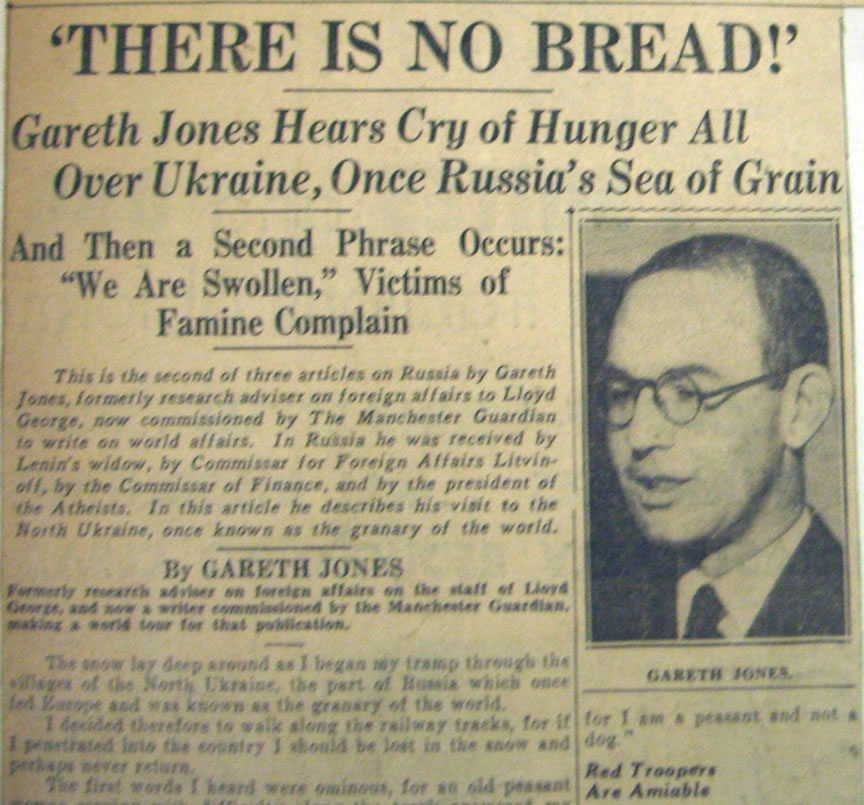
Practically it looks like this.

famine-in-ucraine

In fact real life communism still is, and always was, about a whole country kow-towing to a dictator who pretends to care for nothing else but for the welfare of the people. His people!

The point being that each resource allocation game needs a referee. Otherwise all rational people would take as much as they could carry from the communal reserve – because it is free – and bring back as little as possible, hence nothing if not coerced to – because it implies some effort.

OK, any reasonable five years old would tell you that the communal reserve would very soon become empty if things would go like this – hence that presumably ‘rational’ behavior would be anything but – only it would be very rational to at least try, wouldn’t it? For how long it would work, no matter how short that interval…

And something else.
You are most likely familiar with ‘bad money drives out good’. There have been a lot of examples to prove this, one of them being Christ driving the money changers out of the Temple.
Some of you might not be familiar with how money worked in those days so here is it.
A coin was a simple ‘slab’ of precious metal, of somewhat constant weight, approximately round, which had been ‘stamped’ with the face of the local ruler. At first, in the minting shop, all coins belonging to the same edition were more or less of the same weight. But, since the edges of the coins were not ridged, ‘smart’ people started to ‘shave’ the coins.
And, after the first guy had started to shave them, each individual who got a coin would have been foolish not to shave it, just a little bit. Maybe the next guy would be foolish enough to accept it, after being shaved. To contest it the recipient would have had to go to the money changers and pay for their expertise. And this is how the coins became smaller and smaller…
Only the priests at the temple didn’t want to be fooled. So they hired some money-changers to vet the coins the believers brought to the Temple. The very money-changers that Christ had driven away. “God doesn’t need this kind of guardians. If we keep them here it would mean that we expect people to cheat. Even here, at the Temple. And if we expect them to cheat, they will surely do so!”

Only some people do cheat. And since some cheat, the rest will have to do something about it. Either make cheating the rule, which would lead nowhere, or make it so hard to cheat as to become impractical. Hence the ridges at the edges of the modern coins. Which can no longer be shaved because the ridges would make it obvious.

Coming back to our ‘communal reserve’ you would have to employ a guardian to make it sure that no one would take any more than they really need and that everyone periodically brings back stuff according to their abilities.
But how would that guardian determine what are the real needs and the real abilities of each of those individual members of the community?
And, even more importantly, what would stop the guardian from taking the whole ‘communal’ reserve into his private possession? As in acting like a communist dictator? Simply because ‘he needs it’?

The only alternative that worked was the free market. That where you sold your abilities and where you could buy things to fulfill your needs. Where prices were set at the meeting point between ask and demand.
But the same principle, bad money drive out the good, acts even here.
‘Smart’ people try to organize ‘monopolies’. Which, basically, is the same thing as they attempting to become the owners of the ‘communal reserve’.

This whole thing looks like an intractable vicious circle?
Take heart, that’s what ‘reeds’ are for.
We invented those, when we realized that we needed them, didn’t we?

reeded-coins

You still wondering what to use in order to transform that vicious circle into a virtuous one?
How about individual freedom coupled with a healthy dose of mutual respect?

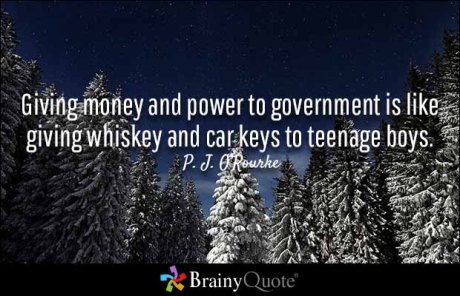
teenager-government

Why am I am trying to make any sense of something said by a comedian?

orourke-trump

Because he’s right?

With a twist, of course!

While ‘government’, all of them, tend indeed to behave like ‘teenage boys’ their actual behavior depends very much on their up-bringing and on the amount of supervising their stakeholders/parents invest in them.

Which brings us to

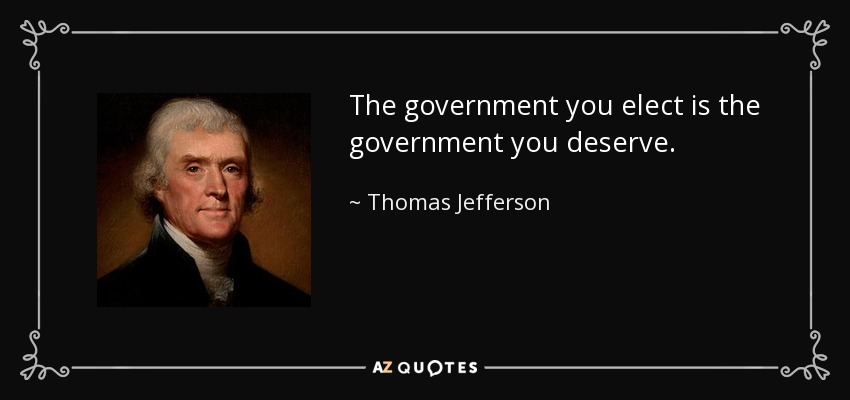
the-government-you-deserve

Now all that is left for us to do – for ‘all’ of us, that is, including ‘the Government’ – is to remember that the individuals who make up the government also belong to the people. They cannot be essentially different from the people itself and they will, eventually, share the same fate as the rest of us.

Or even worse.

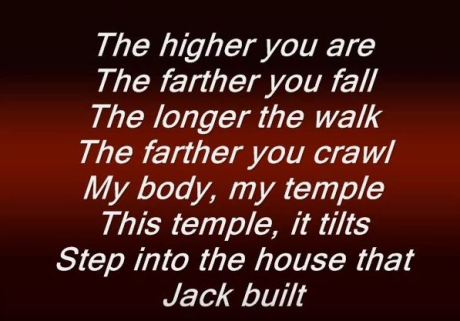
the-higher-you-are

The House Jack Built, Metallica


hacked doublespeak.JPG

The overseers of the U.S. intelligence community have not embraced a CIA assessment that Russian cyber attacks were aimed at helping Republican President-elect Donald Trump win the 2016 election, three American officials said on Monday.

Yet
“ODNI is not arguing that the agency (CIA) is wrong, only that they can’t prove intent,” said one of the three U.S. officials. “Of course they can’t, absent agents in on the decision-making in Moscow.”

The Federal Bureau of Investigation, whose evidentiary standards require it to make cases that can stand up in court, declined to accept the CIA’s analysis – a deductive assessment of the available intelligence – for the same reason, the three officials said.”

Now, since when is anybody in this ‘line of work’ concerned with anything more than ‘a deductive assessment of the available intelligence’?

Wasn’t it the DA’s office which was interested in making the cases ‘stand in court’?

Anyway, this whole exchange sends a very clear message.

Nobody disputes the simple fact that some Russians have indeed hacked into servers which harbor information pertaining to the electoral campaign. What the various branches of the intelligent services cannot agree about is the precise intent of the hackers.

Aha.

„Confortul din timpul somnului este direct proporțional cu efortul depus pentru pregătirea culcușului.”

religie-da-educatie-nu

Una dintre temele disputelor postelectorale a fost dezinteresul tinerilor pentru viața publică în general și pentru cea politică în particular.

Și de ce, mă rog, și-ar bate ei capul cu așa ceva?

Nu zic că nu ar trebui, mă întreb doar de ce ar face-o …

Până la urmă foarte mulți dintre tinerii de astăzi au crescut departe de părinții plecați la muncă peste hotare tocmai din cauza unor decizii luate de înșiși membrii clasei politice.
Având părinții ‘afară’, au ajuns să cunoască ambele lumi. Și să compare lucrurile.

Chiar dacă în magazine se găseasc mai mult sau mai puțin aceleași mărfuri, la prețuri destul de apropiate, asta nu înseamnă că situațiile ar fi echivalente.
Medicii pleacă, și ei, unde vad cu ochii, tot ca urmare a deciziilor politice.
Drumurile sunt sub orice critică din același motiv.
Profesorii sunt demoralizați nu doar din cauza lefurilor insuficiente ci și pentru că întregul sistem de educație este la coada prioritaților aceleiași clase politice.
Oamenii de afaceri se plâng de lipsa a suficient de mulți muncitori cu o calificare adecvată timpurilor de astăzi.
Cum răspunde ‘clasa politică’?

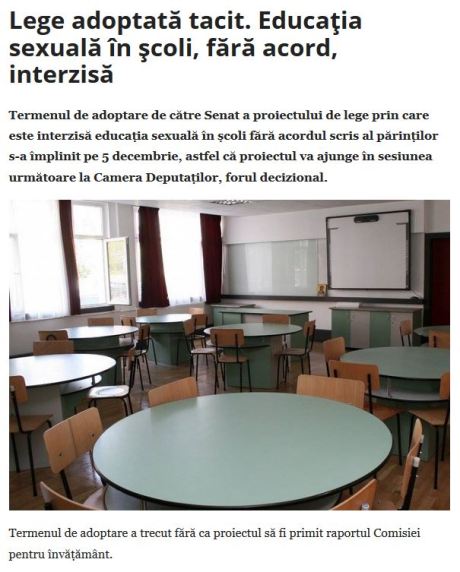
„Termenul de adoptare a trecut fără ca proiectul sa fi primit raportul Comisiei pentru învățământ”….

Las la o parte inconsecvența principială… religia poate fi predată fără acordul expres al părinților dar nu si educația sexuală…

Problema este că nici măcar nu s-au ostenit sa întocmească un raport în termenul stabilit de lege.

Păi dacă lor nu le-a păsat de tineri, atunci tinerilor de ce ar trebui să le pese de ei?

Sau de noi?
De niște părinți atât de ‘inconștienți’/neisprăviți încât să le lăsăm țara în halul în care este acum?

Să vezi ce pumni o să ne dăm în cap, cu toții, atunci când vom înțelege câte prostii am facut până am ajuns aici…

donald-trump-grab-them-by-the-pussy-cartoon

Or is it the (unforeseen?) consequence of some very ‘intelligent design‘?

Prin anii ’70 cineva mi-a spus bancul care da titlul postarii de astazi.
E atat de porcos incat nu pot sa il reproduc aici.
In contrast evident cu ‘burduful de caine’ este morala intamplarii.
‘Niciodata nu poti scapa de consecintele faptelor tale.’

In esenta, viata politica post-decembrista a Romaniei poate fi rezumata cu ajutorul a trei fire narative.
Lupta fratricida dintre PD-FSN si PDSR, agonia urmata de decesul PNTcd-ului si lungul ‘Divort in stil italian’ in care se complace PNL-ul.

Coagulat in timpul – sau poate putin inaintea? – Revolutiei din Decembrie, Frontul Salvarii Nationale i-a grupat pe toti cei care aveau habar despre cum se guverneaza o tara si despre ce beneficii pot fi culese de cei care fac acest lucru.

Numai ca tara era una iar ei erau multi…

Asa ca s-au impartit in doua. N-am de unde sa stiu sigur dar estimarea mea este ca a fost o actiune ‘nepregatitia’.
Erau foarte multi oameni ambitiosi acolo, care nu ‘aveau loc’ unii de altii.
In atmosfera aia era suficient un cat de mic pretext pentru arama sa fie data pe fata.

Disensiunile dintre Petre Roman si Ion Iliescu au fost pretextul perfect.

Ca Petre Roman nu avea experienta, si nici expertiza, necesara sa ii faca fata lui Basescu… mai putin important.

Cu adevarat importanta in toata tarasenia asta este originea comuna a acestor doua organizatii politice. Si caracterul lor autoritar/centralist.
Una a ramas, declarativ, la stanga iar cealalta a trecut, tot declarativ, la dreapta… Amanunte de fatada.
Amandoua au fost animate de oameni care au stiut sa ramana ‘strans uniti’ in jurul conducatorului lor, indiferent care a fost acesta.
Abia prin 2014 o parte din membrii PDL s-au prins ca Traian Basescu ii condusese intr-o fundatura si s-au gandit sa se reinventeze.
Asa ca s-au adapostit in PNL.
Inca nu e clar ce efecte, pe termen lung, va avea aceasta miscare pentru PNL dar nu asta e subiectul de astazi.

In orice caz, o alta parte a vechiului PDL i-a ramas fidela lui Traian Basescu. Impreuna au constituit Partidul Miscarea Populara.

Care a reusit sa intre in parlament!

Unii cred ca a luat din voturile PNL-ului. Nu stiu. Ba chiar nici nu cred chestia asta. Votantii vechiului PDL aveau tendinta de a fi aproape la fel de disciplinati precum cei ai PSD-ului – de unde si reputatia de bun ‘organizator de alegeri’ de care s-a bucurat  Vasile Blaga.
Ei bine, parerea mea este ca tocmai acesti alegatori disciplinati sunt cei care au votat cu PMP si ca genul acesta de alegatori nu ar fi putut niciodata sa voteze PNL. Mai degraba cu PSD-ul decat cu PNL-ul…

Si exact aici este si ‘drama’ intregii situatii.

PSD-ul, pretins reprezentant al unei paturi de oameni modesti care isi inchipuie ca statul ar putea sa le ofere un pic de liniste si de ocrotire, nu are majoritate in Parlament tocmai din cauza mobilizarii unui alt grup de oameni modesti – care, nedumeriti de ceea ce ei percep ca fiind mezalianta dintre PNL si PDL, isi inchipuie ca ‘Basescu’ (?!?) este singurul obstacol care mai sta intre bugetul statului si cei pe care ii considera a fi ‘penalii din PSD’.

Si uite asa PSD-ul va trebui sa faca o alianta cu ALDE, o ramura desprinsa din trunchiul PNL pe acelasi gen de pretexte pentru care Roman s-a certat acum 25 de ani cu Iliescu…

Inainte de vot, multi dintre cei cu mancarime la buricele degetelor se apuca sa ii sfatuiasca pe alegatori. Votati cu aia sau cu ceilalti pentru ca altfel nu stiu ce nenorociri or sa se intample.

Dupa ‘despuierea urnelor’ – asa se cheama, in termeni tehnici, ‘contabilizarea primara’ a voturilor, aceiasi logoreici se apuca sa consilieze partidele. Cum ar trebui invingatorul sa isi nuanteze pozitia si sa isi adapteze programele si ce ar trebui sa faca invinsii pentru a nu mai repeta experienta la urmatoarele alegeri.

Ei bine, s-ar putea ca exact maniera de a caracteriza rezultatele alegerilor in termeni ‘competitionali’ sa ne fi adus in starea in care suntem acum.

Dupa cum ati observat, nu am sfatuit pe nimeni cum sa voteze. Nici nu aveam cum sa fac asa ceva, avand in vedere ca eu plec de la premiza ca cititorii – toti, nu doar ai mei – sunt cel putin la fel de rezonabili ca ‘scriitorii’. Cateodata poate chiar mai rezonabili. Nu de alta, doar pentru ca multi dintre cititori citesc mai mult decat cele scrise de un scriitor pe cand multi dintre acestia au tendinta de a se rezuma doar la o rasfoire sumara a celor scrise altii. Asa, ca sa fie si ei la zi…

Destul cu intepaturile, sa revenim la cestiune.
Deci, cu atat mai putin ma voi apuca sa dau sfaturi combatantilor dupa incheiera ostilitatilor, avand in vedere ca”halul” in care ne aflam se datoreaza exact modului in care aceste partide se razboiesc intre ele in loc sa conlucreze.

Sunt naiv?

Chiar si razboiul adevarat, cel din transee, poate fi inteles ca o forma de colaborare.
La inceput, la inceput de tot, oamenii se bateau ca chiorii. Masculii invinsi erau omorati, femelele erau luate in robie si apoi siluite, copiii foarte mici erau omorati iar cei mai marisori transformati in sclavi.
Putin mai tarziu, dupa aparitia mestesugurilor, singurul lucru care s-a mai schimbat a fost acela ca artizanii/artistii au inceput sa fie crutati atunci cand cineva reusea sa cucereasca o cetate sau alta.
Si mai tarziu, pe vremea cand razboaiele erau purtate mai degraba intre seniorii feudali – care aveau nevoie de brate de munca pentru a munci la camp – decat intre migratorii pradalnici si oamenii locurilor, au inceput sa fie introduse si regulile ‘cavaleresti’. Invinsii erau mai mai ales capturati in loc sa fie omorati si apoi returnati familiilor contra unei rascumparari in loc sa fie folositi ca sclavi.

Incununarea tuturor acestor eforturi a fost introducerea notiunii de crima de razboi. Odata cu aceasta intreaga activitate ‘razboinica’ a fost codificata si a devenit clar, pentru toata lumea, ce ai voie sa faci, si ce nu, pe campul de lupta. Ca unii n-au respectat regulile… asta e alta problema, rezolvata dupa aia, cu ajutorul tribunalelor ‘de razboi’. Numai ca esenta problemei e clara. Odata codificat, razboiul a devenit si el o forma de ‘colaborare’.

Si atunci de ce mai vorbim despre invingatori si invinsi in politica?

Activitate care presupune identificarea problemelor de interes public si rezolvarea lor, nu stabilirea vre-unei ierarhii intre personajele ‘scenei politice’…

Acum, ca am stabilit ‘cadrul teoretic’ in interiorul caruia am de gand sa conduc discutia, sa trecem la subiect.

Situatia in care ne aflam este clara. S-ar fi putut sa fie mult mai buna si alegatorii sunt constienti de chestia asta. Din pacate nici unul dintre programele propuse de catre partidele participante nu a generat vre-un mare entuziasm si nici unul dintre partide nu s-a bucurat de vreo mare manifestare de simpatie.

Asa se explica prezenta extrem de scazuta la vot. Nu neaparat in procente ci in cifre absolute. 72120000 in 2016 fata de precedentul minim, 7238000, inregistrat in 2008 – dupa o alta crestere economica desfasurata concomitent cu o apriga infruntare intre personajele politice ale momentului, Basescu si Tariceanu.

Sa vedem acum ce sugereaza numarul de voturi contabilizate in dreptul fiecaruia dintre partide.

Grupul politic cel mai disciplinat si ale carui promisiuni s-au adresat in principal persoanelor ‘lipsite de initiava’ – sau a caror raza de autonomie/aspiratie este relativ mai mica – s-a bucurat de o mai mare atentie din partea electoratului decat partidele care s-au adresat unui electorat mai ‘sofisticat’ si cu ‘pretentii’ mai ‘elevate’.

Luand in calcul si faptul ca in ultimii 26 de ani nici una dintre aripile politice care s-au perindat pe la putere nu prea si-au respectat cu adevarat promisiunile putem concluziona ca electoratul ‘lipsit de initiativa’ este relativ mai indulgent fata de cei care l-au ‘pacalit’.
Nu pentru ca nu si-ar da seama ca au fost pacaliti ci, mai degraba, dintr-un fel de inertie… dar, de fapt, nici nu prea conteaza chestia asta.
Cert este ca exista un numar de electori dispus sa voteze pentru un anumit gen de program, chiar daca cei care tot vin cu astfel de programe in fata alegatorilor reusesc sa le puna in practica cel putin la fel de prost precum cei din tabara cealalta.

Si mai interesant este ce s-a intamplat cu cei aflati pe partea dreapta a spectrului politic.

Prima oara au ajuns la putere in ’96, mai degraba ca un fel de razbunare experimentala a electoratului fata de excesele post-revolutionare decat ca urmare a vre-unei maturizari politice a populatiei. Aceasta lipsa de maturitate a fost evidenta si printre membrii clasei politice – cei de dreapta s-au certat intre ei in loc sa guverneze tara.

Dupa aceea au preferat mai degraba sa isi vada fiecare de treaba lui, grupati eventual in gasti.
Unele dintre acestea au fost, poate, mai bine organizate decat altele….
Cert este ca nici una nu a priceput ca electoratul de dreapta este mai greu de pacalit si mai greu de mobilizat decat cel din stanga. Pentru ca are pretentii mai mari, pentru ca intelege mai repede ca a fost pacalit – si se supara mai tare, pentru ca este mai mobil – inclusiv ‘fizic’, multi dintre cei de dreapta au plecat din tara cu prima ocazie … definitiv sau temporar.., pentru ca, statistic, cei care il compun au impresia ca se pot descurca foarte bine si singuri, fara ‘ajutorul statului’ – ceea ce ii face foarte sensibili la propaganda care incearca sa-i convinga ca ‘democratia este o vorba goala’ si ca lumea este oricum condusa din ‘umbra’

Fac o paranteza pentru a ma intreba, aici si acum, in ce masura sunt constienti ‘politologii’ de dimensiunea efectelor secundare care sunt generate de strategiile ‘de comunicare’ folosite de toti combatantii aflati ‘in conflict’.

Poate de acum incolo.
Daca omenirea a invatat sa transforme chiar si razboiul intr-o forma de cooperare, poate vom reusi si noi sa colaboram in ceea ce priveste destinul tarii noastre.

Altfel ne furam singuri caciula.
Si dupa aceea ne plimbam cu ea pe Coasta de Azur pentru ca aici nu prea are cine sa ne-o admire.

Politica poate fi vazuta, intr-adevar, si ca o ‘lupta pentru ciolan’. Mai ales ca bugetul unui stat poate oferi o gramada de ‘oase de ros’.

Numai ca genul asta de atitudine seamana putin cu agricultura extensiva.
Folosesti un teren agricol pana se secatuieste pamantul. Dupa aceea mai aprinzi o parcela de padure si te muti acolo.
Din pacate metoda asta functioneaza doar pana cand se termina padurea. Ce te faci atunci cand incerci sa te intorci de unde ai inceput si descoperi ca acolo s-a instapanit deșertul?

Nu cumva era mai bine sa fi avut, de la bun inceput, grija de pamantul tau? Mai o rotatie a culturilor, mai un ingrasamant, natural de preferinta… lucruri cunoscute de multa vreme de altfel…

Democratia reala este despre ce se intampla inainte de momentul votului.

Corectitudinea numaratorii depinde doar de cinstea celor din comisiile electorale iar comportamentul alesilor de caracterul cu care au venit de-acasa.
Daca alegatorii coopereaza eficient inainte de momentul votului – adica daca discuta deschis si civilizat,  daca practica o democratie autentica – atunci intreg procesul devine o incercare de a gasi solutii la problemele comunitatii.
Inaintea alegerilor sunt identificate problemele si propuse solutii, in timpul lor sunt selectati unii care par capabili sa duca la bun sfarsit acel set de solutii care pare mai potrivit iar dupa momentul electoral alesii se apuca de treaba, avand ca obiectiv principal indeplinirea programului. Urmand ca electoratul sa le multumeasca reinnoindu-le mandatul, in masura in care programul a fost indeplinit.

Daca suficient de multi dintre alegatori se lasa ‘aburiti’ de pescuitorii in ape tulburi atunci intreg procesul electoral degenereaza intr-un  concurs de manipulare in care se infrunta diversele tabere care se bat intre ele pentru ‘premiul cel mare’.

Accesul la resursele pe care le ofera ‘puterea’.

Iar alegatorii, toti – atat cei aburiti cat si cei care n-au fost in stare sa-i trezeasca pe primii, se vor trezi ca trebuie sa achite nota de plata pentru dezmăț.


For John Locke and his followers “what makes a person identical with herself over time is her remembering or being able to remember the events to which she was witness or agent.” (According mostly to the followers. What Locke actually said is something else, to which I’ll come back shortly)
Jesse Prinz has another opinion.


In this video Prinz seems to advocate that we maintain the continuity of our selves by sticking to a set of values. But this is only ‘skin deep’.
He didn’t actually say ‘what keeps us ‘together’ over time but ‘what people think that is ‘keeping us together’ as time passes’.
These two are not necessarily the same thing.
The way I see it memories are just the ‘resource’ from which our identity is continuously being built and the ‘values’ we stick to are the ‘blue-prints’ we use/update during the process but that the ‘driver’ behind all this is our self-awareness/free willing soul.
All three are interdependent.
As Locke observed, without our memories we would be like balloons drifting in a cloud of deep fog. We wouldn’t even be able to determine whether we were moving or not.
As Prinz said, without our values we’re like ships which have lost their ‘compass’.  Just imagine a boat sailing during a starless night or in a cloudy day. There are ways that experienced sailors can use to determine whether the ship is moving – relative to the surrounding water – but not even Black Beard nor Magellan would have been able to reach their destinations without ever seeing the Sun, some stars or using a compass.
Not to mention the fact, sorry Jesse, that without our memory we wouldn’t be able to remember today what set of values we had been using yesterday.
Finally, but not lastly, without our self-awareness/free willing soul we would be like perfectly sea-worthy ships which have been abandoned by their crews. Adrift in the middle of the sea, at the mercy of the elements. Elements themselves being not merciless but amoral…
 I’m sure that by now you have already figured out what I mean.
It is “we” that ‘compares’ and ‘considers’ things, that forms “ideas of identity and diversity”, that sees “anything to be in any place in any instant of time”, that is “sure” of anything (or not)… and so on and so forth…
Without this “we” no discussion about memory nor values would have ever been possible
Without memories the “we” would go ‘hungry’. Or nuts.
Without values the “we” would be ‘toothless’. Or antisocial/in jail.
And all these have already been mentioned, albeit in different terms, by both Humberto Maturana and Stephane Lupasco.
PS.
Don’t tell me that none of you have ever thought, however passingly, of the other meaning of ‘stool’.
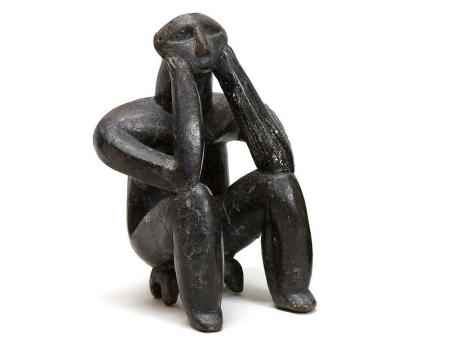
ganditorul