gambit noun [C] (CLEVER ACTION)

– a clever action in a game or other situation that is intended to achieve an advantage and usually involves taking a risk:

 – specialized games a way of beginning a game of chess, in which you intentionally lose a pawn (= game piece) in order to win some other form of advantage later

I borrowed this definition from Cambridge Dictionary, the on-line version.
You have already noticed, I’m sure, the accent on cleverness, the ‘intent to achieve an advantage’ and the relative downplay of the risk that is only ‘usually’ involved.

A more nuanced definition of the concept would mention that the person who uses this tactical maneuver has to get out of their psychological  comfort zone in order to perform it properly.
The whole thing involves offering a valuable bait which, once taken, might produce consequences favorable to the party that is ‘spending’ it.
Since the favorable consequences are not sure – otherwise it would have been a bribe, not a gambit – but the expenditure is certain the guy who initiates this has to thread very carefully. Hence the need for the bait to be really valuable. Valuable enough for the taker to take it and valuable enough so the giver would be really careful when performing the maneuver.

We have witnessed three gambits in close succession.

Britain’s David Cameron promised a Brexit referendum in an attempt to win the 2015 general election. He won the election but lost the referendum.

Quite a large number of Americans, fed up with what has been going on in their country, have pinched their noses and elected Trump into the Oval Office. The deal is not going exactly as they have planned it – Clinton is not going to be charged, the ‘swamp’ is more likely being repopulated rather than drained in earnest – but the jury is still out on this one.

Italy’s Matteo Renzi tried to cash in on his popularity and stream-line the constitution – a move which would have given more powers to the central administration. He has just lost the referendum, is about to resign – as promised and his losing the gambit has opened a wide venue for the opposition 5 Stars Movement led by a comedian – Beppe Grillo.

Need a moral to this?
Gambit works fine when playing chess. That’s a special kind of game where all the pertinent information is out there on the table and the sole variable is the opponent’s mind/will.

Real life, a.k.a. politics, is a completely different game. There are lots of stakeholders, instead of the two chess players, while most of the pertinent information is jealously guarded by each of the stake-holders – along with most of their real intentions.

If we add here the ‘detachment’ of the players – Trump and Cameron are both independently wealthy while Renzi is rather inexperienced – we’ll soon arrive at the conclusion that we’d be better off with some unadventurous, bland even, politicians.

Tallow = “the white nearly tasteless solid rendered fat of cattle and sheep used chiefly in soap, candles, and lubricants“.

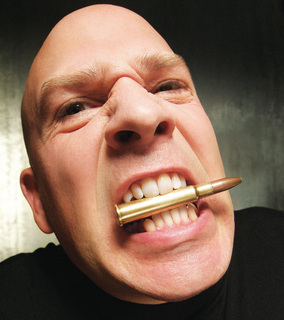
bite-the-bullet

The mutiny (India, 1857) broke out in the Bengal army because it was only in the military sphere that Indians were organized. The pretext for revolt was the introduction of the new Enfield rifle. To load it, the sepoys had to bite off the ends of lubricated cartridges. A rumour spread among the sepoys that the grease used to lubricate the cartridges was a mixture of pigs’ and cows’ lard; thus, to have oral contact with it was an insult to both Muslims and Hindus. There is no conclusive evidence that either of these materials was actually used on any of the cartridges in question. However, the perception that the cartridges were tainted added to the larger suspicion that the British were trying to undermine Indian traditional society. For their part, the British did not pay enough attention to the growing level of sepoy discontent.

tallowed-five-pounder

The new £5 notes contain tallow, a substance made from animal fat Credit: AP

“…a trace of tallow in the polymer pellets used in the base substrate of the polymer…”
“As the tweet was shared, social media users expressed their disgust at the news.
“New £5 note isn’t vegan. Was everyone’s 2016 New Year’s resolution to do ridiculously insane stuff like adding meat to money?” “

What are we to learn from these two (separate ?!?) incidents?

That we have not yet learned how, or when, to use tallow?

Or that we have reached, again, such a level of generalized discontent that people might use whatever plausible pretext in order to vent their accumulated grievances?

Acuma, dupa ce ‘Cumintenia Pamantului‘ s-a dus pe apa Sambetei, aveam nevoie de alte subiecte pentru a ne certa intre noi.

monument-monstru-din-bucuresti-body-image-1470818106-size_1000

Cam așa ar putea să arate monumentul din Piața Alba Iulia din București. Captură foto de site-ul sculptorului Ioan Bolborea.


Teoria si practica democratiei prevad, la unison, un schimb constant de informatie intre membrii comunitatii care practica acesta metoda de gestiune a treburilor publice.

in mod absolut normal, calitatea deciziilor adoptate, dmocratic, depinde in mod esential de onestitatea cu care sunt puse ‘pe piata’ informatiile care stau la baza acestor decizii.

Putem aborda subiectul in cheie ‘umoristica’:
“Poate ai văzut zilele astea pe Facebook că a circulat un filmuleț cu o nouă construcție care ar trebui făcută în Piața Alba Iulia din Capitală și care se cheamă „Monumentul Marii Uniri”. De fapt, va fi o sferă, mai exact o semisferă înaltă de 18 metri, ornată de sus până jos cu omuleți din bronz care țin mâinile întinse și se ating ca într-un fel de horă țărănească.
N-ai înțeles genialitatea ideii și mesajul pentru posteritate al viitorului monument? E clar: ești „zero la cultură”, ca și mine de altfel, după cum mi-a spus maestrul Ioan Bolborea, autorul operei.
Și, atenție, eu nici măcar nu am îndrăznit să-i spun că nu-mi place, ci doar că, deocamdată, nu am nicio părere. Hai să-ți explic acum ce este cu Monumentul Marii Uniri și ce șanse sunt chiar să se materializeze, fix în buricul Bucureștiului. (“Tot ce trebuie să știi despre sfera-monstru de 18 metri care poate ajunge în centrul Capitalei“)

“Pro-festivista”:
“Monumentul „Marea Unire” a trecut prin diverse transformări, artistul Ioan Bolborea căutând mereu perfecţiunea. După opt ani, din momentul în care  câştigat concursul organizat la nivel naţional, de la o lucrare în linii drepte, dure, monumentul „Marea Unire” s-a transformat într-o sferă, simbolul perfecţiunii şi, acum, al uniunii.” (“Monumentul Marii Uniri, de la Bucureşti, o lucrare de care România are nevoie“)

Sau chiar “Negationist-fundamentalista”:
“Brâncuşiul de serviciu de astăzi pare a fi domnul Ioan Bolborea. Iar propagandistul asiduu al său ar fi domnul Pavel Şuşară.
În Piaţa Alba Iulia a Bucureştilor, după monstruozităţile din faţa Teatrului Naţional, se pregăteşte o altă belea.
Care se pare că-i şi gata. Doar s-o pună acolo. O să fie sacrificată şi parcarea aceea generoasă de-acolo, când se va băga acolo meteoritul ăsta în formă de cozonac, garnisit cu serii de omuleţi, veniţi parcă dintr-o invazie cosmică?” (“Brancusiul de Serviciu“)

Din fericire, si spre disperarea ‘spin-doctorilor‘ care se dau peste cap incercand sa ne abureasca, calitatea acelor decizii – care determina in mod esential calitatea vietii noastre – depinde si de grija cu care noi, cei chemati sa adoptam, prin vot, acele decizii, analizam toate aceste mesaje – aruncate ca niste petarde in spatiul public de catre ‘specialistii in comunicare’ (a.k.a spin doctors) angajati de fiecare dintre taberele ‘concurente’.

Ca spin-doctorii nu prea isi dau seama ca atunci cand ne pacalesc pe noi isi taie si ei crengile de sub picioare… e treaba lor.
Ca noi ne uitam de parca am fi hipnotizati la toate circariile astea… e treaba noastra!

Tocmai mi-am adus aminte de un banc de pe vremea cealalta.

Cica Stalin se duce in vizita la un colhoz.
Se organizeza mare adunare populara in piata satului.
Stalin le vorbeste oamenilor despre greutatile pe care trebuie sa le rabde in timpul constuctiei socialismului pentru a se putea bucura mai apoi de binefacerile viitoare a comunismului.
Lumea aplauda frenetic.
Adunarea se incheie, Stalin – inconjurat de oameni, se indreapta spre masina.
Cand tocmai se pregatea sa se urce, o babushka din multime il roaga:
‘Iosif Visarionovici, eu sunt o baba proasta. N-am prea inteles care e deosebirea intre socialism si comunism. Mai explica-ne o data, sa putem pricepe si noi, taranii!”Uite bab-o. Capitalismul e ca praful asta de pe ulita iar comunismul e precum masina asta confortabila in care urmeaza sa ma urc eu acum. Iar socialismul e cum sunt eu acum, cu un picior in praf si altul in masina. Ai priceput?’
‘Acum am priceput maica, cum sa nu pricep daca ne-ai explicat atat de limpede.
Da’ mai am o intrebare. Mult o sa mai stam noi craciti asa?’

Cam asta ma intreb si eu.

Ne mai uitam mult in gurile astora sau incepem sa ne vedem si noi de treburile noastre?

NB.
Asta nu inseamna ca ar trebui sa nu mai citim nimic sau sa nu ne mai uitam la televizor.
Ar insemna sa ne orbim singuri. Tot ce trebuie sa facem este sa fim cu adevarat atenti atunci cand ne uitam la ceva.
Si, mai ales, sa gandim cu capetele noastre. Daca mai inghitim mult, si pe nemestecate, ce tot incearca astia sa ne bage pe gat, o sa ne ‘trezim’ abia la taiere. Precum gastele indopate.

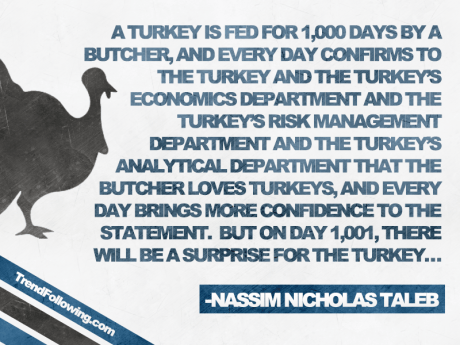
turkey-taleb

Pentru sociologi, ‘religia’ este modul in care se aglutineaza ‘instinctul social’.
Sau, altfel spus, modul in care se manifesta ‘gravitatia’ care ii tine impreuna pe locuitorii unui anumit teritoriu – cunoscut de catre acestia sub numele de ‘tara’.

Din punct de vedere practic ritualurile prin care se manifesta fiecare dintre aceste ‘religii’ au importanta doar pentru cei care le savarsesc. Pentru sociologii despre care vorbeam la inceput, este mult mai important daca respectiva religie isi indeplineste menirea sau nu.

Cu alte cuvinte masura in care locuitorii unei tari se comporta ca niste ‘compatrioti’ sau ca niste oameni aflati intamplator intr-un acelasi tren.
Acolo unde trebuie sa se suporte unul pe altul o anumita perioada.
Cateva ore atunci cand vorbim despre un tren ‘clasic’ sau o viata intreaga…. Prea putin conteaza durata !

Singurul lucru important cu adevarat este modul in care ne comportam unul cu celalalt.
Si, in functie de asta, ce fel de viata ne facem unul altuia.

PS. Tocmai am terminat de citit un articol despre “Colectiv”.

Ziua in care mi s-a acrit de religia voastra!” de Ciprian Pardau.

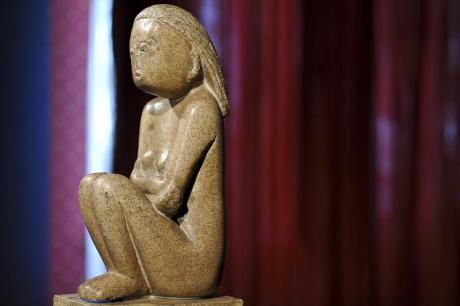
cumintenia-pamantului

Foto: Mediafax

Ne-a fost oferita, din indiferent ce motive, ocazia de a achizitiona o bucata de piatra.

Unii o considera o valoroasa opera de arta.
O parte dintre acestia cred, in plus, ca aceast ‘bolovan’ este, s-au ca macar ar putea deveni, si un simbol national.

Pe de alta parte, clasa politica din Romania este intr-o campanie electorala permanenta.
De frica vre-unui potential ‘castig de imagine’ contabilizat in dreptul uneia dintre gruparile politice, cealalta tabara a initiat o campanie de denigrare a initiativei.

Ca tot suntem si o natie de carcotasi s-au gasit si un numar suficient de ‘sceptici de meserie’ care sa ‘achieseze’ la indoielile colportate asiduu pe cele mai diverse ‘canale’ de comunicare.

Acum, la spartul targului, nu ne mai ramane decat sa interpretam ceea ce s-a intamplat.

Eu unul vad chestia asta ca pe un fel de referendum.
Numai ca, din pacate, ceea ce incepuse ca un prilej de coagulare in jurul unei simbol national – unul fara conotatii etnice dar cu larga recunoastere internationala – a esuat in derizoriu.

Cu alte cuvinte ne-am cam facut-o cu maiinile noastre.
Din nou.

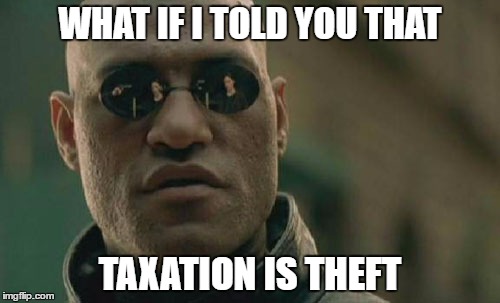
taxation-is-theft

Americans voting in the last elections had four options.

Two authoritarians, one libertarian and a “greenhorn”.

I really like Dr. Stein but her lack of ‘high level’ political or business experience made her an unlikely choice.

The authoritarians have generated much hype but so little real enthusiasm that many voters have chosen to stay home.

voter-turnout

In this situation, with so many voters – who had shown up in 2004 and 2008 – dissatisfied with the mainstream parties, how come the libertarian candidate – who had both a solid experience, as a two term Governor, and a reasonable electoral platform did not manage a better score?
He did ‘rake in’ a little over 4 million votes – more than trebling his 2012 result – but he is still shy of the 5 % needed to qualify the Libertarian Party for federal funding in the next campaign.

Could it be that the libertarians need to ‘clean up their act’?

Judging by the antics performed by the current winner some ‘pundits’ might counsel them to ‘increase the pressure’ but I don’t think that that would be a wise thing to do.
Yes, today’s 2016 President-elect did display a rather unusual behavior for a presidential candidate, and ‘won’, but I’m afraid this was due to a certain set of ‘co-incidents’ rather than the American political scene undergoing a massive upheaval.
Trump is, we must admit that, a great ‘comedian’.
He does have a huge fortune – and presently enough  Americans are sufficiently obsessed with ‘financial success’ to forgive his rather unorthodox ways of amassing that fortune.
And we must not forget that there is a sizable number of Republicans so eager to regain power that they did tolerate his antics – precisely because they have perceived him as a ‘winner’ AND because he has successfully led them to believe that he will uphold their values.
Therefore I’m afraid that Trump’s performance would not be that easy to reproduce nor do I think that America should really go down this path.

Coming back to the Libertarians, they present to the general public such a wide spectrum of ideas that the ordinary American voter is actually bewildered.
For instance, everybody hates paying taxes but give them up altogether?

The business tycoons – those who successfully avoid paying taxes, as private individuals  or through their corporations – won’t give up this system simply because being able to avoid paying taxes constitutes a huge competitive advantage. Actually it would be rational for them to try to increase the ‘fiscal burden’ that weighs down everybody else but them.
The ‘man in the street’, the one who pays little to none income tax but who contributes hugely to the GDP formation simply because he buys the stuff sold by the business tycoons, won’t give them up because he knows that taxes pay for the roads he uses to go to work, for whatever emergency health care he gets, for his children’s schooling, for his meager pension, etc., etc….
It so happens that only the middle class would have any direct, even if highly debatable, benefit if the state would give up collecting taxes. They have private medical insurance, they send their children to private schools, they don’t rely on public pensions in order to have a decent retirement, and they think they have enough money to pay the tolls whenever they’d need to use the roads.

I’m not going to discuss here the practicality of the arrangements proposed by the ‘anarchists’ – private fire-fighters and private police, among others.

What grabbed my attention was the concept of ‘voluntary taxes’.

I work with the Catholic Church (on a consulting basis) and all payments are voluntary. If people don’t like what the church is doing, they either stop participating or stop donating. Similar idea for the government. If it performs a useful function at a friendly cost, people would support it.

This makes a lot of sense, doesn’t it?

OK, I won’t bother reminding you what would have happened up to two or three centuries ago to the brave enough guy who decided to stop paying the tithe.

But I will mention the fact that there still are countries in Europe who continue to collect taxes in the name of the church.

And, because of that – where possible, many people leave their churches.

Which reminds us that in modern days belonging to a church is optional.
People who actively engage in church life constitute a subset of the entire population, a subset of people who have selected themselves into this (mental)state.

Living (somewhere) is (not yet) fully optional.
Really?!?
No matter how hard someone tries it is possible that they will never get to live where they wish. Sometimes the natives don’t accept them or they die trying to get there.
On the other hand there are ‘places’ that don’t allow their inhabitants to leave – North Korea and Eritrea are the first two examples that cross my mind. Romania also used to be such a place.
In this sense taxes somewhat resemble Schrodinger’s cat. They are optional – for those who choose to join a certain group, to remain in a certain country or to join one – and are forcefully levied from those who cannot, no matter how hard they try, to leave the place where they have to live.
To compound the situation usually the countries who allow their citizens to leave also determine in a rather democratic manner the amount of taxes that have to be paid by those who choose to remain while in those who act as a prison for their inhabitants it is the local ruler who imposes the fiscal burden unto his subjects.
Now, isn’t it rather strange that this idea, “taxation is theft”, is making furors in the freest country on Earth?
One can leave America at will and most Americans have enough money to live like ‘princes’ almost anywhere on Earth. Not as safely nor enjoying the same degree of civilization… no wonder that very few of them actually leave while so many ‘aliens’ try to get in there…
But why don’t they reform the tax system AND the (wasteful?) way the taxes are being spent, instead of dreaming of a tax-less world?
And how come they don’t realize that in a ‘voluntary’ situation the ‘rational’ think to do would be to save your money, leave the other to pay whatever they want to and benefit from whatever spoils are there to be enjoyed ‘for free’?
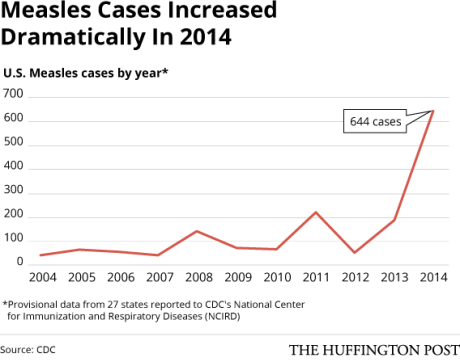
After all this is already happening with vaccines.
Many diseases have all but disappeared from the ‘civilized’ world. So much so that ‘rational’ people have begun to stop vaccinating their children.
‘What’s the use to submit my children to a risk, however small, if all the other children are being vaccinated?’
For how long do you think this ‘rationale’ is going to work?
measlesincrease2
You will tell me that people have grown doubtful about vaccines only after a scientific study was published in a peer reviewed magazine…
Well, people believe what they want to believe.
Even the defenders of Dr. Wakefield do not pretend that he is against vaccination as a principle but only that he still is, to this day, preoccupied with the safety of the ‘triple vaccine’ (MMR) involved in the initial paper.
He did not advise his patients to stop vaccinating, but instead to vaccinate for these three diseases with single vaccines, rather than the combo.
See what I mean?
Far from being rational – people are seldom rational beyond their field of expertise and sometimes fail to be so even in that realm – we are nevertheless convinced that we consistently behave in a reasonable manner.
And this conviction of ours makes us easy prey for the spin doctors who constantly stalk us.
We need to admit that our rationality is bounded before the reasonable libertarians, like Gary Johnson, will have a real chance of stepping into the lime light.
Until then the authoritarians will divide the spoils amongst them.
Not before staging a heated, but fake, fight for our benefit.

The essence of spin doctoring is to present a sequence of true facts in such a manner that will compel the audience to reach the conclusion desired by the ‘good-doctor’. The really skilled ones don’t even need to lie in order to achieve their goals. At most they ‘shave’ some of the rough edges so that the truths they choose to mention fit smoother into their narrative
In fact it doesn’t matter much whether the conclusion they mesmerize their audience into is ‘true’ or not – truth is relative, anyway. The only thing that’s important here is that ‘the’ conclusion fits the intentions of the spin doctor.
Also, it even doesn’t matter what those intentions are. Good, bad… the end is always the same.

Because of the manner in which all this works.

The principle involved here is the same as that used by the magicians who entertain the crowds of circus goers.
They first concentrate the attention of their audience to a single point and then direct it in such a way that the people are no longer able to see anything but what they are allowed to by the magician.
Or by the spin-doctor.

Unfortunately the similarities between magicians and spin-doctors end here.
While most of the circus goers have a nice experience, albeit a relatively short one, most victims of the spin-doctors have to endure long lasting trauma and/or substantial material loss.

Again, irrespective of the spin doctors’ intentions. It doesn’t matter whether the method is used by a (well wishing socialist) utopian or by a callous Nazi.  In my previous post I mentioned how ‘political hyenas’ spring up and monopolize all the situations in which their ‘dark talents’ cannot be kept in check by the rest of the society.
Here we have the explanation for why the otherwise reasonable members of the society are unable to perceive the mortal danger they find themselves in.

Because the spin doctor had skilfully overloaded their attention.
Because after living for so long ‘under the spell’, too many people have become accustomed to let others think for them and in their name.

Was that clear enough?
The spin doctor doesn’t have to be malefic in order for the tragedy to take place. It is enough that they have occupied the attention of the people and have exhausted the ability of too many of the individuals involved to think with their own heads.
In these conditions the ‘political hyenas’ will undoubtedly make their appearance and attempt to gain control over the society.

And, undoubtedly again, those attempts will be extremely detrimental for the entire society.

Apparently these two have nothing in common.

The first appears to be a pleonasm while the second sounds like an oxymoron.
The first was a window dressing for a kind of dictatorship that managed to survive for sometime while the second, if ever attempted, would be so volatile that it would ‘evolve’ almost instantly into a ‘dog eats dog’ situation soon to be followed by the most horrid authoritarianism ever known to man.

But there is something that binds them together.

Both had first appeared in the minds of well intended people who were fed up with and trying to do something about what was going around them.

Socialism, the predecessor of ‘popular democracy’ (a.k.a. communism) had grown as a consequence of the excesses committed by some of the ‘savage capitalists’ during the late XIIIV-th and early XIX-th centuries while libertarianism, the reasonable predecessor of libertarian anarchism, as a reaction to the prevailing statism of the late XX-th and early XXI-st ones.

Let me first explain, briefly, why the concept of ‘popular democracy’ is only apparently pleonastic while in reality this wording covers a sheer impossibility. Then I’ll try to extend my practical experience of living under such a regime into a prediction about what would happen if a group of people would ever have to face a truly anarchic situation.

First things first. Democracy means a situation where everybody can voice their concerns about what is going on and where decisions are made in a collective manner, after anyone who cared to had access to all information pertinent to the decisions that had to be made.
In this, theoretic, context ‘popular’ adds absolutely nothing.
In reality ‘popular’ was a window dressing for ‘the population doesn’t know what’s good for it so we, the communists, have to guide it’. Exactly as Marx had explained in the Communist Manifesto. “The Communists, therefore, are on the one hand, practically, the most advanced and resolute section of the working-class parties of every country, that section which pushes forward all others; on the other hand, theoretically, they have over the great mass of the proletariat the advantage of clearly understanding the line of march, the conditions, and the ultimate general results of the proletarian movement.”

Secondly, but not a iota less important, liberty and anarchy are antithetic terms.
Anarchy is absolutely natural. As natural as water boiling in a kettle. It is impossible to say which drop would ‘burst’ first in a bubble and which would be the last to transition from liquid to gas. OK, if you have a mixture of water and alcohol the latter will boil first and the water later but this would happen only if the sill is heated gradually. If the heat source is too strong, a.k.a. ‘uncontrolled’, the process of distillation becomes ‘anarchic’ and the result is lousy – to say the least. In ‘human terms’ this would translate into a ‘dog eats dog’ situation where things become very quickly aligned along a uni-dimensional criterion – usually ‘brute’ force used in a most callous way.
By the way, this is a second ‘connection’ between these two concepts.
‘Popular democracies’, and dictatorships in general, are eroded by the same dissolving force that would cause any anarchic situation to implode – the most callous and less principled members of the group eventually gain absolute control over the rest, only the process takes longer in a dictatorship.

My point being that dictators are constantly being challenged. Both from within and from outside. It is seldom that a dictatorship passes through all its fazes – like Romania’s communist regime did, or Cambodia’s. Usually at some point a group of people understands what’s going on and try to do something about it. For instance what happened in Russia during Perestroika.
Yes, that could have had better results but just imagine Russia going down to the same depths Romania has probed almost 30 years ago. When most (actually non)public offices were held by incompetent nincompoops whose only goal was to prolong their survival by serving their demented master. Could you have slept at night knowing that Russia’s nuclear arsenal was being managed by such idiots?

Most dictatorships are being ‘weighted down’ by tradition and cultural norms. A dictator needs some time before they can do what they want and they can almost never accomplish all that they would like to. Good or bad.

On the contrary, in a truly anarchic situation – when no rules are observed anymore, except for ‘he who has the biggest fist prevails’, of course – things degenerate very fast. And need a lot more time to get back on track.
Like what happened during the French Revolution. When “the Revolutionary government (the ‘big fisted’ guys of the moment) decided to make “Terror” the order of the day (September 5 decree) and to take harsh measures against those suspected of being enemies of the Revolution (nobles, priests, hoarders). In Paris a wave of executions followed. In the provinces, representatives on mission and surveillance committees instituted local terrors. The Terror had an economic side embodied in the Maximum, a price-control measure demanded by the lower classes of Paris, and a religious side that was embodied in the program of de-Christianization pursued by the followers of Jacques Hébert.”

You might be wondering how come that such a generous concept like ‘let’s treat the workers fairly’ was high jacked into the horrors of communism and whether the same rationale could be extended to predict what a libertarian-anarchist society might (d)evolve into.
The way I see it people’s imagination is huge. A lot of things that might seem bland to ordinary eyes are perceived as resources by ‘crafty’ people and a lot of situations that seem helpless, or even desperate, to normal human beings are seen as very good opportunities by those adept at fishing in troubled waters.

It’s exactly the individuals where this kind of ‘craftsmanship’ is associated with ‘moral lassitude’ who would spare no effort in their attempt to make the’ best’ of the opportunities present in a country being run in an authoritarian manner or during an anarchic situation.

For this kind of guys it doesn’t matter whether the ancient regime was toppled by some socialist utopian (for instance Kerensky in Russia or Dr. Sun Yat-sen in China) or by a bona fide dictator (like, for example, Jorge Rafael Videla of Argentina under whose regime some 10 000 to 30 000 people have been ‘disappeared’ by the authorities). Or whether the anarchic situation has been a consequence of regimes imploding from within (pre-revolutionary France, communist Russia, yesterday day Libya) or being unsettled by  sloppy outside interventions  (Afghanistan and Iraq)

All these situations, and many others, are the perfect breeding and hunting ground for  ‘political hyenas’, callous ‘operatives who would eventually ‘denature ‘even the most well intended dictatorship or ‘well organized’ libertarian anarchy.

I’ve already experienced one of this situation.

I really don’t want to experience the other. No matter how appealing it might seem to the libertarian ‘fundamentalists’.

socialism-for-dummies-explained

What’s going on here has nothing to do with what the bona-fide socialists were about (long time ago they tried to reduce the imbalances produced by the ‘savage capitalism’ that was roaming freely in those days) and a lot to do with what’s currently going on in so many contemporary societies.

What’s left for us to do is to find out who is the ‘socialist’ here.

Those two bone headed morons who are fighting over who to be in control of that ladder?
And who are crying now because both halves have become useless?

Yes, that was what they were fighting for!
If all they wanted was to leave the pit it wouldn’t have mattered who did it first…

Or, maybe, the ‘serpent’ who offered to help those two divide the ladder amongst them?

And who, by doing precisely that, made sure that his control, over his ladder – which was not shown, remained unchallenged?

But what has any of this anything to do with socialism? At all?

Did anybody whisper ‘monopoly’?
Back there?

Anyone?

‘He just says what he has to say in order to get himself elected. Once he will get there he will do like all the others, he will mellow down. Besides that, the system of checks and balances is too strong for one man to upset it.’

The first, and most obvious, problem with this line of reasoning is ‘why on Earth have we grown so accustomed with being lied that we find it acceptable’? Why do we brush aside so easily the lies professed by ‘our’ candidate – along with many other indiscretions, while we meticulously and vehemently point out those committed by the ‘opposition’? Weren’t we supposed to be making ‘rational choices’ when it comes to who governs the country?

The sad fact that there isn’t much to choose from doesn’t exonerate us from the consequences of our mistakes.

But our laziness has yet another – and even more malignant, ‘after-growth’.

By voting for a candidate who promises rather ‘unsavory’ things in order to get elected we not only encourage him to ‘make good’ those promises but we actually ask him, imperatively ( 😉 ), to do his ‘best’ in order to achieve as many of those promises as he possibly can.

Hoping that once elected he will ‘forget’ about (some of) them is both near-sighted and ‘double-standard’.