Archives for category: man as a measure for all things

Universal Grammar (UG) is intended to specify the most general principles of human language. It must provide an explanation for the extraordinary fact that a Japanese child raised in Paris will acquire French, but not Japanese, and a French child raised in Tokyo, Japanese, but not French. Either child may acquire both French and Japanese, of course, but neither will fail to acquire French or Japanese. Linguists and philosophers may have known this in antiquity; they did not say so with any great conviction, and they may not have said so at all. It was left to Chomsky to remark with the full force of his genius that every human language can be acquired by any human being. Universal Grammar, Chomsky concluded, must be a species-specific characteristic of the human race, biologically encoded, genetically transmitted.

The quote comes right out of an article written by David Berlinski and Juan Uriagereka. Never heard of any of them.

Reading that article, I remembered the reason for which I tend to avoid modern philosophers. Or linguists. Hard to discern which is which, anyway…

Let me return to the quote itself.
“An explanation for the extraordinary fact that a Japanese child raised in Paris will acquire French, but not Japanese, and a French child raised in Tokyo, Japanese”.
Read this to anybody who isn’t familiar with the notion of ‘Chomsky’. You’ll get a laugh and a troubled look. ‘What’s so extraordinary here?!? People will always learn whatever language is spoken around them… but only if they come in contact with the ‘exterior’ world!’

Home-school those Japanese/French children in Paris/Tokyo while preventing them from getting in touch with anybody else but their immediate family/trainers and they’ll learn only whatever language(s) their trainers/family will have chosen for them.

As an aside, what does Chomsky mean by ‘French’ and or ‘Japanese’?
‘Genetically’ French/Japanese? What if one parent is French/Japanese and the other German/Korean? What will the child be? Like the father or like the mother?
‘Culturally’ Japanese/French? According to their ‘mother’ tongue?!?
Forget it…

“Universal Grammar, Chomsky concluded, must be a species-specific characteristic of the human race, biologically encoded, genetically transmitted”.

‘Species specific characteristic of the human race’… told you these guys have a lot of humor… or, maybe, they cannot make up their minds…
What are we, humans?!? A species or a race?

OK, let me move forward.
Hidden underneath all this ado, there is a piece/gem of ‘harsh’ reality.
The simple fact that if/when we want to, we are able to understand each-other. To communicate with each-other. To exchange ideas. To trade meaning.
And there is indeed something species-specific about this ability of ours. Nobody else has it… according to our present knowledge about the world, anyway.

‘Nobody else has it’… yeah, right… as if you hadn’t watched, time and time again, two dogs ‘greeting’ each-other in the park.
OK, those dogs were interacting in highly unnatural circumstances. Walked by people, in a people infested environment …
Fact is that all animals have ‘procedures’ for interacting with other animals. Belonging to the same species or belonging to other species. Some of the procedures being inbred while others had been acquired trough learning or training.
Cats, for instance, have an inbred ‘procedure’ for chasing anything which might become a prey but need to be taught by their mothers how to finish the chase. How to kill that prey.
And yes, cats do have a species-specific, biologically encoded and genetically transmitted characteristic which allows them to kill and eat their prey. Or to play with the people who take care of them. They kill and eat using their claws and teeth while they play using their brain. OK, the brain also contributes during the chase… don’t be a nit-pick.

Let me summarize.
So cats have a specific set of tools, teeth and claws, which are ‘coordinated’ by a brain which needs to be taught in order to become fully functional.
And the overall ‘functioning’ of any given cat depends simultaneously on how well their organism works AND the quality of the learning they have been able to amass.

Then where’s the difference between humans and cats?
What is so species-specific in our ability to interact with the world?

I’m exaggerating, of course. We are able to understand each-other far deeper than the other great-apes, our cousins. There is something species-specific in all this.
But only in ‘depth’, not in ‘nature’.
We’ve been able to teach chimps to write. And cats to play with strings instead of catching mice. All three of us ‘share’ the more or less same kind of brain and surprisingly similar anatomies.

What really sets us apart is our learned ability to watch ourselves while doing something. To observe ourselves observing, as Maturana puts it.
And our ability, learned again, to formulate information in a transmittable form. To ‘build’ highly specific messages using rather ‘fungible’ building blocks and in such a manner that those messages might be transmitted from one individual to another. From one generation to another, even.
To make good use of the Universal Grammar noticed by Chomsky.

Can any of this be construed as species-specific? Of course. Without the huge brain we’ve got – or without the ability to articulate sounds, we most likely wouldn’t have been able to reach this stage of our evolution.
But to reduce everything to mere biology … I’m afraid that would be too simplistic.

Consciousness – or self-awareness, opens up huge evolutionary venues. Powered by our very ability to communicate so intensely. To use ‘Universal Grammar’, even without being aware of its existence.
But since both self-awareness and talking depends upon learning them from/with the others… biology is not enough. Necessary, indeed, but not enough.

Not by a long shot.

Liberty is freedom from being constricted, in any way, shape or form. Period.

Liberty is more of an adjective rather than a verb. A situation more than an action.

Liberty can be attached to a space, to an agent or to both.

A free space would be a space where no constriction may occur, whatsoever.
A free agent would be an individual entity outside any constriction, whatsoever.

Mathematically, both definitions are possible.
Philosophically, both definitions are imaginable. By philosophers, of course.

Oscar Hoffman, a Teacher, kept telling us, his students, “For a proposition to be true it is not enough for it to be logically correct. It also has to make ontological sense. For those of you who don’t remember what ontological means, a true proposition must describe something which has to be at least possible”

In the real world, where there is no such thing as absolute freedom, liberty has to be first noticed/invented. And then constantly negotiated.

‘No such thing as absolute freedom?!? But liberty is a (God given) (human) right!!!’

Do you remember what Hoffman had (just) said about things which can exist in practice and things which can exist only in our minds?
Liberty might be a right – for those who enjoy it, but that doesn’t mean that everybody has it. And, even more important, that there is – or ever will be, something even close to absolute liberty.
If you don’t believe me, try to fly off a balcony without any ‘mechanical’ help. Or stop eating for a day or two. The Earth will surely ‘constrict’ you back towards its center and your stomach will certainly constrict itself for lack of food. And both Earth and stomach will constrict you back to reality.

‘OK, so no absolute freedom for individuals. How about ‘free spaces’?’
‘As in spaces where no constriction, whatsoever, may be exercised?’
‘Yes.’
‘Well, that would be possible. If a space is completely empty… no constriction might be exercised in there, right? On the other hand, as soon as something, anything, populates that space, constrictions start to appear. For instance, since no two things can simultaneously exist in the very same place, the mere existence of a speck of dust in a whole stadium induces the restriction that no other speck of dust may exist in the very same spot. Sounds trivial, true, but this is it… No absolute freedom. Not for individual agents and nor for spaces.’

‘Then why are writing a post about ‘Free market’? Doesn’t make much sense, isn’t it?’

Let me finish with liberty before going any further.
I mentioned earlier that liberty must be first noticed and then negotiated.
You see, right or no right, liberty is, above all, a concept.
We’d first observed that a flying bird is freer that a crawling worm and bam!!! We realized that some of us were freer than the others. Then that freer groups/societies fared better than the more ‘stifled’ ones.
But only where liberty was more or less spread around, not concentrated in one hand. Dictatorships – where all liberty is concentrated at the top, are way more fragile than any democracy. I’ll come back to this.
Now, for the negotiation part.
‘Your freedom to swing your fist ends where my nose begins’. And vice-versa. Only this is rather incomplete.
Let me examine the situation where you are a person who likes to swing your fist. In the air, not with any aggressive intent, of course. So you were swinging your fist, after you had determined, in good faith, that there was no nose close enough to hurt. But what if I am a ‘nosy’ guy? ‘Nosy’ enough to bring my actual nose inside your reach? You having to restrict your swings – or to go somewhere else, isn’t a limitation of your freedom? An absolutely unnatural limitation of your freedom?
Has it become a little clearer? What I mean by negotiation when it comes to individual freedom?

OK, time has come for me to go to market. To the free market!

A market is a place. Obviously, right?
A place where people trade their wares. Because they have noticed that it is easier for each of them to do what each of them do better and then trade the results of their work instead of each of them providing everything for themselves. As in everything each of them needs. Or fancy.

Initially, markets were far from being free. First of all, supply was sorely limited. Transportation means were practically nonexistent so supply varied seasonally and was severely influenced by weather, soil and other similar factors. And, maybe even more importantly, supply was influenced by the sheer will of the most powerful ‘free agent’ who happened to be around. Or, more exactly, supply was heavily influenced by the whims of the most powerful free-agent who happened to be around.
Don’t believe me? Then consider the extreme famine experienced by the Bengalis in 1943. Or by the Romanians during the last years of Ceausescu’s reign.
Slowly, people have learned that freer markets tend to be a lot more stable than the less free. ‘Freer’ markets meaning freer from both exterior and interior limitations. For a market to become free(ish) the participants need to have a big enough pool of resources at their disposal and to be wise enough to organize themselves in a ‘free’ manner.

And what happens when at least one of the two conditions remains unfulfilled?
Time has taught us that while markets tend to be limited in space and that some of the participants tent to impose themselves over the rest there is one dimension where the liberty of the market is very hard to be limited. ‘Liberty’ here meaning that things tend to evolve more in their own terms rather than ‘according to plan’. Or according to anybody’s wishes.

Whenever the available resources dry up, the participants to the market move someplace else. Or die of starvation.
Whenever a market looses too much of its freedom – as in some agent controls too much of what is going on there, the market itself no longer functions properly. Whenever too many of the participants loose their ability to determine their fate/future they slowly become ‘sitting ducks’. Not as much easy to hunt down but actually unable to feed themselves.
And since hunger is the best teacher, they either learn to fight for their freedom or… die of starvation. Pol Pot’s Cambodia would be a good example, even if somewhat extreme. The fall of most communist regimes also makes a compelling case for what I have in mind.
Even more interesting, though, is what had happened to the American Automobile Industry. General Motors and Chrysler Corporation, once the dominant stars of the market – along with Ford, had to be rescued by the government. Quasi monopolistic positions tend to be bad for the monopolists also, not only for the rest of the market. Given enough time, true enough…

https://redeeminggod.com/genesis_3_1-5/

You might have figured out already that I don’t believe yet I find a lot of inspiration in the Bible.

I’d like to discuss today the subject of Eve.
Many people are adamant that she was instrumental in Adam being banished from heaven. That she was conned by the serpent into convincing Adam to commit the first – and most important, sin. Into disobeying God, his Father.
Hence Eve – and all her daughters, are the culprits for us, men, having to ‘toil for our daily food’. Outside of where we have been meant to live, the Paradise…

Really?!?

Then, if Eve was the root of all evil, why had God chosen Virgin Mary – Eve’s granddaughter, as the vessel for his beloved Son? For the instrument of our salvation?

Furthermore, if we treasure virginity – something which only man can spoil, then how come it is Eve – the entire womenfolk, who is considered the origin of sin?

Let’s move forward to the really hard questions.

Eve engaging in conversation with the serpent resulted in both Adam and Eve learning the difference between good and evil. In both Adam and Eve becoming full fledged, self aware human beings.
And what was wrong with that?!?
Becoming conscious was a bad thing? Thinking with our own heads is sinful?

I remember that, as a child, I had always experimented what was verboten. Except for the obvious things, of course.
And used the trick on my own son. Whenever I wanted him to try something, I led him to believe that that thing was dangerous or out of limits. For him, of course.

For a (free) market to function, at all, it needs active economic agents.
Which economic agents need, in their turn, certain amounts of concentrated resources at their disposal. A certain amount of ‘capital’. Regardless of who owns it. Or disposes of it.

In this sense, no matter where each of them finds itself on the individual to socialist spectrum, all societies are ‘capitalist’.

On the other hand, individual capitalists – economic agents, do not need a free market to thrive. The do indeed need a market to sell their products/services, only that market does not have to be free. On the contrary, even.

OK, no monopolistic market has survived for long. And all monopolies have eventually failed. Even those who had grown ‘too big to fail’!

But go and tell this to any of those who happen to be at the helm of a monopoly… be it of economic or political nature …

“Asking a bureaucrat for help is like asking an acquaintance to help you move. They don’t feel obliged to help you—but they might, regardless, if you’re sufficiently charming, and they’ve got nothing else they’d rather do.”

John Faithful Hamer

Now, bureaucrats are individual human beings. Seeped/raised in the very same culture/weltanschauung as the rest of us.
If we’re not sure our own acquaintances would help us move, why do we expect a complete stranger to help us? Only because he happens to be a bureaucrat?
On the other hand, if what we need him to do is to fulfill his job – not ‘help us’, simply ‘perform his duty’, then it’s our fault. Our collective fault. Because we’ve allowed the wrong kind of people to climb the bureaucratic ladder.

And because we’ve allowed the wrong kind of weltanschauung to creep upon all of us. Laymen and bureaucrats alike.

Like it or not, some people, a minority, have more clout than others. Than the demographic majority. That’s a fact.
Check Vilfredo Pareto’s principle, if you need more theoretical background.

Things tend to survive.
From the moving object which ‘wants’ to conserve its linear trajectory and speed – Newton’s first law, to the survival instinct which is manifest in all living organisms.

Those with more clout than the others, the elites, are included here. Among the things which want to survive.

As humans, the elites are endowed with consciousness. They are aware of their own status. And of their own fragility.

In time, they (should) have learned a few things.
– They are not infallible. Neither individually and nor as a class.
– When things get really bad – revolution grade bad, they have the most to loose. Regular Joe has nothing to loose but his shackles while the ‘landed gentry’ has everything to loose. Even if land itself has nowhere to go.
– The best way to preserve elite status is through the cunning use of the law.

The point being that these three ‘pearls of wisdom’ must be kept in balance. Whenever one of them is forgotten, things go south. Revolution grade south.

Let me deal with the last but not least one.

Any Law is nothing but the formal expression of an already existing reality.
It doesn’t matter whether that reality is ‘hard’ or ‘virtual’, all it has to do is to be ‘real’.
For example, Newton’s laws describe a portion of the physical reality which surrounds us. The penal codes, all over the world, are the formal expressions of the prevailing mores in each of the respective countries and territories. And both physical reality and prevailing mores are actual realities, even if the first is ‘hard’ while those belonging the second category are virtual. Both have consequences, hence both are real.

OK, very nice. Your theory covers the kind of laws which attempt to describe already existing realities.
But what about the laws which attempt to ‘regulate’ the future? For instance the laws which prevent us from smoking in public places or those which mandate us to pay a portion of our income at the end of the fiscal year? Where is the reality described by these laws?
In the head of those who had come up with them in the first place!
‘They’ had somehow managed to convince us to accept these laws. Which means that ‘their’ convictions had been strong enough to produce consequences. Hence their convictions had been ‘real’.

Among the laws which regulate the future are those which attempt to conserve the already present situation. Starting with the various Constitutions and all the way through to the anti rioting legislation.

If you look close enough, the special status of the elites has a special place – even if not always mentioned as such, in all these pieces of legislation.
Which is not necessarily bad. After all, we’ve already learned that elites do have a role to play in the well being of the social organism we all belong to.

The whole thing boils down to how protected those elites need to be?
In order for them to be able to properly play their role.

We are now faced with another question which needs to be answered.

‘Their role’?

To lead the masses? Where?!?

How about ‘to maximize the chances of survival’? For both the society as a whole and for them, the elite class, as a very important part of the whole?

Let me remind you of the ‘three pearls of wisdom’.

The elites are not infallible.
They are the ones with the most to loose. Hence they are the most interested in maintaining the status quo.
The most efficient way to insure stability is through the wise use of the law. Which must be written wisely and obeyed respectfully.

Hence it’s the elites which mostly need to act wisely.
They are the ones who need the most to constantly adjust their actions according to the consequences obtained.

‘OK, very nicely put.
But what has any of this to do with ‘laissez faire’?!?’

Laissez faire is, above all, an attitude.
A mental frame-work. A blue print, if you want.

An attitude which mandates each of us to do as we please, for as long as we don’t encounter adverse reactions.

For instance, this attitude would allow any of us to shoot ourselves in the foot, if we don’t mind the pain. Or shoot somebody else in the foot if he doesn’t protest.

And this is the real problem with laissez faire.

It cannot be written into law.

‘ ‘Shoot somebody else in the foot if he doesn’t protest’… What does that mean? There are laws against bodily harming others…’

Yes, true enough. But before any law is enforced, somebody has to notify those called to enforce that law…
If the hurt person is in no position to call the ‘cops’ or the ‘shooter’ is powerful/skillful enough to avoid the unpleasant consequences of his actions…

On the other hand, laissez faire is essential.

People do need to be free. It’s their nature to explore every available opportunity!
Specially so for the elites.
Remember their role? To maximize the chances of survival?
How would they be able to do that if nobody is allowed to do as they please? To explore, that is!

Hence the true role of the elites.
To constantly adjust the meaning of laissez faire to whatever happens around them.

When was it the last time that a craftsman has ever told you “This is not the proper way to do this!”?

OK, no matter what we ask them to do, most artisans won’t, yet, do obviously idiotic things. Like outright and evidently dangerous.
But most of them are increasingly willing to cut corners in order to please us, their customers.

What’s going on here?

The customer is king?!?
Even the drug addict?

And how about the ‘boss rules’?
1. The boss is always right.
2. Whenever the boss is not exactly right, refer to rule #1.

Now please take into consideration the fact that decisions are taken according to ‘the chain of command’. Which tends to be unidirectional. From top to bottom.
While information circulates on other grapevines. Usually only ‘on demand’. Whenever the boss asks, he gets whatever information those bellow him dare to share…
Of course, there are also the ’emergency cases’. When the hard reality slaps us in the face. Bosses and foot soldiers alike. But only too late…

No wonder then that too many of those who actually do something give up to the whims of the paying customers/’narrow minded’ bosses.

Or give up altogether.
And demote themselves to the rank of the unthinking robots.

Do/shoot first and damage control/ask questions later….

https://www.improgrammer.net/wp-content/uploads/2014/01/BOSS-is-always-RIGHT.jpg

And you’re still wondering ‘were did all these rules and regulations came from?’ Why is ‘the government’ so adamant that we need ‘guidance’?

Because we no longer pay any attention?
Hence nobody speaks up anymore….
Neither bothers to learn in earnest!

Somebody asked, on his wall, ‘what do you like/dislike most about how people behave on Facebook?

Here’s my answer.

“Facebook presents us with huge opportunities.
For getting in touch with great ideas/very interesting people.
For con-artists to bamboozle other people’s minds.
What I like most? When people contribute. Ideas, feelings, whatever.
What I dislike? When people allow themselves to be taken advantage of.
You see, I could have said ‘I dislike people taking advantage of other people’. That goes without saying. Only telling a con-artist to clean up their act would be akin to asking a lion to stop feeding itself. That’s not gonna happen.
But we could train our minds to avoid being fooled so easily…”

Most commentators treat Maslow’s as if it were a pyramid. A succession of five receding floors constituting a structure in the three dimensional space.

Something which can exist, and function, on its own.

I see it as a mere triangle. Drawn on a two dimensional surface by Maslow’s imagination and imperfectly reproduced – according to our individual manner of seeing things, on the surface of our consciences.

My point being that each of those levels are nothing more than a set of opportunities.

The first two, which are described as ‘basic needs’ are the stages where we have the opportunity to learn how to drink, eat, manage our immediate environment and our own strength.

And so on.

Basically, it’s what we choose to do in each of those stages which determines whether we graduate to the next one.

OK, sometimes we are dealt with an ’empty set’ situation. There is no food available. Or no water. Use your own imagination.
But since in that situation there is nothing to be done except waiting for something to change – death is a form of change, that situation is of no interest for me. There’s noting to be decided so…

What we choose to do…

All that Maslow is trying to teach us is that our freedom of will might be free but will always be influenced by the situation in which we find ourselves.

When hungry, our attention – hence freedom of thought, will be necessarily drawn to finding food. We will still be relatively free to choose our individual manner of gathering/cooking it but much of our ‘bandwidth’ will be spent trying to fulfill that task.

And so on.

The really interesting stage/floor being, of course, the last one.
Where we’ll continue to feel hungry – from time to time, at least, were we’ll continue to be vulnerable to various potential aggressors, where we’ll continue to depend on friends and associates, were we’ll continue to pay attention to what other people say about us.
But where all those needs will be modulated by our manner of relating to them.
Ascending through the first four floors meant that our understanding of things was modulated by our needs. Reaching the top means that our conscience has finally learned to ‘turn the tables’. To peek on the other side. To trans-cede.

To whatever stage our precedent choices have set for us.
For us to play our freedom.

What better way to treat depression than visiting some of the great achievements of humankind?

Stonehenge, the Great Pyramids, Machu Pichu, a selection of Europe’s Medieval Castles and Cathedrals, the Taj Mahal, Beijing’s Forbidden City, the Golden Gate, Burj al Khalifa …

I should take my wife along, right?

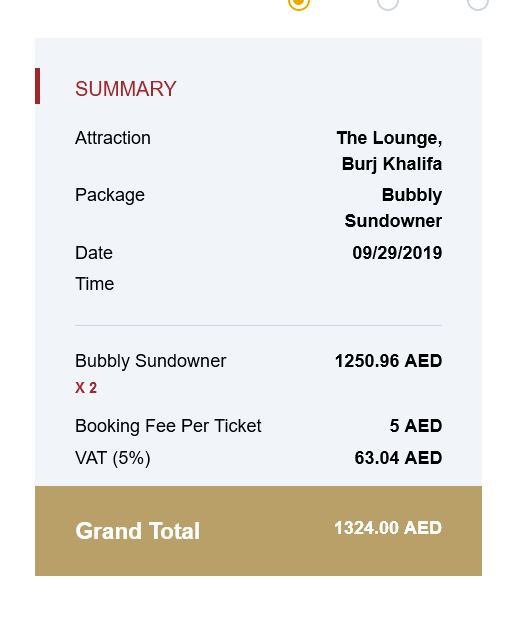
1324 AED roughly translates into 325 Euros. Not exactly cheap but… one also needs to get there.

Good thing I haven’t bought the tickets for the Lounge yet… I must reschedule…

On the other hand, does any of this make any sense for any of you?

Five hours of traveling over the clouds at almost 1000 kms per hour costs the same as spending an hour and half in a bar half a mile up in the sky? OK, Wizz Air is a low cost company, you have to pay extra if you fancy any refreshments… but still….

I’m not at all sure this trip would do anything good to my depression.

Let me put my feet back on the ground first!