Archives for category: man as a measure for all things

Most commentators treat Maslow’s as if it were a pyramid. A succession of five receding floors constituting a structure in the three dimensional space.

Something which can exist, and function, on its own.

I see it as a mere triangle. Drawn on a two dimensional surface by Maslow’s imagination and imperfectly reproduced – according to our individual manner of seeing things, on the surface of our consciences.

My point being that each of those levels are nothing more than a set of opportunities.

The first two, which are described as ‘basic needs’ are the stages where we have the opportunity to learn how to drink, eat, manage our immediate environment and our own strength.

And so on.

Basically, it’s what we choose to do in each of those stages which determines whether we graduate to the next one.

OK, sometimes we are dealt with an ’empty set’ situation. There is no food available. Or no water. Use your own imagination.
But since in that situation there is nothing to be done except waiting for something to change – death is a form of change, that situation is of no interest for me. There’s noting to be decided so…

What we choose to do…

All that Maslow is trying to teach us is that our freedom of will might be free but will always be influenced by the situation in which we find ourselves.

When hungry, our attention – hence freedom of thought, will be necessarily drawn to finding food. We will still be relatively free to choose our individual manner of gathering/cooking it but much of our ‘bandwidth’ will be spent trying to fulfill that task.

And so on.

The really interesting stage/floor being, of course, the last one.
Where we’ll continue to feel hungry – from time to time, at least, were we’ll continue to be vulnerable to various potential aggressors, where we’ll continue to depend on friends and associates, were we’ll continue to pay attention to what other people say about us.
But where all those needs will be modulated by our manner of relating to them.
Ascending through the first four floors meant that our understanding of things was modulated by our needs. Reaching the top means that our conscience has finally learned to ‘turn the tables’. To peek on the other side. To trans-cede.

To whatever stage our precedent choices have set for us.
For us to play our freedom.

What better way to treat depression than visiting some of the great achievements of humankind?

Stonehenge, the Great Pyramids, Machu Pichu, a selection of Europe’s Medieval Castles and Cathedrals, the Taj Mahal, Beijing’s Forbidden City, the Golden Gate, Burj al Khalifa …

I should take my wife along, right?

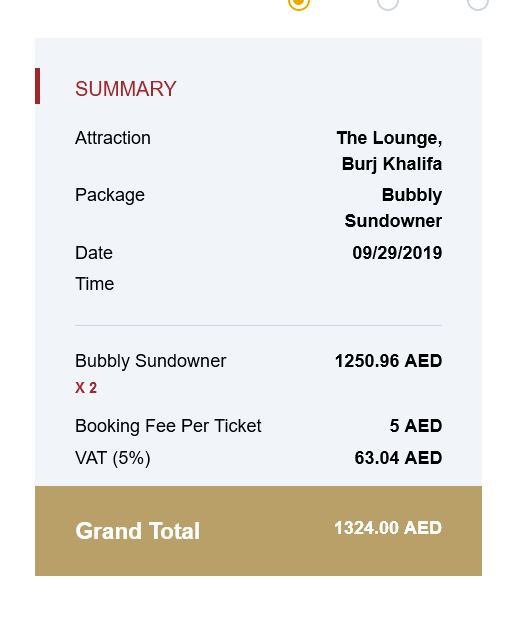
1324 AED roughly translates into 325 Euros. Not exactly cheap but… one also needs to get there.

Good thing I haven’t bought the tickets for the Lounge yet… I must reschedule…

On the other hand, does any of this make any sense for any of you?

Five hours of traveling over the clouds at almost 1000 kms per hour costs the same as spending an hour and half in a bar half a mile up in the sky? OK, Wizz Air is a low cost company, you have to pay extra if you fancy any refreshments… but still….

I’m not at all sure this trip would do anything good to my depression.

Let me put my feet back on the ground first!

Laurie Santos – psychology and cognitive sciences professor at Yale, believes that ‘we really need to do something about it’.

And I saw just students who were, you know, so depressed it was hard for them to get up in morning. I saw cases of students who were so anxious about their summer internships that they could barely function. And I thought, this is — first of all, this is what — not what I expected of college student life. You know, I remember college back when I was there in the ’90s as being relatively happy. And so, it was kind of striking. And the class came out of a goal that I had, which is that we need to do something about this as educators. We’re kind of like — we’re not in the position to really be teaching students if they’re in the midst of this mental health crisis. I think as professors we sometimes think we can teach students, you know, Chaucer and economics and things. But if the stats are right and 40 percent of them are too depressed to function and other two-thirds are so anxious that they can — you know, that they’re having panic attacks, you know, we really needed to do something about it.

And why shouldn’t they be? Depressed and panicked, that is?

Not so long ago, universities were perceived as fountains of knowledge and dispensers of philosopher’s stones. Having a degree was one of the most coveted things in the world. And one of the most useful.

Nowadays?
Universities are described as the origin of evil.
Just as Saudi-funded Salafist religious schools have radicalized large swaths of the Islamic world, American universities are radicalizing an increasingly large share of America.  This is aided by the fact that nearly 70% of kids now go to college, where most of them are taught not to think.

That would explain the depression. But ‘panic attacks’?
Experienced by the young generation of the most civilized and affluent people in the whole world?
Well, just remember the financial burden students and their families have to shoulder…

So. Students are depressed and prone to panic attacks…
Which only proves that the die-hard ‘conservatives’ are right. Millennials and Generation Z are nothing but a bunch of sissies.

Yeah, right.
Only these two generations have grown under our watch.
They are our children. We raised them. We have built the world they have to cope with.

In fact, we are the ones who need to be depressed. And panicked.
Very soon we’ll need to retire. For no other reason than becoming too old to fend for ourselves.
We’ll actually need our arses to be wiped clean and our world to be managed by somebody else but us.

Who will step in our shoes?

Furthermore, what example are we offering the next generation?

Why would they care about us if we don’t care about them? Offering them an extremely expensive education isn’t a proper expression of our love…
Why would they care about us when we don’t care about our fellow human beings? Extremely expensive health care and unaffordable housing isn’t a proper expression of ‘love thy neighbor as you love yourself’.
Why would they care about us, their parents – after we will no longer be of any real use, when we don’t really care about our employees. About those who actually make things happen?
Amazon goes further than gig economy companies such as Uber, which insist its drivers are independent contractors with no rights as employees. By contracting instead with third-party companies, which in turn employ drivers, Amazon divorces itself from the people delivering its packages. That means when things go wrong, as they often do under the intense pressure created by Amazon’s punishing targets — when workers are abused or underpaid, when overstretched delivery companies fall into bankruptcy, or when innocent people are killed or maimed by errant drivers — the system allows Amazon to wash its hands of any responsibility.
You see, Jeff Bezos did a very good thing when maintaining that “Americans deserve an economy that allows each person to succeed through hard work and creativity and to lead a life of meaning and dignity.”
Only words without deeds… might mean that we, the eventually needy parents, might end up uncared for. Sweet-talked to the end but…

On the other hand, depression might be good. Evolutionary speaking, of course.
The depressed have less energy. Hence are unable to put in practice major mistakes. Except killing themselves, of course.
The depressed have a lot of time on their hands. Huge opportunity to think things over. To notice and understand the mistakes that led them here.

Those who will resist the urge to give up – either by actually killing themselves or by falling back into the old morass, will shape ‘tomorrow’.

“Do you know why I hate capitalists?

1. All they care about is money

2. They have all the money”

This is a bi-partisan joke. Some of the haves use it to demonstrate that money is the essence of modern life while the ‘lefties’ use it to demonstrate the ‘malign’ nature of capitalism.

Both sides are wrong.

According to Adam Smith, the market consists of many specialized economic actors who sell their wares/services. Thus helping each-other lead a better/simpler life than if each of them had to ‘do everything’. Furthermore, a free market is better than a ‘cornered’ one, simply because competition keeps everybody on their toes.
In this sense, a capitalist is a guy who organizes a group of synergically skilled operators in such a manner as to increase their aggregated efficiency.
In order for the market to remain free, a.k.a. efficient, there must continue to exist a certain degree of competition between the said capitalists. And for the whole thing to remain a market, each of the capitalists must remain but an actor, not become a dictator. A.k.a a monopolist.
Differently put, for the market to remain functionally free, capitalists should remain/must be kept level with the other ‘merchant-men’. The bakers sell their bread-making skills, the brewers their beer-making skills, the butchers their ability to carve carcasses while capitalists sell their ability to organize people. Their entrepreneurial skills.
OK, there is difference. But only in our heads. While each of the others use specialized tools – ovens, vats, knives, etc., capitalists use money. Yet another tool but one which seems familiar to all of us. But very few of us see money as a tool and even fewer accept that using money, a lot of it, implies a huge responsibility.  Hence the enormous misunderstanding. No reasonable human being – except for a carpenter, of course, would dream to amass a huge number of, say, hammers, but a majority of people are convinced that having a lot of money would make them happy.

And why did I say “both sides are wrong”?

Because real capitalists are focused on the needs of their business partners – a.k.a. ‘consumers’, not on their pockets/paychecks. Because real capitalists understand that sellers would go hungry if there was no money to buy their wares.
Because free market capitalists are focused on making money go round – and getting handsomely paid for this, instead of constantly attempting to hoard all the money in their grasp.

It’s not me who says so.
Jamie Dimon, Alex Gorsky, Tim Cook, Ray Dalio….


Decision is the frontier between action and understanding.

All frontiers are, in fact, links.

Present decisions set the stage where future will be played, just as past decisions have built the theater.
While we, “the people”, are the building actors. The script writers. And the spectators who will eventually bear the brunt.


Trial an error (motor, muscular, directly related to actions)

Emotional

Discursive

All three depend, evidently, on memory. Different kinds – evidently, again.

This is a stub.

Three things have grabbed my attention this week.

Carrie Lam, the Cambridge educated Hong Kong’s top civil servant, whose career spans more than 40 years, who happens to be a devout Catholic, had tried to fast track legislation allowing the Hong Kong authorities to extradite people to mainland China.

More than a million of the 7.4 million inhabitants of Hong Kong have taken to the streets, in protest.

Across the Pacific Ocean, in Venezuela, a pregnant mother accompanied by her two small children, had joined other 31 people who attempted to flee their impoverished country. They had climbed aboard Ana Maria, a fishing boat which was supposed to take them to Trinidad but never made it across the 20 km wide stretch of treacherous water.

Maroly Bastardo, the Venezuelan mother, was trying to survive. Since it is harder and harder to find food in Venezuela – for themselves and for their children, more and more people attempt to leave the country. Which, despite having an immense natural wealth, is being led to disaster by a group of ultimately incompetent people.

The one million people protesting in Hong Kong have adopted another strategy. They attempt not only to survive, physically, but also to preserve their way of life. Their cherished way of life.

These two are relatively easy to figure out. It’s easy to understand the need to survive. Equally easy to understand is the determination of those who want to continue a lifestyle they enjoy.

But what drives the Carrie Lam’s and the Nicholas Maduro’s of this world?
OK, I might accept the idea that, somehow, each of them might have ‘lost it’.
But what about those around them? How come so many people still consider they can, somehow, contradict the entire human history?
‘This time will be different!” ” ‘This Reich’ will rule for one thousand years!”

Yeah, right…

“A person may choose to have an abortion until a fetus becomes viable, based on the right to privacy contained in the Due Process Clause of the Fourteenth Amendment.”

This was how the United States’ Supreme Court was reading the US Constitution in 1973.

Pro-lifers oppose this view. Their main argument being that life is sacred and needs to be protected. Period. For them, abortion equals infanticide. Plain murder.

What we have here is a clash of absolutes.
The absolute right to life and the absolute right to dispose of your own body.

The United States Supreme Court has solved the conundrum by setting a time frame. “until the fetus becomes viable”.
Pro-lifers propose another solution: “make abortion and attempted abortion felony offenses except in cases where abortion is necessary in order to prevent a serious health risk to the unborn child’s mother“. (Alabama’s HB314/2019)

Let’s see where lie the differences between Pro-Choice and Pro-Life.

Pro-Choice say that agency must be reserved for those who 1. are alive and 2. are directly implied in the matter.
Pro-Life extend the definition of ‘alive’ to cover everything they consider to be ‘living matter’ and thus take the final decision from those who are directly implied into the mater. And give it to those who have to decide the seriousness of the “health risk to the unborn child’s mother”.

In both cases the absolute becomes relative.
In the first case, the absolute becomes relative to the person directly involved in the matter.
In the second case, the absolute becomes relative to those powerful enough to insert themselves, and others, into the equation.

And both sides clamor they are acting in the name of individual liberty…

While ‘fitting’ discount priced toilet paper into my new second hand car, something struck me.

DSC_6406

In many ways, we are a first generation.
And by ‘we’ I understand what Americans call ‘the baby-boomers’.

We are the first generation to use toilet paper ‘en masse’. Have you noticed the hole in the Farmer’s Almanac?
We are the first generation to witness new cars becoming less reliable than the older ones. Not to mention less ‘honest’… remember the scandal regarding the Diesel engines emissions…
We are the first generation who has not witnessed a large scale war. As a consequence, very few of us had to flee conflict. My paternal grand parents had to leave their country behind after WWI while my mother was trice displaced during WWII. During my ‘tenure’, I’ve only read about those who had to flee the war in ex-Yugoslavia. Or Syria… We’ve met refugees, indeed, only all of them had come from other continents. While our parents/grandparents had to flee themselves. Had relatives and/or friends who had to run for their lives.
We are the first generation whose children expect to have a harsher life than ours.

Would this be enough explanation for the demographic decline we witness in Europe? And in other civilized places? Japan, South Korea…
As in ‘the reason for which less and less of our children have children of their own’?

OK, and where’s the link between my discount priced toilet paper and the demographic decline?

The fact that we don’t want to get our hands dirty is absolutely normal!
Who, in their right minds, would want such a thing?
There is a second fact though. Which cripples us. We haven’t yet learned that, from time to time, people do have to get their hands dirty in order to survive.

And people actually died because of this.
Boeing was so eager to cut costs – and corners, that didn’t even consider doing the ‘right thing’. ‘Getting their hands dirty’ and treating the 737 Max 8 as the new type of aircraft it really was. Before two of them having crashed due to pilots haven’t been properly trained for the new flying conditions.
Boeing should have designed the plane starting from a clean sheet  and the FAA should have  certified it as such.

“A district judge has ordered the Bernalillo County Sheriff’s Office to release property that deputies took during a child abuse investigation and kept after the charges were dropped.

In October, the District Attorney’s Office dismissed sexual assault charges against a nuclear weapons expert who formerly worked at Kirtland Air Force Base. But the Bernalillo County Sheriff’s Office didn’t release the man’s property, which included thousands of dollars of electronics and a draft of a book.”


They kept the kids in cages. And Excel spreadsheets. And more than 60 other government files and databases that made it nearly impossible to track the thousands of children who have been separated from their parents by the Trump administration while trying to enter the United States.

This is according to a new report released Thursday by the Department of Health and Human Service’s Office of Inspector General, which finds that, since 2017, the Trump administration has separated thousands more children from their parents than it previously disclosed and that it tracked these kids in ad hoc, disparate databases, including Excel spreadsheets and Microsoft Sharepoint accounts, further complicating the already tortured process of figuring out where those children are today.”

I have no first hand knowledge about any of these two separate ‘incidents’.
The first one might have been caused by a series of ‘misunderstandings’ while the second is only a portion of a hugely complex matter.

What really bothers me is what they have in common.

Both have been initiated by people belonging to/working for institutions put in place to protect the greater good of children. Children who are nothing but our future. Our only future.
Each of these ‘actions’ have been botched. By those who initiated them.
The institutions themselves had failed. To control the ‘runaway operators’ and to perform adequate ‘damage control’.

“Why are we doing things like these to our fellow human beings?”

Because we don’t consider them, in earnest, ‘our fellow human beings’?
For whatever reason?