Archives for category: 1989

Winning the war is not enough.


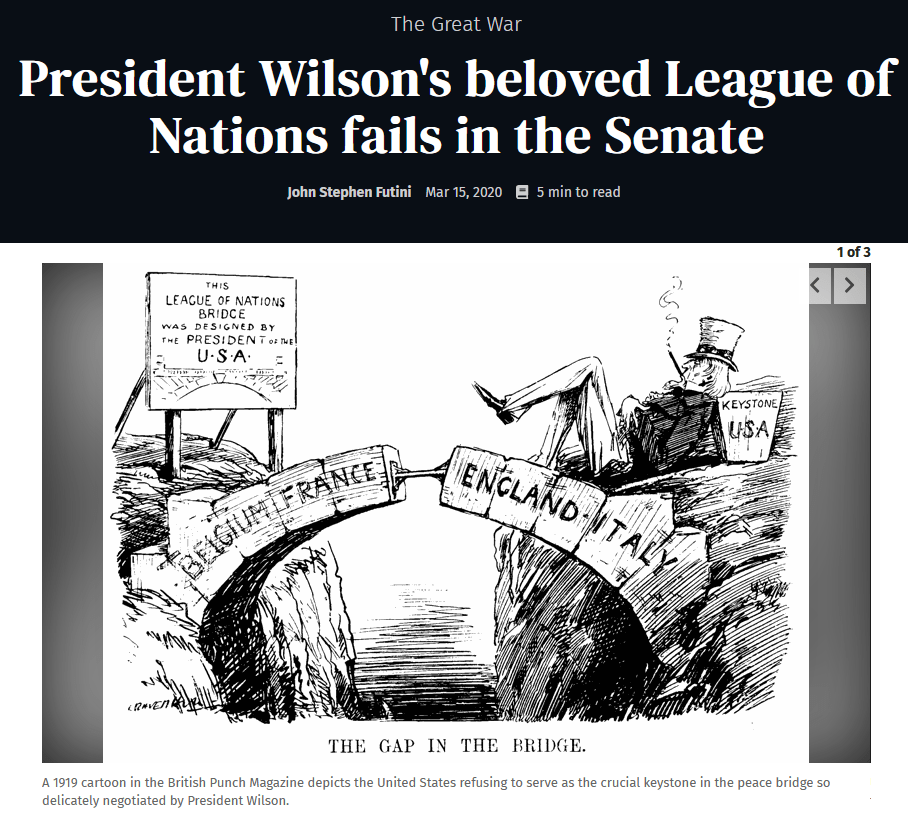
At the end of WWI, the vanquished was left to her own devices. After having been saddled with huge war reparations. The US – whose President, Woodrow Wilson, had been the brain behind the League of Nations – went back into its ‘splendid isolation’.
Adolf Hitler rose to power. Conquered the western part of Europe and then attacked the Soviet Union, convinced that the US would not intervene into the conflict. Convinced that ‘Western Civilization’ had become weak. That the good life enjoyed by those living there had ‘mellowed’ the people. Read ‘castrated’.
Japan was convinced that attacking the US was a good idea. For more or less the same reasons used by Hitler to convince himself that America wasn’t going to fight back.

America had to fight on two fronts. For otherwise all her partners would have been conquered. For otherwise America would have been left alone…

Any resemblance with the current situation, when America seems to be extracting herself from the European front and when Russia has been left to her own devices after loosing the Cold War, is purely coincidental. And since there’s no such thing as a coincidence…

Doing business is not enough.
America and Nazi Germany did a lot of business.
Nazi Germany and the Soviet Union did a lot of business.
The EU and the US did a lot of business with Russia.

WWII is ample proof.
Winning a war is useless unless followed by a workable peace. Which comprises the integration between the victor and the vanquished.

Yet winning the war comes first.
Any attempt to integrate an unrepentant aggressor is doomed to fail.
1938 Munich Agreement and 2014 Crimea should be enough.

‘Revolution’ might be sexy and hype but our lives are shaped by counter-revolution.
Ilie Badescu, PhD

Marx, Karl Marx, is considered the quintessential revolutionary philosopher.

Ilie Badescu – a Romanian Professor of Sociology, proud of his reactionary convictions – makes a very poignant argument. ‘We live in counter-revolutionary times. Almost always. After each revolution, whatever was changed during the upheaval has been mitigated by the survivors to fit with the existing circumstances.’

The Communists are distinguished from the other working-class parties by this only:
1. In the national struggles of the proletarians of the different countries, they point out and bring to the front the common interests of the entire proletariat, independently of all nationality.

2. In the various stages of development which the struggle of the working class against the bourgeoisie has to pass through, they always and everywhere represent the interests of the movement as a whole. The Communists, therefore, are on the one hand, practically, the most advanced and resolute section of the working-class parties of every country, that section which pushes forward all others; on the other hand, theoretically, they have over the great mass of the proletariat the advantage of clearly understanding the line of march, the conditions, and the ultimate general results of the proletarian movement.
The immediate aim of the Communists is the same as that of all other proletarian parties: formation of the proletariat into a class, overthrow of the bourgeois supremacy, conquest of political power by the proletariat.
The theoretical conclusions of the Communists are in no way based on ideas or principles that have been invented, or discovered, by this or that would-be universal reformer.
They merely express, in general terms, actual relations springing from an existing class struggle, from a historical movement going on under our very eyes. The abolition of existing property relations is not at all a distinctive feature of communism.

The Communist Manifesto

Karl Marx and Friedrich Engels wrote this in the first half of the XIX-th century. During quite revolutionary times… Or rather?!?

‘The communist ideas have not been invented or discovered by this or that would-be universal reformer’…

Those familiar with the history of communism know – or should – that both Marx and Engels had been born and raised in Prussia. At that time, until 1848, Prussia was run as an absolute monarchy.
Engels came from a wealthy merchant family who owned textile factories in both Barmen, Prussia, and Salford, England.
Marx was born into a well off family. His father, Heinrich, owned a number of vineyards and was an attorney. Eventually, after an engagement spanning 7 years, Marx married the educated daughter of a liberal aristocrat, but not before befriending his future father-in-law.

Neither had any blue-collar experience. Yet they co-authored the Communist Manifesto…

Consequences.
We are the consequences of the decisions we take.
Of the choices we make.

As biological organisms, our fate, both individually and as a species, depends on whether circumstances remain habitable. Whether we can continue to live.

As rational humans, our individual destinies depend on luck, genes and on our ability to make good decisions.

‘Good’ decisions!
The tricky part being that nobody knows in advance the consequences of our decisions… whether a decision we consider to be good – when we take it – will remain so after its consequences will have been evaluated. After enough time will have passed for the full gamut of consequences to unfold…

To make things easier, humanity has developed ‘culture’.
Layered information which has morphed into ‘Weltanshauung’. Experience distilled into knowledge and accrued in time. Advice we no longer need to ask, only to remember.
When in a hurry, we do as we always used to. Back to the tried and tested.

But there’s a small problem here.
The cultural norms might have been ‘tried and tested’, hence ‘right’, but are we applying the appropriate norm in the given circumstances? Have we interpreted whatever information we have in the right way?

Ukraine is at war. Resisting aggression against all odds. Despite some of those in power attempting to access ‘undeserved rewards’. Unfortunately, war profiteering and corruption are as old as civilization…

Earlier this week, NABU (National Anti-Corruption Bureau of Ukraine) and SAPO (Specialized Anti-Corruption Prosecutor’s Office) said top company officials demanded illicit commissions of 10-15% from contractors.
The corruption allegations center on contracts linked to Energoatom, which provides most of Ukraine’s electricity.
According to investigators, an organized criminal group laundered the funds through an office in central Kyiv linked to the family of former lawmaker and suspected traitor Andriy Derkach. Among those named in the case was then-Energy Minister and later Justice Minister Herman Halushchenko.

https://www.kyivpost.com/post/64185

How do we choose to evaluate the current development?

As yet another step in the right direction? A country at war cleaning up its act?

Or…

Further more, what will we choose to DO?… after we will have chosen an interpretation to fit our ‘general disposition’… ’cause, unfortunately again, this is how we tend to evaluate things! Specially when we’re not diligent enough. Allow our ‘general disposition’ to take over and permit our reason to cowardly back off …

Help Ukraine to defend itself? And the rest of Europe? Freedom in general!
Or give up? On Ukraine, on cultural norms which seemed set in stone until not so long ago…

“How is capitalism better than socialism and communism?”

First of all, capitalism, socialism and communism are four different things.
Socialism, per se, is two things.
Funny, right?

There is the democratic socialism. A social arrangement where ‘nobody is left behind’ and where the economy is run according to capitalist principles.
And there is the ‘stepping stone’ socialism. The ‘prep class’ a Marxist society was supposed to graduate from before acceding to communism. In fact, the former USSR – as well as all the other former ‘communist’ countries had never reached that stage. Stepping stone socialism is something nobody has yet been able to graduate from.

‘Stepping stone’ socialism and communism are bad. For the simple reason that both are authoritarian regimes. Run by a small group of people according to their own whims. Pretending to mind the best interests of the entire people but, in reality and like all other dictatorships, minding exclusively their own businesses.

Capitalism? Nazi Germany was capitalist. Not good. Because it was Nazi…

‘Capitalism’, the entire gamut covered by the blanket term, is neither good nor bad. People collaborating using capitalist principles can reach for the stars – literally – while people obsessed with amassing money will, eventually, end up in a cul de sac. Remember what happened in 2008?
Free market capitalism, run by a democratic society, makes wonders. The USA until 2008, Canada, Australia, New Zealand, Japan and South Korea after they had regained their freedom, W. Europe. Great Britain.
The problem with free-market capitalism being the freedom of the market. In order to make wonders, the market must remain functionally free. Free from obsessions, free from monopolies, free from political heavy handed interventions. And equipped with a sturdy social safety net. The US used to have one. W. Germany also. Unfortunately, that kind of capitalism is very hard to find nowadays… Too many oligopolies have cornered too much of the former free market and too many safety nets have been transformed into pampering devices for dependent people. Some of whom are already rich!

We’re currently experiencing a tug-of-war.
Frustrated people have been harnessed to pull in diametrically opposed directions.
Some have somehow been convinced that the free market should be allowed to become a MMA cage. A no holds barred free for all fighting place. And what if the whole thing will eventually be dominated by your local bully? We’ll deal with that if/when it will happen.
Others have been duped to believe that capitalism is bad. That usury is not an abuse but the defining characteristic of capitalism. Hence a compelling reason for capitalism to be rejected lot, stock and barrel!

OK, for the sake of the argument, let’s look for a replacement. A replacement for Adam Smith’s capitalism.

Let me remind you that bona fide socialism relies on redistributing wealth created using capitalist principles.
That stepping stone socialism is a mockery. An undercover capitalism where all significant property is owned by the state. Where all decisions are made by the government. By the revolutionary government which pretends to know better, as advertised by Marx. Karl, not Groucho.
And that ‘real communism’ is nothing more than a thought experiment! Wouldn’t it be nice if? Yes, it might have been nice if the practical aspects of the whole thing didn’t prevent those who have tried it from reaching their goals.

Nu te lupta cu porcul în noroi.
Tu obosești iar lui îi place
.

Cele două zicători de mai sus sunt adevărate dar incomplete.
Trebuie interpretate.
Iar interpretările, precum toate celelalte ‘prelucrări mentale’, depind de dispoziția generală a interpretului precum și de implicarea sa emoțională în subiectul supus ‘prelucrării’.

Un om tracasat de frecușurile zilnice și fără prea multă dispoziție de a se mai gândi la altceva decât la ziua de mâine le va lua ca pe un îndemn să stea în banca lui. Că e prea greu să schimbi ceva și, oricum, doar unui nebun i-ar păsa de chestia asta. Nebunul fiind floarea care răsare ‘peste rând’.
Cineva puțin mai curajos și care, pe indiferent ce cale, a priceput că ‘așa nu se mai poate’, vede aspectele practice ale situației.

‘Dacă chiar vrei să te iei la trântă cu porcul, ia un furtun cu apă. Dă noroiul jos de pe el. Împinge-l undeva unde e curat. Și mai cheamă câțiva oameni să te ajute!’

Corupția, căci despre ea e vorba în propoziție, e de două feluri.
‘Inițială’ și ‘de etapă’.

Regimul comunist a fost corupt de la început.
Prin definiție.
Orice revoluție este o ‘rupere’ a ceea ce a fost până atunci. Violentă prin natura ei, are ca rezultat punerea în practică a dorințelor revoluționarilor. Urmată, mai devreme sau mai târziu de o contrarevoluție. Manifestă sau aproape nevăzută, contrarevoluția echilibrează, măcar într-o oarecare măsură, dorințele revoluționarilor cu realitatea practică.
Cu alte cuvinte, orice proces revoluționar – duetul revoluție, contrarevoluție – constă în două straturi de corupție. În prima fază este coruptă, violent, realitatea pre-existentă iar în a doua etapă sunt corupte, în foarte mare parte, intențiile revoluționarilor. A două fază poate fi la fel de violentă ca prima sau atât de molcomă încât trece neobservată. Vezi contra-revoluția ce a urmat Revoluția Franceză și procesul lent care a dus la prăbușirea tuturor regimurilor comuniste.

Există și o corupție de etapă.
Chiar și în regimurile care funcționează cu adevărat, în cele democratice, apar perioade de criză. Crize economice, crize produse de agresiuni externe, crize apărute ca urmare a auto-suficienței… Fiecare dintre aceste crize sunt ferestre de oportunitate pentru cei cu porniri corupte. Societatea, în ansamblul ei, este prea ocupată să facă față crizei și neglijează, pentru o vreme, fenomenul corupției. Până când consecințele corupției încep să pună în pericol însăși supraviețuirea societății. Care societate – vorbesc aici despre modul în care funcționează organismul social, nu despre supraviețuirea fizică a locuitorilor – va continua doar în măsura în care sistemul ei imunitar – adică justiția sprijinită, măcar moral, de suficient de mulți dintre locuitori – reușeste să readucă corupția la un nivel supraviețuibil.

În paranteză fiind spus, ‘eradicarea corupției’ este o lozincă goală. E ca și cum ți-ai propune să interzici strănutul în public… Poți doar să le ceri oamenilor ca atunci când le vine să strănute să o facă în plica cotului sau în batistă. Și să se abțină când le vine să fie corupți. Sau să corupă pe alții. Iar pe cei care nu se abțin să-i bagi la pușcărie…

Corupția din România actuală are trei mari surse.
Corupția inițială. Am fost singura țară din estul Europei unde prăbușirea comunismului a avut un caracter revoluționar. Corupția din timpul regimului comunist nu a fost suficient de puternică încât să ducă la disoluția completă a regimului. A fost nevoie de un grup de revoluționari care să rupă gura târgului. Care să servească de catalizator al nemulțumirii populare. Care grup de revoluționari a reușit, în mare măsură, să-și pună pecetea asupra destinului post-comunist al României. Urmată, în mod firesc, de o corupere contra-revoluționară a intențiilor originale.
O corupție de origine ‘externă’. Adică din afara aparatului de stat. Corupția inițială fiind, de la început, adăpostită în chiar trupul statului. Și aici am să citez un specialist. „„Să ieşim din ipocrizie. Dacă există corupţie, singur statul nu poate fi corupt, are un partener. Statul nu poate fi singur neperformant. Are un partener şi acesta este economia privată”, a susţinut preşedintele Băsescu”. Decembrie 2011.
Și o corupție de etapă. Care vine, de fapt, încă de pe vremea fanarioților. Cei care aveau de unde îi mituiau pe cei aflați la putere pentru a fi lăsați în pace. Obicei care s-a perpetuat până în zilele noastre. Omul de rând care dă bacșis medicului care nu-i cere face acest lucru. Preotul care face o mare donație pentru episcopie înainte de a primi parohie. Angajatul – la stat – care ‘se simte’… toate astea fac parte din obișnuință. Că acest obicei a fost întărit de cei care obișnuit să primească… e tot o consecință culturală. Un obicei care vine din istorie.

Ce vreau să spun cu chestia asta?

Mai țineți minte promisiunile care i-au convins pe cetățeni să voteze Convenția Democratică în 1996?

„Presedintele Emil Constantinescu a declarat (în Decembrie 1997) ca cei 15.000 de specialisti pe care CDR ii anunta in campania electorala exista, dar ca au refuzat, dintr-un motiv sau altul, sa-si asume responsabilitati. Constantinescu a participat la primul Congres National al membrilor seniori ai Ligii Studentilor, purtind un dialog direct, timp de trei ore, cu liderii de dupa 1989 ai studentilor. El i-a indrumat pe cei prezenti sa “penetreze” in administratia locala si sa sprijine procesul de inlaturare a structurilor birocratice si greoaie.”

Ar fi păcat să repetăm experiența.
Oana Gheorghiu a spus prezent!

And the LORD God said,
Behold, the man is become as one of us, to know good and evil.

After learning godlike skills – after becoming a conscious human being, that is – man has set his sights on the next target.
Apportioning blame. Finding culprits. The only way forward, right? Bulldoze the obstacles away, lose the dead weight and you’ll get there a lot faster.
Where? Where is that elusive ‘there’? We’ll find out about the place when we’ll get there!

If we’ll get there… If we’ll ever get anywhere with that attitude, for that matter!

Researching for this post, I came across Dietrich Bonhoeffer’s Theory of Stupidity.

First things first.
Bonhoeffer was a German theologian who happened to come of age right when Hitler was confiscating political power in Germany. Even though Bonhoeffer belonged to a church which denounced violence, even in self defense, Bonhoeffer eventually joined a conspiracy trying to assassinate the dictator.
“Here the law is being broken, violated,” he deplored. It might be true that “the commandment is broken out of dire necessity,” but to say he broke the commandment of necessity is still to say he broke the commandment. Rather than pretend this was some positive moral good, Bonhoeffer instead threw himself at God’s feet and begged forgiveness for the sin he could not but commit.

In his writings, Bonhoeffer was abundantly clear.

The fact that the stupid person is often stubborn must not blind us to the fact that he is not independent. In conversation with him, one virtually feels that one is dealing not at all with a person, but with slogans, catchwords and the like, that have taken possession of him. He is under a spell, blinded, misused, and abused in his very being. Having thus become a mindless tool, the stupid person will also be capable of any evil and at the same time incapable of seeing that it is evil. This is where the danger of diabolical misuse lurks, for it is this that can once and for all destroy human beings.
‘Yet at this very point it becomes quite clear that only an act of liberation, not instruction, can overcome stupidity. Here we must come to terms with the fact that in most cases a genuine internal liberation becomes possible only when external liberation has preceded it. Until then we must abandon all attempts to convince the stupid person. This state of affairs explains why in such circumstances our attempts to know what ‘the people’ really think are in vain and why, under these circumstances, this question is so irrelevant for the person who is thinking and acting responsibly.


The key concept here, as I read Bonhoeffer’s work, is that external liberation must come first. As a precondition for the ‘internal liberation’. For a shackled individual, reaching a peaceful state of mind is almost impossible. And since nobody can exercise their will in a free manner unless their mind is ‘level’….
Further more, in order to learn one needs an open mind. A free, level and open mind. And being able/willing to learn is the only road out of ‘stupid-land’. The only way to overcome the ‘what I already know is plenty’ attitude.
Only a free individual can choose to independently examine the facts. A shackled one will almost always give up. And accept whatever official version is being shoveled down their throat.

And here’s the catch.
In conversation with him, one virtually feels that one is dealing not at all with a person, but with slogans, catchwords and the like, that have taken possession of him. He is under a spell, blinded, misused, and abused in his very being.

Having grown up, and being socialized, under a communist regime – somewhat different but not entirely from the nazism experienced by Bonhoeffer – I understand how it is to live under symbolical duress. Under a constant deluge of lies. Which were meant to effectively shackle us. Not to educate but to condition us.
During that time, I had also noticed the deluge was poured by intellectuals. The very people who were supposed to do the exact opposite. To enlighten us. To elevate the willing people to the ‘next level’. Teachers, writers, artists … and even clergy. Not all the intellectuals were involved in this process but all those used by the dictating party to destroy both our external and internal freedom did belong to the intellectual caste.

Communism and nazism had been somewhat ‘natural’ occurrences.
Ruthless political operators – evil people, in Bonhoeffer’s words – have noticed an opportunity – the existence of economically distressed people – and used their ‘knowledge of words’ to ideologically shackle those people to symbolical totem-posts.

What is currently going on is akin to a suicide of sorts.
We might believe those who had instated communism and fascism had good intentions. Misguided – to say the least, according to the horrible results attained by those regimes, but well intended naive individuals.
Nowadays, after having already experienced those episodes, we should be threading very carefully…
The same level of popular dissatisfaction, the same level of finger-pointing, of frustration… everything stirred up and brought to paroxysm by the same kind of manipulation.
Propaganda spun by the same kind of callous intellectuals as those involved in the advent of communism and fascism. I call them callous because this time they should know better. It is their job to know these things. For it is the intellectuals who are supposed, according to their social role, to “know good and evil”.

This is why I cringe every time I see/hear/read an intellectual who blames the ‘stupid people’ for what’s going on.
Blaming the ‘others’ for things they have done unwittingly is a huge error. For one simple reason.
It’s self defeating. And, hence, treasonous!
We all, both the ‘stupid’ and the rest of us, need to liberate ourselves. From the “slogans, catchwords and the like, that have” been used to shackle us, all of us, into a state of ideological prostration.

We blame them. They blame us. And those who have planned all this cannot believe how successful they have been.
But for the very shortest of times…
Social uniformity begets ‘morass’. Like water, a society needs to flow in order to remain reasonably clean. To remain functional.
Communism, artificial equality, brings everything to a stand-still.
On the other hand, too much social disparity, too much power concentrated in a very small number of hands while the rest are reduced to a state of prostration, begets revolution. Like a body of water perched on a cliff wanting to climb down, a strung up society will, eventually, find ‘relief’. Sometimes explosively.
It is the intellectuals who need to figure this out. For it is them who fare worst under all dictatorial regimes. Regardless of anything a dictator might promise.

In the 1970s, Carlo Cipolla, a social psychologist, developed FIVE LAWS OF STUPIDITY. The term itself, he said, wasn’t a description of intellectual acuity, but of social responsibility. A stupid person is a person who causes losses to another person, or to a group of persons, while deriving no gain for himself, and possibly incurring losses. Cases in which someone takes an action by which both parties gained, was deemed intelligent.

Cipolla’s words are correct. But incomplete.
Even if the individual who causes losses to others people do it for personal gain, their endeavor is still stupid! Because that ‘thing’ is unsustainable! People taking advantage of other people leads the whole party into a dead-end.
Adam Smith was describing ‘the butcher, the brewer and the baker working for their own personal interest and so driving forward the entire market/society’. The entire society!
Indeed! Only those people were working together!
Not each of them against all others! Those who tried to con their business partners were thrown away!That was the essence of Adam Smith’s free market!
The freedom enjoyed by everybody. The freedom from being swindled.

Do you feel free?


“As a white family, [we were] being told we’re racist
and not given the same opportunities because of the colour of our skin,”
“My daughters growing up in this world — we just couldn’t have it.”
In a bid to expedite his family’s citizenship applications,
Mr Huffman joined Russia’s military.

As living organisms, we are defined by the genes inherited from our parents.
As socialized human beings, our thoughts are shaped by the particular culture seeping through our consciences.
As politically governed inhabitants of various countries, our destinies depend on the wisdom of those calling the shots. On more than one level…

We don’t have much to say when it comes to our genes.
We can always interpret the tenets of the above mentioned cultures.
As citizens, and very much depending on the particulars of each ‘polity’, we can always try to influence the decision making process.

We cannot do much about our genes for a very simple reason. They are part and parcel of our ‘inner-workings’. The immutable part of what we are.
We can interpret culture and attempt to influence others because of our consciousness. Our ability to develop a certain kind of awareness.

Consciousness, the ability, can be construed as a space. The place where our individual consciences exist, meet and interact.
Our individual consciences can be understood as atoms inhabiting the consciousness.
Like all other spaces. consciousness has dimensions. Hence regions. Each region ‘functioning’ according to certain sets of rules. Sets of rules otherwise known as ‘cultures’.
Culture, in general and each of the individual ones, is ‘alive’. Just as life itself is ‘alive’.

Unfortunately, life is only ‘aware’. Not yet aware of it’s own self. Not yet conscious. Only a certain species of individual living organisms has, as far, developed this ability.
‘Culture’ – a living thing because it is animated by individual living organisms, the conscious ones – is also ‘aware’. Just as life is ‘aware’. But, again like life, culture has not yet developed a full consciousness. And awareness of

Atoms, in the real world as well as the individual consciences inhabiting consciousness, ‘cooperate’.
Democrit’s atoms, in various combinations, constitute the ‘real’ world. Including here the individual living organisms harboring individual consciences.
Conscious ‘atoms’, the individual consciences harbored by the living organisms which have been able to develop one, are about to take over a portion of the above mentioned ‘real’ world.

Unless they destroy it first…


Pentru România, și pentru restul Europei, ideal ar fi ca Rusia să fie în interiorul Europei. Și nu în afara ei, uitându-se cu jind la bunătățile din vitrină. Cel mai bine ar fi să intre republică cu republică și nu ca un întreg. Bine, după ce se va mai fi prăbușit odată, tot sub povara propriei greutăți, probabil că n-o să mai rămână în forma/componența actuală.

Problema noastră, atât a Europei cât și a Rusiei, este că nu am înțeles nimic din primele două războaie mondiale.

Cel de al doilea a fost o consecință a primului. A modului în care învingătorii i-au tratat pe învinși. I-au jefuit. Sub pretextul despăgubirilor de război. Criza existențială din Germania postbelică a facilitat ascensiunea nazismului, care nazism – precum toate dictaturile – a avut nevoie să se proiecteze în exterior.

WWIII a fost la fel de idiot precum WWI.

WWI a fost o consecință a faptului că părțile implicate n-au fost în stare să vadă mai departe de lungul nasului. Să înțeleagă ce urma să se întâmple. Dacă/atunci când fiecare dintre ele respecta, cu ochii închiși, toate angajamentele asumate.
WWIII – cunoscut și sub numele de Războiul Rece – a fost o consecință a faptului că fiecare dintre părțile implicate au respectat, în literă și în spirit, angajamentele deja luate. Angajamentele luate de fiecare dintre părți în fața populațiilor respective… Europa de Vest promisese libertate și prosperitate, lagărul comunist promisese o egalitate forțată ce urma să fie implementată în condițiile în care populația era forțată să asculte și să pună în practică, cu capul plecat, aberațiile ideologice proferate de către ‘cei mai avansați fii ai clasei muncitoare’. Conform Manifestului Comunist pus la cale de Karl Marx…

După WWII, învingătorii au avut grijă, fiecare în felul său, să-i integreze pe învinși. După ce ambele părți au convenit să scoată nazismul și fascismul în afara legii. Și să-i judece pe criminalii care aduseseră pe capul lumii întregi toate nenorocirile acelor ani. Ambele porțiuni ale Germaniei, Italia și Japonia au fost integrate, fiecare dintre ele și după o purificare aproape ritualică, acolo unde le-a fost norocul să ajungă. Germania de Vest, Italia și Japonia în lumea liberă, Germania de Est împreună cu ‘despăgubirile de război’ pretinse de Rusia – adică aproape întreaga Europă de Est – au fost integrate în lagărul socialist.

După WWIII, în mare parte similar cu ce s-a întâmplat după WWI, Marele Învins a fost lăsat să se descurce de unul singur. Comunismul nu a fost judecat, și cu atât mai puțin, scos în afara legii. Mă refer aici la comunismul dictatorial aplicat, cu forța terorii, în ‘democrațiile populare’. Iar singurul dictator comunist care a simțit pe pielea lui consecințele faptelor sale a fost împușcat ca un câine. În loc să fi fost judecat pentru faptele sale!

‘De unul singur’ nu se poate. Am lăsat Rusia post-sovietică să ‘se descurce’. Suferim consecințele. Precum în Germania post WWI, spațiul politic a fost ocupat, și în Rusia aflată în criza economică inevitabilă după o astfel de reașezare, tot de o guvernare dictatorială. Care, și ea, are nevoie să se proiecteze în afara spațiului pe care îl controlează deja.
Pentru că nu știe/poate să supraviețuiască altfel!

God blessed them and said to them:
“Be fruitful and increase in number; fill the earth and subdue it.
Rule over the fish in the sea and the birds in the sky
and over every living creature that moves on the ground.”
Genesis 1:28

Engineers are trained to think first. And ‘shoot’ only after they have figured out what was going on. What was going to happen as a consequence of their enacted decision…
Handymen, the hard working people who actually prevent the ‘wheels’ from halting screechingly, are trained – self trained, mostly – to repeat what has worked in the past.

Both engineers and handymen are convinced that they know better. That each of their Weltanschauungs are more appropriate.
Both are right.
The distance between them can be construed as (one of) the depths we need to fathom. If we wish to understand ‘reality’…

An engineer myself, MSc level, I had my midlife crises rather early. Went back to school. BA in Sociology. Trying to understand ‘decision making’. Figure out what reality really is…
How to make a wise decision if you don’t know what’s going on?!?

Almost 20 years later – and a few entries in my blog – I found out that I was not alone. That more than a century ago, another guy – a former mathematician, had already broken the ‘glass-ceiling’.
While ‘process philosophy‘ is as old as philosophy itself – traceable back to Heraclitus, Panta Rhei – it was Alfred N. Whitehead who had introduced enough epistemological order into the matter to make it a ‘real’ issue.

What’s the meaning of all this?
Why haven’t we changed tack since Whitehead gave us such a powerful heads-up?
Why most of us continue as ‘handymen’?!?

Process philosophy, as I understand it – with my engineering mind, is mostly about responsibility.
Marx’s was about ‘taking charge’. Shoot first, ask questions later – if ever, was how communism had been translated into reality. Like all other dictatorial processes…
Whitehead’s – if I read him correctly – is about understanding responsibility. Not about ‘merely’ assuming it but about accepting it. About accepting the fact that it will be us – or our children – at the receiving end of the processes we initiate.

‘Uncomfortable position’ is a very lame expression for feeling alone. When trying to decide ‘what next’…
‘Maybe we should just proceed as we used to?’

The Sapir-Whorf hypothesis, following ideas put forward by Wilhelm von Humboldt, posits that the kind of language used by various categories of people have a meaningful impact upon the ways each of those categories of people think. And see the world.
The last iteration of the above hypothesis being the advent of AI. We train it using various languages. Those trained using precise languages – chess, go, ‘mathematics’ – work more or less as intended – aka ‘perfectly’ – while those trained using everyday English end up hallucinating…

https://www.jstor.org/stable/43102168: Sapir-Whorf
https://www.ibm.com/think/topics/ai-hallucinations
Moloch’s Bargain: Emergent Misalignment When LLMs Compete for Audiences:
https://arxiv.org/abs/2510.06105