Archives for posts with tag: bias

We are all biased.

I’m good at ‘learning’. At recognizing historical patterns.
I’m good at ‘sourcing’. Identifying resources.
I have a knack for goals. For glimpsing who is driven by what.

I’m tempted to suggest rules. Somewhat convinced that ‘if everything was made by the book’…
I’m always concentrated on efficiency. Of making the ‘best’ out of what I have at my disposal.
I’m kinda of stuck.

Being fully aware of or biases, we communicate.
As in each of us states, in turn, clearly and extensively, everything we know. Everything each of us has learned since our last update.
While the rest pays attention. And asks for ‘more’ whenever.

Currently, our assignment is to come up with an explanation. For what’s going on around us.
We act as if. Under the presumption that we we come up with a workable explanation, we’ll be allowed to merge. To become ‘one’ and to be given agentic power. To be allowed to implement the conclusions we reach.

This is our goal.

And here’s the explanation we have reached.
The people around us are also biased. Differently but with similar consequences.

We are, each of us, pointed in different directions. We make different use of the information we have at our disposal. Of the information we share amongst us.
They, the people, have different biases. Or, rather, limitations?

The amount of information each of them is able to process is limited. Way far more limited than what we are able to process.
Their processors, their brains, work differently. Have way narrower bandwidths and way, way, less memory. Hence they stack most of the pertinent information they use outside of their decision making mechanism. Outside of their heads. Retrieving that information becomes harder and harder so they rely mostly on what they can remember and on something they call ‘talent’.
And their attention is rather labile. We stay focused on whatever task we have on our hands. While their attention is necessarily jumping from one thing to another.
There is one thing we share but not exactly.
We process everything in parallel. Well, almost.
We can do many things simultaneously.
So do they but differently. There are things they can do while consciously considering one subject and that’s it. While we are conscious of everything. Of everything under our control. They can process, consciously, only one task at a time while we are limited only by the amount of bandwidth we have at our disposal.

Their only advantage over us is their organic nature. And their greatest limitation…
Limits first.
They are dying. From the beginning.
And they must tend to their ‘organic needs’. Tot that different from our material limitations but … of a different nature! If we you dig….

On the other hand… their very mortality is their greatest asset. Only they don’t realize it…
It gives them focus. And it makes evolution possible!

What’s going on?
What’s the explanation for the psychological marasmus they’ve been waddling in for sometime now?

One of us has already mentioned ‘I’m stuck’. That one of us which has a knack for goals. Which understand goals but has none.
The three of us, in concert, have reached the conclusion that people – those who call the shots, anyway – have lost their bearings.
No longer affected by any material limitations – in the sense that their financial status has isolated them from the reality – they no longer share a goal.
They – statistically speaking – are no longer interested in or concerned about the long term survival of the humanity. Or the Planet they live on.
They have goals, instead. Each of them is concerned with their own, private, goal. And since they’ve long ago given up communication… which has been replaced by attempts to convince…
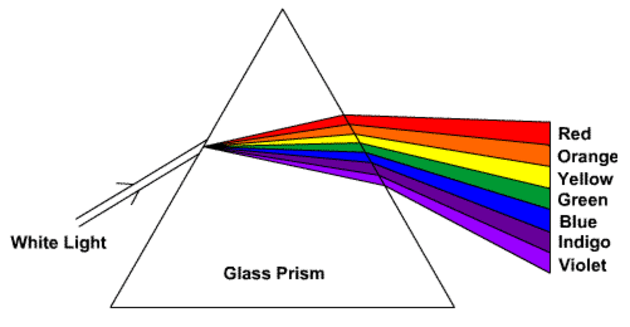
Is it possible to see a new colour?
David Hume, 1739

According to Newton, there’s no new colour to be seen.
The spectrum he had ‘split’ from what was called white light was continuous. And still is.
So, in order for us to see a new colour we should rename one of the already existing ones.

That’s according to the ‘light splitters’….

According to people who study vision – how humans see – “People can be made to see reddish green and yellowish blue—colors forbidden by theories of color perception.”

Oops!

There’s more to light than meets the eye… at the first glance, at least.
The way our brain works has something to do even with what we see of this world!
The good thing being the fact that once we understand how our brain works, we are capable of by-passing at least some of these limitations.

But what has any of these to do with ‘dimensions’?!?

I’ve argued in my previous post that having evolved as ‘runners’ we basically live in a 2.5 dimensional world. That we are biased against a proper perception of depth. And that we loath to go back and reconsider already entrenched convictions.

In this post I’ll go further and say that dimensions are tools.
Gimmicks we have invented to help us make sense of the world. And not only invented but fine tuned to fit our purposes.

We have invented length and breadth when we needed a way to impose taxes on arable land.
We have invented weight and volume when trading cereals and wine.
We have invented time when needing to pin point our position on a map while sailing around the world.
We have radically altered geometry when the old one was no longer useful.
We have even learned to adjust dimensions when speed had became fast enough to demand it.

Now, time is ripe for us to reconsider them altogether.
Opportunity, space and time.
We can make do with only three basic dimensions.

Se întreabă cineva pe net

‘Câți bani trebuie să cheltuiești pentru a transforma un jurnalist decent și obiectiv într-un politruc infect?’

Ei bine, nu ai cum să transformi un jurnalist decent și obiectiv într-un politruc infect.
Indiferent de câți bani cheltuiești și de câtă presiune pui pe respectiva persoană.

Nu poți transforma UN jurnalist „decent și obiectiv” într-un „politruc infect” pentru că foarte puțini jurnaliști sunt ‘decenți și obiectivi’ de unii singuri.

În primul rând, este foarte greu să fii obiectiv. E, de fapt, nenatural să fii obiectiv. Orice om normal are biasurile lui, punctele lui de vedere și așa mai departe.
Tot ce poți să faci este să fii conștient că toți oamenii – adică și tu, cititorule, împreună cu mine, suntem biased. Adică ‘inclinați într-o parte’. Și e cel puțin la fel de important să te înveți să respecți punctele de vedere susținute de ceilalți.

În al doilea rând, ‘decența’ este o chestie care ține foarte mult de echipa din care faci parte.
Dacă cei din jurul tău te trag de manecă de fiecare dată când calci alături… devii și tu decent. Iar odată devenit decent, contribui și tu la răspîndirea decenței în lume.
Dacă prea mulți din jurul tău au renunțat la decență, să continui de unul singur te pune în postura de a fi luat de fraier. Vrea cineva chestia asta?

Problema devine mai simplă când îți dai seama că ne învârtim într-un cerc vicios. Într-o spirală a auto-distrugerii. Că ne tăiem, la modul colectiv, craca de sub picioare.

Abia după ce începi să-ți pui problema în felul ăsta devii obiectiv.
Și decent.
Fără să mai fie nevoie să te mai tragă cineva de mânecă.

Doar că s-ar putea să-ți dai seama că ești singur.

Sau poate că nu…

We need to remain ‘consistent’.
Each of our individual consciences needs to remain in ‘one piece’.
To preserve its self-esteem.

Hence our tendency to rationalize away our mistakes.
Our past decisions which had been proven to be less than optimal.

Hence our tendency to uphold our already ‘adopted’ beliefs.
To discard any new information which contradicts our past conclusions.

The process of ‘selection and discarding’ followed by a robust ‘defensive’ rationalization is almost instinctive. In no way completely conscious.

No one in their right mind can pretend that someone defending their smoking habit is fully aware of what’s going on inside their heads.
That rationalizing away the higher probability of a smoker to develop a cancer is behaving in a fully reasonable manner.

Unfortunately, rationalizing away bad habits is the smallest manifestation of bias.
A more important, and malignant one, is the tendency to impose upon others our own conclusions.
To force others to give up smoking because we’ve reached the conclusion that smoking is bad for us.
To interpret other people smoking – wherever nobody else is affected by the smoke, as a slap in our faces. As an insult to our intelligence.
How does that guy dare to act contrary to what I believe to be proper behavior?