Că dacă n-ar fi,
nu s-ar povesti.

Viola Tricolor.
Sau Trei Frați Pătați…

Au fost odată ca niciodată doi frați. Vitregi.
Bine, nu e foarte clar cât de vitregi sunt, cert este că toată viața lor – acum au împlinit 35 – s-au certat ca chiorii. Bine, la început au fost mai mulți… acum au rămas doar doi…
Pe ce se ceartă?
Pe ce se ceartă frații de obicei… pe bani!

Au găsit o sursă de bani – două, de fapt, dar legate între ele – și nu prea știu cum să o împartă.

O vreme au supt pe rând. Când unul, când altul. Acum, din cauze obiective, sug amândoi odată!

A, nu… asta nu înseamnă că s-au împăcat… Doar și-au dat arama pe față!

Înțelegerea era așa:
Cel care avea controlul sursei de bani, avea obligația să facă lucruri cu banii ăia.
Să păstreze o parte pentru el, normal, nu?, dar grosul ar fi trebuit folosit pentru altceva. Pentru lucrurile care chiar trebuiau făcute.

Cel care ar fi trebuit să verifice chestia asta – modul în care sunt cheltuiți banii – a cam dormit în cizme. Altă poveste lungă.
Cert este că, după o vreme, ‘adormitul’ dădea semne că urma să se trezească.

Prima măsură luată de cei doi frați a fost să se ia de mână. Ca să controleze mai bine banii ăia.
Și au început – de voie, de nevoie – să facă câte ceva din cele promise deja de mult.

Problema lor, a celor doi frați, e că fraierul care trebuia să-i controleze s-a trezit de câteva luni. Bine, nu de tot… Deocamdată e cam grogy…
De ce s-a trezit fraierul?

Pentru că rahatul puțea deja prea tare de sub covorul sub care era acuns.

‘Păi dacă controlorul e cât de cât treaz și ‘icebergul’ a devenit deja evident, care mai e problema?
De ce mai sunt cei doi frați la butoane?’

Pentru că frații și-au pregătit terenul. Și pentru că și-a băgat și dracu’ coada în toată treaba asta…

După cum v-am spus deja, la început au fost mai mulți frați în cursă.
Cei mai mulți au abandonat pe parcurs. Și i-au lăsat pe ăștia doi să se bată între ei.
Acuma, când rahatul a ajuns cât casa, cuțitul a ajuns la os iar fraierul e pe cale să se trezească și ceară socoteală, o parte dintre cei care abandonaseră s-au reactivat.

‘Bine, dar ce ce treabă are dracu’ în toată povestea asta?!?
Tot ce povestești tu e cât se poate de normal. Așa funcționează democrația. La un moment dat, oamenii se trezesc. Și cer socoteală celor aflați la putere…’

Păi da, asta dacă nu cumva are și ‘dracu’ ‘ vre-un interes în toată chestia asta…
Care drac, atunci când vrea să surpe pe cineva, nu dă cu paru’… Își bagă coada!
În cazul ăsta, dracu’ și-a adus aminte de, și l-a reactivat, pe unul dintre frații care abandonaseră. Care părea că abandonase… A pompat resurse în el și l-a scos în față!
Bine, după cum arată situația la teren, dracu’ nu s-a așteptat să aibă atât de mult succes!
În scenariul original, reactivatul ar fi urmat doar să bage zâzanie între cei doi frați principali. Să clatine puțin barca. S-o încetinească. Să-i mai ofere dracului puțin loc de manevră.

Și, mai ales, să arunce un văl pe ochii adormitului. Să-l legene la loc. Să-l zăpăcească de cap.
Poate doar-doar nu s-ar trezi de tot…

În situația asta, dracu’ joacă la două capete. La două capete din trei!
Dacă rămân cei doi frați, se perpetuează situația cu ‘boală lungă, moarte sigură’.
Dacă ajunge la putere cel reactivat de ucigă-l toaca, dracu’ își vede prada cu un pas mai aproape de porțile iadului.
Toată chestia – pentru dracu’ dar și pentru cei doi frați – e ca adormitul să nu cumva să se trezească de tot.

Astea două tabere, dracu’ și cei doi frați, sunt în situația „fă-te frate cu dracu’ până treci puntea.”

Adormitul ar face bine să se trezească odată.
Cei doi frați ar trebui să se întrebe dacă chiar vor să fie singuri cu dracu’ de partea cealaltă a punții.

Dracu’ și reactivatul nu prea au ce învăța din toate astea. Așa le sunt lor firile.
Dar adormitul si cei doi frați ar fi bine să înțeleagă de unde li se trage.
Să înțeleagă odată că toate furăciunile alea – făcute de frați și îngăduite, prin neglijență, de către adormit – ajung să se răzbune la un moment dat. Că tocmai furăciunile alea au fost crăpătura prin care și-a bagat dracu’ coada…

Întrebarea e „cine reușește să le spună ăstora că dacă se mai ceartă mult între ei, dacă își mai spun unul altuia ‘prostule’ în loc să-și asculte unul altuia păsurile, îi ia mama dracului?”
Pe toți! Înainte de a se termina PNRR-ul…

It’s one thing to be able to see white from black.
And a lot more complicated to see black and white…

Being reasonable means listening to what the world has to say about things.
Being reasonable means being open minded.

Being rational means balancing your means with your wishes.
Being rational means actively identifying resources which might help you attain your goals and the pitfalls you need to avoid.

Being reasonable means choosing goals which ‘do not disturb’.
Being rational means transforming things into what they should be. Into what you think they should be…

Being reasonable means getting along.
Being rational means going alone.

Being reasonable means trying to get all in.
Being rational means being able to get to the bottom of it.

The point being that evolution is about the species, not about the individual.
And this point can be made out but individually…

Ai grijă ce-ți dorești
că s-ar putea să primești

Klaus Iohannis a predat ștafeta.
Drept pentru care mai toate canalele media au chemat ‘experți’ și le-au cerut să-și dea cu părerea.
Marea majoritate au subliniat faptul că Iohannis și-a pierdut întreaga popularitate pe care a avut-o la începutul mandatului.
De parca treaba președintelui este să fie popular…

Unul dintre experții menționați mai sus, istoric de meserie și scriitor ca ocupație, a sintetizat activitatea lui Iohannis la Cotroceni folosind expresia pe care am citat-o în titlu. La un moment dat a adaugat și ‘treaba unui președinte este să-i vorbească prostului de popor pe care îl păstorește’. Aici am parafrazat un pic.
Opinia istoricului scriitor se aliniază la opiniile împărtășite de majoritatea celor rugați să se exprime. Principalul defect scos în evidență cu privire la activitatea lui Iohannis a fost „nu a comunicat”. Nu a comunicat în spațiul public, bănuiesc…

Dând cezarului ce e al cezarului, trebuie să recunosc că acești experți au perfectă dreptate. Iohannis nu a comunicat în spațiul public în modul recomandat de experții în domeniu.

Cel de-al doilea reproș care i se face este că nu și-a ținut promisiunea cu privire la PSD.

Foarte puțini dintre comentatori își aduc aminte de participarea lui Iohannis la marșul de protest împotriva ordonanțelor de urgență prin care guvernul Dragnea vroia să răscroiască sistemul de justiție din România.

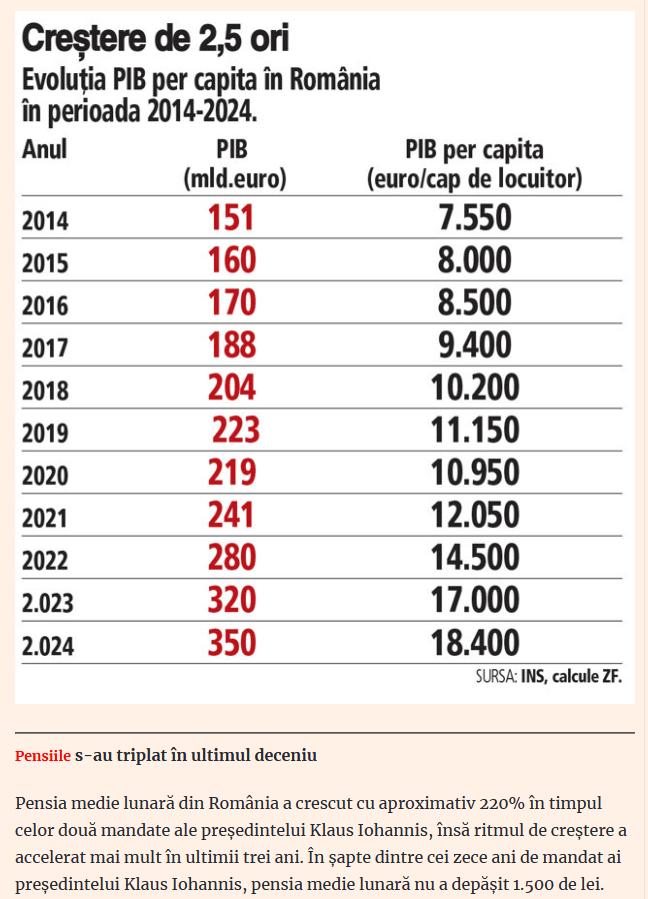
Ziarul Financiar, ce să facă și el, recapitulează ultimul deceniu din punctul său de vedere.
Lăsând la o parte amănuntul Schengen …

O să-mi spuneți că toate astea le-am făcut noi. România. Nu Iohannis!
Și aveți perfectă dreptate…

România a muncit așa cum a muncit.
România a votat așa cum a votat!

Oamenii de afaceri români și-au condus afacerile în așa fel încât au obținut rezultatele înregistrate în ultimul deceniu.
Politicienii votați de noi – de mai multe ori în ultimii 10 ani – au condus treburile publice așa cum au făcut-o.
Comentatorii au explicat poporului, în direct și la ore de maximă audiență, ce, cum și de ce.
Ce, cum și de ce se întâmplă în România. De parcă noi n-am avea ochi să vedem și singuri…

Și pentru că toate astea trebuiau să poarte un nume… cele rele au fost puse în cârca lui Iohannis.
Ficusul care n-a comunicat destul…
Președintele care n-a ascultat sfaturile experților în comunicare publică.

Faptele reci spun totuși altceva.
Atunci când poporul și Iohannis au fost pe aceiași lungime de undă, lucrurile au fost – măcar temporar – readuse la normal.
Ordonanțele alea au fost retrase. Dragnea n-a mai fost prim-ministru. Romania a fost primită în Schengen.
Economia a crescut ca Făt Frumos.

Tot faptele reci mai spun și că percepțiile sunt influențate – mai ales pe terment scurt – de cuvinte.
De multe ori ne lăsăm vrăjiți de cuvintele care ni se par frumoase atunci când le auzim.
După care ne întrebăm ce o fi fost în mințile noastre….

Problema cea mare a cogniției nu e aflarea adevărului.
Digerarea lui, pe de altă parte….

Auzită aseară la televizor
în timp ce dormitam pe canapea

Se plâng unii că IA este folosită în mod abuziv.
IA fiind o clasă de aplicații pe calculator. Care aplicații pot fi folosite, printre altele, pentru generarea de mesaje. Pentru generarea extrem de facilă a unor mesaje care par credibile unor ‘ținte’ alese special. Care mesaje ar putea fi generate și altfel dar la costuri prohibitive.

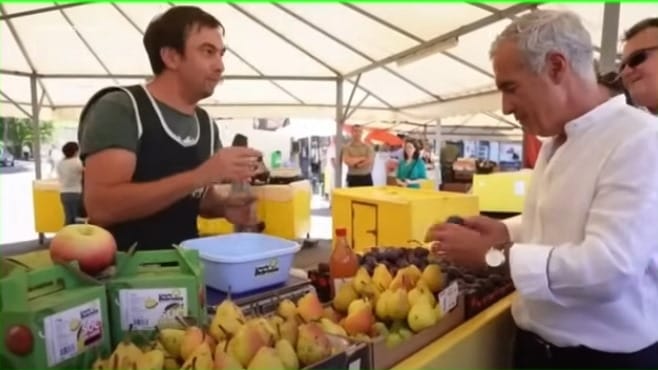
Înainte de a intra în fondul problemei, vă propun să urmărim împreună un clip.
Sau măcar să vă uitați la captura de ecran.

Nu reușesc să-mi dau seama dacă nu cumva și clipul ăsta o fi fost făcut tot de regizorul Inteligență Artificială după un scenariu scris de Marketerul fără Suflet!
Dacă a fost jucat de oameni reali…

Problema pe care o văd eu aici este de natura ‘incrementală’.
Este ușor să cobori, treaptă cu treaptă, dar este mult mai greu să urci la loc!
Dacă acceptăm clipuri din astea ca fiind ‘licențe poetice’ care încearcă în mod legitim să convingă consumatorul să aleagă un anumit produs… de ce ne mai mirăm atunci când ajungem să fim confruntați cu situații de genul:

History never repeats itself.
Only keeps teaching a lesson until we actually understand it.

‘In 1936, Hitler boldly marched 22,000 German troops into the Rhineland, in a direct contravention of the Treaty of Versailles. Hitler offered France and Britain a 25 year non-aggression pact and claimed: “Germany had no territorial demands to make in Europe” ‘.

“In the summer of 1938 Hitler demanded the annexation of the Sudetenland into Germany. At this point Hitler was aware that the Allies were desperate to avoid war, and thought it likely that they would appease his demands.
Hitler threatened war over the issue of the Sudetenland. On 29 – 30 September 1938 the British, Italian, French and German leaders met in Munich to discuss the issue.
The Allies agreed to concede the Sudetenland to Germany in exchange for a pledge of peace. This agreement was known as the Munich Pact.”

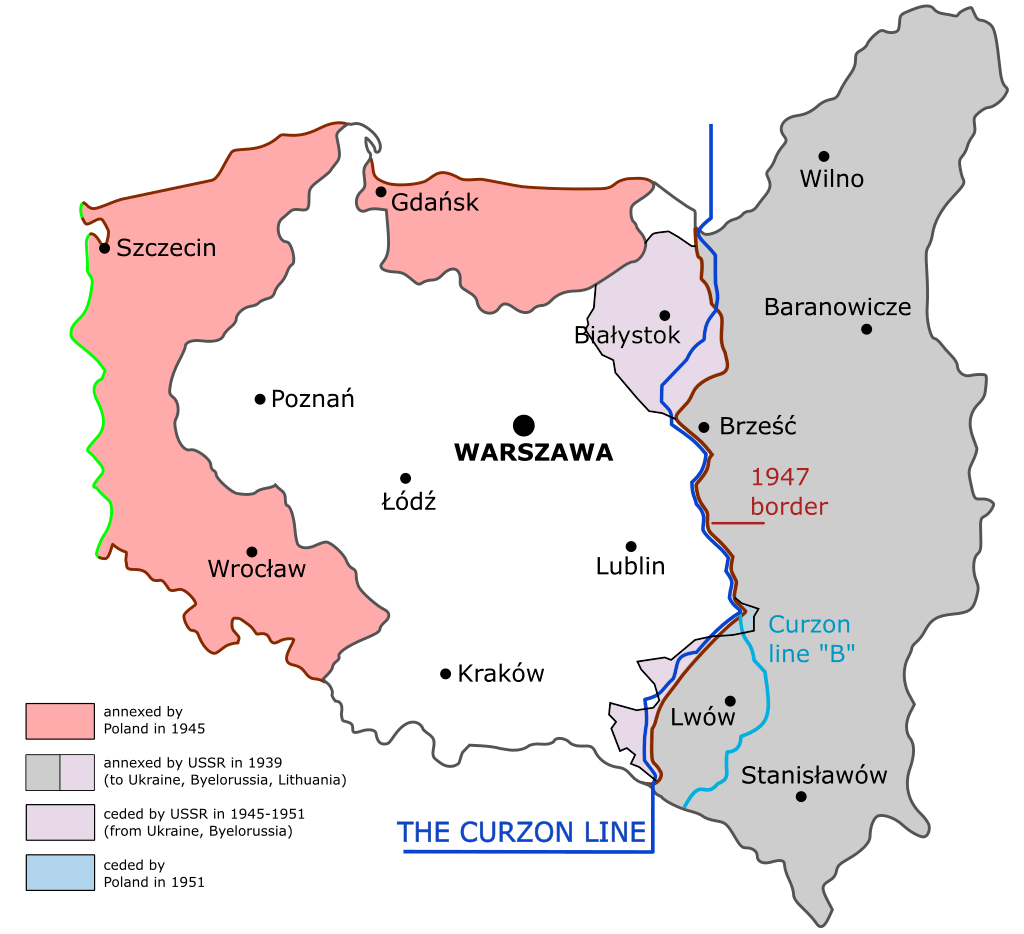
On May 3, 1939, Soviet leader Joseph Stalin fired Foreign Minister Maksim Litvinov, who was Jewish and an advocate of collective security, and replaced him with Vyacheslav Molotov, who soon began negotiations with the Nazi foreign minister, Joachim von Ribbentrop. The Soviets also kept negotiating with Britain and France, but in the end Stalin chose to reach an agreement with Germany. By doing so he hoped to keep the Soviet Union at peace with Germany and to gain time to build up the Soviet military establishment, which had been badly weakened by the purge of the Red Army officer corps in 1937. The Western democracies’ hesitance in opposing Adolf Hitler, along with Stalin’s own inexplicable personal preference for the Nazis, also played a part in Stalin’s final choice. For his part, Hitler wanted a nonaggression pact with the Soviet Union so that his armies could invade Poland virtually unopposed by a major power, after which Germany could deal with the forces of France and Britain in the west without having to simultaneously fight the Soviet Union on a second front in the east.

What is the lesson here?
That each tyrant believes they can outwit all other tyrants.
That tyrants are convinced they can outwit democratic alliances.
That, in the end, all authoritarian regimes fail. Abysmally. For the simple reason that inability to accept their own faillings makes all authoritarian leaders incapable of coping with change. Unable to adapt. Unable to evolve. Hence all authoritarian regimes are inherently fragile.

And who suffers the consequences?
We do. All of us. “World Wide Wars”, remember?

“Insanity is doing the same thing
over and over again
and expecting different results”

Rita Mae Brown

“Knowledge is limited. Imagination encircles the world.”

First celebrated as a brilliant physicist, Einstein had later been recognized as an ‘all rounder’.
So much so that he was found ‘guilty’ for other people’s words.

Rita Mae Brown?!?
Why bother mention her? If you want ‘to back’ up such an important saying, you’d better come up with a really famous ‘promoter’. Preferably a dead one…

‘And your point is…?’

On January 27, the day when Auschwitz was liberated 80 years ago, I shared this on FB:

Some people took exception. Interpreting this as an allusion to what’s currently going on in the US, they asked me to ‘be specific’.

“I don’t protest the protesters but their particular way of doing it. Without any consideration for the ‘collateral damage’ and turning a blind eye towards the already experienced facts.”

My point being that Hitler didn’t invent antisemitism. Germany wasn’t the first country where large scale pogroms were organized.
Pogrom is a Russian word. “To wreak havoc, to demolish violently”.
The way I see it, ‘pogrom’ is not only a tragedy – for both victims and perpetrators – but also a symptom.
A symptom that something is amiss in the society which allows it to happen.

To protest something is fully justified.
If unhappy about something, one is fully entitled to try to prevent that something from happening. Again…
But it would be ‘unreasonably’ to ‘prevent’ it in a way that will be even costlier than the ‘feared development’. Particularly ‘unreasonably’ if the method had already been experimented!

Those supporting Hitler were ‘protesting’ the Versailles Treaty.
Just as Lenin’s Bolsheviks were protesting what had happened during the czarist Russia.
Hitler and Lenin protested by perpetrating crimes even more heinous than those they were protesting.

They should have known better.
Those who supported them, of course… for it was the supporters who had ultimately experienced the consequences!
After all, one doesn’t have to be a rocket scientist to understand that the simple fact that this time it is the others who are at the receiving end of what’s going on doesn’t make it right. In no way better than what we have experienced. And continue to… The misery experienced by the others does not annihilate ours!

American Society Was Built for Populism, Not Elitism
“Technocrats and elites insist that centralized control is best.
Nature and history prove them wrong.”

Karl Zinsmeister, WSJ

Really?

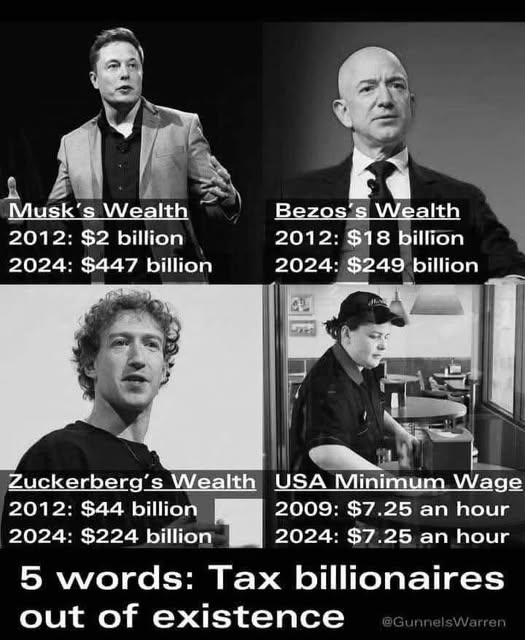
“Tax billionaires out of existence?!?”

And what would be accomplished by doing that?

‘Yet another ‘trickle down theorist’…’

Nope!
Trickle down is an idiocy. It doesn’t work.
Just like ‘taxing billionaires out of existence’. It has been experimented, you know…
It was called communism by those promoting this brilliant idea. So brilliant that it burnt down every society which had tried it.
I lived under communist rule. I know.
There isn’t much difference between all money being controlled by the state/government and too much money being controlled by a handful of billionaires! Meaningful decisions are still being made by a too small number of people…

Yes, taxes are useful.
Besides gathering money to be used, by the government, for the common good.
My point being that taxes are an expression of how a society sees money.

That’s what’s needed. Decision makers who do not put money over everything else!
Any attempt to ‘tax billionaires out of existence’ is already an abuse of power.
Doing it before the society changes its understanding of the matter would be worse than a crime. It would be a horrible mistake.

High marginal taxes accomplish two things. If no loopholes are allowed.
Balance the budget and change the minds of the decision makers. ‘CEO’s’ as well as shareholders.
Convince them to reinvest a bigger share of the profit. Which makes it possible for the company to become more efficient. Which makes it possible for the company to increase wages.
Balancing the budget with money brought in by taxing the high earners makes it possible for the politicians to lower the taxes paid by the Regular Joes. Which would improve their status, their self esteem and their buying power!

Blaming a section of the society for something which needs to be dealt with in concert, by all the members of a society, is counterproductive. To say the least.
It does nothing to solve the real problems and it deepens the already existing rifts.

Blaming the billionaires for what’s going on – for everybody being obsessed with money – is in no way different from blaming the immigrants for most of the people being unsure about tomorrow.

Billionaires, as well as the immigrants, should be ‘exploited’ rather than driven into disappearance.
Each of them are very good at what each of them are doing.
The difference between them consists in the fact that the billionaires set their own wages.

Wages, all wages, are paid by us. By the consumers. Hence it is us who should determine how much each people should get. We, not some of those getting our hard earned money!
How are we going to accomplish that?
Making sure that the market remains free. Functionally free as opposed to controlled by a small number of people. No matter where they come from. The Government, as in communism, or a collection of monopolies. As in oligarchic capitalism.

https://www.justice.gov/atr/antitrust-laws-and-you

Celebratory meme posted by ecstatic Trump 47 supporter a few days after the inauguration.

True enough.

Only living in a world where everybody is scared… isn’t that much fun!

Not even for those who have managed to amass all the money in the market.

As somebody who has lived under both communism and not yet free market capitalism I must stress that there’s little difference between communism and monopolistic capitalism presented under the guise of democracy.
Between a social order where all power – political, economic, social, you name it – is concentrated in the hands of a few self selected people pretending to protect the interests of the people. A social order described by those calling the shots as being a ‘popular democracy'(?!?).
And a social order where all power – …. – is concentrated in the hands of the few people who have amassed all the riches in that particular society. And who, behind manipulated -and no longer liberal – democratic mechanisms pretend to protect the interests of the people.

The problem with both situations being the fact that a few people – no matter how capable and/or well intended, if that is the case – cannot manage, over a sizeable amount of time, such a complex thing as a society. Period.

And the LORD God said,
Behold, the man is become as one of Us,
to know good and evil;
and now, lest he put forth his hand,
and take also of the tree of life,
and eat, and live for ever.

“And the LORD God called unto Adam, and said unto him, Where art thou?

Adam called back and we all what happened next.

The serpent was cursed for his role, Eve was cursed for tempting Adam and Adam was cursed for….
In the end, all those involved – including the serpent, for whatever reason – were banished from the heaven. “Lest he put forth his hand…”

What are we to understand from all this?
That God, the omniscient and all powerful Father, was ‘evil’?
He must have known what was going to happen… he was omniscient, wasn’t he?

There are people who believe the Bible to be an accurate rendering of the past.
I happen to be one of them.
Only I don’t interpret what I read in the literal sense… the narrative is true, those things did happen, only not in the ‘real’ world. The Bible is not the story of flesh but a story of mind.

It is the story of what has happened in our minds. In our collective mind!

Genesis is the story of how we’ve grown conscious!
Starting from the sensations perceived during our interaction with the ‘real’ world – read ‘serpent’ – and using the evolutionary accrued ability to speak among ourselves – we’ve learned to identify ‘information’.
We, like all other living things, were already able to make the difference between good and ‘bad’. All living things ‘know’ what’s good for them and what to avoid. Or, at least, act as if…
We, like all other primates and along many other animals, were already adept at ‘reading minds’. Were already able to figure out intentions.
As conscious ‘human beings’ we have started to attribute intent! “To know good and EVIL”!

So evil is of a conscious nature, right?

‘How about ‘God’? Is it real?’

Sorry, I don’t have a reasonable answer for this question.
All I know is that the God so many of us believe in is nothing but a representation.
A figment of our collective imagination. And since we cannot imagine things but starting from the real world, there is a strong possibility that there is something, somewhere, which fits, however loosely, our concept. Our concept of a God…

Humberto Maturana, The origin and conservation of Self
https://constructivist.info/radical/pub/hvf/papers/maturana05selfconsciousness.html
Frans de Waal, Are we smart enough to know how smart animals are?
https://www.goodreads.com/book/show/30231743-are-we-smart-enough-to-know-how-smart-animals-are

We use words to build narratives.
Which, supposedly, help us in our quest for meaning.
Yet everything does nothing more than alleviate our fear.

At some point in my life, some 6 years after Ceausescu had been chased from his presidential palace, I discovered the Stock Exchange. I had read about it, was under the impression that I knew how it worked but never had the opportunity to trade on in. Living in a communist country prevents you from trading on the free market, you know.
To cut a long story short, I had a lot of beginner’s luck.
And I wanted more. So I started to learn about it. Fundamental analysis, technical analysis, accounting… investor’s psychology, decision making theory…

But it wasn’t enough.
So I went back to school. Sociology this time.
I was no longer trying to beat the market, I only wanted to understand what was going on.
Not only in the market but in our minds. By that time, I had already learned that investors were – and still are – torn apart by greed and fear.

So, what’s going on?
What are we doing here?