
unless fully prepared to deal with all the consequences of getting that something.

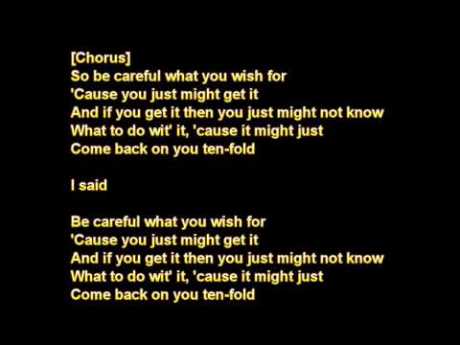
Click here and read all the lyrics. Carefully. Twice!
unless fully prepared to deal with all the consequences of getting that something.
Click here and read all the lyrics. Carefully. Twice!

In calitate de fumator caruia nu-i place sa stea in fum – da, exista si din astia – regula asta mi se pare de bun simt.
Si totusi. Simplul fapt ca mie mi se pare de bun simt nu cred ca are mare valoare… S-ar putea sa fie nevoie de niste argumente mai solide.
Pentru inceput iata unul de ordin istoric.
Prin secolul XIX, atunci cand Europa de Vest incepuse sa se civilizeze – adica sa faca lucrurile dupa reguli si nu dupa bunul plac al fiecaruia – fumatul avea un anume tipic. In primul rand tutunul era destul de scump asa ca oamenii – de obicei barbatii – fumau cate o tigara (de foi) sau cel mult doua. Si nu neaparat in fiecare zi. Dar musai dupa masa de seara si doar dupa ce femeile se retrageau in alta camera. Iar copiii fusesera trimisi de mult la culcare. Si pentru ca mirosul de tutun ars nu era nici atunci considerat a fi foarte placut barbatii respectivi foloseau o anume jacheta doar pentru chestia asta.
Mai apoi acea jacheta a intrat in uzul curent si acum i se spune ‘smoching’, dar asta e alta poveste…
Revenind in contemporaneitate voi sari cu o gratie elefantina peste argumentele de natura medicala – care nu conving pe nimeni pana cand nu este prea tarziu – si voi aduce in discutie o problema draga noua.
Libertatea.
Fiind eu insumi in aceasta situatie mi s-a parut ca omul avea o oarecare dreptate.
Altcineva a introdus in discutie o ‘chestiune de principiu’: “restringem o libertate sau o anulam pentru ca ponderea abuzului derivat din fapta incepe sa produca efecte suparatoare la nivel societal”
In momentul acela mi-am dat seama ca treaba e un pic mai complicata decat pare la prima vedere.
Despre care libertate vorbim aici?
A fumatorilor sa isi strice singuri sanatatea, a fumatorilor sa-i afume pe toti ceilalti, a ‘celorlalti’ sa isi asume riscul de a fi afumati sau a ‘celorlalti’ sa manance intr-o carciuma unde miroase doar a mancare?
Ca sa nu mai vorbim si de libertatea carciumarilor de a organiza sesiuni de sinucidere colectiva pentru clientii lor…atat pentru cei activi cat si pentru cei pasivi.
Hai ca m-am zapacit de cap, tot ratacind printre valatucii astia de fum.

A lot of pundits on both sides of the aisle are bending over backwards trying to explain how come Trump has captured so many ‘hearts and souls’.
Here’s a very poignant explanation from a seemingly independent minded, hence free, commentator who calls himself Tonkerdog1:
“This is a different cat. This is a different phenomenon,” Luntz told reporters after conducting the focus group. “This is real. I’m having trouble processing it. Like, my legs are shaking,” he added.
What we seem to have here is a classic case of people so fed up with what they perceive as happening around them that they fall for the first con man callous enough to grab the opportunity.
I’m not going to bore you with facts about how many times Trump changed his mind and things like that. You can read them by yourself. Just click here. I’m not even going to ask you why didn’t you saw this coming when he said that:
What I am going to ask you is:
What if he’s actually sincere when he says that he doesn’t really care (for anything else but his own ego)?
And why should he?
It seems that his ‘bellowing’ followers do not read much.
“Trump Wrongs the Right”?
So what?
The Internet is choke full with ‘the Media is full of shit’ messages. Why should people start believing what the media publishes now?
When are we going to understand that the Trumps of this world don’t come out of the blue?
Not a single one of them could have become what he is today without enough of us giving him a lot of credit.
Despite the fact that not a single one of them cares a iota about any of us.

And ugly too!
Despite the fact that there is no shortage of obese women in the real world and tonnes of bad jokes about them lurk on the Internet – one of them pictured above – sensible people do not speak much on this subject. Not that the subject isn’t relevant but because normal people refrain themselves from hurting other people.
And the closer those ‘other people’ are to the speaker the more carefully he/she chooses his/hers subjects/wording.
And why is this?
Behaviorists would argue that through the constant push-pull interaction that takes place between the members of a community each of them learn to behave in a manner acceptable to everybody.
‘Insults are not acceptable’ that is.
Evolutionary psychologists would argue that useful information that is presented in an insulting manner has practically no chances to penetrate the ‘ego filter’. Hence effective communicators have learned to ‘dress’ information they really need to convey to their audience in a ‘palatable’ manner.
Take your pick.
Does any of you remember the final ‘battle’ in Spiderman 3?
Not the special effects and not even the reconciliation between Peter and Harry. Or that between Peter and Flint Marko.
Do you remember how the ‘people of New York’ and the media were watching the encounter as if it was a MMA fight?
As if the outcome was of no importance for any of them?
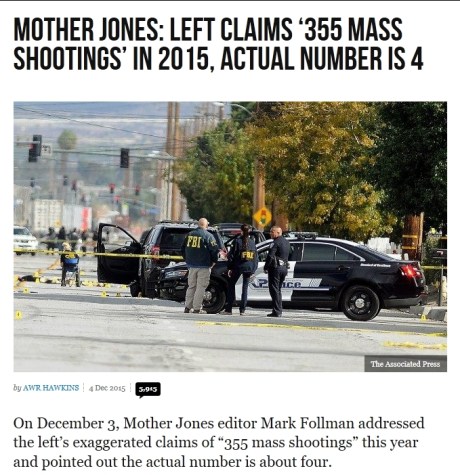
So FBI considers an incident where 4 people get killed to be a ‘mass shooting’ while Shooting Tracker considers a “mass shooting is when four or more people are shot in an event, or related series of events, likely without a cooling off period.”
“Se zice că pe Petre Țuțea l-a întrebat gardianul său, cum e posibil ca un om atât de deștept ca profesorul Țuțea să creadă în Dumnezeu?
Și Petre Țuțea i-a răspuns – “Din orgoliu.”
Și gardianul zice, interzis: “Cum adică, din orgoliu?”
“Sunt atât de mândru, încât nu-mi vine să cred că-s făcut din maimuță!”

Evident ca nu am de unde sa stiu daca Tutea chiar a spus aceste cuvinte si mai ales in ce context a facut asta.
Ca poanta e foarte buna si chiar se potriveste atat cu stilul lui cat si in timpul discutiei cu un gardian dintr-o temnita comunista.
Pe de alta parte faptul ca este atat de des citata spune multe despre cei ce fac acest lucru.
Clive Staple Lewis, citat de CrestinOrtodox.ro, se refera la acest defect al nostru cu apelativul “Pacatul cel Mare”. In limbajul comun el este cunoscut sub numele de ‘trufie’.
De unde provine convingerea noastra, sau a lui Tutea, ca Dumnezeu nu ne-a facut din maimute? Doar din faptul ca cei care au scris Biblia au consemnat doar un rezumat a ceea ce s-o fi intamplat in realitate?
Sau chiar din orgoliu?

“As latest batch of innocent Americans are left in pools of blood” politicians continue to do what we have permitted them to do, for too long.
Some of the conservatives offer prayers, Trump offers to “take out their families”, Hillary Clinton tweets a very well worded but other-ways transparent message (“I refuse to accept this as normal. We must take action to stop gun violence now“) and Martin O’ Malley squares up the ‘anti-gun’ position: “Enough is enough: it’s time to stand up to the @NRA and enact meaningful gun safety laws”.
One of the worst cases of heels being dug in I’ve ever witnessed…

Some of the conservatives cannot get over the ‘if it doesn’t hurt me, it doesn’t need to be addressed’ attitude while some of the democrats cannot get over the Marxist attitude which posits that everything must have a ‘material’ cause – in this case ‘the guns’.
Am I exaggerating?
Then how come the conservatives act swiftly whenever ‘terrorism’ is involved while the democrats conveniently forget that no gun can kill without a man pulling its trigger?
And while too many of the conservatives let God fix the problems they don’t consider important and the ‘democratic’ ideologues focus on the wrong target too many voters from both sides of the aisle “are left lying in pools of blood”.
So yes, “God isn’t fixing this!”.
Anyway, not until ‘we, the people’ start doing something about it.
And the first thing that needs to be done is for us to stop digging in our heels and start talking across the ideological divide.
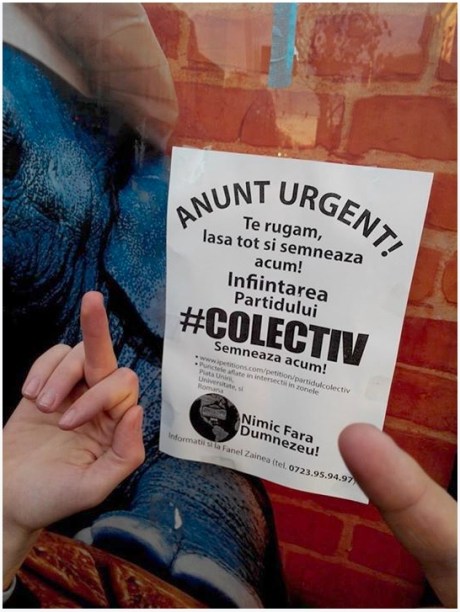
“Daca vedeti asa ceva prin oras,rupeti-le.Nu ii lasati sa profite de pe urma durerii noastre.“
Iar cel al ratiunii civice le permite acestora sa supravietuiasca.
Dupa ce reactia initiala la tragedia din clubul Colectiv s-a mai estompat oamenii au inceput sa actioneze asa-zis rational.
Unii au tratat situatia ca pe o ocazie si au incercat sa profite de ea iar altora a inceput sa li se faca frica ca nu cumva sa fie luati de fraieri.
A profita nu este deloc rusinos, cu conditia sa o faci decent. Adica fara sa inseli pe cineva.
A nu te lasa fraierit este de-a dreptul meritoriu, cu conditia sa nu cazi in aceiasi capcana ca profitorul ‘oneros’.
Mie unuia mi se pare ca numele de ‘Partid Colectiv’ este foarte bun, din punct de vedere al marketingului politic, dar foarte nepotrivit in aceasta situatie. Dupa cum la fel de nepotrivit mi se pare, din punct de vedere democratic, indemnul de a rupe niste afise politice.
Daca nu iti convine ce se intampla intr-un partid politic poti oricand sa te inscrii in el si sa incerci sa-i schimbi orientarea.
Sau sa infiintezi un altul si sa convingi electoratul ca varianta ta este mai buna.
Daca te apuci sa rupi afise nu faci decat sa le dai dreptate celor care sustin ca singura cale de a asigura functionarea societatii este cea ‘autoritara’.

As a teenager I’ve been reading a lot of detective novels. It was then that I learned the phrase that gives the title of this post.
It seems that nowadays people have given up chasing women and started to ‘follow the money’ trek.
Russia says Turkey ‘shot down plane for IS oil’.
The secret bribes of big tobacco.
Coruption in sport: Nebiolo named in ISL bribes scandal.
FIFA: A timeline of corruption.
Volkswagen: The scandal explained.
Cash, visas and talks: key points of EU-Turkey pact on refugees.
Some people might say that corruption has reached an unacceptable level.
Right and wrong. Right in the sense that corruption has indeed reached an unacceptable level and wrong in the sense that NO amount of corruption is ever acceptable, but this is beyond the point of this post.
To some other people the recent developments might suggest that there is no way out of the current situation, where corruption “is no longer a practice but has become a pervasive culture”.
On the contrary. The fact that more and more corruption cases are continuously brought to the surface is not, in any way, a proof that corruption has reached new ‘heights’ but a powerful suggestion that more and more people have become fed up with this phenomenon and no longer disposed to turn a blind eye to what is happening in their presence.

 nicichiarasa