Teoria clasica sustine ca piata cu adevarat libera este singura care reuseste sa ramana in echilibru pe termen nelimitat.

Tot aceasta teorie mai sustine ca orice interventie a statului pune in pericol libertatea pietei si, inevitabil, introduce dezechilibre.

Sa vedem ce se intampla pe o piata reala. A Travatanului, de exemplu.

Pentru cine nu stie, acesta este un medicament – niste picaturi – pentru glaucom. Recent substanta activa, Travoprost, a fost certificata de catre FDA si ca un adjuvant al cresterii parului. Pot certifica ambele proprietati. Glaucomul nu a progresat de cand folosesc aceasta substanta, genele aproape ca mi s-au dublat ca lungime iar barba a inceput sa mi se ridice pe obraz pana aproape sub ochi – partea neagra.
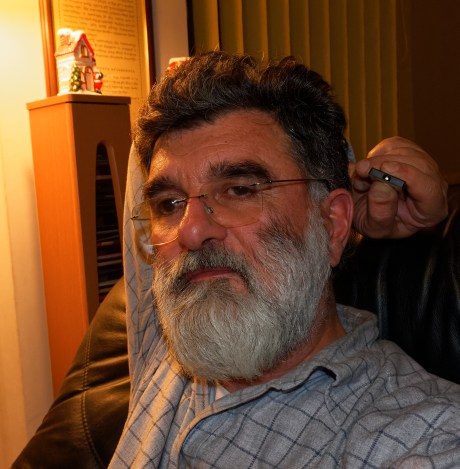
Selfie

In realitate nici o piata, si cu atat mai putin cea a medicamentelor, nu este cu adevarat libera. Influenta statelor se manifesta sub diverse forme.
Medicamentele incep prin a fi protejate de un patent. O chestie foarte normala de altfel. Fara existenta patentelor nimeni nu s-ar mai chinui sa cerceteze si sa dezvolte ceva.

Pe de alta parte, la adapostul patentelor unele dintre firme isi maximizeaza profitul, dincolo de orice ratiune de natura ‘economica’. Pentru ca pot.

Iar patentele sunt ‘aparate’ de catre stat.

Numai ca interventia statului nu se opreste aici.

Chiar si statele cele mai (neo) liberale – cum ar fi America, de exemplu – preiau o parte din costurile asistentei medicale, macar pentru o sectiune din populatie. Pentru cei peste 65 de ani si pentru copii, de exemplu, in SUA. Din postura de cel mai mare cumparator de medicamente statul devine in felul acesta si cel care ‘da tonul’ pe piata, in afara de protector, prin intermediul patentelor si a reglementarilor de acces po piata, a producatorilor deja consacrati.

Sa vedem cum functioneaza chestia asta in Romania.
Aici statul negociaza, pe baza unor legi, cu marii distribuitori de medicamente.
Pe de o parte in calitate de cumparator (Casa de Asigurari suporta medicamentele din spitale precum si compensatia) si pe de alta in calitate de ‘protector al populatiei’.
Iar legea, de fapt o hotarare de guvern, prevede ca pretul medicamentelor vandute in Romania sa fie la nivelul cel mai de jos practicat in cateva dintre tarile din restul Comunitatii Europene.
O hotarare cat se poate de logica. Avand veniturile cele mai mici pe cap de locuitor din Comunitate ar fi imoral sa platim mai mult decat platesc cei mai bogati decat noi.

Plecand, totusi, de la premiza ca producatorul/distribuitorul obtine un oarece profit din toata chestia asta.

Ei bine, din momentul asta lucrurile se complica rau de tot.
S-ar putea ca producatorul/distibuitorul respectiv sa nu scoata profit pe piata luata ca referinta dar sa continue sa o aprovizioneze din motive de marketing. Care s-ar putea sa nu fie valabile si in Romania.
Ar mai fi posibil si ca productia sa fie impartita in doua fabrici, cu costuri diferite. Iar producatorului sa ii convina mai mult sa inchida una dintre ele si sa nu mai aprovizioneze una dintre pietele cu pret minim.

Colac peste pupaza apare si fenomenul ‘exportului paralel’.
La nivelul anului 2015 20% din medicamentele importate in Romania – la preturi ‘negociate’ (in jos) de catre stat au fost reexportate catre alte tari din Comunitatea Europeana
. Presand, tot in jos, preturile de pe acele piete si scazand cu atat mai mult ‘entuziasmul’ marilor producatori/distribuitori de a mai livra unele dintre aceste medicamente pe piata din Romania. O rezolvare de urgenta/temporara a fost blocarea reexportului pentru unele substante dar asta este doar un ‘paleativ’.

Si pentru ca toate astea nu erau suficiente, pe masa Presedintelui Iohannis asteapta sa fie promulgata o lege prin care Parlamentul a permis oricarei farmacii din Romania sa exporta in restul comunitatii medicamente cumparate, la preturi mici, de pe piata interna.

Hai sa facem o ‘recapitulare’.

Principiul ‘Pietei Libere’ este extrem de valabil. Atunci cand poate fi aplicat in mod real acesta da rezultatele scontate.
Dar daca nu poate fi aplicat in integralitatea sa – si in cazul medicamentelor se pare ca ar fi chiar imposibil – atunci hai sa reglementam pana la capat!

Daca ne oprim la jumatatea drumului, si cu un picior in aer, am ajuns intr-o situatie ‘mai rea’ decat la inceput!

Adica am incalcat insusi principiul de baza de la care incepe medicina.

Primum non noccere. In primul rand sa nu strici ‘mai rau’.

Banuiesc ca ati inteles deja ca pe piata romaneasca nu se mai gaseste Travatan.
Am gasit un inlocuitor, Bondulc, numai ca are alti excipienti – adica substantele puse pe langa substanta de baza.
E mai ieftin, intr-adevar, dar de ce sa schimb ceva cu care pana acum mi-a mers bine?
Si nu e vorba despre o crema pentru bataturi…

Si inca ceva.
Cum or putea dormi noaptea cei care fac specula cu medicamente?
Pana la urma nu e acelasi lucru sa vinzi, la preturi babane, parfumuri unor cucoane de lux sau sa te imbogatesti luand medicamentele ieftine din noptiera saracilor pentru a le vinde unora care, de fapt, le-ar putea cumpara si la preturi putin mai mari!
Cat priveste intrebarea ‘de ce ni se pare normal ca medicamentele sa fie considerate, de majoritatea celor implicati, o “marfa” ca toate celelalte?’… ce sa mai vorbim…

PS. Cu cativa ani in urma, atunci cand am aflat ca am glaucom – boala care trebuie tratata pana in ‘ultima clipa’ – m-am intrebat ‘si ce dracu’ o sa fac daca incepe un razboi?’
Uite ca obsesia generalizata pentru bani – la care contribuim, de fapt, cu totii – poate produce ‘neplaceri’ si in absenta unui razboi ‘cald’.


Doi copii, alpinisti experimentati, au urcat pe munte. In Retezat. Acolo unde cel mai inalt varf, Peleaga, are putin peste 2500 de metri.
Fiecare dintre ei urcase deja nu stiu cate virfuri de cel putin doua ori mai inalte.
Erau insotiti de tatii lor, si ei oameni ai muntelui cu ‘vechi state de plata’.
Cu toata experienta lor, intreg grupul a fost surprins de o avalansa. 7 oameni au ajuns in prapastie. Doi dintre ei, cei mai tineri, au fost coborati de pe munte cu picioarele inainte.

Toate acestea au starnit o vie emotie.

Si comentarii acerbe pe net.

“Copiii nu sunt trofee. Şi nici nu trebuie să le obţină ca să le gâdile orgoliul părinţilor.

E drept că nu e doar vina lor că s-a ajuns aici. Este vina noastră, a tuturor, care îi ridicăm în slăvi şi îi glorificăm, fără să ne gândim la riscuri. E adevărat că primii care trebuie să facă asta sunt părinţii. Dar dacă ei sunt prea orbi ca să facă asta, atunci noi măcar n-ar trebui să îi încurajăm. Şi nu e vorba de alpinism. E vorba de orice, de sport, de şcoală, de olimpiade. De presiunea disperată pusă asupra copiilor care trebuie să îşi depăşească părinţii. De competiţia constantă la care îi supunem. Mai întâi noi, comparându-i cu cei din jur. Apoi toţi ceilalţi, care fac exact acelaşi lucru.

Da, e bine să încurajezi copilul să se autodepăşească, să vrea mai mult. Dar tu eşti obligat să îi asiguri integritatea fizică şi psihică.

Iar eu prefer să am un copil mediocru, dar sănătos şi fericit decât unul care doboară recorduri dar moare înainte de vreme.”

Avem de a face aici, suprapuse, cele trei tare ale lumii moderne.

Obsesia pentru maximizarea rezultatului, spiritul de competitie dus dincolo de limita rezonabilui si credinta ca nimic nu poate fi mai presus de concluzia la care am ajuns in urma unui proces de gandire, presupus ‘rational’.

Cel mai tare am fost impresionat de convingerea mamei de mai sus ca preferinta ei pentru un copil viu, fie el si mediocru, are precedenta in fata dorintelor copilului.
Cum o putea fi fericit un copil a carui datorie primordiala este sa ramana, cu orice pret, ‘sanatos’? Bine, extrema cealalta este si ea cel putin la fel de imposibila – un copil, la fel ca toti ceilalti oameni, trebuie sa fie viu pentru a se putea bucura. De orice.

De unde si intrebarea care nu imi da pace de cand am terminat de citit articolul.
Care o fi diferenta intre a impinge un copil pe crestele muntilor si a-l tine legat de fusta mamei?

De unde vine siguranta noastra atunci e vorba despre viitorul copiilor nostri?

Si de unde obsesia asta a noastra pentru ‘recorduri’?
Fata, Dor Geta Popescu, la 13 ani avea deja “8 recorduri mondiale de vârstă, la alpinism de altitudine” iar baiatul, Erik Gulacsi, “a stabilit un nou record european de vârstă când a atins vârful Aconcagua (6.962 metri), la doar 12 ani“. In Ianuarie 2017.

Cristina Bazavan ne indeamna sa nu ne mai miram cand au loc astfel de tragedii daca ne bucuram ‘copios’ atunci cand protagonistii lor stabilesc recordurile. E de-a dreptul schizofrenic sa te miri de rezultate atunci cand incurajezi nefirescul.

Cu asta am ajuns la actiunea in sine.
La doborarea de recorduri ca scop in viata.

Practica, montana dar nu numai, ne-a demonstrat de prea multe ori ca daca vanezi recorduri, ajungi – mai devreme sau mai tarziu, in prapastie.
Singura metoda sa supravietuiesti in domenii de genul asta este sa ‘lasi recordurile sa vina la tine’.
Adica sa faci ce-ti place, pastrand siguranta, a ta si a celorlalti, pe primul plan.
Daca vin, recordurile, bine. Daca nu… macar ai fost acolo – cat mai aproape ‘de varf’, te-ai intors si acum ai ce povesti.
Si nu, nu cred ca a sta acasa, conform principiului ‘sa nu te pui in calea primejdiei’, e o solutie care se potriveste tuturor. Unora li s-ar putea usca sufletul. De Dor.

Totul tine, de fapt, de capacitatea fiecaruia dintre noi de a-si gasi echilibrul. Pe creasta muntelui, intre dorinta de ocrotire a puiului si mandria parinteasca, intre credinta ca le stim pe toate si adevarul ca nu stim, de fapt, mare lucru.

Si, pentru a putea face asta – asa cum frumos spunea Cristina Bazavan, ne-ar ajuta foarte mult “sa ne odihnim putin mintile si sufletele“.


“It is a very difficult decision for all parents because we live in a society that values profit over public health.”

“It’s more like listening to what other mothers were saying…
There was a … huge amount of evidence that it was harmful. Even if there weren’t ways that we could scientifically prove it, it was just talking from one mother to another.”

“Doctors do not do their own research, they are heavily brain-washed when they end school  with this idea that it is all good and then they do not question it much themselves”.

“A beautiful child went to have a vaccine and came back and a week later he had a tremendous fever, got very, very sick and now is autistic”

vaccine sceptic island

Well, the scope of this post goes way beyond the dispute between the vaxxers and the skeptics.

As a matter of fact, at face value all the four quotes I started with are spot on.

Most autistic children living in the so called civilized world have been immunized before having been diagnosed, both the doctors and the anti-vaxxers have been ‘brain-washed’ by their peers into holding to their current beliefs while very few of them have conducted any independent scientific research into the matter and yes, we do seem to live in a society which values profit over public health.

What next?

Ayn RAnd

Ayn Rand in 1957: her novels The Fountainhead and Atlas Shrugged earned her a cult-like following, dubbed the Collective. Photograph: New York Times Co./Getty Images


“But Rand’s philosophy of rugged, uncompromising individualism – of contempt for both the state and the lazy, conformist world of the corporate boardroom — now has a follower in the White House”

So.
The author tells us that Rand despises both (big) government and the ‘corporate boardroom’. He also tells us that the current American President shares the same convictions. I might agree about Trump despising ‘corporate boardrooms’ but I have a definite feeling about Trump having nothing against the notion of ‘big and powerful corporations’ (specially those he controls personally).
“Born Alisa Zinov’yevna Rosenbaum in 1905 in St Petersburg, Russia, she saw her father impoverished and her family driven to the brink of starvation by the Soviet revolution, an experience that forged her contempt for all notions of the collective good and, especially, for the state as a mechanism for ensuring equality.”
It looks like Ayn Rand hated (big) government simply because the Soviet one had failed to deliver what it had promised… And that she had lost confidence in the notion of ‘common good’ for the very same reason…
The problem is that trusting the Soviets, or any other authoritarian regime, is childish to start with…. well then, maybe we shouldn’t wonder about her reaction…
Further more, expecting the government, any of them, to ‘ensure equality’ is even worse! Governments are meant to ‘maintain order’, not to decide the outcome of the game…Regardless of what some of those who climb to power seem to believe!

As for rejecting the very notion of common good, that means rejecting capitalism itself.
“It is not from the benevolence of the butcher, the brewer, or the baker that we expect our dinner, but from their regard to their own self-interest. We address ourselves not to their humanity but to their self-love, and never talk to them of our own necessities, but of their advantages”
If each of those ‘professionals’ didn’t see their personal interest as being conjoint with the ‘common good’ each of them would have tried to double-cross the others. The baker would have tried to use the worst possible flour, the brewer to sell whatever stinking concoction while the butcher would have tried to pass rotten dogs as dry cured beef.

Oh, that’s what’s currently going on in our no longer free market?

Then maybe Rand was a prophet, after all….

“Put more baldly, the reason why Republicans and British Conservatives started giving each other copies of Atlas Shrugged in the 80s was that Rand seemed to grant intellectual heft to the prevailing ethos of the time. Her insistence on the “morality of rational self-interest” and “the virtue of selfishness” sounded like an upmarket version of the slogan, derived from Oliver Stone’s Wall Street, that defined the era: greed is good. Rand was Gordon Gekko with A-levels.”


“Talking about morality in a class about nationalism is sort of like talking about modesty in a swingers club or moderation in a crack house.”

John Faithful Hammer

Absolutely brilliant observation!

I haven’t tried swinging but I imagine that each of the participants does exert a certain form of ‘modestly’, otherwise they would be rapidly kicked out by the rest.
Similarly, no crack addict would survive even his first ‘session’ without being actually ‘moderate’.

As for ‘nationalism’… well, there is nothing wrong when people stick together in an attempt to lead a decent life, in close cooperation with the other nations.
Nationalism becomes dangerous, a.k.a. immoral, only when the people promoting it attempt to lead a (more) than decent life at the expense of all those who happen to live around them. The ‘funny’ part being, of course, the fact that this kind of nationalism invariably leads to tragedy. Mostly for those foolish enough to ‘swallow’ it, but not exclusively.

“The law of unintended consequences, often cited but rarely defined, is that actions of people—and especially of government—always have effects that are unanticipated or unintended. Economists and other social scientists have heeded its power for centuries; for just as long, politicians and popular opinion have largely ignored it.” (Rob Norton, Unintended Consequences, econlib.org)

“All your private online data—the websites you visit, the content of your chats and emails, your health info, and your location—just became suddenly less secure. Not because of hackers, but because Congress just blocked crucial privacy regulations. This will allow your internet service provider to collect all your data and sell that info to the highest bidder without asking you first. Welcome to a brave new world.” (Eric Limer, How to Protect your Online Privacy now that Congress Sold You Out, zerohedge.com)

The rest of Limer’s article, which you can read by clicking on the quote above, is about what each of us might do if he cares enough about the privacy of his browsing data. Instruct your ISP that you do not authorize it to sell your data, change to a more privacy-friendly one – if possible, encrypt your communication, use a VPN, use Tor to browse the Internet or any combination of the above.

Since I already had at least a vague idea about most of those but I had never before even heard of Tor I checked it out first.

“The Tor network is a group of volunteer-operated servers that allows people to improve their privacy and security on the Internet. Tor’s users employ this network by connecting through a series of virtual tunnels rather than making a direct connection, thus allowing both organizations and individuals to share information over public networks without compromising their privacy. Along the same line, Tor is an effective censorship circumvention tool, allowing its users to reach otherwise blocked destinations or content. Tor can also be used as a building block for software developers to create new communication tools with built-in privacy features.

Individuals use Tor to keep websites from tracking them and their family members, or to connect to news sites, instant messaging services, or the like when these are blocked by their local Internet providers. Tor’s hidden services let users publish web sites and other services without needing to reveal the location of the site. Individuals also use Tor for socially sensitive communication: chat rooms and web forums for rape and abuse survivors, or people with illnesses.

Journalists use Tor to communicate more safely with whistleblowers and dissidents. Non-governmental organizations (NGOs) use Tor to allow their workers to connect to their home website while they’re in a foreign country, without notifying everybody nearby that they’re working with that organization.

Groups such as Indymedia recommend Tor for safeguarding their members’ online privacy and security. Activist groups like the Electronic Frontier Foundation (EFF) recommend Tor as a mechanism for maintaining civil liberties online. Corporations use Tor as a safe way to conduct competitive analysis, and to protect sensitive procurement patterns from eavesdroppers. They also use it to replace traditional VPNs, which reveal the exact amount and timing of communication. Which locations have employees working late? Which locations have employees consulting job-hunting websites? Which research divisions are communicating with the company’s patent lawyers?

A branch of the U.S. Navy uses Tor for open source intelligence gathering, and one of its teams used Tor while deployed in the Middle East recently. Law enforcement uses Tor for visiting or surveilling web sites without leaving government IP addresses in their web logs, and for security during sting operations.

The variety of people who use Tor is actually part of what makes it so secure. Tor hides you among the other users on the network, so the more populous and diverse the user base for Tor is, the more your anonymity will be protected.” (Overview, Torproject.org)

Living the first 30 years of my life under communist rule taught me a lot of interesting things. Which seemed specific to that kind of society but which, paradoxically – only in an ostensible manner, are increasingly helpful when I struggle to understand what’s currently going on in the ‘free world’.
Among those things was the fact that ‘blanket surveillance’ doesn’t work. The communists were reputed for shamelessly listening in to our phones but we had learned very fast to talk in a coded manner, to refrain from speaking about certain subjects over a wire AND that they could never hire enough people to listen to everything that was said over the phone.
And this is why most dissidents were ‘smoked’ out almost exclusively by snitches – paid ‘traitors’ employed by Securitate to spy on us and presented by the communists as being ‘concerned citizens’.

Less than thirty years after the fall of most communist regimes we have an almost similar situation. ‘In the mirror’ kind of similar.

The Internet is the medium through which a lot of information is being circulated, some of it of very sensitive nature. Sensitive as in ‘personal’ but also as in potentially very disruptive. For corporations, for political organizations, for states but also for terrorist organizations.

Up to a few weeks ago the Internet was divided in two, very unequal, sections.
A mostly open one, where most of us – who do not have much to hide – used to dwell and one which was a lot more ‘walled in’. (A.K.A. heavily encrypted and tortuously rerouted)
The mostly open section was the hunting ground for the ‘advertisers’ while the ‘encrypted’ one was the playing ground where the ‘dissidents’ (of all ‘persuasions’) played cat and mouse with the ‘law enforcers’ (again, of all ‘persuasions’).

For the ‘free world’ this was a workable arrangement. The advertisers could do their job – as long as they stayed inside the rules, the individuals had their most sensitive data protected, the bona-fide dissidents had a reasonably safe opportunity to express themselves and the bona-fide law enforcers had a reasonably small traffic to sift through when searching for terrorists and all other sorts of law breakers.
For the authoritarian regimes it was not – the very advent of Internet was an abomination for them, but I couldn’t care less. Especially since most of the really proficient people sooner or later realize that authoritarianism simply doesn’t work and eventually ‘change colors’.

I’m afraid the recent changes enforced by the US Congress will unsettle this fragile equilibrium.

As more and more technologically savvy people will start using more and more the ‘walled in’ section of the Interned – not because they have anything really important to hide but to spite the more and more intrusive ‘data thieves’, the bona-fide law enforcers will have more and more difficulties in smoking out the really bad law-breakers. Including the terrorists.

The authoritarian regimes tend to solve these kind of problems by shutting down, or by ‘maiming’, entire systems.
If we, in the free world, will have to resort, even temporarily, to the same solution it will be – including for the advertisers – yet another instance of the golden goose being massacred by the excessively greedy.

“The only one you can really trust to protect you is you.

The short and uncomfortable truth is this: Until more robust privacy protections are put in place, the burden of protecting your online data falls on you. Keep it in mind, do your research, and remember that your monopolized ISP has every reason in the world to sell you out and wring your data for every dime that it is worth. The only one you can really trust to protect you is you.”

trump-epa-er-170328_31x13_1600

“”The president’s been very clear, he’s not going to pursue climate or environmental policies that put the American economy at risk,” said a senior Trump administration official Monday evening. Asked whether climate change poses its own long-term threat to the economy, the official said he was not familiar with research drawing such a conclusion.” (President Trump signs executive order rescinding Obama’s clean energy plans. abcNEWS, March 28, 2017)

“Republican Rep. Kevin Yoder of Kansas parted ways with his Republican colleagues on the issue. He said the privacy protections were “commonsense measures” that would have ensured internet users continue to have control over their personal information.

“We don’t want the government having access to our information without our consent, and the same goes for private business,” Yoder said”.

“The American Civil Liberties Union urged Trump to veto the resolution, appealing to his populist side.

“President Trump now has the opportunity to veto this resolution and show he is not just a president for CEOs but for all Americans,” said the ACLU’s Neema Singh Guliani.”

“”Lawmakers who voted in favor of this bill just sold out the American people to special interests,” said Rep. Jared Polis, D-Colo.” (House votes to block Obama-era online privacy rule, abcNEWS, March 28, 2017.)

“Supporters of the proposed constitutional changes say handing Erdogan sweeping new authority is the only way to achieve the stability that society craves and businesses need to thrive. But opponents say approving the referendum is an invitation to dictatorship, particularly since Erdogan, already the most dominant leader in eight decades, jailed or fired more than 100,000 perceived enemies after rogue army officers attempted a coup in July.

“Everybody on the street tracks the exchange rate on a daily basis and Erdogan wins support as long as Turkey can keep the lira stable,” said Wolfango Piccoli, the London-based co-president of Teneo Intelligence, a political risk advisory firm. “But the challenge here is the external backdrop. They can’t really predict what’s coming.” “ (Erdogan Races against the Dollar in Campaign for Unrivaled Power, Bloomberg.com, March 28, 2017.)

“So we now know that Khalid Masood, the 52-year-old Briton who carried out the Westminster attack in London, had a string of criminal convictions. His first was in 1983 for criminal damage and his last was in 2003 for a stabbing. He was also a convert to Islam. Neither fact should come as a surprise.

Attackers apparently inspired by Islamic extremist ideologies are, for all their righteous rage at others, rarely particularly puritanical in their personal lives. A man who earlier this month seized an automatic weapon from a police officer at Orly airport in Paris had traces of cocaine in his blood and a long criminal record, while the attacker who killed 86 in Nice last July had a history of heavy drinking, cannabis use and casual sex. Several key members of the network which killed 140 in Paris in November 2015 had been involved in drug and arms sales. Almost every high profile attack in Europe – and many in the UK – in recent years has involved someone convicted for petty or serious crime.

There has long been a link between criminality and Islamic radicalism. One of the men who killed the off-duty soldier Lee Rigby in 2013 in south-east London had served time as a young offender for his role in a crack ring. Richard Reid, who tried to detonate a bomb in his shoe on a transatlantic flight in 2001, was a juvenile delinquent.

The proportion of Islamic militants with criminal backgrounds has been rising over recent years. One reason is that Islamic State in Iraq and Syria (Isis), which established its new caliphate in 2014, offers adventure, camaraderie, violence, excitement, relative comfort, cash rewards and even sexual opportunity in a way which contrasts dramatically with the asceticism of previous militant groups like al-Qaeda.

A young man from Dortmund or Lyon or Sheffield could thus expect much that a gang back home offered but repackaged. Violence was no longer wrongdoing but resistance, and even redemption. The extremist’s selective teaching of religious texts encouraged former criminals to see themselves as washed of former sins by their commitment to jihad.

The one surprising fact about the London attacker is that most recruits were between 23 and 28 years old. Some were teenagers. There is no evidence that Masood, so much older, has been involved in criminal activity in recent years. Indeed, reports of his unstable, punchy, pub-going persona a decade or so ago are in stark contrast with neighbours’ description of his “devout” and “quiet” lifestyle recently.”  (Khalid Masood was a convert with a criminal past. So far, so familiar. The Guardian, March 25, 2017.)

“According to general data, the suicide wave began in 2015 in Russia, where local media reported about secret communities for teens that invited them to participate in a dangerous game. In each case, the players must complete 50 tasks, beginning with cutting a vein and using a blade to draw an image of a blue whale on their hand. Suicide is the last mandatory task and if not completed, the game creators threaten to “deal” with the player’s family.

One social media user shared the results after he courageously took part in a game.

“I became curious about how this works and why people commit suicide after 50 days. My friend and me created two fake accounts on VKontakte and were both reached by a person for each one of us. Different people were giving tasks every day. The first one was to ‘scribble’ a blue whale on our hand,” which the user said they did with the help of Photoshop, reported Tengrinews.kz.

“We had to choose either ‘to hang ourselves’ or ‘to jump’ on the 50th day. Death is the end of the game. I then replied that I was scared and received a link. The ‘404 not found’ message appeared after I followed the link. After 10 minutes he wrote ‘If you don’t end your life, I will kill your loved ones’ to me, wrote my address and apartment number and I realised how they do it,” he continued in his message.

He called upon others to spread the post in the hope of preventing possible tragedies. He is confident while many might have refused the final offer, the gamers know where the child lives once the link has been followed.” (Suicide games raising concerns in Kazahstan, The Astana Times, February 15. 2017.)

“Police today warned Devon parents to be on their guard against a sick social media challenge which encourages youngsters to cut themselves. At its most extreme, the so-called ‘Blue Whale’ challenge encourages teenage suicide.” (Devon police issue warning over new ‘suicide challenge’ being spread on social media. Devon live.com, March 13, 2017)

What we have here is piled up evidence that we, as a species, have been focusing too much, for already too long,  on short term goals. While setting aside, or simply ignoring, any possible consequences of our ‘binging’ habits.

We elect our leaders based on their promises that they will ‘fix’ everything. As if any of them ever did. Go back to the history book and show me a single authoritarian leader who didn’t disappoint his followers. And yet we still ‘invite’ them to lead us.

Furthermore, we allow them to convince us that our present actions cannot possibly harm us, or our children, in the future.
Madagascar, one of the poorest nations on Earth, is taking steps to ‘clean up their act’ (“eliminate defecation in the open air; a practice still rooted in the culture and in the Malagasy society“) while the President of the US believes that “The concept of global warming was created by and for the Chinese in order to make U.S. manufacturing non-competitive.” And acts according to his convictions.
Why?
Simple. People living in Madagascar have finally figured out, like many other people before them, that careful management of ‘human waste’ drastically reduces the incidence of diarrhea – which mainly affects the children.
What must happen for the American public to understand that we cannot burn, in two short centuries, the carbon accumulated in hundreds of millions of years without having to face any consequences?

During most of our history, most people have been mainly preoccupied with the welfare of their children. For a very reasonable motive. Having children at your bedside is the most efficient manner to ‘enjoy’ a decent death.

No more. Nowadays we buy life insurance to supplement our pensions and plan to hire ‘outside help’ to wipe our arses,  if and when the ‘time will come’.
And in order to get ‘enough’ money we, or at least some of us. are willing to transform even personal data into ‘merchandise’.

This very obsession with money is the reason for which we care more about the promised stability of the exchange rate than about the character, and past actions, of the person who makes the promise.

This is why we no longer keep in touch with our children. Not even with the under-aged ones who continue to live with us.
This is why some of them become ensnared in ‘challenges’ which ‘inspire’ them to commit suicide.
This is why some of them fall prey to fundamentalist preachers. Islamic, White Supremacist, you name it. Yet another ‘reason’ to commit suicide…

Now, after too many wretched souls have become ‘radicalized’ – some of them even without any outside intervention, and after so much innocent pain has been inflicted, time has come to ask ourselves ‘why is this “blue whale” lurking around in the room?’.
And ‘why haven’t we noticed it before?’.

blue whale

Now is the winter of our discontent, made glorious summer by this sun of York was coined by Shakespeare and put into print in Richard III, 1594. The ‘sun of York’ wasn’t of course a comment on Yorkshire weather but on King Richard. In this play Shakespeare presents an account of Richard’s character that, until the late 20th century, largely formed the popular opinion of him as a malevolent, deformed schemer. Historians now view that representation as a dramatic plot device – necessary for the villainous role that Shakespeare had allocated him. It isn’t consistent with what is now known of Richard III, who in many ways showed himself to be an enlightened and forward-looking monarch. The discovery of Richard’s skeleton under a car park in Leicester has provided precise evidence of the extent of his deformity. While being somewhat curved Richard’s spinal deformity has now been shown to have been exaggerated and deliberately faked in some portraits.

Living matter is a ‘particular case’ of  ‘ordinary matter’. It’s composed of the very same kind of atoms and its ‘living character’ is provided by the particular manner in which those atoms relate to each other. Otherwise said, the living matter is ordinary matter organized in a particular manner.
Furthermore, this ‘particular’ manner of organization’ has been honed through eons of ‘evolution‘.

Living matter depends on being able to perform two things.
It has to ‘Differentiate’ and to ‘Communicate’.

Each organism, no matter how simple or how complex, has to be able to keep its ‘inside’ separate from its ‘outside’ and to be able to ‘decide’, according to its own rules/needs, what goes in and what goes out.
A previously living individual organism dies the very moment when it can no longer fulfill any of these two conditions.

All organisms which live by exactly the same ‘rules’ belong to the same species and need to be able to communicate those rules across successive generations. As soon as the organisms belonging to one species  fail to do so that species becomes extinct.
A special observation must be made about the fact that the species whose organisms have found ways to communicate directly among the members of the same generation tend to be ‘sturdier’ that those whose members communicate exclusively with their successors.
For instance bacteria which have ‘learned’ to transmit to their ‘kin’ information about how to survive when ‘intoxicated’ with antibiotics have it easier that those who cannot do such a thing.

Human being are a ‘special case’ in the animal kingdom, just as ‘living matter’ is a special case of ‘ordinary matter’.
We are both animals and something else than that.

We’ve taken differentiation and communication to the next level. We perform them ‘on purpose’.
We have become ‘aware’ of what we are capable of.
We knowingly use our power to differentiate and choose (some of) the criteria we use when differentiating.
We knowingly use our power to differentiate and choose what to communicate of what we know.

And we consider this behaviour as being ‘rational’.

Some of us are so aware of what is going on that are constantly warning us about the limited nature of our rationality.
They say that our rationality is in fact ‘bounded‘ and that we should give up pretending that we are maximizing/optimizing anything since, in reality, all that we do is adopt/defend the first solution that seems good enough for our self-imposed goals/criteria.

Yet so few of us yield to this kind of warnings and continue to purposefully use ‘communication tricks’ in order to establish their version of the reality. Just as the Bard had done in his days.

Let me go back to what humans are in relation to the rest of the animal kingdom and extend the analogy with the difference between living matter and ordinary matter.
I’ve already mentioned that species whose members are ‘more generous’ communicators are better survivors than those whose members communicate less.
Now please imagine what would happen if a few bacteria, otherwise able to ‘share’ their ‘knowledge’ with their brethren, learn how to ‘crack’ a certain antibiotic but choose to keep that to themselves.

The ‘optimists’ among us would say that those bacteria will eventually give birth to a new species of ‘super-bugs’
The pessimists would observe that their small number dramatically increases their chances of being ‘cooked’ to death in an autoclave or ‘dissolved’ by the next swab with bactericide before having any chance at multiplying themselves into eternity.
Meanwhile the cynics/realists among us would start studying how to convince more bacteria to stop contributing to the shared pool of information about how to beat their common enemy, the antibiotic. And, probably, the best way to do it would be to inform the other bacteria that some of them are holding up information. If the bacteria would behave like so many of us currently do all of them would stop all information sharing. To our delight, of course.

Let’s take a step closer to the end of this post and try to evaluate what would happen if those few bacteria would choose to share false information about how to deal with antibiotics. Purposefully, in their attempt at becoming ‘dominant’.

A very ‘rational’ attempt, according to some of us…

‘Alternate reality’, anyone?

I keep hearing about capitalism having failed us.

I’m afraid this is not possible.

Capitalism cannot fail, simply because it is nothing but a human concept.

It is us who are failing.
It was us who had identified the concept, used it properly for a while and then replaced it, tacitly, with another.

‘Capitalism’ worked wonders, as long as we applied it ‘as advertised’, while ‘monetarism’ – the surrogate we allowed to creep in where capitalism used to stand proudly, has started to unveil its ugly face.

You see, capitalism used to be about ‘faith’. We trusted that ‘the other’ would honestly attempt to meet his end of the bargain. That trust convinced us to close, and take to fruition, business deals which were designed (a.k.a. negotiated) to meet our respective needs. We were doing that simply because we had understood that a good deal today – good for both of us, that was, would mean at least another good deal tomorrow.

For some reason – bad money drives out good, capitalism is being replaced, slowly but too fast, by ‘monetarism’.

Too many of us start ‘businesses’ with the sole goal of ripping their ‘business partners’, a.k.a. clients,  of as much money as they possibly can. Legally or otherwise.

Without understanding – or caring, even, that they are actually slaughtering the goose with the golden eggs. Capitalism itself.

epipen

No matter what opinion each of us entertains about ‘alternate reality’, fact is that none of us is able to grasp all relevant aspects of even the most basic concepts.

Growing under a communist regime I had learned, very quickly, to keep my mouth shut.

Like all authoritarian regimes, communism eventually crumbled.
Mostly under the pressure that had been built from within and which could not be accurately measured, simply because people were conditioned to keep their mouths shut.

Nowadays technology makes it possible for some of us to ‘look’ ‘beyond’ what most understand by ‘freedom of expression’.

… anxiety and action shouldn’t be based only on what could happen in theory as much as what’s likely to happen in practice — and how much it will affect you.

Some people are afraid of sharks. While the prospect of being eaten by a giant fish is vivid and terrifying, it’s also unlikely, old chum. In fact, the drive to the beach is far more dangerous than the swim once you get there.

Likewise, avoid getting hacked. But more important, start taking action on the bigger risk: The stuff publicly posted on social sites.

Alternate meaning of ‘freedom of expression’?

‘You are free to express yourself and I am free to use whatever information you have chosen to share’!

Actually it makes a lot of sense.

Let’s imagine, for instance, that my son comes home and tells us he is going to marry someone.
Twenty short years ago my wife would have phoned her best friend and told her about it. In two days the news would had traveled around and feed back would had poured in, specially if we were living in a small community. We would had been informed about all past indiscretions attributed to our son’s intended spouse, as long as any had ever surfaced.
Nowadays, being technological savvy, my wife would google the name first, even before phoning her best friend – if she wasn’t already privy of ‘enough’ indiscretions, of course.

Would it make any sense to blame the public authorities who do the same thing? Or the private agents who, in their attempt to fulfill their jobs, use whatever information is publicly available about each of us?
My question should have a special meaning for those of you who live in democratic countries – where the public authorities execute whatever mandate you have entrusted them with, and under an economic regime governed by the (more or less) free market – meaning that all ‘private’ agents need at least some support from their stakeholders (yes, that’s you!) in order to remain economically viable.

I’ll come back to this subject.

Meanwhile you can learn more about it by reading the article that spurred my rantings:

“Anything you post can and will be used against you”

Just click on the title.