Archives for category: man as a measure for all things

Maybe it’s to early… I’ll take my chances though.

Germany has weathered this crises a lot better than most of her neighbors.

There are no toll- booths on the German highways. Not that I know of, anyway.

And what has this to do with anything?!?

Well, does your heart bill you for its services?
Your lungs? Your gut? Brain?
The immune system?
Even if each of them works at a cost… for the whole organism!

The health care system is the social equivalent of the immune system.

We, each cultural community around the world, might treat it as an industry. Fine tuned to maximize profit.
Or as a social service. Meant to protect the society from the consequence of disease. And run as efficiently as possible, of course. But sized to be able to cope with reasonably estimated ‘loads’.

There is a fine balance to be held here, of course. A multi-dimensional equilibrium, actually.

It depends on us, as individual members of the brain, to fine tune that equilibrium.

Or else…

All outcome depends on inputs.
When humans are involved, ‘intent’ can be found among inputs.

What do we want, in the present situation?

Basically, to survive! Right?

For as long as possible… as individuals…

The fact that the sum of our individual survivals results in the survival of our species/cultures is a truism. And, maybe, not so important for some of those struggling to survive as individuals.

The point I’m trying to make here being that how we attempt to survive will decisively influence the general outcome.

We might try to survive against the others.
Or we might try to survive with the others. In close – even if ‘distant’, cooperation with the other members of our community/culture/species.

And while surviving we might try to amass whatever we want. Of whatever we’ve always wanted. Doesn’t matter what ‘that’ is. Money, power, prestige… you name it.

Or we might learn something. We might turn Maslow’s Pyramid on its head.
We might use this crises as an opportunity to understand that we’re stronger together.
That cooperation among autonomous individuals generates a lot more chances of survival than attempting to pass through as individuals.
As a lonely individual or as an individual hiding in the middle of a crowd, doesn’t matter.

And we should bear in mind that surviving the crises will be only the first step.
How we do it will shape the stepping stone for how we’ll rebuild our livelihoods.

Any attempt to learn something, to increase your knowledge about a certain subject, is nothing more and nothing less than an attempt to become intimate with it.

Students have two open roads ahead of them.

One which implies a lot of wooing, patience and a certain degree of self appeasement.
The other asks for a direct, almost blunt, approach.
While the first is more like the student dancing around the subject, the second is akin to a hands on combat.

The results are, obviously, different.
Not exactly different. Only fundamentally.

The difference is very much like the difference between courtship and rape.
The end result might be a child. But…

Same thing with art and science.

It is true that in order to have sex, both partners need to be, at least somewhat, naked.
But there is all the difference in the world between having sex and making love!

The end result is only apparently the same!

Where S stands for Sociological.

So. Let me present you with a sociologically fictitious scenario.

We have an intelligent observer and and a trans-galactic vehicle.

There are no details available about the observer except for the fact that it has access to a comprehensive real time stream of data about what is going on inside – or, more exactly, on the surface, of the trans-galactic vehicle.

And here’s what the observer had recorded.

The vehicle is being continuously transformed by its passengers.
In fact, there are two manners in which the passengers change their vehicle.
By interacting directly with it.
And as unintended consequences of the interactions which take place between the passengers themselves.

The passengers are evolving.
During the observation period, some of them had become dominant.
But no matter whether they had become dominant or not, most of the passengers had disappeared. Both as individuals and as species.

The current dominant species is the most intriguing ever.

It displays a strange mix of intelligent behaviors and suicidal tendencies.

It is composed of rather autonomous individuals who are adept at finding ingenious solutions to almost intractable problems.
But, strangely enough, they haven’t yet been able to figure out two basic things:
The limited nature of the vehicle on which they live. In both time and space.
Nor how to balance their individual functional autonomy with their need to cooperate towards their natural goal. The survival of their own species.

If the whole ‘project’ were a SF movie, the text above would have been the opening.
Followed by:

Currently, the dominant passengers are being taught a lesson by the apparently most insignificant amongst those transported by the vehicle. By a virus, as the dominants refer to it.
The virus – like all of its kind, is able to hijack other organisms and somehow convince them to work for him. At a very high cost for the hijacked organisms.
In this case, the hijacked organisms belong to the dominant species.

And what have the individuals belonging to the dominant species chosen to do?
Inform each-other promptly and cooperate earnestly towards the common goal?

Not exactly. Not yet, anyway.

Homework:
What would the intelligent outside observer think about the whole situation?
Would He consider to lend a helping hand?

https://i.imgflip.com/3ua749.jpg

Well, we must remember that solutions came a lot easier when we refuse to think inside a box. Inside any box. No matter how large or how nice.

Every time I understand/notice that somebody tries to frame my thinking process, I go ‘ballistic’.

I try to raise my mind perpendicularly above the frame. So that I may observe the limits.

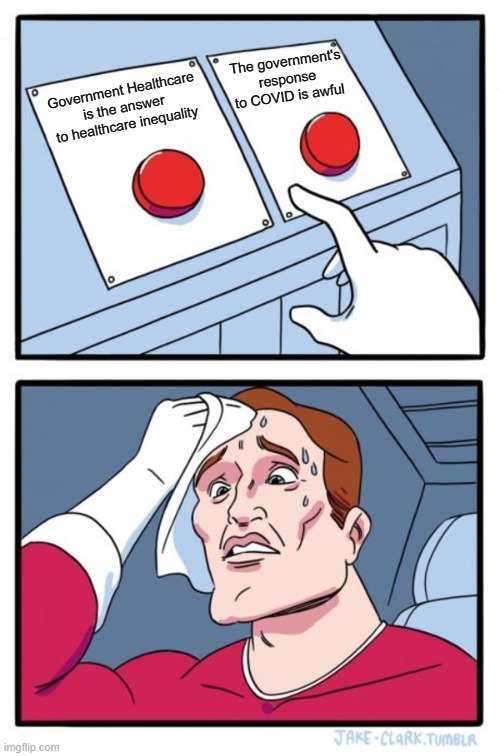
Every time when somebody is presented with an ‘either/or’ option there is a strong likelihood that the situation merits a more nuanced approach.
As in ‘yes, the government was terrible at handling COVID-19’ and ‘yes, the government – as our servant, should be mandated by us, the people, to coordinate the help we need in our hour of need’.

How can we reconcile these two?
Simple.
Hire a better government and keep a keen eye on it!

And, if I’m not mistaken, wasn’t democracy meant to do exactly this?

Some people are convinced that nothing really changes.
That progress is an empty word.

Others are convinced that progress is everything.

And each category has its ‘extremists’:

Some people are convinced that nothing should be allowed to change.
Others are convinced that all change must be imposed, or at least approved, by them.

And the tug of war between these two categories actually hamper whatever progress happens naturally.

Mind you, both categories shoot themselves in the foot.
Each of them shoots only the ‘specific’ foot but the result is equally crippling… Both end up being iron shackles for the rest of us.

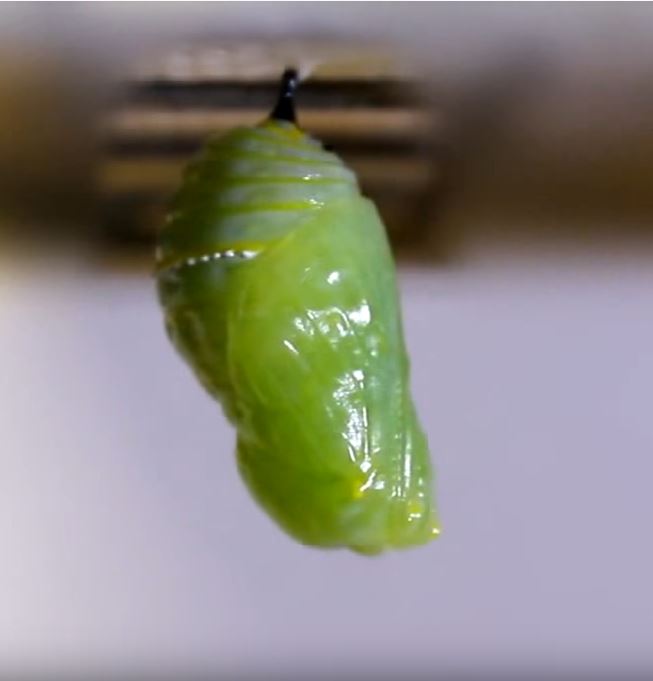
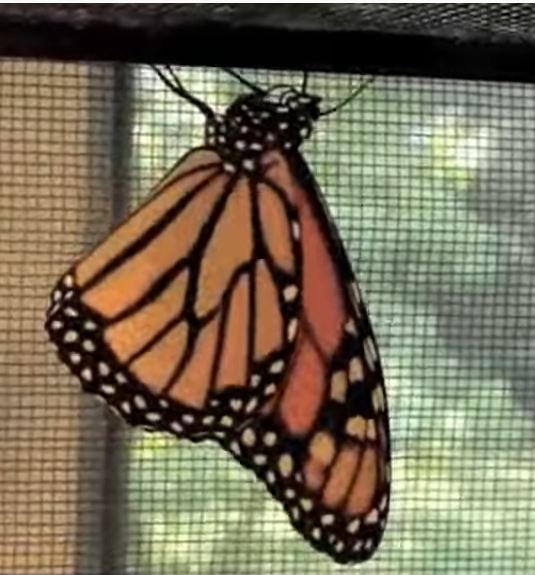
A transformation so drastic that somebody needs to have been at both ends of the process in order to accept that what came out was the same thing as what went in.

The Universe has already went through Metamorphosis 0.1 and 1.0.
The ‘Big Bang’ and the apparition of life.

We’re witnessing Metamorphosis 2.0.
Awareness’ coming of age.

Individuals becoming aware not only of their own awareness but also of their place in the order of things.
Communities becoming aware that each of their individuals are paramount. That ‘no one left behind’ is the only thing that keeps the community together.
Individuals understanding that each of them is equally important yet none of them indispensable.

Individuals and communities alike opening their minds to the fact that none of them might exist without the other.

Smarter people than me are already prepping for the aftermath.
For the opportunities which will have ripened by then.

Which, let’s face it, is a wise thing to do. Most of us would have done it. Prepping for what we fear. And for what we covet.

Also wise would be for us to remember that everything we experience today – the good and the bad of it, together, is the consequence of how we have chosen to use the opportunities opened up by the previous crisis.

And by that before it …

We’re in the middle of a crises.
Some people believe the crises has been only triggered by the virus. And that it has been mainly caused by ‘globalization’.

I beg to differ. In part.

The crises was indeed triggered by the virus.
But the fact that we are so fragile isn’t the consequence of globalization.
Only by what we have done in the given circumstances.

It wasn’t globalization itself which had made us fragile.
Globalization only extended the opportunity field we had at our disposal.
It was our way of developing those opportunities which had made us fragile.
We had chosen ‘financial efficiency’ over ‘resilience’.
We had chosen to increase profit instead of making it ‘more and more sure’ that we’ll be able to survive.
In a sense, we have been acting as if we’d lost touch with reality.
With the hard reality….

There is nothing to suggest that we knew what we were doing. Then.
But we won’t have any excuses left once that we will have reached the other side.

The only real difference between us and the rest of the living world is our ability to make informed decisions.

Since this is a rather vast subject, I shall divide it into chapters.

  1. From feeling to sentiment.

Something prompts us into action. Always. No matter whether we are aware of it or not, there is an underlying cause for each of our actions.
And when we speak about actions which imply our awareness, those causes penetrate our conscience as feelings.

We, more or less automatically, pull back our hands when they touch a hot stove. That is a reaction. Caused by a feeling.

Most of us – the able bodied, of course, would consider going into fire to save a loved one. Or a stranger. Even if pursuing that line of action might get us burned.
‘Going into fire’ – compared to ‘pulling back our hands’, implies making a decision. Which action – ‘making a decision’, is caused by a sentiment.

Sentiment being a feeling which has penetrated not only our conscience but our self-awareness as well.
We not only feel a sentiment, we relate to it. We’re not only aware of it, we elaborate on it.

Hence the difference between a reaction and a decision.
For as long as we allow ourselves to be driven by feelings, we only react to what’s going on around us.
If, and only when, we successfully transform feelings into sentiments we are able to actually decide. To control, to a degree, what’s happening in/to our lives.

To add some meaning to our, otherwise ‘mere’, existence.