Archives for category: altruism

sf_filofteia_w180

Nascuta la inceputul veacului al XIII in Tarnovo – capitala imperiului romano-bulgar condus de fratii Petru si Asan.

Mama sa, despre care se crede ca ar fi fost de origine romana, moare pe vremea cand viitoarea sfanta era copila, dar nu inainte de a o invata pe fiica ei “dragostea de Dumnezeu si de aproa­pele, faptele de milostenie, rugaciunile si postul si alte virtuti care trebuie sa impodobeasca sufletul unui adevarat crestin

Dupa moartea mamei sale, Filofteia continua sa locuiasca in casa tatalui sau – care s-a recasatorit relativ repede – si sa se comporte asa cum a invatat de la mama sa: “traind mai mult pentru Hristos si pentru cei aflati in suferinta.

Comportament care se pare ca a iritat-o pe mama cea vitrega, ba chiar si pe tatal fetei: “acesta a urmarit-o ca sa vada ce face cu mancarea pe care trebuia sa i-o aduca la camp. Incredintandu-se ca o dadea celor lipsiti, s-a infuriat atat de tare, incat a scos securea pe care o purta la brau si a aruncat-o asupra fetei. A ranit-o grav la un picior, incat dupa putina vreme si-a dat sufletul in mana Ziditorului a toata faptura.

Filofteia ajunge sa fie considerata sfanta iar moastele sale, pentru a nu fi profanate de turcii care au ocupat Tarnovo, au fost adapostite la biserica Sf. Nicolae din Curtea de Arges.

In scurt timp Sfanta Filofteia devine “o adevarata ocrotitoare a Tarii Romanesti“.

Daca stai bine sa te gandesti chiar se potriveste.
O sfanta ucisa de chiar tatal ei – si nu de pagani, ca de obicei – din cauza zgarceniei – si nu din motive ‘religioase’, ca de obicei – ajunge sa fie considerata ocrotitoarea unei tari ai carei copii sunt lasati de izbeliste prin orfelinate, parasiti de parintii plecati la munca in strainatate si dispretuiti de guvernanti.

In realitate suntem cu totii vinovati de destinul copiiilor nostri.

NB, astazi este 7 Noiembrie, ziua in care este “pomenita” sfanta Filofteia.
A doua zi dupa Sf. Nicolae.


Recenta măsura legislativa de creștere a sprijinului financiar pentru mamele cu mai mulți copii a stârnit diverse și variate reacții.

Ana Măiță, de la Asociația Mame pentru Mame, spune ca banii suplimentari pot fi de un real folos dar că această inițiativă ar trebui să fie doar începutul. ‘Este nevoie de îmbunatațirea reală a infrastructurii de sprijin a celor care încearcă să crească copii in Romania. Creșe, grădinițe, asistență medicală, stimulente fiscale pentru cei care angajează în mod legal bone, etc., etc….’
Părinţii nu au o problemă cu a face copii în România, au o problemă când e vorba să-i crească. Şi este dureros să aleg să-i crescă în alte state, care, culmea, poate nu au aşa indemnizaţii generoase pentru creşterea copiilor, dar au un sistem de suport pentru părinţi mult mai bine pus la punct.”

Vasile Ghețău, directorul Centrului de Cercetări Demografice al Academiei, ne sugerează ca, înainte de a continua același gen de măsuri pe care le-am folosit și până acum, să încercăm să înțelegem de ce atât de multe cupluri tinere renunță să facă copii sau se opresc la unul, cel mult doi urmași.

Teoria evoluționistă susține că fenomenele apar ca simple întâmplări și se perpetuează în măsura în care acestea se potrivesc cu setul de condiții care determină o situație sau alta.

Deci, pe urmele Profesorului Ghețău, să căutam care sunt acele condiții care ii ‘încurajează’ pe tineri sa se abțină de la a da urmare îndemnului, până la urma firesc, ‘creșteți, înmulțiți-vă și stăpâniți lumea’.

Ca instrument de analiză vă propun să folosim Piramida lui Maslow. Chiar dacă a fost ‘denigrată’, mai ales de psihologi, aceasta poate deveni un instrument valoros, mai ales în sociologie.
Voi face o scurtă digresiune pentru a explica la ce mă refer.
Teoriei lui Maslow i se reproșează o anumită ‘lipsă’ de rigoare științifică – “However, after Maslow’s death in 1970, researchers did undertake a more detailed investigation, with attitude-based surveys and field studies testing out the Hierarchy of Needs. “When you analyse them, the five needs just don’t drop out,” says Hodgkinson (a psychologist at Warwick Business School). “The actual structure of motivation doesn’t fit the theory. And that led to a lot of discussion and debate, and new theories evolved as a consequence.”
Reproș absolut nemeritat, în primul rând pentru că Maslow însuși a prezentat-o ca pe un început fără pretenții: „The present theory then must be considered to be a suggested program or framework for future research and must stand or fall, not so much on facts available or evidence presented, as upon researches to be done, researches suggested perhaps, by the questions raised in this paper.”
Alți cercetători, cu procupări mai degrabă sociologice decât psihologice, au opinii mai nuanțate: „The researchers also discovered that those who felt their life was positive did so more when their most basic needs of food, shelter, and money were met. The higher needs, autonomy, respect, and social support, were linked to a feeling of joy. “Thus life satisfaction is not just an individual affair, but depends substantially also on the quality of life of one’s fellow citizens,”

Concluzia pe care o trag eu este ca Teoria lui Maslow are o puternică ‘încărcătură’ statistică, în sensul că observațiile sale sunt valabile mai degrabă ca medii rezultate din observarea unor populații întregi decât ca niste reguli cărora s[ li se supună indivizi izolați. Și aceștia respectă, bineînțeles, acelaș tip de legități,  însă cu puternice ‘variații’ individuale și nu în mod deterministic, așa cum și-ar dori psihologii și departamentele de HR.

Simplificând puțin teoria, putem grupa cele cinci etaje ale piramidei în trei mari etape.

– Cea care grupeaza necesitățile ‘fiziologice imediate’: de regulă, și mai ales în situația indivizilor valizi, acestea sunt satisfăcute în principal prin eforturi individuale, chiar dacă efectuate în context social.
– Cea care grupeaza necesitățile legate de siguranța persoanei, apartenența la grup și stima de sine – fiecare dintre ele putând fi satisfăcute nu doar exclusiv in context social ci doar exclusiv cu concursul activ al celorlalți membrii ai comunității imediate persoanei despre care vorbim și
– Cea care marchează, de fapt, întoarcerea la autonomia individuală – actualizarea sinelui. Ne-uitand nicio clipă, bineînțeles, că și această etapă are loc, indiferent de cât de puternică este componenta individuală, tot în context social – individul însuși a fost deja puternic modelat de societatea în care/cu ajutorul căreia și-a satisfăcut – în ce măsura în a fost capabil să o facă în condițiile date – necesitățile grupate în primele doua etape.

Să vedem cum reușește populația Romaniei să își satisfacă aceste trei categorii de necesități, ținand cont de faptul că evaluarea rezultatelor este făcută de invizii în sine, procesul fiind mai degraba unul de tip iterativ – fiecare om își re-evaluează, constant, situația și, în plus, compară rezultatelele obținute de sine cu cele obținute de ‘ceilalți’.
Și cum din ce în ce mai mulți Români au acces la internet acești ‘ceilalți’ sunt din ce în ce mai departați de punctul ‘de stație’, atât în sensul geografic al conceptului cât și in cel cultural.

Necesitățile ‘fiziologice imediate’.
Din păcate suntem încă destul de departe de media Europeană – cea pe care o cunoaștem, din ce în ce mai mulți, din ce în ce mai bine. Și cu toate că o cunoaștem, nu prea reușim să ne apropiem suficient de repede de ea.
Cu toate astea sunt anumite segmente de populație din Romania care par a nu lua în considerare aceste aspect. Dupa cum sunt și unele popoare, care trăiesc mult mai prost chiar și decât cele mai defavorizate grupuri din Romania, care continuă să dea naștere unui număr de-a dreptul eroic de copii. S-ar putea deci ca acest aspect, cel direct material și relativ ușor de rezolvat cu mijloace financiare, să nu fie chiar atât de definitoriu pe cât speră cei care promovează, mai degrabă ‘expeditoriu’,  măririle de alocații…. mai ales că același fenomen de încetinire a nașterilor apare și în alte țări, unele cu niveluri de trai mult peste cel din Romania. Japonia, Germania, Scandinavia…
Unii ar spune chiar că ‘prea multă bunăstare moleșește’. Nici asta nu mi se pare a fi vreo certitudine. Îmbătrânirea demografica apare și în Rusia, care, cu toate progresele făcute, nu poate încă rivaliza cu țările din Europa de Vest, precum și în Grecia, țară cu mult in urma Germaniei la capitolul nivel de trai si doar cu foarte putin in urma ei la capitolul fertilitiate – 1,3 copii nascuți la o femeie față de 1,4, in 2013. România, la aceiași dată, înregistrând aproape 1,4, adica undeva intre Grecia si Germania – cu toate ca nivelul de trai este semnificativ mai mic decât în oricare dintre acestea două.

Pe de altă parte sunt unele tari cu un nivel de trai foarte ridicat care nu suferă de această problema. SUA și Israelul de exemplu.

Grupa necesităților psiho-sociale – adica cele care isi gasesc implinirea in etajele 2, 3 și 4 ale piramidei, pentru care este nevoie de colaborarea celorlalți membri ai comunității și, mai ales, care determina hotărâtor modul în care fiecare individ va reacționa odată ajuns la ‘etajul’ la care se face ‘reevaluarea sinelui’ – unde, printre altele, individul ia decizia de a face sau nu copii.

Aici am ajuns exact in zona pe care o menționau Ana Măiță și Vasile Ghețău.

Infrastructura de care vorbea reprezentanta Mamelor pentru Mame este un construct social. Este nevoie de o cooperare instituțională bine pusă la punct pentru ca necesitațile despre care vorbea ea să fie îndeplinite iar suplinirea lor la nivel individual cere eforturi aproape supraomenești.
În același timp exact la acest nivel – cel al cooperării sociale – sunt edificate și așteptările indivizilor care compun o anumita comunitate. Iar dacă rromii, de exemplu, au fost învătați de către istorie să se bazeze doar pe ei înșiși și să nu se aștepte la prea mare sprijin din partea celor din afara comunității lor restrânse, marea majoritate a celorlalți au alte așteptări de la societatea din care fac parte – așteptări născute tocmai din și în timpul interacțiunii cu conaționalii lor precum și din normele social-culturale prevalente la momentul respectiv în comunitatea analizată.
Tot la acest nivel este constatată problema – scăderea natalității – și propuse/luate măsurile prin care societatea încearcă remedierea ei.

Ori, dacă așa cum ne atrage atenția Vasile Ghețău, acționăm înainte de a înțelege cu adevărat ce ni se întâmpla, s-ar putea ca rezultatele intervențiilor noastre să nu rezolve, cu adevărat, mare lucru.

Și, de fapt, mi-e tare teama ca nici măcar rezolvarea formala a celor sesizate de Ana Măiță nu ar fi suficient. Ar fi, evident, un mare pas înainte. Precum și o indicație, chiar dacă indirectă, că ne aflam pe drumul cel bun – către un nou ‘proiect de țară’.

Căci, până la urmă, asta e diferența între Israel/SUA și celelalte țari ‘dezvoltate’. Cetățenii acestor două țări, Israelul și SUA, Americanii într-o măsură din ce în ce mai mică, mai știu încă ‘pentru ce trăiesc’. Chiar dacă ‘visul American’ nu mai e chiar atat de mobilizator – mai ales pentru americanii înșiși – acesta este încă suficient de puternic pentru a ‘energiza’ masele către viitor. Tot așa marea majoritate a Israelienilor știu pentru ce trăiesc. Măcar pentru a-și apăra țara proaspăt regăsită.

Dar noi?!?

Noi pentru ce traim?

Ce vise ne propunem să indeplinim?
Ce poate visa, in mod rezonabil, un cetățean obișnuit al României?
Ce planuri îi sunt propuse, la nivel comunitar sau național, de către figurile semnificative care trăiesc în contemporaneitatea sa?

Ce fel de țară a primit, Românul de rand, moștenire de la părinții săi?
Ce fel de țară pare condamnat să lase în urmă, indiferent unde și când va pleca?
De ce ar mai aduce pe cineva pe lume, AICI?

About 8 years ago a girl meets a guy and they get married.

After four months her family intervenes and helps her get out of a dysfunctional relationship.

He starts another one, has a son, and later kills 50 people in a gay bar some time after a gay couple kissed each-other in front of his child.
“They were kissing each other and touching each other and he said, ‘Look at that. In front of my son they are doing that.”

Isn’t this whole thing very descriptive of the situation we are facing now?

Her family noticed something was wrong – he was abusing her – and helped her out.

Eight years later – after having another relationship, after being investigated by the FBI and issued a gun permit – he snaps and kills 50 people.

Where was his family? His friends? His neighbors? His co-workers?

“In other words, Mateen who according to preliminary reports, had been on a terrorist watchlist, and who still managed to obtain weapons thanks to his various licenses and permits just last week, was employed by one of the world’s largest security companies”.

More than 100 years ago, Emile Durkheim, a French sociologist, discovered that suicide, while being a very personal decision, is heavily influenced by the strength and quality of  the social relations that connect the concerned individual to the rest of the society.

I’m not going to argue now that most acts of terrorism, specially the ones perpetrated in the last 20 or 30 years, are of a suicidal nature. They are but this is a somewhat different problem from what I have in mind right now.

What I’m afraid of is that we, in the West, are killing ourselves.

As a society.

We have stopped caring about the guy next door to the tune of no longer being able to notice that he has become crazy and is about to start shooting.

Left and right.

Us.

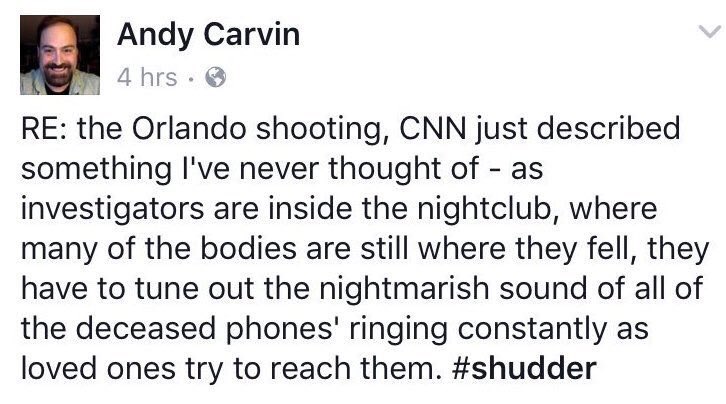
Let’s wake up, before there will be no one left to answer the phones.

phones ringing

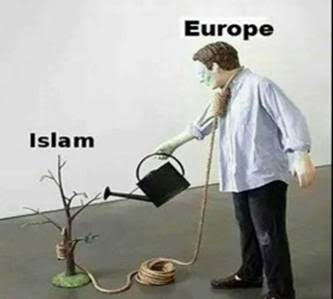
Islam Europe

I’ve just found this cartoon in my e-mail.
It was captioned: “The Winning cartoon in an organized competition.”

I instantly remembered some very wise words I’ve read long time ago:

Do not be deceived: God cannot be mocked. A man reaps what he sows.
Whoever sows to please their flesh, from the flesh will reap destruction; whoever sows to please the Spirit, from the Spirit will reap eternal life.
Let us not become weary in doing good, for at the proper time we will reap a harvest if we do not give up.
Therefore, as we have opportunity, let us do good to all people, especially to those who belong to the family of believers.”

“Beware! Whoever is cruel and hard on a non-Muslim minority, or curtails their rights, or burdens them with more than they can bear, or takes anything from them against their free will, I (Prophet Muhammad) will complain against that person on the Day of Judgment.”

All religious teachings, all of them, maintain that ‘a man reaps what he sows’. It doesn’t really matter if the ‘result’ will come as a sentence delivered by a divine judge or if it will be just another bead in the string representing the life story of an individual.
I, for one, don’t see much difference between ‘fate’ and ‘karma’.

Then how come we keep acting as if we’ve never been warned?

“In my two visits to Auschwitz, the Nazi concentration camp in Poland, I learned that holocausts and genocides do not occur in a vacuum. Rather, there is almost always a vicious campaign of incitement directed against the target group preceding them. What is troubling today, with the recent uptick in anti-Semitic and Islamophobic incidents worldwide, is that extremists and zealots are not the only ones inciting their followers. In a number of Arab countries, Muslim children are taught ideas that distort the true meaning of the Quran and hadith too.”

o-gay-prophet-570

Love, more powerful than hate.

For how many times each of us has moaned, in true disbelief, ‘why is this happening to me?’. Or at all.

“I emerge from this conversation dumbfounded. I’ve seen this a million times before, but it still gets me every time.
I’m listening to a man tell a story. A woman he knows was in a devastating car accident; her life shattered in an instant. She now lives in a state of near-permanent pain; a paraplegic; many of her hopes stolen.
He tells of how she had been a mess before the accident, but that the tragedy had engendered positive changes in her life. That she was, as a result of this devastation, living a wonderful life.
And then he utters the words. The words that are responsible for nothing less than emotional, spiritual and psychological violence:
Everything happens for a reason
. That this was something that had to happen in order for her to grow.

That’s the kind of bullshit that destroys lives. And it is categorically untrue.”

In a sense the post that prodded me into writing this (Everything doesn’t happen for a reason by Tim J. Lawrence) is akin to a self supporting fallacy coupled with the kind of honest, well intended error all of us somehow feel is wrong at the very time we are doing it yet we cannot help ourselves to stop doing it.

So, why is all ‘this’ happening to us?

Basically there are three main stances on this.

The staunch believers are convinced that there is a grand scenario that ultimately decides our fates, down to every minute detail. You can find here, mingled together, religiously motivated people, convinced that ‘God’ has preordained their entire lives well before they were even born, rubbing elbows with the scientifically minded who are convinced that everything that  had ever happened went on according to an uninterrupted chain of causes and effects which can, only if we were able to find out how, be followed down to the root of all things. To even before the Big Bang?

The amoral ‘happenstancers’ believe that  ‘Lady Luck’ is blindly leading us down the path to exactly nowhere, hence ‘it’s up to each of us to make the best of it’. Sometimes up to callously disregarding everything else but their own whims.

The agnostics have figured out that while it is impossible to know/understand the ultimate cause for anything, from time to time it happens that each of us has a glimpse of understanding about something. And that however incomplete, that piece of understanding might  prove itself to be useful, even if temporarily.

Most of you have already noticed that the first two positions are at the very extreme ends of the spectrum and are held, in earnest, by relatively few people.
And that most of us – despite our professed affiliations, belong, in reality, to the third category.

Before proceeding any further I’m going to make a small detour here and note that ‘science’ itself was invented by Christian scholars trying to make sense of God’s ways. Hence no wonder that the ‘scientific minded’ cannot see eye to eye with the ‘believers’ – new converts are looking down in disdain to their old religion, and that both partake in the conviction that ‘there must be something behind what is readily visible’.

The link between all these three categories, between the first two who already have a strong conviction about things and us, the run of the mill people who are sometimes taken aghast by what is happening in our close vicinity, is that all humans need to make at least some sense of things before learning to live with them. And with their consequences.
And since no two normal people are alike there never was a one size fits all narrative able to cover, efficiently enough, all situations that ever occurred to us.

That’s why I simultaneously agree with Tim that the best thing to do when something happens to somebody I care about is to simply say I acknowledge your pain. I am here with you. and disagree with him when he says that all other things that get said in times like those are wrong.

The fact that my experiences/opinion on the matter happen to fit his doesn’t mean that we are both right, nor that our take on things that already happened to us might fit all other things that might happen to all other people. So I find it just a little presumptuous to discard all other opinions simply because they are different from ours.

Now, that I’m nearing the end of this post, let me discuss a little the pretext shared by both our posts: ‘Is there a reason for anything?’

Well, the answer for this depends heavily on what you mean by ‘reason’.

Is there a cause for anything? Most certainly ‘yes’, regardless of whether you believe that that cause to be divine, completely aleatory or any combination of these two.

Or is it that we’d better ask ourselves if there’s a ‘motive’ behind what’s happening to us?

Another thing that is common to most people is their tendency to blame others when thinks go bad and to claim more merit than it’s their due when things go well.
That’s why so many of us find it difficult to assume individual responsibility for our own mistakes and for putting ourselves in harms way – even when that responsibility is only partial.
Along the same psychological mechanism many of us cannot accept the very notion of ‘blind’ bad luck. While cashing a lucky lottery ticket is accompanied by nothing more than a self congratulatory slap on the back, and no soul searching questions get to be asked on the occasion, every time we as much as catch a cold in a very bad moment we wrench our hands in self deprecation: ‘what was it in my head that drove me to go in such a germ infested environment?’.

So, while I cannot rule out the existence of the famous Grand Design that I mentioned earlier, it seems obvious to me that only some things happen for a motive. Or that sometimes there are one or more motives which tilt the table in a direction or other. On the other hand what each of us does in each circumstance might have a huge importance. And sometimes both our efforts and the ‘motive’ responsible for the general set-up are rendered inconsequential by some haphazardous  occurrence.
For instance Romania endured the Soviet yoke simply because of its geographic position, because Stalin-ism was an aggressive creed and because the West was too tired shortly after the WWII to do something really meaningful about the Soviets extending their influence beyond where it was welcomed. At the same time the manner in which communism had influenced our destinies depended a lot on individual decisions – ‘theirs’ but also ours – and on pure luck.

That’s why I fully endorse Tim when he says that it’s extremely important for us to act appropriately whenever something nasty happens to those living inside our reach and that we should carefully select those whose presence we accept around us when something nasty happens to us, while I cannot accept his insistence that there is a single ‘appropriate’ behavior in all circumstances.


rape in the not so virtual reality

Two concepts are slowly merging into one and becoming more and more obvious for the most oblivious among us.

Virtual reality was mentioned for the first time way back in the XXth century.
In 1938, Antonin Artaud described the illusory nature of characters and objects in the theatre as “la réalité virtuelle” in a collection of essays, Le Théâtre et son double. The English translation of this book, published in 1958 as The Theater and its Double,[2] is the earliest published use of the term “virtual reality”.
Nowadays the concept has been widened to cover a lot more than what’s happening inside the theaters.
In fact, the technology used to create VR is able to transform everyplace in a stage, everybody in an actor and to broadcast everything almost everywhere.

The other concept I was mentioning at the beginning of my post is a lesser known one.
The Social Construction of Reality“, published in 1966 by Peter L Berger and Thomas Luckmann eloquently explains how various groups of people collectively adapt their historically accrued habits (cultures) to the ever-changing surrounding reality. One of the sources of change being human activity itself.

The latest, that I heard of, addition to the realm of the not so virtual anymore reality is Periscope. A mobile app that lets its user broadcast, live, whatever he/she deems interesting enough from what is taking place around him/her. What is broadcast has a ‘shelf live’ of 24 hours but can be deleted at wish or made permanent. Also the sharing ‘voyeur’ has control over the audience, it can be set as ‘public’ or ‘private’ – and broadcast only to a selected few.

Some days ago two female high-school students and friends, one 18 and the other 17, met a 29 male in a Columbus, Ohio, mall. He bought them a bottle of vodka and “encouraged them to meet him the following day“.
The girls ‘honored’ the invitation, the three  ‘socialized’ for a while – read “had all been drinking“, and then the male proceeded to raping the youngest of the girls.
The older one live-streamed the rape using Periscope.

The case came to light when authorities were contacted after an out-of-state friend of the woman saw the images, Franklin County Prosecutor Ron O’Brien said.

It is not unusual for a rape to remain unreported by the victim. It’s not OK, but it happens.
Also it is not that unusual for a rape to remain unreported even after friends or relatives of the victim learn of the event. Again, it is not OK but it is known to have happened before.

Yet this is the first time that I’ve heard of a rape that had taken place practically in public and which wasn’t reported ‘live’ to the police.

‘She does everything possible to contain the situation even to the point of asking while it’s being filmed to these Periscope followers, “What should I do now? What should I do now?”‘ Shamansky said.” Shamansky being a lawyer for the older girl, who is currently charged with rape, alongside the male perpetrator.
Separately, she is being charged with “illegal use of a minor in a nudity-oriented material or performanceforlivestreaming her friend nude the day before the assault“.

And how did the viewers react to the broadcast? Except for the “out-of-state friend of the woman” who reported the incident, of course?

Here’s the prosecutor’s side of the story:

O’Brien said Lonina is seen trying to help only briefly during the 10-minute video. O’Brien said the victim was clearly screaming ‘stop’ and ‘no’ during the assault.
Although Lonina told police she was trying to record the assault as evidence, her behavior as people watching via Periscope ‘liked’ the assault painted a different picture, O’Brien said.

‘She got, I guess, taken up with all the “likes” that her livestream was getting and therefore continued to do it, and did nothing to aid the victim,’ O’Brien said.

I don’t know what, or even if, she could have done anything in a really effective manner – remember that all three had been drinking – but I know for sure that at least some people were watching the live stream. The ones “liking” it.

I still cannot understand how come all of them failed to call 911.


section 172

Yoshida Kenko, Tsure-Zure Gusa

I just can’t make up my mind about this.
Is it the figment of an idealist monk’s imagination, the factual description of how things happened in Medieval Japan or a wise advice coming from a great teacher?

Intensitatea reactiilor cu care a fost primita decizia CCR cu privire la modul in care sunt puse in aplicare mandatele de urmarire tehnica imi readuce in minte cuvintele ‘strabunilor’ nostri:

“Fiat justitia, ruat caelum!”

Traducerea cea mai raspandita fiind: ‘Faca-se dreptate, chiar de-ar fi sa cada cerul’.

Mai pe romaneste, aceasta varianta ii indeamna pe cei cu putere de decizie in domeniu sa nu se lase influentati de alte considerente in afara de idea de justitie si nici de alte argumente in afara celor ce au strict de a face cu cauza in sine.

O interpretare formulata in stil moralist ar putea suna: ‘Judecatorule, sa cumva sa-ti fie frica atunci cand imparti justitia. Fii drept, indiferent de pericolele care te pasc pe tine, personal.’

O alta, draga aparatorilor drepturilor omului: ‘Dreptatea individului nu trebuie, in nici un caz, sa fie pusa mai prejos de interesele comunitatii’. Vezi si varianta anglo-saxona: ‘Mai bine sa scape 100 de vinovati decat sa fie pedepsit, pe nedrept, un inocent’.

Cu ceva vreme in urma mi-a trecut prin minte o alta abordare:

‘Faceti cu adevarat dreptate, tocmai ca sa nu va cada cerul in cap’!

De fapt nu e mare diferenta fata de variantele de mai sus.

Pana la urma chiar si cei mai idealisti dintre noi sunt de acord ca idea de justitie a pornit tocmai de la viata de zi cu zi. In care ne-am convins, cu totii, ca nici o colectivitate umana nu functioneaza cu adevarat bine atata vreme cat membrii ei, toti membrii ei, nu se se simt in largul lor.

Atunci cand unii incep sa fure ceilalti incep sa isi piarda increderea in semenii lor. Relatiile dintre membrii societatii se deterioreaza foarte mult, ba chiar ajung sa se blocheze.
Atunci cand unii incep sa se foloseasca de forta pentru a-si impune punctul de vedere – de la talharie pana la dictatura armata – indivizii obisnuiti, indiferent de tabara din care se intampla sa faca fata, sufera o serie de transformari care, insumate, conduc la o degradare marcata a intregii societati. A se vedea soarta comunitatilor de pirati, a societatilor dominate de Mafie sau a dictaturilor – de orice coloratura.

Daca stam bine sa ne gandim, balanta justitiei nu cantareste doar meritele relative ale celor doua parti supuse judecatii ci si efectele produse de modul in care este administrat actul de justitie asupra intregii comunitati.

Modern England was shaped by a bunch of ‘French immigrants’ led by William II of Normandy. In the following centuries England and France fought each-other bitterly, in one instance for more than 100 years. Yet they ended up being best buddies, close enough to have fought, and won, two World Wars.

France and Germany started as the two wings of the Carolingian Empire. After it was divided in 835, France was the first to become a national state and, for a while, was Europe’s hegemon of sorts. During that period the French culture had influenced heavily the life of the entire German area. Take a walk through the Sanssouci palace in Potsdam and the Schonbrunn in Wien if you need any confirmation.
But none of this stopped a considerable number of French and German leaders from marshaling numerous armies that fought each-other bitterly, for various reasons.

In fact one could say that Europe itself was forged during those battles.

In this context, the Peace of Westphalia – that ended a 30 years long war, can be considered the seed of what we have now: a system of sovereign states that interact according to a set of practices that have been enshrined into international law.

But it seems that one war was not enough for the rulers that happened to gain precedence in both French and German speaking areas of Europe. So others followed. Culminating with the two World Wars that have involved almost the entire planet.

And what do we have now?
An European Union that has been built precisely in the spirit of the Franco-German Elysee Treaty signed in 1963?

So, could we say that Europe is the success story of so many nations, speaking different languages and having various cultural traditions, who have finally learned to live in peace?
Who have finally learned to silence the war-mongering among them?

Who have finally realized that they are “better off together than apart” and that what it takes for this to happen is “Mutual respect, no love, …but a considerable amount of curiosity“?

Then how come we are not able to extend that wisdom, that literally soaked in blood body of  knowledge, to cover the current events?
How can we not find in ourselves an effective way to help the so many people who are literally dying outside our closing gates?

Why is it that so many of us still pay any attention to those who teach us to ‘circle the wagons’ and to ‘leave behind those who didn’t make it’?

This tactic seldom worked, if ever.

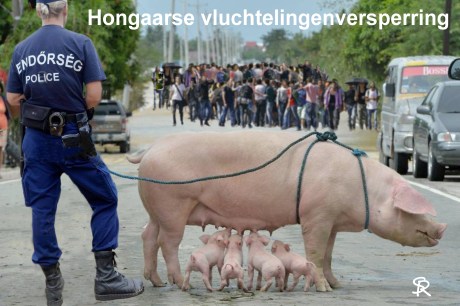
vluchtelingen-wegversperring

‘Hungarian self-defense’


… must we sink in our own, self induced, decrepitude before we’ll be able to notice the stink we, ourselves, have draped around us?

Before figuring out that it’s us who are ultimately responsible for our own fate?

Before figuring out that by allowing this kind of crap to be traded above our heads, and sometimes even by helping to its distribution, we soil the most precious of our ‘belongings’ – our souls?

This image has probably been ‘Photoshopped’ by somebody.
I’m not going to discuss that person’s motives here. We live in a free world and everybody should be able to express his/her feelings.

What I find extremely interesting – and dangerous – is the fact that this picture has been so widely circulated over the internet that it ended up in my mail. A short Google search confirmed that it comes from somewhere in Holland only the guy who sent it to me, horripilated, lives in Canada…

So, what’s the use for us to clamor virtuously about human rights and then make fun, shamelessly, of people who find themselves in a horrible situation?

And, please, do not make any mistake!
I’m not speaking exclusively about the refugees here.

Some of the manifestly dissatisfied Europeans who are protesting these days are not as much against the refugees themselves as they are against the hapless manner in which the European bureaucracy has been (mis) managing so many things recently.

Just as some of the political leaders who are lambasting the European Commission on this subject are not interested in improving the European Community but in ‘scoring swag’ with the disillusioned (and somewhat naive) electorate.

We need to break this vicious circle!