Archives for category: 1989

“Complementarity is a principle that illuminates
an “honest anthropology”
based on “the nature of the subjects themselves who are performing the act””

John Paul II

The manner in which people chose to speak about the subjects they consider to be of great importance sheds a lot of light.
On the speakers!

The notion of “complementarity” was coined by John Paul II in 1979-1981. He was the reigning pope at that time.
I must remind you he was born Karol Wojtyla and his native language was Polish.

Well, nobody bothered to tell him that, in English, “complementary” has a rather limited ‘range’.
“Combining in such a way as to enhance or emphasize the qualities of each other or another. “they had different but complementary skills””

The notion was, and continues to be, used as the reason for which women cannot be made priests or deacons in the Catholic Church. And to deny marriage to the homosexual couples.

I find this whole thing rather baffling.

Man and Woman do not complement each-other. Not always, anyway.
Man and Woman survive together.

If you don’t understand the difference, don’t bother reading any further.

Now, if we need a certain ‘interaction’ between Man and Woman for the species to survive, then certainly we need to condemn homosexuality, right?

Wrong!

We have a series of facts here.

For the species to survive, Man and Woman are equally needed.
For the species to survive, it isn’t necessary for all men and women to bear children.
Homosexuality and gender dysphoria are realities. Regardless of what each of us thinks about each of them.

Humankind has survived. For now, at least.
The three facts I mentioned above have existed along the entire human evolution. We’re still here.

Back to square one.

I can ‘understand’, for the sake of the argument, the notion that homosexuality should not be ‘encouraged’. Homosexual couples are not naturally ‘productive’ so they shouldn’t be sanctioned by the church…
But if both Man and Woman are so indispensable, in their respective ‘natural roles’, for the survival of the humankind and “equal”, according to mainstream Catholic theology, then how can be explained the fact that Woman always comes second? And cannot be ordained?

Why do we allow a rather obscure thinker from the IV-th century B.C. to influence our decisions!?!

“The polarity position, first articulated by Aristotle
(384–322 b.c.), rejected fundamental equality while defending the
natural superiority of man over woman.”

Prudence Allen, RSM: Man-Woman Complementarity, The Catholic Inspiration

Buckminster Fuller prodded us to ‘convert our high technology’ into something really useful.

To do that, we need to perform a ‘self-actualization’ act.
Maslow considered self-actualization to be a need. An actual need, on par with the rest of them. Basic resources, safety, a place in society, esteem…
Maslow was right. Even if somewhat ‘incomplete’.

We need to crawl through the first four stages of Maslow’s pyramid in order to reach the fifth level. Where we have the opportunity to perform a self-actualization.
The result is up to us! There’s no rule nor any guaranteed outcome.

Eat and you’ll live another day. Feel safe and you’ll sleep well. Be loved and you’ll find your place. Feel good about yourself and you’ll be more ‘useful’. For yourself and for those around you.
To become a ‘better person’ you have first to find out what ‘better’ means.
And we really need self-actualization. In order to fulfill the first four needs, we’ve changed the ‘environment’. The place we call ‘home’.
We’ve built the technologies mentioned by Fuller! To make life easier…

To accept Woman as Man’s equal, as a full fledged equal, needs accepting that Man has been borne by Woman.
Some believe that Man has been made by God, ‘In His Image’. I can accept that but I must point out that God made only one Man. Adam.
All the rest have been given birth. By Woman. And raised by the extended family. By Men and Women, together.

After all, what’s keeping us from following Buckminster Fuller’s advice?!?
And is there any real difference between not allowing a woman to be ordained and not allowing her to speak ‘publicly’?

Survival of the fittest?!?
No, only the demise of the unfit!

Ernst Mayr, What Evolution Is?

An end in itself…

For whom? For the concerned individual?
For the philosopher pondering the concept?
For the ideologue promoting the idea?

And who determines ‘the interests of the state’?!?

“Plato suggests, and all later collectivists followed him in this point, that if you cannot sacrifice your self-interest for the sake of the whole, then you are a selfish person, and morally depraved.”

Since there’s no better judge for ‘sustainability’ than mere history, let’s ‘look back’.

Whenever the powerful of the day considered that everything belonged to them, and that the collective wasn’t worth any consideration, that ‘arrangement’ soon ended in chaos. From Alexander the Great to Saddam Hussein. Hitler, Stalin, Ceausescu…
Whenever the meek had accepted everything which came from ‘above’, very soon the ‘arrangement’ also ended in chaos. The Khmer Rouge experiment, the Chinese Cultural Revolution, communism being instated in the Eastern Europe by the Soviets…

As a rule of thumb, individuals can exist only as members of a collective.
None of us can birth itself (?!?)
None of us can educate itself ON ITS OWN. OK, one might teach itself to read. And then devour a whole library. But for that to happen, somebody else must have invented the letters first!
None of us can develop into a conscious human being without living with other human beings.

Furthermore, the same rule of thumb states that collectives which value their individuals, all of them, fare a lot better than the highly ‘hierarchical’ ones.
In this sense, Popper was right. ‘Individualistic’ societies – the collectives which ‘see individuals as ends to themselves’ – fare better than the collectives which allow, for a while, their temporal leaders to lure them into obedience.

Our children have to make do
with the consequences of what we’ve cooked up.

The happier amongst us live in states run as liberal democracies.
Most countries on this planet define themselves, constitutionally speaking, as being democratic.
And except for a very few, all the others behave in an apparently capitalistic manner. Some under a free(ish) market and the rest under a ‘mixed’ regime.

Since we’re speaking about the ‘current’ socioeconomic arrangement, which is in flux, we still don’t have a name for it.
We do have a name, though, for the previous one. Feudalism.
And for the one before that. Slavery.
Or, to use a modern term, all the previous regimes might be bundled together as ‘authoritarian-isms’. Regimes where authority flows from top to bottom and where feed back comes only in the form of revolution. Coup d’etat. Dynastic change… and other euphemisms.

History suggests, and those wise enough to notice implement this lesson where ever possible, that all authoritarian regimes crumble under their own weight.
While liberal democracies tend to survive for as long as they maintain their liberal nature. Their freedom!

What’s the difference between liberal and ‘illiberal’ democracies?

“It’s not who votes that counts
but who counts the votes”

Josef Stalin

Now, speaking seriously – as Stalin style ‘popular democracies’ have crumbled more than 30 years ago, following all other ’empires’ which no longer exist, there is a difference between liberal, a.k.a. functional, and make-belief democracy.
People maintaining a liberally democratic regime take their job seriously.
They speak up their minds. Hence the problems become known.
They listen what the others have to say. Hence the people are not only aware of problems as they arise but people also have the opportunity to understand the nature of those problems.
They respect each-other. Hence they treat all problems, affecting all the people, in a fair manner. Thus maintaining the natural stability of the social arrangement.

It goes without saying that in a liberal democracy everybody can vote and each vote is counted…

An illiberal democracy, on the other hand, is where things are more complicated.
The most illiberal situation is that where it doesn’t matter whether people vote or not. The results have been counted beforehand. The latest example being Venezuela 2024.
A more ‘subtle’ picture is offered by, for example, Hungary. As a matter of fact, it was Viktor Orban, the Hungarian “dictator“, the one who had coined the very notion of “illiberal democracy“. A revamped Constitutional Court, some Constitutional Amends, “emaciated checks and balances“, tight controls imposed over the media

What about the ‘capitalist’ part of the current arrangement?
I’m afraid we waddle in confusion here.
We no longer make any distinction between ‘capitalism’ seen as ‘hoarding money as a sport’, and ‘using accumulated fiscal deposits as resources for building something new’. New and useful, of course…

‘Fiscal deposits’ – hoarded fiduciary money – have been around since coins have been minted. And IOU notes have been written. But capitalism, as Adam Smith understood it, wasn’t born yet at that time.

Under authoritarian regimes, having a lot of money does offer some leverage. But no immunity!
Consider what had happened to the Templar Monks when France’s Philip the IV-th coveted their money. Or the fate of the richest Chinese, after he had been perceived as being too cocky by the communist regime…
Whenever ‘capitalism’ takes place in liberally democratic settings, the market can be described as being ‘free’. Each economic agent – buyer or seller – decides in an autonomous manner. Takes their own advice and has to obey nobody’s orders. Has to obey the law but doesn’t have to abide to any whims.

Putting two and two together, for a society to remain functional in the longer run, the most importing thing is the ‘free market’.
The key word here being ‘free’. The meaning attached to the word and the understanding people have about the concept.
There is ‘free’ as in ‘free for all’ and free as in ‘freedom under the law’.
‘Free for all’, also known as ‘the law of the jungle’, inevitably ends up as a ‘dog eat dog’ situation while freedom under the law remains functional for as long as The People bring the law up to speed whenever needed.
The ‘market’ part is a lot simpler.
A ‘place’, an ‘open’ space, where both ideas and wares are exposed and exchanged. Amongst those who come to the market, to the agora, to solve their problems. To fulfill their needs.

As long as that ‘space’ remains free – as in ‘open’ for all – most people are able to make ends meet. The situation remains stable. For everybody to enjoy.
As soon as one ‘operator’ starts to ‘corner the market’ – using any of the already known ‘technologies’, the most popular being the old fashioned lie – the situation becomes potentially dangerous.

Whenever ‘The People’ have a sound understanding of what freedom really means, the bullies are ejected from the system. The ‘antitrust’ legislation is put to work and the budding ‘monopolies’ are dismantled before real harm was done.
If not… If von Papen hadn’t helped Hitler to rise into power and if Chamberlain hadn’t led the free world into submission…
Had we not threaded so lightly when Putin snatched Crimea back in 2014….

https://carnegieendowment.org/posts/2017/03/revisiting-the-2014-annexation-of-crimea?lang=en

“he said abortion bans early in pregnancy went too far,
suggesting Republican candidates needed to be moderate enough on the issue
to “win elections”.”

The point I’m trying to make here being that what candidates say matters.
That we really need to see through their words.
Whether they are interested in solving issues – and which of them – or they simply want to accede to power.

Doesn’t matter? As long as they keep their promises?

Do you really expect a lying bully to keep up with their words? To fulfill their promises?
Are you comfortable with ‘hiring’ a lying bully to mind the future of your children?

Toată lumea e de acord:
Așa nu se mai poate!

Există doua variante.
Schimbarea din interior sau schimbarea din ‘exterior’.
Schimbare din exterior înseamnă revoluție.
Prefer schimbarea din interior.
Doar că e nevoie ca această schimbare din interior să fie operaționalizată de un grup mare de oameni. De o majoritate.

Unul câte unul, oamenii se pierd pe drum. Îi înghite ‘sistemul’.
Chestia asta funcționează în ambele direcții.
Dacă sistemul e funcțional, îi ejectează pe aberanți.
Dacă sistemul e pe drumul cel rău, îi marginalizează pe cei capabili. Nu-i aruncă de tot – sistemul are nevoie și de oameni care să facă ceea ce trebuie făcut – doar îi ține ‘la respect’. Până se ‘dau pe brazdă’ sau până pleacă singuri.

Suntem într-un fel de cerc vicios.
Foarte mulți dintre cetățeni, adică prea mulți, aleg să nu mai voteze. ‘N-ai cu cine, dom’le’!
Prea mulți dintre oamenii de calitate aleg să nu se implice în politică. ‘Nu vezi ce fel de oameni sunt scoși în față?’
Foarte mulți dintre ‘comunicatori’ crează în spațiul public impresia că ‘politica e murdară’.

Cum ieșim?
Cu toții!
Altfel ne mănâncă – unul câte unul, pe fiecare dintre noi – cei care nu înțeleg că, de fapt, își taie și lor craca de sub picioare.

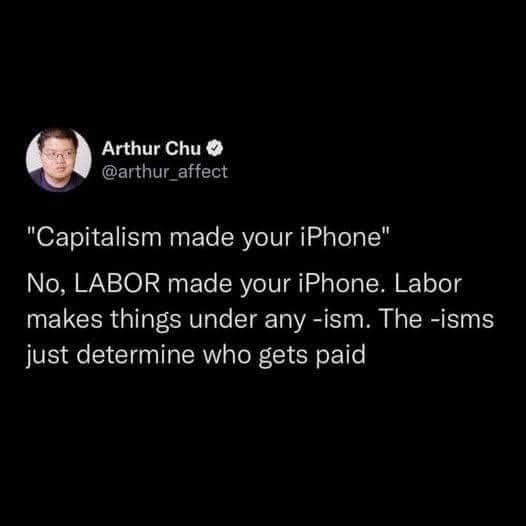
“The act of redistribution requires confiscation of the fruits of labor.
Marxism is a fantasy…..
a classless society with no private ownership of the means of production.
The mere suggestion invites revolution.
Instead, today’s neo Marxist will allow for private ownership
with a high tax rate and a strangling bureaucracy.”

Life, a natural phenomenon, fine-tunes the environment where it happens to take place.
Living organisms, according to our current understanding of how life works, need to eat. Also to drink and to breathe. And they need to excrete the ‘consequences’ of their ‘imperfect’ metabolism.
By ingesting, digesting and excreting portions of their environment, living organisms slowly transform the space where they ‘do their thing’.

Humans do all of the above. Some of it ‘on purpose’!
Human societies ingest huge amounts of raw materials and ‘excrete’ merchandise and waste.
Human societies ingest huge amounts of information and ‘excrete’ knowledge. As in ‘meaning’ and ‘ideology’.

Living organisms, humans included, evolve in the environment they have inherited from their ancestors. Regardless of the species each of them belongs to.
Human societies have to make do in the environment they have inherited. To do that, to ‘survive’, they need to make sense of the situation they find themselves in. In order to go ‘forward’, they need to identify a ‘meaning’. Which meaning is actually built according to the prevalent ideologies, at each given moment in time.

Living organisms do their thing according to species specific information they have inherited from the previous generation. Individual organisms do have some ‘lee-way’/autonomy but only a very small number of animals are able to actually learn something from their parents. And none, but humans, have the ability to teach.
Humans are under a double determination. As animals, they are still functioning according to their DNA. As cultural beings, they are also heavily influenced by the culture in which each of them had happened to be raised. By the culture to which each of them has the opportunity to contribute.

The practical manifestation of culture, civilization, makes it possible for individual humans to enjoy a far deeper autonomy than the rest of the animals. Not only that humans have a lot more to learn from their ancestors/brethren but they are also capable to ad, in real time, new information/meaning to the very culture to which they belong. And to ‘rebuild’/refine the civilization itself.

Darwinian evolution is a multidimensional thing. The individuals/species endowed with genetic information which no longer fits with the prevalent environmental conditions disappear. Only those capable to survive, those endowed with useful enough genetic information, manage to transmit their genetic information to the next generation.

Human evolution, a process which takes place on top of the Darwinian level, is a three dimensional thing.
We build culture and civilization. While searching for ‘meaning’.
We gather information and use it to build the world we live in. The freshly built civilization, our new ‘environment’, constitutes a new ‘playing ground’ where we gather some more information. Which we quickly use to ‘improve’ our ‘homes’.

Humans, like all other living organisms, are limited. By their material nature. By our making.
We live in a three dimensional space but we only perceive two and a half dimensions. Up/down and left/right are very clear. Depth, on the other hand… is a little bit trickier…

Same thing with the evolutionary dimensions.
At first, when transitioning from animals to conscious human beings, we were mainly concerned about ‘meaning’. Gathering food was ‘natural’ – we did it like our ape-like ancestors used to – and we didn’t need much protection against the elements. But our budding conscience was screaming for meaning.

What’s gonna happen to me? What is this whole thing? Who’s responsible for all this?

That was why our ancestors had invented totems, territorial gods and, eventually, religions.
As an answer to the three questions I’ve just formulated.

What we currently call culture and civilization have been built, by us, to ‘beef up’ ‘meaning’. As a manner of confirming, to us, that our already formulated conclusion was right.
Stonehenge was erected to prove that, year after year, the Sun was rising when it was supposed to.
And so on…

After reaching a certain level of material and psychological comfort – Abraham Maslow’s fourth level, self-esteem – we no longer need ‘confirmation’. We’re comfortable enough with what we have so we no longer need fresh meaning.
As a matter of fact, when Maslow was speaking about ‘self-actualization’ he was absolutely clear.
In this stage, the individual is free to chose.
Nota Bene, self actualization is only an opportunity. Not a ‘sentence’.
An open door to a vast space. Where each of us can do almost anything. Anything of what is possible…

Until the bubble bursts!

I grew up under communist rule.
None of us had any hope that our society could ‘revert’ to being ‘normal’.
The fall of the regime was a surprise for everybody.

I understand now, after 35 years of freedom, that the communist rule was doomed to failure.
Because of the ‘strangling bureaucracy’ which was preoccupied with their own survival.
And which blissfully ignored the hard reality.
Living in the bubble they have built for themselves, the strangling bureaucrats were unaware of the mistakes built one on top of the other as a consequence of the bureaucrats deciding according to their own ideology and without proper feed back from the real reality.
Looking farther down in human history, it is easy to see that this has been the fate of all ‘imperial arrangements’. From ‘political’ empires to ‘economic’ monopolies.

Alexander the Great, Genghis-Han, Napoleon Bonaparte, Hitler, Lenin-Stalin-Brezhnev…
East India Company, AT&T and now Boeing & Intel.

Meanwhile, as we reported in a post earlier this week, Lip-Bu Tan, a high-profile board member of Intel, has now resigned, citing the board’s unwillingness to listen to his ideas to make Intel’s contract manufacturing business more customer-centric and to remove the inertia-inducing layers of bureaucracy, including an army of middle managers who thwart innovation at the company’s desktop and server divisions.

And what about gambling?
Using datasets showing deposits and withdrawals into and out of online sports betting platforms like FanDuel and DraftKings, as well as to and from equity brokerage accounts like Charles Schwab, E-Trade, Vanguard and Fidelity, Baker and his co-authors found that legalization has led to higher credit card balances, lower access to credit, a reduction in longer-term and higher-yield investments, as well as an increase in lottery play — with the effects particularly pronounced among financially constrained households.
“Financially constrained” people have a tendency to see their future through a glass ceiling. They know it’s there but they have no idea how to reach it.

The “strangling bureaucracy” are busy – but without a real understanding of what they’re doing – casting layer upon layer of fresh glass-ceiling.

And we continue to live in our respective bubbles… built by us, according to our ideological specifications…

Classic sociologist Emile Durkheim theorizes that crime exists
in all societies because it reaffirms moral boundaries and at times
facilitates needed social changes,
while former U.S. Senator Daniel Patrick Moynihan believes that
Durkheim’s views omit the possibility of too much crime, especially violent crime,
so that deviance as a serious social problem is not addressed.

“Normlessness and deregulation are poor translations of dereglement for several reasons. They did not enter into common English usage until the 1960s and certainly didn’t exist in Durkheim’s time. Dereglement is difficult to render in English. It carries with it in French the connotations of immorality and suffering, but is perhaps best translated as derangement. Anomie as dereglement implies a condition of madness or something akin to sin. This concides with the observation that over 20 words denoting sin were translated as anomia when the Bible was translated by St. Jerome and others.”

Durkheim was right after all.
‘Crime’ does fulfill a social function.
Some deviance, when well ‘managed’, can be useful. The US have somehow managed to transform a rather high level of deviance into ‘speed’. 250 years ago, the 13 American colonies were almost insignificant.
Today, the US is the most powerful/wealthy nation on Earth. While the Union continues to be the most ‘deviant’ among the civilized nations. On all conceivable metrics.

The key words here being, of course, “well managed”!
Maybe the time has come for the likes of Senator Daniel Patrick Moynihan to go back to class. And to finish reading what Durkheim had to say about things.

The problem with the current political class, not only in America, being the fact that too many politicians ‘outsource’ responsibility!
It’s not history’s job to maintain accountability!

The politicians themselves need to provide enough reasonable alternatives for the ‘people’ to chose from!

Durkheim, read from both ends, told us that much.
We are the ones who need to maintain the balance.
For it’s us who will bear the consequences!

No matter who was the culprit, we’ll have to clear up the mess.
So we’d better stop the fan from spreading the mess around!

After all, shit happens. It’s a natural occurrence.
We have to eat so we need to relieve ourselves.
But how about doing this in a civilized manner?
And not rewarding those bragging about ‘inappropriate behavior‘….

‘Universe’ has no meaning. Other than what we assign to be its meaning…

‘Universe’ is a word we use to encompass everything around us. Whether we know of it or not. Whether we understand (of) it or not.

From ‘where’/’when’ we are in/attempt to perceive this huge environment, things look like ‘this’.
Depending of the wavelength of the light we use to ‘reinterpret’ the picture…
Nota bene, the colours were assigned by a computer app, starting from a series of ‘black&white’ images shot using filters which select short intervals of light-wavelength.

By sheer change, life appeared on Earth. And on who knows, if ever, how many other planets.
Evolution, an impersonal process, playing the odds in the current setting, had engendered the set of circumstances into which we happened to ‘burst’ into existence.

We, for better or for worse, have shaped the planet into what it has become.

Regardless of what each of us believes, religiously speaking, it doesn’t actually matter whether a god did or didn’t do anything. Since each and every religion currently biasing human thinking on Earth speaks about individual responsibility – hence freedom, for you can’t have individual responsibility without freedom – it actually doesn’t matter whether any of the teachings we refer speak about have been induced by an outside agent or have been produced ‘in house’.
Since each of us is individually responsible for our thoughts/actions – hence ‘free’ – then the meaning we assign to the object of our judgement, the ‘Universe’, belongs to us. To each and to all of us.

‘God save us!’

But since we’re ‘free’, we must save ourselves.

And since nobody can be free on their own – freedom has been defined by ‘us’ and put in practice collectively – saving ourselves will be a collective effort.
Or else.

Nota bene!
We are a ‘collection’/community of individual human beings.
We either ‘save’ ourselves maintaining what makes us human – our distinct individual individualities – or we become a hive. Of something else but ‘human’.
Of what we currently understand as being ‘human’…

“It is said
that one man’s terrorist
is another man’s freedom fighter.”

Sami Zeidan, Desperately seeking definition…, 2003

‘Truth’, ‘freedom-fighter’ and ‘terrorist’ are words. On the side where we get in touch with them.
We see/hear them first before they penetrate our minds. If at all…
We think of them and only afterwards they get pronounced by our mouths or typed by our fingers.

On the other hand, ‘propaganda’ – another ‘word’ – is a ‘technology’. A particular manner in which some of us choose to spread out their ideas.
Same thing goes for ‘conspiracy’. A particular manner of doing things. ‘Cloaked’. Hidden from sight and involving a number of vetted participants.
Nota Bene! Those involved in ‘conspiracy theory’ are also vetted.
The ‘theorists’ vet their targeted audience by choosing the subjects of their discourse and by wording it in a certain manner. The members of the ‘public’ ‘vet’ the ‘influencers’ by following them. And themselves – they set themselves apart from the rest – by allowing themselves to be ‘entertained’ by the message they keep returning to.
‘Terror’ itself is also a ‘technology’. A sort of ‘propaganda’ 2.0.

While ‘propaganda’ is a manner of spreading ‘the word’ around – presenting the ‘message’ in an easier to ‘accept’/’digest’ form for the targeted audience – ‘terror’ is a ‘technology’ used to convince an entire population that there’s no alternative. No alternative other than that ‘proposed’ by the terrorist.
A technology used to break the will of those whom the terrorist wants to submit.

And what ‘happened to THE truth’?!?

The truth of the matter is that there is no ‘truth’.
No ‘one size fits all’ kind of truth!

A truth is something we agree upon. In this moment!
Something we agree to consider as being true for as long as nothing meaningful contradicts the generally accepted ‘true thing’.

But what if there’s no longer a ‘we’?
What if those who – for whatever reasons – want to separate us manage to do exactly that?
What if ‘we’ no longer see each other eye to eye regarding not so long ago widely accepted ‘subjects’?
What if ‘we’ – a sizeable portion of us – accept ‘alternative facts’ as being at least as valid as the ones previously accepted as being true?
What if we, too many of us for our own good, start to doubt as a matter of creed?

“Too many of us for our own good”?!?
What happened to ‘doubting as a matter of creed’ being the ‘stepping stone’ for science?!?

Words… so many words, no matter how beautiful…

‘Science’ is, first and foremost, a state of mind. The ‘open’ state of mind which conserves the willingness to change ‘the truth’ according to the newly acquired information, if this new information is convincing enough. If it comes from more than one sources AND if ‘the conclusion’ can be reached again and again. Independently!
Being in a scientific state of mind means keeping the door open for new information.
Questioning everything with the transparent intent to impose a single version of ‘the truth’ is more than propaganda.
It’s a form of terrorism!

An amount of interaction expressed in the considered amount of time.

Where ever there is power, there is also resistance.
Michel Foucault in the footsteps of Isaac Newton

Michel Foucault used to be a post-Marxist philosopher and sociologist.
As the rest of the Marxists, two of his main subjects were Power and the individual’s (philosopher) duty to put their own convictions into practice. To make a difference, preferably ‘against’ the establishment.

From a Darwinian point of view, Foucault’s insistence that we shouldn’t restrict ourselves to the ‘straight and narrow’ makes perfect sense. The ability to change along with the changes in the environment is paramount to survival. Furthermore, the ability to induce change is paramount to what we call ‘progress’.

On the other hand, life itself demands that we, successive generations of individuals belonging to different evolving species, need to retain a certain congruence.
Succeeding generations share the genetic information needed to preserve the nature of the species.
Species living together evolve in such a manner as to maintain the viability of ‘their’ ecosystem. Or else…

The ‘law of the jungle’ is nothing more than something we believe to have noticed. And then convinced ourselves that we were right when we have formulated our observation in the current form. “The law of the jungle…

“Power” is but a word.
And words have the nasty habit of cloaking more than one meanings. Well, most of them…

“Power” means many.
From a ‘certain amount of work divided by the time in which that work had been performed’ to ‘the influence somebody has over the people happening to live in the vicinity.
And also something very pervasive yet seldom noticed.

Something which ‘permeates everything and “makes us what we are”‘.

Contradictory?
A tool, teleologically yielded by agents, or a fixture of the ‘environment’?
Both a the same time!
Imagine a group of people cavorting in a pool. Each of them using water to splash the others.
Or two ‘teams’ of angry men fighting near a river and using stones retrieved from the riverbed to crack each-others’ skulls.

‘A fixture of the environment’ identified as such and used by agents as a tool with which to further their goals.

Knowledge is power and power creates knowledge...
Both Bacon/Hobbes and Foucault have been right.
By identifying new and increasingly powerful instruments people have transformed knowledge into power while by putting power to work, the powerful have generated new meaning and driven things towards where they wanted them to be.

Having been able to draw from more accrued knowledge (a.k.a. culture) than Hobbes. Foucault is marginally ‘even more right’ than his predecessors.

“People know what they do;
frequently they know why they do what they do;
but what they don’t know is what what they do does.”

This being the explanation for all ‘social arrangements’ where power has been concentrated in a too small number of hands/heads having eventually failed.

A society where schools and prisons are hard to tell apart – or perceived as such by those who have to spend time in any of them – is sooner rather than later going to reconsider it’s ‘knowledge’ regarding ‘power’. Or else…

“statuuntque latiores terminos scientiae Dei quam potestatis,
vel potius ejus partis potestatis Dei (nam et ipsa scientia potestas est)
qua scit, quam ejus qua movet et agit:
ut praesciat quaedam otiose, quae non praedestinet et praeordinet”

Francis Bacon, 1597
“and they set wider limits for the knowledge of God than for power,
or rather for that part of God’s power (for knowledge itself is power)
by which he knows, than that by which he moves and acts”
Google Translate

scientia potentia est
Thomas Hobbes, 1668

E=mc2
Einstein, 1905

In fact, power produces; it produces reality;
it produces domains of objects and rituals of truth.
Michel Foucault, 1991

“They” – as in ‘the knowing people’ – ‘set the limits for the knowledge of God’.
Then it was ‘they’ who had the real power over (their) God…

A little later, another thinker simplified the whole thing into ‘knowledge is power’.

Which, already collective, state of mind morphed into the socio-cultural environment into which Einstein was able to notice that E=mc2. That apparently different things can morph one into the other, given the right circumstances.

Which brings us to Foucault noticing that power produces reality. Including knowledge…

But is there a real difference between ‘power produces reality’ and ‘they set different limits for God’s knowledge than for God’s power’?
In fact, there is.

According to Foucault power is exercised directly.
According to Bacon, people exercise power by ‘fine tuning’ their ultimate tool. Their God. Which god, like all others, acts like an agent. Its powers might be limited – it is able to do/know only as much as those who have faith in it believe it to be able to know/do – but inside those limits it is as free as each of those who believe in it.

And the difference is huge.
As soon as Nietzsche had noticed that ‘God was dead’, ‘reality’ had shattered.
While God was alive, power created one reality. Also known as “God”.
As soon as there was no more God to mediate between reality and those gathering knowledge about it and exercising power while recreating it… reality became many!

And not only many versions of reality are competing for our attention, each of these realities are farther and farther away for the ‘hard’ one. The one harboring Einstein.

“People know what they do; frequently they know why they do what they do; but what they don’t know is what what they do does.”

Michel Foucault, Madness and Civilization: