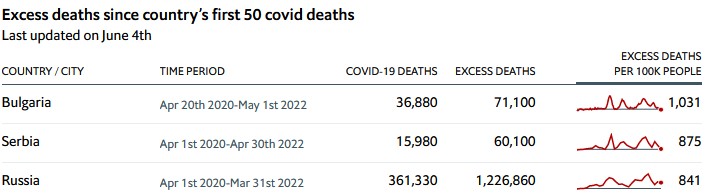
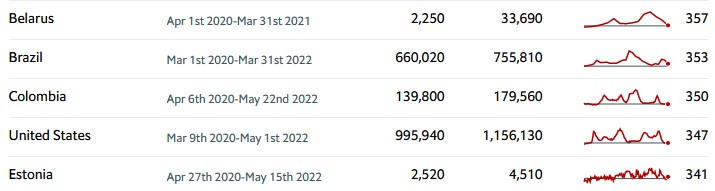
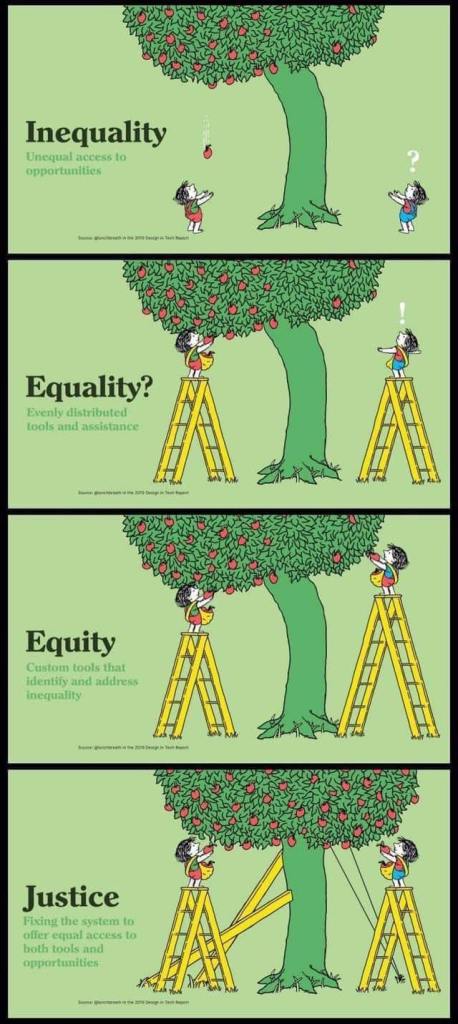
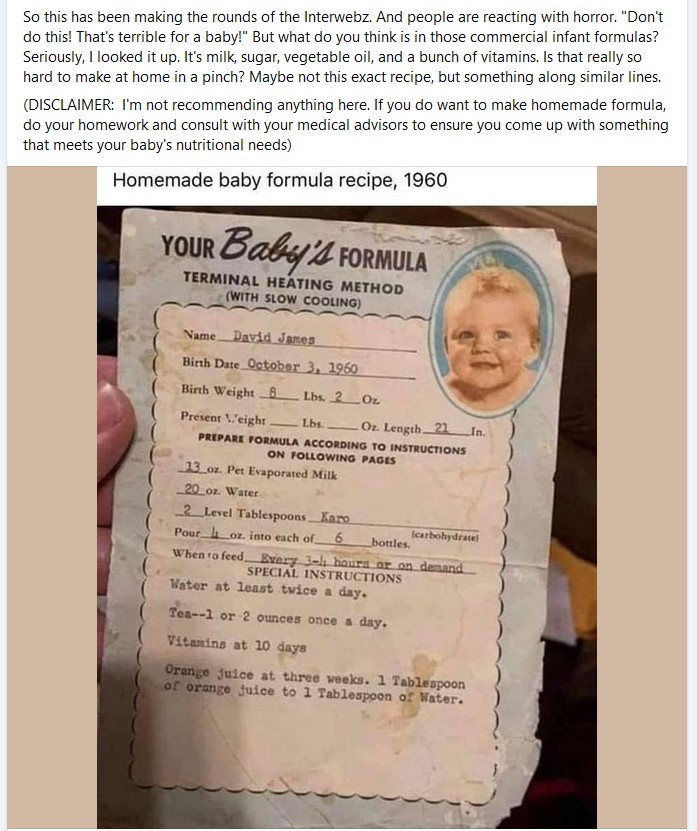
Many people interpret Darwin’s Evolution as ‘the survival of the fittest’.
Ernst Mayr, What Evolution Is, made is crystal clear that ‘evolution is not as much about the survival of the fittest as it’s about the demise of the unfit. Read the book, it’s well worth the time. https://www.scribd.com/document/358382958/Ernst-Mayr-What-Evolution-is-PDF

The meme above had been shared by somebody who was convinced that “Covid is solely a mental disease programmed into the minds of the masses to further ingratiate themselves in their loving servitude to their slave master tyrants“.

The fact that we have so many, and so conflicting, views on such a simple natural law as the law of evolution means that… we don’t know shit!

Hence Samuel Adams was right.
Since we know basically nothing, none of us should have ‘authority’ over others. Each of us should be free. To do as they please. To follow exclusively the ‘laws of nature’.

Which one of them?
Darwin’s – as some of us have chosen to interpret, or Mayr’s?

‘Survival of the fittest’ or ‘The demise of the unfit’?
‘I’m stronger than you so move over’ or ‘If you don’t agree with our commonly shared values, please find another place to live?’
‘Free against all else’ or ‘free together with everybody else’?

.

.

.

Third-World Country? No. Sorry, it’s Seattle…

There are so many of us who consider that ‘if you can’t pull your weight, you don’t deserve to live’…

On the other hand, there was a moment in time when the Brits had abolished the institution of debtor’s prison… And a second moment, no less significant, has been the Marshall Plan.

You see, for whatever reason, an individual or a business might fail. Sometimes, even a whole continent might fail…

Until recently – historically speaking, debtor’s prison was abolished in 1869 and the last war reparations had been extracted after WWI – it was a matter of ‘one strike, you’re out’. One mishap, for what ever reason – bad luck was enough – and you were practically reduced to ‘servitude’. If somebody else didn’t bail you out, your chances of getting out ‘alive’ were very slim. No matter whether you were an individual, a business or even a country.

Interestingly, the first who was allowed the protection of bankruptcy was the business sector, countries came next – but only if they were sovereign states, while individuals are not yet completely out of the woods.

Now, where would any of you prefer to live? In the XIX-th century Britain or in the XXI-st century Britain? Ceteris paribus. As in ‘conserving all other ‘variables’ ‘. Given the fact that hot water was practically absent in XIX-th century Britain, I’d prefer the present century anytime.

Was ‘bankruptcy’ the only explanation for the economic take-off which happened after the second half of the XIX-th century?
Probably not but it surely helped. Just as the present day Europe owns a lot to the Marshall Plan.

Then why aren’t we extending a more helpful hand to more of those who have ‘stumbled’?

https://www.thegazette.co.uk/all-notices/content/100938

‘On the face of it’, it makes perfect sense.

But why bother?

If I’m on the ‘right’ side, why would I make it easier for the other guy?
If on the ‘wrong’ side, why not just switch sides? Why would I bother to straighten the tree? Against the wishes of those who have a lot to lose in the process?

From the other side of the looking glass, things are a lot simpler.

‘Fiat justitia, ruat caelum’ is a warning, not a behest.

‘Make sure that justice is served, unless you want the heavens to fall on your shoulders’ is what any open minded reader of history makes of this ancient adage…

The fact that we concentrate our attention on what justice means for each of us is a measure of our individualism.
Of our nearsightedness…

Our respective individualities, each and everyone of them, have grown into what they are now in a social context.
None of us can exist for long, let alone protect and develop their individuality, in solitude.

We need the others.
We, each and everyone of us, need to belong. To a community.

To a functional community!
To a community where each individual is cherished.
Where each individual can develop its potential.

Where each individual has the opportunity and the tools to develop their potential.
For his own good, in concert with the main interest of entire community.

Survival.
Things remaining as they should be.

Us toiling here, on the surface of the Earth.
The heavens perched safely up there.

Justice must be served if things are to remain as we, each and all of us, need them to be.

After Putin ordered the Russian army to invade Ukraine, the rest of the world ‘took sides’.

Some sided with Putin, many extended a helping hand to Ukraine – for various reasons, and others felt their lives have been ‘disturbed’.

This morning I almost blew my top.
I was listening to the radio. A usually decent station. Usually decent and, like all of us, imperfect.

The news anchor was interviewing an ‘expert’. An Ivy League Professor of International Relations and other blah-blahs. I’m not giving their names because I want them forgotten, not even more famous than they already are.

‘Is there any chance for this conflict to end in a negotiated manner?’
‘Yes, if/when both sides will find a mutually acceptable solution.
For example, if the Ukrainian side would accept a referendum in Donbass – and in Crimea, and if the Russian side would accept UN inspectors to validate the process. This would be in line with the general accepted policy of self-determination and ….’

OK, and where’s the difference between what Putin keeps saying and what I’ve just heard?!?

Two non-Ukrainians telling Ukraine what to do…

I’m going to set aside, for now, what these two – wait, three! – people are saying.
That Ukraine, the Ukrainian People, should give up a piece of their land.
My immediate interest lies in ‘who these three guys think they are’?!?

OK, only those who don’t want to see haven’t yet found out that Putin is a dictator.
But for a renowned Ivy League Professor to elaborate a scenario according to which the UN would supervise a referendum where an occupied population would have the opportunity to vote whether they want ‘their’ aggressor to maintain its control over the already occupied territory….

Would that distinguished Professor be comfortable with a referendum – equally supervised by the UN, taking place in California? Which California had already been occupied by Mexico? For which referendum, the Californians were asked where they want to live? Whether Mexico should continue its occupation or should the Mexican army retreat behind the internationally recognized border?

No, I don’t think the Professor has been paid by Putin. Or ‘compensated’ in any other way by the ‘red Satan’.
I just consider he was not paying real attention to what he was saying.
He had just opened his mouth and verbalized what his mind was churning.
The current ‘events’ have disturbed his pleasant existence to such a degree that he really needs this ‘fly in the ointment’ to ‘fly away’.

He is so ‘driven’ by his ‘need’ that he is no longer ‘patient’. He just can’t ‘stop talking’ for long enough to realize how fast Putin’s propaganda machine will make ‘good’ use of his ‘verbalizations’…

‘See, the good Professor confirms what our Beloved Leader has already done.
It’s the Ukrainians who are not reasonable!
They should first change their leadership then come back into Mother Russia’s arms.’

When are we going to understand?

Don’t tell others what to do unless you are prepared to ‘take advice’ yourself…
And, for your own good, don’t trade your future freedom for your present comfort!

Can we do without it?
And if not, how much of it?

– If ‘no government’, then who would pay for the army we need to defend ourselves?

Ooops… you’ve just answered the ‘why does Russia ‘encourage’ the trolls who push ludicrous libertarian ideas’ question. Which trolls attempt to achieve two things at once. Weaken the concept of free government and give libertarian-ism a bad rep. Transforming libertarian-ism into yet another form of extremism.

Let’s get serious and try to find an answer to ‘why, and how much of it, do we need government?’

The boring one would be: ‘Whenever one government falls, another one takes over. The interregnum is always bad so… let’s get used to it’.

‘Getting used to it’ works only for very short expanses of time. Left on its own, all ‘government’ becomes sloppy. So sloppy that it soon becomes such a burden that even the most ‘used to it’ lose their patience.
Government, all of them, need to be kept on a tight leash. Otherwise it will soon cease to perform as intended.

– But if you have to keep it on a tight leash, why bother with any in the first place?
Can’t we do without such a bothersome pet?
What’s the point of the whole thing, anyway?

Instinctively, we’re against ‘government’ for two reasons.
It costs us a lot and it used to represent the interests of the ruler.

Until 10 000 or so years ago, we didn’t need ‘government’.
People were living more or less like the modern day Sun People still do. In the Kalahari desert… small bands roam the place, living of the land. The bands are small – so that they might find sustenance, they don’t have any ‘private’ property to protect, hence they don’t need government. Neither did our ancestors.

As soon as people ‘invented’ agriculture – raising ‘tame’ animals at first and working the land soon after, things had changed dramatically.
The advent of agriculture brought two things. An increased productivity and private property.
Soil has not been born equal. Both pastures and arable land can be good, passable or bad. People wish to have the best. Those who already have it are willing to defend it and those who don’t are willing to steal it.
Increased productivity means that those who produce are able to hire people to protect their ‘means of production’. Their property. As a consequence of fighting for it, some people accumulate more and more of it.
More and more ‘means of productions’ – property, means an ever increasing need for ‘management’ and an ever increasing need for ‘protection’. Soon you have a very ‘wealthy’ owner – the lord of the place, call it what you like or use the name given to him by his subjects, the people who perform the day to day management of the ‘whole-sale property’ and those who protect it from ‘marauders’. Both the ‘managers’ – read ‘government’, and the ‘protectors’ – read ‘army’, used to be under the direct supervision of the local lord.
For a while – for as long as the lord kept everything in balance, everybody was happy. The ‘peasants’ were happy because thy were safe, the ‘managers’ were happy because the wise lord used to appreciate their work and ‘compensated’ them accordingly, the ‘protectors’ were happy because they were well fed and taken care of. According to this article, the great Egyptian had been built by willing people, not by slaves.
https://www.harvardmagazine.com/2003/07/who-built-the-pyramids-html
But soon enough, the lord had become estranged from his people. Government had become an instrument used to extract more and more wealth from the peasants while the army was used to protect the government against the people and, whenever possible, to increase the property of the ruling lord by stealing some from the neighboring ‘lords’. The ’empire’ was born.

But this development could take place only in certain circumstances. Where those below the ruling lord had nothing more to do than to obey. Where the best subject was the disciplined one. Where autonomous thinking and imagination were frown upon by the ruler. Where one mind was enough.
Whenever the ‘environment’ mandated the individuals to remain relatively autonomous, proto-democratic forms of self government had been experimented. From the nomadic pastoralists of the Central Asia to the sailing communities in Ancient Greece and Medieval Scandinavia. Those driving herds or sailing ships need to be a lot more independent-minded that those who just tile the earth. No offense intended here! Simple observation will notice that where the geography of the place had allowed it, somebody had ‘built’ an empire. The Nile Valley, the Middle East, the Russian plain, China, Mexico…
Where ever the geography of the place was fragmented enough by sail-able sea, proto-democratic forms of self-management had been developed. The sailing Ancient Athens versus the land-locked Sparta, Medieval Scandinavia versus Medieval France…

Fast forward to present day.
When we have two forms of government.
The more or less democratic ones. Those under whose ‘guidance’ discussions like the present one can happen.
And the more or less authoritarian ones. Which actively discourage autonomous thinking.

Mind you, there are no ‘perfect’ governments.
There’s no perfectly democratic arrangement anywhere on Earth. Because we are imperfect human beings.
And there’s no ‘perfect’ authoritarian government. Because no government can survive for long if it attempts to centralize the decision power. The closer a government gets to being perfectly authoritarian, the smaller is the crisis needed to topple it. Unless it is supported from the out-side but that’s another topic.

So. It is fairly simple to understand how authoritarian governments fail. Too much ‘stiffness’ makes it impossible for authoritarian governments to evolve. To find solutions for whatever challenges pop up constantly.

But what can go wrong with the collective forms of self-rule? With the participative forms of social self management? Otherwise known as democracies?
Lack of enough popular involvement. Due to a sense of apparent safety, initially. And to a feeling of apparent impotence, soon after.
Lack of enough fore-sight. Those who should know better become distracted, for whatever reasons.
Too much opportunism. More and more of the ‘insiders’ use ‘the power of the government’ to fulfill their own, private, goals instead of making sure that ‘government’ works properly.

And what does that mean?

A government works properly when the community which self manages itself using that particular (form of democratic) government survives in the long run.
When those momentarily working inside the government make things happen for the community at large.
When people, both inside and outside the government, follow, in spirit, Kennedy’s words.

Am I being naive?
Maybe… But wouldn’t it be a nice thing to have?
A nice thing to chase, anyway?

And what better way to chase ‘it’ than voting for people who at least pretend to be honest? Who at least make the ‘right’ noises? Whom we can hold accountable whenever they break their promises?
Instead of voting for those who promise barrels and barrels of ‘pork‘?
https://grammarist.com/idiom/pork-barrel/

Ideological pork or hands-on pork, I don’t know which is worse…

– In which direction?

– I thought we were talking about a glass ceiling, not a glass bottom…

You see, we have to deal here with the difference between depth and thickness.

A ‘coat of paint’ has a certain thickness – we know where it starts and where it ends, while a sea has a certain depth. We know it’s there, we know where it starts – at the surface of the water, but we’re never exactly sure where it ends. How deep it actually is!

Another way to put this would be to compare the depth of human consciousness with the thickness of the cerebral cortex.
The depth of the reality we perceive using our brain and the thickness of the cerebral tissue where this perception takes place.
The depth of the reality we, humans, have built during our history inside the relatively shallow portion of the Earth where we feel at home.

We use a small number of phonemes to communicate among ourselves.
A relatively small number of words to convey hugely complicated concepts.
Two digits, 0 and 1, to build artificial intelligence… inside a wafer thin ‘slab’ of doped silicon.

– OK, enough introduction. How about making in clear what you really meant?
A glass ceiling or a glass bottom?

Whether it is a glass ceiling or a glass bottom is a matter of perspective.
A matter of where you are when looking at it. Above or below.
The only thing which really matters being the fact that you see it despite of it being made of glass.
Despite it being transparent.

Transparent to our eyes but not to our conscious mind.

– But if it’s already transparent, why is it such a big thing to break through it?
We already know what’s behind/above it…

Seeing is not the same thing as knowing… just as 0 and 1 scribbled on a computer chip is not enough to make an intelligent computer…

What happened:

And what various people make of it:

Two idiots go on a fishing trip.
They rent all the equipment – the reels, the rods, the wading suits, the rowboat, the car, and even a cabin in the woods.
They spend a fortune.
The first day they go fishing, but they don’t catch anything. The same thing happens on the second day, and on the third day. It goes on like this until finally, on the last day of their holiday, one of the men catches a fish.
As they’re driving home, they’re really depressed. One guy turns to the other and says
“Do you realise that this one lousy fish we caught cost us $1,500?!?”
The other guy answers
“Wow! It’s a good thing we didn’t catch any more!””

“On his evening walk Tony finds an ancient pottery bottle half buried in the silt down the river next to an old rusted-out van. Carefully examining the bottle, he notices that it still has a stopper in it, and there is some kind of writing etched around the neck of the bottle. Using his shirtsleeve, Tony gently begins to rub the mud from the bottle, to see if he can decipher the characters.
To his surprise, a thread of smoke oozes from around the stopper and the bottle begins to shake violently. With a sudden POP the stopper flies off and a genie appears before him, its arms folded in the traditional genie manner.
“Thank you for freeing me!” cries the genie. “I have been trapped in that bottle for over a thousand years!”
The genie continues “In return for releasing me, I will give you a reward of one million dollars. However, Tony, I must warn you, if you accept it, the person you loathe most in this world will get twice as much. Do you accept the reward with these terms?”
“Of course I’ll take it!” Tony replies with a smile “My family could use the money!””

“Every Friday night after work, Dave would fire up his barbeque on the shore of the lake and cook a venison steak.
All of Dave’s neighbours were Catholic and since it was Lent, they were forbidden from eating meat on a Friday.
The delicious aroma from the grilled venison steaks drifted over the neighbourhood and was causing such a problem for the Catholic faithful that they finally talked to their priest.
The Priest came to visit Dave, and suggested that he become a Catholic.
After several classes and much study, Dave attended Mass… and as the priest sprinkled holy water over him, he said “You were born a Lutheran and raised a Lutheran but now you are a Catholic”.
Dave’s neighbours were relieved, until Friday night arrived and the wonderful aroma of grilled venison filled the neighbourhood again.
The Priest was called immediately by the neighbours and he rushed over to Dave’s place clutching a rosary and was prepared to scold him, he stopped and watched in amazement.
There stood Dave, clutching a small bottle of holy water which he carefully sprinkled over the grilling meat and chanted to it:
You were born a deer, you were raised a deer, but now you are a rainbow trout“.”

“OK, I had a laugh. And your point is?”

If the first two were such idiots, where did their money come from?
If the guy who hates his family is wise enough to accept the genie’s offer, what is it that still makes the rest of us to actually kill each-other?

“And the third joke? What hidden meaning do you have for that one?”

“A turkey was chatting with a bull.
“I would love to be able to get to the top of that tree” sighed the turkey, but I haven’t got the energy”.
“Well, why don’t you nibble on my droppings?” replied the bull. “They’re packed with nutrients”.
The turkey pecked at a lump of dung and found that it gave him enough strength to reach the lowest branch of the tree. The next day, after eating some more dung, he reached the second branch. Finally, after a fourth night, there he was proudly perched at the top of the tree.
Soon he was spotted by a farmer, who shot the turkey out of the tree.
Moral of the story: Bullshit might get you to the top, but it won’t keep you there.”

BetterFailling's avatarnicichiarasa

A system is nothing more and nothing less than a set of relatively stable interactions.
A system can be evaluated only from the outside.
A system exists only in the mind of the observer.

I’ll discuss these three affirmations from the bottom.

Even if the objects that compose the system exist ‘in the real world’, the system itself exists only in the minds of the observers – the person who had first identified the interactions and all those who agree with him.
To illustrate my point I’ll give you three examples.
–  A constellation is “a group of stars that forms a particular shape in the sky and has been given a name“. A long time ago, when those constellations had been named by our ancestors, people thought they were something totally different than what we think of them now. Yet they continue to exist as before and…

View original post 439 more words

Marea majoritate consideră că abuzul, orice abuz, are două dimensiuni.
Că orice abuz are loc la întâlnirea a două variabile.

Ghinionul victimei: să se afle în locul nepotrivit la momentul nepotrivit.
Și ‘pornirea nefirească’ a abuzatorului. Indiferent de ce natură ar fi aceasta!

Mai sunt câte unii care pun măcar o parte din vină și pe umerii victimei.
Ce căuta acolo, nu a făcut tot ar fi fost posibil pentru a evita abuzul, etc., etc.,…
Teoretic cel puțin, fenomenul acesta – mă refer acum la ‘victim blaming’, a fost deja disecat. E suficient de bine cunoscut și oamenii de bună credință reușesc să evite a se mai afla în astfel de situații. Adică reușesc să se abțină atunci când – dintr-o firească, din punct de vedere psihologic, încercare de a nu se încărca sufletește cu necazurile altora, au tendința de a ‘echilibra situația’. Adică de a găsi ‘o explicație’ pentru ce s-a ‘întâmplat’.

Am să fac o paranteză, pentru cei care nu s-au prins încă.
Foarte mulți cei care dau vina pe victimă fac acest lucru din nevoia de raționalizare.
Atunci când crezi că ai înțeles un lucru, el devine ‘predictibil’.

Crezi că știi ce trebuie să faci pentru a provoca repetarea acelui lucru – dacă și când dorești.
Și, în oglindă, crezi că știi ce trebuie să faci pentru a evita producerea acelui lucru!

Știi cum să te îmbraci pentru a evita să fii violată. Ce atitudine să adopți, pe unde să (nu) umbli, cu cine să (nu) ai de a face…
Știi cum să-ți educi copiii pentru a micșora șansele ca fata ta să treacă prin astfel de experiențe…
Știi chiar cum să-l înveți pe băiatul tău să ‘facă față situației’ atunci când ‘are de a face cu o provocatoare’. Dacă chiar nu se poate abține, să dea vina pe ea…

Toate considerațiile de mai sus sunt valabile și pentru barbați. Tați dar nu numai.

Toate considerațiile de mai sus sunt valabile pentru orice fel de abuz. Nu doar pentru cele de natură sexuală.
De la bullyingul din curtea școlii până obligarea unui subaltern, sau a oricărei persoane aflată în ‘deficit de protecție’ – real sau perceput, să facă orice fel de ‘nefăcute’. Sau să nu facă ceva ce ar fi fost firesc să facă în situația respectivă …

Nevoia de a raționaliza situații potențial periculoase apare în orice împrejurare, nu doar în cele în care pericolul este de natură fizică sau sexuală.
Credința că agresorul nu a fost chiar nebun dă potențialei victime senzația că ‘s-ar fi putut face ceva’, de către victimă, pentru evitarea pericolului.

Sfârșitul parantezei este marcat de un link către un articol foarte interesant, în limba engleză, despre diferența dintre vinovăția morală și responsabilitatea cauzală.
https://blog.practicalethics.ox.ac.uk/2021/10/responsibility-and-victim-blaming/

‘Ne spui și nouă despre ce e vorba în propoziție, dacă tot ai terminat paranteza?’

Actrița Viorica Vodă a vorbit, pe scena Premiilor Gopo, despre „hărțuirea sexuală din sistem, nu din afara lui” de care a avut parte după ce a înterpretat un rol în filmul Filantropica al lui Nae Caranfil.

O parte dintre spectatori au ales să reacționeze cel puțin nepotrivit. Cu manifestări din spectrul ‘raționalizării dusă la extrem’. Adică ‘dă vina pe victimă’ că ‘nu iese fum fără foc’.

‘Acuma ce faci? Ai zis că ai terminat cu ‘blamarea victimei’. Mergi în cerc?!?’

Nu. Doar voiam să vă introduc în problemă.
Ca să știți ‘ce m-a apucat’…

Ei bine, ‘cineva’, un cititor, a comentat ceva de genul ‘nu cred că Gala Gopo este locul unde să fie discutate chestii de genul ăsta’.

Extrem de revelator!
În momentul acela mi-am dat seama că orice abuz are, de fapt, trei ‘personaje’.

Acesta este locul în care am să fac a doua paranteză.
Cei care dau vina pe victimă sunt, de fapt, niște personaje tragice.
Victimele trec prin abuz și au șansa de a merge mai departe. Cu ajutor, prin forțe proprii…
Agresorii trec și ei prin abuz, la un moment dat își primesc pedeapsa – pământească sau divină, și pot, și ei, să meargă mai departe.
Cei care dau vina pe victime sunt ‘blocați în sistem’. În același timp victime și călăi, nu pot ieși din capcana pe care și-au săpat-o singuri. Încercând să găsească o explicație pe care să o poată înțelege…
Doar că încercarea lor de a găsi o explicație ‘logică’ îi împiedică, efectiv, să ‘iasă deasupra’. Să se ‘mântuie’…
Liniștea pe care o găsesc după ce au aruncat o parte din vină în cârca victimei este doar de suprafață!

‘Bine, bine. Și atunci, dacă ăștia cu victim-blaming-ul fac parte din categoria primelor două personaje, cine e al treilea?’

Măria Sa, spectatorul plictisit. Plictisit și indiferent!
Cel care, considerând că lui nu i se poate întâmpla așa ceva, nici măcar nu încearcă să înțeleagă.
Ce se întâmplă!
Spectatorul care resimte o oarecare neplăcere atunci când află despre un abuz.
Cam același fel de neplăcere pe care o are atunci când este bâzâit de muște.
Spectatorul care rezolvă problema trimițând ‘musca’ să bâzâie la altă masă!

Că el n-are chef de chestii d-astea!

Adică genul ăla de oameni care încep să aplaude atunci când proiecția filmului nu începe exact la timp.
Să-l trezească pe proiecționist…
„Bă! Noi am venit aici să vedem filmul, nu să te așteptăm pe tine!”

Genul ăla de oameni care trec mai departe.
Care trec pe partea ‘cealaltă’.
Care nu înțeleg, nici în ruptul capului, că ‘data viitoare va fi rândul lor’…

Și că, exact așa cum ei nu au făcut nimic – agresorul nestrâns de pe stradă rămânând astfel liber să mai agreseze odata – tot așa cei asemenea lor n-or să facă nici ei nimic atunci cand „ei” vor fi devenit victime.

Completare.
Am fost întrebat ‘care e faza cu aplaudacii’.
Termenul a fost inventat pentru a-i descrie pe cei care aplaudau frenetic la ședințele de partid.
Mai ales la cele televizate…
Nu din convingere, ci pentru ca sa se termine odată ședința. Să plece și ei acasă.
Aplaudau dorindu-și doar să scape de acolo.
Nici măcar nu îndrăzneau să-și imagineze cum ar fi să nu fie nevoie să facă așa ceva.
Așa cum noi nici măcar nu îndrăznim să visăm la o lume în care cei care abuzează pe alții să fie puși la colț.
La o lume în care opinia publică să fie fermă. Dreaptă și fermă!